

Discover how Panorabanques FR can help you make smarter banking decisions by comparing bank accounts, fees, cards, savings options, and credit products. Learn how to evaluate banking offers, reduce unnecessary costs, and choose financial services that best match your personal needs and spending habits.
Table of Contents
- Why Smarter Banking Decisions Matter
- The Real Cost of Everyday Banking
- What Is Panorabanques FR?
- How the Comparison Platform Works
- Understanding Bank Fees Before Choosing
- Which Banking Costs Deserve Attention
- Comparing Traditional and Online Banks
- When an Online Bank Makes Sense
- Finding the Right Bank for Your Profile
- Matching Banking Services to Your Habits
- Using Personalized Comparisons
- Looking Beyond Free Banking
- Choosing the Right Bank Card
- Everyday and Premium Card Considerations
- Evaluating Overdraft and Payment Costs
- Making Better Savings Decisions
- Comparing Savings Products
- Understanding Credit Before Borrowing
- Comparing Consumer and Mortgage Credit
- Why Banking Conditions Matter as Much as Price
- Avoiding Common Banking Comparison Mistakes
- Using Banking Data to Improve Your Budget
- When Switching Banks Can Be Worth It
- A Practical Banking Comparison Checklist
- The Future of Smarter Banking Comparisons
- Conclusion
- Frequently Asked Questions
Why Smarter Banking Decisions Matter
Choosing a bank used to feel like a decision you made once and then forgot about. You opened an account, received a card, arranged your salary payments, and stayed with the same institution for years, even when the fees gradually increased or another bank introduced a better offer. Today, that approach can leave money on the table. Banking products have become more varied, with traditional branch-based institutions competing against online banks and newer digital providers, while the cost of cards, account management, transfers, overdrafts, and additional services can differ significantly. That is why making smarter banking decisions with insights from Panorabanques FR starts with changing the question from “Which bank is popular?” to “Which banking arrangement actually fits my financial life?” Panorabanques describes its service as an independent, free comparison platform that analyzes offers from nearly 100 banks and credit organizations. Its current comparison tools allow users to examine fees and services according to their own profile rather than relying solely on a generic ranking.
The Real Cost of Everyday Banking
The biggest banking mistake is often focusing on one attractive number while ignoring the rest of the pricing structure. A bank might advertise a free card, for example, but the account may have usage requirements, specific withdrawal conditions, or other charges that become relevant depending on how you use the account. Similarly, a low account-management fee does not automatically make an institution inexpensive if other services you regularly need cost more. Panorabanques highlights this issue by comparing numerous categories of everyday banking charges rather than treating the headline price as the complete picture. Its current database covers numerous banking services and includes traditional banks, online banks, and multichannel institutions, giving consumers a broader basis for comparison.

This matters because your banking behavior is personal. Someone who rarely visits a branch and makes almost every payment through a smartphone may value a completely different package from someone who regularly deposits checks, needs face-to-face advice, or uses overdraft facilities. A frequent traveler may care deeply about foreign transaction and withdrawal fees, while another customer may barely notice them. A household with shared finances may prioritize joint-account functionality, whereas a student may put more emphasis on low fees and simple mobile banking. The smarter approach is therefore to calculate the total cost of the services you actually use, not simply choose whichever bank has the lowest advertised monthly price.
What Is Panorabanques FR?
Panorabanques FR, operating through Panorabanques.com, is a French banking and credit comparison platform designed to help consumers understand and compare financial products. According to its current information, the service has operated since 2012 and is a subsidiary of Groupe M6. It describes itself as an independent and free service that analyzes offers from nearly 100 banks and credit organizations, with the broader purpose of helping consumers compare, understand, and choose financial solutions. The platform covers more than basic bank-account comparisons. Its current categories include bank accounts, cards, consumer credit, mortgages, savings products, life insurance, and other financial topics.
The useful idea behind a platform like this is simple: financial decisions become easier when complex pricing information is organized into something a normal customer can understand. Bank pricing documents can be lengthy, and comparing several institutions manually can take considerable time. Panorabanques says its teams monitor and update pricing information, while its database includes hundreds of service categories and pricing lines. The platform’s published methodology also makes clear that its comparisons rely on publicly available pricing information and that individually negotiated discounts may not be reflected. That distinction is important because a comparison tool should be treated as a decision-making aid rather than an automatic command to switch banks.
How the Comparison Platform Works
The basic comparison process is designed to turn a broad banking question into a personalized result. Instead of simply asking which bank is “best,” a user identifies their current bank, card, and relevant banking habits, then provides information about factors such as transfers and overdraft usage. Panorabanques says its algorithm uses these details to estimate the cost of the customer’s banking products and calculate potential savings from changing banks. The platform states that a personalized comparison can be completed in approximately two minutes, although the quality of the result naturally depends on how accurately the user’s circumstances are represented.
That personalization is one of the strongest reasons to use a comparison service. Imagine two people standing in front of the same supermarket shelf: one needs ingredients for a family dinner while the other needs food for a hiking trip. Giving both people the same shopping list would not make much sense. Banking works in a similar way. A recommendation that is excellent for a digital-first customer may be inconvenient for someone who needs branches or cash-related services. A premium card may be valuable to a frequent traveler but unnecessary for someone whose spending is mostly local. Personalization helps turn a giant list of banking products into a smaller set of potentially relevant choices.
Understanding Bank Fees Before Choosing
Bank fees deserve more attention than they usually receive because small recurring charges can become meaningful over a year. Account-management fees, card fees, transfer costs, cash withdrawal charges, overdraft-related expenses, incident fees, and packaged service charges can all contribute to the final cost. Panorabanques currently publishes banking tariff information covering more than 150 banks, including both network banks and online institutions, with information covering areas such as cards, transfers, payment incidents, account-management charges, packages, hotline availability, and mobile applications.
A useful comparison therefore begins with your personal fee profile. Start by looking at your bank statements and identify the charges that repeatedly appear. Do not guess. If you pay a card fee every month, record it. If you frequently make international payments, check those costs. If you occasionally exceed your balance, look at overdraft-related expenses. Once you know your own pattern, you can compare another bank against a realistic baseline. This method is much more powerful than simply searching for a “free bank,” because it measures what you are actually paying rather than what a marketing headline suggests you might pay.
Which Banking Costs Deserve Attention
Not every fee deserves equal weight. A customer who never uses cash may not care much about cash withdrawal pricing, while someone who regularly visits ATMs should make it a major comparison criterion. Likewise, a person who maintains a comfortable balance may rarely encounter overdraft costs, whereas another customer may consider overdraft conditions one of the most important aspects of a bank account. Panorabanques’ approach of collecting numerous pricing lines is useful precisely because banking costs are multidimensional. Its data methodology says the database covers the main pricing lines associated with everyday current-account use, including individual prices and bundled offers.
The lesson is straightforward: do not optimize for the cheapest bank in general; optimize for the cheapest suitable bank for your behavior. A slightly more expensive account can actually be better value if it includes services you would otherwise purchase separately. On the other hand, a package can become poor value if it contains benefits you never use. Think of a gym membership: paying more for access to facilities you never visit is not necessarily better than paying less for a simpler plan. Banking packages work in much the same way, so every included service should be judged according to whether it genuinely improves your financial life.
Comparing Traditional and Online Banks
Traditional banks continue to appeal to customers who value physical branches, personal relationships, and broader in-person support. Online banks, by contrast, often compete through lower fees, digital account management, streamlined onboarding, and strong mobile experiences. Panorabanques explicitly recognizes these differences and explains that the right choice depends on a customer’s preferences and degree of independence. It notes that online institutions can appeal to customers looking to reduce banking costs, while traditional banks can be more appropriate for people who want access to branches.
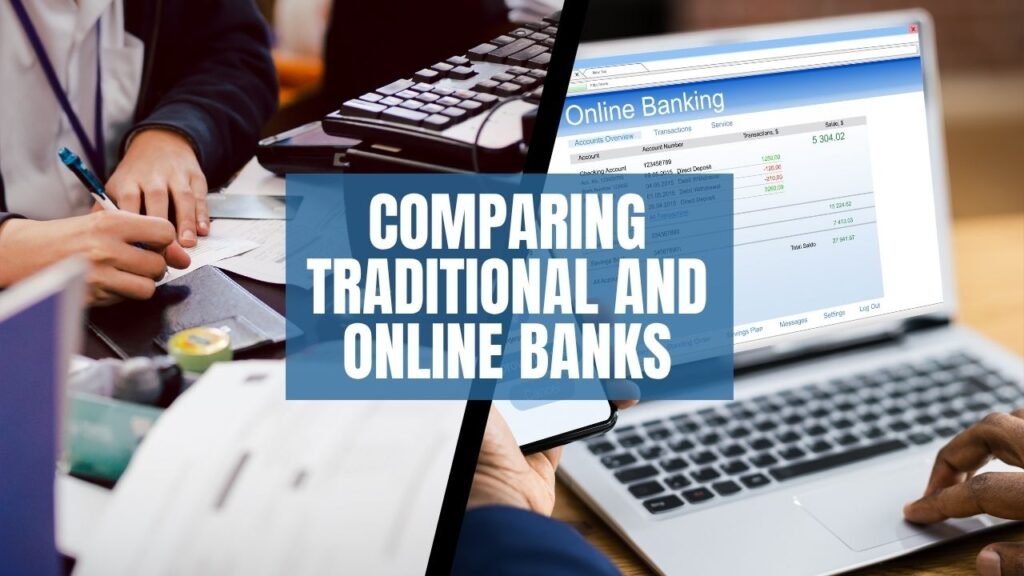
There is no universal winner here. A bank that looks expensive on a simple fee comparison may offer branch access and services that are genuinely valuable to a particular customer. Conversely, someone who conducts every banking task online could end up paying for physical infrastructure they rarely use. The right comparison therefore includes both price and convenience. Ask yourself how you actually interact with your bank. Do you need to speak with an adviser in person? Do you frequently deposit checks? Is a powerful mobile app more important than branch access? Do you travel internationally? The answers will often narrow the choice more effectively than a generic “best bank” ranking.
When an Online Bank Makes Sense
An online bank can make considerable sense for customers who are comfortable managing money digitally and want to minimize recurring banking costs. Many online providers compete aggressively on card pricing, account fees, digital tools, and international-use features. Panorabanques’ current comparison tables include online institutions such as BoursoBank, Fortuneo, Hello bank!, BforBank, and Monabanq, with different card structures and conditions. Some cards may be free when certain usage requirements are met, while charges can apply when those conditions are not satisfied.
That final point is critical. “Free” does not always mean “free under every circumstance.” A customer should read the conditions attached to a card before making a decision. If a free card requires monthly use and you rarely use it, the advertised benefit may not apply in practice. The same principle applies to promotional pricing, welcome offers, premium services, and international benefits. A smart comparison converts promotional language into practical questions: What will I pay after the promotion? What conditions must I meet? What happens if my behavior changes? Those questions help prevent attractive introductory offers from becoming expensive long-term arrangements.
Finding the Right Bank for Your Profile
A good banking decision begins with knowing what kind of customer you are. You might be a student looking for simplicity, a salaried employee seeking low recurring costs, a frequent traveler requiring favorable international terms, a family needing joint-account functionality, or a professional requiring specialized financial services. There is no reason these customers should receive identical recommendations because their financial needs are fundamentally different. Panorabanques’ personalized comparison approach reflects this idea by asking about customer circumstances and banking behavior before producing a ranking.
The best way to define your profile is to write down the banking services you use in a normal month. Include your card, withdrawals, transfers, direct debits, cash deposits, overdraft frequency, savings behavior, and any international activity. Then add the services you expect to need during the next few years, such as a mortgage, consumer loan, joint account, or investment product. This creates a practical picture of both your current and future requirements. Your bank should not merely solve today’s problem; ideally, it should remain suitable as your financial situation evolves.
Matching Banking Services to Your Habits
Once you know your habits, comparison becomes much easier. Consider a customer who makes almost every purchase by card, rarely uses cash, travels several times a year, and manages everything through a smartphone. That person should pay close attention to card conditions, foreign transaction fees, ATM policies, application quality, payment notifications, and customer support. Someone who rarely travels but values branch access may reasonably prioritize different factors. Panorabanques’ current bank comparisons emphasize exactly this kind of trade-off by encouraging users to consider bank type, pricing, services, personal needs, and promotional offers together.
The key is to avoid allowing one feature to dominate the decision. A beautiful mobile app cannot compensate for an unsuitable fee structure if your banking activity is expensive. Likewise, a very low monthly price may not be attractive if customer service is difficult to access and you regularly need assistance. Think of your banking relationship as a toolkit. The best toolkit is not the one with the fewest tools or the lowest price; it is the one containing the tools you actually need without making you pay heavily for unnecessary extras.
Using Personalized Comparisons
Personalized comparison can make banking research faster because it filters a large market according to individual circumstances. Panorabanques says its comparison covers nearly 100 banks and asks users about elements such as their current bank, card, overdraft situation, and transfer behavior. The resulting algorithm calculates estimated banking costs and potential savings associated with switching. Panorabanques also states that the average maximum annual savings observed among users who completed a banking comparison during 2025 was €296, although that figure should be treated as an indicative platform statistic rather than a guaranteed saving for every customer.
This is an important distinction when interpreting comparison results. A projected saving is not the same thing as money already sitting in your account. Your actual outcome depends on the products you choose, the conditions you satisfy, your negotiated rates, and your real banking behavior. Panorabanques itself notes that negotiated discounts may not be known to its system and therefore may not be included in calculations. Use the estimate as a signal that your current arrangement deserves investigation, then verify the final tariff and contractual conditions directly before switching.
Looking Beyond Free Banking
The phrase “free banking” sounds irresistible, but it can be misleading when taken without context. Some banks offer accounts without account-management fees, while cards or specific services may still have conditions or costs. Panorabanques’ current information identifies several institutions with zero account-management fees, including BforBank, BoursoBank, Fortuneo, Hello bank!, LCL, and others, while also showing that traditional banks can have different annual account-management charges depending on the institution or regional entity.
The smarter question is not “Can I get a free account?” but “What is my total annual banking cost?” Suppose one bank charges €0 for account management but has a card fee and costly services you use frequently. Another might charge a modest account fee while including services that eliminate several other expenses. The second bank could therefore be cheaper overall. This is why comparison should happen at the level of your entire banking relationship rather than around one isolated fee. A low headline price is useful only when the rest of the pricing structure works in your favor.
Choosing the Right Bank Card
The bank card is often one of the most visible parts of a banking relationship, but its value depends heavily on usage. Basic cards may be enough for everyday domestic spending, while premium cards can add insurance, assistance, higher limits, or travel-related benefits. Panorabanques’ current comparison tables show that card pricing varies considerably between providers and that some supposedly free cards have usage conditions.
When comparing cards, examine more than the annual or monthly price. Check withdrawal limits, payment limits, foreign transaction treatment, ATM access, payment notifications, card type, insurance, and eligibility requirements. If you travel, international conditions deserve particular attention because a card that is cheap at home may become costly abroad. If you rarely travel, paying extra for premium travel benefits may not make sense. The right card is the one whose features align with the way you spend, withdraw, travel, and manage risk.
Everyday and Premium Card Considerations
Premium cards can be useful when their benefits are actually used. Travel insurance, assistance services, higher limits, and other extras can have real value for some customers, but paying a recurring premium solely because the card looks more sophisticated is rarely a sound financial strategy. Panorabanques’ current account information includes examples of both standard and premium cards across online banking providers, illustrating how different pricing models can coexist within the same institution.
Before upgrading, estimate the annual value of the benefits you expect to use. If the additional cost is €X and you realistically receive only €Y of value from the extras, the upgrade may not be worthwhile. Conversely, someone who travels frequently and uses included assistance or insurance may receive substantially more practical value. This simple cost-versus-use calculation prevents consumers from confusing a premium label with a premium financial decision.
Evaluating Overdraft and Payment Costs
Overdraft costs deserve serious attention because they can become disproportionately expensive for customers who regularly operate close to their account balance. A bank that appears inexpensive under normal circumstances may become less attractive if its overdraft or payment-incident structure does not suit your financial habits. Panorabanques includes overdraft-related behavior among the information used for personalized comparisons, which demonstrates why the platform does not treat every customer as though they use their account in exactly the same way.
The best strategy is prevention first and comparison second. Maintaining an emergency buffer can reduce the need for overdraft facilities, while alerts and real-time notifications can help you recognize spending before the account becomes unbalanced. When comparing banks, investigate what happens when something goes wrong, not only what happens when everything goes perfectly. Banking decisions should account for ordinary life: delayed salaries, unexpected bills, forgotten subscriptions, travel expenses, or temporary cash-flow problems. A bank should remain manageable even during a financially inconvenient month.
Making Better Savings Decisions
Banking decisions should not stop at the current account. Once everyday fees are under control, the next question is what happens to the money you are not spending. Panorabanques currently compares savings accounts and term products, with its savings comparison updated in August 2026. The platform’s current listings illustrate that savings products can have different rates, promotional periods, access conditions, fees, and eligibility requirements.
This is where consumers need to distinguish between a headline interest rate and a sustainable return. A promotional rate may apply for a limited period before dropping, so the longer-term conditions matter. You should also consider liquidity: money needed for emergencies should generally be easy to access, while money intended for a longer-term goal may be suitable for a different product. The right savings choice is therefore a balance between return, accessibility, risk, taxation, and time horizon. Comparison tools can make the product landscape easier to understand, but the final decision should reflect your own financial goals.
Comparing Savings Products
Savings comparison becomes particularly useful when consumers stop looking only at the percentage printed beside a product. A higher advertised rate can be attractive, but you should check whether it is gross or net, temporary or permanent, subject to a maximum balance, or linked to another account. Panorabanques’ current savings pages explicitly warn that rates and conditions can change and encourage users to check partner websites for the latest information.
A practical approach is to create three categories: emergency money, short-term planned spending, and long-term savings. Emergency money needs accessibility and stability. Planned spending may tolerate a slightly different structure if the date of use is known. Long-term money can be evaluated according to broader investment objectives and risk tolerance. Once the purpose of the money is clear, comparing products becomes much more rational. Instead of asking, “Which account pays the most?” you are asking, “Which product is appropriate for this particular job?”
Understanding Credit Before Borrowing
Credit comparisons require even more discipline because the wrong decision can affect your finances for years. Consumer loans, revolving credit, and mortgages have different structures, costs, durations, and risks. Panorabanques offers comparison and informational resources covering consumer credit and mortgage-related topics, alongside its bank-account comparisons.
Before borrowing, start with the total cost rather than the monthly payment. A lower monthly payment can sometimes be achieved by extending the repayment period, but that may increase the total amount paid. Ask what the borrowing will cost over its entire life, what fees and insurance are involved, and whether the monthly obligation fits comfortably within your budget. Credit should solve a specific financial need rather than become a permanent extension of ordinary spending capacity. Comparison tools can help identify different offers, but responsible borrowing still requires a realistic assessment of affordability.
Comparing Consumer and Mortgage Credit
Consumer credit and mortgage borrowing should never be treated as identical decisions. A small personal loan may have a relatively short repayment period, while a mortgage can shape a household’s finances for decades. When comparing mortgage offers, factors such as interest rate, insurance, fees, repayment structure, and borrower conditions can materially affect the overall cost. Panorabanques maintains dedicated information around mortgage credit and borrower insurance, showing that banking comparison extends beyond current-account pricing.
For either type of borrowing, compare like with like. Looking only at the interest rate can hide important differences in insurance, fees, or repayment conditions. Ask lenders for complete information and calculate the overall cost using the same assumptions for each offer. If one offer has a slightly higher headline rate but materially lower associated costs, it could potentially be more competitive overall. The goal is not to find the most impressive-looking number; it is to understand the complete financial commitment before signing.
Why Banking Conditions Matter as Much as Price
Price is important, but convenience has economic value too. A customer who spends hours resolving banking problems may technically have a cheap account but still experience a poor financial service. A branch network, responsive customer support, useful digital tools, convenient cash services, and reliable payment notifications can all influence the practical value of a bank. Panorabanques encourages consumers to consider factors such as adviser access, branch availability, 24/7 support, remote banking services, and mobile applications when making a personalized comparison.
This is why a smart comparison should have two columns: financial cost and functional value. Under financial cost, record fees, card costs, transfer charges, and other recurring expenses. Under functional value, record branch access, support quality, digital tools, travel benefits, and services you genuinely need. The best option is often the bank that offers the strongest balance between those two columns. Choosing solely on price can be just as short-sighted as choosing solely on reputation.
Avoiding Common Banking Comparison Mistakes
One common mistake is assuming that a national ranking automatically determines the best bank for every individual. Another is comparing promotional prices without checking what happens after the promotion ends. Customers can also overlook usage conditions attached to supposedly free cards or fail to calculate charges related to services they use frequently. Panorabanques itself notes that its rankings and comparison information can involve commercial referencing and that certain tables are not exhaustive, while its methodology explains that public pricing data may not reflect individually negotiated discounts.
Another mistake is switching too quickly. A comparison should trigger investigation, not automatic action. Read the selected bank’s current tariff document, verify eligibility, check service availability, and understand the switching process. If the difference is only a few euros per year and the new bank creates major inconvenience, switching may not be worthwhile. If the potential saving is substantial and the services fit your needs better, however, the comparison may reveal a meaningful opportunity to improve your financial setup.
Using Banking Data to Improve Your Budget
Banking data becomes much more valuable when it is connected to budgeting. Your statements reveal how often you use transfers, cards, cash withdrawals, subscriptions, and overdraft facilities. That information can help you understand not only which bank is cheapest but also where your own financial habits are costing money. A comparison platform such as Panorabanques can then provide a market reference point against which you can evaluate your existing arrangement. Its stated objective is to make banking and credit information clearer so consumers can make more informed choices.
Try reviewing your banking costs once or twice a year rather than waiting until a major financial problem occurs. Banks change pricing, products evolve, promotional offers expire, and your own circumstances can change. A student can become a salaried worker, a renter can become a homeowner, or a domestic spender can become a frequent international traveler. Your bank does not necessarily need to change every year, but your decision to stay should be based on current evidence rather than habit.
Latest Post




When Switching Banks Can Be Worth It
Switching banks can make sense when the combination of fees, services, and conditions at another institution clearly fits your circumstances better. Panorabanques reports that users completing its comparison during 2025 saw average maximum annual savings of €296 in the platform’s results, which indicates that meaningful differences can exist for some customers. However, that statistic should never be interpreted as a promise. Your own potential saving depends on your products, behavior, eligibility, and the prices available when you compare.
The strongest reason to switch is therefore not simply “another bank is cheaper.” It is “another bank gives me a better overall arrangement for a lower or reasonable total cost.” Before making the move, compare your current annual cost against the estimated annual cost of the alternative, then examine the practical differences. If the new bank saves money while maintaining or improving the services you actually need, the case becomes much stronger. If the saving is tiny but the change creates significant inconvenience, staying may be perfectly rational.
A Practical Banking Comparison Checklist
A good banking review does not need to be complicated. Begin by recording your current account-management fees, card costs, transfer activity, cash withdrawals, overdraft usage, and other recurring charges. Then identify your priorities, such as branch access, mobile banking, international spending, customer support, savings products, or future borrowing. Panorabanques can be used as a starting point for comparing these factors because its platform brings together banking prices and services across a large number of French institutions.
Before choosing an alternative, verify the details directly with the bank and read the current conditions. Check whether card fees depend on usage, whether promotional pricing expires, whether a package includes services you actually need, and whether the bank supports the payment and withdrawal behavior you rely on. Finally, calculate the annual difference rather than focusing on a monthly headline number. A clear annual comparison turns an emotional decision into a measurable one.
The Future of Smarter Banking Comparisons
Banking comparison is becoming increasingly data-driven. Customers now expect digital tools to help them understand costs, compare products, and manage their finances more efficiently. Platforms such as Panorabanques fit into this wider shift by organizing complex financial information and presenting it in a more accessible format. Its current site includes comparison tools for banks, cards, credit, savings, and other financial products, while its recent 2026 content continues to address online banking, digital cards, savings, and specialized banking needs.
The future of banking decisions will probably be less about choosing a bank once and more about continuously evaluating whether the relationship remains suitable. Consumers have more options than before, but more options also create more complexity. Comparison tools can reduce that complexity by putting competing offers into a common framework. The smartest customers will still go one step further: they will combine comparison data with their own spending patterns, financial goals, risk tolerance, and long-term plans. That combination of personal data and market information is what turns comparison into genuine financial decision-making.
Read More:-
Key Benefits of Joining Klook US Affiliates for Travel Content Creators
Top Features to Explore When Choosing Legimi PL for Digital Reading
Why Lebara NL Is a Popular Choice for Flexible Mobile Services
Why ScreenPal Is Becoming a Popular Tool for Digital Marketers
A Complete Guide to Using checkdomain DE for Domain Registration
Conclusion
Making smarter banking decisions with insights from Panorabanques FR is ultimately about becoming more deliberate with money that can otherwise disappear through routine banking costs. Panorabanques provides a useful starting point because it brings together information on banks, cards, fees, savings, credit, and other financial products, while allowing comparisons to be personalized around a customer’s circumstances. Its current database and comparison tools demonstrate why consumers should look beyond a single advertised price and consider the complete cost and usefulness of a banking relationship.
The most important lesson is simple: the best bank is not necessarily the cheapest bank, the biggest bank, or the most popular bank. It is the bank that provides the right combination of cost, services, accessibility, flexibility, and value for your specific situation. Review your current fees, understand how you actually use your account, compare suitable alternatives, and verify the final conditions before making a switch. Banking does not have to be complicated when you approach it with the right information. A few minutes of thoughtful comparison today can potentially improve the way you manage everyday money for years to come.
Frequently Asked Questions
Q. What is Panorabanques FR?
A. Panorabanques is a French banking and financial comparison platform operated through Panorabanques.com. It states that it has operated since 2012 and is a subsidiary of Groupe M6, with the goal of helping consumers compare, understand, and choose banking and financing products. Its current platform compares offers from nearly 100 banks and credit organizations and provides information on banking fees, accounts, cards, credit, savings, and related financial products.
Q. Can Panorabanques help me find a cheaper bank?
A. Yes, its comparison tools are designed to estimate banking costs based on your personal profile and compare those costs with alternatives. Panorabanques states that its algorithm calculates the price of relevant banking products and estimates potential savings from changing banks. The result should be considered an estimate rather than a guaranteed saving because individual discounts and circumstances may not be fully reflected.
Q. Is a free bank account always the best option?
A. No. A bank without account-management fees may still charge for other services or impose conditions on cards and other products. The more useful measurement is your total annual banking cost, including the services you actually use. Comparing the entire fee structure is therefore more reliable than selecting a bank simply because one particular service is advertised as free.
Q. Should I choose an online bank or a traditional bank?
A. It depends on your needs. Online banks can be attractive to customers who prioritize low costs and digital self-service, while traditional banks may be more suitable for people who value branch access and face-to-face assistance. Panorabanques itself recommends considering factors such as fees, services, branch requirements, support availability, and mobile banking before choosing.
Q. How often should I compare my banking options?
A. A yearly review is a sensible habit, especially if your financial situation, spending patterns, or banking needs have changed. You do not necessarily need to switch banks every year, but periodically checking current fees and competing offers can help you avoid staying with an unsuitable arrangement simply because of habit. A major life change—such as starting a new job, traveling more, buying a home, or combining finances with a partner—is also a good reason to reassess your banking setup.