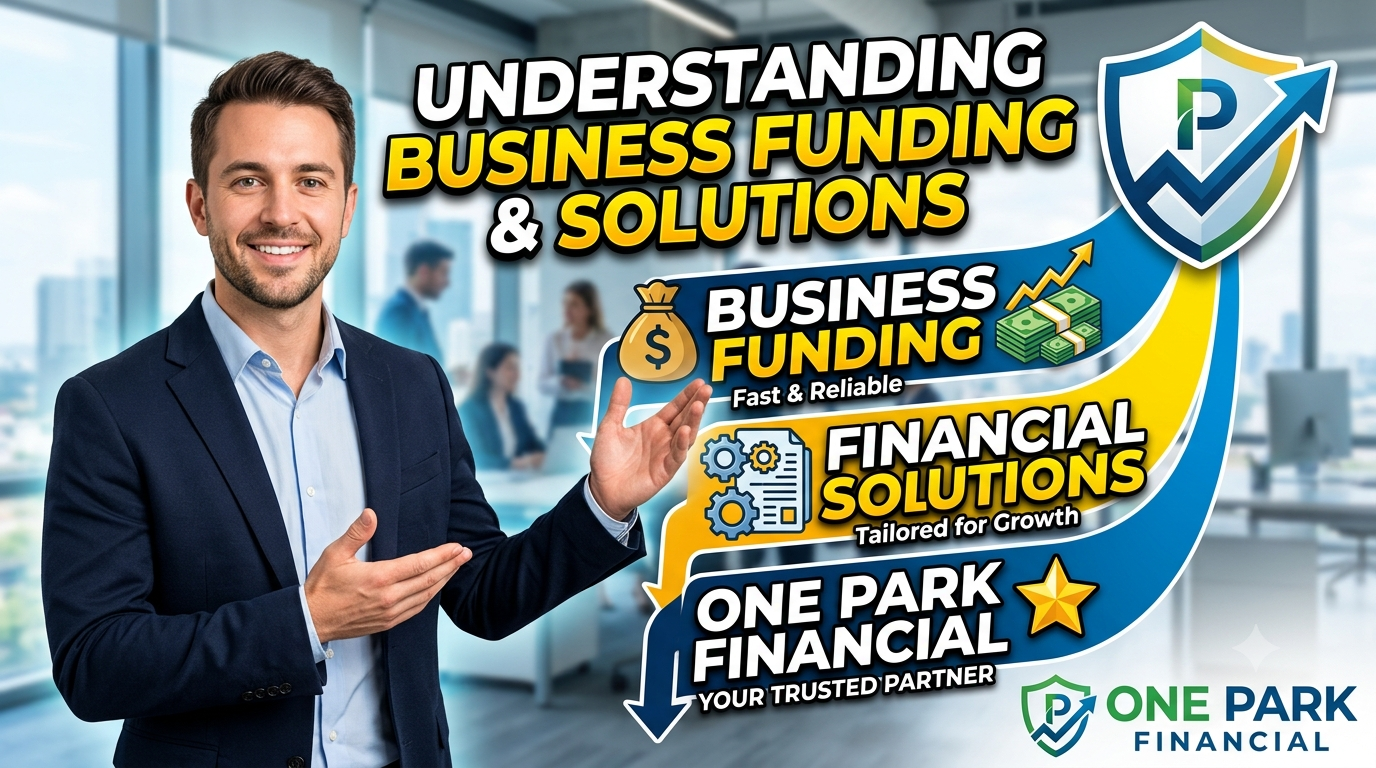
Discover how One Park Financial helps small businesses explore flexible funding and financial solutions for working capital, inventory, equipment, payroll, marketing, expansion, and other business needs. Learn about One Park Financial, its funding process, eligibility requirements, potential funding amounts, repayment considerations, and how its alternative financing approach compares with traditional bank financing. This guide explains what business owners should know before choosing One Park Financial for their company’s financial needs.
Table of Contents
- What Is One Park Financial?
- How One Park Financial Supports Small Businesses
- Why Business Funding Matters for Growing Companies
- Common Reasons Businesses Seek Funding
- How One Park Financial’s Funding Process Works
- Understanding Available Business Funding Options
- One Park Financial Eligibility Requirements
- How Fast Can a Business Receive Funding?
- How Funding Can Be Used for Business Growth
- Evaluating Costs, Repayment, and Financial Risk
- One Park Financial Reviews and Customer Experience
- One Park Financial vs. Traditional Bank Financing
- Is One Park Financial Right for Your Business?
- Conclusion
- FAQs
What Is One Park Financial?

Running a small business often means making important financial decisions before you have perfect financial conditions. You may have customers waiting, employees who need to be paid, inventory that needs replenishing, equipment that needs replacing, or a new opportunity that cannot wait several months for a traditional bank approval. This is where alternative business funding can become useful, and One Park Financial positions itself as a financing resource designed around the needs of small businesses. The company was founded in 2010 and says it has serviced more than 100,000 clients and facilitated more than $1.5 billion in funding. Its current website also says businesses can seek funding ranging from $5,000 to $500,000, depending on factors such as revenue, business history, and overall financial profile.
The important distinction is that One Park Financial is not a conventional bank. The company describes itself as a growth services organization focused primarily on helping small businesses access financing, while its network includes multiple funding providers. That model can appeal to entrepreneurs who find conventional lending requirements too rigid or who need capital faster than a traditional lending process can provide. Instead of assuming that every business should fit the same financial template, the company says it evaluates factors including business revenue and recent banking activity alongside credit information. That approach can be particularly relevant for newer companies or owners whose credit history is less than perfect, although approval and terms are ultimately dependent on the specific offer and funding provider.
How One Park Financial Supports Small Businesses
Think of business funding as fuel for a vehicle. A profitable business can still slow down when it does not have enough cash available at the right moment, just as a well-maintained car cannot continue moving without fuel in the tank. One Park Financial focuses on providing access to capital that businesses can use for legitimate operating and growth needs. According to its current FAQ, funding can potentially be used for inventory, equipment, payroll, marketing, renovations, expansion, or cash-flow gaps. This flexibility matters because two businesses requesting the same amount of money may have completely different reasons for needing it, and the usefulness of financing depends heavily on how that money is deployed.
The company also emphasizes a relatively streamlined application experience. Its website says the initial prequalification can take around two minutes and does not affect the applicant’s credit score because the initial process uses a soft inquiry. After that stage, a Business Funding Manager can help the applicant understand available options, review documentation, and evaluate an offer. The company says applicants typically provide basic business information, recent business bank statements, and government-issued identification. For a small-business owner who has spent hours assembling documents for traditional financing applications, this simplified starting point can make the process feel much more manageable.
Why Business Funding Matters for Growing Companies
Growth rarely arrives on a convenient schedule. A retailer may discover that its best-selling product is suddenly in high demand, a contractor may win a large project that requires additional workers and materials, or a restaurant may need new equipment before the busy season begins. In each example, the business may have a genuine opportunity but lack enough liquid capital to act immediately. That is one of the central reasons business funding exists: it allows an entrepreneur to bring future business potential forward rather than waiting until accumulated profits are large enough to finance the opportunity independently.
At the same time, funding should not be treated as free money or as a solution to every financial problem. Borrowed or financed capital creates an obligation, and the repayment structure can affect future cash flow. A business therefore needs to ask a simple but powerful question before accepting an offer: Will the money generate enough value to justify its total cost? If $50,000 of financing helps a company purchase inventory that produces substantially more revenue and profit, the financing may serve a strategic purpose. If the same amount merely postpones an underlying cash-flow problem without improving the business, it could create additional pressure. Understanding that difference is essential when evaluating any financial solution.
Common Reasons Businesses Seek Funding
Small businesses commonly seek financing for working capital, expansion, inventory, equipment, marketing, renovations, payroll, or unexpected expenses. The timing of these needs can be just as important as the amount itself. Imagine a seasonal company that earns most of its annual revenue during a few months but must purchase inventory weeks before customers begin buying. Waiting until sales arrive would create a timing problem even though the company may ultimately be profitable. Financing can potentially bridge that gap, allowing the business to purchase what it needs before the revenue arrives.
One Park Financial specifically says its funding can be used for a broad range of legitimate business purposes, including inventory, equipment, payroll, marketing, renovation, expansion, and managing cash-flow gaps. That flexibility can make alternative funding useful across many industries, but business owners should still build a realistic plan before accepting capital. A funding amount should be connected to a specific business objective, expected return, and repayment capacity rather than simply being chosen because it is available. The strongest funding decisions usually begin with a business problem or opportunity and then determine how much capital is genuinely necessary to address it.
How One Park Financial’s Funding Process Works
The funding process is designed to reduce some of the friction that entrepreneurs associate with business financing. One Park Financial currently describes a four-step process beginning with online prequalification, followed by a conversation with a funding professional, review of an offer, and finally receipt of funds after the necessary agreements and final steps are completed. The company says prequalification takes approximately two minutes and can be completed online without an initial credit-score impact.
That structure is relatively straightforward, but prospective borrowers should still read every document carefully. A quick application does not mean that the financial decision itself should be rushed. Once an offer is presented, the business owner needs to understand the amount being advanced, the total repayment obligation, the frequency of payments, the expected duration, fees, and any conditions associated with early repayment. Speed can be valuable, but clarity is even more valuable when money is involved.
Step 1: Online Prequalification
The first stage is designed to determine whether a business may qualify. One Park Financial says its online prequalification takes approximately two minutes and does not require lengthy documentation at the beginning. Basic information about the company, including revenue-related details, is used to start the evaluation. The company states that the initial application does not affect the applicant’s credit score.
This initial step can be useful because it gives a business owner an early indication of whether exploring funding is worthwhile. However, prequalification should not be confused with final approval. A preliminary indication does not guarantee that financing will ultimately be offered, nor does it guarantee a particular funding amount or repayment structure. Final terms depend on the business’s financial information and the specific funding provider involved.
Step 2: Working With a Funding Manager
After prequalification, One Park Financial says an assigned Business Funding Manager helps the applicant navigate the next stages. The manager may review the company’s needs, request documentation, explain potential offers, and help the business owner understand the proposed arrangement. According to the company, applicants will typically need three months of business bank statements or secure bank verification, along with valid government-issued identification.
This human-support element is significant because financial terminology can be confusing, particularly for owners who do not regularly work with commercial financing. A funding manager can help explain what an offer means, but the business owner remains responsible for deciding whether the terms make sense. Before signing anything, it is sensible to calculate the total cost of capital and compare the payment obligation with realistic monthly or weekly cash flow.
Understanding Available Business Funding Options
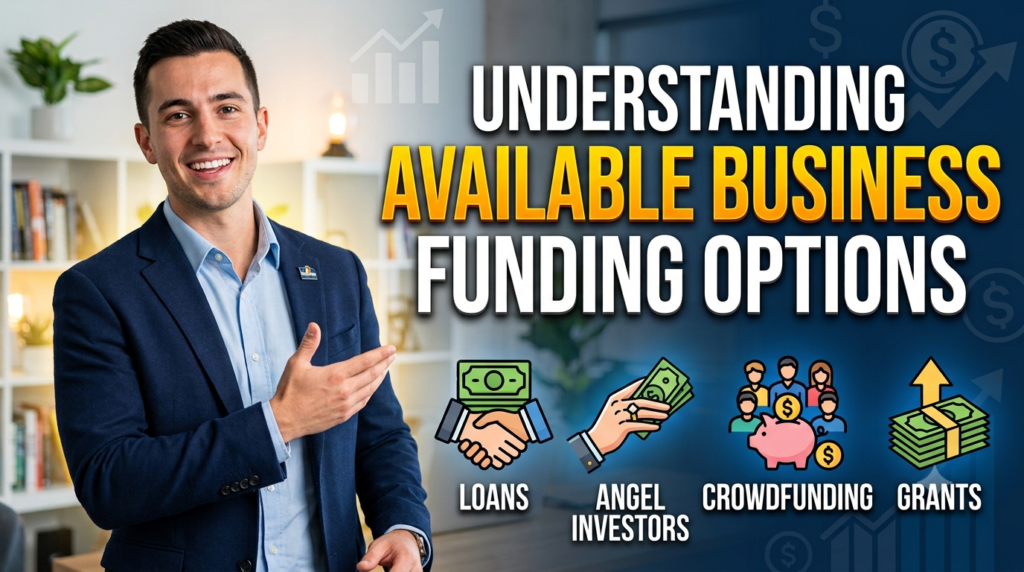
Business funding is not a single product. Different companies have different revenue patterns, risk profiles, operating costs, and capital requirements, so financing structures can vary significantly. One Park Financial says it works with a network of funding providers and offers solutions based on a business’s circumstances. Its FAQ describes funding amounts generally ranging from $5,000 to $500,000, although the actual amount available depends on the applicant’s revenue, time in business, and overall financial profile.
For an entrepreneur, the goal should not simply be to obtain the largest possible amount. More capital is not automatically better. A smaller amount that solves a specific inventory or equipment need without placing excessive pressure on cash flow may be much healthier than a larger facility that creates unnecessary repayment obligations. The right funding structure should fit the business rather than forcing the business to fit the funding.
Revenue-Based Financing
One financing structure discussed by One Park Financial is revenue-based financing. In this model, a business receives capital and repayment is connected to a percentage of future sales or revenue. The company’s FAQ explains that repayment can occur through daily or weekly payments tied to revenue, meaning the amount paid can move with the business’s cash flow.
The concept can be attractive for businesses whose revenue fluctuates. If sales naturally rise and fall, a repayment structure linked to revenue may provide a different cash-flow experience from a fixed-payment loan. But flexibility does not eliminate cost. Business owners should carefully review the specific repayment formula, total repayment obligation, payment frequency, and other terms before agreeing to revenue-based financing. The key is understanding exactly how much capital is received and how much ultimately needs to be repaid.
Working Capital and Growth Funding
Working capital is the money a business uses to keep everyday operations moving. It can cover expenses between incoming customer payments and outgoing bills, help purchase inventory, support payroll, or finance marketing campaigns. Growth funding goes a step further by helping a business invest in opportunities that could increase future revenue, such as opening another location, adding equipment, hiring employees, or expanding product capacity.
One Park Financial says its funding can be used for these kinds of business purposes without restrictions within legitimate business operations. For an owner, the most important step is matching the funding purpose with a measurable outcome. If the capital is for inventory, estimate expected turnover. If it is for marketing, establish a realistic customer-acquisition target. If it is for equipment, calculate how much additional capacity or revenue the equipment is expected to produce.
One Park Financial Eligibility Requirements
According to One Park Financial’s current eligibility information, businesses generally need at least three months in business, at least $10,000 in monthly sales before expenses, and a minimum 500 FICO score to meet its basic starting requirements. The company says it also reviews recent business bank statements as part of the evaluation.
These requirements are important because they show that the evaluation is not based solely on a business owner’s personal credit score. Revenue and operating history provide additional information about whether the company has established commercial activity. Still, meeting the stated starting requirements does not guarantee approval or a specific offer. Financing decisions depend on the complete financial picture and the terms available from the relevant funding source.
| Factor | One Park Financial’s stated starting requirement |
| Time in business | At least 3 months |
| Monthly sales | At least $10,000 before expenses |
| Credit score | At least 500 FICO |
| Bank statements | Typically 3 months |
| Funding range | Approximately $5,000–$500,000 |
| Initial application credit impact | No impact from the prequalification process |
The figures above reflect information published by One Park Financial and should be treated as starting criteria rather than a promise of approval or funding terms.
How Fast Can a Business Receive Funding?
Speed is one of the biggest selling points in alternative business financing. One Park Financial says an online prequalification can take about two minutes, an offer may be ready within two business hours after the necessary application process, and many approved clients can receive funds within 24 hours after completing the required final steps.
That timeline can be meaningful when a business faces an urgent opportunity. Suppose a contractor needs materials for a new project or a retailer needs inventory before a major sales period. Waiting several weeks could mean losing the opportunity entirely. Fast access to capital can therefore have real economic value, although speed should never replace careful evaluation. A funding offer that arrives quickly still deserves the same scrutiny as one that takes weeks to arrange.
How Funding Can Be Used for Business Growth
Capital becomes valuable when it produces a useful business outcome. One Park Financial says its funding can support areas including inventory, equipment, payroll, marketing, renovations, expansion, and cash-flow management. The possibilities are broad, but successful deployment requires discipline. The best approach is to connect every dollar to a purpose instead of allowing new capital to disappear into miscellaneous expenses.
Managing Cash Flow and Inventory
Cash flow problems can happen even when sales are healthy. A company may invoice customers today but not receive payment for 30 or 60 days, while payroll, rent, suppliers, and utilities still require immediate payment. Working capital can potentially help bridge that timing difference. Similarly, inventory-heavy businesses often need to purchase products before those products generate revenue.
One Park Financial’s published client stories illustrate this type of use. Its success-story section describes a Los Angeles auto-parts and tire shop owner who used funding to increase inventory, with the company reporting that the additional inventory supported revenue growth. A story like this highlights the basic principle behind productive financing: capital works best when it is connected to an identifiable business bottleneck. The objective is not simply to have more money in the bank but to remove an obstacle that is preventing the business from operating or growing efficiently.
Evaluating Costs, Repayment, and Financial Risk
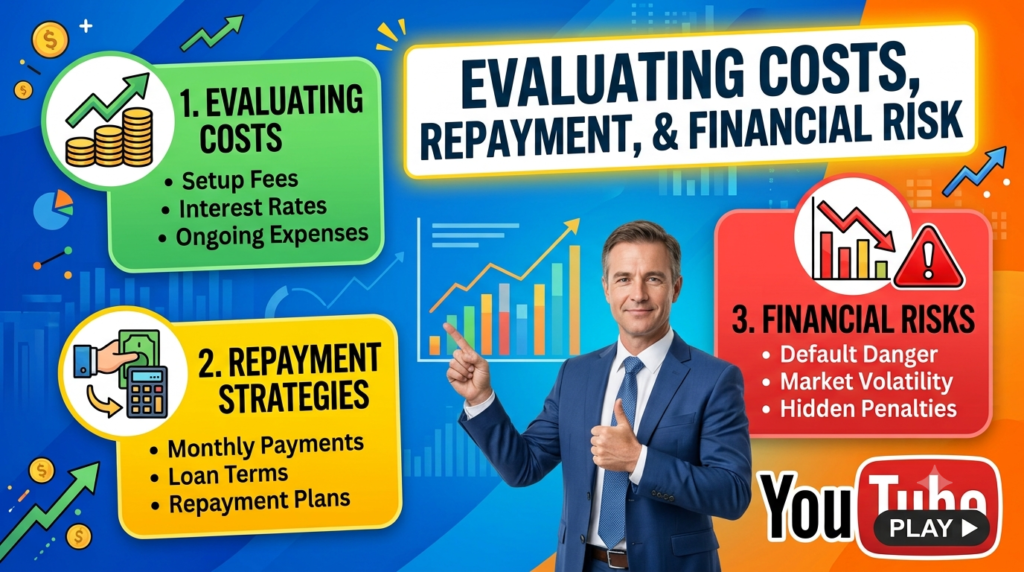
Before accepting any business funding, owners should look beyond the headline amount. A $100,000 funding offer does not necessarily mean the business receives $100,000 of usable capital or that the cost of obtaining that capital will be low. Fees, repayment structure, payment frequency, and other contractual conditions can materially change the economics of the transaction. One Park Financial states that there is no fee to begin the application or prequalify, but customers who accept funding can incur the cost of capital and a professional service fee.
A practical evaluation should answer several questions. What amount will actually reach the business bank account? What is the total amount that must be repaid? How often are payments made? What happens if revenue falls temporarily? Are there fees associated with the agreement? Is early payoff permitted, and if so, does it reduce the overall cost? These questions transform financing from an emotional decision into a measurable business decision.
It is also important to distinguish access to capital from affordability of capital. A business may qualify for financing and still decide that the cost is too high for its current margins. Qualification simply means an option is available; it does not mean the option is automatically appropriate. Business owners should consider alternative financing sources and compare the total economics before committing.
One Park Financial Reviews and Customer Experience
Customer feedback is another factor people consider when evaluating a financial services company. One Park Financial currently has thousands of reviews on Trustpilot, with Trustpilot displaying a 4.8 out of 5 TrustScore based on more than 4,000 reviews at the time of the current search. Recent reviews frequently mention responsiveness, communication, and a straightforward funding process.
The Better Business Bureau also currently lists One Park Financial as an A+ rated BBB Accredited Business, with an average customer review rating of 4.76 based on 95 reviews shown on the BBB page. Reviews should always be interpreted as one piece of the decision-making process rather than proof that every customer will receive the same experience. Financial outcomes depend on individual circumstances, funding products, repayment obligations, and the particular provider behind an offer.
Read More:-
How Does Strikingly Simplify the Website Building Process?
Building Your Dream Website with Site123
Boost Your E-commerce Strategy with YITH Plugins
Maximize Your Customer Engagement with LiveAgent’s Features
Why STRIPO is Essential for Digital Product Marketersa
One Park Financial vs. Traditional Bank Financing
Traditional banks remain an important source of business financing, particularly for established companies that have strong credit profiles, significant financial history, collateral, and time to complete a conventional underwriting process. Alternative funding providers generally appeal to a different part of the market. One Park Financial specifically positions its process around speed, revenue, simplified documentation, and businesses that may not fit traditional lending criteria.
| Consideration | One Park Financial approach | Traditional bank financing |
| Initial application | Online prequalification | Often more extensive application |
| Initial credit impact | Company says prequalification has no impact | Depends on lender and stage |
| Speed | Potentially as little as 24 hours after approval | Often longer |
| Business history | Starting point of 3 months stated | Often varies and may favor established businesses |
| Credit profile | Company states lower credit can be considered | Requirements vary and can be stricter |
| Funding purpose | Broad legitimate business uses | Depends on product |
| Human support | Dedicated Business Funding Manager | Varies by bank |
The comparison is not a statement that one approach is universally better. A business with excellent credit and substantial operating history may find conventional bank financing attractive because of potentially different pricing and structures. A younger company that values speed and has difficulty meeting traditional requirements may find alternative financing more accessible. The right decision depends on the business’s financial position, urgency, and ability to handle repayment.
Is One Park Financial Right for Your Business?
One Park Financial may be worth considering if your company has an established revenue stream, needs capital relatively quickly, and does not necessarily fit the traditional bank-financing model. The company’s current published requirements start at three months in business, $10,000 in monthly sales, and a 500 FICO score, while its funding range is described as approximately $5,000 to $500,000. Those criteria make it particularly relevant to entrepreneurs looking for working capital or growth financing rather than consumers seeking personal loans.
The better question, however, is not simply whether you can qualify. It is whether the financing makes sense for your business. If the funding will generate measurable revenue, protect an important customer relationship, purchase profitable inventory, or resolve a temporary working-capital gap, financing may serve a clear strategic purpose. If the business is consistently losing money and financing would only delay difficult decisions, additional debt or repayment obligations may make the situation worse.
A sensible approach is to calculate your expected cash flow before accepting an offer. Consider conservative revenue projections rather than your best-case scenario. Then compare expected free cash flow against the proposed payment schedule. The goal should be to choose financing that gives your business room to breathe rather than financing that consumes the oxygen your business needs to operate.



Conclusion
One Park Financial represents an alternative approach to small-business financing, emphasizing speed, simplified prequalification, flexible funding possibilities, and personalized support. The company says it has operated since 2010, serviced more than 100,000 clients, and facilitated more than $1.5 billion in funding. Its current information indicates funding opportunities from roughly $5,000 to $500,000, with basic starting criteria that include three months in business, $10,000 in monthly sales, and a 500 FICO score.
For entrepreneurs, the biggest advantage may be accessibility and speed, particularly when traditional financing is too slow or difficult to obtain. At the same time, responsible funding decisions require more than approval. Business owners should understand the total cost of capital, repayment frequency, fees, and the effect of payments on future cash flow before accepting an offer. When capital is connected to a clear growth opportunity or practical operating need, it can become a useful business tool rather than simply another financial obligation.
The bottom line is simple: business funding works best when the money has a job before it arrives. Whether that job is purchasing inventory, financing equipment, managing payroll, launching marketing, or expanding operations, a clear plan helps ensure that borrowed capital contributes to the business instead of becoming an unnecessary burden.
FAQs
Q. What is One Park Financial?
A. One Park Financial is a financial services and growth organization that focuses on helping small businesses access alternative financing. The company was founded in 2010 and says it has serviced more than 100,000 clients and facilitated more than $1.5 billion in funding.
Q. How much funding can I potentially get through One Park Financial?
A. One Park Financial currently states that funding amounts generally range from $5,000 to $500,000, depending on factors such as monthly revenue, time in business, and overall financial profile. The actual amount and terms depend on the specific funding offer.
Q. Does applying to One Park Financial affect my credit score?
A. The company says its initial prequalification process uses a soft inquiry and does not affect the applicant’s credit score. However, applicants should review the specific terms and disclosures associated with any subsequent financing process.
Q. What can One Park Financial funding be used for?
A. According to the company’s FAQ, funding can be used for legitimate business purposes such as inventory, equipment, payroll, marketing, renovations, expansion, and cash-flow management.
Q. How quickly can I receive business funding?
A. One Park Financial says prequalification can take approximately two minutes, an offer may be available within two business hours after the relevant application process, and many approved clients can receive funds within 24 hours after completing the required final steps. Actual timing depends on approval, documentation, and the funding provider.