
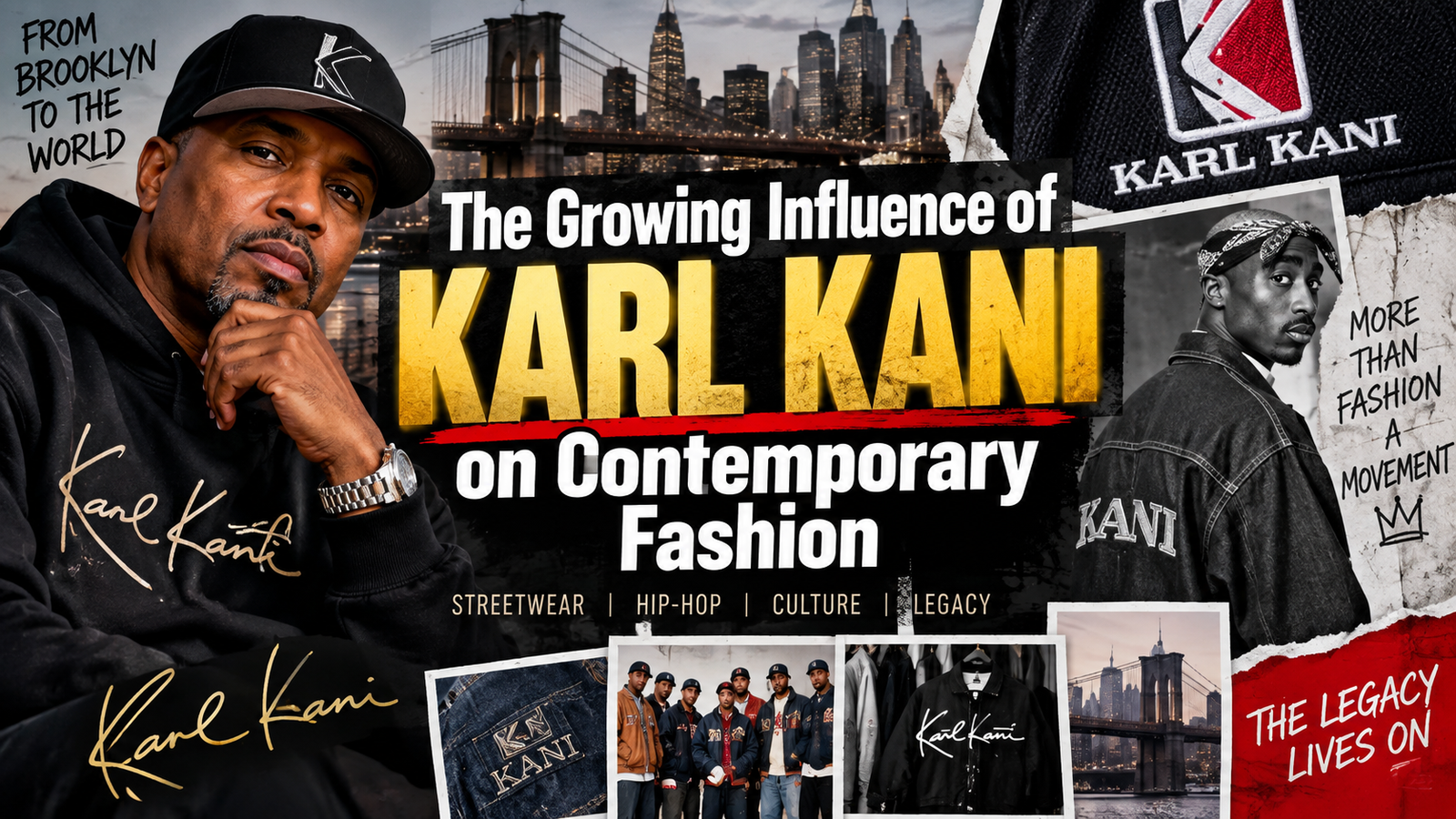
Karl Kani has become a defining name in contemporary fashion, blending authentic streetwear, hip-hop culture, bold denim, oversized silhouettes, and distinctive urban style. From its roots in Brooklyn to its global recognition, Karl Kani has influenced generations of fashion lovers and helped shape the evolution of modern streetwear. This article explores the brand’s cultural impact, iconic 1990s aesthetic, connection with hip-hop, and continued relevance in today’s ever-changing fashion landscape.
Table of Contents
- The Origins of Karl Kani
- How Karl Kani Changed Hip-Hop Fashion
- Karl Kani and the Mainstream Fashion Shift
- Tupac and the Karl Kani Legacy
- The Role of Music in Karl Kani’s Growth
- Why 1990s Karl Kani Still Matters
- Karl Kani’s Influence on Modern Streetwear
- Karl Kani’s Influence on Global Fashion
- Quality, Comfort, and Luxury in Modern Karl Kani
- Karl Kani and the Future of Fashion
- Conclusion
- FAQs
The Origins of Karl Kani
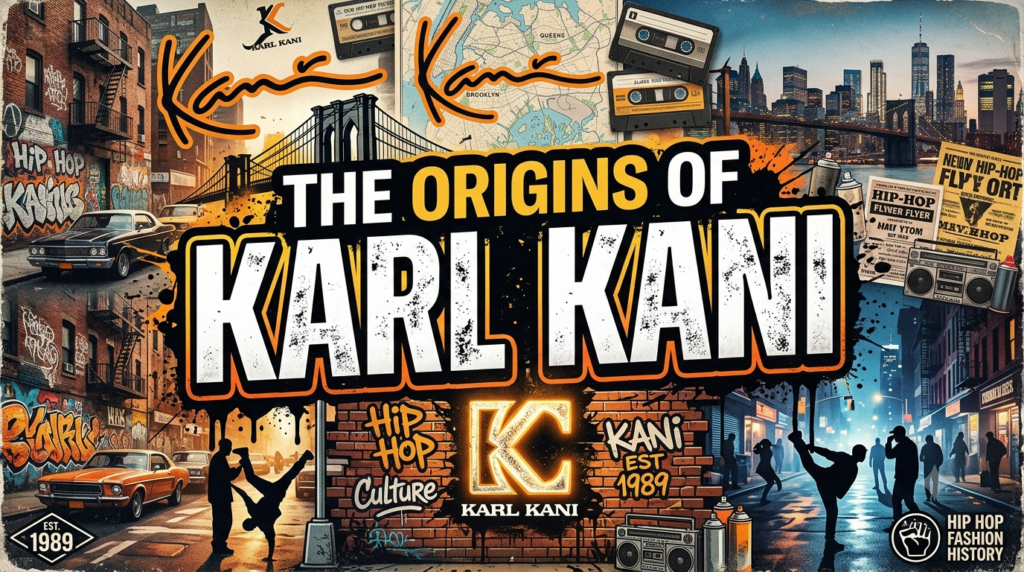
The story of Karl Kani begins with a remarkably simple idea: make clothing for the community that actually reflects the community. Karl Kani, born Carl Williams, grew up in Brooklyn and was influenced by watching his father and a Haitian tailor create clothing. Rather than following the traditional route through fashion school or established design houses, Kani developed his skills through direct experience and experimentation. That difference mattered because his designs were not created by observing street culture from the outside; they grew directly from the environment in which he lived. The official Karl Kani history explains that he wanted to create clothing “in the hood, for the hood,” and that philosophy became central to the identity of the brand. His decision to use the name Karl Kani also represented a personal transformation, turning a question about whether he could succeed into a permanent identity and business philosophy. The name itself was inspired by the phrase “Can I?”, a question that became a recurring expression of confidence and possibility. This origin story helps explain why the brand feels different from a label that simply borrowed elements of urban culture. Karl Kani was not merely selling an aesthetic; he was translating lived experience into clothing. That authenticity eventually became one of the most valuable assets in streetwear.
From Brooklyn Streets to Fashion
When Karl Kani began developing his clothing business, mainstream fashion was not necessarily looking toward Brooklyn neighborhoods for its next major source of inspiration. Traditional fashion institutions often determined what was considered desirable, while street communities developed their own aesthetics independently. Kani recognized that young consumers were already creating trends through music, sports, neighborhoods, and social networks. Instead of waiting for established fashion companies to validate those trends, he built a brand around them. This approach allowed him to experiment with proportions and materials that were dramatically different from the fitted silhouettes popular in many mainstream markets at the time. His baggy denim, oversized shirts, heavy sweatshirts, and relaxed shapes became recognizable parts of the Karl Kani visual identity. The result was a style that felt comfortable and expressive at the same time. That combination is still central to modern streetwear, where consumers often want clothing that can move easily between everyday life, music culture, social media, and fashion-conscious environments. Kani’s early journey demonstrates an important lesson about contemporary fashion: trends do not always begin on runways. Sometimes they begin in communities, and the designer who understands those communities can transform an everyday preference into a global fashion movement.
The Birth of Urban Streetwear
The term streetwear now covers an enormous global industry, but its early development was deeply connected to music, youth culture, sports, and local identity. Karl Kani played an important role in defining this intersection during the late 1980s and 1990s. His designs gave young consumers a way to visibly participate in the emerging hip-hop aesthetic without needing to imitate traditional luxury fashion. Baggy jeans, oversized sweatshirts, strong branding, and relaxed proportions created an entirely different relationship between the body and clothing. Instead of emphasizing a narrow silhouette, the clothing created space and movement. That change might sound simple today, but it represented a significant cultural shift at the time. According to The Hip Hop Museum, Kani helped establish purpose-built baggy jeans and other urban silhouettes that became closely associated with hip-hop. The influence eventually moved beyond the original audience, showing that street culture could create fashion rather than simply consume it. This is one reason Karl Kani remains important to contemporary fashion discussions. Modern streetwear is often praised for blurring boundaries between luxury, music, sports, and everyday clothing, and Kani was working within that boundary decades before the concept became a mainstream business strategy.
How Karl Kani Changed Hip-Hop Fashion
Karl Kani’s relationship with hip-hop was not simply a marketing partnership. The clothing and the music developed alongside each other, creating a visual language that audiences could immediately recognize. During the 1990s, hip-hop artists became increasingly important cultural figures, and what they wore could influence millions of fans. Karl Kani understood this relationship early. Artists and celebrities wearing the clothing gave consumers a way to connect fashion with the music they loved. The official brand history highlights the involvement of major hip-hop figures and describes how artists helped turn the clothing into a recognizable part of their public identities. This was a powerful form of cultural marketing because it felt less like conventional advertising and more like genuine participation in the movement. When an artist appeared wearing a Karl Kani sweatshirt, denim outfit, or oversized look, the garment became part of the story surrounding that artist. The clothing therefore gained emotional meaning. Modern influencer marketing operates on a similar principle, but the technology has changed dramatically. Today, social media personalities can make an item desirable within hours, while Kani’s generation relied on television, magazines, music videos, live appearances, and word of mouth. The basic mechanism, however, remains surprisingly similar: people want to wear what represents the culture they admire.
The Rise of Baggy Silhouettes
One of Karl Kani’s most visible contributions to fashion is the normalization of baggy clothing. Loose jeans and oversized garments are now common enough that it is easy to forget how influential the silhouette became during the 1990s. The oversized approach challenged the idea that fashionable clothing had to be narrow, structured, or traditionally polished. Instead, comfort became part of the visual statement. A large pair of jeans could communicate confidence, rebellion, individuality, and connection to hip-hop culture simultaneously. Interestingly, this aesthetic has returned strongly in contemporary fashion. In a 2026 CNN interview, Kani himself discussed the renewed popularity of oversized clothing and noted that baggy styles were becoming prominent again in markets including Europe and Japan. Current fashion coverage also continues to document the broader revival of 1990s aesthetics. The return of the baggy silhouette demonstrates that fashion rarely moves in a straight line. It behaves more like a pendulum, swinging between fitted and relaxed proportions before returning to earlier ideas with a new generation attached to them. Today’s oversized jeans may be styled differently from those of the 1990s, but the underlying idea remains remarkably familiar.
Clothing as Cultural Expression
The most powerful part of Karl Kani’s legacy may be the idea that clothing can represent identity rather than simply appearance. Streetwear has become globally commercial, but its roots are connected to communities that used fashion to express confidence, creativity, belonging, and resistance. Karl Kani’s clothing gave people an opportunity to visibly participate in that culture. The designs were not intended to disappear into the background; they were meant to be noticed. Large silhouettes, recognizable branding, bold colors, and distinctive denim created a strong visual identity. That approach helped establish a broader principle now common in contemporary fashion: consumers want brands with stories. They want to know where a label came from, what it represents, and why it matters. A product becomes more meaningful when it connects to cultural history. Karl Kani’s success shows how powerful that connection can be. Even decades later, the brand’s association with Brooklyn, hip-hop, and 1990s street culture gives its vintage pieces a meaning that cannot be recreated simply by copying their appearance. The history is part of the product.
Karl Kani and the Mainstream Fashion Shift
One of the most important achievements in Karl Kani’s history was helping demonstrate that urban streetwear could move into mainstream retail without completely losing its cultural identity. The brand’s history records major retail and fashion-show milestones, including Karl Kani appearances connected with Macy’s during the 1990s. This transition mattered because it changed perceptions about where important fashion ideas could originate. Streetwear no longer had to remain confined to neighborhood stores, music scenes, or niche communities. It could become commercially significant while retaining its connection to youth culture. That shift created opportunities for many brands that followed. Labels associated with hip-hop and urban fashion later developed their own mainstream businesses, while luxury houses eventually began incorporating streetwear principles into their collections. The fashion industry today is filled with collaborations between luxury designers, sports brands, musicians, artists, and streetwear companies. That environment would have been much harder to imagine without earlier pioneers proving that cultural authenticity could have commercial value. Karl Kani therefore represents more than a particular clothing aesthetic. He represents a change in the direction of fashion influence, from traditional institutions toward communities and cultural movements.
The Power of Celebrity Visibility
Celebrity influence is hardly new, but Karl Kani used it in a particularly culturally meaningful way. During the 1990s, figures such as Tupac Shakur and other major musicians helped expose the brand to audiences far beyond its original market. The relationship between Kani and Tupac became especially important to the brand’s mythology. Kani has described Tupac as one of his most significant ambassadors and has discussed how the rapper’s personal style helped put Karl Kani on a larger stage. The visual power of those appearances was enormous because Tupac was not simply a musician; he was a cultural symbol whose clothing choices were closely watched. When he wore Karl Kani, the garments became associated with his confidence and individuality. This approach anticipated today’s creator-driven fashion economy. Modern brands frequently depend on personalities who can turn clothing into cultural conversation, and consumers often respond more strongly to a product when it is connected to someone they admire. The difference is that Kani’s early celebrity relationships developed before Instagram, TikTok, and algorithmic feeds existed. The principle was the same, but the distribution system was television, music, magazines, concerts, and word of mouth.
Tupac and the Karl Kani Legacy
Few relationships illustrate Karl Kani’s cultural impact as clearly as the connection between Tupac Shakur and Karl Kani. Tupac represented an unusually powerful combination of music, activism, personal style, storytelling, and visual identity. His willingness to embrace streetwear helped reinforce the idea that clothing could become part of an artist’s message. Kani has spoken publicly about meeting Tupac and about the rapper’s involvement in the brand’s early campaigns. The resulting imagery remains important because it captured a particular moment in American culture when hip-hop was rapidly moving from a musical genre into a dominant cultural force. For younger audiences discovering these images today, the appeal is partly historical and partly aesthetic. The oversized clothing, strong silhouettes, and unapologetic styling feel both nostalgic and surprisingly modern. That duality is exactly what gives vintage Karl Kani such relevance. It is not simply old clothing; it is clothing connected to a cultural period whose influence is still visible across music, fashion, photography, and entertainment. The continuing interest in 1990s style proves that these images have not lost their ability to communicate something. They continue to tell a story about confidence, creativity, and cultural independence.
The Role of Music in Karl Kani’s Growth
Music helped Karl Kani become more than a clothing label because hip-hop provided a natural storytelling platform. Artists could communicate their personalities through lyrics, performances, videos, interviews, and clothing, allowing fashion to become part of the overall artistic package. Karl Kani’s official history points to numerous influential artists who wore and referenced the brand, helping establish its place within hip-hop culture. This relationship also demonstrates why streetwear has remained closely connected to music. A song can establish an emotion, while clothing gives that emotion a visual form. When both are presented together, the audience experiences a complete cultural identity rather than a standalone product. Contemporary artists continue to operate in exactly this way. Musicians release merchandise, collaborate with fashion companies, launch their own labels, and use clothing to reinforce their visual identities. The difference is that today’s artists have global digital platforms available instantly. Karl Kani helped prove the concept before those tools existed. His story shows that successful fashion does not always begin with a traditional advertising campaign. Sometimes it starts with culture itself, grows through community recognition, and eventually becomes commercially powerful because people genuinely want to participate.
Why 1990s Karl Kani Still Matters
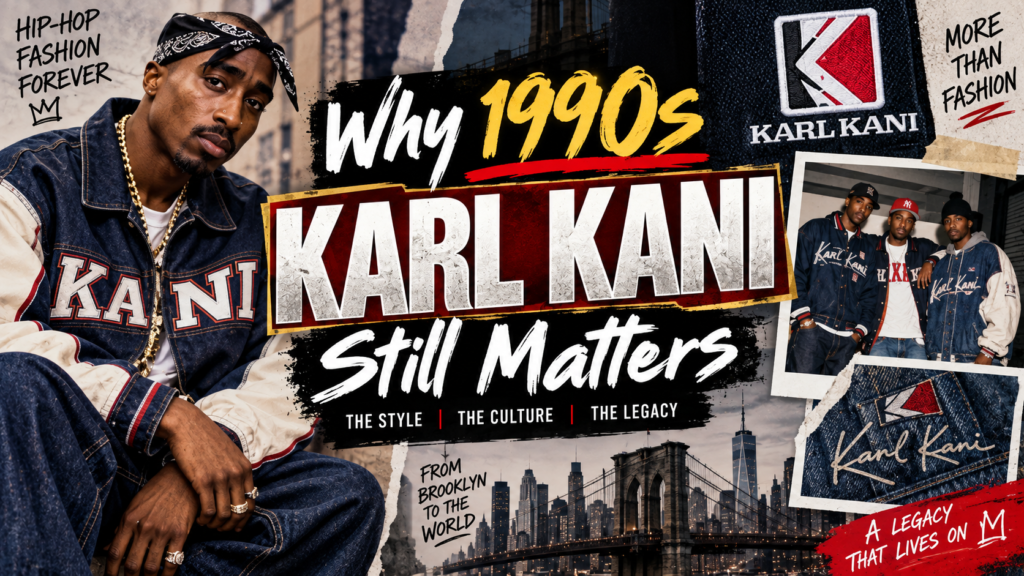
The current fascination with the 1990s has created a new environment in which Karl Kani’s original aesthetic can be understood by younger consumers. Nostalgia is one reason, but nostalgia alone does not explain the brand’s continued relevance. The stronger explanation is that many of the principles behind 1990s streetwear remain attractive today. Consumers still want comfortable clothing, distinctive silhouettes, recognizable brands, and pieces that communicate personality. What has changed is how those elements are styled. Today’s consumer might pair an oversized vintage-inspired jacket with minimalist sneakers, modern accessories, or more polished pieces. This ability to mix eras is one of the defining characteristics of contemporary fashion. The 1990s are not simply being copied; they are being reinterpreted. Current fashion reporting shows that 1990s aesthetics continue to influence contemporary designers and consumers, while Kani himself has discussed the renewed popularity of oversized clothing. That combination of nostalgia and reinterpretation gives Karl Kani an unusual advantage. The brand already possesses authentic historical credibility, so it does not need to manufacture a backstory. Its archive is the backstory.
Karl Kani’s Influence on Modern Streetwear
Modern streetwear looks dramatically different from its early forms, yet many of its most recognizable characteristics can be traced to pioneers like Karl Kani. Oversized clothing, denim-focused outfits, prominent branding, cultural collaborations, and music-driven marketing are now standard elements of the streetwear ecosystem. What was once considered niche has become part of global fashion vocabulary. Luxury houses regularly borrow from streetwear proportions, while streetwear brands increasingly experiment with premium fabrics, refined construction, and limited releases. This movement between casual and luxury is particularly relevant to Karl Kani’s current direction. In his 2026 CNN interview, Kani described his contemporary approach as cleaner and more minimal while emphasizing quality fabrics, vintage washing techniques, comfort, and luxury. That evolution is important because it shows that staying relevant does not require abandoning the original identity. Instead, a heritage brand can preserve its signature ideas while adjusting the execution for a new audience. Karl Kani’s influence can therefore be seen not only in what contemporary streetwear looks like but also in how heritage streetwear brands can evolve without becoming disconnected from their origins.
Oversized Fashion Makes a Comeback
The return of oversized fashion is perhaps the clearest modern reminder of Karl Kani’s influence. For several years, slim and skinny silhouettes dominated many mainstream markets, creating a strong contrast with the loose proportions associated with classic hip-hop fashion. Fashion trends eventually shifted again, and relaxed jeans, wide-leg trousers, oversized jackets, and loose sweatshirts returned to prominence. The cycle is not simply about copying the past. Designers today have access to new materials, different construction techniques, and broader cultural influences, so the modern oversized silhouette can feel more sophisticated than its earlier counterpart. Still, the visual DNA is recognizable. Karl Kani helped establish the idea that volume itself could be fashionable. That concept now appears across streetwear, contemporary menswear, womenswear, and even luxury collections. When young consumers choose oversized clothing today, they may not consciously think about Karl Kani, but the cultural history behind the silhouette remains significant. Fashion influence often works this way: the pioneer may become invisible while the idea becomes universal. The fact that an aesthetic can become so normal that its origins are forgotten is actually evidence of how deeply it has succeeded.
Nostalgia Meets Contemporary Design
Nostalgia can be a powerful commercial force, but successful heritage brands need more than old memories. They need to translate those memories into something people want to wear now. Karl Kani’s challenge is therefore both interesting and familiar: how do you preserve the visual language that made the brand important while making it relevant to consumers who were not alive during its original peak? The answer lies in selective reinterpretation. Instead of reproducing every detail of 1990s fashion, contemporary collections can retain recognizable proportions, materials, logos, and cultural references while simplifying the overall styling. This creates a bridge between archive and present-day fashion. Kani’s recent comments about minimal branding, premium fabrications, vintage washes, and luxury-oriented quality demonstrate this direction. It reflects a broader consumer shift toward pieces that feel durable and meaningful rather than disposable. The result is a modern interpretation of an old idea: streetwear can be comfortable and expressive while still possessing craftsmanship and longevity. That combination gives heritage brands a strong position in an era when consumers increasingly question disposable fashion.
Karl Kani’s Influence on Global Fashion
Karl Kani’s impact is no longer limited to the United States. The brand’s own history describes an international presence across numerous countries, while current discussions around the designer’s legacy emphasize the global reach of the streetwear movement. This globalization is significant because streetwear has become a shared cultural language. A young consumer in Europe, Japan, or another international market can discover 1990s hip-hop imagery and immediately connect with its silhouettes even without having experienced the original era. Social media has accelerated that process by allowing archival photographs, vintage outfits, music videos, and old campaigns to circulate repeatedly. As a result, fashion history is now constantly being rediscovered. A style from thirty years ago can become a reference point for someone who encounters it for the first time today. Karl Kani benefits from that environment because the brand has a distinctive visual identity and a strong connection to one of the most influential cultural movements of the late twentieth century. The result is a fascinating reversal: what was once local street culture became global fashion heritage, and that heritage is now being interpreted by a new generation.
Read More:-
How Does Strikingly Simplify the Website Building Process?
Building Your Dream Website with Site123
Boost Your E-commerce Strategy with YITH Plugins
Maximize Your Customer Engagement with LiveAgent’s Features
Why STRIPO is Essential for Digital Product Marketersa
Quality, Comfort, and Luxury in Modern Karl Kani
One of the most interesting developments in Karl Kani’s contemporary philosophy is the stronger emphasis on quality and luxury. In his 2026 CNN interview, Kani discussed the movement away from cheap, disposable fashion and toward better materials, timeless quality, and elevated streetwear. This perspective fits neatly into a broader shift occurring across fashion. Consumers increasingly want clothing that feels substantial, lasts longer, and has a clear identity. Streetwear does not necessarily have to mean inexpensive or casual in construction. A heavy sweatshirt can be produced with premium materials, carefully designed washes, detailed stitching, and sophisticated finishing. This is exactly where the boundaries between streetwear and luxury become less rigid. Karl Kani’s original contribution was to show that clothing from the street could influence mainstream fashion. His contemporary contribution may be showing that streetwear can mature without losing its soul. The future of the category may therefore involve fewer artificial divisions between luxury and casual clothing. Instead, quality, design, cultural relevance, and authenticity may become more important than the category printed on the label.
Karl Kani and the Future of Fashion
Looking ahead, Karl Kani’s influence may become even more visible as fashion continues to embrace cultural history. The contemporary fashion industry increasingly values brands with recognizable origins, authentic communities, and stories that can survive beyond individual trends. Karl Kani possesses all three. Its history is connected to Brooklyn, hip-hop, 1990s youth culture, celebrity style, and the transformation of streetwear into a global industry. At the same time, the brand has demonstrated an ability to reinterpret its original language for new generations. That combination of heritage and reinvention is powerful. Future consumers may not want exactly the same clothing their parents wore, but they may want pieces that carry the same cultural confidence. This creates an opportunity for Karl Kani to remain relevant while continuing to experiment with proportions, fabrics, collaborations, and international markets. The most successful heritage brands are not museums. They are living conversations between past and present. Karl Kani’s greatest strength may therefore be its ability to remind fashion where an important movement came from while continuing to participate in where that movement is going.




Conclusion
The growing influence of Karl Kani on contemporary fashion is ultimately a story about cultural authenticity, confidence, and the power of communities to reshape an industry. Karl Kani helped establish a visual language in which oversized clothing, baggy denim, bold branding, and hip-hop culture could exist at the center of mainstream fashion rather than at its margins. His work demonstrated that street culture could create trends instead of merely following them, and that a designer did not necessarily need traditional fashion credentials to change the direction of an industry. Today, the return of baggy silhouettes, renewed interest in 1990s aesthetics, global streetwear culture, and the blending of casual clothing with luxury demonstrate how relevant those ideas remain. The modern fashion landscape is more interconnected than ever, but the fundamental desire behind Karl Kani’s work has not changed: people want clothing that feels like them. They want comfort without sacrificing identity, heritage without looking outdated, and style that carries a story. That is why Karl Kani’s influence continues to grow. The brand did not simply participate in the birth of urban streetwear; it helped create a blueprint that contemporary fashion continues to reinterpret.
FAQs
Q. What is Karl Kani best known for?
A. Karl Kani is best known as a pioneering figure in urban streetwear and for helping connect hip-hop culture with mainstream fashion. The brand became particularly recognized for baggy denim, oversized clothing, bold branding, and a distinctive 1990s aesthetic.
Q. How did Karl Kani influence modern streetwear?
A. Karl Kani helped establish several characteristics that are now common in streetwear, including oversized silhouettes, relaxed denim, cultural storytelling, celebrity-driven visibility, and the combination of music and fashion. These ideas continue to appear in contemporary streetwear collections around the world.
Q. Why is Karl Kani associated with Tupac?
A. Tupac Shakur was one of Karl Kani’s most prominent celebrity ambassadors. His public appearances wearing Karl Kani helped connect the brand with hip-hop culture and gave its clothing a powerful visual presence during the 1990s.
Q. Is 1990s Karl Kani fashion coming back?
A. Yes. The broader fashion industry has experienced a renewed interest in 1990s-inspired clothing, including oversized jeans, relaxed silhouettes, and vintage streetwear. Karl Kani’s designs fit naturally into this revival because many of the brand’s original signatures remain fashionable today.
Q. What makes Karl Kani relevant to contemporary fashion?
A. Karl Kani remains relevant because its original ideas align closely with current fashion movements. Oversized clothing, cultural authenticity, nostalgia, premium streetwear, and the blending of casual and luxury aesthetics are all important parts of contemporary fashion, allowing the brand’s heritage to connect with a new generation.