
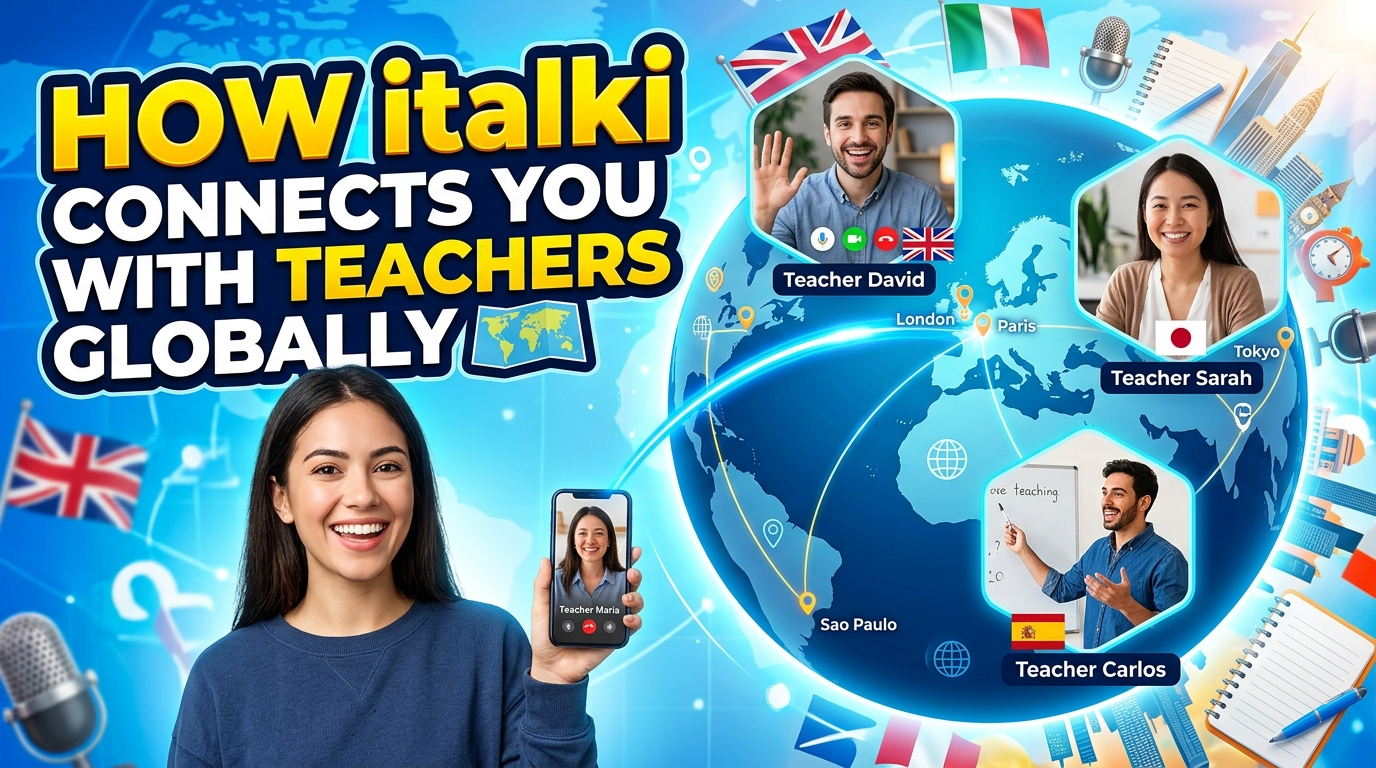
italki is a global language-learning platform that connects students with teachers from around the world through personalized online lessons. With a wide selection of languages, flexible scheduling, and experienced instructors, italki makes it easier for learners to improve speaking, listening, grammar, and communication skills from anywhere. Whether you are learning a language for travel, work, education, or personal growth, italki offers a convenient way to practice with real teachers and gain confidence through meaningful conversations.
Table of Contents
- What Is italki and How Does It Work?
- How italki Makes Global Language Learning Accessible
- Finding the Right Teacher on italki
- Personalized Lessons for Different Learners
- Flexible Scheduling and Online Classes
- The Role of Culture in Language Learning
- The italki Community Beyond Private Lessons
- Why Learners Choose italki
- Conclusion
- FAQs
What Is italki and How Does It Work?
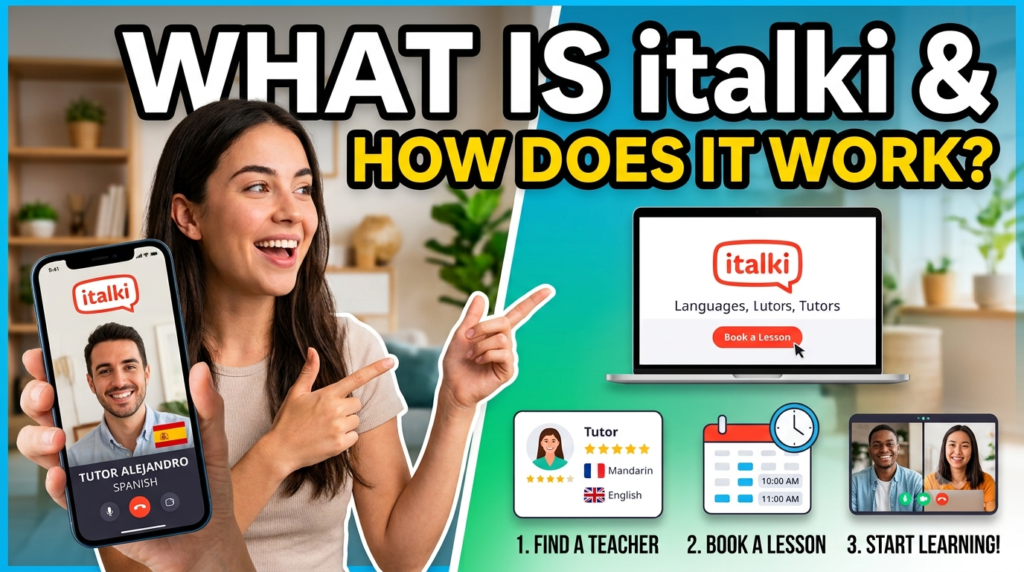
At its core, italki is a global language learning marketplace designed to connect students with teachers for online language instruction. The company describes its service as a community that brings students and teachers together for both one-to-one and group online lessons. Its current company profile says its teachers come from 180 countries, while the platform serves more than 10 million learners. This scale matters because it creates something that traditional local language schools often cannot provide: a huge pool of potential teachers with different backgrounds, accents, specialties, schedules, and teaching approaches.
The process is designed around choice. A learner can look for a language, explore available teachers, review profiles, examine lesson offerings, and choose an instructor based on factors that matter personally to them. Those factors might include teaching experience, native language, learning specialty, availability, lesson price, personality, or the student’s specific objective. The result is closer to choosing a personal coach than simply registering for a class. The current italki app listing also describes customizable lessons, different class durations, level-based instruction, and access to native teachers.
A Global Marketplace for Language Learning
The marketplace model is one of italki’s most important features because it brings supply and demand together on a global scale. Teachers can offer their expertise to learners who might never have discovered them through traditional education systems, while students gain access to instructors who match their needs more closely. This creates an environment in which language education can become much more personalized. A learner interested in business English, for example, does not necessarily need the same teacher as someone who simply wants conversational practice for an upcoming vacation.
This approach also makes the teacher-student relationship more flexible. Students can explore different teaching styles instead of committing immediately to a long-term classroom program. Community discussions about italki frequently emphasize that learners use professional teachers and community tutors differently, with some preferring structured instruction and others using conversation-oriented sessions for fluency practice. The important point is that the marketplace gives learners room to experiment and discover what works.
Connecting Students With Human Teachers
Technology can provide vocabulary exercises, automated corrections, pronunciation tools, and endless practice questions, but conversation with another human being remains a special part of language learning. A teacher can notice hesitation, ask a follow-up question, change the difficulty of a conversation, explain why a phrase sounds unnatural, or introduce a cultural detail that an automated exercise may not capture.
That human element is central to the italki concept. The platform’s company description specifically emphasizes building connections with people from other cultures as part of its vision for language learning. In practical terms, this means a language lesson can become more than a grammar session. It can be a conversation with someone who actually uses the language in daily life, giving learners opportunities to hear natural expressions, different accents, conversational rhythms, and culturally appropriate ways of communicating.
How italki Makes Global Language Learning Accessible
One of the biggest advantages of an international online platform is the ability to learn from teachers regardless of where they live. A physical language school might have five, ten, or twenty instructors available for a particular language. An online marketplace can provide a vastly larger selection. That difference becomes especially important for languages that are not widely taught in a learner’s local area.
The current italki app listing says that more than 150 languages are available with native teachers. It also highlights the ability to choose lesson durations and schedule classes around a learner’s availability. This makes the platform useful for very different types of students, from complete beginners to advanced learners looking for conversation practice. Someone does not have to reorganize their entire life around a language class; instead, the learning experience can fit into the life they already have.
Learning From Teachers Across Different Countries
Imagine a learner studying Korean from a teacher who lives in Korea, Spanish from someone who lives in Spain or Latin America, or Mandarin with a teacher who uses the language every day. The value is not simply that the teacher knows vocabulary and grammar. The learner can also encounter the living language: expressions people actually use, differences between formal and informal communication, regional vocabulary, pronunciation patterns, and cultural references.
This geographic diversity is one reason the platform can feel different from a conventional textbook-based course. A textbook may explain how a phrase works, but a teacher can explain when people actually say it. That distinction is crucial. Language is not a museum exhibit with every word preserved behind glass; it is something people use, change, shorten, joke with, and adapt every day.
More Than 150 Languages and Flexible Lesson Options
The breadth of available languages also makes italki useful for learners with very specific goals. Someone might be learning a major international language for professional reasons, while another learner may be studying a language because of family heritage, travel plans, entertainment, or personal curiosity. Having access to a large teacher marketplace increases the chance of finding an instructor who understands that particular motivation.
The platform’s current app description states that learners can choose lessons lasting 30, 45, 60, or 90 minutes, and that classes can be conducted through italki Classroom as well as services such as Zoom or Skype. This flexibility is particularly useful for modern learners whose schedules are rarely identical from one week to the next.
Finding the Right Teacher on italki
Finding a teacher is easy; finding the right teacher requires a little more thought. A strong profile does not automatically mean an instructor will be the perfect fit for every learner. Language education is personal, and two students can take lessons with the same teacher and have completely different experiences.
The best approach is to begin with the goal. Are you preparing for an exam? Do you need professional vocabulary? Are you trying to stop translating in your head? Do you want casual conversation? Are you a complete beginner who needs patience and structure? Or are you an advanced learner who mainly needs someone to challenge you? Answering these questions makes it easier to evaluate teacher profiles intelligently rather than simply choosing the person with the highest number of reviews.
Professional Teachers vs. Community Tutors
One of the distinctive aspects of the italki marketplace is the presence of different types of instructors, including professional teachers and community tutors. Professional teachers generally focus on structured language instruction and may have formal teaching qualifications or experience, while community tutors can provide a more conversational and informal learning experience depending on their profile and strengths.
Neither option is automatically better for every learner. Community discussions show that some learners prefer professional teachers for structured lessons, grammar, and exam preparation, while others appreciate community tutors for natural conversation and everyday expressions. That difference illustrates an important principle: the best teacher is not necessarily the person with the most impressive credentials; it is the person whose approach matches the learner’s objective.
Matching Teaching Style With Learning Goals
A learner who wants to pass a language exam might benefit from a highly structured instructor who understands test formats and can systematically identify weaknesses. Someone preparing for a trip might care much more about practical phrases, listening comprehension, and confidence in everyday conversations. Meanwhile, an advanced student may simply want a native speaker who can keep a challenging conversation moving.
This is where the variety of the marketplace becomes useful. Instead of forcing every student through the same curriculum, italki gives learners an opportunity to search for a teaching relationship that fits their individual needs. The platform’s current app information says teachers can tailor lessons to levels ranging from A1 through C2, and some use materials such as books, videos, and cards.
Personalized Lessons for Different Learners
Personalization is one of the strongest arguments for one-to-one online learning. In a traditional classroom, a teacher has to divide attention among many students, which means the pace is often determined by the group. One student may already understand a grammar point while another is still trying to grasp the basics. With individual instruction, the lesson can focus directly on the learner’s needs.
That does not mean every lesson automatically becomes perfect. Learners still need to communicate their goals, participate actively, and choose instructors carefully. Recent discussions among italki users show that teacher quality and preparation can vary, making it important for students to evaluate whether an instructor’s style actually fits their expectations rather than relying only on ratings.
Learning at Your Own Level
A beginner needs a different type of support from an advanced speaker. Someone at A1 may need pronunciation guidance, basic sentence patterns, and confidence-building repetition. A C1 learner may need nuanced vocabulary, natural phrasing, debate practice, or corrections that focus on subtle errors rather than basic grammar.
The ability to tailor instruction to different proficiency levels helps prevent the “one-size-fits-all” problem. According to the current italki app listing, teachers can customize lessons according to learners’ levels and may use different teaching resources depending on the lesson. That flexibility allows learners to concentrate their limited study time on the areas that matter most.
Building Lessons Around Real-Life Goals
Language becomes easier to remember when it connects to something meaningful. A person learning French for work might practice presentations and professional vocabulary. Someone moving to Germany might rehearse conversations at a doctor’s office, supermarket, workplace, or apartment viewing. A traveler might practice ordering food, asking for directions, making small talk, and understanding common responses.
This is where a human teacher can transform abstract knowledge into practical ability. Instead of simply learning that a particular grammatical structure exists, the student can use it in a realistic conversation. That repeated cycle—learn, speak, make mistakes, receive feedback, and try again—is one of the most valuable parts of personalized language education.
Flexible Scheduling and Online Classes
Modern learners are busy. Students have classes, professionals have meetings, parents have responsibilities, and travelers may be moving between time zones. A language platform that requires everyone to attend at the same fixed time is naturally limited. italki’s global teacher marketplace addresses this by connecting students with instructors who have different schedules.
The current app listing specifically highlights learning “where and when you want” and allows learners to choose different lesson lengths. That can make consistent learning more realistic. Instead of waiting for the perfect two-hour window every Saturday, a student may be able to fit a shorter conversation lesson into a weekday schedule.
Learning Around Work, School, and Travel
Imagine having a busy office schedule but wanting to improve English before an international presentation. You may not be able to attend a language school every evening, but you could potentially schedule an online lesson around your work calendar. The same principle applies to university students, freelancers, parents, and travelers.
This flexibility also supports learners living in different time zones. Because teachers are distributed internationally, the marketplace is not restricted to one country’s working hours. That global availability is one of the practical consequences of connecting learners and instructors through the internet rather than through physical classrooms.
Choosing Lesson Lengths and Frequency
Different learners need different rhythms. Some may benefit from frequent short sessions because regular speaking keeps the language active. Others may prefer longer lessons once or twice a week because they want time for structured instruction and extended conversation.
The current app listing offers 30-, 45-, 60-, and 90-minute lesson choices, giving students several ways to organize their study time. The best schedule ultimately depends on the learner’s goal, attention span, budget, and ability to practice between classes. Consistency usually matters more than creating an ambitious schedule that becomes impossible to maintain.
The Role of Culture in Language Learning

Learning a language without learning anything about the people who speak it can feel like learning the rules of a game without ever watching anyone play. Grammar explains structure, vocabulary provides building blocks, and pronunciation helps people understand you, but culture often explains why communication sounds the way it does.
This is particularly valuable in one-to-one lessons with teachers who use the target language in their everyday environment. A teacher can explain social expectations, conversational habits, humor, gestures, politeness, and regional differences. These details can help learners communicate in ways that feel more natural rather than simply grammatically correct.
Learning Language Through Human Connection
italki’s stated vision centers on helping people become fluent by building connections with people from other cultures. That philosophy reflects a broader truth about language: communication is fundamentally social.
When learners regularly speak with another person, language stops being just an academic subject. It becomes a relationship. Students begin recognizing their teacher’s accent, favorite expressions, conversational habits, and cultural references. Over time, the learner may become more comfortable making mistakes because the lesson feels like communication rather than an examination.
Why Cultural Context Makes Communication More Natural
A sentence can be grammatically correct and still sound strange. Native speakers rely on context, tone, rhythm, and cultural conventions that textbooks cannot always explain. A teacher can point out those differences immediately.
For example, a learner may know the literal translation of a phrase but not realize that native speakers rarely use it in everyday conversation. A teacher can offer a more natural alternative and explain the situation in which it would be appropriate. Those small discoveries accumulate, gradually moving a learner from textbook language toward real-world communication.
Read More:-
How Does Strikingly Simplify the Website Building Process?
Building Your Dream Website with Site123
Boost Your E-commerce Strategy with YITH Plugins
Maximize Your Customer Engagement with LiveAgent’s Features
Why STRIPO is Essential for Digital Product Marketersa
The italki Community Beyond Private Lessons
italki is not limited to paid lessons. Its current app listing also describes a free community where learners can ask questions, participate in language discussions, practice with other learners, and engage in language exchange. This adds another layer to the platform because learning can continue outside scheduled teacher sessions.
That matters because a weekly lesson alone is rarely enough to produce fluency. Learners need repeated exposure, practice, curiosity, and opportunities to use what they know. Community interaction can help turn language learning from a once-a-week appointment into something that appears throughout the learner’s routine.
Practice, Discussions, and Language Exchange
Community features can be particularly helpful for learners who want to practice writing or interact with other people studying the same language. Instead of depending entirely on a teacher, students can encounter different perspectives and communication styles.
The result is a broader learning ecosystem: teachers provide instruction, students practice independently, and community members create additional opportunities for interaction. It is a little like having a gym for language skills—the teacher can show you the exercises, but improvement still comes from regular practice.
Why Learners Choose italki
The strongest appeal of italki is the combination of choice, flexibility, personalization, and human interaction. Learners are not locked into one classroom, one schedule, or one teaching style. They can search across a global pool of teachers and select instruction that fits their objectives.
The scale of the platform reinforces that advantage. italki currently describes a network of more than 30,000 teachers across 180 countries and more than 10 million learners, while its app listing says more than 150 languages are available. Those figures demonstrate how the platform has evolved from the idea of online tutoring into a large international language-learning community.
Convenience, Choice, and Personalization
Convenience gets learners through the door, but personalization can keep them learning. A student can choose an instructor based on goals, schedule, teaching approach, and language needs rather than simply accepting whoever happens to teach at a nearby school.
There is also something psychologically powerful about having a real person waiting for you. Language apps can be excellent for vocabulary and repetition, but a scheduled conversation creates accountability. You have to show up, speak, listen, respond, and deal with the uncomfortable moments when you cannot remember a word. Those moments are not failures; they are part of the process of turning passive knowledge into active communication.




Conclusion
italki connects language learners with teachers around the world by turning online language education into a flexible global marketplace. Its large network of teachers, broad language selection, customizable lessons, flexible scheduling, and community features allow learners to approach language study in a way that is far more personal than a traditional one-size-fits-all classroom. The platform currently reports more than 30,000 teachers across 180 countries and more than 10 million learners, while its app listing advertises more than 150 languages and several lesson-duration options.
What makes the model particularly interesting is that the connection is not only technological. At its best, italki creates a human bridge between people who may live thousands of kilometers apart. A learner does not simply receive information from a screen; they can speak with another person, ask questions, hear natural language, discover cultural context, and gradually become more confident. That combination of technology and human interaction explains why global platforms such as italki have become an important part of modern language learning.
FAQs
Q. What is italki used for?
A. italki is an online language-learning platform that connects learners with teachers for personalized lessons. Students can search for instructors, choose lessons based on their goals and schedules, and practice languages through online classes. The platform also provides community-based opportunities for language practice and interaction.
Q. Can I learn languages with teachers from other countries on italki?
A. Yes. Connecting learners with teachers internationally is one of italki’s central features. The company currently describes a network of more than 30,000 teachers from 180 countries, allowing learners to access instructors beyond their local area.
Q. Does italki offer personalized language lessons?
A. Yes. italki describes its lessons as customizable, and its current app listing says teachers can tailor instruction to learners at different proficiency levels, from A1 through C2. Teachers may also use resources such as books, videos, and cards depending on their teaching approach.
Q. Are italki lessons flexible?
A. Yes. The current italki app listing says learners can choose 30-, 45-, 60-, or 90-minute lessons and schedule classes according to their availability. This makes the platform suitable for people balancing language learning with work, education, travel, or other responsibilities.
Q. Is italki only for beginners?
A. No. italki supports learners across different proficiency levels. Its current app information specifically references levels from A1 to C2, while teachers can customize lessons around different objectives. Advanced learners can use lessons for conversation, professional communication, pronunciation, vocabulary development, or more specialized goals.