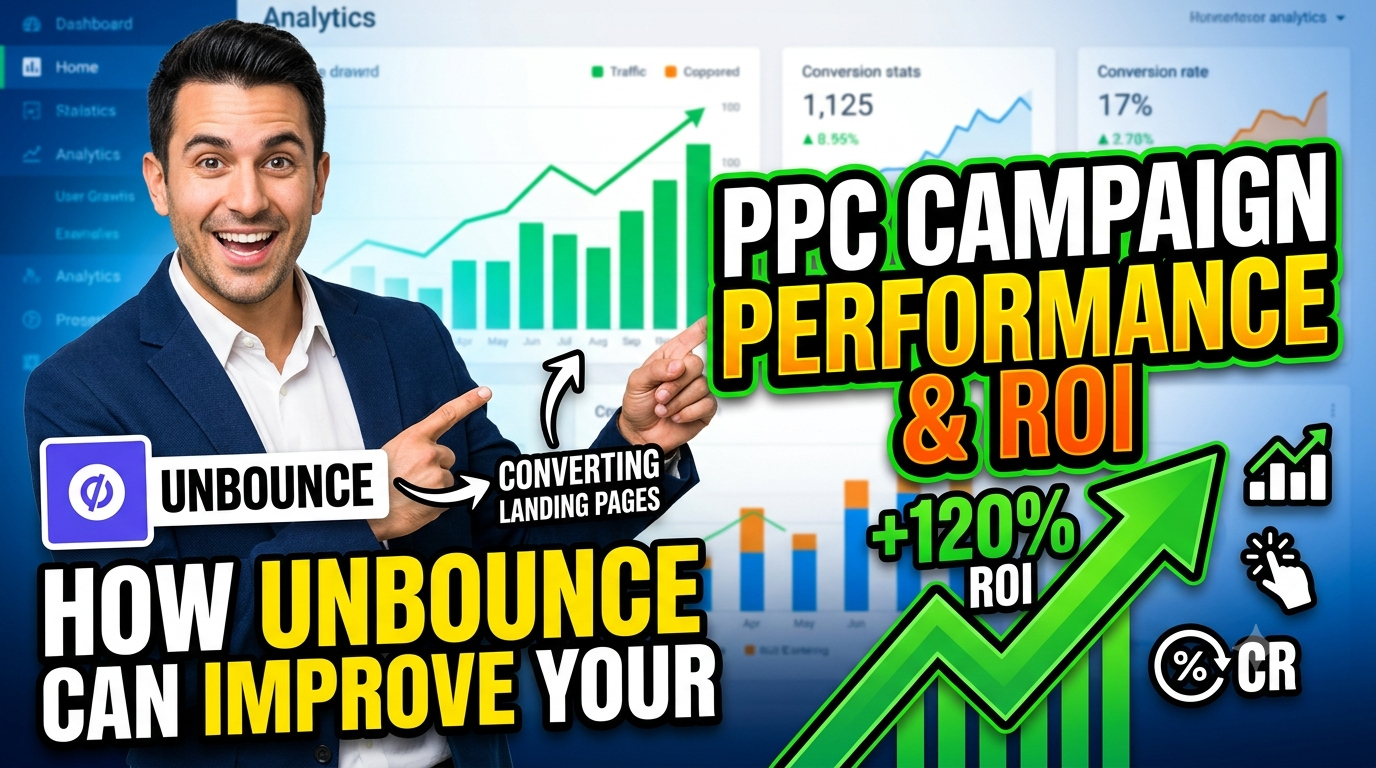
Unbounce is a powerful landing page platform designed to help businesses maximize conversions and improve PPC campaign performance. With features like AI-powered Smart Traffic, Dynamic Text Replacement, A/B testing, and an intuitive drag-and-drop builder, Unbounce enables marketers to create high-converting landing pages without coding. Whether you’re running Google Ads, Facebook Ads, or other paid campaigns, Unbounce helps reduce cost per acquisition (CPA), improve Quality Score, and increase return on investment (ROI). By optimizing every stage of the customer journey, Unbounce empowers businesses of all sizes to generate more leads, boost sales, and achieve better marketing results through data-driven landing page optimization.
Table of Contents
- Why Landing Pages Matter for PPC Success
- How Unbounce Increases Conversion Rates
- Improving Quality Score with Better Landing Pages
- Reducing Cost Per Acquisition (CPA)
- Unbounce Features That Maximize ROI
- Unbounce vs Traditional Website Landing Pages
- Best Practices for PPC Campaigns Using Unbounce
- Common Mistakes to Avoid
- Is Unbounce Worth the Investment?
- Conclusion
- Frequently Asked Questions
Why Landing Pages Matter for PPC Success
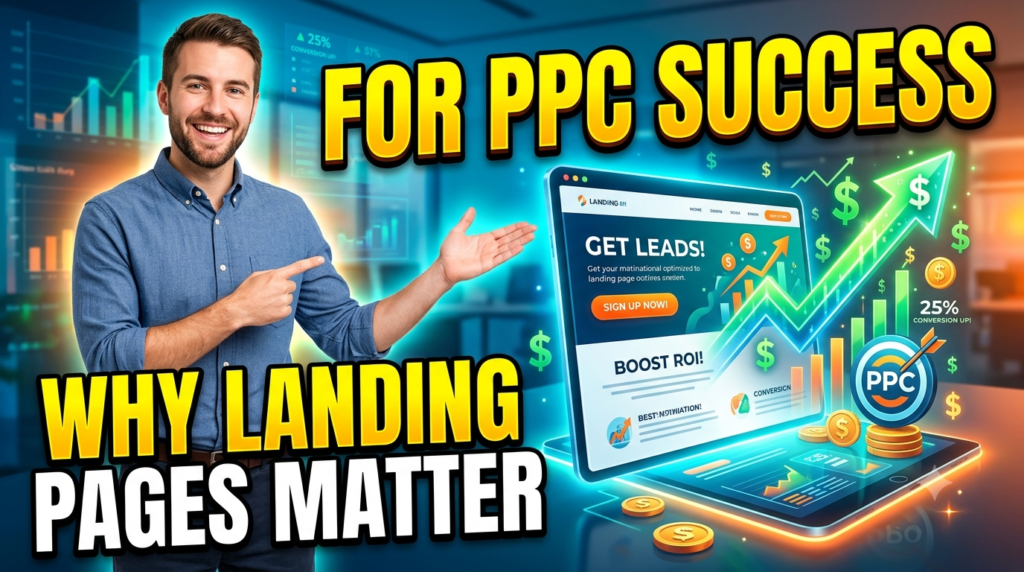
Landing pages are the bridge between your advertisement and your desired conversion. While a compelling ad encourages users to click, the landing page determines whether that click turns into a customer or becomes another wasted advertising expense. Many businesses still send paid traffic to their homepage because it seems convenient, but homepages are designed to serve multiple audiences and purposes. They often contain navigation menus, numerous calls-to-action, blog links, and product categories that distract visitors from completing the intended action. A dedicated landing page, on the other hand, removes unnecessary elements and focuses entirely on one objective, whether it’s collecting leads, selling a product, or booking a consultation.
This focus has a measurable impact on conversion rates. Visitors arriving from a PPC campaign expect the landing page to match the promise made in the advertisement. If an ad promotes a free marketing consultation, the landing page should immediately reinforce that offer rather than forcing visitors to search for relevant information. Consistency between the ad and the landing page builds trust, reduces confusion, and encourages action. Unbounce simplifies this process by allowing marketers to create campaign-specific landing pages for every ad group, keyword, or audience segment. Instead of compromising with generic website pages, advertisers can tailor every experience to maximize conversions and improve campaign profitability.
The Cost of Sending Traffic to Generic Pages
Every click in a PPC campaign represents an investment, and every visitor who fails to convert increases the overall cost of acquiring customers. Generic webpages often dilute the visitor’s attention by presenting too many choices. Imagine paying for 1,000 clicks each month while only a handful of visitors convert because they become distracted or leave before finding the relevant information. That scenario is surprisingly common and can significantly reduce advertising ROI. Poor landing page experiences also contribute to lower Quality Scores, which can increase cost-per-click and make campaigns more expensive over time.
Using Unbounce allows marketers to eliminate these issues by creating highly targeted pages aligned with specific campaigns. Instead of directing every visitor to the same destination, advertisers can build pages that mirror individual keywords, customer pain points, seasonal promotions, or geographic locations. This level of personalization not only improves user experience but also increases relevance, helping businesses generate more conversions from the same advertising budget. The result is a more efficient PPC strategy where every dollar works harder.
How Unbounce Increases Conversion Rates
The ultimate purpose of any landing page platform is to increase conversions, and this is where Unbounce excels. Rather than relying on assumptions about what visitors want, the platform provides data-driven tools that continuously improve performance. Every feature is designed to reduce friction, increase engagement, and encourage users to complete the desired action. Whether the goal is capturing leads, generating appointments, or increasing product sales, Unbounce helps marketers optimize every stage of the conversion journey.
Unlike traditional website builders that prioritize design flexibility, Unbounce focuses on marketing performance. It encourages experimentation through testing, personalization, and AI-driven optimization. Businesses no longer need to guess which headline works best or which layout converts more visitors. Instead, they can use measurable insights to refine campaigns continuously. Over time, these incremental improvements compound into significant increases in ROI, making Unbounce an essential tool for organizations that depend on paid advertising.
AI-Powered Smart Traffic
One of Unbounce’s most innovative features is Smart Traffic, an AI-powered optimization tool that goes beyond conventional A/B testing. Traditional testing divides visitors evenly between multiple page versions until enough data is collected to determine a winner. During this period, many visitors still see lower-performing pages. Smart Traffic takes a different approach by analyzing visitor attributes such as device type, location, referral source, and browsing behavior. Using machine learning, it predicts which landing page variation is most likely to convert each visitor and automatically directs them to that version.
This intelligent routing becomes increasingly accurate as more traffic flows through the campaign. Rather than waiting weeks for statistically significant test results, marketers begin benefiting from optimization almost immediately. Businesses using Smart Traffic often experience meaningful conversion improvements because the platform adapts to changing visitor behavior in real time. Instead of choosing one “best” landing page for everyone, Unbounce recognizes that different visitors respond to different messaging and layouts. This personalized approach improves user satisfaction while maximizing advertising returns.
Dynamic Text Replacement
Relevance is one of the strongest drivers of PPC success, and Dynamic Text Replacement helps marketers deliver exactly what visitors expect. This feature automatically changes landing page headlines, subheadings, or other content based on the keyword that triggered the advertisement. For example, if one user searches for “CRM software for startups” while another searches for “CRM for small businesses,” both visitors can land on the same page but see customized messaging tailored to their search intent.
This level of personalization strengthens the connection between advertisements and landing pages. Visitors immediately recognize that they have arrived at the right destination, reducing bounce rates and increasing trust. Dynamic Text Replacement also supports higher Quality Scores because search engines reward relevance between keywords, advertisements, and landing page content. Instead of building dozens of nearly identical pages manually, marketers can use one intelligently personalized landing page that adapts automatically. The result is improved efficiency, stronger user engagement, and better PPC performance.
A/B Testing
Successful PPC optimization depends on continuous experimentation rather than assumptions. A/B testing allows marketers to compare different versions of a landing page to determine which one generates more conversions. Unbounce includes built-in testing tools that make experimentation straightforward without requiring additional software. Businesses can compare headlines, images, form lengths, call-to-action buttons, page layouts, testimonials, pricing sections, and other design elements to identify what resonates most with visitors.
The true value of A/B testing lies in its ability to replace opinions with evidence. Instead of debating whether a blue button performs better than a green one or whether shorter forms generate more leads, marketers can rely on real conversion data. Small improvements discovered through testing often accumulate into substantial gains over time. A landing page that improves conversion rates by just a few percentage points can dramatically increase revenue when thousands of paid visitors arrive each month. Unbounce encourages ongoing optimization, making every campaign progressively more profitable.
Mobile Optimization
Mobile devices now account for a significant share of PPC traffic, making responsive design essential rather than optional. Visitors expect landing pages to load quickly, display correctly, and remain easy to navigate regardless of screen size. Slow-loading or poorly formatted mobile pages create frustration, leading users to abandon the page before completing a conversion. Since advertisers still pay for those clicks, poor mobile experiences directly reduce campaign ROI.
Unbounce automatically supports responsive landing page creation, enabling marketers to optimize experiences for smartphones, tablets, and desktops. Designers can customize mobile layouts independently to ensure forms remain accessible, buttons stay easy to tap, and content remains readable without excessive scrolling. Fast-loading pages combined with streamlined mobile experiences increase visitor satisfaction while reducing bounce rates. As mobile advertising continues to dominate digital marketing, businesses that prioritize mobile optimization gain a significant competitive advantage and maximize returns from every advertising dollar.
Improving Quality Score with Better Landing Pages

A strong Quality Score is one of the most important factors influencing the success of a PPC campaign. Platforms like Google Ads evaluate the relevance and usefulness of your ads, keywords, and landing pages before determining how much you pay for each click and where your ads appear. While advertisers often spend significant time refining keywords and writing compelling ad copy, they sometimes overlook the landing page experience. An irrelevant or poorly designed landing page can lower your Quality Score, increase your cost-per-click (CPC), and reduce your ad visibility. Unbounce addresses this challenge by enabling marketers to build highly relevant, fast-loading, and conversion-focused landing pages that align closely with specific campaigns.
With Unbounce, every landing page can be customized to match the exact message of an advertisement. Features such as Dynamic Text Replacement ensure that visitors see content closely related to the keywords they searched for, creating a seamless experience from the moment they click the ad. Faster page load speeds, mobile responsiveness, and clear calls-to-action also contribute to a positive user experience, which advertising platforms reward. As Quality Scores improve, businesses often benefit from lower CPCs, higher ad rankings, and better campaign efficiency. Rather than increasing ad spend to gain visibility, marketers can use optimized landing pages to improve performance while keeping advertising costs under control.
Reducing Cost Per Acquisition (CPA)
Every PPC campaign aims to acquire customers at the lowest possible cost without sacrificing lead quality or revenue. Cost Per Acquisition (CPA) measures how much it costs to generate one conversion, making it one of the most important metrics for advertisers. Even small improvements in landing page performance can significantly reduce CPA because more visitors convert without increasing advertising spend. Unbounce helps businesses achieve this by combining personalization, testing, AI optimization, and user-friendly design into one platform.
When conversion rates increase, the same advertising budget produces more leads or sales. For example, if a campaign receives 1,000 clicks and converts at 5%, it generates 50 leads. Improving the conversion rate to 8% increases total leads to 80 without purchasing additional traffic. That improvement dramatically lowers acquisition costs and increases marketing efficiency. Businesses that consistently optimize their landing pages often find that lowering CPA becomes easier than reducing click costs alone. Instead of focusing exclusively on cheaper traffic, Unbounce encourages marketers to maximize the value of every visitor who already reaches their landing page.
Unbounce Features That Maximize ROI
Unbounce offers a collection of tools specifically designed to improve marketing return on investment. Unlike traditional website builders that emphasize general website creation, Unbounce focuses on optimizing the conversion journey. Each feature contributes to better campaign performance by reducing friction, simplifying optimization, and helping marketers make data-driven decisions.
Drag-and-Drop Builder
The drag-and-drop builder enables marketers to create professional landing pages without writing code. Users can position elements exactly where they want, customize branding, add forms, embed videos, and publish pages quickly. This flexibility allows marketing teams to launch campaigns faster and respond to seasonal promotions or changing customer demands without waiting for developers. Faster deployment means businesses can test more ideas, gather data sooner, and continuously improve campaign performance.
Popups and Sticky Bars
Popups and sticky bars provide additional opportunities to engage visitors who may not convert immediately. Exit-intent popups can present a special discount before users leave the page, while sticky bars keep important offers visible as visitors scroll. These tools help recover potential customers who might otherwise abandon the page, increasing the overall effectiveness of PPC campaigns. They promote action without interfering with the user experience when utilized carefully.
Analytics and Integrations
Effective optimization requires reliable data, and Unbounce integrates with popular marketing tools such as Google Analytics, Google Ads, HubSpot, Salesforce, Mailchimp, and Zapier. These integrations allow marketers to track conversions, measure campaign performance, automate lead management, and analyze visitor behavior from one connected ecosystem. Access to accurate analytics enables informed decision-making and supports continuous optimization, ultimately improving long-term ROI.
Unbounce vs Traditional Website Landing Pages
| Feature | Unbounce | Traditional Website |
| Purpose | Conversion-focused | General browsing |
| A/B Testing | Built-in | Often requires third-party tools |
| AI Optimization | Smart Traffic | Usually unavailable |
| Dynamic Personalization | Yes | Limited |
| Drag-and-Drop Editing | Yes | Depends on CMS |
| PPC Optimization | Designed specifically for PPC | General website functionality |
Traditional websites serve multiple purposes, including showcasing products, publishing blog content, and providing company information. While these functions are important, they can distract visitors arriving from paid advertisements. Unbounce removes unnecessary navigation and focuses visitors on one conversion goal, making it a more effective solution for PPC campaigns.
Best Practices for PPC Campaigns Using Unbounce
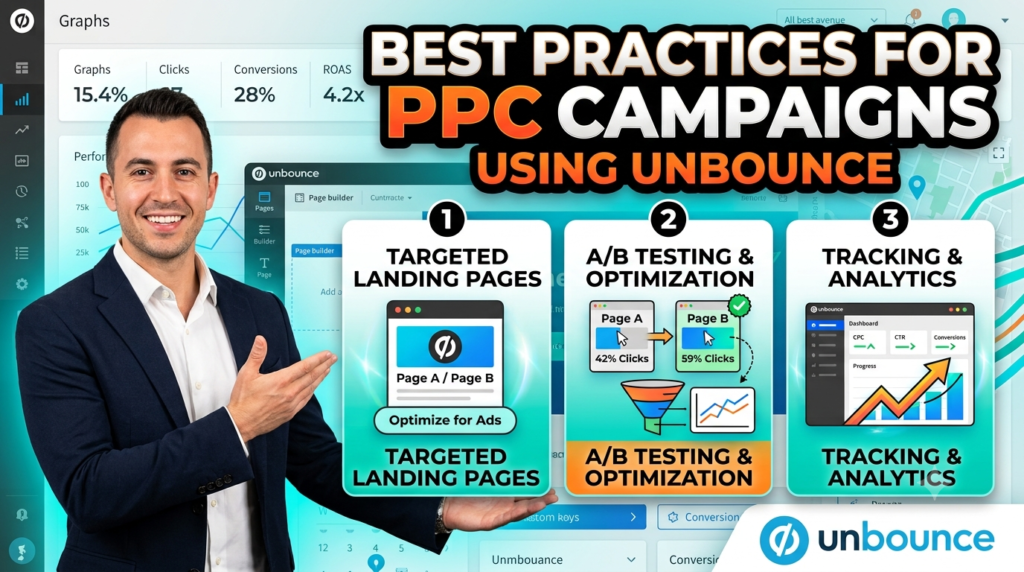
Creating a landing page is just the beginning. Achieving exceptional PPC performance requires continuous refinement based on data and user behavior. Successful marketers treat landing pages as evolving assets rather than one-time projects.
Some proven best practices include:
- Match the landing page headline with the advertisement.
- Keep forms short and request only essential information.
- Use clear, action-oriented call-to-action buttons.
- Include testimonials, reviews, or trust badges to build credibility.
- Optimize page speed for desktop and mobile users.
- Test headlines, images, forms, and CTAs regularly.
- Monitor analytics and make data-driven improvements.
Following these practices helps maintain relevance, improve conversion rates, and maximize the value of every advertising dollar.
Read More:-
How Does Strikingly Simplify the Website Building Process?
Building Your Dream Website with Site123
Boost Your E-commerce Strategy with YITH Plugins
Maximize Your Customer Engagement with LiveAgent’s Features
Why STRIPO is Essential for Digital Product Marketersa
Common Mistakes to Avoid
Even experienced advertisers make mistakes that reduce PPC performance. One common issue is sending all traffic to a homepage instead of a dedicated landing page. Another is assuming that the first version of a landing page is the best one without testing alternatives. Businesses also frequently overload pages with excessive text, multiple offers, or too many navigation options, creating unnecessary distractions.
Ignoring mobile optimization is another costly mistake, especially since a significant share of PPC traffic now comes from smartphones. Failing to measure conversions accurately can also lead marketers to optimize the wrong metrics. Unbounce helps avoid these issues by providing built-in testing, responsive design, analytics integrations, and AI-powered optimization tools that encourage ongoing improvement.
Is Unbounce Worth the Investment?
For businesses investing consistently in paid advertising, Unbounce can provide substantial value by improving conversion rates and reducing acquisition costs. While there is a subscription cost, the platform often pays for itself if even a modest increase in conversions is achieved. Higher conversion rates mean more revenue from existing traffic, making every advertising dollar work harder.
The platform is particularly valuable for marketing agencies, SaaS companies, eCommerce brands, and lead-generation businesses that depend on PPC campaigns for growth. Organizations running multiple campaigns benefit from the ability to build, test, and optimize landing pages quickly without developer support. When combined with strong ad copy and effective targeting, Unbounce becomes an important component of a profitable digital marketing strategy.



Conclusion
Successful PPC campaigns require more than compelling advertisements and carefully selected keywords. The landing page plays a decisive role in determining whether visitors convert into customers. Unbounce provides marketers with the tools needed to create focused, personalized, and high-performing landing pages that improve user experience while supporting better advertising outcomes.
By combining AI-powered Smart Traffic, Dynamic Text Replacement, built-in A/B testing, responsive design, and seamless integrations, Unbounce helps businesses increase conversion rates, improve Quality Scores, reduce CPA, and maximize ROI. Rather than simply driving more traffic, marketers can extract greater value from every click, making paid advertising more efficient and sustainable over the long term.
Frequently Asked Questions
Q. What is Unbounce primarily used for?
A. Unbounce is a landing page platform designed to help marketers create, test, and optimize high-converting landing pages for PPC campaigns and lead generation.
Q. Does Unbounce improve Google Ads Quality Score?
A. Yes. Relevant, fast-loading, and user-friendly landing pages can contribute to a better landing page experience, which may improve Quality Score.
Q. Is Unbounce suitable for small businesses?
A. Absolutely. Small businesses can build professional landing pages without coding and optimize campaigns without relying heavily on developers.
Q. Can Unbounce integrate with CRM and marketing tools?
A. Yes. It integrates with many popular platforms, including Google Analytics, HubSpot, Salesforce, Mailchimp, Zapier, and other marketing tools.
Q. Is A/B testing included in Unbounce?
A. Yes. Unbounce includes built-in A/B testing, allowing marketers to compare different landing page variations and continuously improve conversion performance.