Discover how ZIK Analytics helps e-commerce sellers analyze competitors, research profitable products, track market trends, compare prices, and optimize product listings. Learn how to use ZIK Analytics for eBay selling and dropshipping, identify high-demand products, understand competitor strategies, and make smarter data-driven business decisions to grow your online store and improve your sales potential.
Table of Contents
- Introduction to ZIK Analytics
- Why Competitor Analysis Matters in E-Commerce
- It is important to understand what the platform cannot achieve
- How to Find Competitors Using ZIK Analytics
- How to Analyze Competitor Sales and Listings
- How to Discover Profitable Products
- Competitor Pricing and Market Demand
- Improving Product Titles and SEO
- Using Watchlists to Track Competitors
- Understanding Market Trends
- ZIK Analytics for eBay Sellers
- ZIK Analytics for Dropshippers
- A Practical Competitor Analysis Workflow
- Common Mistakes to Avoid
- Advantages and Limitations of ZIK Analytics
- ZIK Analytics Pricing and Plans
- Best Practices for Better Results
- Conclusion
- Frequently Asked Questions (FAQs)
Introduction to ZIK Analytics
Selling online can feel like trying to win a race when you cannot see the other runners. You have products to list, prices to set, suppliers to evaluate, and customers to attract, but how do you know which decisions are likely to work? Competitor analysis is useful in this situation. Instead of relying entirely on guesswork, online sellers can study marketplace activity to understand which products attract buyers, how successful stores organize their listings, and where opportunities may exist. ZIK Analytics is an e-commerce research platform designed to help sellers make more informed decisions by examining products, competitors, and market trends. Its tools can help turn marketplace information into practical ideas for improving an online store.
The real benefit of competitor research is not simply knowing what another seller is doing. It is understanding why a particular product might perform well, whether demand appears consistent, how competitive its price range is, and whether you can offer something better. Imagine discovering that several sellers are generating sales from a product category you have overlooked. That finding gives you a starting point for further research, supplier comparisons, and listing improvements. ZIK Analytics can help you investigate those possibilities, especially if you sell on eBay or operate a dropshipping business. This guide explains how to use the platform step by step, interpret its data carefully, and transform competitor insights into a more practical selling strategy.
What Is ZIK Analytics?
ZIK Analytics is an e-commerce product research and competitor intelligence platform that helps sellers investigate products, analyze seller performance, explore potential suppliers, and improve product listings. Its tools cover several e-commerce and advertising sources, with specific features available according to the product, marketplace, and subscription plan. For competitor analysis, one of its central capabilities is the ability to research a seller and review indicators such as active listings, sales, earnings, successful products, and sell-through rate. Sellers can use these signals to identify products worth investigating and compare their own business decisions with visible marketplace patterns.
Knowing what the platform does not accomplish is crucial. ZIK Analytics is a research tool, not a marketplace where customers purchase products directly, and it does not guarantee sales or profits. Its data should be treated as evidence for making decisions rather than a promise that a product will succeed. Your results still depend on factors such as sourcing costs, shipping reliability, product quality, listing accuracy, competition, customer service, and marketplace policies. Used thoughtfully, however, the platform can help reduce unnecessary experimentation and give sellers a clearer starting point for research.
Why Competitor Analysis Matters in E-Commerce

Competitor analysis helps online sellers understand the environment in which they operate. When you launch a store without researching other sellers, you may choose products with weak demand, price them too high, or enter a category where dozens of established businesses already compete aggressively. Research can reveal patterns that are difficult to recognize by browsing individual listings alone. For example, you might notice that certain products repeatedly appear in successful stores, that buyers have several price options, or that a particular seller specializes in a narrow category. These observations help you develop informed questions before investing money in inventory or spending hours creating listings.
A useful competitor analysis examines several dimensions together. Product demand indicates whether customers appear interested in an item, while competition helps you understand how many alternatives buyers may have. Pricing research shows the range in which similar products are offered, and listing analysis helps you evaluate titles, photographs, descriptions, delivery promises, and variations. Seller performance adds another perspective by showing whether a competitor’s overall business appears active and productive. The goal is to identify opportunities where customer demand, manageable competition, and realistic profit potential overlap. No single metric can establish that an opportunity is good, so you should compare multiple signals before making a decision.
It is important to understand what the platform cannot achieve
ZIK Analytics combines several research features that can support different stages of an online seller’s decision-making process. The Competitor Research tool helps investigate individual sellers, while Product Research helps assess demand for particular products or keywords. Other features, such as Category Research, Title Builder, supplier research, and market insights, can support decisions about what to sell, how to source it, and how to present it to potential buyers. Availability varies by marketplace and subscription, so it is worth checking the current feature list before choosing a plan.
Seller Performance Metrics
Seller performance metrics provide an overview of how a competitor’s store is operating. Depending on the research view, you may see indicators such as active listings, sales, estimated earnings, items sold, feedback, average selling price, successful listings, and sell-through rate. Each metric answers a different question. Active listings indicate how many products a seller has available, while sales and earnings estimates can help you investigate whether the store appears to be generating meaningful activity. Successful listings help narrow your attention toward products that may deserve closer examination.
The important part is interpreting these figures in context. A seller with thousands of listings is not automatically more successful than a seller with a smaller, carefully selected catalog. Similarly, high estimated revenue does not necessarily mean high profit because sourcing, shipping, advertising, fees, returns, and other expenses reduce the amount a seller keeps. Use performance metrics to generate hypotheses, then verify those hypotheses with product-level research and realistic cost calculations. This approach makes competitor analysis more useful than simply ranking sellers by the biggest numbers.
How to Find Competitors Using ZIK Analytics
The first practical step is identifying sellers whose products and business models resemble your own. If you already know a competitor’s eBay or AliExpress seller ID, you can enter it into the Competitor Research tool and select the appropriate marketplace. ZIK’s help documentation describes analysis periods of 7, 14, 21, and 30 days, allowing you to examine activity over different windows. Alternatively, when you discover an interesting product during product or category research, you can use the Scan Seller option associated with a listing to investigate the seller behind it.
If you do not know which sellers to investigate, start by choosing a product category that matches your business. Search for products you already sell, products you are considering, or items that appear repeatedly in your niche. Look for sellers with relevant catalogs, meaningful recent activity, and products that fit your intended sourcing model. Avoid limiting your research to the largest stores; smaller competitors can reveal useful opportunities because their catalogs may be more focused and their strategies easier to understand. Build a shortlist of several sellers rather than relying on a single example, since one seller’s performance may reflect unusual circumstances rather than the wider market.
How to Analyze Competitor Sales and Listings
Once you have identified a competitor, examine the seller overview before jumping into individual products. Review the number of active listings, recent sales indicators, estimated earnings, successful listings, and sell-through rate where available. Compare these metrics across your shortlisted sellers using the same date range and marketplace settings. A consistent comparison helps you distinguish between sellers with large catalogs but limited activity and sellers whose smaller selection appears to generate stronger demand. It also gives you a more balanced understanding of the competitive landscape.
Next, inspect the products responsible for the competitor’s activity. Look at the product title, price, photographs, description, item variations, delivery estimates, and customer feedback. Ask yourself what the seller does well and where the listing could be improved. Perhaps the product title communicates its main benefits clearly, or perhaps the listing offers useful variations that make buying easier. You may also discover recurring complaints in customer feedback that suggest an opportunity to improve quality, packaging, instructions, or support. The aim is to learn from the market without copying another seller’s protected content, photographs, branding, or intellectual property.
How to Discover Profitable Products
Finding a product that sells is only the beginning; finding one that can generate a reasonable profit is the real objective. ZIK Analytics can help you identify products worth investigating by combining competitor research with product research and marketplace demand indicators. Start with a broad category, identify items that appear to attract buyers, and narrow the selection according to recent sales activity, selling prices, and competition. Then investigate whether those items fit your target customer, sourcing capabilities, and business model. Instead of making a snap judgment based on a single well-liked listing, this technique generates a shortlist of possible products.
Before choosing a product, calculate its expected unit economics. For example, suppose a product sells for $30, costs $12 to source, and requires $5 for shipping and $4 in marketplace and payment fees. Your preliminary contribution is $9 per sale before advertising, returns, overhead, and applicable taxes. That calculation immediately gives you more useful information than the sales price alone. If advertising and returns consume the remaining margin, the product may not be attractive despite strong demand. Consider supplier reliability, delivery times, product restrictions, seasonality, and return rates before committing to inventory or launching a listing.
Competitor Pricing and Market Demand
Pricing is one of the clearest areas where competitor analysis can influence your decisions. Reviewing similar listings helps you identify the lower, middle, and upper portions of the market’s price range. Instead of automatically matching the cheapest seller, investigate what customers receive at different price points. A higher-priced listing might offer faster delivery, a stronger warranty, better presentation, or a more complete product bundle. A low-priced competitor may have purchasing advantages you cannot reproduce. Understanding these differences helps you decide where your offer can compete sustainably.
Demand should be examined alongside price. A product with many competing listings may still be attractive if buyers purchase it regularly and there is room to differentiate your offer. Conversely, an item with few competitors might have limited demand rather than an undiscovered opportunity. Compare several products, examine recent activity, and check whether the apparent demand persists over time. When possible, compare equivalent products in the same marketplace and account for condition, size, color, shipping, and seller location. A sensible price is one that attracts customers while leaving enough margin to operate a reliable business.
Improving Product Titles and SEO
Product titles influence how clearly buyers understand an offer and how easily marketplace search systems can match a listing with a query. Competitor analysis can help you discover the words and product attributes commonly used in successful listings, including model numbers, sizes, materials, compatible devices, and intended uses. ZIK Analytics offers title-related research features that can support keyword discovery and listing optimization. Use these insights to understand the language of your category, then create a title that accurately describes your own product.
For example, a vague title such as “Kitchen Organizer” may omit details that matter to shoppers. A more descriptive title might mention the product type, material, dimensions, and relevant use, provided those details are accurate. Do not stuff a title with repetitive keywords or claim features that the product does not have. A strong listing also includes clear photographs, useful descriptions, accurate specifications, competitive shipping terms, and consistent stock availability. Competitor research can reveal what deserves attention, but testing your own listings is necessary to determine which changes actually improve clicks and conversions.
Using Watchlists to Track Competitors
Competitor research becomes much more valuable when it is repeated regularly. A seller’s catalog can change as products gain popularity, seasonal demand shifts, and new competitors enter the market. ZIK Analytics includes a Watchlist feature that lets you save competitors and add notes, making it easier to return to sellers you want to monitor. According to its help documentation, you can add a seller from the Competitor Research page or discover a seller through other research tools.
Create a watchlist that includes direct competitors, emerging sellers, and stores that specialize in promising product categories. Add notes explaining why each seller matters, such as strong performance in a particular niche or an interesting pricing strategy. Review the list on a consistent schedule and compare recent observations with your earlier notes. Rather than reacting to every price change, look for meaningful patterns: a product appearing repeatedly among successful listings, a sustained change in pricing, or a competitor expanding into a related category. This habit helps turn competitor analysis into an ongoing business process instead of a one-time research exercise.
Understanding Market Trends
Market trends can reveal when customer interest is growing, declining, or changing direction. Product research and market insights can help you investigate these patterns by examining marketplace activity and identifying products or categories that deserve additional attention. However, a product that performs well today may not remain attractive indefinitely. Seasonal products, viral trends, promotional campaigns, and temporary supply shortages can all influence short-term results. That is why it is useful to compare different time periods rather than assuming that a recent increase in activity will continue.
Try comparing a product’s recent performance with its broader history and checking whether several sellers show similar patterns. If demand appears concentrated around a holiday or a particular season, consider how much time you have to source, list, and deliver the product. If several competitors are suddenly entering the same category, investigate whether demand is growing quickly enough to support additional sellers. Trend analysis is most effective when combined with careful sourcing and profit calculations. It helps you identify what to investigate next, but it cannot remove the uncertainty involved in predicting future customer behavior.
ZIK Analytics for eBay Sellers
eBay sellers can use ZIK Analytics to research their marketplace, identify relevant competitors, examine product activity, and improve listings. A practical starting point is to choose the eBay marketplace where you operate and investigate sellers in your main categories. Analyze their product selection, price ranges, listing characteristics, and recent performance. Then use Product Research and related tools to validate the products that seem most promising. ZIK’s official eBay resources describe a set of tools covering competitor research, product discovery, title optimization, supplier discovery, and other seller workflows.
For established sellers, the platform can also help identify gaps in an existing catalog. If competitors are generating activity from complementary products that you do not currently offer, investigate whether those items fit your customer base and sourcing strategy. If your own listings appear less competitive, compare titles, prices, delivery terms, and product presentation before deciding what to change. New sellers can use the same process to learn how a niche works before committing significant resources. In both cases, treat the tool as a source of research rather than a replacement for your own sales records and customer feedback.
ZIK Analytics for Dropshippers
Dropshippers need to understand both sides of the transaction: the price at which an item can be sold and the total cost of fulfilling an order. ZIK Analytics can help identify potential products and investigate competitors who appear to be selling similar items. Researching a competitor’s catalog may reveal categories worth exploring, while supplier-related features can help you investigate possible sourcing options. The official platform describes integrations and research capabilities across multiple marketplaces and supplier sources, although the exact features available depend on the relevant plan.
Before listing a product, confirm that the supplier can provide accurate stock information, dependable shipping, acceptable product quality, and appropriate documentation. Calculate your margin after shipping, marketplace fees, payment processing, advertising, refunds, and other expected expenses. You should also verify that your business model complies with the rules of the marketplace on which you sell. Competitor research may show that an item attracts buyers, but it cannot guarantee that your supplier will fulfill orders reliably or that the same pricing strategy will work for your business. A sustainable dropshipping operation depends on customer satisfaction and operational discipline as much as product selection.
A Practical Competitor Analysis Workflow
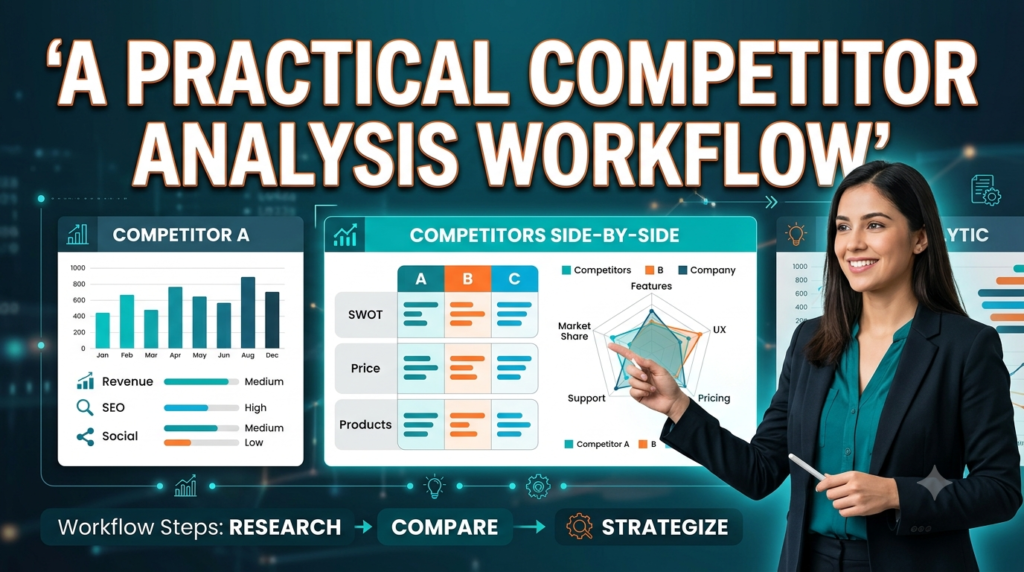
The easiest way to use ZIK Analytics consistently is to follow a repeatable workflow. Begin with a clear objective, such as identifying products for a new store, improving an existing category, or comparing your pricing with other sellers. Select the relevant marketplace, establish your preferred analysis period, and identify several competitors. Record their important metrics and examine the products that appear to generate meaningful activity. Then shortlist opportunities that fit your budget, sourcing capabilities, and customer requirements.
The following table summarizes a practical process.
| Step | Action | Expected outcome |
| 1 | Choose a niche and marketplace | A focused research area |
| 2 | Identify 5–10 relevant competitors | A useful comparison group |
| 3 | Review seller performance | An overview of competitor activity |
| 4 | Investigate promising listings | Product and presentation insights |
| 5 | Validate demand and pricing | A shortlist of possible products |
| 6 | Calculate all expected costs | A realistic profit estimate |
| 7 | Improve your listing and launch carefully | A testable selling strategy |
| 8 | Revisit your watchlist and results | Ongoing improvements based on evidence |
Once you have completed the research, document your decisions in a simple spreadsheet. Include the product, competitor, observed price, demand indicators, estimated sourcing cost, expected fees, delivery considerations, and reasons for selecting or rejecting the opportunity. After launching a product, compare actual results with your initial assumptions. If conversion is weak, revisit the listing and pricing; if sales are strong but profits are disappointing, review costs. This feedback loop is what makes the research useful over time.
Common Mistakes to Avoid
Assuming that the success of a rival ensures your own success is a typical error. The competitor may have better supplier pricing, stronger customer reviews, more established marketplace history, or a different fulfillment arrangement. Another mistake is relying on one metric, such as estimated revenue or active listing count, without checking product-level demand and costs. These shortcuts can make an apparently attractive opportunity look more certain than it really is. A stronger process combines several indicators and verifies important assumptions independently.
A second mistake is copying competitor listings instead of learning from them. Reusing protected photographs, descriptions, branding, or other original material can create intellectual property and marketplace compliance problems. You should also avoid entering a price war simply because another seller has lowered a price. If matching that price eliminates your margin, the strategy may harm your business rather than improve it. Finally, remember that research data may be estimated, incomplete, or affected by changing marketplace conditions. Use it to guide decisions, monitor actual performance, and revise your approach when the evidence changes.
Advantages and Limitations of ZIK Analytics
The main advantage of ZIK Analytics is that it brings several research activities into a connected workflow. Instead of manually investigating every seller and product from scratch, users can access seller metrics, product research, listing insights, and other relevant features in one platform. This can save time, help identify patterns, and make product selection more systematic. Its educational resources can also be useful for people who are new to marketplace research and want to understand how to interpret seller data.
There are limitations to consider. Research tools cannot guarantee that a product will remain popular, that an estimated sales figure precisely reflects a competitor’s actual performance, or that a supplier will deliver as expected. The platform also has a subscription cost, and some features may be restricted by plan or marketplace. Instead of using the dashboard as a quick fix for results, users must take the time to comprehend the analytics. For these reasons, ZIK Analytics is most useful when combined with first-hand product checks, supplier verification, business calculations, and ongoing analysis of your own store.
Read More:-
How Does Strikingly Simplify the Website Building Process?
Building Your Dream Website with Site123
Boost Your E-commerce Strategy with YITH Plugins
Maximize Your Customer Engagement with LiveAgent’s Features
Why STRIPO is Essential for Digital Product Marketersa
ZIK Analytics Pricing and Plans
Pricing matters because a research tool should provide enough value to justify its recurring cost. ZIK Analytics offers different plans and feature sets for eBay and Shopify-related workflows, and the price can depend on the subscription type, billing period, and selected tier. Its official pricing page currently lists eBay-oriented Pro and Pro+ plans with displayed annual-billing equivalents of $14 and $20 per month, respectively, alongside other billing options. The page also shows different feature allowances across plans, including differences in tools such as Product Explorer, Bulk Scanner, and other research features.
| Plan shown on official pricing page | Displayed annual-billing equivalent | What to consider |
| Pro | $14/month | Whether its research tools meet your needs |
| Pro+ | $20/month | Whether higher feature allowances justify the added cost |
These are advertised equivalents, not a guarantee of the amount you will pay at checkout. Promotional offers, trial terms, billing options, taxes, and plan availability may change. Check the official ZIK Analytics pricing page before subscribing, and confirm the total charge and renewal terms. Beginners may prefer to start with a lower-cost option if it provides the features they actually need. Experienced sellers who regularly analyze many competitors may benefit from a higher tier if the additional capabilities save meaningful time or improve their workflow.
Best Practices for Better Results
To get more value from ZIK Analytics, approach competitor analysis with a specific question instead of browsing data without a goal. You might want to find products with steady demand, understand why a competitor’s listings perform well, or identify opportunities to improve your own prices and titles. Choose a consistent marketplace and analysis period, record your observations, and compare multiple sellers before reaching a conclusion. This makes your research more organized and reduces the risk of making decisions based on isolated examples.
It is equally important to connect research with real business results. Monitor your own sales, conversion rate, average order value, product costs, returns, and customer feedback. Compare these figures with your original assumptions and make one or two targeted changes at a time where practical. If a product does not perform as expected, investigate the reasons before abandoning it or increasing your spending. Above all, prioritize customer value, accurate listings, reliable fulfillment, and healthy margins. Competitive analysis is more effective when it aids in decision-making rather than when it pushes you to copy every action taken by another vendor.



Conclusion
ZIK Analytics can be a valuable tool for competitor analysis when you use it to make informed, evidence-based decisions. By researching successful sellers, examining product-level activity, comparing prices, exploring market trends, and improving listing titles, you can build a clearer understanding of your competitive environment. The platform provides a structured way to discover potential opportunities without relying entirely on guesswork. Whether you are starting your first eBay store or managing an established dropshipping business, these insights can help you decide which products deserve further research and where your existing strategy might need improvement.
Remember that successful e-commerce is about more than finding products that other sellers are selling. You must also understand customer needs, calculate realistic profit margins, work with dependable suppliers, and create listings that communicate value. Use ZIK Analytics to identify opportunities, validate them independently, and monitor the results after making changes. Start with a small group of relevant competitors, establish a consistent research routine, and learn from your own store’s performance. With patience and disciplined analysis, competitor research can become a practical part of building a more competitive and sustainable online business.
Frequently Asked Questions (FAQs)
Q. What is ZIK Analytics used for?
A. ZIK Analytics is an e-commerce research platform used to investigate competitors, research products, explore supplier options, and improve marketplace listings. It is particularly relevant to eBay sellers and dropshippers who want to understand product demand, pricing, and seller performance before making business decisions.
Q. How do I analyze competitors using ZIK Analytics?
A. Open the Competitor Research tool, select the relevant marketplace, and enter the competitor’s seller ID or use the available seller-scanning feature. Review metrics such as active listings, sales indicators, earnings estimates, and sell-through rate. Then investigate individual products, compare pricing, and save useful sellers to your watchlist for future research.
Q. Can ZIK Analytics help me find profitable products?
A. Yes, it can help you discover potential products by examining marketplace activity, researching competitors, and identifying items that may have promising demand. However, it cannot guarantee profitability. You should independently verify supplier costs, shipping, marketplace fees, advertising expenses, return risks, and applicable policies before investing in a product.
Q. Is ZIK Analytics suitable for beginners?
A. Yes. Beginners can use it to learn how to research products, evaluate competitors, and improve listings. Starting with a focused niche and a small competitor shortlist makes the process easier to manage. Before purchasing a subscription, review the current plans and choose one that matches your experience, budget, and research requirements.
Q. How much does ZIK Analytics cost?
A. The cost depends on the plan, billing period, and features you choose. The official pricing page displays different tiers for eBay and Shopify-related research, along with different billing options and feature allowances. Visit ZIK Analytics Pricing to confirm current prices, trial conditions, and subscription terms before signing up.