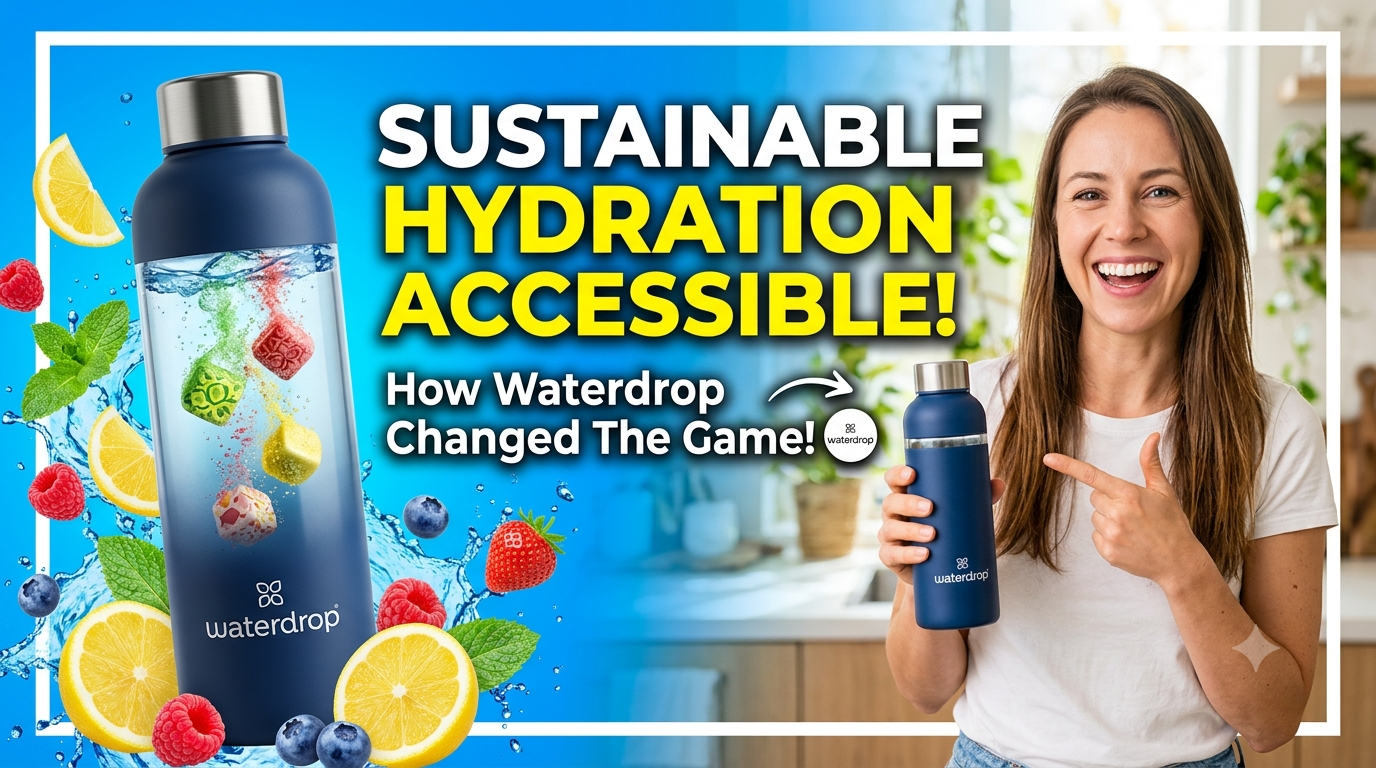
Discover how Waterdrop is making sustainable hydration products more accessible with innovative Microdrinks, reusable water bottles, and eco-conscious drinkware. Learn how Waterdrop helps reduce reliance on single-use plastic bottles, offers convenient sugar-free flavour options, and encourages sustainable hydration through practical, stylish, and portable products. Explore its sustainability initiatives, affordable hydration solutions, and commitment to making everyday drinking habits more environmentally friendly.
Table of Contents
- Understanding Waterdrop and Its Sustainability Mission
- Why Sustainable Hydration Matters Today
- How Waterdrop Microdrinks Make Hydration Easier
- Reusable Bottles Designed for Everyday Life
- Making Sustainable Hydration More Affordable
- Expanding Access Through Retail and Online Shopping
- Product Variety for Different Lifestyles
- Sugar-Free Flavour and Everyday Hydration
- Recycling Initiatives and Environmental Partnerships
- Sustainable Manufacturing and Transportation
- How Waterdrop Compares With Traditional Bottled Drinks
- The Role of Design in Consumer Adoption
- Challenges and Limitations of Sustainable Hydration
- How Consumers Can Make More Sustainable Choices
- The Future of Accessible Hydration
- Conclusion
- Frequently Asked Questions About Waterdrop
Understanding Waterdrop and Its Sustainability Mission
Staying hydrated is one of the simplest ways to support everyday well-being, yet the way people purchase drinks can create a surprising amount of waste. Think about a typical day: you buy bottled water on your commute, pick up a flavoured drink during lunch, and grab another beverage after the gym. These small purchases may seem harmless, but disposable packaging can accumulate quickly. This is where Waterdrop is trying to make a difference by combining convenient hydration products with a more sustainability-conscious approach to drinking water. Its best-known Microdrinks are compact, flavoured cubes that dissolve in water, while its product range also includes reusable glass and stainless-steel bottles, tumblers, and accessories.
The company’s central idea is straightforward: make drinking water more appealing without relying on conventional ready-to-drink beverages for every refreshment. Instead of carrying a large supply of bottled drinks, consumers can carry a reusable bottle and add a small hydration cube whenever they want flavour. When individuals frequently refill their bottles, this strategy can lessen reliance on single-use drink containers. Waterdrop also highlights environmental initiatives, including a partnership with Plastic Bank that funds plastic collection and recycling-related efforts. According to its sustainability information, the company had helped fund the collection of more than 31.5 million plastic-bottle equivalents by July 2026.
This method is intriguing because it integrates sustainability as a regular habit rather than as a stand-alone lifestyle endeavor. Consumers do not necessarily need to change where they work, how they travel, or what they do during the day. They can begin with one reusable bottle and a few flavour cubes. Waterdrop’s broader challenge is to make that transition practical, attractive, and financially worthwhile for people with different preferences and budgets.
Why Sustainable Hydration Matters Today
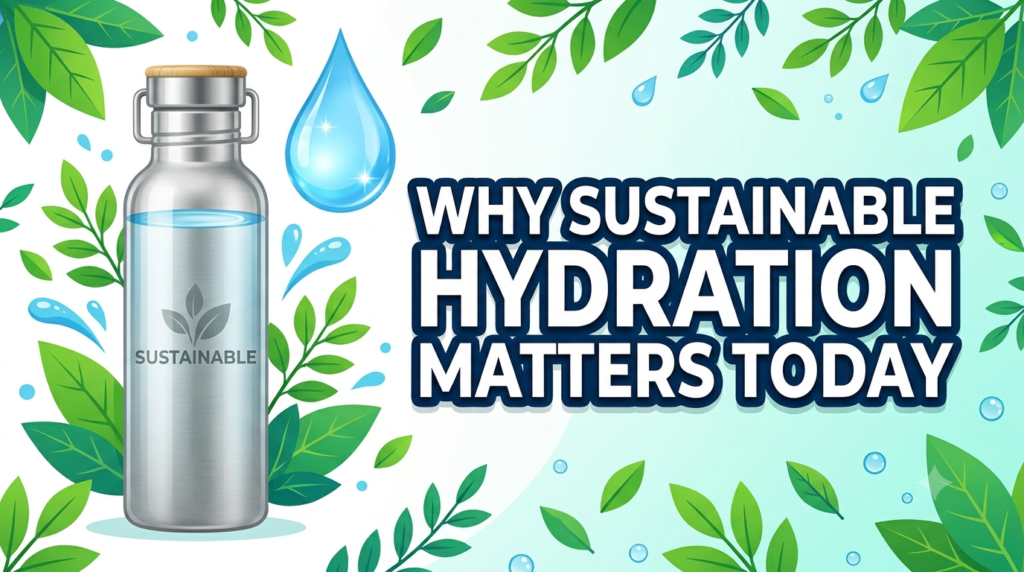
Selecting reusable bottles is just one aspect of sustainable hydration. It entails taking into account the packaging, transportation, consumption, and disposal of beverages. Traditional bottled drinks require packaging materials, manufacturing energy, transportation, and waste-management infrastructure. When consumers regularly purchase individual drinks, these stages are repeated for every bottle. A reusable hydration system can reduce the need for repeated packaging, although its overall environmental advantage depends on factors such as how often the bottle is reused, how it is manufactured, and how it is produced and how it is ultimately disposed of.
Consumers are also looking for products that fit naturally into busy lives. Students need convenient drinks between classes, office workers want something they can keep at their desks, and travellers often prefer lightweight products that take up little space. Athletes may want a bottle that keeps drinks cold, while people working outdoors may appreciate a durable container that can withstand frequent use. Sustainable products are more likely to become everyday choices when they meet these practical needs as well as environmental expectations.
Waterdrop addresses this challenge by connecting reusable drinkware with portable flavour products. Rather than asking customers to accept an inconvenient alternative simply because it is considered environmentally friendly, the brand aims to make the alternative enjoyable. That distinction matters because sustainable habits tend to be easier to maintain when they fit existing routines. A product that looks good, travels easily, and makes plain water more appealing has a better chance of being used consistently.
Still, sustainable hydration should not be treated as a guarantee of zero environmental impact. Reusable bottles require resources to produce, and flavoured hydration cubes still need packaging. The more useful question is whether the complete system can reduce unnecessary waste over time while providing a convenient way to drink more water.
The Environmental Cost of Single-Use Plastic Bottles
Single-use plastic bottles are popular because they are lightweight, widely available, and convenient to carry. However, their convenience comes with an environmental cost when they are used briefly and discarded. Plastic waste can escape collection systems, enter rivers and oceans, and persist in the environment for long periods. Recycling can help, but collection, sorting, material quality, and local infrastructure all affect whether a bottle actually gets recycled.
The scale of the problem is illustrated by figures cited on Waterdrop’s sustainability page. Drawing on the Organisation for Economic Co-operation and Development’s Global Plastics Outlook, the company reports that only 9% of plastic waste was ultimately recycled in 2019 and that 6.1 million tonnes of plastic waste leaked into rivers, lakes, and the ocean that year. These are historical global figures, not current annual measurements, but they demonstrate why reducing unnecessary plastic use remains important.
In response, Waterdrop is urging customers to refill sturdy bottles rather than keep buying drinks in single-use containers. Its company-reported packaging comparison states that a hydration cube uses up to 98% less plastic packaging than a typical 500-millilitre single-use PET bottle. This comparison is based on packaging weight: 0.44 grams for the company’s cube packaging, including its lid, compared with 23.09 grams for an average 500-millilitre PET bottle.
It lacks context, but that figure is helpful. It compares packaging weights rather than the full environmental footprint of every beverage. Not all production, transportation, water consumption, and end-of-life effects are automatically taken into consideration. Nevertheless, it illustrates how concentrated products can reduce the amount of packaging needed for a serving. When combined with a bottle that is refilled repeatedly, the approach offers a practical alternative to purchasing individual packaged drinks.
How Waterdrop Microdrinks Make Hydration Easier
One of Waterdrop’s most recognisable products is its Microdrink range. Fruit and plant extracts, flavoring compounds, and, depending on the type, additional vitamins or other useful elements are all present in these little cubes. Users place a cube into water and allow it to dissolve, creating a flavoured drink without needing a pre-filled bottle. The company describes its standard preparation method as adding a cube to approximately 400–600 millilitres of still or sparkling water, although consumers should follow the directions on the specific product they purchase.
The format makes hydration more portable. Carrying a few cubes in a bag or desk drawer can be easier than carrying multiple drinks, especially when a clean drinking-water supply is available. Consumers can prepare a drink when they want one, rather than purchasing a packaged beverage every time they feel like having something flavoured. This can be useful during commutes, at work, while studying, or on trips where carrying bulky bottles would be inconvenient.
Flavour also plays a practical role in encouraging water consumption. Some people enjoy plain water, while others prefer a mild fruity taste. A flavour cube provides another option without requiring a conventional sugar-sweetened soft drink. Waterdrop promotes its Microdrinks as zero-sugar products, but ingredient lists and nutrition labels should always be checked for the exact variety because formulations can differ.
The product is not a replacement for access to safe drinking water, and it does not make every hydration challenge disappear. Consumers still need a suitable source of water, a clean bottle, and a way to refill it. Yet the combination of a reusable container and a compact flavour product can make sustainable hydration feel less complicated. By separating the water from the flavour, Waterdrop gives people the flexibility to prepare a drink wherever refillable water is available.
Less Packaging, More Convenience
Compact packaging is one of the main advantages of concentrated hydration products. A box of cubes can provide multiple servings while occupying less space than the same number of ready-to-drink bottles. This can make storage easier at home and reduce the amount of space needed in a backpack, gym bag, or office drawer. For consumers who frequently travel or commute, carrying small cubes can be more practical than purchasing a new packaged drink at every stop.
The lighter format may also create transportation efficiencies. Shipping concentrated products can require less packaging and cargo space per serving than shipping equivalent quantities of bottled beverages. Waterdrop’s production information identifies the lightweight nature of its products as one factor that can reduce transportation-related emissions compared with conventional 500-millilitre PET bottled drinks. Actual savings depend on transport distance, shipping methods, production processes, and the comparison product.
However, convenience should not be confused with completely waste-free packaging. Waterdrop explains that its hydration cubes use protective packaging to preserve the quality of their ingredients. Its European sustainability information describes packaging made from recyclable polypropylene for the blister body and a PET-and-aluminium layer for the seal. The company acknowledges that the compact, layered format may not be captured by ordinary recycling systems and offers a TerraCycle programme at participating stores, subject to availability.
The takeaway is that less packaging can be a meaningful improvement without being a perfect solution. Consumers who choose Microdrinks can maximise the benefit by refilling their bottles consistently and following the disposal guidance available in their region. For the brand, continuing to improve the recyclability and material efficiency of its packaging remains an important part of making sustainable hydration more accessible.
Reusable Bottles Designed for Everyday Life
A reusable bottle is the foundation of a more sustainable hydration routine. Waterdrop offers glass and stainless-steel bottles in different sizes, along with insulated drinkware and interchangeable accessories. Its official bottle collection includes options ranging from approximately 14 to 47 fluid ounces in the US market, giving customers choices for short outings, office use, exercise, and longer days away from home.
Design plays an important role in encouraging people to carry reusable bottles. A container that looks attractive, feels comfortable to hold, and fits easily into a bag is more likely to become part of someone’s daily routine. Waterdrop combines practical features with colours, patterns, different lids, and special-edition designs. These choices help make reusable drinkware feel like a personal accessory rather than simply another item people must remember to carry.
Durability also matters. A well-maintained stainless-steel bottle can withstand regular use, while glass may appeal to people who prefer the taste and appearance of drinking from glass. Each material has trade-offs: glass can break if dropped, and steel bottles require resources to manufacture. The environmental benefit therefore depends partly on how long the bottle remains in use and how frequently it replaces disposable alternatives.
The simplest way to get more value from a reusable bottle is to use it consistently. Fill it before leaving home, keep it on your desk, and refill it wherever safe drinking water is available. Over time, a single durable bottle can replace many disposable containers. This everyday practicality is central to Waterdrop’s approach to making sustainable hydration accessible.
Making Sustainable Hydration More Affordable
Price is one of the biggest factors influencing whether people adopt sustainable products. Even consumers who want to reduce waste may hesitate when a reusable bottle or a flavoured hydration product costs more upfront than a conventional alternative. Making sustainable hydration more accessible therefore requires more than offering environmentally conscious products; it also requires giving customers understandable choices and opportunities to manage their spending.
Waterdrop’s product range includes individual flavour packs, multipacks, starter sets, reusable bottles, and combinations of bottles with Microdrinks. On its UK website, for example, the company lists a variety taster pack at £17.99 and a starter set featuring a stainless-steel bottle from £32.99, although prices and availability vary by product and can change over time.
Buying a reusable bottle involves an initial expense, but the long-term value depends on how it is used. Consider someone who regularly buys bottled drinks during the working week. Switching to a refillable bottle could reduce repeated packaging purchases, particularly when free or inexpensive drinking water is readily available. However, actual savings depend on local bottled-water prices, the cost per hydration cube, the number of servings consumed, and whether the customer would otherwise buy a flavoured beverage.
Here is a practical comparison of the main options:
| Hydration option | Initial cost | Packaging considerations | Best suited to |
| Single-use bottled drinks | Usually low per purchase | Repeated disposable packaging | Occasional convenience |
| Reusable bottle with tap or refill-station water | One-time bottle purchase | Less repeated packaging | Everyday hydration |
| Waterdrop Microdrinks with a reusable bottle | Bottle purchase plus recurring cube purchases | Compact packaging, but not packaging-free | People who prefer flavoured water |
| Homemade fruit-infused water in a reusable bottle | Low to moderate | Usually minimal additional packaging | People who prefer natural flavouring |
The most affordable choice will not be the same for everyone. Plain water in a reusable bottle may be the cheapest option, while Microdrinks add flavour at an additional cost. Waterdrop’s contribution to accessibility lies in providing different ways to build a hydration routine, rather than requiring customers to purchase a premium bottle and a large product bundle at the same time.
Expanding Access Through Retail and Online Shopping
A sustainable product cannot become widely adopted if customers cannot find it. Waterdrop uses online shopping and retail partnerships to reach consumers who have different shopping preferences. Its international website identifies retail partners that include Target, CVS, and H-E-B in the United States, alongside other retailers in different markets. The company also provides store-finder facilities to help shoppers locate products.
Online shopping offers a convenient way to compare flavours, bottle sizes, multipacks, and accessories before making a purchase. Customers can explore product descriptions, check ingredients, and sometimes choose subscription options. Depending on the market, the company also advertises bundle promotions, free-shipping thresholds, and subscription savings. Such offers can make repeat purchases more convenient, although customers should compare the final cost rather than assuming every bundle represents a saving.
Retail availability provides a different advantage: shoppers can discover products while buying other everyday essentials. This matters because sustainable products become easier to adopt when customers do not need to make a separate shopping trip or learn about an unfamiliar online store. Physical retail can also help introduce the concept to consumers who have never tried hydration cubes.
Accessibility nevertheless varies by country and region. A product available in a major US or European retail chain may not be stocked locally elsewhere. Shipping fees, import duties, delivery times, and currency differences can make products less affordable in some markets. For customers in India, for example, it is important to check local availability and the final delivered price before comparing Waterdrop with alternatives available domestically.
Product Variety for Different Lifestyles
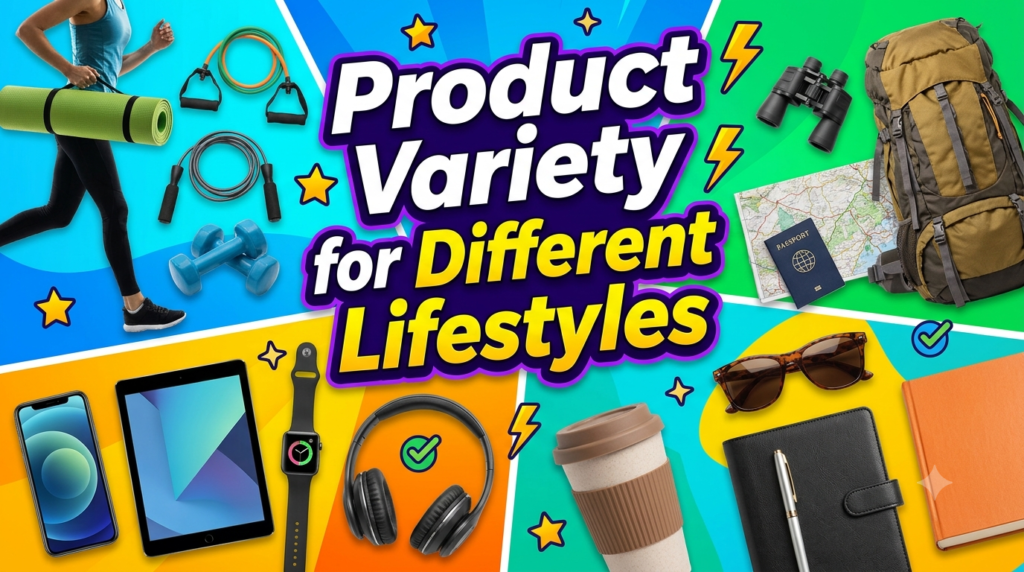
People have different hydration habits, so one product format will not suit everyone. Waterdrop offers several product categories designed around different preferences. Its Microdrinks focus on flavoured water, while other ranges include energy-oriented drinks, electrolyte products, and reusable drinkware. The company’s UK website, for example, groups products into hydration with vitamins, energy, and electrolytes.
For someone who spends long hours at a desk, a glass bottle and a selection of flavour cubes may be enough. A sturdy, portable insulated bottle can be preferred by someone who rides a bike, hikes, or works out. A person who dislikes sweet soft drinks but wants a little flavour may appreciate a zero-sugar option, while another person may simply prefer plain water and have no need for additional products.
This variety helps make sustainable hydration more flexible. Customers can start with a single reusable bottle and add other products only if they find them useful. They do not need to buy every item in the range to benefit from the basic principle of refilling rather than repeatedly purchasing disposable drinks.
It is also important to choose products according to actual needs rather than marketing claims. Energy and electrolyte products have different purposes from ordinary flavoured water, and their ingredients may not be suitable for everyone. Reading nutrition information and following product directions allows consumers to make informed choices. Ultimately, the most sustainable product is one that serves a real purpose and gets used regularly.
Sugar-Free Flavour and Everyday Hydration
One reason people choose flavoured beverages is simple: plain water does not appeal to everyone all the time. A little fruit flavour can make drinking water feel more enjoyable, especially for people who frequently reach for sweetened drinks. Waterdrop promotes its Microdrinks as sugar-free, providing an option for consumers who want flavour without the sugar typically found in many soft drinks.
This positioning connects sustainability with another everyday consideration: beverage choice. When consumers enjoy carrying a reusable bottle and preparing flavoured water, they may find it easier to replace some packaged drinks with a refillable alternative. The convenience of adding a small cube can make this habit easier to maintain at work, at home, or while travelling.
However, sugar-free does not automatically mean healthier in every circumstance. Ingredients, sweeteners, caffeine, vitamins, and electrolyte levels differ across product categories. A hydration cube should not be treated as a substitute for medical advice, a balanced diet, or a properly formulated rehydration solution when one is medically needed. People with specific dietary requirements should review the label and seek professional advice when appropriate.
The broader benefit is choice. Waterdrop gives consumers a way to personalise the flavour of water while keeping a reusable bottle at the centre of their routine. That combination can help turn hydration from an occasional afterthought into a habit that is easier to repeat.
Recycling Initiatives and Environmental Partnerships
Reducing packaging is one part of sustainability; managing the packaging that remains is another. Waterdrop acknowledges that the protective packaging used for its hydration cubes is not always suitable for collection through standard recycling systems. Its sustainability programme describes a partnership with TerraCycle that allows customers to return empty cube packaging at participating Waterdrop stores, where the programme is available.
This type of initiative addresses a common problem with small packaging formats. Even when a material is technically recyclable, local waste-management systems may not collect or process it efficiently. A dedicated collection programme can offer an alternative route, although its usefulness depends on whether a participating location is accessible and whether customers are willing to collect and return their packaging.
Waterdrop also reports a continuing partnership with Plastic Bank. According to the company’s sustainability page, the partnership funds the collection of 83,250 plastic-bottle equivalents from the environment each month. The corporation stated in July 2026 that over 31.5 million bottles had been collected thanks to the campaign. These are company-reported figures calculated using Plastic Bank’s conversion methodology, rather than a direct measurement of every bottle collected by Waterdrop itself.
Partnerships can help extend the impact of a company’s sustainability efforts, but they should complement waste prevention rather than replace it. Consumers can contribute by reusing bottles, checking local recycling rules, and returning eligible packaging through available collection programmes. Companies, meanwhile, can improve their contribution by designing products that require fewer materials and making recycling instructions clear.
Sustainable Manufacturing and Transportation
A product’s environmental impact begins long before it reaches a customer’s home. Manufacturing requires raw materials, energy, water, and packaging. Products must then travel through supply chains before reaching stores or consumers. Looking only at a product’s final packaging can therefore give an incomplete picture of its sustainability.
Waterdrop’s production information describes efforts to use renewable energy sources and energy-efficient technologies where applicable, recycle production waste, and recover energy where possible. The company also highlights the transportation advantages that may come from producing lightweight, concentrated products instead of shipping conventional bottled drinks.
These measures point toward a broader approach: consider the full lifecycle of a product, not just the moment of consumption. A lightweight hydration cube may require less transport volume than an equivalent quantity of bottled beverages, but the overall result still depends on manufacturing methods, delivery distances, material choices, and the bottle used to prepare the drink.
Consumers can support better outcomes by choosing durable products, avoiding unnecessary purchases, and using their bottles for as long as practical. Brands can contribute through transparent reporting, measurable targets, and continued improvements in packaging and production. Sustainable hydration becomes more credible when environmental claims are supported by clear information rather than attractive branding alone.
How Waterdrop Compares With Traditional Bottled Drinks
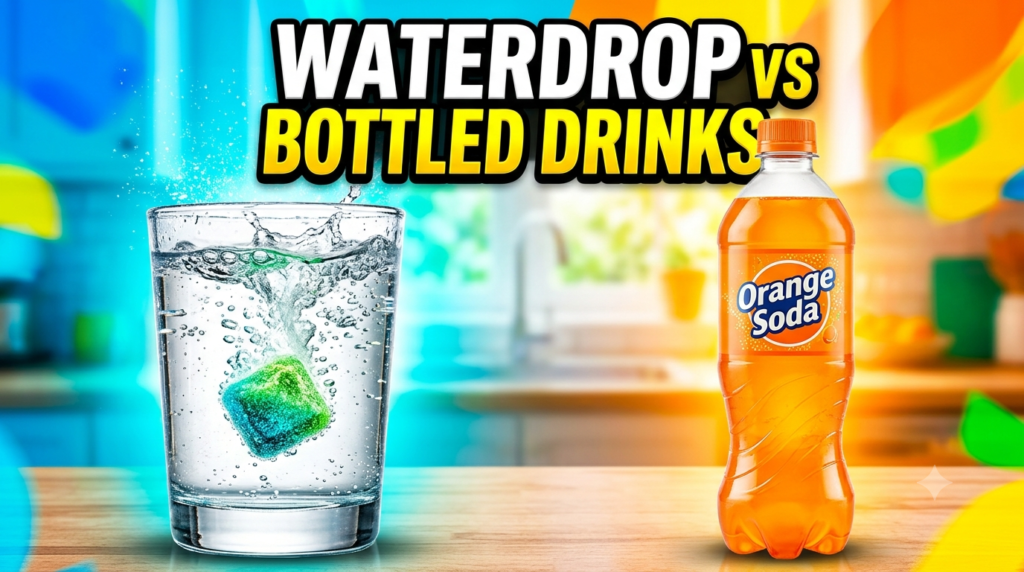
The biggest difference between Waterdrop’s hydration system and conventional bottled drinks is how the beverage is delivered. Traditional bottled drinks arrive ready to consume, while Microdrinks require a consumer to add water. This simple difference changes the packaging, storage, and transportation requirements of the product.
| Feature | Traditional bottled drinks | Waterdrop Microdrinks |
| Preparation | Ready to drink | Add water and dissolve |
| Portability | Carry each drink separately | Carry compact cubes and a reusable bottle |
| Packaging | Usually a bottle and closure for each serving | Compact protective packaging plus reusable drinkware |
| Flavour options | Depend on the chosen beverage | Multiple cube flavours and product categories |
| Waste reduction potential | Depends on recycling and packaging reuse | Potentially lower packaging use when replacing repeated single-use purchases |
| Main limitation | Repeated packaging and transport of liquid | Requires refillable water and still produces some packaging waste |
Waterdrop’s sustainability page reports up to 98% less plastic packaging for a hydration cube compared with an average 500-millilitre single-use PET bottle. That comparison is based on packaging weight, so it should not be interpreted as a claim that the entire product lifecycle has 98% less environmental impact.
Traditional bottled drinks can still be useful in situations where safe refill water is unavailable. Likewise, not everyone enjoys flavoured water or wants to purchase cubes. The right choice depends on access, taste, cost, and practical needs. For people who regularly buy packaged drinks and have access to safe refill water, a reusable bottle paired with concentrated flavour products may provide a convenient way to reduce repeated packaging.
The Role of Design in Consumer Adoption
Sustainability initiatives often focus on the environmental benefits of a product, but design can determine whether people actually use it. A reusable bottle that is difficult to clean, uncomfortable to carry, or prone to leaking may remain unused in a cupboard. A well-designed alternative is more likely to become part of a person’s daily routine.
Waterdrop’s product collections combine different materials, sizes, colours, and lids, allowing consumers to choose according to their habits. Some people prioritise insulation, others prefer glass, and some want a lightweight bottle that fits into a small bag. This product variety helps connect environmental intentions with everyday convenience.
Design also influences how people perceive sustainable products. A bottle that looks attractive can become something a person enjoys carrying rather than a reminder of an obligation. That emotional connection may encourage repeated use, which is important when evaluating the value of reusable products. Still, style should not overshadow durability, ease of cleaning, replacement-part availability, or the likelihood that the bottle will be used for years.
The strongest design approach combines appearance with function. A reusable product should be easy to maintain, fit the user’s lifestyle, and last long enough to justify its production impact. By treating drinkware as both a practical tool and a personal accessory, Waterdrop makes the transition to refillable hydration more appealing.
Challenges and Limitations of Sustainable Hydration
Waterdrop’s approach offers benefits, but it is not without limitations. The first challenge is the initial purchase cost. A reusable bottle and a supply of hydration cubes can cost more upfront than buying a single bottle of water. People who have limited budgets may find it difficult to justify this expense, particularly when free refill water is available and plain water meets their needs.
The second challenge is packaging. Although hydration cubes use less packaging by weight than a typical single-use PET bottled drink, their protective packaging is not necessarily accepted by every local recycling system. Waterdrop’s own sustainability information acknowledges that the layered packaging may require specialist collection through its TerraCycle programme, where available.
Product availability presents another barrier. Retail networks and delivery services differ across countries, and not every customer has convenient access to Waterdrop products. International shipping costs, limited local stock, and currency differences may make the products less accessible in certain regions. Sustainable hydration options should ideally be available through a mix of local retailers, refill stations, and affordable alternatives.
Finally, consumers should be careful with broad environmental claims. The impact of any reusable bottle depends on how long it is used and what it replaces. A new bottle purchased unnecessarily may provide little benefit, whereas consistently refilling an existing bottle can be a straightforward improvement. Waterdrop can strengthen its sustainability credentials by continuing to reduce packaging, improve recycling access, and publish clear evidence about its environmental performance.
Read More:-
How Does Strikingly Simplify the Website Building Process?
Building Your Dream Website with Site123
Boost Your E-commerce Strategy with YITH Plugins
Maximize Your Customer Engagement with LiveAgent’s Features
Why STRIPO is Essential for Digital Product Marketersa
How Consumers Can Make More Sustainable Choices
You do not need to transform your entire lifestyle to reduce beverage-related waste. Start by examining your current habits. If you regularly purchase bottled drinks during your commute or at work, consider carrying a reusable bottle and refilling it when safe drinking water is available. If plain water does not appeal to you, try a suitable flavouring option and compare the cost and packaging with the drinks you usually buy.
The next step is to choose products based on how you will actually use them. A durable bottle that fits your bag and is easy to clean is often more valuable than an expensive design that stays at home. You may not need a collection of different bottles, accessories, or flavours. Start with one practical item and add products only when they solve a genuine problem.
Consider these simple habits:
- Refill regularly: Keep your bottle visible so you remember to use it.
- Choose durable products: Prioritise materials and designs that suit your everyday routine.
- Compare costs per serving: Look beyond the initial price and consider recurring purchases.
- Check packaging guidance: Follow local recycling instructions and use specialist return programmes where available.
- Avoid unnecessary purchases: Continue using a bottle you already own if it meets your needs.
These actions can make sustainable hydration more affordable and practical. Waterdrop’s products may help people who want additional flavour and a convenient reusable system, but consumers can also reduce waste without buying new products. The goal is to make better use of what is already available and avoid disposable packaging whenever a suitable alternative exists.
The Future of Accessible Hydration
The future of sustainable hydration will depend on making low-waste choices easier, more affordable, and more widely available. Product innovation can help, but meaningful progress will also require better recycling systems, access to safe drinking water, transparent environmental reporting, and designs that last. Companies that make sustainability convenient without overstating their impact are more likely to build lasting consumer trust.
Waterdrop has several opportunities to continue improving its approach. More accessible starter products could help customers try the concept without committing to expensive bundles. Wider retail availability could reduce delivery barriers, while more local packaging-return programmes could make recycling easier. Continued development of packaging materials could also help address the limitations of small, layered wrappers.
Another opportunity lies in consumer education. Clear comparisons of cost per serving, packaging weight, recycling instructions, and product ingredients would help people make informed decisions. Sustainability becomes more accessible when customers understand both the advantages and the limitations of the products they buy.
Ultimately, the most effective hydration system is one that people can afford, use consistently, and maintain over time. Waterdrop’s combination of reusable drinkware and concentrated flavour products provides one option for reducing dependence on pre-packaged drinks. Its long-term impact will depend on how well it continues to balance convenience, price, product quality, and measurable environmental improvements.



Conclusion
Waterdrop is making sustainable hydration more accessible by combining reusable bottles with compact flavour products that fit into everyday routines. Its Microdrinks offer an alternative to repeatedly purchasing ready-to-drink beverages, while its glass and stainless-steel bottles encourage consumers to refill and reuse. Retail partnerships, online shopping, product bundles, and different bottle designs also give customers several ways to explore the system according to their preferences and budgets.
The company’s reported packaging comparison and environmental partnerships highlight the potential benefits of reducing single-use packaging. At the same time, its protective cube packaging, upfront costs, and uneven recycling access show that sustainable hydration still has practical limitations. Consumers should evaluate products using the full picture, including cost, durability, convenience, and local availability, rather than relying on one environmental statistic.
The key lesson is that sustainability does not have to begin with a dramatic lifestyle change. Carrying a reusable bottle, refilling it regularly, and purchasing fewer individually packaged drinks can be meaningful first steps. Waterdrop helps make that transition more appealing for people who enjoy flavoured water, while the wider goal remains simple: make convenient hydration compatible with less unnecessary waste.
Frequently Asked Questions About Waterdrop
Q. What is Waterdrop, and how does it work?
A. Waterdrop is a hydration brand known for its Microdrinks, compact flavour cubes that dissolve in water. Users add a cube to the recommended amount of still or sparkling water and allow it to dissolve before drinking. The company also sells reusable bottles, tumblers, and related accessories. Its products are designed to make hydration convenient while encouraging alternatives to repeatedly purchasing ready-to-drink beverages.
Q. Are Waterdrop products environmentally friendly?
A. Waterdrop offers products that can help reduce dependence on single-use drink packaging, especially when customers repeatedly refill durable bottles. The company reports that its hydration cubes use up to 98% less plastic packaging by weight than a typical 500-millilitre PET bottle. However, the cubes still require protective packaging, and the overall environmental impact depends on manufacturing, transportation, recycling access, and how often reusable products are used.
Q. Are Waterdrop Microdrinks sugar-free?
A. The company markets its Microdrinks as zero-sugar flavoured hydration products. However, ingredients and nutritional formulations can differ among product ranges. Customers should check the packaging or official product listing for the exact variety they intend to purchase, especially if they have dietary restrictions or need to monitor specific ingredients.
Q. Are Waterdrop products affordable for everyday use?
A. Affordability depends on the product, local pricing, shipping fees, and how frequently it is used. Multipacks and starter sets may provide convenient ways to begin, but buyers should compare the cost per serving with their usual drinks. A reusable bottle filled with safe tap or refill-station water may be cheaper than buying flavoured cubes every day. Waterdrop is one option for people who value the additional flavour and convenience.
Q. Where can customers buy Waterdrop products?
A. Customers can explore the brand’s official website and use its store-finder features to check retail availability. Waterdrop products are available through selected retail partners in several markets, but the available flavours, bottle designs, promotions, and delivery options vary by region. Before ordering, customers should check the local website, shipping charges, and final delivered price.