
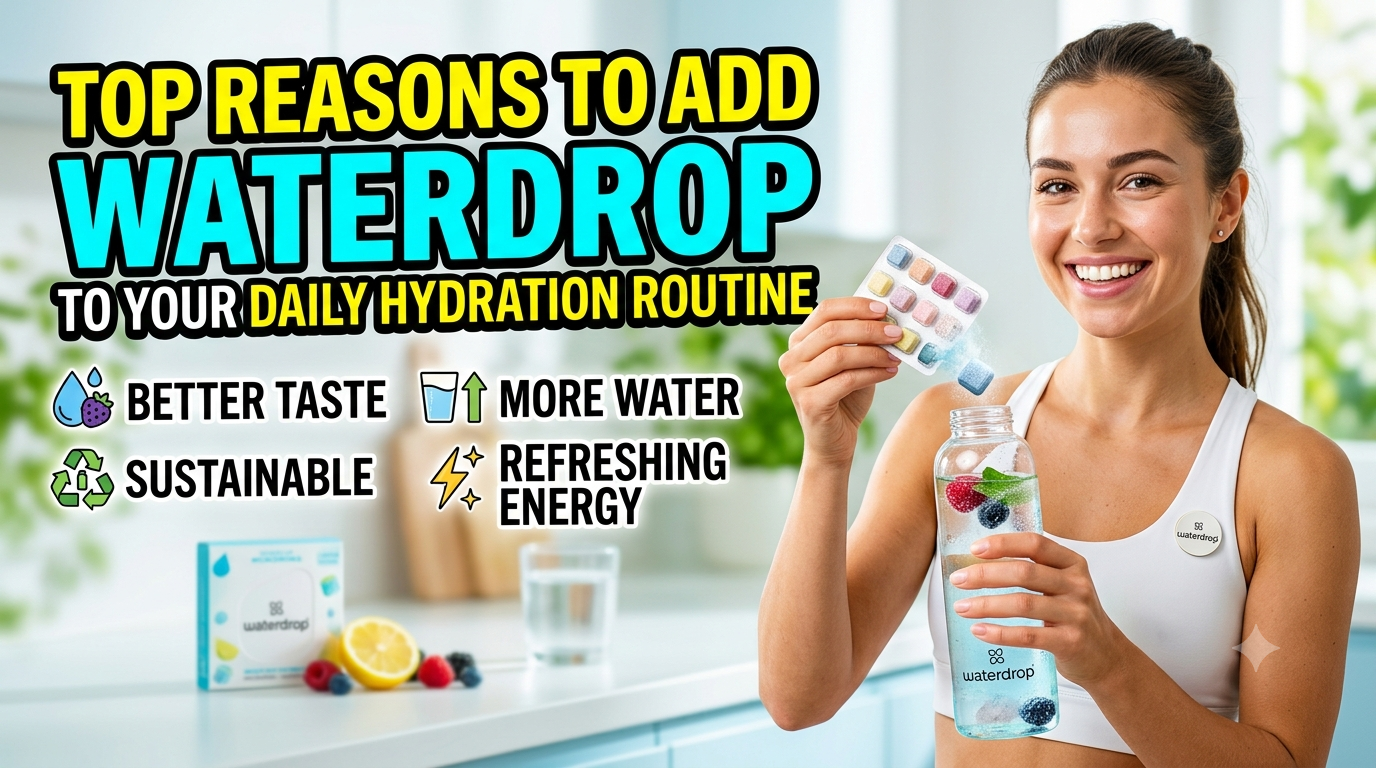
Waterdrop is a convenient way to make everyday hydration more enjoyable by adding delicious flavor to plain water in seconds. Designed as compact dissolvable cubes, Waterdrop Microdrinks come in a variety of flavors and formulations, including options featuring vitamins, electrolytes, and caffeine. They are easy to carry, simple to prepare, and can be enjoyed with still or sparkling water, making Waterdrop a practical choice for busy lifestyles, workdays, travel, workouts, or relaxing at home. Whether you want to add variety to your hydration routine or find plain water a little boring, Waterdrop offers a simple and flavorful approach to drinking more water throughout the day.
Table of Contents
- Why Daily Hydration Matters
- Water and Everyday Body Functions
- Why Drinking Enough Water Can Be Difficult
- What Is Waterdrop?
- How Waterdrop Microdrinks Work
- 1. Makes Plain Water More Enjoyable
- 2. Offers a Sugar-Free Alternative
- 3. Adds Variety to Your Daily Drinks
- 4. Convenient for Busy Lifestyles
- 5. Includes Vitamin-Focused Options
- 6. Provides Electrolyte and Energy Choices
- Waterdrop and Sustainable Hydration
- Portable Cubes Versus Bottled Drinks
- How to Build a Waterdrop Hydration Habit
- Choosing the Right Waterdrop Option
- Things to Consider Before Using Waterdrop
- Check Ingredients and Caffeine
- Waterdrop Compared With Other Hydration Choices
- Simple Ways to Make Waterdrop Part of Your Day
- Conclusion
- FAQs
Why Daily Hydration Matters
Staying hydrated is one of those everyday habits that sounds incredibly simple but can be surprisingly easy to overlook. You may remember your coffee, breakfast, lunch, meetings, notifications, and errands, yet somehow realize at the end of the day that you have barely had enough water. That matters because water is essential for normal body functions, and the Centers for Disease Control and Prevention explains that getting enough water helps the body function normally and prevents dehydration. Dehydration can be associated with problems such as unclear thinking, mood changes, overheating, constipation, and kidney stones. The National Academies also emphasizes that water is essential for cellular processes, transporting materials, regulating body temperature, maintaining circulation, and removing waste. The interesting part is that there is no single magic number that works perfectly for every person every day because water needs change with factors such as activity, climate, age, sex, pregnancy, and breastfeeding. That is why building a practical hydration routine can be more useful than obsessing over one fixed target. For someone who finds plain water boring, Waterdrop can be one way to make the habit more appealing by turning ordinary water into flavored water with compact cubes designed for convenience.
Water and Everyday Body Functions
Think of water as the quiet infrastructure running behind the scenes of your body. You do not necessarily notice it when everything is working normally, but it participates in a huge range of ordinary processes. According to the National Academies, water supports cellular homeostasis, acts as a medium for transporting materials, helps maintain vascular volume, assists with the removal of waste, and contributes to the body’s ability to handle metabolic heat. The CDC similarly notes that water helps regulate normal body temperature, lubricate and cushion joints, protect sensitive tissues, and remove waste through urination, perspiration, and bowel movements. Your hydration needs are not necessarily identical from one day to the next either. A hot day, a workout, fever, vomiting, diarrhea, or simply spending more time outdoors can increase fluid needs. This makes hydration less like completing a fixed daily assignment and more like adjusting your fuel according to the road ahead. Waterdrop does not replace the fundamental importance of water; its practical role is to make drinking water more interesting and convenient for people who may otherwise reach for sugary beverages or simply forget to drink.
Why Drinking Enough Water Can Be Difficult
The biggest hydration challenge for many people is not knowing that water matters; it is actually remembering to drink it consistently. Plain water can feel repetitive, particularly if someone is accustomed to flavored beverages, soda, juice, sweetened coffee drinks, or packaged refreshments. When water does not provide the taste experience someone expects, it can be tempting to postpone drinking until thirst becomes obvious. The CDC specifically suggests practical strategies such as carrying a reusable water bottle, choosing water over sugary drinks, serving water with meals, and adding a wedge of lemon or lime to make water more appealing. Waterdrop follows a similar behavioral idea but makes flavor more portable by concentrating the flavoring into a small dissolvable cube. Instead of purchasing a large flavored drink, you carry the cube and add it to water when you want it. That simple change can make hydration feel less like a chore and more like a small daily ritual.
What Is Waterdrop?
Waterdrop is a beverage brand best known for its small Microdrink cubes that are designed to add flavor to water. The company’s current product range includes hydration products featuring vitamins, electrolyte-focused options, and energy-oriented products containing caffeine. The standard Microdrink concept is straightforward: add a cube to approximately 400–600 ml of cold still or sparkling water, allow it to dissolve, and then drink it. The company describes its standard Microdrink products as sugar-free and made with fruit and plant extracts, although some products use sweeteners such as stevia or sucralose. That distinction is important because “sugar-free” does not automatically mean “ingredient-free,” and different Waterdrop products can have different formulations. Waterdrop therefore fits best into a hydration routine as a flavor and convenience tool rather than as a replacement for ordinary water. If you already enjoy drinking water, you may not need it at all; if flavor makes it easier for you to drink consistently, however, it offers a simple option worth exploring.
How Waterdrop Microdrinks Work
Using a Waterdrop Microdrink is intentionally simple. Start with cold still or sparkling water, add the cube, wait for it to dissolve, and drink. The brand currently recommends approximately 400–600 ml of water per cube, depending on the product instructions. The small format is part of the appeal because you can keep several flavors in a drawer, bag, desk, or travel kit without carrying bottles of premixed beverages. Waterdrop currently describes its Microdrink collection around natural extracts, vitamins, and zero sugar, while separate collections focus on energy or electrolytes. In other words, the concept is less about creating a completely different beverage and more about changing the experience of drinking water. That can be particularly useful when routine matters. If one small cube encourages you to refill your reusable bottle and take several more sips throughout the day, its practical value comes from the behavior it supports rather than from some extraordinary claim about hydration itself.
1. Makes Plain Water More Enjoyable
One of the clearest reasons people may add Waterdrop to their hydration routine is simply taste. Not everyone enjoys drinking several glasses of plain water every day, and flavored water can make the experience feel more interesting without turning it into a sugary soft drink. Waterdrop’s Microdrink range includes a variety of fruit-inspired and other flavors, giving users the ability to change their drink according to mood rather than committing to one taste every day. This variety can be useful because repetition is one of the enemies of long-term habits. Imagine having the same meal every day: even if it is healthy, you might eventually want something different. Hydration can work the same way. A lemon-flavored cube one day, a berry-style flavor another day, and plain water on another can create enough variety to keep drinking water from becoming monotonous. The important point is that the primary hydration still comes from the water itself; the cube simply gives the water a flavor profile that some people may find more appealing.
2. Offers a Sugar-Free Alternative
Another reason Waterdrop attracts attention is its focus on sugar-free hydration. The brand states that its Microdrink products contain no sugar, while some formulations use stevia or sucralose for sweetness. This can be relevant for someone trying to reduce the amount of sugar coming from beverages. The CDC notes that water contains no calories and that replacing sugary drinks with plain water can help reduce calorie intake. Waterdrop sits somewhere between completely plain water and traditional sweetened beverages: it adds flavor while avoiding sugar in the formulation. That does not make every Waterdrop product automatically appropriate for every diet, because ingredients vary and individual preferences or dietary requirements matter. Reading the nutritional and ingredient information for the exact flavor remains important. Still, for people who want a stronger flavor without reaching for a conventional sugary soft drink, a sugar-free cube can be a practical middle ground.
3. Adds Variety to Your Daily Drinks
Hydration routines can become surprisingly repetitive, especially for people who spend most of their day at a desk. Waterdrop gives users a way to build variety without filling the refrigerator with multiple bottles or cans. The brand currently offers numerous Microdrink flavors alongside separate collections designed around vitamins, energy, and electrolytes. Variety can also help create associations with different parts of the day. You might prefer a bright fruit flavor during work hours, plain water during meals, and another flavor after exercise, depending on your personal routine and the specific ingredients in each product. This approach makes hydration feel more flexible instead of rigid. Rather than thinking, “I have to drink more water,” you can think, “Which drink fits the next part of my day?” That small psychological shift can make a routine easier to repeat. The goal is still adequate fluid intake, not collecting every flavor or consuming a product simply because it is available.
4. Convenient for Busy Lifestyles
Convenience is another major reason compact hydration products can fit modern routines. A traditional bottled flavored drink requires you to buy, carry, store, and eventually dispose of the entire beverage container. A Waterdrop cube is small, lightweight, and designed to be added to water when you need it. The brand describes its Microdrink format as something that can be used with cold water at home or while traveling, with the cubes providing the flavor while the user supplies the water. That can be especially practical for office workers, students, travelers, and people who already carry a reusable bottle. You can keep a few cubes in a bag and use them when plain water starts feeling repetitive. There is also no need to refrigerate the cube in the same way you would a premixed drink. In a busy schedule, these little conveniences can matter because the easier a habit is to perform, the fewer obstacles stand between intention and action.
5. Includes Vitamin-Focused Options

Some Waterdrop Microdrink products are formulated with vitamins, giving the range an additional nutritional angle beyond flavor. The company currently describes its vitamin-focused Microdrink products as hydration products containing valuable vitamins, while its broader collection also includes separate electrolyte and energy categories. It is useful to keep expectations realistic here. Adding vitamins to a beverage does not mean that the drink should replace a balanced diet, and it should not be treated as a cure or treatment for a health condition. Instead, think of these products as flavored beverages that may contribute selected nutrients depending on the specific formulation. Because individual cubes can differ, checking the ingredient and nutrition information for the exact product is the sensible approach. If you already take supplements or have been advised to limit certain nutrients, it is particularly important to consider the full picture rather than looking only at the front of the package. The appeal is convenience, not nutritional magic.
6. Provides Electrolyte and Energy Choices
Waterdrop also offers products beyond its standard vitamin-oriented Microdrink range. Its current collection includes Microlyte, an electrolyte-focused product, and Microenergy, which contains caffeine. The company describes Microenergy products as containing 90 mg of caffeine in its current range, while Microlyte is described as containing electrolytes, vitamins, and zinc. These options can make the overall product range more adaptable to different moments, but they should not all be treated as interchangeable. A caffeinated product is different from a regular flavored-water cube, and an electrolyte drink may have a different purpose from ordinary daily hydration. If you are sensitive to caffeine, monitor total caffeine from coffee, tea, energy products, and other sources rather than viewing one cube in isolation. Similarly, electrolyte products are more relevant in contexts where electrolyte replacement is appropriate, such as certain exercise situations, rather than being automatically necessary for every glass of water.
Waterdrop and Sustainable Hydration
Sustainability is another part of Waterdrop’s brand proposition. The company says its approach is based partly on shipping concentrated drink ingredients instead of transporting large quantities of premixed beverage, and it reports that this can save up to 98% of CO2 emissions compared with bottled beverages under its stated comparison. Those figures are company-reported claims and should be understood in that context rather than treated as an independently verified universal result for every beverage scenario. The brand also says that it collects one plastic bottle from the environment for every 12-pack sold. Regardless of how you evaluate those specific claims, the underlying concept is easy to understand: if you flavor water yourself in a reusable bottle, you do not need to purchase a separate single-use bottle every time you want a flavored drink. The sustainability impact of any routine ultimately depends on what it replaces, how products are packaged, transportation, recycling, and how consistently reusable containers are used. A reusable bottle paired with tap or filtered water can therefore be an important part of the overall equation.
Portable Cubes Versus Bottled Drinks
| Feature | Waterdrop-style hydration | Bottled flavored drink |
| Format | Compact dissolvable cube | Ready-to-drink bottle or can |
| Water supplied separately | Yes | Usually no |
| Sugar | Many Waterdrop Microdrinks are sugar-free | Depends on product |
| Flavor variety | Multiple flavors and collections | Depends on brand |
| Portability | Very compact | Larger and heavier |
| Reusable bottle compatibility | Yes | Usually consumed from package |
| Caffeine | Only certain products | Depends on product |
| Electrolytes | Available in specific products | Depends on product |
| Packaging considerations | Small cube packaging + reusable bottle | Bottle/can plus beverage transport |
The comparison shows why the format itself is part of the attraction. Waterdrop does not simply compete on flavor; it changes how the drink is carried and prepared. The brand’s standard Microdrink instructions call for roughly 400–600 ml of water, while its current product lineup includes vitamin, energy, and electrolyte categories. Bottled beverages, on the other hand, are immediately ready to consume but require transportation of the finished drink. Neither format automatically makes someone healthy or unhealthy; the broader diet, hydration habits, ingredients, and consumption pattern matter more than packaging alone. For someone who already owns a reusable bottle and has easy access to drinking water, the cube format may simply be more convenient. For someone who prefers completely unflavored water, adding a flavor product may offer little benefit. The best fit depends on what actually helps you maintain a consistent hydration habit.
How to Build a Waterdrop Hydration Habit
The easiest way to use Waterdrop consistently is to connect it to routines that already exist. For example, you might keep a reusable bottle beside your laptop and prepare your first drink when you start work. Another approach is to keep a few cubes in your travel bag so that you have an option when plain water becomes boring during the day. You can also use different flavors to create simple hydration cues: one flavor for your morning routine, another for your afternoon break, and plain water around meals. The CDC recommends carrying a reusable water bottle and choosing water instead of sugary beverages as practical ways to drink more water. Waterdrop can fit naturally into that strategy because the bottle remains the main hydration tool while the cube provides flavor. Most importantly, avoid turning hydration into a competition. Your fluid needs vary, and the National Academies specifically notes that water requirements are influenced by activity and environmental conditions. A sustainable routine should feel manageable, not like another stressful target.
Choosing the Right Waterdrop Option
Choosing a Waterdrop product becomes easier when you first decide what you actually want from it. If your main problem is that plain water tastes boring, a standard Microdrink may be the logical category to explore. If you are specifically looking for an electrolyte product, Waterdrop has its Microlyte range, while those looking for caffeine will find Microenergy products. The important thing is not to assume that every cube has identical ingredients or nutritional characteristics. Waterdrop itself directs customers to the ingredient and nutritional information for individual products, and its FAQ confirms that some products use sweeteners such as stevia or sucralose. If you are avoiding particular ingredients, watching caffeine, or managing a specific nutritional requirement, check the exact product label before making it part of your everyday routine. In simple terms, choose according to your goal rather than choosing based solely on packaging, flavor names, or marketing language.
Things to Consider Before Using Waterdrop

Waterdrop can be convenient, but convenience should not make you ignore the ingredient list. The company states that its Microdrink, Microenergy, and Microlyte products are free from sugar but may contain stevia or sucralose depending on the product. Energy-focused products contain caffeine, which means they should be considered alongside your total daily caffeine consumption. The CDC also emphasizes that hydration needs vary based on factors including activity, climate, pregnancy status, age, and breastfeeding. People with medical conditions that affect fluid intake, electrolyte balance, kidney function, or other aspects of hydration should follow advice from their healthcare professional rather than adopting a generic hydration routine. It is also unnecessary to assume that more water is always better. The National Academies notes that there is no single water intake level that guarantees adequate hydration for everyone under all conditions. The smartest routine is therefore personalized, moderate, and based on the product’s actual ingredients.
Check Ingredients and Caffeine
If you are planning to drink Waterdrop every day, checking the label is one of the simplest habits you can develop. The standard Microdrink range is positioned around flavor, vitamins, and zero sugar, while the wider Waterdrop range includes products with caffeine and electrolytes. That means two cubes from the same brand can serve very different purposes. Someone who wants an afternoon flavored drink may not want the same formulation as someone preparing for exercise. Likewise, someone who already drinks several cups of coffee should take caffeine-containing Waterdrop products into account when considering total caffeine intake. Product formulations can also change over time, so the current packaging or official product information should take priority over older reviews or social media posts. A good rule is simple: know what you are drinking. Waterdrop can make hydration more enjoyable, but reading the label keeps the routine aligned with your own dietary preferences and needs.
Read More:-
How Does Strikingly Simplify the Website Building Process?
Building Your Dream Website with Site123
Boost Your E-commerce Strategy with YITH Plugins
Maximize Your Customer Engagement with LiveAgent’s Features
Why STRIPO is Essential for Digital Product Marketersa
Waterdrop Compared With Other Hydration Choices
There is no requirement to use a flavored hydration product to stay hydrated. Plain water remains a straightforward option, and the CDC explicitly recommends water as a healthy beverage choice. You can also obtain water through other beverages and water-rich foods; the National Academies notes that total water intake includes drinking water, other beverages, and moisture from food. Waterdrop’s role is therefore more about habit design than necessity. If you dislike plain water, a flavored cube may make it easier to drink. If you already drink plenty of water without flavor, there may be no compelling reason to add anything. Tea, sparkling water, fruit-infused water, and other low- or no-calorie beverages can also fit into a healthy hydration pattern depending on their ingredients. The CDC lists several low-calorie beverage choices, including plain coffee or tea, sparkling water, seltzers, and flavored waters. The useful question is not “Do I need Waterdrop?” but rather “Does this make my personal hydration habit easier to maintain?”
Simple Ways to Make Waterdrop Part of Your Day
Start small rather than changing your entire routine overnight. Keep a reusable bottle where you can see it, because visibility is a surprisingly powerful reminder. Put a few Waterdrop cubes next to your bottle, and prepare one when you want a flavored drink. You can also experiment with still versus sparkling water if the particular product instructions allow it, since Waterdrop says its Microdrinks can be prepared with either still or sparkling water. Try several flavors instead of buying a large quantity of one flavor immediately, particularly if you are unsure what you will enjoy. Keep caffeinated products separate from ordinary hydration products so you do not accidentally treat an energy-oriented cube as identical to a standard Microdrink. Most importantly, allow your routine to include plain water too. Hydration does not have to be complicated: the best routine is generally the one you can repeat comfortably while adjusting your fluid intake to your activity and environment.




Conclusion
Adding Waterdrop to a daily hydration routine can be appealing for a simple reason: it can make drinking water more enjoyable without requiring a bottle of premixed sugary beverage. Waterdrop’s Microdrink products are designed as compact cubes that dissolve into approximately 400–600 ml of water, with the current range emphasizing sugar-free flavor, natural extracts, and selected vitamins. The wider product lineup also includes energy products with caffeine and electrolyte-focused options, so different formulations should be considered separately rather than as identical drinks. The broader health picture is equally important: adequate hydration supports normal body functions, but individual water needs vary according to activity, environment, age, sex, and other factors. Ultimately, Waterdrop is best viewed as a convenient flavoring option that may help some people make hydration a more enjoyable habit. If it encourages you to reach for your reusable bottle more often, it can become a practical part of your routine; if you already love plain water, you may not need it at all.
FAQs
Q. What is Waterdrop used for?
A. Waterdrop Microdrinks are designed to add flavor to water through compact dissolvable cubes. The brand describes its Microdrink products as sugar-free and made with fruit and plant extracts, with some varieties also containing vitamins.
Q. Is Waterdrop sugar-free?
A. Many Waterdrop products are marketed as sugar-free. However, the company states that some Microdrink, Microenergy, and Microlyte products are sweetened with ingredients such as stevia or sucralose, so checking the specific product label is recommended.
Q. How much water should I use with a Waterdrop cube?
A. Waterdrop currently recommends approximately 400–600 ml of cold still or sparkling water for its Microdrink products, although the exact instructions should be checked for the product you purchase.
Q. Does Waterdrop contain caffeine?
A. Some Waterdrop products do contain caffeine, particularly products in the Microenergy category. The company currently describes its energy products as containing 90 mg of caffeine, so these should be considered alongside other caffeine sources in your diet.
Q. Can Waterdrop replace plain water?
A. Waterdrop is designed to flavor water rather than replace the underlying importance of hydration. Plain water remains an effective hydration choice, and total water intake can also come from other beverages and water-containing foods.