

TrainPetDog.com is a valuable online resource for dog owners looking to improve their pets’ behavior, training, and overall well-being. From puppy potty training and basic obedience to managing barking, biting, jumping, and leash pulling, TrainPetDog.com provides practical guidance designed to make dog training easier and more effective. The platform also offers helpful information about grooming, nutrition, exercise, breed-specific care, and responsible pet ownership, making TrainPetDog.com a useful destination for anyone who wants to help their dog learn, grow, and thrive. Whether you are a first-time puppy owner or an experienced dog lover, TrainPetDog.com offers training resources and educational content to support a stronger and happier relationship between dogs and their owners.
Table of Contents
- Why Effective Dog Training Matters
- What TrainPetDog.com Offers Dog Owners
- Teaching Puppies Essential Life Skills
- Managing Common Dog Behavior Problems
- Supporting Dogs Beyond Obedience Training
- Making TrainPetDog.com Part of a Daily Routine
- When Online Resources Are Not Enough
- Conclusion
- Frequently Asked Questions
Why Effective Dog Training Matters
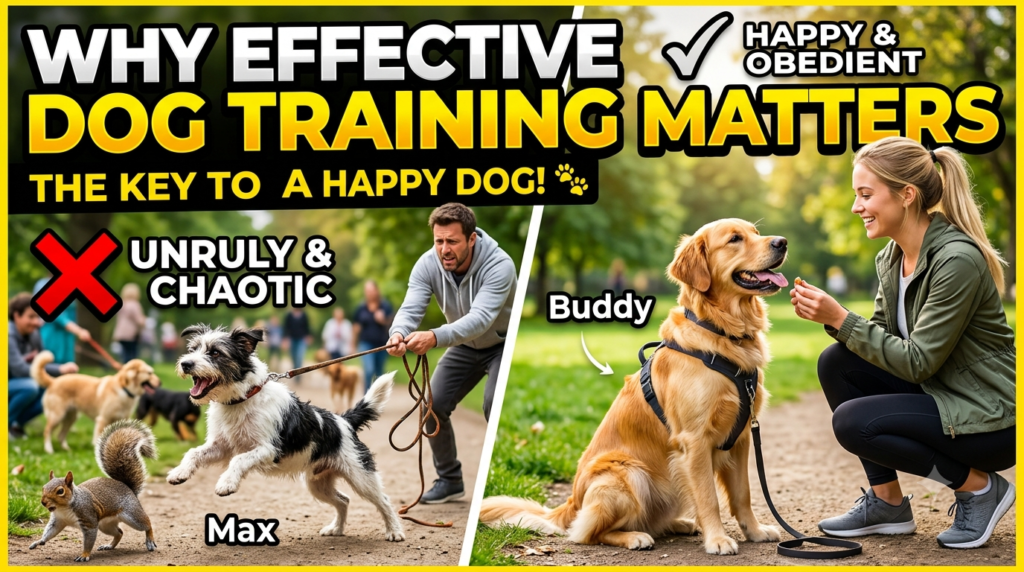
A well-trained dog is not simply a dog that performs tricks on command. Good training helps a dog understand boundaries, predict what will happen next, and make better choices in everyday situations. Imagine moving to a country where you do not speak the language and nobody explains the rules. That is somewhat like life for an untrained dog in a human household. The dog has instincts, emotions, energy, and curiosity, but it does not automatically understand that jumping on guests is undesirable, that chewing a shoe is different from chewing a toy, or that coming when called can be important for safety.
TrainPetDog.com presents obedience as a foundation for addressing many behavior issues. Its guidance emphasizes teaching dogs to respond reliably to basic commands such as sit, down, come, and stay, while consistently communicating expectations and rewarding appropriate behavior. This perspective is valuable because obedience is not just about control; it can become a practical communication system. Once a dog understands a few foundational cues, an owner has more tools for managing everyday situations, from welcoming visitors to going for walks.
Training as a Foundation for Better Communication
Communication is one of the most important reasons to train a dog. Dogs communicate naturally through body language, posture, vocalization, movement, and behavior, while humans tend to rely heavily on words. Training creates a bridge between those systems. When a dog learns that a particular word, hand signal, or gesture consistently predicts an action and a positive outcome, the animal can begin to understand what its owner wants.
This process requires patience because dogs do not learn by memorizing a dictionary. They learn through repeated associations and experiences. TrainPetDog.com encourages owners to communicate consistently and reward their dogs when they respond correctly. That approach can turn an ordinary interaction into a learning opportunity. A short practice session before dinner, a few repetitions during a walk, or a calm “stay” before opening the front door can gradually become part of everyday life.
Building Confidence, Trust, and Good Habits
Training can also strengthen the relationship between an owner and a dog. When learning is structured around patience, consistency, and appropriate reinforcement, the dog has an opportunity to discover that working with its human partner is rewarding. Instead of constantly correcting mistakes after they happen, owners can create situations where the desired behavior is easier to understand and repeat.
The resources on TrainPetDog.com reflect this broader philosophy by presenting dog training alongside care, grooming, diet, exercise, and breed information. The site’s stated goal is not simply to make dogs obedient but to help owners raise healthier, better-behaved companions. That distinction matters. A dog is not a machine waiting for commands; it is a living animal with individual needs. The more an owner understands those needs, the easier it becomes to build useful routines.
What TrainPetDog.com Offers Dog Owners
One of the biggest attractions of TrainPetDog.com is the range of information available in one place. The site’s current resources include free dog training courses, articles about specific breeds and behavior issues, training materials, and paid programs. Its main page promotes a free mini-course covering areas such as housebreaking, obedience, and unwanted behaviors including barking, nipping, biting, jumping, and leash pulling.
The website also has an extensive article library. Current listings include subjects such as dog biting problems, exercise needs, suspiciousness toward strangers, destructive behavior, breed-specific health concerns, grooming, socialization, and other canine topics. For an owner who keeps encountering new questions as a puppy grows, this type of library can be useful because dog ownership is rarely a one-problem journey. The issue you are solving at three months may be completely different from the challenge you face at eighteen months.
Free Dog Training and Mini-Course Resources
TrainPetDog.com’s free mini-course is positioned as an accessible starting point for owners who want structured guidance without immediately committing to a paid program. The course page asks owners to identify whether their dog is under or over one year old and select an area of interest, allowing the material to be more relevant to the dog’s stage of life.
That structure can be particularly helpful for beginners because too much information can become overwhelming. Instead of searching randomly for dozens of disconnected tips, an owner can start with foundational skills and gradually expand. A puppy might begin with housebreaking and basic obedience, while an older dog may need help with leash behavior, barking, or another established habit. The key is not trying to fix everything on the same afternoon. Effective learning is usually built through small repetitions that eventually become reliable habits.
Breed-Specific and Behavior-Focused Guidance
Dogs are individuals, but breed characteristics can influence training, exercise, grooming, and behavior. TrainPetDog.com provides breed-oriented material and organizes some training resources around different dog sizes and breed groups. Its medium and mid-sized breed resources, for example, include breeds such as Labrador Retrievers, Border Collies, Boxers, Shiba Inus, Whippets, and others.
Breed information should not be treated as a rigid prediction of personality. Two dogs from the same breed can behave very differently depending on genetics, early experiences, environment, training, age, and health. Still, understanding common breed tendencies can help an owner ask better questions. A highly energetic working breed may require more mental stimulation than a low-energy companion dog, while a dog with a thick coat may require a different grooming routine. Training works best when those individual differences are considered rather than ignored.
Teaching Puppies Essential Life Skills
Puppyhood is a period when habits can develop quickly, which makes early training particularly valuable. Puppies are naturally curious and may explore the world with their mouths, noses, paws, and endless energy. They do not know that a carpet is different from a puppy pad, that a chair leg is not a chew toy, or that guests may not appreciate being greeted with muddy paws.
TrainPetDog.com places significant emphasis on puppy housebreaking and obedience. Its main training resources describe puppy training as a process that requires time, patience, and an understanding between the dog and owner. The goal is not perfection after one lesson. Instead, owners can use consistent routines to make desirable behavior predictable and easier for the puppy to repeat.
Housebreaking and Potty Training
Potty training is one of the first challenges that new dog owners encounter. The process becomes much easier when owners establish predictable routines, supervise the puppy carefully, recognize signs that it needs to eliminate, and reward appropriate behavior. Consistency is the secret ingredient because puppies learn from repetition. If the rules change every day, the puppy receives mixed signals.
TrainPetDog.com specifically promotes resources focused on housebreaking and offers a free training mini-course covering this area. The site’s training materials also describe housebreaking as a core part of creating a well-behaved household companion. Owners should remember that accidents are part of the learning process, particularly with very young puppies. The better approach is to manage the environment, reinforce the correct location, and avoid turning mistakes into frightening experiences.
Basic Obedience Commands
Basic commands provide the building blocks for everyday communication. Sit, down, come, and stay can help owners manage situations around the home and outside. TrainPetDog.com identifies these commands as fundamental obedience skills and emphasizes reliable responses rather than merely performing them once in a quiet room.
The real test of training is whether a dog can gradually apply what it has learned in different environments. A dog that sits perfectly in the kitchen may become distracted when a delivery driver arrives or another dog walks past. That is why owners should progress gradually, increasing distractions only as the dog becomes more reliable. Short, successful sessions can be more productive than exhausting the dog with a long training marathon.
Managing Common Dog Behavior Problems

Behavior problems are among the biggest reasons people search for dog-training help. Barking, chewing, jumping, biting, nipping, pulling, and house accidents can make everyday life frustrating. Yet these behaviors usually communicate something about the dog’s needs, learning history, environment, or emotional state. Treating every unwanted behavior as simple stubbornness can cause owners to miss the real issue.
TrainPetDog.com specifically provides resources addressing barking, biting, jumping, leash pulling, chewing, and other unwanted habits. Its free masterclass also discusses techniques intended to help dogs remain calm around distractions, greet people appropriately, and walk without constantly pulling. These are practical skills because they directly affect how comfortably a dog can participate in family life.
Barking, Jumping, Biting, and Nipping
Dogs bark for many reasons, including excitement, alerting, frustration, fear, attention seeking, and environmental triggers. Simply shouting “stop” may not teach the dog what to do instead. A more useful training plan identifies the trigger, manages the environment, reinforces calm behavior, and teaches an alternative response where appropriate.
The same principle applies to jumping and nipping. A dog that jumps on visitors may have learned that jumping produces attention, even if that attention comes in the form of pushing the dog away. Changing the behavior requires changing the pattern. TrainPetDog.com’s masterclass discusses teaching dogs to greet people calmly and addressing excitement-related barking and jumping. Serious aggression or dangerous biting, however, deserves individualized help from a qualified veterinary behavior professional or experienced trainer rather than relying solely on general online instructions.
Leash Pulling and Unwanted Habits
Walking should ideally be a shared activity rather than a daily wrestling match. A dog that constantly pulls may be excited by smells, people, other animals, movement, or simply the freedom of being outdoors. Training can teach the dog that walking calmly beside its owner produces better outcomes than dragging the leash.
TrainPetDog.com includes leash-pulling among the unwanted behaviors addressed by its free training resources. Its masterclass also describes methods for teaching dogs to walk on a leash without pulling. Owners can make progress by practicing in low-distraction environments before expecting perfect behavior in a busy park. Think of it like learning to drive: you would not begin in the middle of the busiest intersection in town.
Supporting Dogs Beyond Obedience Training
A thriving dog needs more than commands. Nutrition, exercise, grooming, socialization, mental stimulation, appropriate veterinary care, and a suitable environment all contribute to quality of life. TrainPetDog.com reflects this broader perspective by offering resources covering dog diet, grooming, exercise, breed selection, and general care alongside its training material.
This holistic approach makes sense because behavior and physical well-being are closely connected. A bored dog may become destructive. A dog with insufficient exercise may struggle to settle. A dog whose grooming needs are ignored may become uncomfortable. Training should therefore be viewed as one piece of a much larger care puzzle.
Grooming, Nutrition, Exercise, and General Care
TrainPetDog.com lists dedicated resources for dog grooming and diet, as well as information about exercise and breed-specific care. Its article library also covers subjects ranging from exercise requirements to breed-related health topics. For owners, this can create a useful habit: when a new problem appears, look beyond the obvious behavior and consider the dog’s broader needs.
Nutrition deserves particular caution because dietary requirements can vary according to age, size, health status, activity level, and other factors. General online information can help owners understand basic concepts, but individualized dietary decisions should be discussed with a veterinarian. The same principle applies to health problems. Training websites can educate owners, but they should not replace professional veterinary diagnosis or treatment.
Choosing Training Methods That Fit Your Dog
There is no single magic formula that works identically for every dog. TrainPetDog.com itself notes that training depends on the dog, the methods used, and the skill and understanding of the owner. That is an important reminder to remain flexible. If one approach is not producing progress, an owner may need to adjust the environment, reward timing, difficulty level, session length, or type of reinforcement.
Modern dog training increasingly emphasizes humane, reward-based learning rather than intimidation or harsh punishment. TrainPetDog.com’s own material discusses patience and positive reinforcement as important elements of contemporary training. The most useful goal is not to make a dog afraid of making mistakes; it is to make the desired behavior clear enough that the dog has a reason to repeat it.
Read More:-
How Does Strikingly Simplify the Website Building Process?
Building Your Dream Website with Site123
Boost Your E-commerce Strategy with YITH Plugins
Maximize Your Customer Engagement with LiveAgent’s Features
Why STRIPO is Essential for Digital Product Marketersa
Making TrainPetDog.com Part of a Daily Routine
The biggest mistake many owners make is treating training like a special event. They train for twenty minutes on Sunday, expect dramatic results, and become disappointed when the dog forgets everything by Tuesday. Dogs learn through repetition and context, so training can be woven into ordinary life. Ask for a sit before putting down the food bowl. Practice recall in a safe environment. Reward calm behavior when visitors arrive. Reinforce appropriate leash walking during a short neighborhood stroll.
TrainPetDog.com can serve as a reference library throughout that process. The website offers free courses, articles, breed resources, and premium training materials, giving owners multiple ways to explore different topics. Its paid Dog Lovers Training Course currently advertises a $67 price, a 120-day money-back guarantee, and additional resources, although prices and offers can change and should be verified directly on the site before purchase.
Turning Training Into a Positive Habit
Consistency does not mean making every session rigid or boring. Dogs can learn during play, walks, feeding, grooming, and household routines. The trick is to recognize moments when the dog can practice a behavior and reward the right choice. Over time, these tiny lessons can accumulate into meaningful changes.
A useful routine might begin with five minutes of basic obedience in the morning, calm leash practice during a walk, and a few minutes of mental stimulation in the evening. Owners can then use TrainPetDog.com’s resources to troubleshoot specific issues as they arise. The website’s free masterclass and mini-course are designed around practical training subjects, including housebreaking, obedience, distractions, barking, jumping, and leash behavior.
When Online Resources Are Not Enough
Online dog-training resources can be extremely useful, but responsible ownership also means recognizing their limits. A generalized article cannot observe your dog’s body language, living environment, health, history, or interactions in real time. If a dog displays severe aggression, repeated dangerous biting, extreme fear, sudden behavioral changes, or behavior that may be connected to illness or pain, professional assistance is appropriate.
TrainPetDog.com provides a contact system for questions related to its products and free mini-courses, while its resources are intended to help owners learn about training and care. Its FAQ library also provides information about accessing courses, memberships, downloads, payments, and customer support. Owners can use those resources for educational guidance while still involving veterinarians, qualified trainers, or veterinary behavior professionals when a dog’s situation requires individualized assessment.




Conclusion
Helping a dog learn and thrive is a long-term relationship rather than a one-time project. TrainPetDog.com provides a broad collection of educational resources that can help owners approach that relationship with more structure, from basic obedience and puppy housebreaking to barking, biting, leash behavior, grooming, diet, exercise, and breed-specific information. Its free mini-course and masterclass can provide accessible starting points, while its broader training products offer additional material for owners who want a more comprehensive program.
The most important lesson is that training should not be viewed as punishment or a battle of wills. It is a conversation built through repetition, consistency, patience, and appropriate reinforcement. When owners combine useful educational resources with daily practice and professional support when needed, dogs have a much better opportunity to become confident, responsive, well-adjusted companions. After all, the goal is not simply to have a dog that follows commands—it is to build a relationship in which both human and dog understand each other better.
Frequently Asked Questions
Q. What is TrainPetDog.com?
A. TrainPetDog.com is a dog-training and dog-care resource website offering information about obedience training, puppy housebreaking, behavior problems, grooming, diet, exercise, breed information, and related topics. The site states that its mission is to educate dog owners and promote responsible dog ownership.
Q. Does TrainPetDog.com offer free dog-training resources?
A. Yes. The website currently promotes a free dog-training mini-course and a free online masterclass covering topics such as obedience, housebreaking, barking, jumping, leash pulling, and managing distractions.
Q. Can TrainPetDog.com help with puppy potty training?
A. Yes. Housebreaking is one of the major subjects covered by the site’s free and paid training resources. The website specifically promotes guidance for puppy housebreaking and describes it as an important part of developing a well-behaved household dog.
Q. Does TrainPetDog.com provide breed-specific information?
A. Yes. Its resources include breed-specific training and informational material, along with articles covering individual breeds and breed-related health and behavior subjects.
Q. Can online dog-training resources replace a veterinarian or professional trainer?
A. Not always. Online resources are useful for education and routine training, but serious aggression, dangerous biting, sudden behavioral changes, suspected illness or pain, and complex behavior problems may require individualized assessment from a veterinarian, qualified trainer, or veterinary behavior professional.