
This article offers a comprehensive guide to Tenable Vulnerability Management in 2026, explaining how organizations can effectively detect, prioritize, and remediate security vulnerabilities in modern IT environments. It covers Tenable’s key features such as risk-based prioritization, continuous monitoring, and AI-driven analytics, along with an overview of its ecosystem including Nessus and Tenable One. The guide also outlines how the platform works step by step, discusses pricing models, highlights real-world use cases, and compares Tenable with competitors, helping readers understand its value in strengthening cybersecurity and managing evolving digital threats.
Table of Contents
- What is Tenable Vulnerability Management?
- Core Features of Tenable Vulnerability Management
- Key Products in the Tenable Ecosystem
- How Tenable Works (Step-by-Step Process)
- Pricing and Licensing in 2026
- Benefits of Using Tenable
- Limitations and Challenges
- Tenable vs Competitors
- Real-World Use Cases
- Best Practices for Implementation
- Future Trends in Vulnerability Management
- Conclusion
- FAQs
What is Tenable Vulnerability Management?
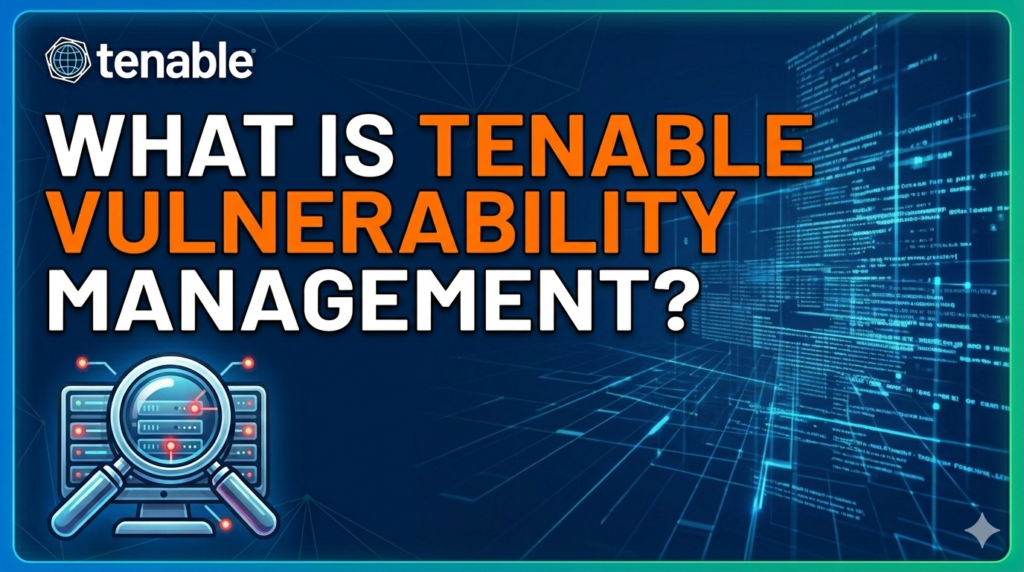
If cybersecurity were a battlefield, then Tenable Vulnerability Management would be your radar system—constantly scanning, detecting, and prioritizing threats before they strike. In 2026, cyber threats are no longer occasional disruptions; they are persistent, automated, and increasingly intelligent. Businesses today are not just defending against hackers but against entire ecosystems of cybercrime, and this is where Tenable steps in as a critical defense layer.
At its core, Tenable provides a risk-based vulnerability management platform that identifies, analyzes, and helps remediate weaknesses across your IT environment. Unlike traditional scanners that simply list vulnerabilities, Tenable focuses on what actually matters—which vulnerabilities are most likely to be exploited and cause real damage. This shift from reactive to proactive security is what makes it stand out.
The platform is powered by the well-known Nessus scanning technology, widely considered one of the most trusted vulnerability scanners in the world. What makes Tenable even more powerful in 2026 is its integration of AI-driven analytics, real-time monitoring, and cloud scalability, allowing organizations to maintain continuous visibility over their entire attack surface.
Cybersecurity experts often describe modern vulnerability management as “prioritization under pressure.” With thousands of vulnerabilities discovered daily, organizations need tools that don’t just detect but also prioritize intelligently. Tenable does exactly that by combining exploit data, asset criticality, and business context.
Evolution of Tenable in Cybersecurity
Tenable didn’t just appear overnight—it has been shaping vulnerability management for over two decades. Starting with the launch of Nessus, the company quickly became a leader in vulnerability scanning. Today, it serves over 44,000 organizations worldwide, helping them manage cyber risk across IT, cloud, and operational technology environments.
The transformation from simple vulnerability scanning to exposure management platforms like Tenable One reflects how cybersecurity has evolved. Earlier, businesses only needed periodic scans. Now, they require continuous, real-time risk visibility, especially with the rise of cloud computing, remote work, and IoT devices.
In 2026, Tenable is no longer just a tool—it’s an ecosystem. It integrates with DevOps pipelines, cloud environments, and compliance frameworks, making it a central hub for modern cybersecurity operations.
Why Vulnerability Management Matters in 2026
Imagine leaving your house with dozens of unlocked doors and windows—that’s exactly what an unpatched IT environment looks like. Every vulnerability is an entry point, and attackers only need one.
The scale of cyber threats has exploded. Automated bots now scan the internet constantly, looking for weaknesses within minutes of their discovery. That means organizations no longer have the luxury of time. Vulnerability management must be continuous, automated, and intelligent.
Tenable addresses this by offering real-time risk insights, automated scanning, and continuous visibility, ensuring that no critical vulnerability goes unnoticed. Instead of drowning security teams in endless alerts, it helps them focus on the vulnerabilities that truly matter.
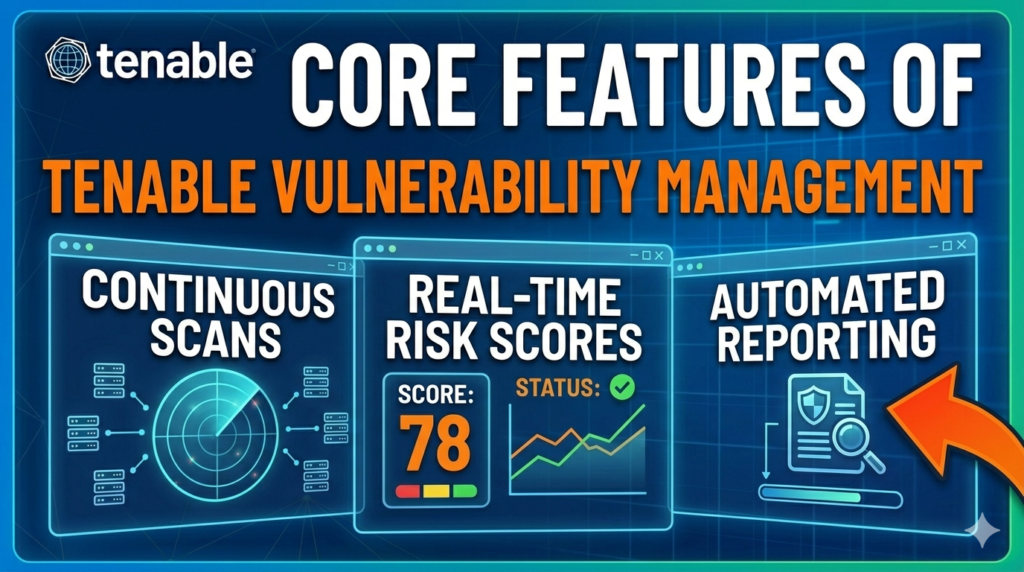
Core Features of Tenable Vulnerability Management
Risk-Based Prioritization
One of Tenable’s biggest strengths is its ability to cut through the noise. Traditional tools rely heavily on CVSS scores, which often don’t reflect real-world risk. Tenable goes further by analyzing exploitability, asset importance, and threat intelligence.
This means your team doesn’t waste time fixing low-risk issues while critical vulnerabilities remain exposed. It’s like having a smart assistant that tells you exactly where to focus first.
Continuous Monitoring & Asset Discovery
You can’t protect what you can’t see. Tenable solves this with advanced asset discovery capabilities, automatically identifying devices, applications, and cloud resources across your environment.
From servers and containers to IoT devices, everything is tracked in real time. This ensures that even dynamic environments—where assets constantly appear and disappear—remain secure.
AI-Driven Analytics
In 2026, artificial intelligence is no longer optional—it’s essential. Tenable uses AI to analyze massive datasets, identifying patterns and predicting which vulnerabilities are most likely to be exploited.
This predictive capability transforms security from reactive to proactive, allowing organizations to stay ahead of attackers rather than constantly playing catch-up.
Reporting and Dashboards
You can only use data if you can comprehend it. Tenable provides intuitive dashboards and detailed reports, making it easy for both technical and non-technical stakeholders to grasp security risks.
Whether you’re a CISO presenting to executives or a security analyst tracking vulnerabilities, the platform offers insights tailored to your needs.
Key Products in the Tenable Ecosystem
Nessus Scanner
Nessus remains the backbone of Tenable’s offerings. It provides comprehensive vulnerability scanning, including:
- Configuration auditing
- Malware detection
- Compliance checks
- Asset discovery
- Continuous monitoring
It’s widely used by security professionals due to its accuracy and reliability.
Tenable Vulnerability Management (Cloud)
This cloud-based platform extends Nessus capabilities with centralized dashboards, automation, and scalability. It allows organizations to manage vulnerabilities across distributed environments effortlessly.
Tenable One Platform
Tenable One represents the future of exposure management. It combines vulnerability management with identity, cloud, and attack surface management into a single platform, providing a holistic view of cyber risk.
How Tenable Works (Step-by-Step Process)
Asset Discovery
The first step is identifying all assets within your environment. Tenable automatically discovers devices, applications, and cloud resources, ensuring nothing is overlooked.
Vulnerability Scanning
Next, Nessus scans these assets for vulnerabilities using a vast database of known threats. This includes everything from outdated software to misconfigurations.
Risk Analysis
Here’s where Tenable shines. Instead of just listing vulnerabilities, it analyzes them based on real-world risk factors, helping teams prioritize effectively.
Remediation
Finally, Tenable provides actionable guidance to fix vulnerabilities, streamlining the remediation process and reducing overall risk.
Pricing and Licensing in 2026
Subscription Models Explained
Tenable uses a subscription-based pricing model, typically based on the number of assets. Pricing varies depending on features, deployment size, and add-ons.
- Entry-level pricing starts around $2,275 per year for basic plans
- Cloud vulnerability management starts around $3,700 annually for 250 assets
- Enterprise solutions can exceed $50,000 per year
Cost Comparison Table
| Product | Starting Price (Annual) | Best For |
| Nessus Essentials | Free (limited) | Beginners & testing |
| Nessus Professional | $4,790 | Security professionals |
| Tenable VM | $3,700+ | Mid-sized organizations |
| Tenable One | $50,000+ | Enterprises |
Benefits of Using Tenable
Tenable offers a range of advantages that make it a top choice for vulnerability management:
- Comprehensive visibility across IT, cloud, and OT environments
- Accurate risk prioritization
- Scalable cloud-based architecture
- Integration with DevOps and security tools
- User-friendly dashboards and reporting
These benefits help organizations reduce risk while improving efficiency.
Limitations and Challenges

No tool is perfect, and Tenable is no exception. Some challenges include:
- Pricing can be high for small businesses
- Advanced features may require additional modules
- Initial setup and configuration can be complex
However, for most enterprises, the benefits outweigh these drawbacks.
Tenable vs Competitors
When compared to competitors like Qualys or Rapid7, Tenable stands out for its risk-based prioritization and deep vulnerability insights. While others may offer similar scanning capabilities, Tenable’s focus on actionable intelligence gives it an edge.
Real-World Use Cases
Tenable is used across various industries, including:
- Financial services for compliance and risk management
- Healthcare for protecting sensitive patient data
- Government agencies for national security
- Tech companies for securing cloud infrastructure
Read More:-
Why STRIPO is Essential for Digital Product Marketers
Maximize Your Customer Engagement with LiveAgent’s Features
Boost Your E-commerce Strategy with YITH Plugins
Building Your Dream Website with Site123
How Does Strikingly Simplify the Website Building Process?
Why ContentStudio & Leadpages Are Essential for E-commerce Success
LiveChat: Transforming Customer Support for Digital Entrepreneurs
How Can Simvoly Elevate Your Digital Product Store Experience?
Why Should You Consider Elementor for Your Next Web Project?
Best Practices for Implementation
To get the most out of Tenable:
- Regularly update scanning policies
- Integrate with SIEM and ticketing systems
- Prioritize vulnerabilities based on risk
- Train your team on platform usage
Future Trends in Vulnerability Management
The future of vulnerability management is all about automation, AI, and integration. Platforms like Tenable are evolving into full exposure management systems, providing end-to-end visibility and control.
Expect deeper integration with AI, improved predictive analytics, and more automation in remediation workflows.



Conclusion
Tenable Vulnerability Management is not just a tool—it’s a complete cybersecurity strategy. In a world where threats are constant and evolving, having a platform that provides continuous visibility, intelligent prioritization, and actionable insights is essential.
Whether you’re a small business or a large enterprise, Tenable offers the tools needed to stay ahead of cyber threats in 2026 and beyond.
FAQs
Q. What is Tenable used for?
A. Tenable is used for identifying, prioritizing, and fixing security vulnerabilities across IT, cloud, and network environments.
Q. Is Tenable suitable for small businesses?
A. Yes, but pricing may be a challenge. Smaller teams often start with Nessus Essentials.
Q. How does Tenable prioritize vulnerabilities?
A. It uses risk-based analysis considering exploitability, asset importance, and threat intelligence.
Q. What is the difference between Nessus and Tenable VM?
A. Nessus is a scanner, while Tenable VM is a full vulnerability management platform with dashboards and automation.
Q. Is Tenable cloud-based?
A. Yes, Tenable offers cloud-based solutions along with on-premise options.