
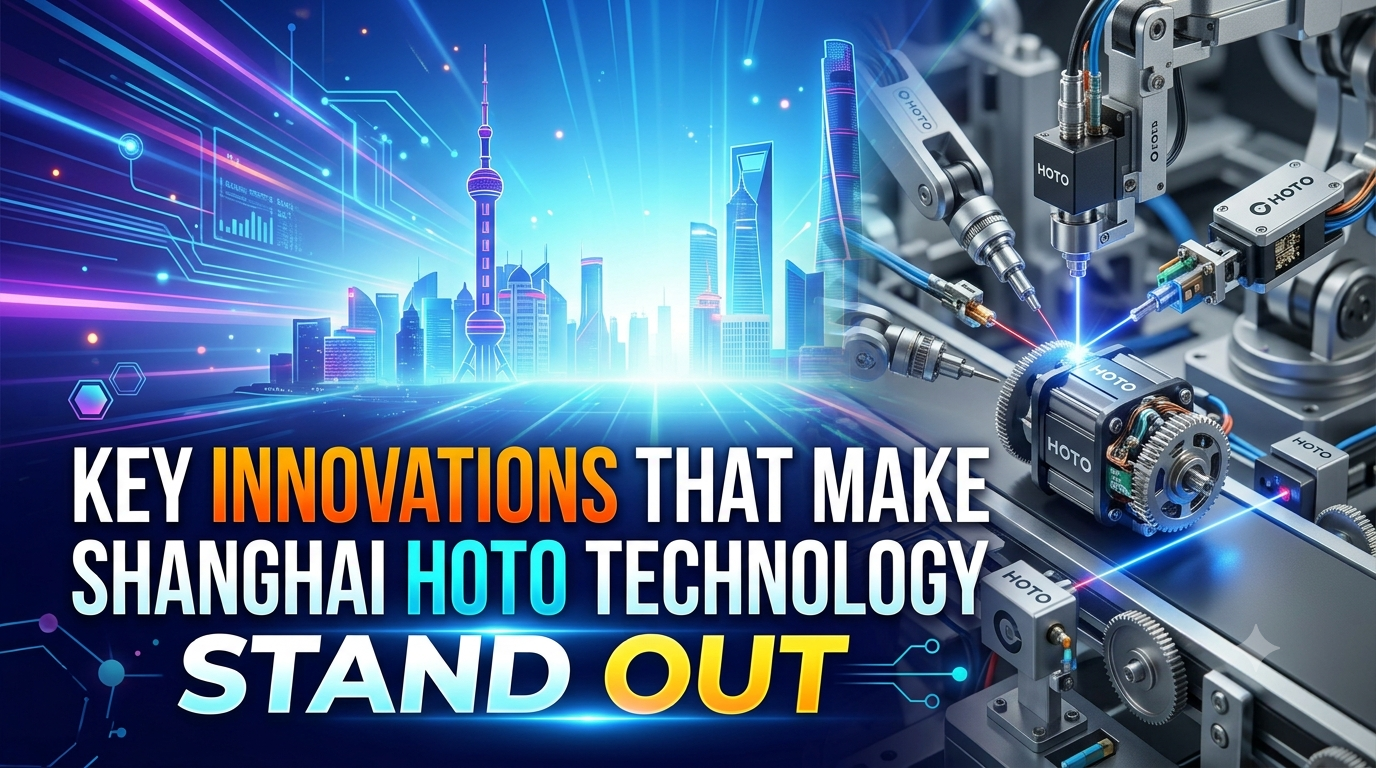
Shanghai HOTO Technology is a modern tool and lifestyle technology company known for combining innovative engineering, smart functionality, and minimalist industrial design. From precision screwdrivers and cordless drills to measuring devices, air pumps, cleaning tools, and modular solutions, Shanghai HOTO Technology focuses on creating compact, user-friendly products for everyday DIY, home improvement, automotive care, and repair needs. With an emphasis on portability, rechargeable technology, multifunctionality, and thoughtful design, the company continues to bring a consumer-electronics approach to the traditional tools industry.
Table of Contents
- Understanding Shanghai HOTO Technology
- The Design-First Philosophy Behind HOTO
- Smart Engineering in Compact Tools
- The SNAPBLOQ™ Modular Tool Ecosystem
- Innovation in Precision Screwdrivers
- Cordless Technology and USB-C Convenience
- Smart Measuring and Sensing Solutions
- Multi-Functional Products for Everyday Problems
- HOTO’s Approach to User-Friendly Engineering
- Professional Performance in Consumer-Friendly Designs
- Product Innovation Across Home, DIY and Automotive Use
- Building an Ecosystem Instead of Individual Tools
- HOTO’s Global Design and Innovation Footprint
- Why Compactness Matters in Modern Tools
- Sustainability and Long-Term Product Utility
- The Role of Patents and Design Recognition
- HOTO’s Expanding Product Portfolio
- What Sets HOTO Apart From Conventional Tool Makers
- The Future of HOTO Technology
- Conclusion
- Frequently Asked Questions
Understanding Shanghai HOTO Technology
Shanghai HOTO Technology has built its identity around a straightforward but ambitious idea: everyday tools do not have to look, feel, or operate like traditional hardware. The company says it was founded in 2016 with the goal of reinventing essential everyday tools, and its first product, a precision screwdriver set, was launched in 2018. According to HOTO, that first creation sold more than 2.1 million units, giving the company an early indication that consumers were interested in tools that combined practicality with a more refined product experience.
What makes the company particularly interesting is the way it approaches the tool category. Instead of treating a screwdriver, drill, measuring device, air pump, or cleaning tool as an isolated piece of hardware, HOTO frequently approaches these products as part of a modern lifestyle ecosystem. Its current portfolio spans screwdrivers and drills, measuring tools, air pumps, cleaning devices, tool sets, lighting products, and the modular SNAPBLOQ™ system. This broader approach helps explain why Shanghai HOTO Technology is often associated with the intersection of consumer electronics, industrial design, and practical DIY equipment.
From Everyday Tools to Modern Lifestyle Products
Traditional tools are generally designed around the task first: tighten a screw, drill a hole, measure a distance, inflate a tire, or clean a surface. HOTO takes a somewhat different route by asking another question: how can the entire experience of performing that task become simpler? That difference can be seen in its emphasis on compact dimensions, integrated storage, cordless operation, rechargeable batteries, visual simplicity, and multi-purpose functionality.
HOTO describes its mission as making “cool tools” that can help everyone bring projects to life, from first-time users to experienced professionals. That inclusive positioning is important because DIY equipment can sometimes appear intimidating to people who do not regularly work with hardware. A complicated tool with multiple controls, loose accessories, and bulky storage can create friction before the actual project even begins. By contrast, a compact, clearly organized tool can make the same activity feel much more approachable.
The Design-First Philosophy Behind HOTO
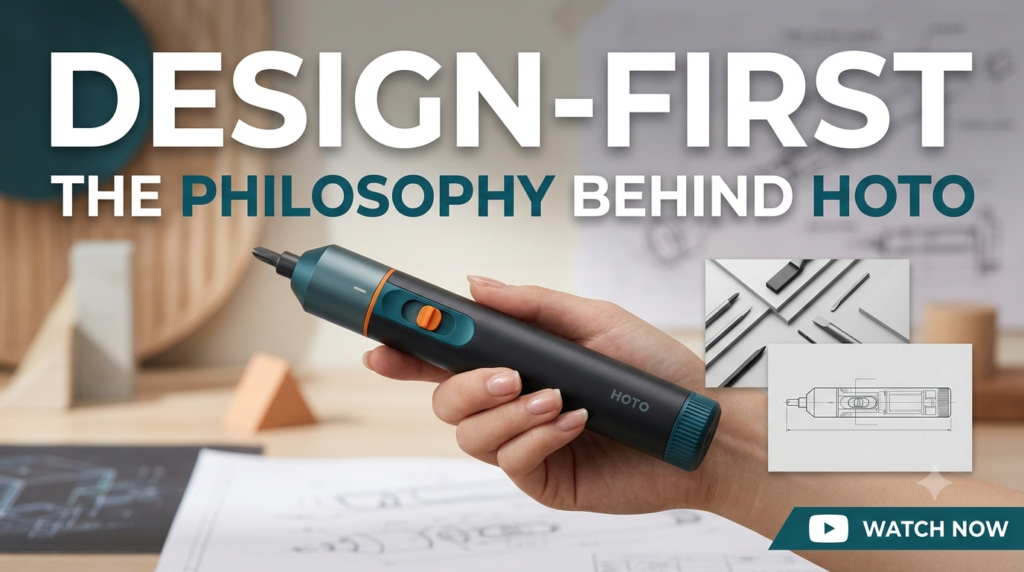
One of the strongest innovations associated with HOTO is not a single motor, battery, or electronic component. It is the company’s design-first approach to tools. HOTO says it focuses on user-friendly, stylish, and high-quality products while combining advanced technology with product design. Its official materials also report more than 60 design awards, more than 100 product patents, and recognition including German Red Dot awards.
Combining Function With Visual Simplicity
Good industrial design is more than making something attractive. It is about reducing the number of decisions a user needs to make while increasing confidence during operation. HOTO’s products frequently use clean forms, integrated storage, simplified controls, and compact bodies to create that experience. The company’s precision screwdriver products, for example, pair specialized bits with organized magnetic storage rather than treating each component as something the user must manage separately. HOTO India currently lists products ranging from a 28-in-1 manual precision screwdriver to a 48-in-1 professional-oriented set and an electric precision screwdriver with USB-C charging.
This is where HOTO’s design philosophy becomes practical rather than cosmetic. Imagine having a small repair project on a desk. A traditional tool kit might require opening a large box, searching for the appropriate bit, connecting or finding batteries, and managing several loose pieces. A thoughtfully designed compact system attempts to turn those steps into a more predictable routine. That reduction in friction is a meaningful form of innovation because the best tool is not necessarily the one with the largest motor or the highest number of accessories; it is often the one that makes the job easier to start and finish.
Smart Engineering in Compact Tools
HOTO’s engineering philosophy combines compact form factors with modern electronics and mechanical systems. The company’s own description highlights advanced energy supply, brushless motor innovation, and sensory solutions, along with a supply chain that connects consumer electronics and tools. This combination is significant because modern consumers increasingly expect tools to behave more like electronic devices: rechargeable, portable, efficient, intuitive, and easy to store.
Precision Motors and Portable Power
The challenge with making a tool smaller is that size reduction cannot simply come at the expense of useful performance. A compact drill still needs sufficient torque. A portable cleaning device still needs effective airflow or suction. A precision screwdriver needs controlled rotation rather than raw power. HOTO’s product range shows how the company applies different engineering approaches to these different use cases.
Its current portfolio includes a 16V brushless drill, a 12V brushless drill tool set, cordless screwdrivers, rotary tools, air pumps, spin scrubbers, and other powered devices. These products demonstrate a broader movement away from the old idea that household tools must be large, heavy, and permanently associated with a workshop.
Brushless Motor Technology
Brushless motors are particularly relevant to modern cordless tools because they eliminate the traditional mechanical brushes used in brushed motor designs. That can support efficient operation and reduce a source of mechanical wear. HOTO currently lists brushless drill products, including an Indian-market cordless brushless drill described with 30 N·m torque and up to 1,400 RPM, alongside an 18-piece bit set.
The importance of this innovation is not simply the specification itself. It is how such technology can be packaged into a consumer-oriented product. A user buying a compact cordless drill does not necessarily want to understand motor architecture; they want reliable performance without needing to become a hardware expert. HOTO’s approach attempts to hide the complexity behind a simpler experience.
The SNAPBLOQ™ Modular Tool Ecosystem
One of HOTO’s more distinctive recent innovations is SNAPBLOQ™, a modular tool platform designed around multiple compatible tool functions. HOTO’s current product listings include the SNAPBLOQ system alongside a cordless soldering iron, electric precision screwdriver, mini rotary tool, and mini drill.
One Platform, Multiple Applications
The idea behind a modular platform is easy to understand: instead of purchasing a completely separate powered system for every task, users can build around a common ecosystem. This resembles the way interchangeable lenses expand a camera system or how software platforms support different applications. The underlying concept is flexibility.
SNAPBLOQ’s importance lies in the direction it represents for consumer tools. A user might need precision driving today, drilling tomorrow, and rotary-tool functionality later. A modular approach can make that transition more convenient while reducing the conceptual and physical clutter associated with owning multiple unrelated devices. HOTO’s current catalog specifically identifies several SNAPBLOQ components, including the S-A01 Electric Precision Screwdriver Master Set, R-A04 Electric Mini Rotary Tool Kit, and D-A03 Electric Mini Drill Set.
Innovation in Precision Screwdrivers
Precision screwdrivers may sound like a simple category, but they are a strong example of how HOTO applies innovation to familiar objects. Small electronics, watches, cameras, laptops, glasses, toys, and other devices frequently require specialized screwdriver bits. The challenge is to provide enough variety without creating a box full of components that are difficult to organize.
HOTO’s current Indian product range includes a 170 RPM cordless electric precision screwdriver with 25 S2-steel bits and USB-C charging, as well as multiple manual precision screwdriver systems. The combination of specialized bits, magnetic storage, compact dimensions, and electric operation illustrates HOTO’s tendency to treat a basic hand tool as a complete product experience rather than merely a metal shaft with a handle.
The innovation becomes clearer when viewed from the user’s perspective. Someone repairing a laptop does not necessarily want the strongest screwdriver available. They want the right bit, controlled movement, comfortable handling, organized storage, and enough power for the task. HOTO’s precision-tool designs focus on these details, turning a conventional repair accessory into something closer to a purpose-built consumer electronic device.
Cordless Technology and USB-C Convenience
Another major innovation is HOTO’s emphasis on cordless rechargeable operation. Modern users are surrounded by USB-powered devices, so charging a tool through a familiar connector can make the product easier to integrate into everyday life. HOTO’s product listings include USB-C rechargeable screwdrivers and drills, while other cordless products are designed around rechargeable battery systems.
This may appear like a small convenience, but charging architecture can strongly influence whether a portable tool gets used regularly. If a product requires a dedicated charger that is easily misplaced, the tool can become inconvenient. USB-C, by comparison, fits into an increasingly standardized charging environment. The result is not necessarily a revolutionary engineering breakthrough by itself, but it is a practical example of consumer-electronics thinking entering the traditional tool market.
Smart Measuring and Sensing Solutions
Measurement is another area where technology can remove guesswork. HOTO’s portfolio includes laser measuring tools, self-lock measuring tape, laser levels, and smart kitchen scales. These products show that the company’s innovation strategy extends beyond powered screwdrivers and drills.
A measuring tool is valuable when it produces information quickly and consistently. A laser measure, for example, can simplify certain distance-measuring tasks without requiring the user to physically extend a long tape across a space. A self-lock tape measure addresses a different problem by making traditional measurement easier to handle. These are relatively ordinary activities, but that is exactly why they are interesting: HOTO applies product design and technology to small moments that people encounter in daily life.
Multi-Functional Products for Everyday Problems
HOTO’s current portfolio is increasingly defined by multi-functionality. Its official product collection includes an AutoCare air duster and vacuum, spin scrubbers, air pumps, tool sets, measuring devices, screwdrivers, drills, rotary tools, lighting products, and other accessories.
One example is the HOTO AutoCare 4-in-1 air duster and vacuum, which the India site describes as combining blowing, suction, and inflating functions in a compact handheld device. This type of product reflects a consumer trend toward fewer devices that perform more tasks.
Multi-functionality can be especially useful in smaller homes, apartments, cars, workshops, and workspaces where storage is limited. Instead of having one device for every small job, a multi-purpose tool can act as a compact toolbox. The trade-off, of course, is that a multi-function device must perform each intended function well enough to justify its versatility. HOTO’s product strategy clearly places considerable emphasis on solving this balance.
HOTO’s Approach to User-Friendly Engineering
The phrase user-friendly engineering can sound vague, but HOTO’s products provide several concrete examples of what it can mean. It can involve a magnetic bit case, integrated accessory storage, compact dimensions, simplified controls, cordless operation, ergonomic shapes, or a combination of several of these decisions.
HOTO explicitly says its products are intended for everyone, from beginners to seasoned professionals. That is a challenging design target because beginners generally need simplicity while experienced users may demand performance and precision. A successful product has to avoid becoming so basic that professionals find it limiting while also avoiding unnecessary complexity that intimidates newcomers.
The company’s approach can therefore be understood as an attempt to make professional-inspired functionality more approachable. Instead of asking users to learn a tool before they can use it, the design tries to communicate how the tool works through its physical form and controls.
Professional Performance in Consumer-Friendly Designs
HOTO’s product portfolio illustrates an effort to combine consumer-friendly presentation with specifications associated with more serious tools. Its current catalog includes brushless drills, precision screwdrivers, rotary tools, and powered cleaning equipment.
The important point is not that every HOTO product is intended to replace professional workshop equipment. Rather, the company appears to occupy an interesting middle ground between basic household accessories and conventional professional hardware. A homeowner assembling furniture, a hobbyist working on electronics, a creator making small projects, or an enthusiast maintaining a vehicle may all have different requirements, but they can benefit from compact tools with clear controls and reliable power.
That positioning also explains why design matters so much. When a product sits between consumer electronics and traditional hardware, appearance, portability, interface design, and storage can influence the buying experience almost as much as raw specifications.
Product Innovation Across Home, DIY and Automotive Use
HOTO’s innovation strategy is increasingly broad. The company is not restricted to one tool category or one user group. Its product catalog covers home maintenance, DIY projects, electronics repair, cleaning, automotive care, measuring, lighting, and outdoor applications.
This breadth allows the company to apply ideas developed in one category to another. Battery technology, motor systems, ergonomic design, accessory organization, and compact packaging can all have applications across different products. A motor designed for efficient operation, for instance, can become relevant to a drill, scrubber, blower, or rotary tool, although each application still requires different engineering decisions.
This cross-category strategy is one reason HOTO can be viewed as more than a screwdriver manufacturer. The company is building a broader identity around modern tools for people who want to create, repair, maintain, and improve things without necessarily owning a traditional workshop.
Building an Ecosystem Instead of Individual Tools
Perhaps the biggest strategic innovation is HOTO’s movement toward an ecosystem mindset. Rather than just asking, “What new tool should we make?”, an ecosystem-oriented company can ask, “What collection of tools makes the user’s entire workflow easier?”
SNAPBLOQ™ is the clearest example, but the broader portfolio supports the same philosophy. HOTO sells individual products as well as tool sets, accessories, replacement components, and complementary devices. Its official store currently lists replacement blades, filters, scrubber accessories, glue sticks, and other supporting products alongside primary tools.
An ecosystem can create convenience because users know where compatible accessories and related products fit into their workflow. It can also encourage product continuity because one useful tool may naturally lead a customer toward another product designed around similar principles.
HOTO’s Global Design and Innovation Footprint
Although Shanghai is central to HOTO’s identity, the company has developed an international footprint. HOTO says it has established offices in Shanghai, the United States, Japan, and Hong Kong, and reports more than 10 million users across 56 countries. These are company-reported figures rather than independent market measurements, but they illustrate the scale HOTO associates with its international presence.
The company’s global orientation is relevant because tool preferences can vary considerably by region. A product designed for a global market needs to account for different household environments, electrical standards, consumer expectations, repair habits, and cultural approaches to DIY. HOTO’s international positioning therefore creates both opportunities and engineering challenges.
Its presence in India also demonstrates this expansion. HOTO India currently maintains dedicated collections for tools including screwdrivers, drills, cleaning products, measuring equipment, lighting, and the SNAPBLOQ system.
Why Compactness Matters in Modern Tools
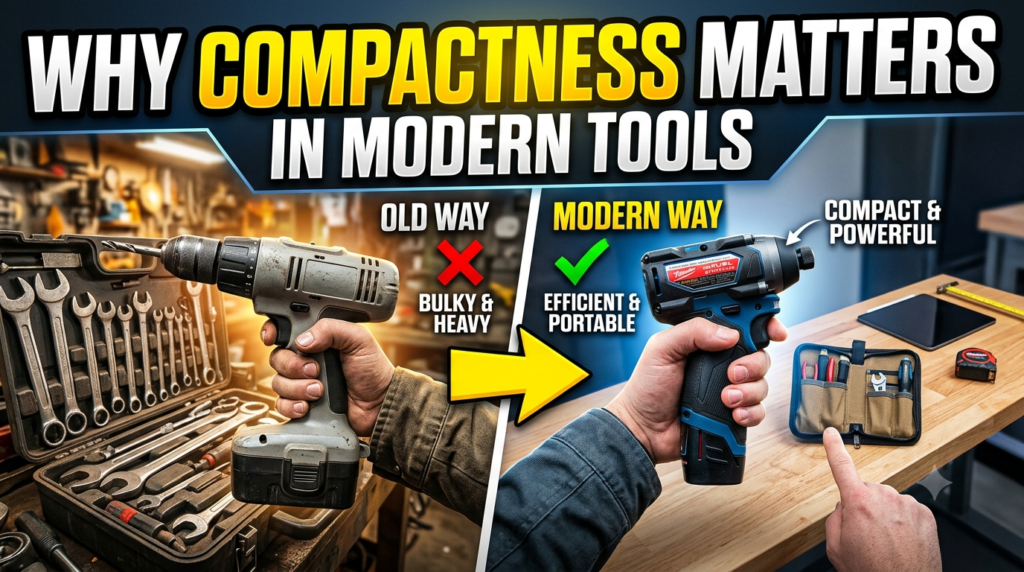
Compactness is one of HOTO’s most recognizable design characteristics. But smaller does not automatically mean better. The real innovation comes from achieving a useful balance between size, power, battery capacity, ergonomics, and functionality.
Modern living spaces are often optimized around convenience. People may not have a garage-sized workshop or a large storage cabinet dedicated to tools. A compact screwdriver or multi-function device can therefore provide practical value simply by occupying less space. HOTO’s product portfolio repeatedly emphasizes portable and compact form factors, particularly in precision tools, rotary tools, air pumps, and cleaning devices.
Think of compactness as the difference between carrying a full toolbox and carrying the few tools you actually need. If a smaller device can cover most everyday tasks, it becomes easier to keep nearby, easier to transport, and more likely to be used.
Sustainability and Long-Term Product Utility
Tool sustainability is not limited to the materials used in manufacturing. Product lifespan, repairability, replacement accessories, battery design, and continued usability can all affect the overall environmental footprint of a product.
HOTO’s catalog includes replacement components such as filters, blades, and scrubber accessories. This suggests an approach where certain products are supported through replaceable consumable or accessory components rather than necessarily treating the entire product as disposable when one component reaches the end of its useful life.
That does not by itself establish a complete sustainability profile, and consumers would need detailed product-level information to evaluate environmental performance. Still, the availability of replacement accessories is an important part of designing a tool ecosystem for continued use. A product that can remain functional through accessory replacement has a different lifecycle from one that is simply discarded after a component wears out.
The Role of Patents and Design Recognition
HOTO reports more than 100 product patents and more than 60 design awards, while also highlighting Red Dot recognition and an IF tools design ranking. Such recognition does not automatically prove that a product is superior in every practical situation, but it does provide evidence that design and innovation are central parts of HOTO’s corporate strategy.
Awards are particularly relevant for a company operating at the intersection of industrial design and consumer technology. A traditional tool company might primarily compete through durability, torque, price, or professional reputation. A design-oriented company adds another dimension: how the product looks, feels, fits into the user’s environment, and communicates its purpose.
That distinction helps explain why HOTO products often resemble consumer electronics more than conventional workshop equipment. The design language itself is part of the company’s product proposition.
HOTO’s Expanding Product Portfolio
HOTO’s current catalog illustrates how quickly its product strategy has expanded. Its global store lists categories including SNAPBLOQ™, screwdrivers and drills, spin scrubbers, tool sets, air pumps, measuring tools, cleaning tools, lighting products, and accessories.
| Product Area | Representative Innovation | Primary Use |
| Precision Screwdrivers | Electric operation, specialized bits, magnetic storage | Electronics and small repairs |
| Brushless Drills | Cordless brushless motor systems | DIY drilling and fastening |
| SNAPBLOQ™ | Modular tool platform | Multiple DIY applications |
| Air Pumps | Compact cordless inflation | Bikes, vehicles and inflatables |
| AutoCare Tools | Combined blowing and vacuum functions | Vehicle and workspace cleaning |
| Spin Scrubbers | Cordless powered cleaning | Household cleaning |
| Measuring Tools | Laser and self-lock measurement | Home projects and DIY |
| Rotary Tools | Compact multi-purpose operation | Crafting and repairs |
The breadth of these categories reveals a consistent pattern. HOTO is taking ordinary activities and redesigning the tools around them for a generation that values portability, visual simplicity, rechargeable power, and multifunctionality.
Read More:-
How Does Strikingly Simplify the Website Building Process?
Building Your Dream Website with Site123
Boost Your E-commerce Strategy with YITH Plugins
Maximize Your Customer Engagement with LiveAgent’s Features
Why STRIPO is Essential for Digital Product Marketersa
What Sets HOTO Apart From Conventional Tool Makers
The distinction between HOTO and conventional tool manufacturers is best understood as a difference in product philosophy, not simply a difference in specifications. Traditional tools often emphasize durability, raw performance, specialization, and workshop use. HOTO adds consumer-electronics principles such as compact industrial design, rechargeable power, intuitive controls, modular ecosystems, and lifestyle-oriented aesthetics.
Its official brand language explicitly connects consumer electronics and tools through its integrated supply-chain approach. That intersection is where much of HOTO’s differentiation comes from.
Consider a screwdriver. One company might focus primarily on the steel composition of its bits and the mechanical durability of its handle. HOTO may consider those things while also asking how the tool is stored, charged, carried, displayed, operated, and combined with other products. That broader design lens changes the product from a single-purpose implement into part of a complete user experience.
The Future of HOTO Technology
The future direction of Shanghai HOTO Technology appears closely connected to modularity, cordless systems, compact engineering, smart functionality, and broader tool ecosystems. Its recent product releases include additional SNAPBLOQ components, new electric screwdriver products, and products spanning cleaning and automotive applications.
As technology continues to enter everyday hardware, the boundary between a traditional tool and a consumer electronic device will likely become less distinct. Batteries will become more integrated, motors more efficient, sensors more common, and modular systems more capable. The companies that succeed in this environment will need to solve two problems simultaneously: provide meaningful technical capability while keeping the user experience simple.
HOTO’s current strategy gives it a clear framework for pursuing that balance. Its emphasis on design, compactness, portability, modularity, and accessible functionality suggests that the company sees the future of tools as something broader than professional workshop equipment. The modern tool can be something that sits on a desk, travels in a backpack, lives in a car, or remains in a kitchen drawer until an unexpected problem appears.



Conclusion
Shanghai HOTO Technology stands out because it treats tools as complete product experiences rather than simply pieces of hardware. From its early precision screwdriver success to its growing portfolio of drills, rotary tools, measuring devices, air pumps, cleaning products, and modular systems, the company has consistently emphasized the combination of engineering and design.
Its most notable innovations include compact cordless engineering, brushless motor technology, USB-C charging on selected products, organized precision-tool systems, multifunctional devices, smart measurement products, and the SNAPBLOQ™ modular ecosystem. These innovations are tied together by a broader philosophy: make capable tools easier to understand, easier to store, and more enjoyable to use.
The company’s reported global reach, patent portfolio, and design recognition reinforce its position as a design-oriented tool brand, although individual product performance should always be evaluated according to the specific task and requirements. What makes HOTO particularly interesting is the way it brings ideas from consumer electronics into an industry that has traditionally focused more heavily on conventional hardware. That combination of technology, portability, modularity, and industrial design is ultimately the foundation of what makes Shanghai HOTO Technology distinctive.
Frequently Asked Questions
Q. What is Shanghai HOTO Technology known for?
A. Shanghai HOTO Technology is known for designing modern tools that combine practical functionality with consumer-oriented industrial design. Its portfolio includes precision screwdrivers, drills, rotary tools, measuring devices, air pumps, cleaning tools, and modular systems such as SNAPBLOQ™.
Q. What is SNAPBLOQ™?
A. SNAPBLOQ™ is HOTO’s modular tool system. Its current product lineup includes components such as an electric precision screwdriver, mini rotary tool, mini drill, and cordless soldering iron.
Q. Does HOTO make professional-grade tools?
A. HOTO offers products designed for both everyday users and more experienced DIY users. Its portfolio includes higher-performance products such as brushless drills and multi-function rotary tools, while the company explicitly positions its products for everyone from beginners to seasoned professionals.
Q. What makes HOTO screwdrivers different?
A. HOTO focuses on precision, compact design, organized bit storage, cordless operation on selected models, and user-friendly handling. Its Indian catalog includes electric precision screwdrivers with specialized S2-steel bits and USB-C charging.
Q. Where can HOTO products be purchased?
A. HOTO operates an official global online store and has a dedicated India website featuring its current product range. Availability and pricing vary by market and product.