
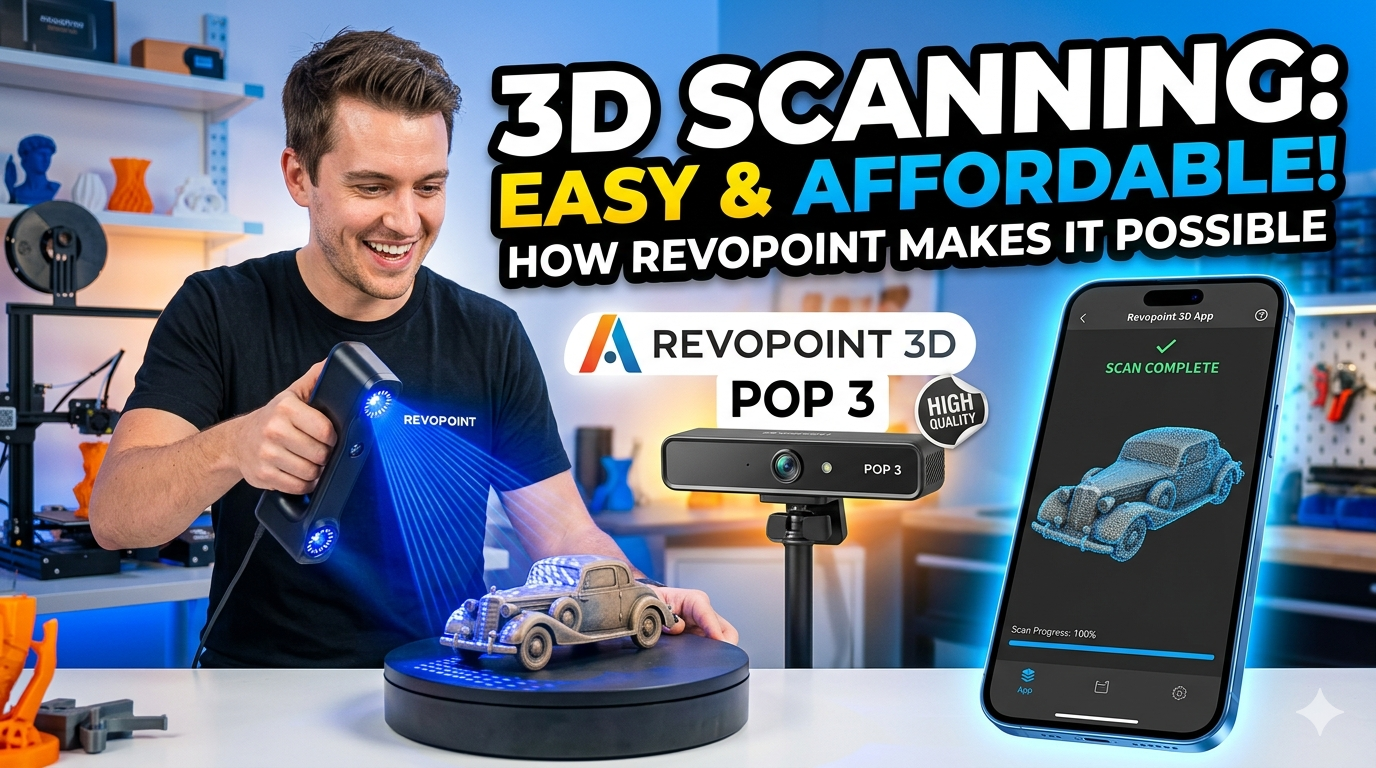
Discover how Revopoint 3D Technologies Inc. is transforming the world of 3D scanning with affordable, portable, and beginner-friendly solutions. This in-depth guide explores Revopoint’s innovative scanners, advanced AI-powered software, real-world applications, and how the company is making professional-quality 3D scanning accessible for creators, engineers, educators, and businesses worldwide.
Table of Contents
- The Rise of Affordable 3D Scanning
- Understanding Revopoint’s Mission
- What Makes Revopoint Different
- Popular Revopoint 3D Scanners
- How Revopoint Simplifies the Scanning Process
- Industries Benefiting from Revopoint Technology
- The Role of Software in Affordable 3D Scanning
- Revopoint’s Pricing Strategy and Value
- Challenges and Future Opportunities
- Conclusion
- FAQs
The Rise of Affordable 3D Scanning
Why 3D Scanning Used to Be Expensive
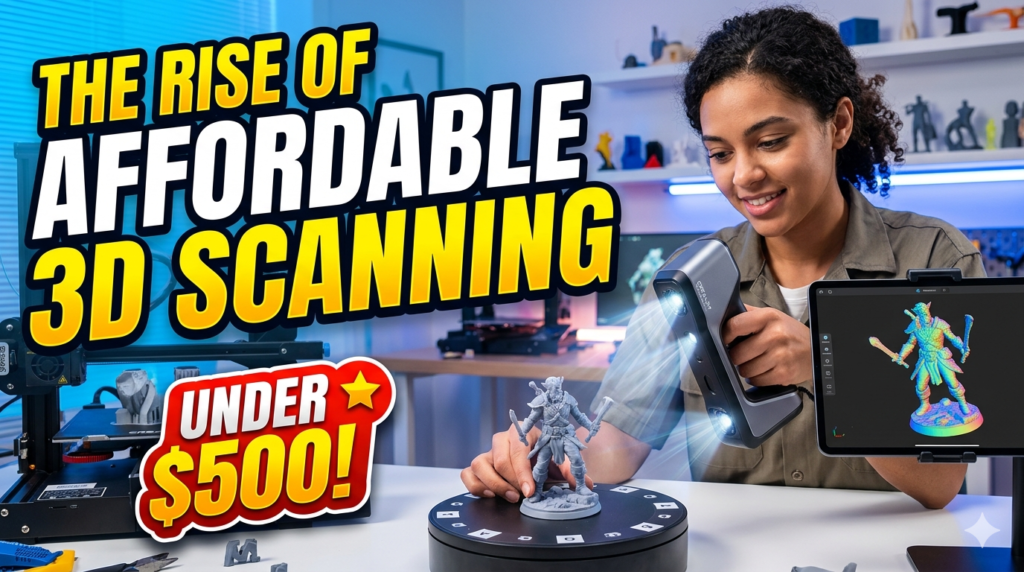
For years, 3D scanning technology lived behind a wall of complexity and high pricing. Traditional scanners were designed mainly for industrial metrology, aerospace inspection, or medical engineering. These systems often cost tens of thousands of dollars, required controlled lighting environments, and demanded specially trained operators. Small businesses and hobbyists simply couldn’t justify the investment. Imagine trying to buy a Formula 1 car just to commute to work—that’s how excessive early 3D scanning systems felt for regular users.
The problem wasn’t only the hardware price. The supporting software was equally intimidating. Users had to spend hours learning calibration, point cloud alignment, mesh repair, and CAD integration. Many scanners also needed powerful workstation computers to process large data files. That created a chain reaction of expenses. If you bought the scanner, you also needed upgraded computers, premium software subscriptions, and technical support contracts.
At the same time, industries like 3D printing, gaming, AR/VR, education, and product design were growing rapidly. These sectors needed fast and affordable ways to digitize real-world objects. Consumers wanted tools that worked more like smartphones and less like industrial lab equipment. This growing demand created an opportunity for companies willing to simplify the technology.
That’s where Revopoint entered the picture. Founded in 2014, the company focused on combining portability, affordability, and precision into a single ecosystem. According to the company’s public profile, Revopoint products are now used in more than 150 countries, showing just how quickly consumer-grade scanning has expanded globally.
The Shift Toward Consumer-Friendly Technology
The evolution of affordable scanning mirrors what happened in photography. Professional cameras once required studios, film expertise, and expensive equipment. Smartphones changed everything by simplifying the process while still delivering impressive quality. Revopoint has followed a similar philosophy in the 3D scanning industry.
Instead of designing equipment only for engineers, Revopoint created scanners for everyday creators. Portable devices like the POP series can fit into a backpack and connect directly to smartphones, laptops, or tablets. This portability immediately lowered the barrier to entry. A student, YouTuber, designer, or hobbyist could now experiment with 3D scanning without renting lab equipment.
Another major shift came from software automation. Revopoint scanners integrate intelligent tracking, automatic alignment, and simplified mesh generation. Users no longer need to manually stitch together dozens of scans in complicated third-party programs. The system handles much of the heavy lifting behind the scenes, making scanning feel almost intuitive.
Recent product announcements also show how aggressively the company continues to innovate. The new POP 4 combines blue laser and near-infrared structured-light scanning into a single handheld device, allowing users to scan different object types without switching equipment. That flexibility matters because creators today work on everything from jewelry to automotive parts to digital avatars.
The affordability angle remains critical too. Compared with legacy industrial scanners, Revopoint products often cost a fraction of traditional systems while still delivering respectable accuracy. That pricing strategy has helped bring 3D scanning into classrooms, home studios, makerspaces, and small businesses around the world.
Understanding Revopoint’s Mission
A Company Built Around Accessibility
At the heart of Revopoint’s success is a clear understanding of user frustration. Most people don’t want to become scanning experts. They simply want to capture objects quickly and accurately. Revopoint’s mission revolves around removing friction from the process.
The company openly describes itself as a global leader in consumer-based 3D scanning technology focused on accessibility. That mission shapes nearly every product decision. Instead of building overly specialized machines for niche industrial workflows, Revopoint focuses on versatility and usability.
This approach explains why many of their scanners support multiple applications. A single scanner might be used for reverse engineering one day and cosplay prop creation the next. That flexibility increases value for buyers because they are not locked into one narrow use case.
Accessibility also means portability. Traditional scanners were tied to fixed workstations, but Revopoint devices emphasize mobility. Some models are lightweight enough to carry in one hand during fieldwork. Others, like the MIRACO series, eliminate the need for external computers entirely. Users can scan, preview, and process data directly on the device itself.
This democratization of technology has had a ripple effect across industries. Small design studios can now prototype products faster. Teachers can introduce students to advanced manufacturing concepts without massive budgets. Independent creators can build digital assets for games and AR experiences from their own homes.
Innovation Through Research and Development
Accessibility doesn’t mean sacrificing innovation. Revopoint continues investing heavily in research and development, particularly in micro-structured optical chips and high-precision 3D vision algorithms. These technologies are essential because scanning quality depends heavily on how accurately the system interprets depth, texture, and spatial relationships.
The company’s participation in events like TCT Asia 2026 also highlights its expanding ambitions. Revopoint recently showcased an integrated 3D vision ecosystem connecting scanning, reverse engineering, measurement, and data processing. That ecosystem approach matters because modern workflows require more than just scanning hardware. Users want a complete pipeline from object capture to editable digital models.
One particularly interesting development is Revopoint’s push into AR and XR workflows. The company recently discussed how affordable professional scanning tools are helping solve the “digital asset bottleneck” for augmented reality content creation. In simpler terms, the AR industry needs huge libraries of realistic 3D objects, and scanning is often faster than building those assets manually from scratch.
By continuously improving hardware and software together, Revopoint has positioned itself as more than a scanner manufacturer. It is evolving into a complete 3D visualization platform designed for both professionals and newcomers.
What Makes Revopoint Different
Portable and Lightweight Hardware
One of Revopoint’s biggest advantages is its focus on portability. Many scanners in the company’s lineup are designed to work almost anywhere. You can scan objects in workshops, classrooms, museums, garages, or outdoor environments without hauling massive equipment.
This portability changes user behavior dramatically. People are more likely to experiment with technology when it feels convenient rather than intimidating. A handheld scanner invites creativity in a way that large industrial machines never could. It turns scanning into something spontaneous instead of something requiring hours of preparation.
Devices like the POP series embody this philosophy perfectly. They are compact enough for mobile workflows yet powerful enough for professional tasks like reverse engineering and animation asset creation. Recent improvements in tracking stability, frame stitching, and optical zoom have also increased usability.
Another major benefit is flexibility. Portable scanners can capture objects of different sizes and shapes in real-world conditions. Artists can scan sculptures, mechanics can scan vehicle components, and educators can digitize historical artifacts without moving them into specialized facilities.
High Accuracy Without Industrial Pricing
Affordability means little if scan quality is poor. Revopoint’s real achievement lies in balancing price with respectable accuracy levels. Some scanners in the company’s ecosystem deliver precision down to fractions of a millimeter, which is impressive considering their price range.
For example, the POP 3 Plus reportedly offers accuracy around 0.08 mm while maintaining fast scan speeds. Meanwhile, professional systems like the MetroY Ultra target even higher industrial-grade precision. This tiered approach allows users to choose hardware based on their specific needs instead of overpaying for unnecessary capabilities.
That pricing flexibility matters enormously in emerging markets and educational environments. A startup designing custom products can invest in a Revopoint scanner without risking financial disaster. Schools can expose students to advanced manufacturing tools without spending entire department budgets.
The company also keeps improving performance through hybrid scanning technologies. The POP 4’s integration of blue laser and infrared structured light shows how Revopoint is blending multiple scanning methods into affordable devices. That innovation helps users handle challenging surfaces like shiny metals or dark materials more effectively.
Beginner-Friendly Software Ecosystem
Hardware alone doesn’t make scanning easy. The software experience is equally important, and this is where Revopoint has invested heavily. Tools like Revo Scan, Revo Measure, and Revo Track simplify workflows that once required multiple third-party applications.
Recent updates to Revo Scan 6 introduced redesigned workflows, simplified file structures, and one-click processing features. These improvements sound technical, but their real impact is practical: users spend less time troubleshooting and more time creating.
Automatic alignment, intelligent tracking, and streamlined post-processing reduce the learning curve dramatically. Beginners can start producing usable 3D models within hours instead of weeks. That accessibility encourages experimentation and adoption, especially among creators unfamiliar with CAD or engineering software.
The company also supports multiple operating systems, including Windows, macOS, iOS, and Android. Cross-platform compatibility matters because users today work across laptops, tablets, and smartphones interchangeably.
Popular Revopoint 3D Scanners
Revopoint POP Series
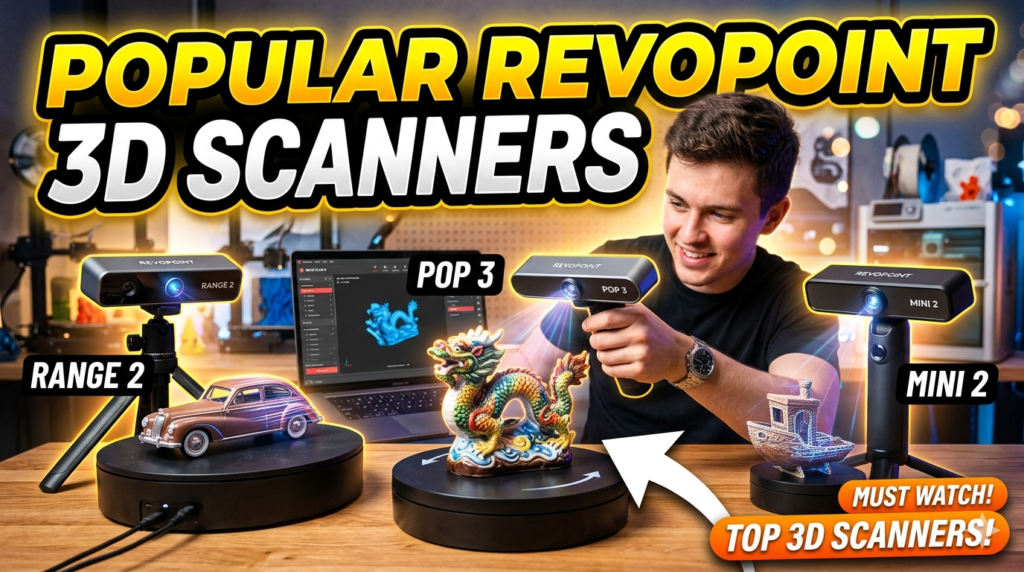
The POP series has become one of Revopoint’s most recognizable product lines because it combines portability, affordability, and solid performance. These scanners target creators, hobbyists, educators, and small businesses looking for versatile scanning solutions.
The POP lineup evolved steadily through multiple generations, with each release refining tracking stability, color capture, and precision. Users particularly appreciate how quickly they can transition from scanning to 3D printing or digital editing. The scanners are lightweight enough for handheld operation yet detailed enough for practical design work.
Why POP 3 Plus Became Popular
The POP 3 Plus gained attention because it improved several pain points from earlier generations. According to current product information, it features enhanced optical zoom, faster scanning speeds, and improved tracking reliability. Those improvements translate into smoother workflows and fewer failed scans.
Another reason for its popularity is versatility. Users can scan small mechanical parts, sculptures, cosplay props, or even human faces. That adaptability makes the device attractive to creators who work across multiple disciplines.
The scanner’s affordability compared with industrial alternatives also expanded its audience significantly. Instead of needing enterprise-level budgets, individuals could now own professional-grade scanning tools personally.
Revopoint MIRACO Series
The MIRACO series represents another important step in simplifying scanning workflows. Traditional portable scanners still relied on external computers or smartphones, which could complicate mobile use. MIRACO changed that by introducing standalone scanning functionality.
Standalone Scanning Without a PC
The MIRACO scanners include integrated processing capabilities, meaning users can scan and process data directly on the device. This design removes cables, laptops, and setup complexity from the workflow.
Imagine being able to walk around a large object and capture it naturally without worrying about tethered hardware. That freedom is especially useful for fieldwork, automotive scanning, museum preservation, and architectural documentation.
The MIRACO Pro also offers expanded memory for handling larger projects like full vehicle scans. This capability pushes consumer scanning closer to industrial workflows while remaining significantly more accessible than legacy systems.
MetroX and Professional Solutions
Revopoint hasn’t ignored professional users either. The MetroX and MetroY series target advanced applications requiring higher precision and industrial measurement capabilities. These scanners are designed for quality inspection, reverse engineering, and manufacturing workflows.
Recent updates highlight improvements in laser scanning performance, tracking stability, and measurement software integration. These enhancements position Revopoint as a competitor not just in the hobbyist space but increasingly in professional metrology as well.
What makes this impressive is the pricing gap between Revopoint solutions and traditional industrial systems. Companies that once avoided scanning due to cost barriers can now adopt digital workflows more realistically.
How Revopoint Simplifies the Scanning Process
Easy Setup for Beginners
One of the biggest reasons people abandon new technology is setup frustration. Revopoint minimizes this issue through simplified onboarding and intuitive interfaces. Most users can connect the scanner, install software, and begin scanning relatively quickly.
The company also provides calibration tools and guided workflows to reduce user confusion. Instead of bombarding beginners with technical terminology, the software emphasizes visual feedback and streamlined controls.
This simplicity matters because first impressions shape adoption. If someone successfully creates a clean 3D scan during their first session, they are far more likely to continue exploring the technology.
AI-Assisted Tracking and Alignment
Modern scanning depends heavily on intelligent software assistance. Revopoint scanners use AI-supported tracking and alignment systems to keep scans stable and coherent even during handheld movement.
This technology is crucial because manual stitching used to be one of the most frustrating parts of 3D scanning. Users often had to align dozens of partial scans manually, which required patience and technical expertise. Revopoint automates much of that process.
Features like global marker tracking and IMU stabilization help maintain accurate positioning during movement. The result is smoother scans with fewer interruptions and less post-processing work.
Real-Time Data Processing
Real-time feedback dramatically improves usability. Instead of waiting until the end of a session to discover errors, users can see scan quality instantly. This immediate visualization helps beginners correct mistakes while scanning rather than starting over later.
Recent software updates have also streamlined mesh generation and file management. Faster processing means creators can move quickly from capture to production, which is essential in industries where speed matters.
Industries Benefiting from Revopoint Technology
3D Printing and Makerspaces
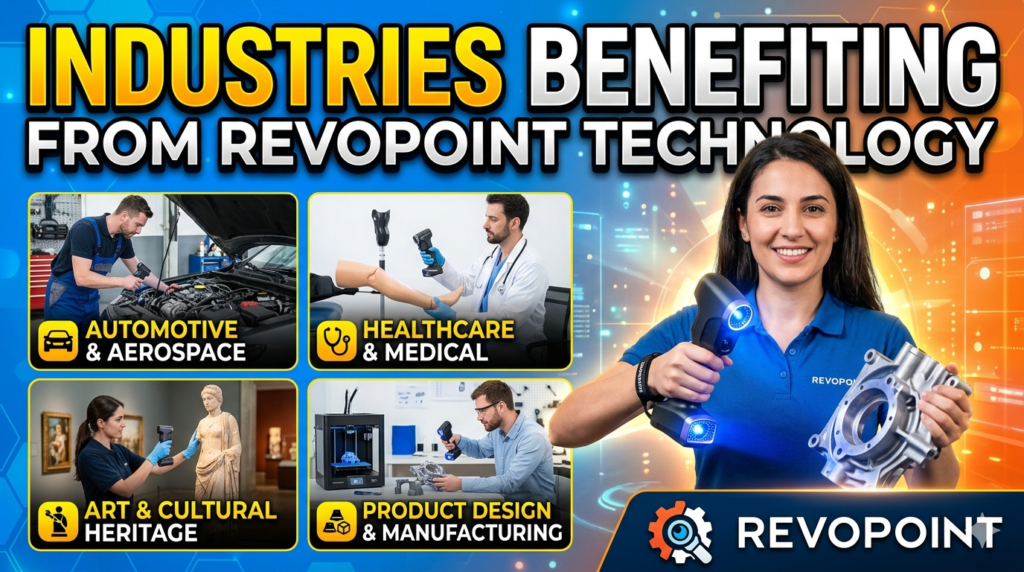
The relationship between 3D scanning and 3D printing is incredibly strong. Scanning allows creators to replicate, modify, or customize real-world objects for printing. Makerspaces and hobbyists especially benefit from affordable scanners because they accelerate experimentation.
A creator can scan a broken component, modify it digitally, and print a replacement within hours. That kind of workflow was almost impossible for everyday users a decade ago.
Automotive and Reverse Engineering
Automotive workshops increasingly use portable scanners for reverse engineering and customization. Mechanics can digitize vehicle parts, analyze fitment issues, or create aftermarket modifications more efficiently.
Revopoint’s portable form factor is especially valuable here because workshops are dynamic environments. Technicians need tools that adapt to real-world conditions rather than perfectly controlled labs.
Healthcare and Dentistry
Precision scanning also has growing applications in healthcare and dentistry. High-detail scanning can assist with prosthetics, dental modeling, and patient-specific customization.
While ultra-specialized medical scanners still dominate certain areas, affordable scanning systems help smaller clinics and educational institutions access digital workflows more affordably.
AR, VR, and Game Development
Gaming, virtual reality, and augmented reality all rely heavily on realistic 3D assets. Creating these assets manually is time-consuming, which is why scanning has become increasingly attractive.
Revopoint recently emphasized how affordable scanning is helping solve AR content bottlenecks. As AR ecosystems expand, demand for quick digital asset creation will likely increase dramatically.
The Role of Software in Affordable 3D Scanning
Revopoint’s software ecosystem deserves attention because affordability is not only about hardware pricing. Time savings also represent economic value. If software reduces hours of manual editing, it effectively lowers operational costs.
Revo Scan 6 introduced major workflow improvements, including simplified file management and enhanced post-processing automation. These changes make professional-quality results achievable for less technical users.
The company also continues updating tracking software and measurement tools, suggesting a long-term commitment to ecosystem development rather than one-time hardware sales. That strategy helps build user loyalty and keeps products relevant longer.
Read More:-
How Does Strikingly Simplify the Website Building Process?
Building Your Dream Website with Site123
Boost Your E-commerce Strategy with YITH Plugins
Maximize Your Customer Engagement with LiveAgent’s Features
Why STRIPO is Essential for Digital Product Marketers
Revopoint’s Pricing Strategy and Value
One reason Revopoint has grown rapidly is its layered pricing strategy. The company offers scanners across multiple price tiers, allowing users to enter the ecosystem gradually.
Beginners can start with affordable entry-level models while professionals can invest in more advanced systems with industrial features. This scalable approach widens the customer base significantly.
Sales campaigns and bundle discounts also make the technology more approachable. Recent promotions included discounts up to 28% on scanner bundles and software packages. While pricing fluctuates, the overall strategy clearly emphasizes accessibility.
The value proposition becomes even stronger when compared with legacy industrial systems costing tens of thousands of dollars. For many users, Revopoint scanners deliver “good enough” professional performance at a fraction of the traditional cost.
Challenges and Future Opportunities
Despite its success, Revopoint still faces challenges. The 3D scanning market is becoming increasingly competitive, with brands constantly improving accuracy, speed, and automation.
Consumer expectations are also rising. Users want scanners that handle reflective surfaces, outdoor environments, and complex geometries effortlessly. Maintaining affordability while improving performance will remain a delicate balancing act.
At the same time, opportunities are enormous. The growth of AR glasses, digital twins, AI-generated content, and personalized manufacturing could dramatically expand demand for accessible scanning tools. Revopoint appears well-positioned to benefit from these trends because its ecosystem already targets portability and ease of use.
Future innovations may focus even more heavily on AI automation, cloud collaboration, and mobile integration. If scanning becomes as seamless as smartphone photography, adoption could explode across industries.




Conclusion
Revopoint 3D Technologies Inc. has played a major role in transforming 3D scanning from an elite industrial process into an accessible creative tool. By focusing on portability, affordability, intelligent software, and practical usability, the company has opened doors for creators, educators, engineers, and businesses worldwide.
Products like the POP series, MIRACO lineup, and Metro solutions demonstrate how far consumer-friendly scanning technology has evolved. Instead of requiring specialized labs and massive budgets, users can now capture detailed 3D models with handheld devices and intuitive software.
The company’s continued investment in AI-assisted workflows, hybrid scanning technologies, and integrated ecosystems suggests that the future of 3D scanning will become even more accessible. As industries increasingly depend on digital assets, reverse engineering, and immersive technologies, Revopoint’s mission of simplifying 3D scanning may become more important than ever.
FAQs
Q. What is Revopoint best known for?
A. Revopoint is best known for creating portable and affordable 3D scanners designed for both beginners and professionals. Its products focus on balancing ease of use, portability, and precision.
Q. Are Revopoint scanners good for beginners?
A. Yes. Revopoint scanners are designed with beginner-friendly software, simplified workflows, and AI-assisted alignment features that reduce technical complexity.
Q. Which Revopoint scanner is best for portable use?
A. The MIRACO series is especially popular for portability because it supports standalone scanning without requiring a connected PC.
Q. Can Revopoint scanners be used for professional work?
A. Absolutely. Many professionals use Revopoint scanners for reverse engineering, quality inspection, 3D printing, automotive customization, and AR/VR content creation.
Q. How accurate are Revopoint 3D scanners?
A. Accuracy varies by model, but several Revopoint scanners offer sub-millimeter precision suitable for many professional and creative applications. Some advanced models provide industrial-grade measurement capabilities.