
Lebara NL is a popular mobile service provider in the Netherlands, offering affordable prepaid and SIM-only plans designed for flexible and reliable connectivity. With competitive pricing, convenient mobile data options, international calling solutions, and access to a reliable network, Lebara NL provides practical mobile services for customers with different communication needs. Its focus on affordability, flexibility, digital convenience, and customer-friendly solutions has helped strengthen its position in the competitive Dutch telecom market. Whether customers need prepaid flexibility or a cost-effective SIM-only subscription, Lebara NL offers accessible options that make staying connected at home and internationally easier.
Table of Contents
- Introduction to the Lebara NL Marketing Strategy
- Understanding Lebara NL and Its Position in the Dutch Telecom Market
- Core Elements of the Lebara NL Marketing Strategy
- Digital Marketing as a Growth Engine
- Customer Retention and Lifecycle Marketing
- International Connectivity as a Differentiation Strategy
- What Digital Brands Can Learn From Lebara NL
- Future Growth Opportunities for Lebara NL
- Conclusion
- Frequently Asked Questions
Introduction to the Lebara NL Marketing Strategy

The Lebara NL marketing strategy offers an interesting case study for businesses trying to compete in a crowded digital marketplace. The Dutch telecommunications industry gives consumers plenty of choices, which means that simply offering mobile data, calls, and text messages is not enough to stand out. A telecom brand needs a clear reason for customers to pay attention, switch providers, and remain loyal. Lebara’s current Netherlands proposition revolves strongly around affordability, flexibility, connectivity, and simple mobile services. Its Dutch website prominently promotes SIM-only and prepaid options while emphasizing low prices, 5G access, flexibility, and network reliability. The company also highlights that its services operate using KPN’s network, turning underlying network infrastructure into a visible trust signal for potential customers.
What makes this approach valuable from a marketing perspective is the way product features and promotional messages work together. Instead of asking consumers to decode complicated technical language, Lebara NL communicates practical benefits: customers can choose prepaid or SIM-only options, access mobile data, use 5G services, and select plans that fit different usage patterns. Its marketing also connects affordability with freedom, which is important because low-cost positioning alone can sometimes create concerns about quality. By pairing competitive prices with messages around network performance and customer satisfaction, the brand can appeal to price-conscious consumers without presenting itself purely as a bargain-basement alternative.
For digital marketers, the broader lesson is simple: successful growth comes from aligning product, positioning, user experience, and promotion. You can spend heavily on paid advertising, SEO, social media, and influencer campaigns, but if visitors cannot understand your offer within seconds, acquisition costs can quickly become painful. Lebara NL demonstrates how a straightforward value proposition can become the foundation for multiple digital growth activities. The strategy is not merely about selling SIM cards; it is about making mobile connectivity appear accessible, manageable, and financially sensible.
Understanding Lebara NL and Its Position in the Dutch Telecom Market
The Dutch telecom market is competitive, and consumers generally evaluate providers through a combination of price, data allowance, network quality, contract flexibility, customer experience, and additional benefits. Within this environment, Lebara NL occupies a value-oriented position that can attract consumers who want affordable mobile connectivity without unnecessary complexity. Its product portfolio includes prepaid services and SIM-only subscriptions, giving the company the ability to address different customer needs rather than relying on a single commercial model. This matters because a prepaid customer and a long-term SIM-only subscriber may have completely different expectations, purchasing habits, and levels of commitment.
Lebara’s website illustrates this segmentation clearly. Prepaid customers can choose bundles and top up based on their requirements, while SIM-only customers can select different subscription durations and customize aspects of their plans. Current SIM-only information also promotes 5G connectivity and options related to calling, texting, internet speed, and international calling. This modular approach creates a sense of control, allowing consumers to build a service around their priorities instead of accepting a rigid package.
From a strategic marketing perspective, this is similar to running a restaurant with a focused menu that still allows customization. Too few choices can exclude potential customers, but too many choices can overwhelm them. Lebara’s challenge—and the challenge facing virtually every subscription business—is to create enough variety to serve different segments while keeping the buying decision simple.
That balance is especially important online. Every additional question a customer must answer creates another potential exit point. A strong digital marketing strategy therefore does more than attract traffic; it creates a smooth bridge between interest and purchase. Lebara NL’s positioning shows why businesses should consider the entire customer journey rather than treating advertising, product design, and conversion optimization as separate activities.
A Value-Focused Mobile Proposition
One of the clearest elements of the Lebara Netherlands marketing approach is its emphasis on value. The brand repeatedly connects mobile connectivity with keeping costs manageable. Its current Dutch homepage highlights low pricing alongside network quality and customer satisfaction, while its prepaid pages promote bundles designed for different usage levels. This combination helps create an easily understandable proposition: customers should feel that they are getting the connectivity they need without paying more than necessary.
Value-based marketing works particularly well when customers can compare products easily. Telecommunications is a perfect example. Consumers can open several browser tabs, compare gigabytes, monthly prices, calling allowances, promotional discounts, and contract periods, and make a decision relatively quickly. In such an environment, vague branding is rarely enough. Companies must translate their positioning into concrete benefits.
Lebara does this by making price and plan characteristics highly visible throughout its digital experience. The approach reduces the mental effort required to understand what the customer receives. For marketers, that is an important reminder that clarity is a conversion tool. Your product may have dozens of advantages, but your landing page should identify the few benefits that matter most.
The same principle applies outside telecommunications. A SaaS platform might emphasize time saved, an e-commerce company might focus on price and delivery convenience, and a financial service might lead with simplicity and transparency. The objective is to identify the strongest customer motivation and build the communication hierarchy around it. Lebara NL’s value-focused proposition demonstrates how consistent messaging can help a brand occupy a recognizable position in a competitive category.
The Importance of Flexibility and International Connectivity
Flexibility is another important pillar of Lebara NL’s customer proposition. Consumers do not all want the same commitment level. Some prefer prepaid because it offers greater control over spending, while others want the predictability and value associated with a monthly subscription. By serving both groups, Lebara can engage customers at different points in their mobile-service journey.
International connectivity adds another dimension to this positioning. Lebara NL currently offers an international calling option that allows customers to make unlimited calls and texts to 44 countries for an additional monthly fee, according to its roaming information. That feature can be particularly relevant to people who maintain relationships across borders, whether they are international professionals, students, families, migrants, or frequent travelers.
This is an example of need-based differentiation. Instead of trying to differentiate through abstract brand language, a company can solve a specific problem that matters deeply to a defined audience. For someone who regularly calls family members abroad, international calling is not simply another feature hidden in a pricing table—it can influence the entire provider-selection decision.
Digital businesses can apply the same thinking by identifying underserved customer needs. Ask what your audience struggles with that larger competitors treat as an afterthought. Then turn that solution into a prominent part of your marketing. When a feature solves a meaningful problem, it can become a powerful acquisition message and a reason for customers to stay.
Core Elements of the Lebara NL Marketing Strategy
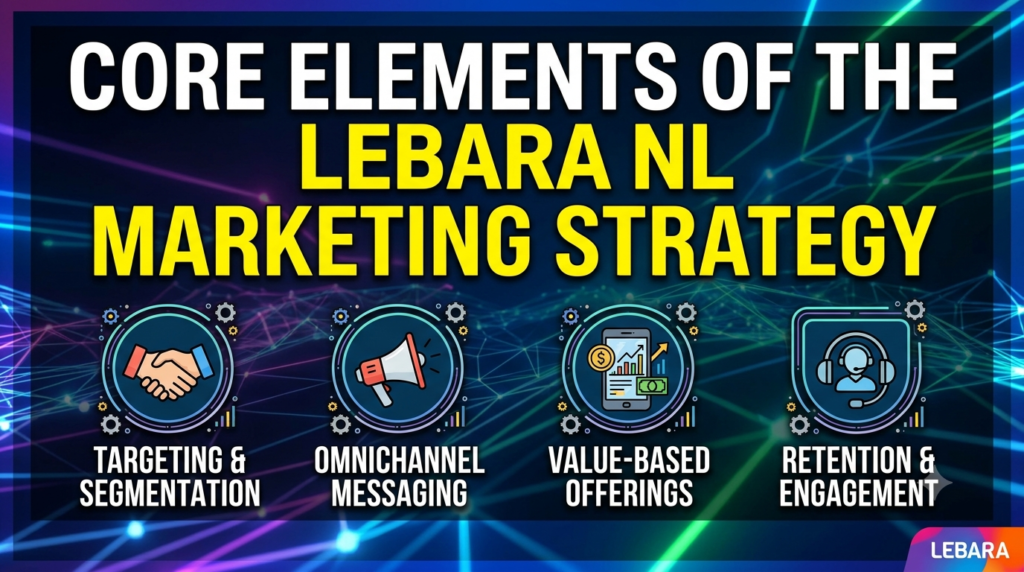
The Lebara NL marketing strategy can be understood through several interconnected elements: competitive pricing, network credibility, flexible products, digital self-service, promotional incentives, and international communication options. These components reinforce one another. Low pricing attracts attention, network messaging reduces concerns about service quality, flexible plans lower commitment anxiety, and digital account management supports convenience after the purchase.
| Strategic Element | Customer Benefit | Marketing Impact |
| Competitive pricing | Lower mobile costs | Supports customer acquisition |
| Prepaid options | Greater spending control | Attracts flexibility-focused users |
| SIM-only plans | Predictable monthly service | Supports recurring revenue |
| 5G connectivity | Faster modern mobile experience | Strengthens product relevance |
| KPN network positioning | Reliability and credibility | Reduces perceived quality concerns |
| International calling | Easier cross-border communication | Differentiates the proposition |
| MyLebara self-service | Usage and cost management | Supports retention and convenience |
| Promotional offers | Immediate financial incentive | Encourages conversion |
The strength of this model lies in the relationship between these elements. Imagine a customer arriving from a Google search after typing a query related to affordable SIM-only plans in the Netherlands. Price might bring that person to the website, but price alone may not close the sale. They may also want reassurance about network coverage, contract duration, 5G availability, number portability, or international calling.
Effective marketing anticipates those questions and answers them before uncertainty becomes abandonment. This is where Lebara’s product pages become part of its broader marketing strategy. They do not simply display products; they address common purchasing concerns such as keeping an existing number, switching from prepaid, activating a SIM, and managing subscriptions.
Competitive Pricing as a Customer Acquisition Tool
Pricing can function as much more than a financial decision—it can be a marketing channel in itself. When customers actively search for phrases related to cheap SIM-only deals, prepaid bundles, or affordable mobile data, pricing becomes closely connected to search intent. A competitively priced product can therefore improve the effectiveness of SEO, paid search, affiliate marketing, comparison platforms, and promotional campaigns.
Lebara NL’s current website prominently displays plan pricing and promotional discounts. Its SIM-only page presents different subscription durations and highlights savings associated with longer commitments, while prepaid offers include promotional mechanisms such as extra data and multi-month bundle incentives.
The marketing psychology here is straightforward. Customers need a reference point to evaluate value. Showing regular pricing alongside promotional pricing can make savings easier to understand, while limited promotions can create an additional reason to act. However, businesses should avoid making discounting their entire identity. Constant promotions can train customers to wait for the next deal rather than purchase at standard prices.
The stronger approach is to use price to open the door and then use product quality, convenience, service, and brand experience to keep customers inside. This is particularly relevant for subscription businesses where long-term customer value matters more than a single transaction.
Turning Network Quality Into Brand Trust
Affordable telecom services face a predictable marketing challenge: some consumers may assume that lower prices mean lower quality. Lebara NL addresses this potential objection by highlighting its use of KPN’s network. Its website currently promotes 5G connectivity through that network, allowing the brand to associate its value-oriented pricing with established network infrastructure.
This is a powerful principle in trust-based marketing. When customers cannot directly evaluate the technical infrastructure behind a service, recognizable proof points can reduce perceived risk. Reviews, certifications, partnerships, independent testing, guarantees, transparent policies, and established infrastructure can all serve a similar purpose.
Additionally, Lebara emphasizes customer satisfaction messaging on their website. At the time of this article’s search, Lebara’s homepage featured a visible Trustpilot score. Such social proof can influence visitors who are comparing multiple providers and looking for reassurance before switching.
For other digital businesses, the lesson is to identify what customers are afraid might go wrong. Then provide evidence that directly addresses that concern. If customers worry about quality, show verified reviews or independent testing. If they worry about security, explain your safeguards clearly. If they worry about commitment, offer flexible terms. Marketing becomes more persuasive when it responds to customer anxiety instead of merely broadcasting product features.
Flexible Prepaid and SIM-Only Plans
Flexibility expands the number of customer segments a telecom brand can reach. Lebara NL offers prepaid services for customers who prefer to control their spending and SIM-only subscriptions for those who want recurring mobile service. Its current prepaid offerings include bundles with data, calls, and texts, while SIM-only plans provide different commitment periods and customizable options.
From a marketing funnel perspective, prepaid can also function as a lower-commitment entry point. A consumer may initially hesitate to enter a longer subscription relationship but feel comfortable trying a prepaid service. If the experience is positive and their usage increases, that person becomes a potential candidate for a SIM-only plan.
Lebara explicitly supports movement between these product categories. Its prepaid-to-SIM-only page explains the switching process and promotes benefits such as greater savings and the ability to retain the existing number. This is a good example of lifecycle marketing, where growth does not depend entirely on finding new customers. Instead, the company can increase value by helping existing users migrate toward products that better match their evolving needs.
Businesses in other industries can use the same model. Offer an accessible starting product, deliver value, understand customer behavior, and then introduce the next logical solution. A customer journey should feel like a staircase rather than a cliff.
Digital Marketing as a Growth Engine
Digital marketing plays a central role in modern telecommunications because customers increasingly research, compare, purchase, activate, and manage services online. For Lebara NL, the website functions simultaneously as a storefront, product catalog, educational resource, conversion platform, and customer-support gateway. This makes digital experience inseparable from marketing performance.
A visitor may discover Lebara through organic search, paid advertising, a comparison website, an affiliate, social media, word of mouth, or an offline campaign. Regardless of the acquisition source, many journeys eventually arrive at a digital property where the customer must understand the offer and decide what to do next.
This is why digital growth requires continuity. An advertisement promising affordability should lead to a landing page where affordability is immediately visible. A search result about prepaid plans should take users directly to relevant prepaid information rather than forcing them to navigate through unrelated pages. A campaign promoting international calling should clearly explain eligible countries and costs.
Lebara’s online structure supports multiple customer intents with dedicated pages covering SIM-only plans, prepaid bundles, international communication, roaming, rates, eSIM information, and customer support. This creates a useful lesson for SEO and performance marketers: build landing experiences around intent, not just around your internal company structure.
SEO and Search-Driven Customer Acquisition
SEO can be especially valuable in telecommunications because consumers frequently begin their buying journey with a problem or comparison query. Searches may involve prepaid SIM cards, SIM-only subscriptions, international calling, mobile data, roaming, number portability, eSIM support, or provider comparisons.
A brand that creates useful pages for these specific needs can capture high-intent traffic. Lebara NL maintains dedicated pages around many of these topics, including prepaid services, SIM-only plans, roaming, eSIM, rates, and switching from prepaid to SIM only. From an SEO perspective, this creates multiple entry points into the website rather than relying exclusively on the homepage.
The lesson for content marketers is important. Do not build your SEO strategy entirely around your brand name. Create content for the questions customers ask before they know which brand they want. Transactional pages can target high-purchase-intent keywords, while guides and FAQs can capture informational searches earlier in the journey.
A successful search strategy should connect keyword intent with conversion intent. Ranking for thousands of keywords means little if visitors cannot find the next step. Every important page should answer three questions: Am I in the right place? Is this offer right for me? What should I do next?
Mobile-First Customer Experience
For a telecommunications provider, mobile experience is particularly important because many customers interact with the brand through the same device they use for the service itself. A complicated mobile journey creates an obvious contradiction: a company selling mobile connectivity should make mobile account management feel effortless.
Lebara promotes the MyLebara app as a way for customers to maintain visibility over usage and costs and adjust bundles. Its support information also directs customers toward digital self-service alongside chat and telephone assistance.
From a marketing perspective, apps and account portals are retention channels. They create recurring touchpoints after acquisition. Every time customers check their usage, manage a plan, or adjust a bundle, the brand has an opportunity to make the relationship easier.
The key lesson is that customer experience is part of marketing. A beautiful advertising campaign can generate a first purchase, but frustrating account management can destroy loyalty. Digital growth teams should therefore measure more than clicks and conversion rates. Activation success, self-service completion, repeat usage, retention, and customer support demand can reveal whether marketing promises are being fulfilled after the sale.
Promotions and Conversion-Focused Offers
When promotional offers are clear and directly related to the main product, they help speed up the acquisition of new customers. Lebara NL uses several promotional structures across its current prepaid and SIM-only offerings, including discounted introductory periods, extra data promotions, and multi-month prepaid incentives. For example, its prepaid terms describe a “3+1” structure in which qualifying customers paying for three monthly bundles in advance receive a fourth bundle free.
These promotions do more than lower prices. They give customers a reason to make a decision now rather than postpone it. That urgency can improve conversion when visitors are already interested but undecided.
However, the strongest promotions are those that reinforce the brand’s central value proposition. If a company positions itself around affordability, a meaningful introductory discount makes strategic sense. If a brand positions itself around premium exclusivity, aggressive discounting might weaken the desired perception.
The broader lesson is to make promotions strategically consistent. A discount should not exist simply because competitors are discounting. It should support acquisition, encourage trial, increase commitment, or reward loyalty—and marketers should know which objective they are trying to achieve.
Customer Retention and Lifecycle Marketing
Customer acquisition often receives the most attention in digital marketing, but retention can have a major impact on sustainable growth. Telecom customers generate recurring value, making the ongoing relationship extremely important. Once a customer has activated a SIM or subscription, the marketing journey should not disappear.
Lebara NL’s ecosystem includes account-management tools and pathways between product types. Customers can manage aspects of their service through MyLebara, while prepaid users are given a route to move toward SIM-only subscriptions. These mechanisms create opportunities for lifecycle communication based on actual customer needs rather than generic promotional blasts.
Imagine a prepaid customer who consistently purchases larger bundles. Their behavior may indicate that a recurring SIM-only subscription could provide better value. A relevant message explaining the potential savings would feel useful rather than intrusive. By contrast, sending the same upgrade campaign to an occasional prepaid user might be ineffective.
This is when segmentation and customer data become useful. Businesses should use behavioral signals to determine when to educate, retain, cross-sell, or upgrade. The goal is not to push every customer toward the most expensive product. It is to help each customer find the product that best matches their usage, increasing satisfaction and reducing the likelihood that they will leave.
Using MyLebara to Build an Ongoing Relationship
The MyLebara experience illustrates how self-service technology can support customer relationships. Lebara’s Netherlands support pages state that customers can use the app to monitor usage and costs and make bundle adjustments. These functions reduce dependence on traditional customer support while giving users more control over their service.
For marketers, a customer app can become a valuable owned channel. Unlike paid advertising, where a company repeatedly pays to reach audiences, an app creates a direct relationship with existing users. Notifications, account insights, renewal reminders, relevant upgrades, and personalized offers can potentially be delivered within a context where customers are already engaged with the brand.
The important word is relevant. Excessive promotional notifications can quickly become annoying. The best lifecycle marketing behaves more like a helpful assistant than a salesperson following you around a store.
Companies should therefore design post-purchase communication around customer utility. Tell users when something needs attention. Help them understand their consumption. Recommend a better plan when their behavior justifies it. Make renewals easy. When digital tools consistently save customers time or money, retention becomes a natural outcome of the experience.
Moving Customers From Prepaid to SIM Only
Lebara NL’s prepaid-to-SIM-only journey provides a practical example of customer progression. The company explains how prepaid users can move to a SIM-only plan while keeping their number and highlights potential financial and flexibility benefits. The process can also be initiated through the MyLebara app.
This strategy matters because acquiring a completely new customer can require advertising spend, promotions, affiliate commissions, or other acquisition costs. Existing customers already know the brand. If they have had a positive experience, persuading them to consider another suitable product may be easier.
Digital businesses should map similar progression opportunities. A free user may become a paid subscriber. A basic subscriber may need a professional plan. A one-time purchaser might become a recurring client. A small business client may eventually require enterprise services.
The best upsell is not simply “buy more.” It is “your needs have changed, and this option may now work better for you.” When companies frame lifecycle marketing around customer outcomes, commercial growth and customer satisfaction can move in the same direction.
International Connectivity as a Differentiation Strategy
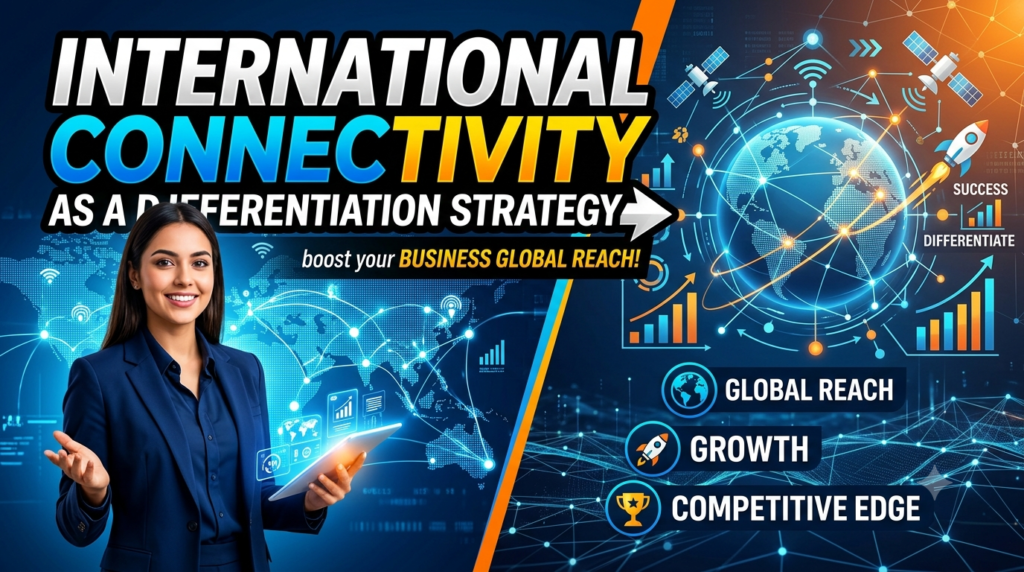
International connectivity has historically been closely associated with Lebara’s broader brand proposition, and it remains visible in the Netherlands offering. The Dutch roaming page currently promotes an optional international calling feature covering 44 countries, while prepaid offerings include international-oriented bundles.
This creates a meaningful point of differentiation because cross-border communication solves a specific emotional and practical need. A mobile call is not merely a telecom transaction when it connects someone with family or friends in another country. Marketing that understands this context can communicate more powerfully than campaigns focused entirely on technical specifications.
The strategic lesson is to search for the human motivation behind the product feature. A gigabyte is technical; staying connected is emotional. A monthly subscription is transactional; having predictable expenses creates peace of mind. International minutes are numerical; speaking with family abroad is personal.
Brands that translate technical features into meaningful outcomes tend to communicate more clearly. Lebara NL’s international positioning demonstrates how serving a specific need can help a company remain distinctive even as competitors offer increasingly similar mobile data packages.
Read More:-
How Does Strikingly Simplify the Website Building Process?
Building Your Dream Website with Site123
Boost Your E-commerce Strategy with YITH Plugins
Maximize Your Customer Engagement with LiveAgent’s Features
Why STRIPO is Essential for Digital Product Marketersa
What Digital Brands Can Learn From Lebara NL
The most useful lessons from the Lebara NL marketing strategy extend far beyond telecommunications. The first is that a distinct value proposition ought to be apparent at every stage of the client journey. The second is that affordability becomes more persuasive when paired with trust. The third is that flexibility can remove barriers to trial and conversion. Finally, digital self-service can turn customer experience into a retention advantage.
Brands often make the mistake of separating marketing from operations. The marketing team attracts customers, the product team builds the service, and customer support deals with problems. Customers, however, experience only one brand. They do not care which internal department owns a particular touchpoint.
Lebara’s digital proposition shows the importance of connecting acquisition messages with practical product experiences. If marketing promises flexibility, customers should actually be able to change relevant options easily. If marketing promises affordability, pricing should be transparent. If the company promotes convenience, activation and account management should not become unnecessarily complicated.
Digital growth is therefore a system. SEO brings people in. Landing pages explain the value. Pricing creates motivation. Trust signals reduce uncertainty. Conversion design helps customers act. Self-service supports the relationship. Retention creates long-term value. Growth gets more difficult when one gear is removed from that machine.
Lesson 1: Make the Value Proposition Immediately Clear
Visitors should not need detective skills to understand why they should choose your brand. Lebara NL leads heavily with concepts such as low pricing, data availability, network quality, and flexibility. That communication style helps users quickly determine whether the service matches their priorities.
Digital marketers should perform a simple test: show your homepage to someone unfamiliar with your company for five seconds, then ask what you sell and why they should care. If they cannot answer, the positioning may be too complicated.
Clarity does not mean boring communication. It means creating a hierarchy. Start with the strongest benefit, support it with proof, explain relevant features, and provide a clear action.
When brands try to communicate every advantage simultaneously, the message becomes noise. The strongest marketing often feels surprisingly simple because the strategic thinking happened before the copy was written.
Lesson 2: Combine Low Prices With Credibility
Competing on price can attract customers, but it can also trigger doubts about quality. Lebara’s emphasis on operating through KPN’s network helps address this tension by pairing affordability with an established infrastructure message. Its current website also references customer satisfaction as another trust signal.
This approach applies to almost every value brand. If you are cheaper than competitors, explain why customers do not need to sacrifice the things they care about.
Trust signals should be specific.Rather of claiming “we are trustworthy,” provide proof. Instead of saying “customers love us,” present verified feedback. Instead of claiming “high quality,” explain the infrastructure, process, guarantee, or expertise behind the service.
The formula is straightforward: attractive promise + credible proof = stronger persuasion. Remove the proof, and the promise may sound like advertising. Add evidence, and it becomes easier to believe.
Lesson 3: Reduce Friction Across the Customer Journey
Every unnecessary click, confusing form, hidden fee, or unclear instruction creates friction. Lebara NL’s online information addresses common actions such as selecting plans, transferring numbers, switching from prepaid to SIM only, activating services, managing usage, and contacting support.
Reducing friction should be treated as a growth strategy because conversion is not determined only by demand. Customers can want your product and still abandon the process if buying becomes frustrating.
Businesses should regularly examine their customer journey from the user’s perspective. Search for the product. Visit the landing page. Compare options. Try to purchase. Create an account. Contact support. Attempt to cancel or change a plan. Each step reveals opportunities for improvement.
The companies that win digitally are often not those with the most features. They are the ones that make important tasks feel effortless.
Future Growth Opportunities for Lebara NL
Looking ahead, the next stage of the Lebara NL digital marketing strategy could increasingly depend on personalization, stronger lifecycle automation, broader digital SIM adoption, content-driven acquisition, and customer segmentation. Lebara’s current Netherlands website already shows movement toward digital connectivity through its eSIM offering, although availability and device compatibility should always be checked directly because the supported-device information can change.
Personalization could be particularly valuable. Instead of showing every visitor the same offer, digital experiences can increasingly adapt based on customer intent. Someone searching for international calling could see relevant international options first, while a heavy-data user could be guided toward larger data plans.
Content marketing represents another opportunity. Practical guides covering topics such as moving to the Netherlands, choosing between prepaid and SIM-only plans, understanding roaming, managing mobile costs, or transferring a phone number could capture informational search demand and introduce potential customers to the brand before they are ready to purchase.
The central opportunity is to connect data, content, product, and customer experience. The future of digital growth is unlikely to belong to brands that simply advertise more loudly. It will favor companies that understand intent more accurately and remove friction more effectively.




Conclusion
The Lebara NL marketing strategy demonstrates how a value-focused telecommunications brand can combine competitive pricing, flexible mobile plans, network credibility, international connectivity, digital self-service, and promotional incentives into a coherent growth model. Its Netherlands offering shows that affordability does not have to stand alone; it can be strengthened through trust signals, practical flexibility, and a customer journey designed around recognizable consumer needs.
For marketers, the biggest takeaway is that sustainable digital growth rarely comes from one campaign. It comes from alignment. Your SEO strategy should reflect what customers search for. Your landing pages should communicate a clear promise. Your pricing should support your market position. Your product experience should deliver what the advertising promised, and your retention strategy should continue providing value after the first conversion.
Lebara NL also highlights the importance of understanding customer context. International calling, prepaid flexibility, SIM-only options, digital account management, and network messaging address different concerns within the same broader customer journey. That creates multiple reasons for different audiences to consider the brand.
Whether you run a telecom company, SaaS startup, e-commerce store, or digital service business, the principle remains the same: make your value obvious, prove your credibility, reduce customer effort, and build relationships beyond the first sale. When those pieces work together, marketing stops being a collection of disconnected campaigns and becomes an engine for long-term brand success.
Frequently Asked Questions
Q. What is the main focus of the Lebara NL marketing strategy?
A. The strategy centers on communicating affordability, flexibility, connectivity, and practical value. Lebara NL offers prepaid and SIM-only services and prominently communicates network quality and competitive pricing. Its marketing also addresses international communication needs, helping the brand appeal to customers who value affordable cross-border connectivity alongside domestic mobile service.
Q. How does Lebara NL use pricing in its marketing?
A. Lebara uses visible pricing, promotional discounts, prepaid incentives, and different subscription durations to attract price-conscious customers. Pricing works as both a product feature and an acquisition message, particularly for consumers actively comparing mobile providers online.
Q. Why is international calling important to Lebara’s positioning?
A. International calling helps differentiate the service for customers who frequently communicate across borders. Lebara NL currently promotes an optional international calling feature covering 44 countries, making cross-border connectivity a practical part of its customer proposition.
Q. What can digital marketers learn from Lebara NL?
A. Digital marketers can learn to build growth around a clear value proposition, credible proof, flexible products, conversion-focused promotions, and low-friction customer experiences. The broader lesson is to align acquisition marketing with the actual product and post-purchase experience rather than treating them as separate functions.
Q. How can Lebara NL strengthen its digital growth in the future?
A. Potential opportunities include deeper personalization, intent-based landing pages, expanded lifecycle marketing, broader digital SIM experiences, educational SEO content, and smarter customer segmentation. These strategies could help the brand deliver more relevant experiences while strengthening both acquisition and retention.