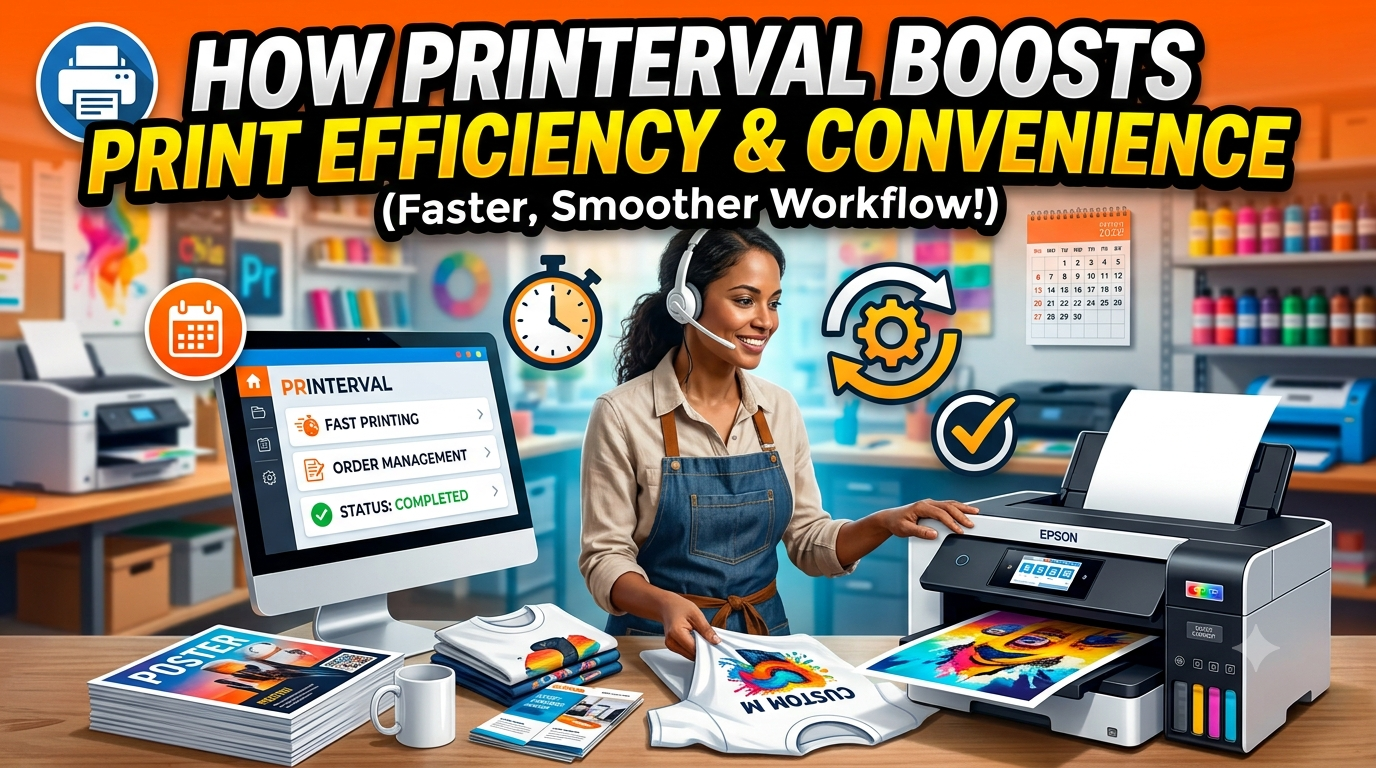
PRINTERVAL makes custom printing simple, convenient, and accessible by bringing personalized products, print-on-demand services, easy customization, online ordering, and order tracking together in one platform. Whether you are looking for custom apparel, unique gifts, home décor, accessories, or creative products, PRINTERVAL offers a wide range of options designed to turn your ideas into physical products while saving time and reducing the hassle of traditional printing.
Table of Contents
- Understanding PRINTERVAL and Its Printing Model
- Why Convenient Printing Matters Today
- On-Demand Printing and Better Efficiency
- Simplifying Personalized Product Creation
- A Wider Range of Products in One Place
- Design Preview and Customization Convenience
- How PRINTERVAL Saves Time for Buyers
- How PRINTERVAL Helps Independent Creators
- Order Tracking and Post-Purchase Convenience
- Global Accessibility and Digital Shopping
- Flexible Printing for Gifts and Special Occasions
- The Role of Print-on-Demand in Modern Commerce
- Quality, Product Variations, and Expectations
- Customer Support and Problem Resolution
- PRINTERVAL vs. Traditional Printing Methods
- Potential Limitations to Consider
- Practical Tips for Getting Better Results
- Why PRINTERVAL Can Be Useful for Modern Consumers
- The Future of Convenient Custom Printing
- Conclusion
- Frequently Asked Questions
Understanding PRINTERVAL and Its Printing Model
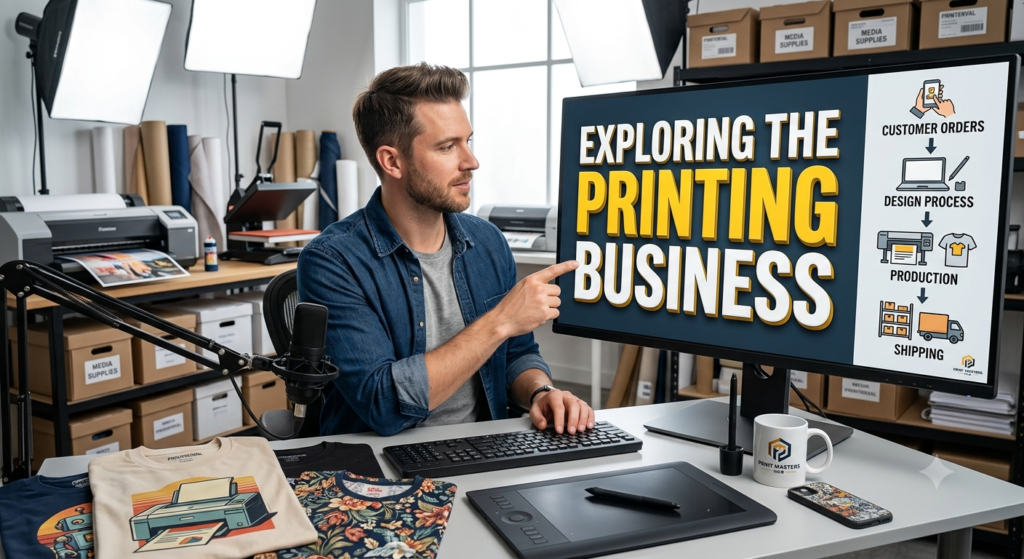
PRINTERVAL operates as an online marketplace that connects buyers with independent sellers and creators rather than functioning simply like a conventional single-location print shop. This distinction matters because the marketplace model gives customers access to a broad collection of designs and products while allowing independent creators to participate in selling their work. Instead of walking into a store and choosing from whatever happens to be displayed on a shelf, shoppers can search through a much broader digital catalog. That creates an experience closer to browsing a huge online creative marketplace than visiting a traditional printer.
The platform’s current support documentation explains that there is no central PRINTERVAL warehouse in the conventional marketplace sense; independent sellers offer products through the platform. This approach can improve convenience because customers do not necessarily need to coordinate separately with a designer, manufacturer, printer, and seller. The digital marketplace effectively brings those stages into one shopping journey. For someone ordering a personalized gift or custom piece of clothing, that reduction in coordination can be extremely useful because the customer spends more time choosing what they want and less time figuring out whom to contact.
How the PRINTERVAL Marketplace Works
A typical experience begins with discovery. Customers can search for an existing design, browse categories, or use personalization tools to create something that better reflects their needs. The platform currently highlights categories ranging from custom T-shirts and sweatshirts to mugs, posters, blankets, doormats, signs, ornaments, and accessories. Once a suitable product is found, the buyer can review available options, customize the design where supported, and proceed through the online ordering process.
This model is particularly useful when the desired product is highly specific. Imagine trying to find a local store that has a particular humorous shirt design, personalized wedding gift, or customized home accessory. The traditional approach could involve multiple shops and several phone calls. An online marketplace reduces that search burden by putting many options into one searchable environment. The result is not necessarily that every order will be perfect, but the path from idea to purchase can become considerably shorter.
Connecting Customers With Independent Sellers
The independent-seller structure also creates opportunities on the other side of the transaction. Artists and creators can turn their designs into products without necessarily operating a conventional printing facility themselves. That means an illustrator, designer, hobby creator, or niche-content seller can focus more heavily on creating artwork and managing their storefront while fulfillment is integrated into the broader marketplace ecosystem.
For customers, this can create a more diverse selection than a single print company might reasonably maintain. Niche interests, fandom-inspired themes, hobbies, occupations, seasonal occasions, and humorous designs can all find space in a large marketplace. For creators, the model can reduce some of the infrastructure traditionally associated with selling physical merchandise. The important point is that efficiency here comes from specialization: creators focus on designs, customers focus on choosing products, and production occurs after an order rather than requiring every participant to operate a complete printing business.
Why Convenient Printing Matters Today
Convenience has become one of the most important factors in online shopping. People are accustomed to researching products, comparing options, customizing purchases, paying digitally, and tracking deliveries without leaving their homes. Printing has naturally moved in the same direction. A customer who wants a personalized shirt or printed home decoration may not want to learn about printing substrates, production methods, color profiles, file preparation, or machinery before making a simple purchase.
PRINTERVAL can simplify that process by presenting printing as a consumer-friendly shopping experience. Instead of asking, “Which printing technology should I use?””What do I want to create?” is a more natural way for the consumer to start. That’s a big shift in perspective. The technical complexity sits behind the interface, while the customer interacts primarily with products, designs, personalization options, and ordering tools.
Reducing the Complexity of Custom Printing
Traditional custom printing can involve multiple stages. A person might first need to find a printer, determine whether the printer supports a particular product, prepare artwork, send files, discuss specifications, confirm a price, approve a proof, arrange payment, and finally organize delivery or pickup. None of those steps is impossible, but together they create friction.
A digital print-on-demand marketplace can compress many of these decisions into a single workflow. Product selection and design become part of the same experience, and personalization can be completed before checkout. The current PRINTERVAL app description specifically emphasizes adding a photo, name, or design and previewing the creation before purchase. That type of visual confirmation is valuable because it gives customers a better understanding of the intended result before they commit to the order.
On-Demand Printing and Better Efficiency
One of the biggest ways modern printing can become more efficient is through print-on-demand production. Instead of manufacturing a large quantity of identical products before anyone purchases them, an item can be produced after an order is placed. This approach changes the economics and logistics of customized merchandise because production is linked more closely to actual demand.
For consumers, the benefit is choice. A product does not have to be popular enough to justify a large production run before it becomes available. For creators, the benefit is flexibility because they can offer designs without necessarily purchasing and storing large amounts of finished inventory. For the broader operation, the model can reduce some forms of unnecessary stock and allow products to remain available digitally even when physical inventory is not sitting on a traditional retail shelf.
Minimizing Unnecessary Inventory
Inventory can become a hidden source of inefficiency in traditional merchandise businesses. If a company prints 1,000 shirts and sells only 600, the remaining 400 shirts still represent money tied up in physical products. Customized merchandise makes this even more challenging because demand for a specific design can be difficult to predict.
Print-on-demand approaches the problem differently. Instead of guessing exactly how many products customers will want, the system can respond to actual purchases. This does not eliminate every production or supply issue, but it can make the relationship between demand and production more flexible. For independent creators in particular, that can lower the barrier to experimenting with new designs because they do not necessarily need to commit to a huge batch before discovering whether customers are interested.
Simplifying Personalized Product Creation
Personalization is one of the strongest reasons consumers choose online printing platforms. A generic mug is easy to buy anywhere, but a mug featuring someone’s name, photograph, favorite phrase, or memorable date has a different emotional value. The same principle applies to shirts, hoodies, blankets, posters, ornaments, accessories, and other products.
PRINTERVAL’s current app listing emphasizes personalization through photos, names, dates, and messages, while its website provides tools for creating products from uploaded images. That means the customer can approach the purchase as a creative project rather than simply selecting a finished commodity. Instead of asking what is already available, the customer can ask how an existing product can be adapted to represent a person, occasion, interest, or idea.
The convenience becomes particularly noticeable for gifts. A personalized birthday gift, wedding item, anniversary product, or holiday decoration may be more meaningful than a generic alternative, but customization traditionally takes additional effort. Online design tools reduce some of that effort by bringing personalization into the purchasing process. The customer can experiment with a concept, review the result, and order when satisfied.
A Wider Range of Products in One Place
Another major efficiency advantage is product variety. A traditional print shop may specialize in a handful of products because stocking every possible item would be impractical. A large online marketplace can present a much broader selection without requiring customers to visit multiple physical locations.
PRINTERVAL currently promotes products across apparel, home and living, accessories, gifts, and decorative items. This variety means a person planning an event or gift campaign can potentially source several types of customized products through the same online environment. A customer might choose shirts for a group, mugs for guests, a poster for decoration, and a personalized keepsake without beginning the search from scratch each time.
Apparel, Home Products, and Accessories
The breadth of categories also makes customization useful beyond clothing. A personalized product might be part of someone’s wardrobe, but it could just as easily become part of a home, office, celebration, or special event. Posters can communicate a message, blankets can become gifts, signs can support an event, and accessories can carry designs that reflect personal interests.
That variety changes the role of printing. Printing is no longer restricted to documents, business cards, or promotional materials. It becomes a way to transfer digital creativity onto physical objects. As digital design becomes easier, consumers increasingly expect physical products to offer similar flexibility.
Design Preview and Customization Convenience
One of the most useful features in any customization process is the ability to preview the result. Without a preview, customers have to imagine how an uploaded image or text will look on a physical product. That can create uncertainty about placement, scale, and overall appearance.
PRINTERVAL’s current app listing says users can add photos, names, or designs and preview their creation before buying. That simple feature can make a major difference in convenience. A preview acts like a digital mock-up: it gives the customer a chance to catch obvious mistakes before the order moves forward.
At the same time, buyers should understand that an on-screen preview is not an absolute guarantee of the final physical result. PRINTERVAL’s terms explain that exact print size, positioning, and colors can vary depending on the product and artwork. That is an important reminder for anyone ordering custom products: digital previews improve decision-making, but physical production can still introduce variations.
How PRINTERVAL Saves Time for Buyers
Time savings are not always measured in minutes spent clicking buttons. Sometimes the biggest saving comes from eliminating unnecessary decisions. A customer does not want to spend an afternoon figuring out which local printer can produce a particular item, which file format is needed, or whether a design can be placed on the back of a garment.
An online marketplace can make those questions easier to manage. Search, customization, checkout, and order tracking can happen in the same digital environment. PRINTERVAL also maintains a support center covering topics such as order changes, cancellations, returns, refunds, tracking, product information, and troubleshooting.
This is especially useful for people ordering around deadlines. Whether the product is intended for a birthday, wedding, holiday, reunion, team event, or other occasion, having order information available online makes it easier to follow progress. The customer still needs to consider estimated delivery times carefully, but the ability to monitor an order provides greater visibility than simply placing a request and waiting for a phone call.
How PRINTERVAL Helps Independent Creators
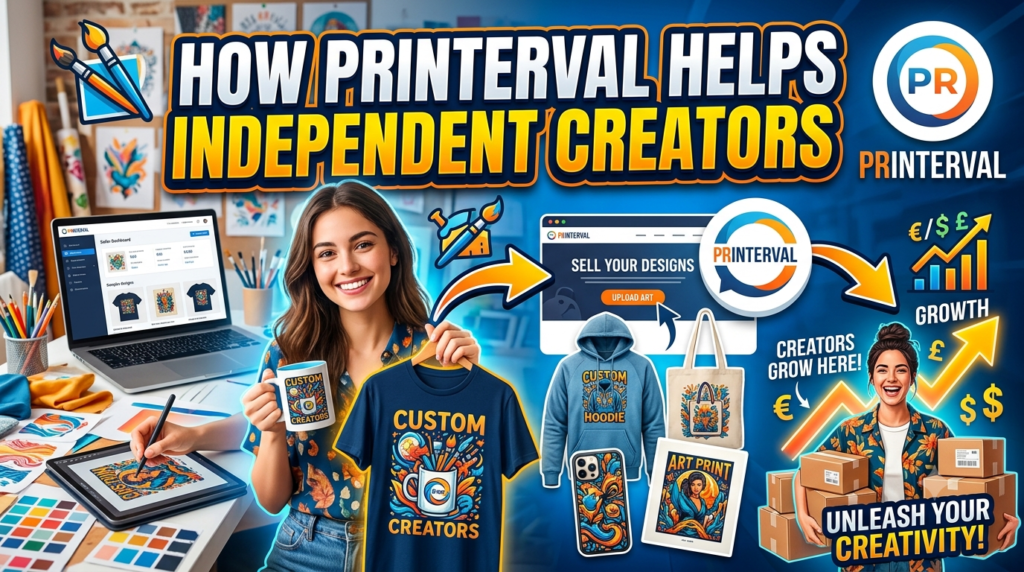
Efficiency is not only about buyers. Independent creators can also benefit from platforms that connect designs with physical products. Traditionally, an artist wanting to sell merchandise might have to purchase inventory, find a printing partner, package orders, handle fulfillment, and manage customer communication. That can turn a creative side project into a logistics operation surprisingly quickly.
A marketplace model can reduce some of that burden. PRINTERVAL’s documentation includes guidance for artist accounts, product creation, listing optimization, supplier accounts, shipping profiles, and order management. These tools indicate that the platform is designed to support sellers as well as buyers.
Easier Product Listing and Selling
For creators, the ability to convert digital artwork into merchandise can make experimentation easier. Suppose an artist has ten designs and wants to discover which ones attract customers. Producing hundreds of physical units of every design would be risky. A print-on-demand marketplace allows the creator to test demand through listings without approaching the problem exactly like a traditional manufacturer.
That flexibility can encourage a broader creative catalog. Artists can respond to seasonal trends, special occasions, niche interests, and customer preferences without necessarily rebuilding their entire business model for each new product. Efficiency therefore becomes a creative advantage: less time spent managing physical infrastructure can mean more time spent developing ideas.
Order Tracking and Post-Purchase Convenience
A smooth purchase does not end at checkout. Customers want to know what happens afterward. Has the order been processed? Has it shipped? Where is it now? When should it arrive? These questions become especially important when a personalized product is intended for a particular date.
PRINTERVAL provides order-tracking resources through its support center, and its current mobile app description highlights real-time order tracking. Having access to this information gives customers greater visibility into the post-purchase process. Instead of wondering whether an order is still being prepared, customers can use available tracking information to understand its progress.
This kind of visibility is a small feature with a large psychological benefit. Online shopping already requires customers to wait for something they cannot physically inspect. Tracking reduces some of that uncertainty. It turns waiting from a complete information gap into a process that can be followed.
Global Accessibility and Digital Shopping
Physical print shops are naturally limited by geography. A customer generally needs to visit a local business or arrange shipping with a printer that serves their region. An online marketplace removes much of that geographical friction by making product discovery available through the internet.
PRINTERVAL promotes global shipping and supports multiple currencies through its current app listing. That makes the service potentially useful for customers who want customized products without depending entirely on a local printer. It also creates opportunities for creators whose audiences may live in different countries.
Global accessibility does not mean every product or delivery experience is identical everywhere. Shipping times, production locations, taxes, availability, and fulfillment can vary. Still, the digital marketplace model fundamentally expands the reach of custom printing beyond the boundaries of a single physical store.
Flexible Printing for Gifts and Special Occasions
Customized printing becomes especially powerful when there is an emotional reason behind the purchase. A printed gift can carry a person’s name, photograph, inside joke, important date, favorite design, or shared memory. That personal layer can make an ordinary object feel much more intentional.
PRINTERVAL currently promotes categories and collections around birthdays, weddings, anniversaries, new parents, holidays, seasonal events, and other occasions. This makes the platform useful for shoppers who know the occasion but do not yet know exactly what they want to buy. Instead of searching through generic gift categories, they can begin with the event and then explore customizable products.
For event organizers, the same principle applies. A group might want matching shirts, personalized accessories, signs, or decorative products. Having customization available online can make coordination easier because everyone starts from a shared digital product concept rather than trying to describe the desired result verbally to a printer.
The Role of Print-on-Demand in Modern Commerce
Print-on-demand is part of a broader shift in commerce from mass production toward flexible production. Consumers increasingly expect products to reflect individual preferences, while creators want to test ideas without taking on excessive inventory risk. Digital marketplaces sit between those two needs.
Production Based on Actual Demand
The basic logic is straightforward: create a digital design, make it available on a physical product, and produce the item when an order is placed. This is fundamentally different from producing large quantities first and waiting for customers afterward.
The model can make niche products economically viable because a design does not necessarily need to appeal to a mass audience. A small community can support a specialized product if the platform makes it practical to produce and fulfill individual orders. That is one reason print-on-demand has become so relevant to independent artists and personalized merchandise.
Quality, Product Variations, and Expectations
Efficiency should never be confused with perfection. Digital printing marketplaces can make ordering easier, but physical products still involve manufacturing realities. Materials can vary, colors may look different on screen and in print, and products may occasionally need to be substituted when supply changes.
PRINTERVAL’s support documentation explains that, in some cases, third-party printers may use equivalent substitute garments because of supply issues while maintaining stated quality standards. Its terms also acknowledge that exact print placement, size, and colors are not guaranteed. Understanding these details helps customers develop realistic expectations.
The best approach is to read product information carefully, examine size charts where available, review the design preview, and allow adequate time for production and shipping. Convenience works best when it is paired with informed purchasing. A few minutes spent checking specifications can prevent much greater inconvenience later.
Customer Support and Problem Resolution
Customer support is another part of printing convenience that is easy to overlook until something goes wrong. Even an efficient platform cannot eliminate every problem. Orders can be delayed, products can have defects, sizes can be unsuitable, or customers can simply change their minds.
PRINTERVAL’s support center currently provides dedicated information for modifying or canceling orders, returns and refunds, order tracking, product information, and troubleshooting. The platform also states that customers can contact its support team when they need help.
Independent review platforms show that customer experiences are mixed, which is common for large marketplaces with many sellers and fulfillment variables. Current Trustpilot data, for example, shows both positive feedback about ordering and product appearance and complaints involving sizing, delays, or order issues. That makes it important to evaluate the specific product and seller rather than assuming that every marketplace listing will deliver exactly the same experience.
PRINTERVAL vs. Traditional Printing Methods
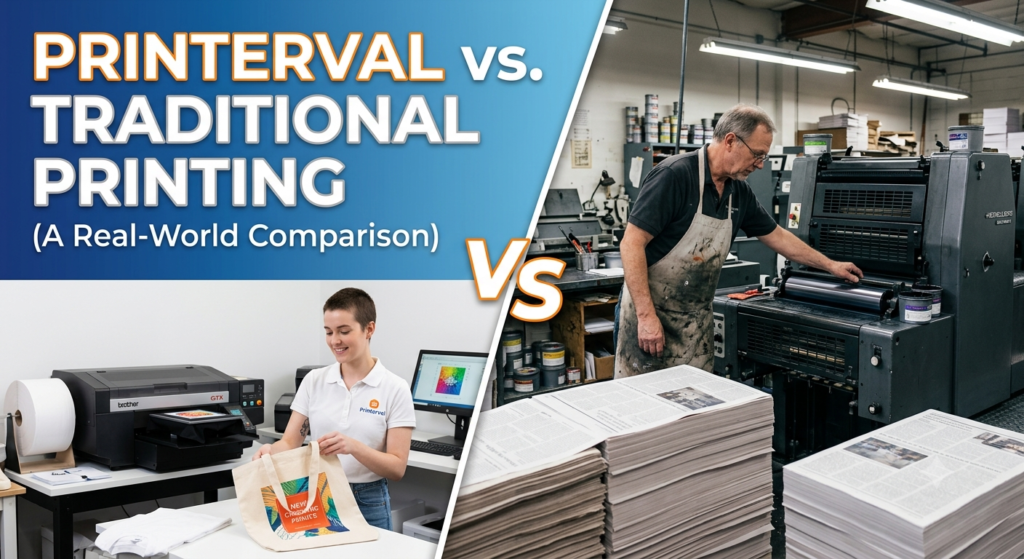
The difference between PRINTERVAL and a conventional printing shop is easiest to understand by looking at the workflow. A local printer can be excellent for specialized business projects, bulk orders, professional consultation, and situations where direct communication with a production expert is essential. An online marketplace is often more convenient for consumers who want individual personalized products and prefer a self-service shopping experience.
| Factor | PRINTERVAL-style online marketplace | Traditional local printer |
| Product discovery | Online catalog | Usually discussed directly |
| Personalization | Digital customization on supported products | Often handled manually |
| Shopping availability | Online | Usually location-dependent |
| Product variety | Broad marketplace selection | Depends on printer |
| Small personalized orders | Often convenient | May vary by provider |
| Order tracking | Digital tracking options | Depends on business |
| Bulk commercial projects | May not be the primary strength | Often a strong option |
| Face-to-face consultation | Limited | Usually available |
| Design assistance | Platform/product tools vary | Often available directly |
Neither approach is universally better. The right choice depends on the project. If you need a single personalized gift, browsing an online marketplace can be incredibly efficient. If you need 5,000 professionally color-managed brochures for a business campaign, a specialized commercial printer may be a much better fit.
Potential Limitations to Consider
Convenience always comes with trade-offs. Online marketplaces give customers tremendous choice, but that choice can also make quality and seller consistency harder to evaluate. A product may look excellent in a digital listing while the actual physical result differs in material, sizing, color, or print placement.
Delivery is another consideration. Personalized and made-to-order products cannot always be shipped as quickly as mass-produced items sitting in a warehouse. Anyone purchasing for a specific event should check the estimated production and delivery window rather than assuming that an online order will arrive immediately.
There can also be marketplace-specific concerns around design ownership and intellectual property. Creators should ensure that they have the necessary rights to the artwork they upload or sell. Buyers should also be cautious about listings that appear to use protected characters, brands, logos, or artwork without authorization. A convenient platform does not remove the legal responsibilities associated with copyrighted or trademarked material.
Practical Tips for Getting Better Results
Getting the best experience from PRINTERVAL begins before clicking the purchase button. Start by choosing the right product for the purpose. A design that looks great on a T-shirt may not translate equally well to a mug, blanket, poster, or phone case. Think about the physical surface, intended use, and size before becoming attached to a particular design.
Next, inspect the customization carefully. Check spelling, names, dates, colors, and image quality. If a preview is available, use it as a final inspection rather than treating it as a formality. For apparel, review the size chart instead of relying entirely on your usual clothing size because garment dimensions can vary between products.
Finally, plan around the delivery window. If the item is for a birthday or wedding, ordering early is usually smarter than hoping a made-to-order product will arrive at the last possible moment. The combination of careful customization, realistic expectations, and adequate lead time can turn an already convenient printing service into a much smoother experience.
Read More:-
How Does Strikingly Simplify the Website Building Process?
Building Your Dream Website with Site123
Boost Your E-commerce Strategy with YITH Plugins
Maximize Your Customer Engagement with LiveAgent’s Features
Why STRIPO is Essential for Digital Product Marketersa
Why PRINTERVAL Can Be Useful for Modern Consumers
The strongest argument for PRINTERVAL is simple: it makes customized physical products feel more like ordinary online shopping. You do not need to understand the machinery behind printing to order a personalized product. You can start with an idea, explore available products, customize the design, review the result, pay online, and track the order.
That does not mean every situation requires PRINTERVAL. Businesses with highly technical printing requirements may need a specialized commercial provider. Customers with extremely strict color or material requirements may also benefit from working directly with a professional printer. But for everyday personalized merchandise, gifts, apparel, home products, and creative designs, the marketplace model can remove a surprising amount of friction.
In that sense, PRINTERVAL is less about reinventing printing itself and more about changing how people access printing. The machinery may still be behind the scenes, but the customer experience becomes digital, searchable, customizable, and convenient.
The Future of Convenient Custom Printing
The future of printing is likely to become increasingly connected to personalization. Consumers are becoming comfortable creating products digitally, previewing them before purchase, and ordering items that are produced specifically for them. At the same time, creators are looking for ways to turn artwork into merchandise without carrying the costs and risks associated with large inventories.
PRINTERVAL fits naturally into this broader direction. Its current ecosystem combines an online marketplace, customization tools, print-on-demand products, seller resources, and mobile shopping. The company’s current app listing also shows continued development, including performance improvements and additional shopping and account features.
The bigger trend is clear: printing is becoming less about purchasing a generic item and more about transforming a digital idea into something physical. Whether that means a personalized shirt, a family photo blanket, a custom poster, or a unique gift, the distance between imagination and finished product continues to shrink. Platforms that can make that journey simple are likely to remain useful as personalized commerce grows.




Conclusion
PRINTERVAL can improve efficiency and convenience in printing by bringing product discovery, customization, ordering, and post-purchase support into a digital marketplace experience. Its print-on-demand approach can reduce the need for unnecessary inventory, while its broad selection allows customers to explore apparel, home products, accessories, gifts, and other customizable items from one platform. For independent creators, the marketplace model can also provide a practical route from digital artwork to physical merchandise without requiring the same infrastructure as a traditional printing operation.
The platform is not a universal replacement for every printing company. Customers still need to consider delivery estimates, seller information, product specifications, sizing, artwork quality, and the possible variations inherent in physical production. Yet for people who value customization and convenience, the ability to create and order personalized products online can save time and reduce the complexity traditionally associated with custom printing.
Ultimately, the biggest advantage is the streamlined journey. Instead of treating printing as a technical chore, PRINTERVAL makes it feel more like creative online shopping. You bring the idea; the platform helps turn that idea into a product.
Frequently Asked Questions
Q. What is PRINTERVAL?
A. PRINTERVAL is an online marketplace focused on unique, personalized, and print-on-demand products. Customers can browse designs and customize supported products, while independent creators and sellers can offer their work through the platform.
Q. Can I create personalized products on PRINTERVAL?
A. Yes. PRINTERVAL currently supports personalization on various products, with options that can include adding photos, names, dates, messages, or designs depending on the product. The platform also provides tools that allow customers to preview customized creations before purchasing.
Q. Does PRINTERVAL use print-on-demand?
A. PRINTERVAL offers made-to-order and print-on-demand products. This model means products can be produced in response to customer orders rather than requiring every design to be manufactured in large quantities ahead of time.
Q. Can I track a PRINTERVAL order?
A. Yes. PRINTERVAL provides order-tracking functionality through its website and support resources, and its current mobile application promotes real-time order tracking. Customers should still review the specific estimated delivery information associated with their order.
Q. Is PRINTERVAL suitable for every printing project?
A. Not necessarily. PRINTERVAL can be convenient for personalized merchandise, gifts, apparel, home products, and other consumer-oriented printed items. Large commercial projects requiring specialized materials, strict color management, bulk production, or direct professional consultation may be better suited to a dedicated commercial printing company.