
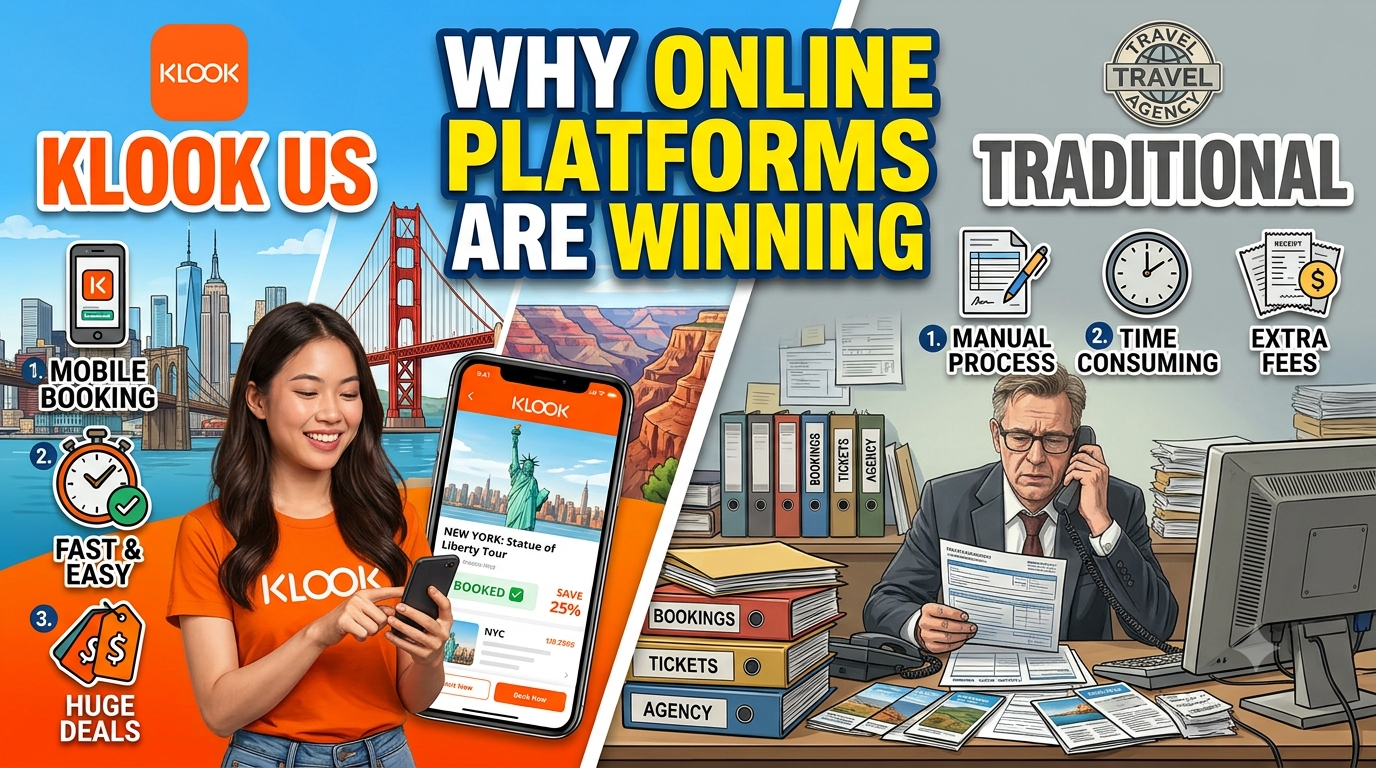
Klook US is a convenient online travel booking platform designed to help travelers discover and book exciting attractions, tours, activities, transportation, and unique experiences with ease. Whether you are planning a local getaway or an international adventure, Klook US makes travel planning simpler by bringing a wide range of options together in one accessible platform. Travelers can explore popular destinations, compare experiences, and organize important parts of their trips from their smartphones or computers. With its focus on convenience, flexibility, and experience-driven travel, Klook US offers a modern alternative to traditional travel booking methods. From sightseeing tours and attraction tickets to airport transfers and memorable local activities, Klook US helps travelers spend less time organizing their journeys and more time enjoying unforgettable experiences.
Table of Contents
- The Travel Booking Industry Is Going Through a Digital Transformation
- What Is Klook US and How Does It Work?
- How Traditional Travel Booking Works
- Klook US vs Traditional Travel Booking: Key Differences
- Why Online Travel Platforms Are Winning
- The Growing Importance of Travel Experiences
- Where Traditional Travel Agents Still Have an Edge
- Is Klook US Better for Every Traveler?
- The Future of Online Travel Booking
- Conclusion
- FAQs
The Travel Booking Industry Is Going Through a Digital Transformation
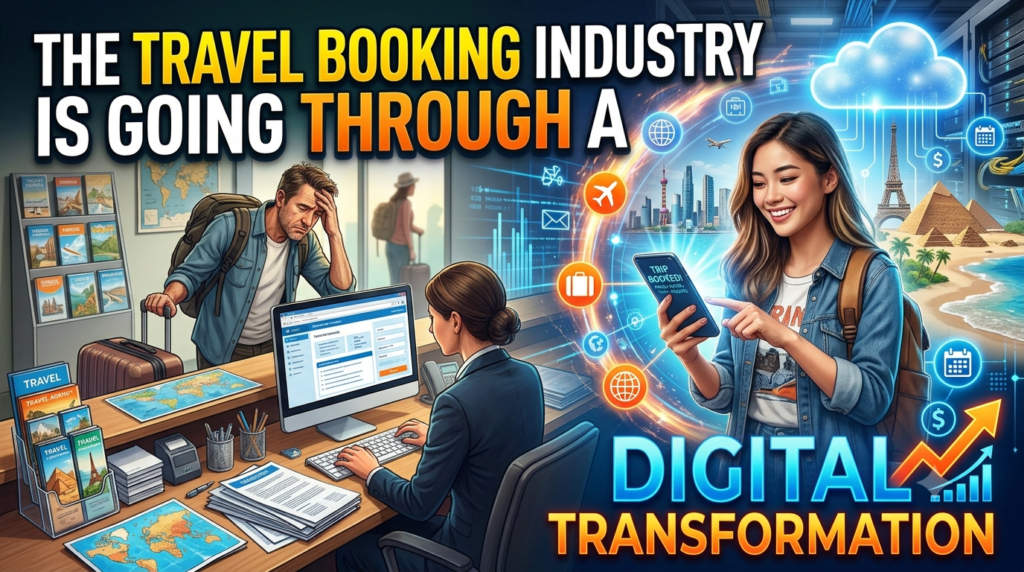
Travel has always involved a complicated chain of decisions. Where should you go? Which flight makes sense? How will you get from the airport to your hotel? Which attractions require advance reservations? What activities are actually worth your limited vacation time? Traditional travel agencies historically solved these problems by placing an experienced professional between the traveler and a fragmented collection of airlines, hotels, tour operators, and transportation providers. That model delivered real value because travelers had limited access to information and booking systems themselves. A knowledgeable agent could essentially act as the bridge between the customer and an otherwise confusing travel marketplace.
The internet changed that relationship, but smartphones accelerated the transformation. Travelers now expect to research destinations while commuting, compare activities over coffee, and make reservations while already standing in their destination city. Online platforms have transformed travel planning from a scheduled appointment into an ongoing process. You can discover something interesting on social media in the morning, research it during lunch, and potentially book it that evening. The boundary between travel inspiration and travel transactions has become increasingly thin.
That evolution helps explain the growing relevance of platforms such as Klook. Its US-facing platform currently highlights categories spanning tours and experiences, day trips, attraction tickets, cultural experiences, hotels, airport transfers, car rentals, and rail transportation. In other words, the modern online platform increasingly resembles a digital travel marketplace rather than a simple ticket website.
From Travel Agency Desks to Smartphone Screens
Imagine planning a vacation twenty or thirty years ago. You might begin with recommendations from friends, visit a travel agency, collect brochures, and ask an agent to contact different suppliers. Each additional activity could create another layer of coordination. Changing plans sometimes meant making phone calls during business hours and waiting for someone else to process the request.
The modern booking experience can look completely different. A traveler planning a trip from the United States to Japan, for example, may research destinations online, compare attraction tickets, reserve transportation, and organize activities through a smartphone. The phone becomes something like a digital travel command center, storing confirmations and helping the traveler manage different parts of the journey.
Klook’s mobile app reflects this broader evolution. Its current app listings describe access to hotels, local activities, car rentals, day tours, and other travel services from a mobile device.
That doesn’t automatically make every digital booking superior to every agency booking. What it does demonstrate is a major change in consumer expectations. People have grown accustomed to ordering food, managing finances, buying products, and arranging transportation through apps. Travel booking naturally follows the same behavioral pattern. When someone can reserve a ride in seconds, waiting for business hours to inquire about a sightseeing tour can feel unnecessarily slow.
Why Traveler Expectations Have Changed
Today’s traveler is often more informed before making a purchase. Search engines, social media, travel videos, online reviews, creator recommendations, and destination guides expose people to an enormous range of possibilities.Travelers may approach at the booking stage knowing they want transportation between Tokyo and Kyoto, a cultural activity, and an excursion to Mount Fuji rather of asking an agency, “What should I do in Tokyo?”
Social influence is playing an especially important role. Klook’s 2025 Travel Pulse research, conducted with GWI across 14 markets including the United States, found that social media recommendations influenced the trip planning of 79% of surveyed Millennials and Gen Z travelers. The same research indicated strong international travel intentions and significant interest in spending on meaningful experiences.
This creates a natural advantage for digital booking ecosystems. The journey from “I saw this place online” to “I want to experience it” to “I booked it” can happen incredibly quickly.
Traditional travel agencies typically operate around a consultation model. Online platforms operate around a discovery-and-action model. Both can work, but the second aligns particularly well with consumers who already live much of their daily lives online.
What Is Klook US and How Does It Work?
Klook is an online travel platform centered heavily on destination experiences and related travel services. On its US website, travelers can browse activities and travel products across international destinations as well as destinations within the United States. Current categories include tours and experiences, day trips, outdoor and cultural activities, cruises, attraction tickets, hotels, airport transfers, car rentals, and rail options.
The basic idea is familiar to anyone who has used an online marketplace. Instead of contacting individual tour companies or visiting multiple attraction websites separately, travelers can explore different options through a centralized platform. That can reduce friction during the planning process, particularly when organizing experience-heavy international trips.
Consider a traveler planning a two-week journey through several Asian cities. The trip may involve airport transportation, rail travel, theme parks, observation decks, cultural attractions, and day tours. Traditionally, each element might require separate research and potentially separate communication. A travel marketplace attempts to bring more of that discovery and booking process together.
The value proposition, therefore, is not simply “book online.” Almost everything can be booked online today. The more important proposition is centralized discovery combined with immediate booking capability. Travelers can move between inspiration, comparison, and purchasing without completely restarting their research process every time they add something new to their itinerary.
The Experience-First Approach to Travel Booking
Flights and hotels once dominated the mental model of travel planning. Book the flight, reserve the room, and figure out the rest later. Experiences are becoming much more central to how younger travelers think about their trips.
Klook’s recent consumer research illustrates this trend. Its 2024 Travel Pulse findings reported that three in five surveyed Millennial and Gen Z travelers were willing to dedicate up to half of their travel budgets to shared experiences. The research also found that 69% booked activities before departure.
The 2025 research continued to highlight the importance of experiences, with travelers prioritizing authentic activities, local cuisine, and less conventional destinations even while remaining conscious of costs.
This is where the Klook US vs traditional travel booking comparison becomes particularly interesting. Traditional agencies often built their businesses around complete vacation packages involving transportation and accommodation. Experience-focused platforms approach travel from another direction: What will you actually do once you arrive?
That difference may sound subtle, but it reflects a significant change in travel culture. A traveler might choose a destination because of a specific food experience, seasonal event, theme park, concert, scenic railway, or cultural attraction. The experience isn’t an accessory to the trip anymore. Sometimes, it is the reason for the trip.
How Traditional Travel Booking Works
Traditional travel booking generally involves working directly with a travel agent or agency that helps research, organize, and reserve parts of a journey. Depending on the agency and traveler, this might include flights, accommodations, cruises, transfers, packaged tours, travel insurance, and complex itineraries. The agent becomes a human point of contact who understands the traveler’s preferences and handles much of the administrative work.
There is genuine value in that model. Travel can become complicated very quickly, especially when several destinations, multiple travelers, visa requirements, special accommodations, or premium arrangements are involved. An experienced professional can help reduce the mental burden of navigating those variables. For someone organizing a complicated honeymoon or a large family trip, paying for expert assistance may be preferable to spending dozens of hours researching independently.
The main limitation is that the traditional model can introduce friction for travelers who prioritize immediate control. Communication may depend on office hours or individual response times. The selection presented to the traveler may also depend on the agent’s supplier relationships, expertise, or booking systems. By comparison, digital marketplaces encourage travelers to browse continuously and make decisions independently.
The difference is similar to hiring an interior designer versus shopping through a large online furniture marketplace. The designer offers expertise and personalized guidance; the marketplace offers enormous browsing freedom and immediate purchasing. Neither model is inherently wrong. They simply solve the problem differently.
The Human Service Advantage
Traditional agents have one advantage that technology still struggles to replicate perfectly: human judgment in complicated situations. A skilled agent can listen to an uncertain traveler, understand unspoken preferences, notice potential itinerary problems, and recommend alternatives based on experience.
Suppose you’re organizing a multi-generational family trip involving grandparents, young children, dietary requirements, mobility considerations, and several destinations. A simple “book now” button doesn’t necessarily understand the complete picture. An experienced travel professional may notice that a connection is too tight, a hotel location is inconvenient, or a tour schedule is unrealistic for the group.
Human assistance can become even more valuable when something goes wrong. Cancellations, missed connections, supplier problems, and unexpected disruptions can turn a smooth vacation into a logistical puzzle. Having a trusted professional who already understands the itinerary may provide significant peace of mind.
This is why online platforms aren’t necessarily “killing” traditional travel agencies. Instead, the market is becoming segmented. Self-directed travelers increasingly gravitate toward digital tools, while travelers with complex requirements may still value personalized professional service.
Klook US vs Traditional Travel Booking: Key Differences
| Feature | Klook US / Online Platform | Traditional Travel Booking |
| Access | Typically available online 24/7 | Often dependent on agent availability |
| Booking Speed | Many products can be booked directly | May require communication and confirmation |
| Travel Discovery | Searchable digital marketplace | Curated recommendations from an agent |
| Personalization | Technology and user-driven browsing | Human consultation |
| Reviews | Customer ratings and digital feedback may be available | Primarily agent expertise and recommendations |
| Mobile Convenience | Strong mobile-first experience | Varies significantly by agency |
| Complex Itineraries | Traveler may manage multiple details | Agent can coordinate complexity |
| Human Support | Platform-based customer support | Dedicated agent may be available |
| Best For | Independent, digital-first travelers | Complex or highly customized trips |
Convenience and 24/7 Accessibility
Convenience is perhaps the clearest reason online platforms continue gaining ground. Travel inspiration doesn’t operate from nine to five. People plan vacations at midnight, during lunch breaks, while commuting, and sometimes while they’re already traveling.
An online platform allows travelers to search and potentially reserve products whenever they want. This gives the customer direct control over the pace of planning. There’s no need to schedule an appointment simply to investigate whether an activity is available.
The psychological effect is important too. Instant access creates a sense of momentum. When someone becomes excited about a destination, they can act on that excitement immediately instead of adding “call the travel agent tomorrow” to a growing to-do list.
Klook’s US website and mobile app emphasize this self-service model, allowing travelers to browse destination activities alongside transportation and accommodation-related offerings.
Pricing, Deals, and Comparison Shopping
Digital travelers have become enthusiastic comparison shoppers. Before purchasing anything—from headphones to hotel rooms—they often want to know whether they’re getting reasonable value. Online travel platforms make that behavior easier because users can move between products, dates, packages, and options quickly.
Traditional travel agents may have access to valuable supplier relationships or package pricing, so it would be inaccurate to claim that online platforms are universally cheaper. Prices can vary by destination, product, date, currency, availability, promotion, and cancellation terms. Travelers should always compare the total cost and booking conditions, not simply the biggest promotional number on the screen.
Where online platforms gain an advantage is transparency and speed of comparison. A traveler can investigate several options independently without repeatedly requesting new quotes. That reduces the effort required to make a price-conscious decision.
Klook’s broader travel research suggests that this matters to younger travelers. The 2025 Travel Pulse findings highlighted financial concerns as a barrier to travel while also showing that travelers remained unwilling to sacrifice meaningful experiences. This creates demand for platforms that make it easier to balance budgets against desired activities.
Choice and Experience Discovery
A traditional agent can be extremely good at recommending the right product, but the recommendations naturally pass through a human filter. Online platforms flip that relationship by allowing the traveler to browse a larger digital catalog and create their own shortlist.
This appeals to curious travelers who don’t necessarily know what they want when they begin searching. You might open a travel app intending to book an airport transfer and discover a food tour, museum pass, seasonal excursion, or day trip you hadn’t considered.
Klook’s US site, for instance, currently organizes products across numerous experience categories and destinations, from cultural activities and outdoor adventures to cruises and attraction tickets.
Discovery is becoming increasingly important because travel planning itself has become a form of entertainment. People enjoy browsing possible experiences in much the same way they browse restaurants or streaming content. The platform isn’t merely processing a reservation—it is influencing what travelers imagine their trip could become.
Why Online Travel Platforms Are Winning

Online travel platforms are winning attention because they fit into a broader change in consumer behavior. People increasingly expect services to be searchable, comparable, reviewable, and bookable from a phone. Travel is no exception.
This doesn’t mean every online booking experience is perfect. Digital platforms can still face customer-service complaints, supplier disputes, refund delays, or confusing cancellation conditions. Travelers should read product details carefully and understand refund policies before purchasing. The convenience of clicking “book” quickly should never replace basic due diligence.
Yet the structural advantage remains powerful. Online marketplaces can connect large numbers of travelers with large inventories of experiences while keeping discovery available around the clock. As inventory grows, users have more reasons to browse; as more travelers browse, suppliers have more reasons to participate. This marketplace effect can strengthen the digital ecosystem over time.
Klook’s business growth offers one indicator of broader momentum. Reuters reported in November 2025 that Klook disclosed a 24.4% increase in 2024 revenue as part of its US IPO filing. Company revenue shows the financial size that experience-focused digital travel platforms have attained, even though it doesn’t mean that all customers prefer online booking.
Mobile-First Booking Matches Modern Lifestyles
The smartphone has arguably become the most important travel accessory after the passport. Travelers use it for maps, translations, payments, transportation, photography, restaurant discovery, communication, and reservations.
A mobile-first booking platform fits naturally into this environment. If your itinerary changes, you don’t necessarily want to return to a hotel and open a laptop. You want to make a decision while standing at a train station or eating breakfast.
That flexibility becomes particularly useful for spontaneous travel. Maybe rain ruins your outdoor plans. Maybe you unexpectedly have a free afternoon. Maybe another traveler recommends an attraction you hadn’t considered. Mobile booking lets you adapt more easily.
Klook’s app positioning reflects this expectation by promoting the ability to find and book accommodation, activities, transportation-related services, and day tours through the mobile experience.
Reviews and Digital Content Influence Decisions
Trust used to come primarily from the travel agent. If your agent recommended a hotel or tour, you relied heavily on their professional knowledge. Today, trust is distributed across a much wider network.
Travelers watch videos, read reviews, follow creators, ask online communities, and compare multiple sources before spending money. The decision-making process has become social and decentralized.
Klook’s 2024 research reported that more than 80% of surveyed travelers had made bookings influenced by online reviews and recommendations, while its 2025 research found social media recommendations influencing trip planning among 79% of surveyed Millennials and Gen Z travelers.
This creates an environment where online booking platforms are positioned close to the moment of inspiration. Someone sees an activity, researches it, checks reviews, and wants a straightforward path to reservation. The shorter that path becomes, the more likely digital platforms are to capture the transaction.
Last-Minute Planning Is Becoming Easier
Traditional travel planning was often front-loaded. You organized everything before leaving home because making arrangements from abroad could be difficult. Smartphones and digital marketplaces have made travel planning more fluid.
Travelers can now arrive with the major pieces secured while leaving parts of the itinerary open. That flexibility is increasingly visible in current travel behavior. Klook’s 2026 Spring Readiness Index found that seven in ten respondents across nine Asian markets planned to book spring activities, tours, and attractions within two months of departure. The study linked shorter booking windows with a desire to remain flexible around seasonal conditions.
This doesn’t mean every traveler should book late. Popular attractions can sell out, and advance reservations may still be essential. The broader point is that online platforms make adaptive planning easier. Travelers can respond to weather, energy levels, recommendations, and changing circumstances without rebuilding their itinerary from scratch.
The Growing Importance of Travel Experiences
Travel is increasingly judged by what happened during the journey rather than simply where someone stayed. A luxurious hotel might be wonderful, but the stories people bring home often involve food, culture, nature, entertainment, and unexpected adventures.
This experience-driven mindset is particularly visible among Millennials and Gen Z. Klook’s research has repeatedly highlighted younger travelers’ willingness to allocate significant portions of their budgets toward activities and meaningful experiences. Its 2026 findings also suggest that travel spending remains resilient: 88% of surveyed global Millennial and Gen Z travelers planned to maintain or increase travel budgets, while nine in ten planned international travel.
For experience-focused platforms, this is a favorable environment. The platform doesn’t need to convince someone that travel matters. Instead, it helps answer the next question: What should I actually do when I get there?
That question opens a massive marketplace covering attractions, tours, food, cultural activities, transportation, events, and niche experiences. As travelers become more ambitious about how they spend their limited vacation time, convenient access to that marketplace becomes increasingly valuable.
Travelers Want Memories, Not Just Reservations
Think about your favorite trip. Do you remember the reservation confirmation number? Probably not. You remember watching the sunset, tasting unfamiliar food, laughing with friends, visiting a landmark you had dreamed about, or getting wonderfully lost in a neighborhood you hadn’t planned to explore.
Travel platforms increasingly compete for this emotional layer of the journey. The product isn’t simply a ticket. The ticket is access to an experience.
This helps explain why the online travel sector is expanding beyond traditional flight-and-hotel transactions. When travelers can discover and reserve experiences digitally, platforms become involved in a much larger portion of the journey.
Klook’s own positioning emphasizes this experience marketplace, with its US platform currently showcasing everything from attractions and cultural experiences to day trips and transportation options.
The companies that make these experiences easiest to discover and book have an opportunity to become the traveler’s companion throughout the trip—not merely the website they visited once to reserve a flight.
Where Traditional Travel Agents Still Have an Edge

Despite the advantages of online platforms, declaring traditional travel agents obsolete would be premature. There are situations where human expertise can be extremely valuable.
Professional coordination may be beneficial for complex luxury travel, destination weddings, group travel, customized cruises, multi-country journeys, and itineraries with unique requirements.The more moving parts a trip contains, the more valuable it can be to have someone responsible for seeing the complete picture.
A travel agent can also save something that is increasingly scarce: time. Online platforms make self-booking easier, but easier doesn’t necessarily mean effortless. A traveler may spend hours comparing hotels, reading reviews, researching neighborhoods, checking transportation, and evaluating tours. Someone with more money than planning time may happily pay an expert to handle those decisions.
Human agents may therefore evolve rather than disappear. Successful agents can concentrate on areas where human expertise and customer service are most important rather than competing with online platforms on straightforward transactions. Digital platforms excel at scale and convenience; human professionals can excel at complexity and relationship-driven service.
Read More:-
How Does Strikingly Simplify the Website Building Process?
Building Your Dream Website with Site123
Boost Your E-commerce Strategy with YITH Plugins
Maximize Your Customer Engagement with LiveAgent’s Features
Why STRIPO is Essential for Digital Product Marketersa
Is Klook US Better for Every Traveler?
No single booking method is ideal for everyone. The best choice depends on the type of trip, your comfort with technology, your budget, and how much control you want over planning.
Klook US and similar online platforms may be particularly attractive to independent travelers who enjoy researching destinations and making their own decisions. They’re also useful for people who want to discover activities, compare options, and book from a phone.
Traditional agencies may be more suitable for travelers who want a dedicated professional managing the itinerary. They can also make sense when the trip is complicated enough that coordinating everything independently becomes stressful.
Many travelers may ultimately choose a hybrid approach. They might use an agent for complicated flights and accommodations while booking attractions and local experiences independently. Others may organize the entire trip digitally but consult a specialist for one particularly complicated portion.
The future isn’t necessarily online versus offline. It may be about using the right tool for each part of the journey.
The Future of Online Travel Booking
The next stage of travel technology is likely to move beyond simple search boxes and booking buttons. Artificial intelligence, personalized recommendations, real-time availability, digital payments, location-aware discovery, and increasingly integrated itineraries could make platforms more proactive.
Imagine arriving in a city and receiving relevant suggestions based on your available time, location, weather, interests, and existing reservations. Instead of searching through hundreds of activities, the platform could help narrow the choices to what actually fits your day.
Klook has already highlighted an AI-first approach to in-destination travel discovery in its 2026 newsroom updates, suggesting how seriously major travel technology companies are approaching intelligent personalization.
The winning platforms will still need to solve a fundamental challenge: trust. Convenience gets customers through the door, but reliable fulfillment, clear policies, transparent pricing, and effective support determine whether they return.
The future of online travel booking, therefore, isn’t simply about making transactions faster. It’s about reducing uncertainty throughout the entire journey—from “Where should I go?” to “What should I do tomorrow?”




Conclusion
The comparison between Klook US vs traditional travel booking reveals a larger transformation in the travel industry. Travelers haven’t stopped needing help; they’ve changed the kind of help they expect.
Online platforms are gaining momentum because they provide convenience, accessibility, mobile booking, broad discovery, digital reviews, and greater control. These advantages align closely with how younger generations research and purchase almost everything else in their lives.
Klook is particularly well positioned within the growing experience economy because it connects travelers with activities and destination services alongside other travel products. Current consumer research also suggests that Millennials and Gen Z remain highly motivated to travel and continue prioritizing meaningful experiences despite financial and time pressures.
Traditional travel agents, however, still provide meaningful advantages when complexity, personal service, and professional judgment matter. The smartest travelers don’t necessarily need to choose one side permanently. They can use digital platforms when speed and independence matter and professional agents when expertise and coordination justify the additional support.
Online platforms are winning because they fit naturally into modern life. The traveler’s smartphone has become a map, translator, wallet, camera, guidebook, and increasingly, a booking desk. As technology makes the journey from inspiration to reservation even shorter, the influence of digital travel platforms is likely to keep growing.
FAQs
Q. What is Klook US?
A. Klook US is the US-facing version of Klook’s online travel platform, where travelers can discover and book various travel-related products. Its current offerings include tours, activities, attraction tickets, day trips, hotels, airport transfers, rental cars, and selected transportation services. Availability depends on the destination and individual product.
Q. Is Klook US better than using a traditional travel agent?
A. It depends on your needs. Klook may suit travelers who prefer independent research, digital booking, and easy access to destination activities. A traditional travel agent may be more valuable for complicated itineraries, luxury arrangements, large groups, or travelers who want personalized professional assistance.
Q. Why are online travel booking platforms becoming popular?
A. Online platforms combine convenience with control. Travelers can browse products at any time, compare options, read digital feedback, and potentially make reservations without waiting for an agent. They also fit naturally with the growing use of smartphones and social media during travel planning.
Q. Are online travel platforms always cheaper than traditional travel agencies?
A. No. Prices vary according to destination, supplier, dates, promotions, exchange rates, package conditions, and cancellation policies. Travelers should compare the final price and terms rather than assuming that either online platforms or traditional agents will always provide the lowest cost.
Q. Will online platforms completely replace traditional travel agents?
A. Probably not. Online platforms are well suited to scalable, self-service booking, while travel agents can provide valuable expertise for complex or highly personalized journeys. The industry is more likely to evolve toward a hybrid environment where travelers choose digital tools or human professionals depending on the complexity of each trip.