
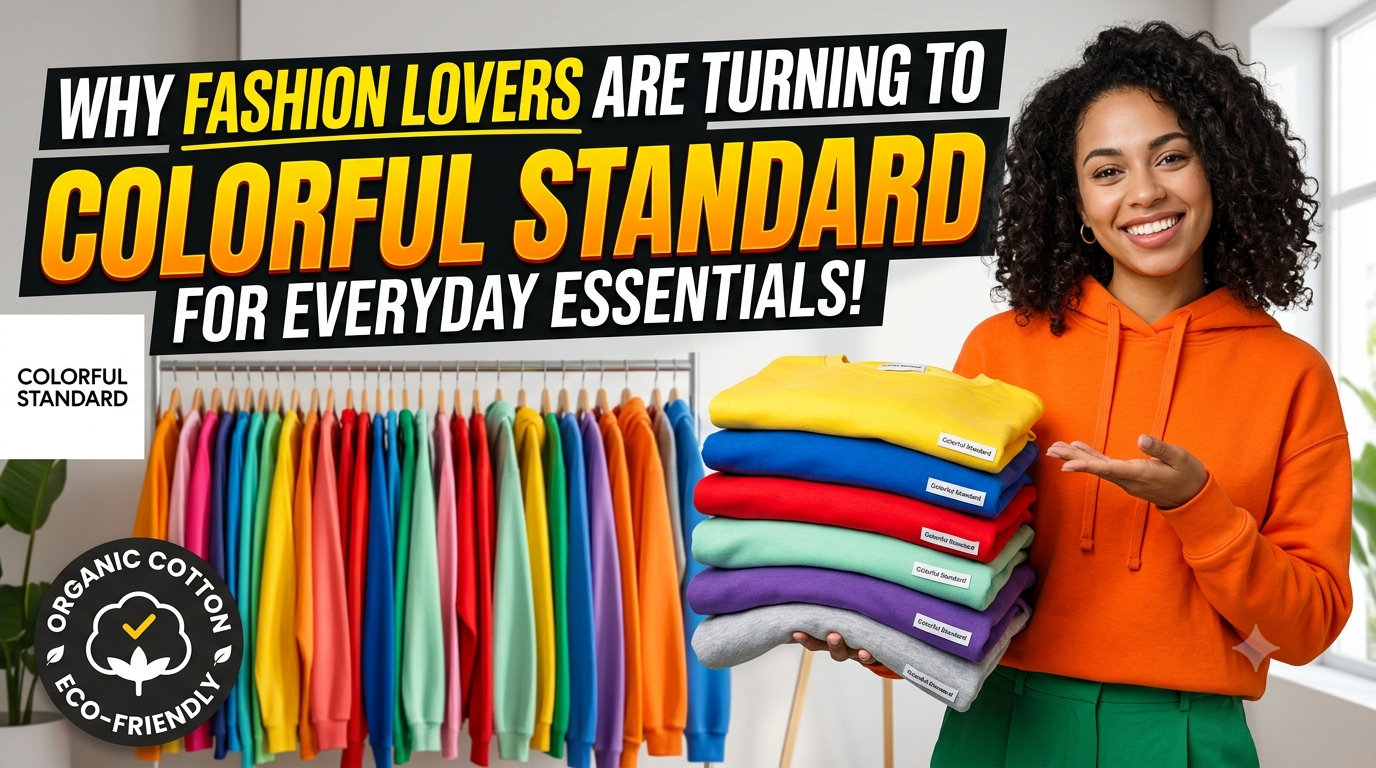
Colorful Standard is a modern clothing brand known for its colorful, minimalist approach to everyday essentials. From organic cotton T-shirts and comfortable hoodies to sweatshirts, socks, and other wardrobe staples, Colorful Standard combines simple designs with a wide selection of vibrant and classic shades. The brand focuses on versatile pieces that can easily fit into casual, minimalist, and capsule wardrobes while emphasizing quality materials and responsible production. Whether you prefer timeless neutrals or bold colors, Colorful Standard offers everyday clothing designed to make getting dressed simple, comfortable, and expressive.
Table of Contents
- The New Meaning of Everyday Fashion
- What Makes Colorful Standard Different?
- The Colorful Standard Color Philosophy
- Materials That Put Comfort First
- Production in Portugal and Supply-Chain Transparency
- Why Minimalist Fashion Lovers Like the Brand
- Everyday Pieces Worth Exploring
- How Colorful Standard Fits a Capsule Wardrobe
- Is Colorful Standard Sustainable?
- Pricing and Value for Everyday Wear
- Styling Colorful Standard for Different Occasions
- Why Color Variety Changes the Way People Shop
- What Shoppers Should Consider Before Buying
- Conclusion
- FAQs
The New Meaning of Everyday Fashion
For a long time, the word “basic” carried a slightly negative meaning in fashion. A basic T-shirt was something you bought because you needed one, not because you were excited about it. Today, that attitude is changing as shoppers become more interested in wardrobes that work across multiple situations. A good T-shirt can be worn with denim for a casual day, layered under a jacket for work, paired with relaxed trousers for travel, or used as a colorful foundation for a more experimental outfit. That versatility makes essentials much more important than their simple appearance suggests. Colorful Standard leans heavily into this idea, describing its everyday selections around timeless, versatile pieces rather than short-lived trends. The appeal is easy to understand: instead of buying a complicated wardrobe where every piece demands a specific combination, shoppers can create a smaller collection of dependable garments and use color, layering, and accessories to change the mood. It is almost like having a box of building blocks. The shapes remain familiar, but the combinations keep changing. For someone who wants fashion to fit into real life rather than dominate it, that approach can feel refreshingly practical.
Why Basics Are Becoming Style Statements
A basic garment becomes much more interesting when color takes center stage. Think about a classic T-shirt in white, black, navy, or grey. Those colors are easy to wear, but they can also make an outfit feel predictable. Now imagine the same simple silhouette in emerald green, polar blue, bubblegum pink, red tangerine, soft yellow, or ultra violet. Suddenly, the garment has a different visual role even though its construction remains simple. Colorful Standard’s current collections list many of these shades, with classic organic tees offered across 40-plus color variations depending on the collection and market. This is one reason the brand can appeal to people who like minimalist clothing but do not necessarily want a monochrome wardrobe. The shape does not have to scream for attention because the color can do the work. That creates an interesting middle ground between minimalism and maximalism. You can wear a bright tee with simple jeans and sneakers and still look put together, or combine several softer shades for a more coordinated outfit. The basic becomes a canvas, while the color becomes the personality.
The Appeal of a Color-First Wardrobe
A color-first wardrobe can also make getting dressed easier. Instead of starting every morning by asking what style you want to create, you can begin with a color mood. Maybe today calls for deep black and navy because you want something understated. Tomorrow could be soft lavender and faded grey. On another day, a bright green T-shirt can become the focal point while everything else stays neutral. Colorful Standard’s product range makes this approach particularly accessible because many of its silhouettes are repeated across a large selection of shades. The current Classic Organic Tee range, for example, includes colors ranging from traditional neutrals to brighter options such as Kelly Green, Emerald Green, Red Tangerine, Bubblegum Pink, and Ultra Violet. That consistency means shoppers can experiment with color without constantly learning a new fit or silhouette. If you find a T-shirt shape that works for you, changing the shade can create an entirely different outfit without changing the basic formula. For fashion lovers, this can turn shopping into something closer to collecting a palette than chasing every new trend.
What Makes Colorful Standard Different?
Colorful Standard’s approach is built around wardrobe staples rather than a huge rotation of complicated seasonal designs. Its current catalog includes organic T-shirts, oversized T-shirts, sweatshirts, hoodies, quarter-zips, socks, boxer briefs, caps, jackets, and other everyday pieces. The brand’s B Corp profile describes its products as premium wardrobe staples designed to be responsibly made and built to last, while noting that the company has offered timeless essentials in more than 50 colors since 2017. That positioning matters because it gives the collection a recognizable logic. You are not necessarily shopping for one spectacular garment; you are building a wardrobe in which different pieces can live together. This makes the brand particularly relevant to people who value consistency. A person might start with one T-shirt, discover a preferred fit, and later add a hoodie, sweatshirt, or cap in another shade. Over time, those purchases can form a coordinated system rather than a random pile of clothes.
A Focus on Timeless Essentials
Timeless does not have to mean boring. A well-designed T-shirt does not need a giant logo or unusual cut to remain interesting. Its value can come from the fabric, fit, color, stitching, weight, and ability to work with other clothes. Colorful Standard’s product assortment reflects this philosophy by repeating familiar silhouettes in many colors. Its Classic Organic Tee, for example, appears in shades such as Optical White, Deep Black, Navy Blue, Faded Black, Heather Grey, Oxblood Red, Ocean Green, and Pacific Blue, alongside many others. That gives shoppers room to choose according to personal taste without forcing them into a trend-driven design cycle. A classic shape can also survive changes in fashion because it does not depend heavily on a particular season’s aesthetic. If oversized clothing becomes less dominant, a classic tee can still work. If bright colors become popular, the same silhouette can participate simply by changing shades. That adaptability is a major part of why everyday essentials continue to matter.
Designed for Everyday Versatility
The strongest everyday clothes are usually the garments you do not have to think about too much. You can grab them before work, pack them for a weekend trip, wear them at home, or layer them for an evening out. Colorful Standard explicitly frames some of its current selections around everyday use, including combinations such as the Classic T-Shirt and Oversized Hoodie. The benefit is not just convenience. Versatile pieces can reduce the number of separate garments needed to create different outfits. A navy T-shirt can move from casual to slightly polished with a change of trousers and shoes. An oversized hoodie can become a travel layer, a relaxed weekend piece, or part of a streetwear-inspired outfit. When the same garment works in several contexts, its role in the wardrobe becomes much larger than its price tag or appearance on a product page might suggest.
The Colorful Standard Color Philosophy
Color is arguably the brand’s most recognizable feature. Many clothing companies offer black, white, grey, beige, navy, and perhaps a few seasonal colors. Colorful Standard takes a different route by presenting a much broader palette across repeated silhouettes. Its current product pages show classic tees in 42 colors in several collections, while other products such as crews and socks also come in numerous shades. This gives shoppers an unusual amount of freedom to choose something that feels personal without moving away from a simple garment. The palette also includes both vivid and muted shades, which matters because not everyone wants a neon wardrobe. A faded khaki or lava grey can satisfy someone who prefers understated colors, while bubblegum pink, emerald green, or ultra violet can suit someone who wants more visual energy. In other words, the brand does not define colorful fashion as “wear the brightest thing possible.” Instead, it treats color as a spectrum.
From Neutral Basics to Bold Shades
The easiest way to explore the collection is often to start with the colors you already wear. Someone who normally chooses black can try faded black, lava grey, navy, or deep black before moving toward stronger shades. Someone who already likes blue can experiment with polar blue, marine blue, Pacific blue, or emerald green. This gradual approach makes colorful clothing less intimidating. The same basic outfit formula can remain intact while the color changes. A person wearing jeans, white sneakers, and a T-shirt does not need to reinvent the entire outfit simply because the T-shirt changes from white to red or green. That is the quiet strength of a color-led basics brand: it gives people a low-risk way to experiment. Instead of buying an unusual silhouette that may be difficult to style, shoppers can start with a familiar garment and change only one variable.
Building Outfits Around Color
Once the basics are established, color can become a styling tool. Try pairing one saturated piece with two neutral garments rather than combining several loud shades immediately. A green tee with black trousers and white sneakers is straightforward. A faded pink sweatshirt with blue denim creates a softer contrast. Navy, grey, and white can create a clean foundation for a brighter accessory or outer layer. Because Colorful Standard offers multiple shades within similar silhouettes, it becomes possible to build combinations deliberately. The brand’s current collections include colors such as Faded Pink, Cherry Blossom, Soft Yellow, Kelly Green, Pine Green, Sapphire Blue, and Red Tangerine, providing plenty of options for experimenting with combinations. The result can be expressive without feeling complicated. For someone who enjoys fashion but does not want to spend an hour deciding what to wear, that balance can be particularly useful.
Materials That Put Comfort First

Color is what catches the eye, but materials determine whether a garment becomes something you actually want to wear repeatedly. Colorful Standard says its cotton garments are made from 100% organic cotton and explains that its organic cotton carries OCS100 certification. The company also says its recycled merino wool products use 100% recycled merino wool and identifies the Global Recycled Standard in connection with those products. These material choices fit the broader trend toward shoppers paying more attention to what is inside a garment rather than judging clothing only by its appearance. For everyday pieces, that matters even more because T-shirts, sweatshirts, and underwear can spend a lot of time against the skin and go through repeated washing and wearing. Material selection does not automatically guarantee that every shopper will prefer a garment, because comfort depends on personal fit, fabric weight, climate, and styling. Still, the emphasis on material composition gives consumers useful information when deciding what belongs in their everyday rotation.
The Role of Organic Cotton
Organic cotton is central to the brand’s product identity. According to Colorful Standard, its organic cotton is sourced through suppliers in countries including India and Turkey, while spinning, knitting, finishing, and other stages are connected with production in Portugal. The company describes OCS100 certification as verification that its cotton is grown without synthetic pesticides or fertilizers. For shoppers, the important point is that “organic cotton” is not simply a visual feature; it refers to how the raw material is produced and certified. At the same time, responsible shopping works best when consumers look beyond a single material claim and consider the broader manufacturing process, certifications, durability, care instructions, and how often they are likely to wear the item. A T-shirt that becomes a favorite and gets worn regularly has a different practical value from one that stays in a drawer, regardless of its fabric label. That is why the material story becomes most meaningful when it is paired with everyday usability.
Recycled Merino Wool
The brand also uses recycled merino wool for selected products. Colorful Standard says its recycled wool begins with wool scraps collected in Italy, which are then processed into recycled yarn. Its sustainability information identifies these wool products as certified by the Global Recycled Standard. Recycled wool is particularly relevant to consumers interested in extending the usefulness of existing textile materials rather than relying entirely on virgin resources. For cold-weather wardrobes, wool can also add a different texture and warmth compared with cotton. A recycled wool sweater can sit alongside cotton T-shirts and sweatshirts, creating a wardrobe with different layers for different temperatures. That makes the material story practical rather than purely environmental. Shoppers can appreciate the sourcing approach while also thinking about whether a garment fits their climate, lifestyle, and actual frequency of use.
Production in Portugal and Supply-Chain Transparency
Production location has become an increasingly visible part of fashion conversations, and Colorful Standard places considerable emphasis on Portugal. Its materials page explains that organic cotton yarn is spun in Portugal before being knitted and finished through local suppliers and the company’s production operations. The company’s B Corp profile states that its products are crafted in Portugal and describes a production model based on proximity, transparency, and long-term partnerships. It also says the company operates its own factory to provide greater visibility and accountability over important stages of production. In 2025, Colorful Standard became a certified B Corporation, according to B Lab’s company profile. B Corp certification involves an assessment covering areas such as governance, workers, community, environment, and customers, although certification should not be interpreted as proof that a company has no environmental or social challenges. Colorful Standard itself describes the certification as an ongoing framework rather than a finish line. That distinction is useful for shoppers who want to evaluate sustainability claims with a little more nuance.
Why Minimalist Fashion Lovers Like the Brand
Minimalism in fashion is not necessarily about owning only black and white clothing. It can mean reducing unnecessary complexity and keeping a wardrobe focused on pieces that work together. Colorful Standard’s model fits that idea surprisingly well because the silhouettes remain relatively straightforward while the color choices expand. Someone can own five similar T-shirts and still have five visually different outfits because each shade changes the overall composition. This can be especially appealing to people who want fewer decisions without sacrificing personality. Instead of asking whether a garment will work with one particular outfit, they can ask a broader question: Does this color work with the rest of my wardrobe? If the answer is yes, the garment has many possible uses. The brand’s current assortment reinforces this modular approach, with familiar tees, crews, hoodies, socks, and other essentials repeated across multiple color families. It is a simple formula, but simple formulas can be powerful when they are executed consistently.
Everyday Pieces Worth Exploring
For many shoppers, the easiest entry point is the Classic Organic Tee. Current listings show it at £30 in the UK and €35 on the European site, although prices can vary by market and can change over time. The tee is available in sizes ranging from XS through 2XL on the referenced collections, with dozens of color options. Oversized T-shirts offer another route for shoppers who prefer a looser silhouette, while crews and hoodies add layering options for cooler conditions. The current UK collection lists Classic Organic Crews around £60 and Oversized Organic Crews around the same price, while hoodies and zip hoodies sit at higher price points. These products work as a wardrobe system because they can be mixed rather than treated as isolated purchases.
Classic Organic T-Shirts
The Classic Organic Tee is arguably the clearest example of the brand’s concept. Its silhouette is familiar, but the color menu turns a standard wardrobe staple into a personal choice. Current listings show options including Optical White, Deep Black, Navy Blue, Bubblegum Pink, Emerald Green, Oxblood Red, Polar Blue, Ocean Green, and many others. That variety can be useful for people who already know the fit they like but want more freedom in color. Instead of buying a different style for every mood, shoppers can keep the same general silhouette and switch between colors. The tee can also act as a layering foundation under overshirts, jackets, sweaters, or hoodies. This is where an apparently simple product can become a workhorse: the more combinations it supports, the more frequently it can realistically leave the wardrobe.
Hoodies, Crews, and Layering Pieces
Sweatshirts and hoodies extend the same philosophy into colder-weather dressing. A neutral hoodie can be a safe everyday choice, but a shade such as faded red, marine blue, soft yellow, or emerald green can turn the same relaxed silhouette into the focal point of an outfit. Colorful Standard currently lists organic hoodies and crews across numerous colors, with some styles available in more than 40 shades. The oversized options are especially useful for people who enjoy relaxed streetwear proportions, while classic versions can fit more closely into a conventional casual wardrobe. Layering also makes color more interesting because only part of a garment may be visible. A bright sweatshirt under a neutral jacket can create a small flash of color without making the entire outfit feel loud. That flexibility is one reason these pieces can work across seasons.
How Colorful Standard Fits a Capsule Wardrobe
A capsule wardrobe is built around a relatively small group of pieces that can create many outfits, and Colorful Standard’s product philosophy naturally lends itself to that approach. Imagine starting with one white tee, one navy tee, one darker tee, a pair of jeans, neutral trousers, a sweatshirt, a hoodie, and a few accessories. From there, adding one or two stronger colors can dramatically expand the number of combinations without requiring dozens of new silhouettes. The trick is not simply buying fewer clothes; it is choosing clothes that cooperate. Colorful Standard’s repeated silhouettes and extensive palette make coordination easier because the shopper can control color while keeping shapes relatively consistent. Its current range also extends beyond T-shirts into socks, caps, underwear, crews, hoodies, quarter-zips, and jackets, allowing the same color philosophy to spread across different parts of a wardrobe. For people who dislike cluttered closets but still enjoy getting dressed creatively, this can be an appealing compromise.
Is Colorful Standard Sustainable?
Sustainability is one of the most visible parts of Colorful Standard’s brand story, but it is useful to separate specific facts from broad marketing language. The company states that it uses 100% organic cotton, recycled merino wool, and certified materials, while its B Corp profile confirms that the company became certified in December 2025. Its B Corp information also says its Portugal-based manufacturing facility has a valid GOTS scope certificate covering manufacturing of organic cotton apparel in Portugal. These are concrete elements shoppers can examine. At the same time, sustainability in apparel involves many variables, including farming, dyeing, energy, transportation, packaging, garment longevity, washing, and end-of-life disposal. No single certification or material answers every one of those questions. A more practical way to approach the brand is to look at the complete picture: what the product is made from, where it is manufactured, what certifications apply, how durable the garment appears to be, and whether you will actually wear it frequently.
Pricing and Value for Everyday Wear

Price is another part of the Colorful Standard conversation because everyday essentials are usually purchased repeatedly. Current official listings show a Classic Organic Tee at €35 on one European storefront and £30 on the UK storefront, while classic crews are listed around €70 or £60 respectively. In the US listings, the Classic Organic Tee is currently shown at $38, while other products sit at higher prices. Prices naturally vary by market, taxes, promotions, and currency, so shoppers should check the relevant regional store before purchasing. The question of value also depends on usage. If someone wears the same T-shirt dozens of times, the cost per wear can become more meaningful than the initial sticker price. If a garment does not fit well or rarely gets worn, even a relatively reasonable price can represent poor personal value. For everyday fashion, the best measurement is often not “How cheap is this?” but “How useful will this be in my actual wardrobe?”
Styling Colorful Standard for Different Occasions
One reason colorful basics remain popular is that they can move between settings without requiring a complete outfit change. For a relaxed office environment, a muted green or navy tee can work with tailored trousers and clean sneakers. For weekends, the same tee can be paired with denim and casual footwear. A sweatshirt can move from travel days to coffee runs to evenings at home, while a hoodie can become part of a relaxed layered outfit. The key is controlling the relationship between color and silhouette. If the garment is oversized, keeping the rest of the outfit relatively structured can create balance. If the T-shirt is bright, neutral trousers can keep the look grounded. If everything is neutral, a colorful cap or pair of socks can add a small accent. Colorful Standard’s extensive range gives shoppers enough shades to make those decisions without changing the basic wardrobe formula.
Read More:-
How Does Strikingly Simplify the Website Building Process?
Building Your Dream Website with Site123
Boost Your E-commerce Strategy with YITH Plugins
Maximize Your Customer Engagement with LiveAgent’s Features
Why STRIPO is Essential for Digital Product Marketersa
Why Color Variety Changes the Way People Shop
The biggest attraction may not be any single T-shirt or hoodie. It may be the freedom created by having many colors available in the same basic style. Once shoppers know that a particular fit works for them, they do not need to start from zero with every purchase. They can explore the palette instead. That creates a different shopping psychology: instead of constantly asking, “What is new?”, the question becomes, “Which color is missing from my wardrobe?” The current range demonstrates just how extensive this approach can be, with certain classic tee collections showing 42 colors and other silhouettes carrying similarly broad selections. This can make fashion feel more personal because color becomes a form of self-expression while the underlying garment remains familiar. For shoppers tired of disposable trends, that is an attractive proposition. The wardrobe evolves without having to reinvent itself every season.
What Shoppers Should Consider Before Buying
Colorful Standard’s concept will not automatically suit everyone, and thoughtful shopping still matters. Fit should come first because even excellent materials and attractive colors cannot compensate for a silhouette that does not feel comfortable. Shoppers should also check the specific product’s fabric composition, care instructions, available sizes, regional price, delivery conditions, and return policy before purchasing. The color shown on a screen can also differ slightly from the physical garment depending on lighting and display settings, so expectations should remain realistic. People who live in very warm climates may want to prioritize lighter pieces, while those in cooler regions may get more value from crews, hoodies, and wool layers. Finally, sustainability claims are most useful when considered alongside actual wearing habits. Buying ten “responsible” T-shirts that rarely leave the closet is still less practical than buying a few garments that become genuine wardrobe favorites. The strongest reason to choose an everyday essential should be that you expect to wear it often.




Conclusion
Colorful Standard sits at an interesting point between minimalist design and expressive fashion. Its approach is straightforward: take familiar wardrobe essentials, focus on materials such as organic cotton and recycled merino wool, produce much of the collection in Portugal, and give shoppers an unusually broad range of colors. Current collections demonstrate how the same basic silhouettes can move from neutral shades such as black, white, grey, and navy into stronger colors including emerald green, bubblegum pink, red tangerine, and ultra violet. The company’s recent B Corp certification and stated use of certified materials add another layer for shoppers interested in production practices and sourcing. Ultimately, the appeal of the brand comes down to a simple fashion idea: everyday clothes do not have to be visually ordinary. A T-shirt, sweatshirt, hoodie, or pair of socks can be practical enough for daily life while still giving the wearer room to express personal taste. For fashion lovers building a wardrobe around comfort, repeat wear, color, and versatility, that combination explains why Colorful Standard continues to attract attention.
FAQs
Q. What is Colorful Standard known for?
A. Colorful Standard is known for everyday wardrobe essentials offered in a wide range of colors. Its current collections include organic T-shirts, hoodies, sweatshirts, socks, underwear, caps, jackets, and other basics, with some individual styles available in more than 40 colors.
Q. Are Colorful Standard clothes made from organic cotton?
A. The company states that its cotton garments are made from 100% organic cotton and that its organic cotton carries OCS100 certification. Its materials information also describes production stages involving suppliers in Portugal and sourcing partners in India and Turkey.
Q. Where are Colorful Standard products made?
A. Colorful Standard states that its garments are crafted in Portugal. Its company profile from B Lab describes Portugal-based production and says the company operates its own factory while also working with nearby specialist suppliers.
Q. What colors does Colorful Standard offer?
A. The selection varies by product, but current listings include shades such as black, white, navy, faded grey, bubblegum pink, emerald green, polar blue, red tangerine, soft yellow, Kelly green, ultra violet, and many others. Some classic T-shirt listings currently show 42 color options.
Q. Is Colorful Standard suitable for a capsule wardrobe?
A. Its simple silhouettes and extensive color range can work well for a capsule-style wardrobe because shoppers can keep a consistent set of shapes while using different colors to create variety. Whether it works for an individual wardrobe depends on personal preferences, climate, fit, budget, and how frequently the garments will be worn.