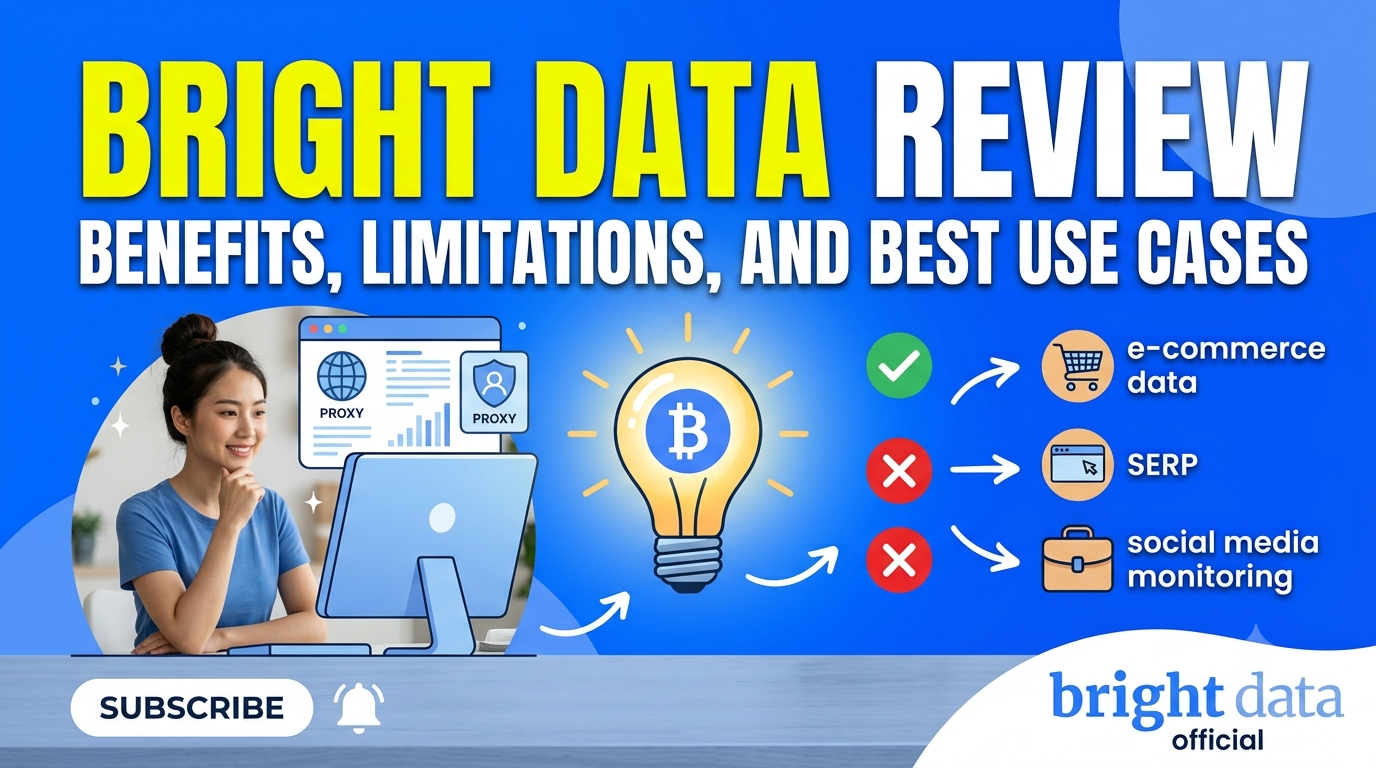
Bright Data is a powerful web data platform trusted by businesses worldwide for its advanced proxy network, web scraping APIs, browser automation tools, and ready-to-use datasets. Whether you need to collect public web data for SEO monitoring, price tracking, market research, AI model training, or competitive intelligence, Bright Data offers reliable, scalable, and compliant solutions. This review covers Bright Data’s key features, benefits, limitations, pricing, and best use cases, helping you decide if it’s the right platform for your data collection and automation needs.
What Is Bright Data?
If you’ve ever searched for enterprise-grade proxy services or web scraping platforms, chances are you’ve come across Bright Data. Formerly known as Luminati Networks, Bright Data has evolved into one of the world’s most comprehensive web data platforms, offering everything from residential proxies and scraping APIs to ready-made datasets and browser automation tools. Today, it serves businesses ranging from startups to Fortune 500 companies that rely on real-time public web data for research, competitive intelligence, AI model training, cybersecurity, travel pricing, e-commerce analytics, and much more. According to the company’s official information, the platform supports over 400 million residential IPs, provides infrastructure across 195 countries, and advertises 99.99% uptime with enterprise-grade security.
Unlike many proxy providers that only sell IP addresses, Bright Data positions itself as a complete data collection ecosystem. Businesses can choose from rotating residential proxies, ISP proxies, datacenter proxies, mobile proxies, scraping browsers, Web Unlocker, SERP APIs, and structured datasets depending on their requirements. This broad portfolio makes it attractive for organizations that need reliable access to publicly available web data without building a complicated infrastructure from scratch. The company also emphasizes ethical sourcing, compliance, and developer-friendly APIs, which are becoming increasingly important as web scraping regulations and privacy expectations continue to evolve. While Bright Data is undeniably powerful, it isn’t necessarily the perfect solution for every user. Its pricing, complexity, and enterprise focus mean that beginners and small businesses should evaluate whether they truly need everything the platform offers before investing.
Key Features of Bright Data
Bright Data stands out because it goes well beyond the traditional definition of a proxy provider. The platform combines networking infrastructure with sophisticated automation tools that reduce the technical challenges of collecting public web data at scale. Its flagship offering remains its massive proxy network, including residential, mobile, ISP, and datacenter IPs that allow users to access geo-restricted or region-specific content. Residential proxies are particularly valuable because they originate from real consumer devices, making them less likely to be blocked during large-scale scraping operations. Businesses can target requests at the country, city, carrier, or ASN level, providing remarkable precision for localized data collection.
Beyond proxies, Bright Data offers a collection of specialized products designed to simplify automation. Its Web Unlocker automatically bypasses CAPTCHAs, anti-bot systems, and JavaScript rendering challenges, while the Scraping Browser provides cloud-hosted browser automation compatible with modern frameworks. Organizations that don’t want to build scraping infrastructure themselves can instead use the company’s Web Scraper APIs, which return structured information from popular websites. Another standout capability is the Dataset Marketplace, where users can purchase ready-made datasets covering e-commerce, real estate, finance, social media, job listings, travel, and many other industries. With more than 190 datasets across 120+ domains, organizations can obtain structured information immediately instead of spending weeks building extraction pipelines.
Benefits of Using Bright Data
The biggest advantage of Bright Data is reliability at scale. Anyone who has attempted large-scale web scraping knows that IP bans, CAPTCHAs, rate limiting, and constantly changing website structures create significant obstacles. Bright Data addresses these challenges through intelligent proxy rotation, browser automation, and specialized unlocking technology that significantly improves request success rates. According to the company’s official platform information, it advertises 99.95% success rates and 99.99% uptime, making it particularly attractive for enterprises where downtime translates directly into lost revenue or incomplete datasets. Whether you’re monitoring airline prices, tracking competitor inventories, or collecting SEO ranking data, consistent availability becomes a major competitive advantage.
Another significant strength lies in the platform’s versatility. Instead of purchasing separate solutions for proxies, scraping APIs, browser automation, and structured datasets, organizations can manage everything through one ecosystem. This centralized approach simplifies authentication, billing, documentation, and monitoring. Bright Data has also invested heavily in compliance, transparency, and customer support, areas that enterprise procurement teams often prioritize over low pricing. Independent review platforms consistently praise the quality of its documentation, intuitive dashboard, responsive support staff, and ease of integrating APIs into existing workflows. Many users also appreciate that they can start with one service, such as residential proxies, and later expand into SERP APIs, browser automation, or datasets without migrating to another provider.
Limitations of Bright Data
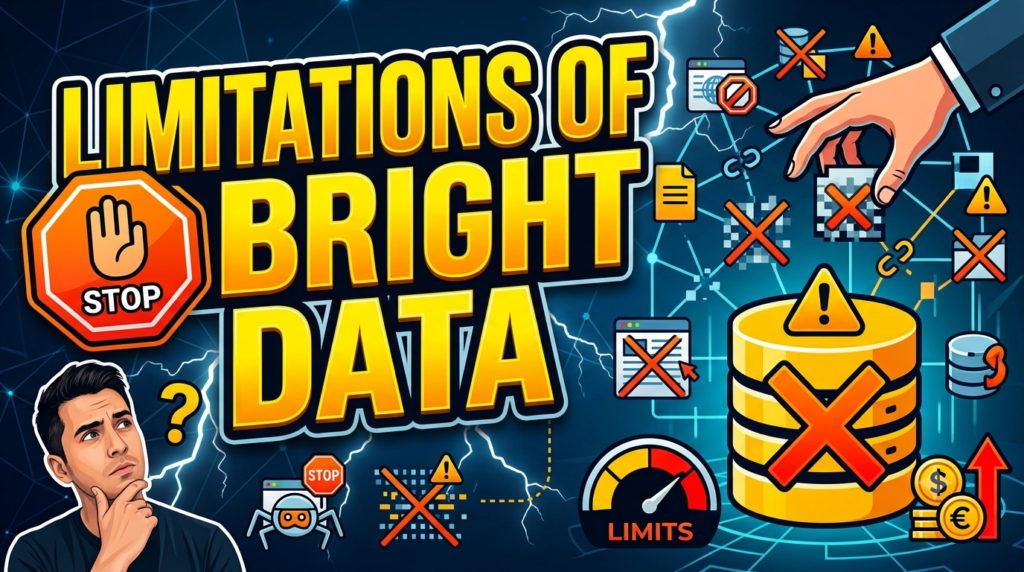
Bright Data is not an ideal platform. While it excels in providing enterprise-grade web data solutions, there are a few drawbacks that potential users should consider before committing to a plan. The first challenge is its pricing. Compared to many budget proxy providers, Bright Data is positioned at the premium end of the market. Businesses pay for high-quality infrastructure, advanced automation tools, compliance measures, and reliable customer support. For organizations that rely heavily on web data, this investment often pays for itself. However, freelancers, hobbyists, or small startups with limited scraping needs may find the costs difficult to justify. Even though the platform offers flexible plans, estimating monthly usage can be confusing because pricing varies depending on the proxy type, bandwidth consumption, API requests, and additional services used.
Another limitation is the platform’s learning curve. Bright Data offers an extensive collection of products, including residential proxies, ISP proxies, datacenter proxies, mobile proxies, Web Unlocker, Scraping Browser, SERP APIs, and datasets. While this variety is a major advantage, it can also overwhelm new users. Beginners who simply want to scrape a few websites may spend considerable time understanding authentication methods, proxy rotation settings, API configurations, and dashboard options. Fortunately, Bright Data provides detailed documentation, tutorials, and customer support to ease the onboarding process. Users with prior experience in web scraping or automation generally adapt much faster, while newcomers should expect a short learning period before becoming fully productive.
Pricing Overview
Bright Data follows a flexible pricing model designed to accommodate businesses of different sizes. Rather than offering a single flat-rate subscription, the platform provides multiple billing options based on the type of service being used. Residential proxies, mobile proxies, ISP proxies, datacenter proxies, scraping APIs, browser automation, and datasets each have their own pricing structure. Customers can typically choose between pay-as-you-go usage or monthly subscription plans that reduce the cost per unit as usage increases. This approach allows businesses to optimize spending based on their workload instead of paying for unused resources.
The platform also offers enterprise-level pricing for organizations with high-volume data collection requirements. These plans often include dedicated account managers, premium support, customized infrastructure, higher request limits, and service-level agreements (SLAs). Although Bright Data’s pricing may initially appear more expensive than many competitors, it is important to consider the value delivered through higher success rates, advanced anti-blocking technology, global IP coverage, and integrated scraping tools. Businesses that frequently encounter blocked requests or downtime with cheaper providers may ultimately save money by using a more reliable platform that requires less maintenance.
Bright Data Pricing Comparison
| Service | Best For | Pricing Model |
| Residential Proxies | Large-scale web scraping | Pay-as-you-go & Subscription |
| Datacenter Proxies | High-speed automation | Pay-as-you-go & Subscription |
| ISP Proxies | Stable long sessions | Monthly Plans |
| Mobile Proxies | Mobile app testing & scraping | Monthly Plans |
| Web Scraper APIs | Structured data extraction | Request-based |
| Datasets | Ready-to-use public datasets | Subscription / Custom |
Best Use Cases

Bright Data serves a wide range of industries because reliable public web data has become an essential business asset. One of its most common applications is SEO and SERP tracking. Digital marketing agencies, SEO professionals, and enterprise marketing teams use Bright Data’s proxy network and SERP APIs to monitor keyword rankings across different countries, cities, and devices. Since search engine results vary by location and personalization, having access to geographically targeted IP addresses allows businesses to collect more accurate ranking data. This enables marketers to evaluate campaign performance, monitor competitors, and identify optimization opportunities without being affected by local search biases.
Another major use case is e-commerce price monitoring. Online retailers constantly adjust product prices based on demand, inventory levels, promotions, and competitor activity. Bright Data enables businesses to track thousands or even millions of product listings across multiple marketplaces in real time. Retailers can monitor pricing trends, stock availability, customer reviews, and promotional campaigns to make data-driven pricing decisions. This capability is particularly valuable for brands operating in competitive industries where even small pricing changes can significantly influence sales performance.
Artificial intelligence has also become one of Bright Data’s fastest-growing application areas. AI developers require enormous amounts of structured and unstructured public web data to train language models, recommendation systems, sentiment analysis engines, and predictive algorithms. Bright Data simplifies this process through its proxy infrastructure, Web Unlocker, scraping APIs, and ready-made datasets. Instead of spending months building complex scraping systems, organizations can collect high-quality public data efficiently while maintaining compliance with applicable regulations. Research institutions, technology companies, and startups increasingly rely on platforms like Bright Data to accelerate AI development.
Market research represents another powerful use case. Businesses across finance, travel, real estate, cybersecurity, and recruitment industries depend on current public information to make informed decisions. Analysts use Bright Data to gather pricing information, monitor industry trends, analyze consumer behavior, evaluate competitor strategies, and track changing market conditions. Because the platform supports global geographic targeting, companies can compare data across multiple countries and regions without maintaining physical infrastructure in those locations.
Read More:-
Parcel ABC UK Shipping Guide: Features, Pricing, and Benefits Explained
Why Fun-sport-vision.com DE Is Gaining Popularity in Germany
Mashvisor (US): Complete Review for Real Estate Investors in 2026
What Is Scandic SE? A Complete Beginner’s Guide
Simpel NL Explained: Everything You Need to Know
Bright Data Pros and Cons
Choosing the right web data platform requires balancing strengths against potential drawbacks. Bright Data offers one of the industry’s most comprehensive feature sets, but prospective users should evaluate whether those capabilities align with their specific needs.
| Pros | Cons |
| Massive global proxy network | Premium pricing |
| Residential, mobile, ISP, and datacenter proxies | Learning curve for beginners |
| Advanced anti-bot and CAPTCHA bypass technology | Pricing can be complex |
| High success rates and uptime | Better suited for professional users |
| Excellent documentation and support | Some features may exceed small business needs |
| Ready-made datasets available | Initial setup takes time |
Final Verdict
Bright Data has earned its reputation as one of the leading enterprise web data platforms for good reason. Instead of focusing solely on proxy services, it delivers an integrated ecosystem that combines proxy infrastructure, scraping APIs, browser automation, Web Unlocker technology, and ready-to-use datasets. This all-in-one approach reduces operational complexity while improving reliability for organizations that depend on large-scale public web data collection. Businesses involved in competitive intelligence, SEO monitoring, AI development, market research, cybersecurity, travel pricing, and e-commerce analytics will likely find significant value in its capabilities.
That said, Bright Data is not necessarily the ideal choice for every user. Individuals with occasional scraping needs or limited budgets may prefer simpler and more affordable alternatives. The platform’s premium pricing and extensive feature set make the most sense for businesses that require enterprise-level performance, high success rates, geographic targeting, and scalable infrastructure. If your projects demand consistent access to public web data with minimal interruptions, Bright Data remains one of the strongest options currently available.



Conclusion
Bright Data has evolved far beyond being just another proxy provider. It now offers a complete web data collection ecosystem capable of supporting organizations across virtually every industry that depends on public online information. Its enormous proxy network, advanced automation tools, Web Unlocker technology, structured datasets, and enterprise-grade infrastructure position it among the most capable solutions on the market. While its pricing and learning curve may discourage casual users, companies requiring reliable, scalable, and compliant data collection will appreciate the platform’s comprehensive capabilities.
As businesses continue to embrace AI, automation, competitive intelligence, and data-driven decision-making, access to accurate public web data will become increasingly valuable. Bright Data addresses this need by providing a flexible platform that can scale alongside growing business requirements. For organizations seeking a long-term solution rather than a temporary proxy service, Bright Data is a worthwhile investment that delivers reliability, performance, and extensive functionality.
Frequently Asked Questions
Q. Is Bright Data suitable for beginners?
A. Bright Data is beginner-friendly in terms of documentation and customer support, but its wide range of advanced tools means there is a learning curve. Users with prior web scraping experience will find onboarding easier.
Q. What makes Bright Data different from other proxy providers?
A. Unlike traditional proxy providers, Bright Data combines proxies, scraping APIs, browser automation, Web Unlocker technology, and ready-made datasets into a single platform.
Q. Is Bright Data legal to use?
A. Yes. Bright Data is designed for collecting publicly available web data while emphasizing ethical practices and compliance. Users should always ensure their activities comply with applicable laws and website terms of service.
Q. Which industries benefit most from Bright Data?
A. SEO agencies, e-commerce businesses, AI companies, cybersecurity firms, travel companies, financial organizations, market research agencies, and data analytics firms are among the biggest users of Bright Data.
Q. Is Bright Data worth the price?
A. For businesses that require reliable, large-scale web data collection, Bright Data’s premium pricing is often justified by its high success rates, enterprise infrastructure, global proxy network, and comprehensive feature set. Small businesses with minimal scraping needs may find lower-cost alternatives more suitable.