Discover the key benefits of joining the pCloud Partnership Program, including commission opportunities, recurring income potential, promotional tools, and flexible affiliate marketing options. Learn how the pCloud Affiliate Program works, who can join, how to get started, and the best strategies to promote pCloud cloud storage services successfully. Whether you’re a blogger, content creator, or digital marketer, explore how the pCloud Partnership Program can help you monetize your audience and build a potential source of online income.
Table of Contents
- Introduction to the pCloud Partnership Program
- What Is the pCloud Affiliate Program?
- Key Benefits of Joining the pCloud Partnership Program
- No Sign-Up Fees or Mandatory Sales Targets
- Global Participation Opportunities
- Marketing Tools and Promotional Resources
- Tracking Links and Performance Statistics
- Understanding pCloud’s Cloud Storage Features
- Who Should Join the pCloud Partnership Program?
- How to Join the pCloud Affiliate Program
- Important Terms, Limitations, and Potential Challenges
- Tips to Promote pCloud Successfully
- Conclusion
- Frequently Asked Questions (FAQs)
Introduction to the pCloud Partnership Program
The demand for cloud storage continues to grow as individuals, freelancers, businesses, and content creators look for convenient ways to store, access, and share digital files. Photos, videos, documents, presentations, and project files can quickly consume the available space on personal devices. Cloud storage services help solve this problem by allowing users to keep their files online and access them across supported devices. This growing need also creates opportunities for bloggers, website owners, and digital marketers who want to earn money by recommending useful online services. The pCloud Partnership Program, commonly presented through its affiliate program, offers one such opportunity by allowing eligible participants to promote pCloud and earn commissions from qualifying purchases made through their referral links.
Before joining, however, it is important to understand how the program works, which commission options are available, what promotional resources you can use, and what conditions apply to payments. According to pCloud’s official affiliate page, the program advertises commissions of up to $300 per sale, although actual earnings depend on the qualifying purchase and applicable program terms. The company also promotes benefits such as free enrollment, worldwide participation, tracking tools, and ready-to-use marketing materials.
These features can make the program attractive to people who already create content about technology, productivity, online security, or digital organization. Understanding the benefits and limitations first will help you decide whether promoting pCloud fits your audience and long-term earning goals.
What Is the pCloud Affiliate Program?
The pCloud Affiliate Program is a referral-based marketing opportunity offered by pCloud. It allows affiliates to promote the company’s cloud storage services using unique tracking links. When a user follows an affiliate link and completes an eligible purchase under the program’s rules, the affiliate may receive a commission. This arrangement benefits both parties: pCloud gains exposure to potential customers, while the affiliate can monetize relevant website traffic, social media content, newsletters, or educational resources. Instead of creating a product, managing a cloud storage platform, or handling customer subscriptions, affiliates concentrate on helping potential customers discover a service that suits their needs.
One appealing aspect of this model is that it can complement content you already produce. For example, a blogger writing about digital productivity could explain how cloud storage helps organize work documents, while a YouTube creator could publish a practical tutorial about backing up files. A technology website might compare storage services, discussing their features, pricing structures, and limitations before directing interested readers to pCloud. In each case, the recommendation should provide genuine value rather than simply pushing a promotional link. The affiliate program is therefore best understood as a way to earn from relevant recommendations, not as a guaranteed source of passive income. Success depends on audience trust, content quality, purchase intent, and compliance with the program’s current conditions.
How the Partnership Model Works
The pCloud affiliate model follows a straightforward process: join the program, obtain your unique affiliate link, share it with a relevant audience, and earn commissions from eligible purchases. Once you have access to your affiliate account, you can incorporate the link into suitable articles, tutorials, product comparisons, newsletters, and social media posts. When a potential customer clicks your link, the affiliate tracking system helps associate the referral with your account. If that person makes a qualifying purchase within the applicable tracking period, the transaction may generate a commission according to your selected commission model and the program’s conditions. pCloud’s official affiliate page provides an overview of this process and highlights the tools available to participants.
Imagine that you run a website focused on productivity tools. You publish an article explaining how freelancers can organize project documents, store important files, and share resources with clients. Within the article, you recommend pCloud where it genuinely fits the reader’s needs. A reader follows your link, explores the available plans, and eventually purchases a qualifying subscription. That purchase may generate affiliate revenue for you without requiring you to sell the service personally. However, clicks alone do not guarantee commissions, and not every visitor will become a customer. The strongest approach is to create content that answers real questions, explains the product honestly, and helps readers make informed decisions before purchasing.
Key Benefits of Joining the pCloud Partnership Program
The main attraction of the pCloud affiliate program is the combination of a recognizable digital service, multiple commission options, and promotional tools designed to help affiliates reach potential customers. Instead of developing a product from scratch, you can build content around an existing service that addresses everyday digital storage needs. This can be particularly useful if your audience already searches for cloud storage comparisons, backup solutions, file-sharing tools, or ways to manage large digital libraries. The official program also advertises free registration, worldwide eligibility for adults, and access to tracking statistics and promotional resources.
Another benefit is flexibility. You can promote pCloud through different channels depending on your experience, audience size, and available resources. A beginner might start with educational blog posts, while an established publisher could build detailed comparison pages or create video demonstrations. You can also develop content around different customer needs, including personal file storage, family photo organization, and business document management. Nevertheless, these benefits should be viewed as opportunities rather than guaranteed results. Your performance will depend on the relevance of your audience, the quality of your recommendations, the conversion rate of your content, and the conditions attached to each referral.
Attractive Commission Opportunities
Commission potential is one of the first things people investigate before joining an affiliate program. The pCloud affiliate page advertises earnings of up to $300 per sale, while its published commission information describes a 20% rate for qualifying Lifetime plan purchases and a 20% recurring rate for monthly or annual subscriptions. The maximum advertised amount is not a fixed payment for every customer; it depends on the eligible product, purchase value, and applicable terms.
For content creators, this structure provides an opportunity to earn revenue from recommendations without holding inventory or processing customer orders. Suppose you create a detailed guide to cloud storage and a reader purchases an eligible plan through your link. Your commission would depend on the qualifying transaction and the model assigned to that referral. A more expensive plan could potentially produce a different commission from a lower-priced subscription, but actual payouts must be checked against the current program rules. Before planning your earnings, review the approved commission schedule and calculate realistic scenarios using the prices and rates that apply to your account. This is more reliable than assuming that every successful referral will generate the maximum advertised commission.
Recurring Income From Subscription Plans
Recurring commissions can be especially attractive to affiliates who want to develop revenue over time. According to pCloud’s official affiliate information, affiliates can select a recurring commission model that pays 20% of eligible monthly or annual subscription payments. This differs from a model that pays only once when a customer makes an initial purchase. If referred customers continue to maintain eligible subscriptions and the applicable terms remain satisfied, their payments may create additional commission opportunities.
Consider a technology blogger who publishes useful cloud storage tutorials throughout the year. Each article may continue attracting readers through search engines long after publication. Some visitors may become customers months after the content first appears, creating the possibility of commissions from new referrals. Under an eligible recurring model, subscription renewals may also contribute to earnings. However, recurring revenue should not be confused with guaranteed lifetime income. Cancellations, unsuccessful payments, refunds, program rules, and changes to subscription arrangements can affect earnings. You should also confirm which commission model applies to each referral because pCloud states that the model selected for a customer cannot subsequently be changed for that customer.
Earning Potential From Lifetime Plans
Lifetime plans offer another commission opportunity for affiliates who prefer promoting a one-time purchase rather than a recurring subscription. pCloud advertises a 20% commission on eligible one-time Lifetime plan payments. This arrangement allows an affiliate to earn from a qualifying purchase without relying on that particular customer making monthly subscription payments. It may be appealing to audiences who prefer paying upfront for a product or service instead of managing another recurring expense.
For example, a website comparing long-term cloud storage costs could explain the differences between subscription-based plans and Lifetime options. Readers could evaluate the initial price, expected duration of use, included storage, and other relevant conditions before deciding which model suits them. This type of comparison gives affiliates a natural opportunity to discuss pCloud while helping customers understand the financial trade-offs. However, a Lifetime plan should not automatically be described as the best deal for everyone. Customers should review the exact terms, included features, eligibility, and current price before purchasing. Affiliates should likewise confirm the commission applicable to the selected product instead of assuming that every Lifetime transaction earns the maximum amount advertised.
No Sign-Up Fees or Mandatory Sales Targets
A major advantage for newcomers is the absence of a joining fee. pCloud’s official affiliate page lists a sign-up fee of $0 and states that there is no sales requirement. It also indicates that people aged 18 or older can apply worldwide, subject to the program’s requirements.
This makes the program accessible to people who want to explore affiliate marketing without paying an enrollment charge. You do not necessarily need an established media company, a large website, or years of marketing experience to begin learning how referrals work. You can start by understanding the product, identifying an appropriate audience, and publishing useful content through channels you already manage. Still, joining for free does not mean that promotion has no costs. Website hosting, content production, video equipment, advertising, and your time may all involve expenses. The sensible approach is to begin with resources you already have, measure the results, and invest more only when you can justify the additional spending. Free enrollment lowers the initial cost barrier, but it doesn’t eliminate the work needed to establish a successful affiliate business.
Global Participation Opportunities
The pCloud affiliate program is advertised as open to participants worldwide, which gives eligible content creators an opportunity to promote the service to audiences in different countries. This can be particularly helpful for websites that publish in English or serve international readers interested in technology, cloud storage, digital productivity, or online backup. Rather than depending entirely on a local audience, you may be able to attract potential customers through search traffic and social media from several markets.
International promotion does require some planning. Readers in different countries may have different payment preferences, purchasing power, languages, and expectations about storage services. An article designed for an audience in India, for example, may need to explain pricing and value differently from one written for readers in the United States. You should also consider whether your chosen payment method is available and practical in your country. pCloud identifies PayPal as its standard monthly payment method and mentions bank transfer as an alternative subject to a higher minimum payout threshold. Verify the current payment conditions before joining, particularly if you operate outside the company’s main markets. Global eligibility is a useful starting point, but effective international promotion still requires audience research and locally relevant content.
Marketing Tools and Promotional Resources
Creating promotional materials from scratch can take time, especially for beginners who are still learning design, copywriting, and conversion optimization. pCloud advertises access to marketing resources such as banners, ready-to-use content, targeted landing pages, and other promotional tools. These resources can help affiliates build more consistent campaigns without needing to design every asset independently.
A blogger might, for instance, combine a thorough explanation of cloud storage features with an appropriate commercial banner. A video creator could include an affiliate link in a tutorial description, while a newsletter publisher might recommend the service in a relevant discussion about file organization. Targeted landing pages can also help direct readers toward information that matches their interests, reducing the need to send every visitor to a generic homepage. The best choice depends on the user’s intent: someone researching business storage may need different information from a person looking for a place to store family photographs. Always use authorized assets according to the program’s rules, keep promotional claims accurate, and disclose affiliate relationships clearly. Marketing resources can make promotion easier, but they work best when paired with helpful content and a clear understanding of the audience’s needs.
Tracking Links and Performance Statistics
Affiliate marketing becomes easier to manage when you can measure what your content actually achieves. pCloud advertises an affiliate dashboard with real-time statistics for clicks, sales, and commissions. Its official page also describes referral tracking, although the stated cookie duration appears inconsistent across different sections of the published information.
This makes it especially important to check the current tracking conditions inside your affiliate account before building campaigns around a specific attribution period. A tracking cookie generally helps associate a later purchase with a previous referral, subject to the program’s rules and technical limitations. It does not mean that every click will be credited indefinitely. Meanwhile, performance statistics can help you identify which articles, videos, or promotional placements attract attention and generate purchases. If one tutorial produces many clicks but few conversions, you might improve its explanation of product benefits or clarify which customers the service suits. If another article generates fewer clicks but more qualified sales, it may be worth developing related content. By using tracking data to make informed adjustments, you can spend more time on strategies that demonstrate real potential instead of relying on guesswork.
Understanding pCloud’s Cloud Storage Features
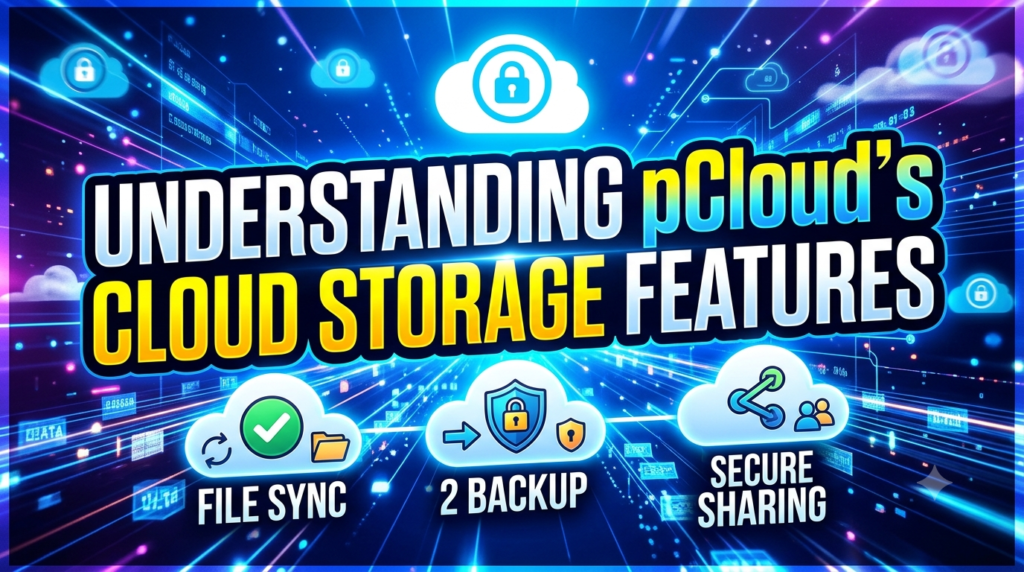
Before promoting any product, you should understand what it does and why someone might want to purchase it. pCloud is a cloud storage service that allows users to store, access, and share digital files. Its product information highlights features such as file sharing, backup and recovery, remote access, photo management, media management, and branded links. The company also offers personal and business plans, giving affiliates several use cases to explore when creating educational content.
These features provide useful topics for content creators. A photographer might be interested in managing a large collection of images, while a freelancer may want to keep project files accessible across devices. A small business could explore cloud storage as part of its broader document-management workflow. By discussing these real-world applications, you can explain how the service may fit into a customer’s routine instead of relying on generic promotional language. It is also important to be precise about security. Although pCloud promotes security-related features, you should distinguish standard storage protections from optional encryption products and explain any relevant limitations. Never promise that a service eliminates every security risk. A clear, balanced explanation helps readers make better decisions and strengthens your credibility as an affiliate.
Who Should Join the pCloud Partnership Program?
The pCloud affiliate program may be suitable for people who can reach audiences interested in cloud storage, file sharing, digital organization, online productivity, or data backup. The strongest candidates are not necessarily those with the largest following; they are often the ones whose content naturally connects with the product. A smaller website that attracts readers researching cloud storage purchases may generate more qualified referrals than a large entertainment account whose followers have little interest in the subject. Relevance matters because affiliate marketing works best when recommendations appear in a context where readers can genuinely benefit from them.
The program may also appeal to people who want to diversify their website revenue. A technology publisher could add pCloud to a broader collection of software recommendations, while a productivity blogger might include it in guides about managing digital files. Potential affiliates should, however, take into account their capacity to regularly create helpful material and uphold audience trust. If your audience rarely uses cloud storage or prefers services that meet different requirements, promoting pCloud may not be a natural fit. Before applying, review your existing content, identify relevant audience questions, and determine whether you can recommend the service honestly. Generally speaking, a solid product-audience fit is a better starting point than signing up for an affiliate network just because the advertized commission seems appealing.
Bloggers, Content Creators, and Review Websites
Bloggers and review website owners can integrate pCloud into articles that answer specific questions about cloud storage. Potential topics include comparisons between storage plans, explanations of file-sharing workflows, tutorials for organizing digital documents, and guides to evaluating online backup solutions. These topics can attract readers who are already researching ways to manage their files, making them a natural audience for relevant product recommendations. A carefully researched article can continue attracting search traffic after publication, although rankings and traffic levels are never guaranteed.
YouTube creators can approach the same topic through practical demonstrations, product walkthroughs, and honest reviews. For example, a video might explain how to organize folders, share files, or evaluate the suitability of a cloud storage service for a particular workflow. The creator can include an affiliate link in the description, along with a clear disclosure that purchases may generate a commission. Social media creators can also share short educational tips and direct interested viewers toward more comprehensive resources. Whatever the format, useful information should remain the priority. Avoid exaggerated promises, copied product descriptions, or recommendations based solely on earning potential. Readers and viewers are more likely to trust content that discusses both advantages and limitations.
Digital Marketers and Technology Publishers
Digital marketers may find the pCloud affiliate program useful as part of a broader content monetization strategy. Publishers covering software, remote work, cybersecurity, productivity, or business technology can create content around the problems cloud storage helps address. For example, an article about remote collaboration could discuss file access and sharing, while a guide to digital backups could compare different approaches to protecting important documents. These subjects allow a publisher to introduce pCloud where it is relevant instead of inserting promotional links into unrelated content.
Technology publishers can also experiment with different content formats and measure their performance. A comparison article might attract users who are close to making a purchasing decision, whereas a beginner’s guide may attract readers who are still learning about the category. Although they have different functions, both can be helpful. Performance data can help you identify which topics attract qualified visitors and which content deserves further development. Paid advertising requires particular care: review the affiliate program’s current traffic-source restrictions before investing money in campaigns. Some affiliate arrangements apply different commission rules to coupon, deal, or paid-search traffic. Never assume that every traffic source receives identical treatment. Building a sustainable strategy around useful content and compliant promotion is generally safer than relying on aggressive advertising alone.
How to Join the pCloud Affiliate Program
Getting started is relatively straightforward, but you should read the current terms before promoting the service. The official pCloud Affiliate Program page provides program information and a link to the affiliate registration portal.
A practical starting process looks like this:
- Visit the official website. Review the program overview, available commission models, eligibility criteria, and payment conditions.
- Apply through the affiliate portal. Follow the registration process and provide accurate information requested by the program.
- Review your account terms. Verify the compensation structure, attribution guidelines, products that qualify, payout options, and account-specific limitations.
- Obtain your affiliate link. Use the tracking link supplied by the program rather than an ordinary product URL when you want a referral to be attributed to you.
- Create useful promotional content. Publish relevant articles, videos, tutorials, or social posts that explain the service honestly.
- Monitor results. Review clicks, qualifying purchases, and commissions through the available reporting tools, then refine your content based on performance.
Don’t think that registering will result in commissions or approval. Follow the instructions presented during enrollment, and keep copies of the terms applicable to your account. It is also sensible to test your links and check that they direct visitors to the correct destination before publishing them widely. A careful setup can prevent avoidable problems later.
Read More:-
How Does Strikingly Simplify the Website Building Process?
Building Your Dream Website with Site123
Boost Your E-commerce Strategy with YITH Plugins
Maximize Your Customer Engagement with LiveAgent’s Features
Why STRIPO is Essential for Digital Product Marketersa
Important Terms, Limitations, and Potential Challenges
Although the pCloud affiliate program offers several attractive features, prospective affiliates should understand the conditions that affect earnings. The advertised commission of up to $300 per sale is a maximum marketing claim, not a promise that every referral will produce that amount. The official page describes different commission models for Lifetime purchases and recurring subscriptions, and the model assigned to a customer cannot subsequently be changed for that customer.
Tracking details also deserve attention. The official page refers to a 90-day tracking feature in one section but describes a 45-day cookie duration in its FAQ. The affiliate listing on Awin also displays a 45-day attribution period, while other details may differ by listing or arrangement.
Because these published details are not fully consistent, confirm the actual tracking period and applicable rules directly in your account before relying on a particular duration.
Payment conditions are another consideration. pCloud states that PayPal payments are made monthly, typically on the 16th, and no earlier than 45 days after a successful referral. It also lists bank transfer as an alternative with a $500 minimum threshold.
Check whether the available payment methods suit your location and whether additional eligibility or verification requirements apply.
Finally, affiliate marketing involves uncertainty. Visitors may click without purchasing, search rankings can fluctuate, and customers may cancel subscriptions. You may also need to invest considerable time in writing, researching, updating, and promoting content. Treat the program as a potential revenue channel rather than guaranteed income, and never make unsupported claims about earnings, security, or product performance.
Tips to Promote pCloud Successfully
Successful affiliate promotion starts with understanding the questions your audience actually asks. Instead of publishing an article that simply announces that pCloud is a good service, create content that solves a particular problem. You could explain how to choose a cloud storage plan, compare one-time purchases with subscriptions, or describe the factors people should consider before storing important files online. This approach gives readers a reason to engage with your content and makes any product recommendation more useful.
Search engine optimization can help your content reach people who are actively researching these subjects. Use a clear primary keyword, descriptive headings, relevant supporting terms, and an informative meta description. Search intent should guide the structure: a comparison article should compare meaningful features, while a beginner’s guide should explain concepts in accessible language. Avoid repeating the same keyword unnaturally or publishing multiple pages with nearly identical information. Original examples, practical demonstrations, and regularly reviewed product details can make your content more valuable.
It is equally important to maintain transparency. Disclose affiliate links clearly, follow applicable advertising and privacy requirements, and use only promotional methods permitted by the program. Review performance data periodically to understand which pages attract qualified traffic and which need improvement. Most importantly, recommend pCloud when it genuinely fits the reader’s needs. Honest promotion may take longer than aggressive sales tactics, but it provides a stronger foundation for building audience trust and sustainable affiliate revenue.


Conclusion
The pCloud Partnership Program, through its affiliate offering, presents an opportunity for bloggers, technology publishers, content creators, and digital marketers to monetize relevant recommendations. Its key attractions include free enrollment, advertised commissions of up to $300 per sale, a 20% commission structure for eligible Lifetime purchases, recurring commissions on qualifying subscription payments, promotional resources, and affiliate performance statistics. The program also advertises worldwide participation for eligible adults, making it worth exploring for publishers who serve international audiences.
But signing up for an affiliate program is just the beginning. Your results will depend on the relevance of your audience, the usefulness of your content, the quality of your promotional strategy, and the current terms governing tracking and payments. Before applying, carefully review the official conditions, confirm the commission model that suits your strategy, and ensure that you can receive payments through an available method. Start by creating informative content that helps readers understand their cloud storage options rather than focusing exclusively on commissions. If pCloud fits your audience’s needs, the program could become a useful addition to your broader content monetization strategy.
Frequently Asked Questions (FAQs)
Q. What is the pCloud Partnership Program?
A. The pCloud Partnership Program generally refers to promoting pCloud through its affiliate program. Participants receive unique tracking links and can earn commissions when eligible customers purchase qualifying plans through those links. The program provides promotional resources and performance statistics to help affiliates manage their activities. Visit the official pCloud Affiliate Program for current details.
Q. How much can you earn through the pCloud Affiliate Program?
A. pCloud advertises commissions of up to $300 per sale. Its official information also describes a 20% commission on eligible Lifetime plan purchases and a 20% recurring commission on qualifying monthly or annual subscription payments. Actual earnings depend on the product purchased, the commission model, and the applicable terms. The advertised maximum is not guaranteed for every transaction.
Q. Is the pCloud Affiliate Program free to join?
A. Yes. According to pCloud’s official affiliate page, the sign-up fee is $0, and there is no mandatory sales requirement. The program is advertised as open worldwide to people aged 18 or older, subject to its requirements. Applicants should review the current eligibility and payment conditions before registering.
Q. How does pCloud pay its affiliates?
A. pCloud states that affiliate commissions are paid monthly through PayPal, typically on the 16th, with payments made no earlier than 45 days after a successful referral. Bank transfer is also listed, with a $500 minimum payout threshold. Payment eligibility and processing conditions should be confirmed through the official program before you begin promoting the service.
Q. How can beginners promote pCloud effectively?
A. Beginners can start by publishing helpful blog posts, product comparisons, cloud storage tutorials, or social media content. Focus on questions your audience wants answered, explain relevant product features accurately, and include affiliate links where they genuinely help readers. Disclose your affiliate relationship, follow the program’s promotional rules, and use available performance statistics to improve your content over time. Consistent, relevant content is a better long-term strategy than relying on clicks alone.