

Atlas VPN was a privacy-focused VPN service designed to help users secure their internet connections, protect their IP addresses, and improve online privacy. Although Atlas VPN was discontinued in April 2024, its features, including VPN encryption, Tracker Blocker, SafeSwap, and Data Breach Monitor, remain relevant when discussing modern online security and privacy. This guide explains how Atlas VPN worked, what security benefits it offered, what happened after its discontinuation, and what former users should know about moving to an alternative VPN service.
Table of Contents
Understanding Atlas VPN and Its Purpose

Atlas VPN was a consumer-focused VPN service built to help people create a more private and protected internet connection. Like other VPN services, its basic function was to establish an encrypted connection between the user’s device and a VPN server before internet traffic continued toward its destination. This can be especially useful when connecting through networks where the user does not completely control the network infrastructure, such as public Wi-Fi in cafés, airports, hotels, libraries, or other shared environments.
The concept is easier to understand if you imagine sending a private letter through a busy city. Without additional protection, different parts of the journey may reveal information about where the letter is coming from and where it is going. A VPN adds an encrypted tunnel around the connection between your device and the VPN server. That does not make you invisible on the internet, but it can reduce the amount of connection information exposed to the local network. Atlas VPN was created to provide this kind of privacy-focused connection, along with additional features designed to improve everyday online security.
What Atlas VPN Was Designed to Do
Atlas VPN offered several features aimed at improving privacy and security during everyday internet use. According to information published by Atlas VPN and its successor support materials, the service included features such as SafeSwap, Tracker Blocker, and Data Breach Monitor. Its former VPN infrastructure also used AES-256 encryption and a WireGuard-based protocol.
These features addressed different parts of the privacy problem. VPN encryption focused primarily on securing the connection between the device and VPN server, while tracker-blocking features were designed to reduce certain forms of online tracking. A breach-monitoring feature served a different purpose by helping users identify whether information associated with their accounts appeared in known data breaches. Thinking about these tools separately is important because online security is not a single lock on a door; it is closer to having several layers of protection working together.
How a VPN Protects Your Internet Connection
A VPN generally encrypts traffic between your device and the VPN server. This can make it considerably harder for someone monitoring the local network to inspect the contents of properly protected traffic. It can also replace the public-facing IP address associated with your direct connection with an address associated with the VPN server, which can provide an additional layer of privacy.
However, a VPN should not be confused with complete anonymity. Websites can still identify you through accounts, cookies, browser fingerprinting, advertising identifiers, and other technologies. If you log into your Google, Facebook, Amazon, or banking account while connected to a VPN, the service you are using still knows that your authenticated account is interacting with it. A VPN is therefore best understood as one privacy and security layer, not a magic cloak that makes every online activity anonymous.
The Current Status of Atlas VPN
Before following any old tutorial about installing Atlas VPN, check the date. Atlas VPN’s official website currently states that its VPN service has been permanently discontinued, with the shutdown taking effect in April 2024. The official announcement says the decision followed challenges including rapidly changing technological requirements, competition in the VPN market, and rising costs associated with providing the service.
This matters because many online articles and videos may still describe Atlas VPN as if it were an active service. Older reviews can contain useful information about what the product offered historically, but they should not be treated as current instructions for purchasing or installing Atlas VPN. If you encounter a website claiming to sell a brand-new Atlas VPN subscription, verify its legitimacy carefully rather than entering payment or personal information.
Why Atlas VPN Was Discontinued
Atlas VPN explained that maintaining a modern VPN service had become increasingly challenging because of rapidly advancing technology requirements, intense competition, and increasing service costs. The company ultimately decided to discontinue the product rather than continue operating it under those circumstances.
For consumers, the practical lesson is broader than the fate of one particular VPN brand. Cybersecurity services change over time, and a privacy tool that was available a few years ago may be renamed, discontinued, merged, or replaced. Security-conscious users should therefore periodically check whether the software they rely on is still officially supported. Continuing to use abandoned software can introduce unnecessary risks because security updates, infrastructure, and technical support may no longer be available.
What Happened to Existing Atlas VPN Subscribers
Existing paid Atlas VPN subscribers were transitioned to NordVPN for the remainder of their original subscription periods. Atlas VPN’s official announcement states that the transition occurred without additional charges during that remaining period. It also says that only essential information needed for the transition, including the subscription duration and registration email address, was transferred.
The official support information also states that Atlas VPN’s automatic renewal was disabled and that new Atlas VPN subscriptions are no longer available. Former users should therefore rely on official communications and current NordVPN support information rather than old Atlas VPN installation guides.
How VPN Encryption Helps Protect Your Data

Encryption is one of the most important concepts behind VPN security. In simple terms, encryption transforms readable information into a form that cannot be easily understood without the appropriate cryptographic key. When a VPN encrypts traffic between your device and its VPN server, it helps prevent people on the same local network from simply reading the contents of that traffic.
Imagine sitting in a crowded coffee shop and connecting your laptop to the café’s Wi-Fi. You have no direct control over the network equipment or who else is connected. A properly configured VPN can create an encrypted tunnel between your device and the VPN server, giving your connection an additional layer of protection while information travels across that local network. This is particularly useful when you are working with sensitive information or accessing accounts away from your trusted home network.
Protecting Data on Public Wi-Fi
Public Wi-Fi deserves special attention because it places your device on a network shared by many people. Even when modern websites use HTTPS, which already encrypts much web traffic, a VPN can provide an additional layer for the connection between your device and the VPN endpoint. This can be useful when you are traveling, working remotely, or using unfamiliar networks.
Still, good Wi-Fi habits remain essential. Avoid connecting to suspicious networks merely because their names look familiar, keep your operating system updated, disable automatic connection to unknown Wi-Fi networks, and use HTTPS websites whenever possible. A VPN complements these habits rather than replacing them. Security works best when multiple safeguards are combined instead of expecting one application to solve every problem.
Improving Privacy While Browsing
Privacy involves more than preventing someone from reading your traffic. It also involves limiting unnecessary exposure of identifying information. A VPN can help by routing your connection through another server and masking the IP address that websites would otherwise see from your normal internet connection.
That can make it harder for a website to associate your activity directly with your home or mobile connection. However, IP masking is only one part of the privacy equation. Your browser, operating system, logged-in accounts, cookies, device identifiers, and browsing behavior can all provide information that a VPN cannot automatically hide.
Reducing Exposure to Trackers
Atlas VPN historically included a Tracker Blocker feature designed to help reduce tracking technologies. Tracker blocking can be useful because advertising and analytics systems may use different technologies to observe browsing behavior across websites.
The important thing is to understand the difference between reducing tracking and eliminating tracking. A tracker-blocking feature may stop or restrict particular known tracking mechanisms, but it cannot guarantee that every website or advertising technology will be unable to collect information. For stronger privacy, users should also review browser privacy settings, limit unnecessary permissions, remove unused browser extensions, and think carefully before accepting every cookie request automatically.
Protecting Your IP Address
Your IP address can provide information about your network connection and approximate geographic location. A VPN can replace the IP address visible to many internet services with an address associated with the VPN server. This can provide useful privacy benefits when browsing.
But an IP address is not the same thing as your identity. If you log into an account, provide your email address, make a purchase, or voluntarily share personal information, the website may still know who you are. VPN-based IP masking should therefore be viewed as one privacy layer rather than a replacement for careful online behavior.
Atlas VPN Security Features
Atlas VPN’s historical security feature set illustrates how modern privacy services can combine several tools rather than relying solely on encrypted tunneling. The service offered SafeSwap, a feature intended to allow users to browse using rotating shared IP addresses; Tracker Blocker, intended to limit certain trackers; and Data Breach Monitor, intended to alert users about compromised information.
These features addressed different risks. SafeSwap was connected to IP privacy, Tracker Blocker focused on online tracking, and Data Breach Monitor focused on exposure resulting from data breaches. Looking at them together provides a useful lesson: online privacy and online security overlap, but they are not identical. Someone can have a private VPN connection and still have a weak password, an exposed email address, or an outdated device.
Using a VPN Responsibly
A VPN is most useful when it is combined with other cybersecurity practices. It can protect part of the journey your data takes across the internet, but it does not automatically protect your device from malware, phishing, unsafe downloads, stolen passwords, or fraudulent websites. If you download a malicious file while connected to a VPN, the VPN does not magically make the file safe.
The same principle applies to phishing. A fake banking website remains a fake banking website whether you access it through a VPN or not. Good security therefore means combining VPN protection with software updates, antivirus or endpoint protection where appropriate, strong passwords, multi-factor authentication, secure browsing habits, and regular account monitoring.
Why a VPN Is Not Complete Online Protection
The most common mistake people make with VPNs is assuming that VPN equals total privacy. It does not. A VPN primarily changes how your internet connection is routed and protected; it does not automatically control what information you voluntarily provide to websites or applications.
For example, if you use the same email address across dozens of websites, reuse passwords, keep old accounts active, and allow every application to access your location, a VPN alone will not solve those privacy problems. Think of the VPN as a secure lane on a highway. It can improve the security of your journey, but you still need to choose where you travel, protect your vehicle, and avoid handing your keys to strangers.
Practical Ways to Strengthen Online Security Today
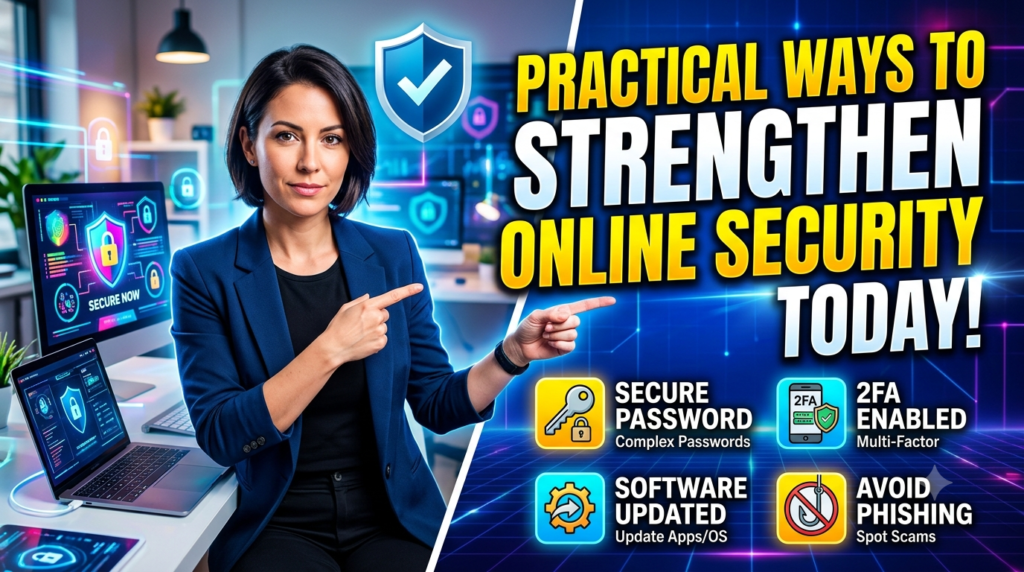
Even though Atlas VPN is no longer available, its original purpose highlights several practical security habits that remain relevant. Start by keeping your operating system, browser, applications, and security software updated. Software updates frequently contain security fixes, so delaying them indefinitely can leave known vulnerabilities unpatched.
Next, review the applications installed on your phone and computer. Remove programs you no longer use and check permissions for apps that request access to your microphone, camera, contacts, files, or location. The fewer unnecessary permissions you grant, the smaller your privacy exposure can become. Finally, periodically review your important accounts and remove old sessions or devices that you no longer recognize.
Strong Passwords and Multi-Factor Authentication
Passwords remain one of the simplest and most important security controls. Instead of using short passwords that are easy to guess, use long and unique passwords for important accounts. A password manager can make this practical because you do not need to memorize dozens of complex passwords yourself.
Multi-factor authentication adds another layer. With MFA enabled, someone who obtains your password may still need a second authentication factor to access your account. Whenever a major email, banking, social-media, cloud-storage, or work account offers a reputable MFA option, enabling it can significantly strengthen account security.
What Former Atlas VPN Users Should Do Now
If you previously used Atlas VPN, the first step is to confirm your current service status rather than attempting to reinstall an old Atlas VPN application. Atlas VPN’s official support documentation confirms that the service closed on April 24, 2024. Paid subscribers were transitioned to NordVPN for the remainder of their subscription period, while new Atlas VPN subscriptions are no longer available.
If you were migrated, follow the official account setup instructions sent by NordVPN rather than relying on third-party websites. You should also review your current subscription details, disable or remove outdated Atlas VPN applications if they remain on your devices, and make sure your new VPN application is downloaded from an official source. This simple cleanup can reduce confusion and help ensure that an obsolete application is not mistaken for an active security service.
Read More:-
How Does Strikingly Simplify the Website Building Process?
Building Your Dream Website with Site123
Boost Your E-commerce Strategy with YITH Plugins
Maximize Your Customer Engagement with LiveAgent’s Features
Why STRIPO is Essential for Digital Product Marketersa
Moving From Atlas VPN to NordVPN
Atlas VPN and NordVPN were both part of the Nord Security family, and the official Atlas VPN announcement states that paid users were transitioned to NordVPN after Atlas VPN’s closure. Former Atlas VPN users should therefore consult current NordVPN documentation for account access and service information.
For users in India, there is another detail worth checking before selecting a server. NordVPN’s current support documentation says that it shut down physical Indian servers in response to India’s CERT-In requirements but offers a virtual Indian IP location released in January 2024. This distinction between a physical server and a virtual location can matter when choosing a VPN connection for particular websites or services.




Conclusion
Atlas VPN can no longer be used as a current VPN service because it was permanently discontinued in April 2024. Its official website confirms that the service is no longer available, while former paid subscribers were transitioned to NordVPN for the remaining duration of their subscriptions.
The security lessons associated with Atlas VPN remain useful, though. VPN encryption can add protection when using unfamiliar networks, IP masking can provide an additional privacy layer, tracker-blocking tools can reduce certain forms of online tracking, and breach-monitoring features can help users respond to compromised information. None of these tools should be treated as complete protection on their own.
For stronger online security today, combine VPN protection with unique passwords, multi-factor authentication, software updates, cautious browsing, privacy-conscious browser settings, and regular account monitoring. If you are a former Atlas VPN customer, use official NordVPN migration and support resources rather than old Atlas VPN installation guides. Online privacy is best approached as a collection of small, consistent habits rather than a single application that promises to solve everything.
FAQs
Q. Is Atlas VPN still available?
A. No. Atlas VPN officially discontinued its service on April 24, 2024, and its website states that the VPN service is permanently unavailable. New Atlas VPN subscriptions can no longer be purchased.
Q. What happened to existing Atlas VPN subscribers?
A. Paid Atlas VPN subscribers were transitioned to NordVPN for the remaining period of their original subscription, according to Atlas VPN’s official announcement. The announcement also states that automatic renewal was disabled during the transition.
Q. Did Atlas VPN protect my online privacy?
A. Historically, Atlas VPN provided VPN encryption and privacy-focused features such as SafeSwap, Tracker Blocker, and Data Breach Monitor. These features could provide additional privacy and security layers, but a VPN does not guarantee complete anonymity or protect against every online threat.
Q. Can a VPN protect me from hackers?
A. A VPN can protect certain network traffic by encrypting the connection between your device and the VPN server, particularly when using untrusted networks. However, it does not automatically protect against phishing, malware, weak passwords, malicious downloads, compromised accounts, or every other form of cyberattack. A layered security approach is still necessary.
Q. What should I use if I was an Atlas VPN customer?
A. Former Atlas VPN customers should follow the official migration information provided by Atlas VPN and NordVPN. Atlas VPN’s official documentation states that paid subscribers were transitioned to NordVPN and that new Atlas VPN subscriptions are unavailable.