
Discover why SANSI LED lights are becoming increasingly popular for energy-efficient lighting. From high-lumen brightness and advanced ceramic heat dissipation to long-lasting performance and lower energy consumption, SANSI LED lighting offers practical solutions for homes, businesses, outdoor spaces, workshops, and commercial applications. Learn how SANSI LED technology combines powerful illumination, durability, thermal management, and energy efficiency to deliver better lighting performance while helping reduce long-term operating costs.
Table of Contents
- The Growing Demand for Energy-Efficient Lighting
- What Makes SANSI LED Lights Different
- How SANSI LED Lights Save Energy
- SANSI Ceramic Heat Dissipation Technology
- Longer Lifespan and Lower Maintenance
- Brightness Without Excessive Power Consumption
- SANSI LED Lights for Homes
- SANSI LED Lights for Commercial Spaces
- SANSI LED Lights for Outdoor Lighting
- Energy Savings and Long-Term Value
- Lighting Quality and Visual Comfort
- Durability and Thermal Performance
- Sustainability and Environmental Benefits
- Why High-Lumen LEDs Are Gaining Attention
- Choosing the Right SANSI LED Light
- SANSI LEDs vs. Traditional Lighting
- Are SANSI LED Lights Worth the Investment?
- The Future of Energy-Efficient LED Lighting
- Conclusion
- Frequently Asked Questions
The Growing Demand for Energy-Efficient Lighting
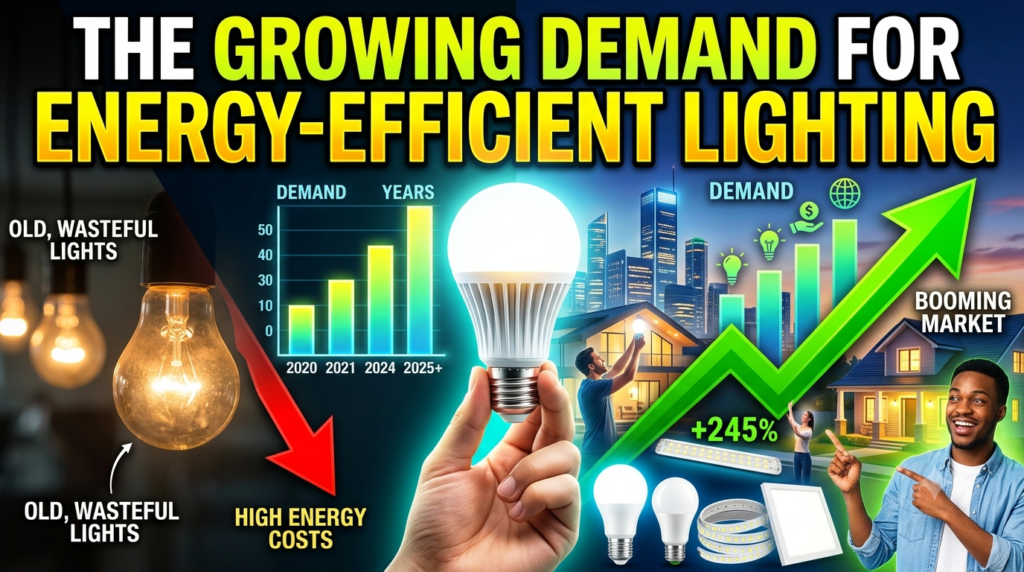
Energy efficiency has become a practical concern rather than a niche environmental idea. Electricity costs, sustainability goals, maintenance budgets, and growing awareness of energy consumption are encouraging households, businesses, property managers, and municipalities to rethink how they illuminate spaces. Lighting is particularly interesting because it operates for many hours in homes, stores, offices, warehouses, parking areas, streets, and public spaces. A small reduction in power consumption per fixture may appear insignificant when looking at a single lamp, but multiply that reduction across dozens, hundreds, or thousands of fixtures and the financial and operational effect can become substantial. ENERGY STAR notes that LEDs use substantially less energy than incandescent lighting and that commercial buildings with long operating hours can achieve especially attractive returns from lighting upgrades. This helps explain why energy-efficient LED lighting continues to gain popularity. People are not necessarily searching for the dimmest or cheapest bulb; they are looking for a sensible balance between brightness, electricity consumption, reliability, and total ownership cost. SANSI enters this market with products designed around exactly that balance. Its lighting solutions include high-lumen products, street lights, industrial lighting, landscape lighting, and other professional applications. The broader movement toward LEDs therefore creates an environment where brands that can deliver high illumination without excessive energy demand have a natural advantage.
Why LED Technology Is Replacing Traditional Bulbs
The fundamental advantage of LED technology is efficiency. An incandescent bulb creates light by heating a filament until it becomes extremely hot, which means a large proportion of the electrical energy becomes heat rather than visible light. LEDs work differently: an electrical current passes through semiconductor material and produces light without relying on a glowing filament. ENERGY STAR explains that LEDs can be up to 90% more efficient than incandescent bulbs and also notes that LEDs generally do not simply burn out; instead, their light output gradually decreases through a process called lumen depreciation. This difference changes the economics of lighting. A bulb that consumes less electricity and remains useful for a longer period can reduce both operating expenses and the frequency of replacement. That is especially important in places where changing a lamp is inconvenient, expensive, or potentially dangerous. Imagine having to replace dozens of lights in a high ceiling every few months compared with installing fixtures designed for years of operation. The value is not just the electricity saved; it is also the labor, equipment, downtime, and inconvenience avoided. SANSI’s own product information emphasizes long service life and thermal engineering across its professional lighting range, including products rated for tens of thousands of operating hours. This combination of efficiency and longevity is a major reason LED technology has become the default direction for modern lighting.
What Makes SANSI LED Lights Different
SANSI LED lights stand out primarily because the brand has concentrated on solving one of the most important engineering challenges in LED lighting: how to produce substantial brightness while controlling heat in a compact package. High brightness sounds simple until you consider what happens when more electrical power and more LED chips are concentrated into a relatively small physical space. Heat can influence component performance, reliability, and useful life, so thermal management becomes an essential part of the product rather than an afterthought. SANSI describes its ceramic heat-dissipation approach as a key part of its lighting technology and says its products can use ceramic structures to transfer heat away from the LED source efficiently. The company has also promoted high-lumen bulb designs that aim to provide substantial output while remaining physically compact. In a traditional lighting mindset, brighter often means bigger, hotter, and more power-hungry. Modern LED engineering challenges that assumption by attempting to pack more useful illumination into smaller and better-managed systems. That is where SANSI’s approach becomes interesting. The appeal is not simply that a SANSI bulb can be bright; many lighting brands offer bright LEDs. The differentiating question is whether the product can combine brightness, thermal control, compactness, efficiency, and reasonable longevity. SANSI’s product development clearly targets that intersection, making the brand particularly relevant for people who need powerful lighting without automatically moving to oversized or inefficient fixtures.
High Brightness in Compact Designs
One of the most noticeable trends in modern LED lighting is the push toward higher lumen output from increasingly compact products. Lumens describe the amount of visible light produced, while watts describe electrical power consumption, so comparing the two provides a better understanding of efficiency than looking at wattage alone. SANSI has highlighted compact high-lumen bulbs as one of its areas of development, including products designed to deliver substantial output from relatively small form factors. Its published material describes an 800-lumen bulb in a compact A11 design and discusses high-lumen A21 products that can reach significantly higher outputs than many conventional bulbs. This matters because fixture compatibility can become a problem when a high-output bulb is physically too large. A compact high-lumen source can potentially fit into more applications, giving users greater flexibility when upgrading existing lighting. The concept is similar to modern computer processors: better engineering allows more performance to be delivered from a smaller physical footprint. Of course, consumers should always verify the specifications of a particular model, including wattage, lumen output, fixture compatibility, temperature rating, and enclosed-fixture suitability before purchasing. But the underlying direction is clear. SANSI is attempting to make high-output lighting practical without requiring the enormous physical form factors associated with some older high-intensity lighting technologies.
How SANSI LED Lights Save Energy
Energy savings from SANSI LED lights primarily come from the efficiency of LED technology itself and from the ability to produce sufficient brightness without unnecessarily high electrical consumption. A useful way to think about lighting efficiency is lumens per watt. If one fixture produces more usable light while consuming fewer watts, it is generally making better use of the electricity supplied to it. ENERGY STAR emphasizes the energy advantage of LEDs compared with incandescent lighting, while SANSI publishes efficiency figures for several professional products. For example, SANSI lists certain street-lighting products with luminous efficacy figures in the range of roughly 120 to 160 lumens per watt depending on the model and configuration. These numbers illustrate why modern LEDs can be attractive for applications where lights operate for long periods. A street light, warehouse fixture, commercial exterior, or industrial light may run for many hours, making efficiency particularly valuable over time. However, efficiency should never be judged from a single headline number. Real-world performance also depends on optics, installation, operating temperature, controls, maintenance, and the actual lighting level required. The right question is therefore not simply, “How many watts does this bulb use?” but rather, “How much useful light am I getting for the electricity I consume?” SANSI’s emphasis on high-output LEDs and thermal management is designed to address that broader efficiency equation.
Lumens, Wattage, and Lighting Efficiency
Understanding lumens and watts makes it easier to evaluate energy-efficient lighting intelligently. Wattage tells you how much electrical power a light consumes, while lumens indicate the amount of visible light it produces. An older consumer habit was to buy bulbs based almost entirely on wattage, such as asking for a 60-watt or 100-watt bulb. With LEDs, that approach can be misleading because a modern LED may provide comparable or greater brightness using substantially less power. ENERGY STAR explains that LEDs can deliver light much more efficiently than incandescent bulbs and that incandescent bulbs release most of their energy as heat. This is why a good LED comparison should consider lumen output, watts, color temperature, beam pattern, expected life, dimming compatibility, and installation requirements. SANSI’s high-lumen products demonstrate how this philosophy can work in practice: the focus is on delivering substantial illumination rather than simply recreating the electrical characteristics of an older bulb. For consumers, that means a better purchasing question is, “How bright do I need the space to be?” Once that is established, the next question becomes, “Which product gives me that brightness efficiently?” This approach helps prevent both under-lighting and unnecessary energy use. It also makes comparisons between modern lighting products much more meaningful than relying on old wattage labels alone.
SANSI Ceramic Heat Dissipation Technology
Heat management is one of the most important but least visible aspects of LED design. When people look at a light bulb, they see brightness, shape, and perhaps color temperature, but they cannot easily see what is happening inside the housing. LED components, like other electronic components, operate within temperature limits, and excessive heat can negatively influence reliability and performance. SANSI has made ceramic heat dissipation a central part of its product development, describing ceramic structures designed to move heat away from the LED source. Its recent high-lumen technology materials explain that the company directly integrates LED chips with ceramic cooling structures in some products to improve heat dissipation and reliability. This is especially relevant when trying to create compact, high-output lighting. A high-power LED packed into a small enclosure has less room to naturally dissipate heat, so the materials and physical structure become critical. SANSI’s approach is essentially an attempt to make the light source act like a carefully engineered heat-management system rather than simply placing LEDs inside a housing. The benefit to the user is potentially better long-term performance and a more practical path toward high brightness. Heat management does not make every LED automatically superior, of course, and buyers should still consider the complete product specification. But it is an important reason SANSI has developed a distinct position in the high-output LED market.
Why Heat Management Matters for LEDs
Heat is sometimes called the hidden enemy of electronics because it can gradually affect components even when the product appears to be working normally. LEDs are generally more efficient than incandescent bulbs partly because they waste far less electrical energy as heat, but efficient does not mean heat-free. The remaining heat still has to go somewhere. ENERGY STAR explains that LED products use heat sinks and other thermal designs to manage the heat produced during operation and maintain performance over their rated life. SANSI takes this principle further in its own designs by emphasizing ceramic heat dissipation. The company’s street-lighting products, for example, describe ceramic thermal structures alongside long service-life claims. For a homeowner, this may sound like a technical detail, but it can have practical consequences. A bulb that operates in a hot environment, an enclosed fixture, or a location with limited airflow may face very different thermal conditions from one installed in an open ceiling socket. That is why responsible lighting selection should always consider the manufacturer’s installation requirements. The real advantage of good thermal engineering is that it supports the broader goal: maintaining brightness and reliability without forcing the product into an unnecessarily large form factor.
Longer Lifespan and Lower Maintenance
The economic appeal of LED lighting becomes even stronger when lifespan and maintenance are considered alongside energy consumption. Replacing a household bulb is easy, but replacing a light in a warehouse ceiling, street pole, commercial facade, or industrial facility can involve ladders, lifts, labor, traffic management, or operational disruption. A longer-lasting lighting system can therefore reduce more than the cost of replacement bulbs. It can reduce the frequency with which maintenance teams have to revisit the installation. SANSI has published product information describing long service lives, including 25,000-hour figures for certain high-lumen household bulbs and 50,000-hour ratings for several professional street-lighting products. These figures should always be interpreted as model-specific specifications rather than guarantees that every SANSI product will last exactly that long under every condition. Still, they illustrate the broader LED advantage. ENERGY STAR explains that LED lifetime is generally based on lumen depreciation rather than the sudden failure associated with traditional incandescent bulbs. That difference is important because a lighting system may remain useful even as output gradually decreases. When energy efficiency, long life, and reduced maintenance are combined, the total cost of ownership can become more attractive even if the initial purchase price is higher than that of a basic traditional bulb.
Brightness Without Excessive Power Consumption
Brightness is one of the strongest reasons consumers become interested in SANSI. Many people associate energy saving with sacrificing performance: turn down the power and accept less light. LED technology challenges that idea because efficient semiconductor lighting can deliver substantial illumination from relatively modest electrical input. SANSI has built much of its product positioning around high-lumen output, including compact bulbs and professional lighting systems. Its published materials describe a 10,000-lumen A21 ceramic bulb designed around high-output applications and emphasize the engineering needed to achieve such brightness within a compact format. For commercial and industrial environments, this can be particularly useful because insufficient illumination can affect productivity, safety, visibility, and the overall usability of a space. At the same time, installing unnecessarily powerful lights everywhere can waste electricity and create glare. The objective is therefore not simply maximum brightness; it is appropriate brightness delivered efficiently. This distinction matters when choosing lighting for homes, workshops, offices, garages, warehouses, outdoor spaces, or streets. A well-designed LED system can place light where it is needed instead of flooding an entire area with excess illumination. That is where good optics, lumen output, beam angle, color temperature, and fixture placement become just as important as raw wattage.
High-Lumen SANSI Lighting Options
High-lumen lighting is particularly useful in applications where a conventional household bulb cannot provide enough illumination. Garages, workshops, warehouses, large rooms, commercial interiors, retail spaces, and some outdoor environments may require significantly more light than a typical decorative bulb can provide. SANSI has developed products specifically around this high-output segment, with its recent technology announcements highlighting a 10,000-lumen A21 ceramic bulb. Earlier SANSI material also describes high-lumen bulbs designed to produce substantial brightness while maintaining compact dimensions. The attraction is straightforward: users can obtain a powerful light source without necessarily installing a much larger traditional fixture. Still, high-lumen products should be selected carefully. More light is not automatically better if the application requires softer illumination or if excessive brightness creates glare. The best lighting plan matches the lumen output to the room size, ceiling height, task requirements, fixture position, and desired visual environment. SANSI’s high-output focus is therefore most valuable when it is used strategically. Instead of thinking of a powerful LED as simply a “brighter bulb,” it makes more sense to view it as a tool for solving spaces where conventional lighting struggles to provide sufficient illumination efficiently.
SANSI LED Lights for Homes
For residential users, SANSI LED lights can be appealing because they address several everyday lighting concerns at once. People want rooms to be bright enough for reading, cooking, working, cleaning, hobbies, or general activities, but they also want electricity consumption to remain reasonable. A modern LED can provide the required brightness while using much less power than an equivalent incandescent source, which is one reason LEDs have become so widespread. SANSI’s household-oriented materials describe compact high-lumen bulbs, thermal-management technology, and long service-life claims designed to make powerful lighting practical in ordinary fixtures. The brand can be particularly interesting for rooms where people want stronger illumination than standard decorative bulbs provide. Garages, kitchens, workshops, utility rooms, basements, and home offices are examples where higher-output lighting can be useful. At the same time, homeowners should check whether a particular model is designed for enclosed fixtures, dimming, outdoor use, or other specialized conditions. SANSI itself has discussed adaptive power and temperature-sensing technology in certain high-lumen products intended for enclosed lamps. The important lesson is that LED selection should be application-driven. The right SANSI light is not necessarily the brightest one; it is the model whose specifications match the room and fixture.
SANSI LED Lights for Commercial Spaces
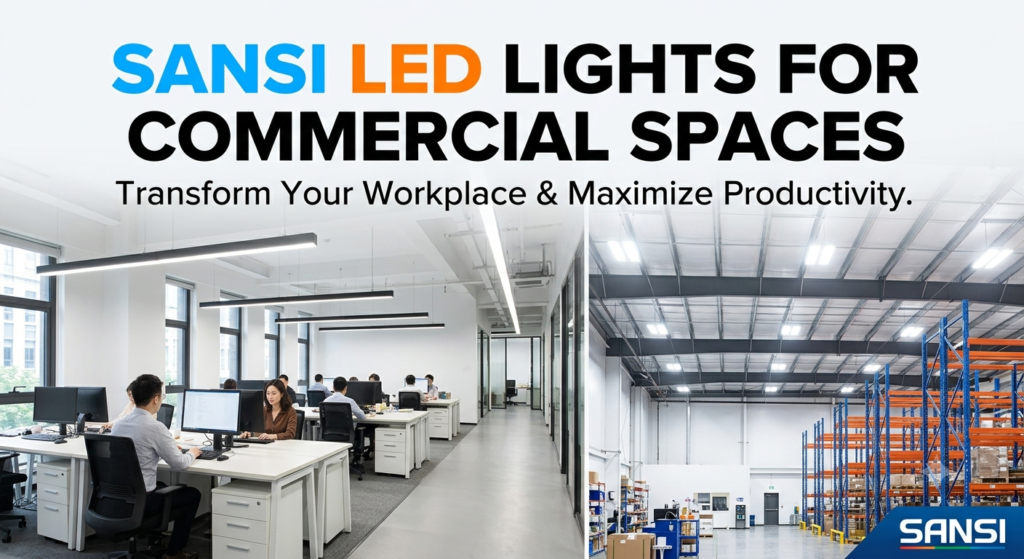
Commercial lighting places different demands on a lighting system because operating hours can be long and maintenance costs can accumulate quickly. An office, retail store, warehouse, restaurant, factory, or hotel may operate lighting for many hours each day, making electricity consumption a recurring expense. In such environments, even modest improvements in lighting efficiency can become meaningful over months and years. ENERGY STAR specifically points to long operating hours as a factor that can improve the return on investment from LED upgrades. SANSI’s professional portfolio includes industrial and commercial lighting, along with solutions designed for large-scale applications. The combination of efficient output, thermal management, and long service-life specifications can make LED systems attractive for businesses that want to reduce operational friction. Commercial lighting is also about more than saving electricity. Good illumination can influence how products appear in retail stores, how safely employees move through warehouses, how comfortable office workers feel, and how clearly customers see signs and displays. The best systems therefore consider brightness, color quality, uniformity, glare, controls, maintenance access, and operating schedules. SANSI’s broad lighting portfolio means its relevance extends beyond the traditional consumer bulb market into professional environments where performance and total cost of ownership are particularly important.
Applications in Offices and Retail
Offices and retail environments illustrate why modern lighting needs to balance efficiency with visual quality. An office requires enough light for screens, documents, meetings, and movement without creating excessive glare or an uncomfortable atmosphere. A retail store has another challenge: lighting needs to make merchandise attractive while maintaining consistent illumination across shelves, displays, and walkways. LEDs are well suited to these applications because they can be engineered for different brightness levels, color temperatures, beam patterns, and fixture designs. ENERGY STAR notes that modern LEDs can support features such as dimming and color tuning, expanding the ways lighting can be integrated into work environments. SANSI’s commercial and professional product categories reflect the growing diversity of LED applications, from commercial lighting to industrial systems. The energy-saving benefit becomes particularly interesting when lighting operates throughout the working day. Instead of treating lighting as a fixed overhead expense, businesses can think of it as an efficiency opportunity. Upgrading to suitable LED fixtures may reduce electricity use while also improving illumination quality and reducing maintenance interruptions. The exact financial result depends on the existing system, operating schedule, local electricity rates, installation costs, and product specifications, but the underlying business case is increasingly straightforward: lighting can deliver better performance without demanding the same energy consumption associated with older technologies.
SANSI LED Lights for Outdoor Lighting
Outdoor lighting is one of the areas where LED efficiency and durability can make a particularly visible difference. Street lights, parking areas, pedestrian paths, bridges, parks, roads, and building exteriors often require illumination for long periods and must operate in changing weather conditions. SANSI offers professional outdoor products including street lights and landscape lighting, and its published street-lighting specifications include high luminous efficacy, long service-life ratings, wide operating-temperature ranges, and weather-resistant designs depending on the model. These characteristics matter because an outdoor light is exposed to challenges that an indoor bulb may never encounter. Temperature changes, moisture, dust, vibration, corrosion, and electrical surges can all influence performance. A well-designed outdoor LED fixture therefore needs more than a good LED chip. It needs appropriate housing, thermal management, optics, electrical protection, and environmental resistance. SANSI’s street-lighting products describe features such as IP ratings, surge protection on selected models, ceramic thermal structures, and professional optical designs. For municipalities and property owners, this type of engineering can potentially reduce maintenance requirements while providing consistent illumination. The result is a lighting system designed not simply to turn on at night but to remain useful and dependable through repeated outdoor operating cycles.
Energy Savings and Long-Term Value
The strongest argument for SANSI LED lighting is not necessarily the initial price of the bulb or fixture; it is the potential long-term value. A lighting product should be evaluated across its useful life, considering electricity consumption, replacement frequency, maintenance, installation, and performance. LEDs already have a strong efficiency advantage over incandescent lighting, with ENERGY STAR stating that LED products can produce light up to 90% more efficiently. When that basic technology is combined with long-life designs and high luminous output, the economic equation becomes more interesting. SANSI’s published product specifications demonstrate this focus, with some professional products rated at 50,000 hours and high efficacy figures. Imagine two lighting systems installed in a large facility. One uses more electricity and requires frequent replacement, while the other uses less power and is designed for substantially longer service. Even if the efficient system costs more initially, the difference can potentially be recovered through lower operating and maintenance costs. The actual payback period will depend on electricity prices and usage, so no single figure applies to every customer. Nevertheless, the basic principle remains strong: energy-efficient lighting should be judged by total ownership cost, not just purchase price.
Comparing LEDs With Incandescent Lighting
The difference between LED and incandescent technology becomes clear when looking at where electrical energy goes. Incandescent bulbs create visible light by heating a filament, which means much of the electricity becomes heat. ENERGY STAR states that incandescent bulbs release about 90% of their energy as heat, whereas LEDs produce very little heat comparatively and can use electricity far more efficiently. That efficiency difference can become significant when lights operate for long periods. Consider a home with numerous bulbs or a business with hundreds of fixtures: the cumulative energy consumption can be much larger than what one bulb’s wattage suggests. LED technology reduces that demand while offering design flexibility that traditional bulbs cannot easily match. SANSI’s products build on the LED platform by emphasizing high output and thermal management, making them particularly interesting for applications where users want substantial illumination. The comparison is not really about whether incandescent bulbs can still produce good light—they certainly can. It is about whether they make sense when the goal is efficiency, longevity, and lower operational demand. For many modern applications, LED technology provides a more practical foundation.
Lighting Quality and Visual Comfort
Energy efficiency alone does not make a light good. A bulb can consume very little electricity and still produce poor-quality illumination if its color rendering, beam distribution, flicker performance, brightness, or color temperature does not suit the application. This is why the popularity of LED lighting has also pushed manufacturers to focus on the quality of the light itself. Different environments call for different characteristics. A workshop may benefit from strong neutral-white illumination, while a bedroom may need warmer and softer light. A retail environment may prioritize color appearance, while a street light may prioritize uniformity and optical control. SANSI’s product range includes different color-temperature and optical configurations, particularly within its professional lighting products. For example, one SANSI street-lighting product lists a 3000K–5000K color-temperature range, while another model specifies a 2700K configuration. This illustrates an important point: modern LED lighting is not one-size-fits-all. Choosing the correct product involves understanding the environment and desired visual effect. When efficiency is combined with appropriate light quality, the result is much more useful than simply installing the highest-output bulb available. Good lighting should make a space easier to see, use, navigate, and enjoy—not merely make it brighter.
Durability and Thermal Performance
Durability is another reason SANSI LED lights attract attention, particularly in demanding environments. A light that consumes little electricity but fails frequently is not an efficient solution from a practical standpoint because replacements create additional material, labor, transportation, and maintenance requirements. This is why thermal performance and structural design matter so much. SANSI’s professional products describe ceramic thermal technology, corrosion-resistant materials, protective housings, optical designs, and electrical protection depending on the model. Its C08LD004 street light, for instance, lists a 50,000-hour service-life claim, ceramic thermal design, corrosion-resistant construction, and 10KV surge protection. These features demonstrate how modern LED lighting has evolved into a broader engineering discipline. The LED itself is only one part of the system. The housing, driver, heat-management system, optics, electrical protection, and installation environment all contribute to overall performance. For consumers, the takeaway is simple: do not evaluate an LED only by its advertised lumen output. Look at the entire specification sheet. A slightly more sophisticated product may provide better value if it delivers reliable performance in the environment where it will actually be used. SANSI’s emphasis on thermal and structural engineering is therefore a meaningful part of its appeal.
Sustainability and Environmental Benefits
The sustainability case for LED lighting extends beyond the electricity bill. Using less electricity means reducing the amount of energy required to provide a given level of illumination, and that can contribute to lower environmental impact depending on how the electricity is generated. ENERGY STAR highlights the broader potential of LED adoption, estimating that widespread use could produce enormous electricity savings. LEDs also tend to last longer than traditional incandescent bulbs, which can reduce the frequency of replacements. SANSI positions its professional lighting solutions around sustainability and energy efficiency and offers products designed for applications ranging from street lighting to industrial and commercial environments. Of course, no lighting product is automatically “green” simply because it uses LEDs. Manufacturing, transportation, materials, disposal, electricity sources, and actual operating behavior all influence environmental impact. Still, replacing inefficient lighting with well-designed LED systems can be a practical step toward reducing energy consumption. The sustainability advantage becomes especially meaningful in large installations where lights operate for many hours every day. In that context, energy efficiency is not merely a marketing phrase; it becomes a measurable operational characteristic. SANSI’s focus on high-output LEDs attempts to push that idea further by making efficient illumination available for applications that require considerably more light than standard household bulbs.
Why High-Lumen LEDs Are Gaining Attention
The market for high-lumen LEDs is growing because modern spaces increasingly demand more flexible lighting solutions. A homeowner might want one powerful bulb for a garage instead of several weaker fixtures. A warehouse may need high-output illumination across a large ceiling. A commercial property may require strong outdoor lighting without installing enormous conventional fixtures. High-lumen LEDs address these challenges by concentrating substantial illumination into relatively efficient sources. SANSI has made high-output lighting one of its notable areas of innovation, including recent work on a 10,000-lumen A21 ceramic bulb. Its earlier high-lumen materials also describe compact bulbs capable of delivering significant brightness. The trend reflects a larger shift in consumer expectations. People increasingly want lighting that is both powerful and efficient rather than choosing between the two. However, high lumen output should always be matched to the application. Excessive brightness can create glare, discomfort, or unnecessary energy consumption. The smartest use of high-lumen technology is therefore targeted: use strong illumination where strong illumination is genuinely required, and select lower-output options where softer lighting is appropriate. SANSI’s high-lumen approach becomes most compelling when viewed as part of that broader strategy.
Choosing the Right SANSI LED Light
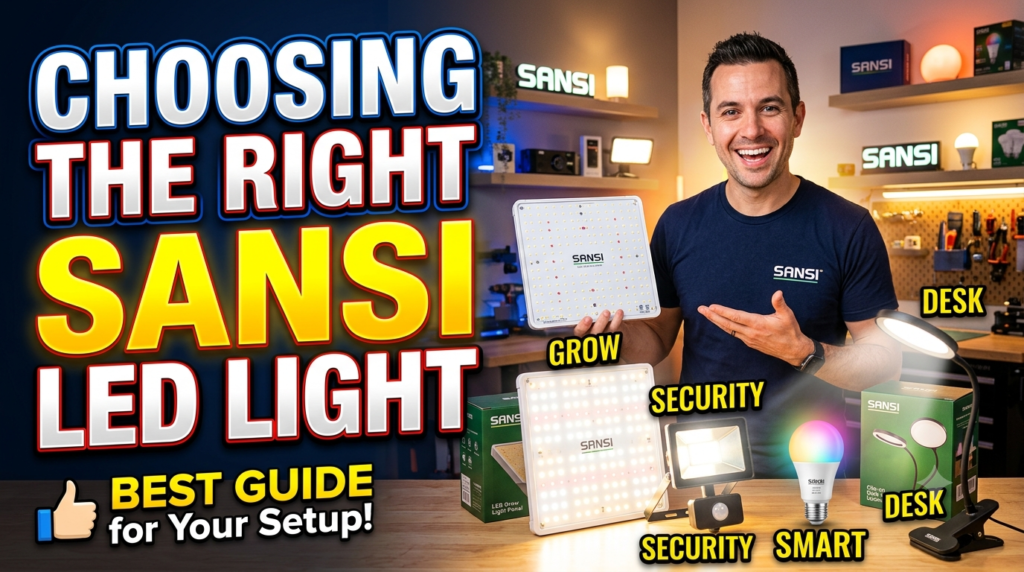
Choosing a SANSI LED light should begin with the application rather than the brand name or the highest lumen number on the package. Start by determining how much light the space actually requires. Then consider wattage, lumen output, color temperature, beam angle, fixture compatibility, indoor or outdoor rating, operating temperature, dimming requirements, and whether the fixture is enclosed. For professional installations, factors such as surge protection, ingress protection, mounting configuration, optical distribution, and maintenance access may also be important. SANSI’s product portfolio is broad, ranging from household-style high-lumen bulbs to street, industrial, landscape, greenhouse, and commercial lighting. That variety means the best product depends heavily on the application. A compact household bulb and a street-light fixture should not be evaluated using exactly the same criteria. Buyers should also compare actual manufacturer specifications rather than assuming that every SANSI product has identical performance. The company’s published products demonstrate significant variation in lumen output, efficacy, temperature range, and intended use. In other words, choosing the right light is a little like choosing the right vehicle: a small car may be perfect for city driving, while a truck is better for heavy loads. Both are useful, but only when matched to the job.
SANSI LEDs vs. Traditional Lighting
When SANSI LEDs are compared with traditional incandescent lighting, the differences are primarily visible in efficiency, heat production, lifespan, and design flexibility. Incandescent bulbs remain straightforward and familiar, but their operating principle inherently produces large amounts of heat. ENERGY STAR reports that incandescent bulbs release approximately 90% of their energy as heat, while LED lighting can be up to 90% more efficient. LEDs also provide manufacturers with greater flexibility to create directional lighting, compact high-output products, and specialized fixtures. SANSI’s designs add another layer by focusing on ceramic thermal management and high-lumen performance. This does not mean every SANSI product is automatically the best choice for every situation. Traditional lighting may still have a place in specific decorative or legacy applications, while LED selection should always consider compatibility and intended use. But for consumers prioritizing energy efficiency and long-term operation, the technical advantages of LED technology are compelling. The most important change is conceptual: instead of thinking about lighting as electricity converted into heat with some light produced along the way, modern LEDs are engineered to maximize useful illumination from the available energy. That is the central reason brands such as SANSI are benefiting from the transition toward efficient lighting.
Read More:-
How Does Strikingly Simplify the Website Building Process?
Building Your Dream Website with Site123
Boost Your E-commerce Strategy with YITH Plugins
Maximize Your Customer Engagement with LiveAgent’s Features
Why STRIPO is Essential for Digital Product Marketersa
Are SANSI LED Lights Worth the Investment?
Whether SANSI LED lights are worth the investment depends on what the buyer values and how the product will be used. If the goal is simply to purchase the cheapest possible bulb for an occasionally used room, a premium high-output LED may not provide the best immediate value. But if the goal is strong illumination, lower energy consumption, long service life, thermal performance, and reduced maintenance, the equation changes. SANSI’s product specifications and technology materials show a clear emphasis on those characteristics, particularly for high-lumen and professional applications. The strongest case is likely to appear in applications where lighting operates frequently or where replacement is inconvenient. Warehouses, workshops, commercial buildings, outdoor spaces, streets, and large rooms can all benefit from efficient high-output lighting when the product is properly matched to the application. The initial price should therefore be evaluated against expected operating hours and total ownership costs. A more expensive light that consumes less electricity and lasts longer may become less expensive over its useful life than a cheaper product that needs frequent replacement. That is the fundamental argument behind energy-efficient lighting. The real question is not “How much does this bulb cost today?” but “How much value will this lighting system deliver over the years?”
The Future of Energy-Efficient LED Lighting
The future of lighting is likely to involve more than simply replacing old bulbs with LEDs. The technology is moving toward higher efficiency, better thermal management, smarter controls, improved optics, greater output, and more application-specific designs. SANSI’s recent development of a 10,000-lumen ceramic A21 bulb illustrates one direction of this evolution: pushing high brightness into compact formats while using advanced thermal engineering. At the professional level, SANSI is also developing solutions for street lighting, industrial environments, greenhouses, commercial spaces, and smart-city applications. This suggests that the future of LED lighting will increasingly be about systems rather than individual bulbs. Sensors, dimming, connected controls, adaptive lighting, and carefully designed optics can help deliver light only where and when it is needed. That could make future lighting systems even more efficient than today’s basic LED replacements. The bigger opportunity is to treat light as a controllable resource. Instead of illuminating everything at maximum intensity all the time, intelligent systems can adjust output according to occupancy, daylight, schedules, traffic, and application requirements. As LED technology continues to improve, brands that combine efficient light sources with sophisticated thermal, optical, and control technologies are likely to remain important in the energy-efficient lighting market.




Conclusion
The growing popularity of SANSI LED lights reflects a larger transformation in the way people think about lighting. Efficiency is no longer simply about using a lower-wattage bulb; it is about achieving the right level of useful illumination while minimizing electricity consumption, heat, maintenance, and replacement requirements. LEDs already offer a major efficiency advantage over incandescent lighting, and SANSI has built its product strategy around several characteristics that matter in demanding applications: high lumen output, compact designs, ceramic heat dissipation, long service-life specifications, and professional lighting solutions. The company’s published professional products also demonstrate how LED technology can extend from everyday household lighting to streets, industrial facilities, commercial spaces, landscapes, and other specialized environments. For buyers, the smartest approach is to look beyond marketing claims and compare the specifications that actually matter: lumens, watts, efficacy, lifetime, thermal design, color temperature, fixture compatibility, and environmental ratings. When those factors align with the application, energy-efficient LED lighting can become more than an upgrade—it can become a long-term strategy for reducing operating costs while improving illumination. That is ultimately why SANSI is attracting attention: it is participating in a lighting market where brightness, efficiency, durability, and intelligent engineering increasingly need to work together rather than being treated as separate goals.
Frequently Asked Questions
Q. Why are SANSI LED lights considered energy efficient?
A. SANSI LED lights use LED technology, which is inherently much more efficient than incandescent lighting. ENERGY STAR states that LED lighting products can produce light up to 90% more efficiently than incandescent bulbs. SANSI also focuses on high-lumen designs, allowing users to obtain substantial illumination without necessarily relying on high electrical consumption.
Q. What is special about SANSI’s ceramic heat dissipation technology?
A. Ceramic heat dissipation is designed to help move heat away from LED components efficiently. This is particularly important for high-output LEDs because controlling operating temperature can support reliability and performance. SANSI describes ceramic thermal technology as a major part of its high-lumen lighting development.
Q. Are SANSI LED lights suitable for outdoor use?
A. Some SANSI products are specifically designed for outdoor applications, including street lights and landscape lighting. Individual models can have features such as weather protection, broad operating-temperature ranges, optical designs, and surge protection. However, buyers should always check the specifications of the exact model before using it outdoors.
Q. Do SANSI LED lights last longer than traditional bulbs?
A. LED products generally have long useful lives compared with incandescent bulbs. ENERGY STAR explains that LED lifetime is typically associated with gradual lumen depreciation rather than an immediate “burnout.” SANSI publishes service-life ratings such as 25,000 hours for certain household high-lumen products and 50,000 hours for some professional lighting products.
Q. How should I choose the right SANSI LED light?
A. Start with the intended application and determine the required brightness in lumens. Then compare wattage, luminous efficacy, color temperature, beam angle, fixture compatibility, indoor/outdoor rating, operating temperature, dimming compatibility, and service-life specifications. For demanding commercial or outdoor applications, also consider environmental protection, thermal management, surge protection, and installation requirements.