
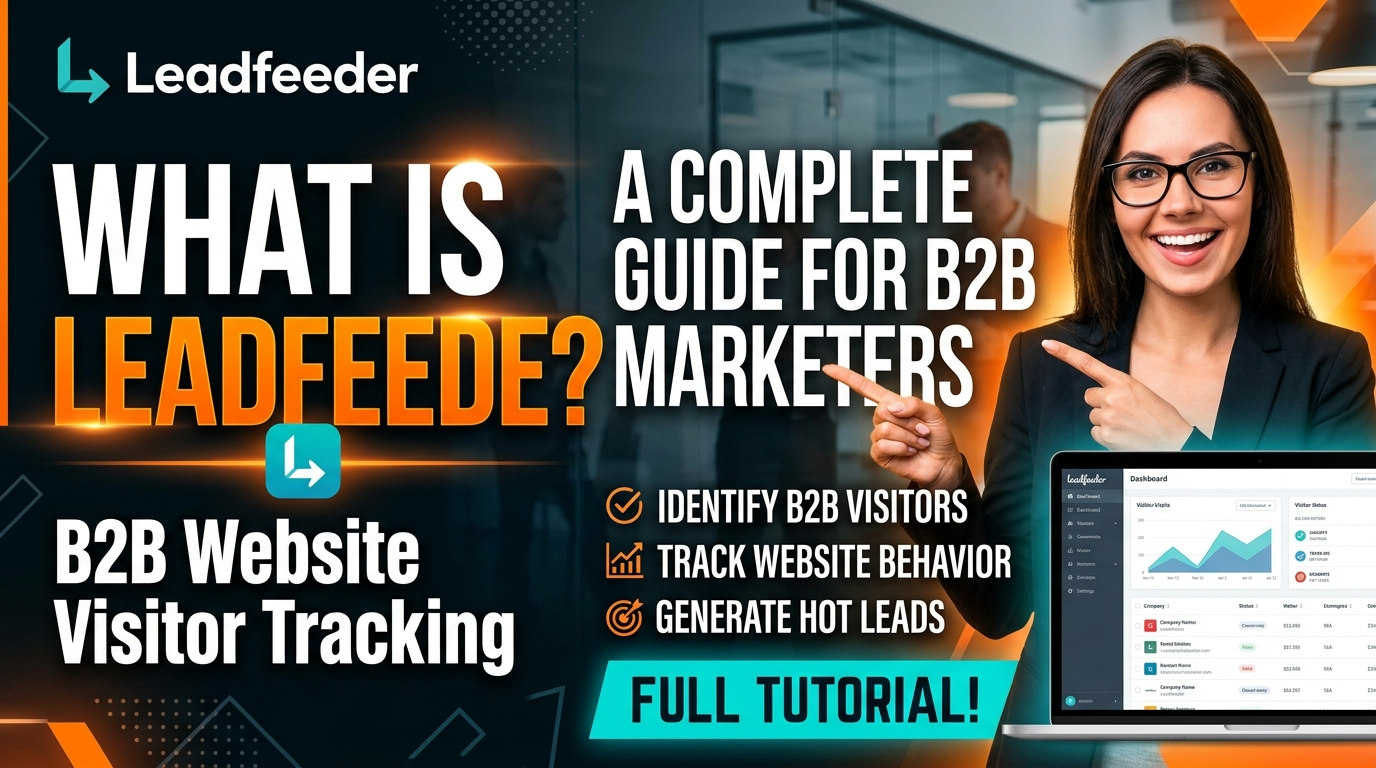
Leadfeeder is a powerful B2B website visitor identification and sales intelligence platform that helps businesses uncover the companies visiting their website, even if they don’t fill out a contact form. By combining visitor tracking, buyer intent signals, AI-powered insights, and seamless CRM integrations, Leadfeeder enables marketing and sales teams to identify high-value prospects, prioritize qualified leads, and improve account-based marketing (ABM) strategies. Whether you’re looking to increase lead generation, optimize sales outreach, or gain deeper visibility into your website traffic, Leadfeeder provides the actionable data needed to turn anonymous visitors into potential customers and accelerate business growth.
Understanding Leadfeeder
What Leadfeeder Does
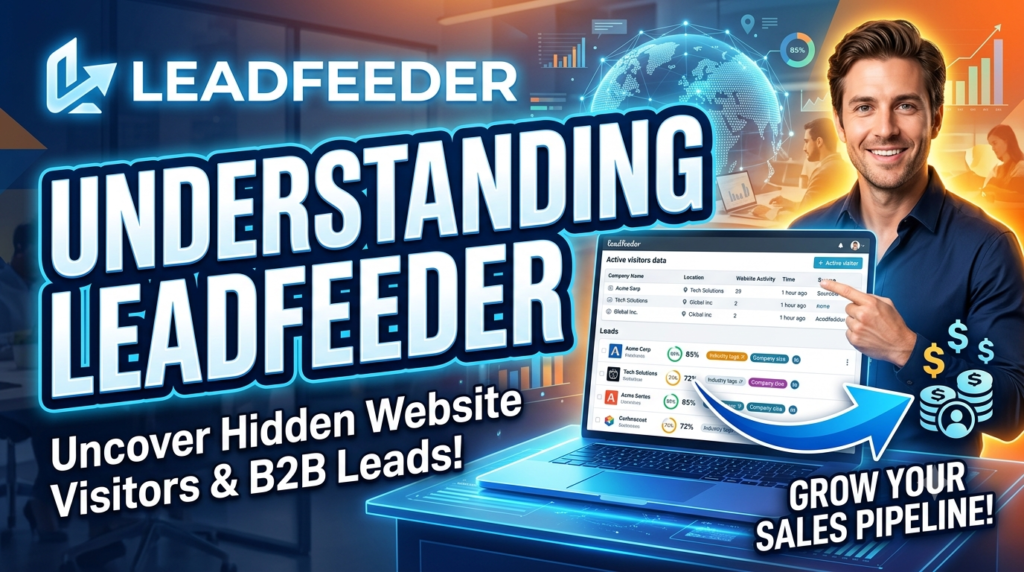
Leadfeeder is designed specifically for B2B companies that want to identify organizations visiting their websites. Rather than focusing on individual consumers, the platform matches website traffic with company information using IP intelligence and other identification technologies. Once identified, businesses can see which organizations visited, which pages they viewed, how often they returned, and how engaged they appeared throughout their browsing journey. These insights allow marketing and sales teams to prioritize outreach toward companies already demonstrating buying interest.
This capability fills a significant gap left by traditional web analytics. While analytics platforms measure traffic volume, Leadfeeder adds valuable business context by revealing company names, industries, employee counts, estimated revenue, technologies used, and buying signals. Instead of treating every visitor equally, marketers can distinguish casual browsers from serious prospects. Sales representatives also benefit because they can approach potential customers with conversations tailored to the pages those companies actually explored, making outreach far more relevant and timely.
Why Anonymous Website Visitors Matter
Research consistently shows that most B2B buyers conduct extensive online research before speaking with vendors. During this early buying stage, prospects compare solutions, review pricing pages, explore case studies, and evaluate competitors without submitting contact forms. Unfortunately, many businesses lose these valuable opportunities simply because they never know those companies visited.
Leadfeeder changes this dynamic by exposing hidden buying intent. If a software company notices that multiple employees from a Fortune 500 organization repeatedly visit its pricing, integration, and product pages, that activity signals genuine interest. Marketing teams can immediately launch targeted advertising campaigns while sales teams prepare personalized outreach. Instead of waiting for leads to arrive, organizations become proactive in engaging buyers already considering their solutions.
How Leadfeeder Works
Website Visitor Identification
Leadfeeder connects with your website analytics and analyzes incoming traffic to identify business visitors. Using sophisticated IP matching and company databases, it determines which organizations are behind anonymous website sessions whenever possible. Rather than displaying only IP addresses, it presents meaningful company profiles that include business size, industry, headquarters location, and website behavior.
Once identified, visitors are grouped into accounts, allowing users to monitor recurring visits over time. Sales teams can instantly recognize when existing prospects return to product pages or pricing information. Marketing teams can segment traffic based on industries, company size, geography, technology stack, or visitor behavior. These insights enable smarter lead prioritization and more effective campaign optimization because resources are focused on companies showing genuine purchase intent rather than random website traffic.
Company Intelligence and Intent Signals
Modern Leadfeeder extends far beyond visitor identification. The platform now includes AI Insights, Buying Intent Signals, ICP (Ideal Customer Profile) Insights, and workflow automation to help revenue teams prioritize opportunities faster. AI can highlight the companies most likely to convert based on visitor behavior, while buying intent signals identify organizations actively researching relevant products or services.
This intelligence dramatically improves decision-making. Instead of manually reviewing hundreds of visitors, sales representatives receive prioritized recommendations based on engagement quality. Marketing teams can also build highly targeted audiences for account-based marketing campaigns. These AI-assisted insights reduce guesswork and enable faster follow-up, increasing the likelihood of converting interested visitors into qualified opportunities.
Key Features of Leadfeeder
AI Insights
Artificial intelligence has become one of the biggest differentiators in modern B2B sales technology, and Leadfeeder has embraced this trend with AI-powered insights that help revenue teams focus on the accounts most likely to convert. Instead of expecting sales representatives to manually sift through hundreds of website visits every week, the platform analyzes visitor behavior and highlights companies showing the strongest buying intent. This saves valuable time while allowing teams to concentrate on opportunities that have the highest potential return. AI can identify patterns that humans may overlook, such as repeated visits from multiple employees within the same organization, frequent views of pricing pages, or increasing engagement over several weeks.
These insights become even more valuable when combined with Leadfeeder’s Ideal Customer Profile (ICP) filtering capabilities. Businesses can define characteristics that match their ideal customers—such as company size, industry, revenue, or geographic location—and the platform automatically prioritizes visitors fitting those criteria. Instead of chasing every website visitor equally, sales and marketing teams can create a focused pipeline filled with qualified prospects. This targeted approach improves conversion rates, shortens sales cycles, and ensures that resources are spent on opportunities with the greatest likelihood of becoming customers.
CRM Integrations
One of Leadfeeder’s greatest strengths is its extensive integration ecosystem. Salesforce, HubSpot, Microsoft Dynamics 365, Pipedrive, Zoho CRM, and numerous other sales platforms are just a few of the top CRM systems that the platform easily integrates with. These integrations eliminate the need for manual data entry by automatically syncing visitor information with existing customer records. Sales representatives can immediately see whether a visiting company is already an existing customer, an active opportunity, or a completely new prospect.
Beyond CRMs, Leadfeeder also integrates with marketing automation tools, communication platforms, analytics solutions, and workflow applications. Businesses can automatically notify sales teams through Slack whenever a high-value account visits the website or trigger marketing automation campaigns based on visitor activity. Because data flows automatically between systems, organizations create a unified view of customer engagement across the entire buyer journey. Instead of operating in isolated silos, marketing, sales, and customer success teams all work from the same accurate and up-to-date information.
Workflow Automation
Automation is essential for growing B2B organizations that receive thousands of website visitors every month. Without automation, reviewing every company manually becomes impossible. Leadfeeder solves this challenge through customizable workflows that automatically classify, score, filter, and distribute leads based on predefined business rules. Companies can build automated processes that assign high-value accounts to sales representatives, notify account managers about returning customers, or create CRM tasks whenever important companies visit strategic web pages.
Workflow automation also supports personalized engagement strategies. For example, if a visitor from a target enterprise company repeatedly views pricing, case studies, and product comparison pages within a short period, Leadfeeder can automatically trigger an alert for immediate follow-up. Likewise, lower-priority visitors can be placed into long-term marketing nurture campaigns until they demonstrate stronger buying intent. This level of automation ensures that no valuable opportunity is overlooked while reducing administrative work for revenue teams.
Browser Extension
Leadfeeder also offers a convenient browser extension that enables sales professionals to access company intelligence directly while browsing LinkedIn or company websites. Instead of switching between multiple applications, representatives can instantly view available company insights, recent website visits, engagement history, and CRM information within their existing workflow. This significantly improves productivity because research becomes faster and outreach can be personalized with minimal effort.
The browser extension is particularly valuable for account-based selling. Sales teams often spend considerable time researching target companies before making initial contact. With Leadfeeder’s extension, representatives can quickly verify whether an organization has recently visited the company website, which pages attracted the most interest, and whether other stakeholders from the same business have also engaged with marketing content. These insights enable more relevant conversations and increase the likelihood of successful prospecting.
Benefits for B2B Marketing Teams
Better Lead Qualification
Generating leads is only half of the equation; identifying which leads deserve immediate attention is where many businesses struggle. Leadfeeder significantly improves lead qualification by combining visitor identification with behavioral analytics and firmographic information. Instead of relying solely on form submissions, marketing teams can evaluate prospects based on actual buying behavior. Companies repeatedly visiting pricing pages, solution pages, implementation documentation, or customer success stories often indicate stronger purchase intent than organizations casually reading blog articles.
Lead qualification becomes even more effective when businesses combine Leadfeeder data with existing CRM information. Existing customers exploring new product pages may represent upsell opportunities, while inactive prospects returning after several months could signal renewed buying interest. Sales representatives no longer need to rely exclusively on cold outreach because they know which companies have already expressed interest through their website behavior. This results in higher response rates, better sales efficiency, and improved marketing ROI.
Stronger Account-Based Marketing
Account-Based Marketing (ABM) has become one of the most successful B2B marketing strategies because it focuses resources on carefully selected high-value accounts instead of broad audiences. Leadfeeder naturally complements ABM initiatives by revealing which target companies are actively engaging with your website. Marketing teams can identify accounts researching products before competitors recognize the opportunity, allowing personalized advertising, email campaigns, and sales outreach to begin much earlier in the buying process.
Leadfeeder also helps marketers evaluate the effectiveness of ABM campaigns. If target accounts begin visiting product pages more frequently after launching LinkedIn advertisements or email sequences, marketers receive measurable evidence that campaigns are generating genuine interest. This visibility enables continuous optimization of messaging, targeting, and campaign investments. Rather than measuring success solely through form fills, organizations gain deeper insight into the complete customer research journey.
Sales and Marketing Alignment
One of the oldest challenges in B2B organizations is aligning marketing and sales teams around shared objectives. Marketing often focuses on generating traffic and leads, while sales prioritizes revenue and qualified opportunities. Leadfeeder bridges this gap by providing both departments with a common source of truth regarding website engagement and buying intent. Marketing identifies interested companies, while sales receives actionable intelligence for personalized outreach.
This improved collaboration leads to faster response times and more productive conversations. Instead of asking generic discovery questions, sales representatives already understand which solutions prospects explored and which topics generated interest. Sales provides marketing with information about which visitor profiles become customers, enabling more focused promotions in the future. The result is a more efficient revenue engine where both departments contribute toward shared business goals rather than operating independently.
Leadfeeder Pricing
Available Plans
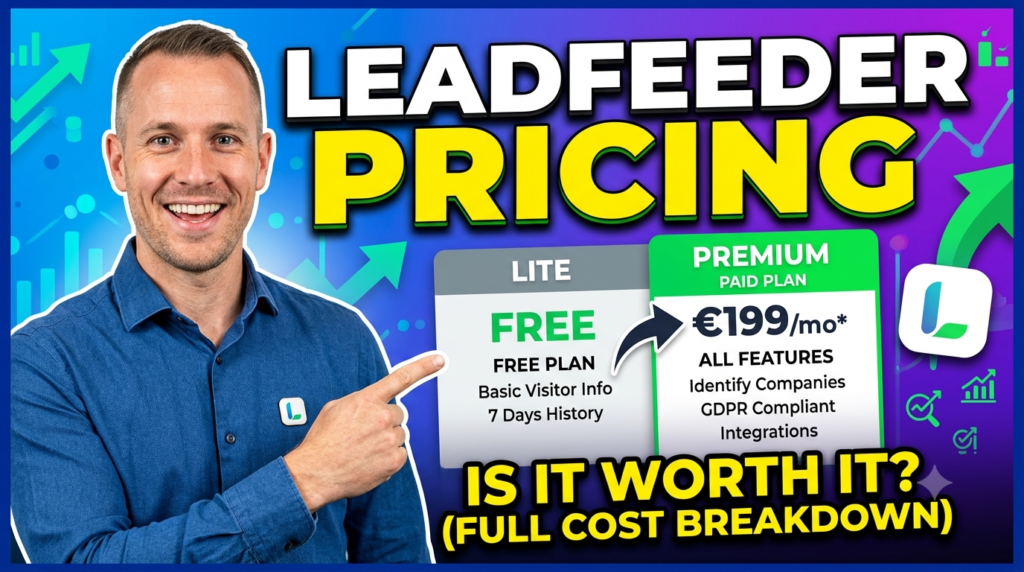
Leadfeeder offers flexible pricing designed to accommodate businesses of different sizes, from startups exploring website visitor identification to large enterprises managing sophisticated account-based marketing (ABM) programs. The company provides a free trial that allows users to experience the platform’s core capabilities before committing to a paid subscription. Paid plans unlock advanced features such as unlimited company identification, AI-powered insights, CRM integrations, automation workflows, and detailed account intelligence. Pricing may vary depending on the number of identified companies, data requirements, and additional premium capabilities, so organizations are encouraged to request a custom quote for enterprise deployments.
For smaller B2B companies, starting with the trial is often the smartest approach. It enables marketing teams to determine how many valuable companies visit their website each month and estimate the platform’s potential return on investment (ROI). As website traffic grows, businesses can upgrade to plans that provide broader visitor coverage, enhanced integrations, and deeper buyer intent insights. Because Leadfeeder focuses on uncovering opportunities that traditional analytics miss, many organizations find that even a handful of additional qualified leads each month can justify the subscription cost.
| Feature | Free Trial | Paid Plans |
| Company Identification | Limited | Extensive |
| AI Insights | Limited | Included |
| CRM Integrations | Basic | Advanced |
| Workflow Automation | No | Yes |
| Buyer Intent Data | Limited | Full Access |
| Support | Standard | Priority Options |
Pricing and plan details may change over time. Visit the official Leadfeeder website for the latest information.
Read More:-
Parcel ABC UK Shipping Guide: Features, Pricing, and Benefits Explained
Why Fun-sport-vision.com DE Is Gaining Popularity in Germany
Mashvisor (US): Complete Review for Real Estate Investors in 2026
What Is Scandic SE? A Complete Beginner’s Guide
Simpel NL Explained: Everything You Need to Know
Leadfeeder vs Competitors
Comparison Table
The B2B sales intelligence market has grown significantly, with several platforms offering visitor identification and buyer intent capabilities. While each solution has unique strengths, Leadfeeder stands out because of its user-friendly interface, powerful website visitor identification, AI-enhanced insights, and seamless CRM integrations. Businesses should evaluate their specific sales processes, budget, and marketing goals before choosing a platform.
| Feature | Leadfeeder | Albacross | Clearbit | ZoomInfo |
| Website Visitor Identification | ✅ Excellent | ✅ Good | Limited | Limited |
| Buyer Intent Signals | ✅ Yes | ✅ Yes | Partial | ✅ Advanced |
| AI Insights | ✅ Available | Limited | No | Yes |
| CRM Integrations | Excellent | Good | Excellent | Excellent |
| Workflow Automation | Yes | Basic | Limited | Advanced |
| Ease of Use | Very High | High | High | Moderate |
| Best For | SMBs & Enterprises | SMBs | Data Enrichment | Enterprise Sales |
Although ZoomInfo provides one of the most comprehensive B2B databases, it generally comes with a higher price tag that may not suit smaller businesses. Clearbit excels in data enrichment but focuses less on detailed visitor tracking. Albacross offers similar visitor identification capabilities but may not provide the same breadth of integrations and AI-powered workflow automation. Leadfeeder strikes a strong balance between affordability, functionality, and ease of implementation, making it an attractive choice for organizations beginning or expanding their account-based marketing initiatives.
Best Practices for Success
Common Mistakes to Avoid
Simply installing Leadfeeder is not enough to maximize results. Like any sales and marketing platform, its effectiveness depends on how well organizations integrate it into their daily workflows. One common mistake is treating every identified visitor as an immediate sales opportunity. Not every company browsing your website is actively shopping for a solution. Some visitors may be conducting research, comparing vendors, or simply reading educational content. Prioritizing leads based on behavioral signals, page visits, frequency, and company fit produces far better outcomes than contacting every visitor indiscriminately.
Another frequent mistake is failing to connect Leadfeeder with existing CRM and marketing automation systems. Without integration, valuable visitor data remains isolated instead of contributing to a unified customer journey. Organizations should establish automated workflows that notify sales representatives about high-intent accounts, enrich CRM records with visitor intelligence, and trigger personalized marketing campaigns based on website behavior. Regularly reviewing visitor reports, refining Ideal Customer Profile filters, and analyzing which identified companies eventually become customers will continuously improve campaign performance. Businesses should also remain mindful of privacy regulations such as GDPR and ensure that their use of visitor identification complies with applicable data protection laws.



Conclusion
Leadfeeder has evolved into far more than a simple website visitor identification tool. It has become a comprehensive B2B sales intelligence and buyer intent platform that empowers organizations to uncover hidden opportunities within their existing website traffic. By identifying anonymous company visitors, enriching them with firmographic data, prioritizing them using AI-driven insights, and integrating seamlessly with CRM and marketing platforms, Leadfeeder enables businesses to transform passive website visits into meaningful sales conversations.
For B2B marketers, every website visitor represents a potential opportunity—even if they never complete a contact form. Traditional analytics reveal where visitors come from and which pages they view, but Leadfeeder answers the far more valuable question: Who are these companies, and how interested are they? That visibility allows marketing teams to optimize campaigns, strengthens account-based marketing strategies, and gives sales representatives the context needed for highly personalized outreach. Organizations seeking to improve lead generation, shorten sales cycles, and increase conversion rates can benefit significantly from incorporating Leadfeeder into their revenue technology stack.
Frequently Asked Questions
Q. What is Leadfeeder used for?
A. Leadfeeder is a B2B website visitor identification platform that helps businesses discover which companies visit their websites, monitor visitor behavior, and identify potential sales opportunities before prospects submit contact forms.
Q. Does Leadfeeder identify individual visitors?
A. Leadfeeder primarily identifies companies, not individual people. Depending on integrations and available data sources, businesses may enrich company information with contact data through connected sales intelligence platforms.
Q. Is Leadfeeder suitable for small businesses?
A. Yes. Small and medium-sized B2B businesses can use Leadfeeder to identify qualified prospects, improve sales outreach, and maximize the value of existing website traffic without requiring large marketing budgets.
Q. Can Leadfeeder integrate with CRM platforms?
A. Absolutely. Leadfeeder integrates with popular CRM systems such as Salesforce, HubSpot, Microsoft Dynamics 365, Pipedrive, Zoho CRM, and several marketing automation tools to streamline lead management.
Q. Is Leadfeeder worth using for Account-Based Marketing?
A. Yes. Leadfeeder is particularly valuable for Account-Based Marketing (ABM) because it identifies target accounts visiting your website, provides buying intent insights, and enables personalized engagement before competitors reach those prospects.