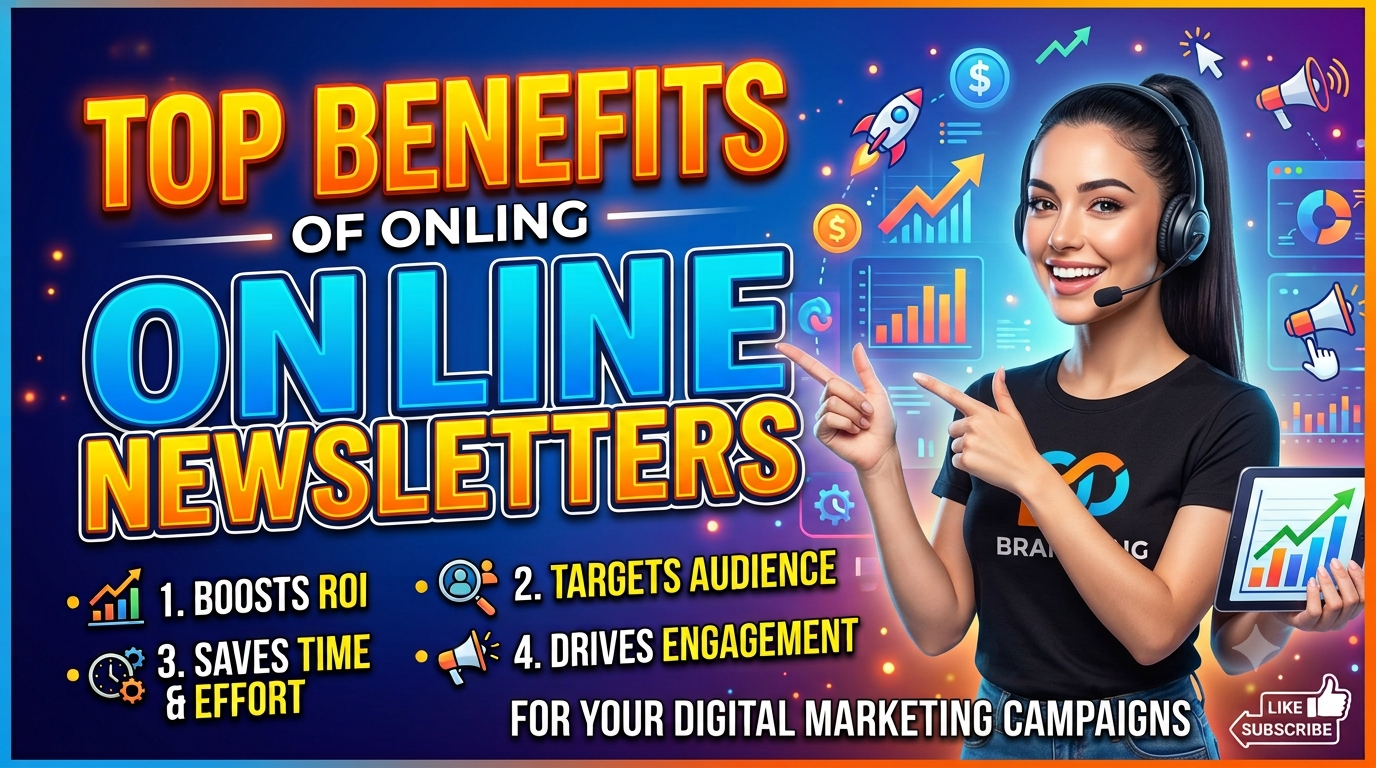
Discover the top benefits of Online NL for your digital marketing campaigns and learn how it can help strengthen your online presence, improve brand visibility, reach targeted audiences, and drive better business results. By incorporating Online NL into your digital marketing strategy, businesses can enhance SEO performance, attract valuable website traffic, optimize marketing campaigns, and increase customer engagement. Explore how Online NL can support data-driven marketing decisions, improve conversions, maximize ROI, and create a powerful multi-channel strategy for sustainable online growth.
Table of Contents
- Introduction to Online NL and Digital Marketing
- What Is Online NL?
- Benefit 1: Strengthening Your Online Visibility
- Benefit 2: Reaching the Right Target Audience
- Benefit 3: Improving Search Engine Visibility With SEO
- Benefit 4: Running More Effective Paid Advertising Campaigns
- Benefit 5: Making Data-Driven Marketing Decisions
- Benefit 6: Increasing Website Traffic and Conversions
- Benefit 7: Building Brand Awareness and Customer Trust
- Benefit 8: Creating an Integrated Multi-Channel Marketing Strategy
- Benefit 9: Improving Campaign Cost Efficiency and ROI
- How to Get the Most From Online NL for Digital Marketing
- Conclusion
- Frequently Asked Questions
Introduction to Online NL and Digital Marketing
Digital marketing has transformed the way businesses attract customers, communicate their value, and compete in increasingly crowded markets. Whether you run a small local company, an ambitious e-commerce business, or an established organization, your customers are spending more time searching, comparing, researching, and making purchasing decisions through digital channels. This means having a website alone is no longer enough. Businesses need an interconnected strategy that brings together SEO, online advertising, social media, content marketing, website optimization, analytics, and conversion-focused campaigns. Dutch online marketing providers commonly position these channels as complementary parts of a measurable digital strategy, emphasizing visibility, traffic, leads, and sales rather than isolated marketing activities.
The concept of utilizing Online NL for digital marketing initiatives becomes pertinent at this point. The term can be understood broadly in the context of building and managing an online presence within the Dutch digital ecosystem. The Netherlands has a highly developed online business environment, and companies operating in this market often rely on a combination of search visibility, paid advertising, social platforms, website performance, and data analysis to reach potential customers. Think of digital marketing as an orchestra: SEO may be the strings, paid advertising the percussion, social media the brass section, and analytics the conductor. Each element can work independently, but the real impact appears when everything plays together.
The biggest advantage of a well-planned Online NL digital strategy is therefore not simply “being online.” It is about becoming visible to the right people at the right moment, understanding how those people interact with your business, and continuously improving your campaigns based on measurable results. From increasing organic traffic to improving conversion rates, the benefits can reach almost every stage of the customer journey.
What Is Online NL?
Before exploring the benefits, it is useful to clarify what Online NL can represent in a digital marketing context. “NL” is commonly associated with the Netherlands, particularly through the country’s .nl domain ecosystem, while online marketing in the Dutch market covers strategies designed to increase visibility, engagement, leads, and sales through internet-based channels. Depending on the specific service or platform being discussed, an Online NL strategy may involve website development, SEO, search advertising, social media campaigns, analytics, content, and conversion optimization.
One important distinction is that Online.nl itself is also the name of a Dutch internet, television, and telecommunications provider, rather than simply a generic digital marketing platform. Publicly available information describes Online.nl as a long-established Dutch internet provider serving consumers and small businesses. For this article, however, the focus is on the broader value of using an Online NL-oriented approach and online marketing services to support digital campaigns in the Netherlands.
Why does this distinction matter? Because digital marketing success depends on understanding exactly which tools, platforms, and services you are using. A successful strategy starts with clear goals and then selects the appropriate channels to achieve them. If your goal is visibility, SEO and content may play a central role. If you need immediate traffic, paid search or social advertising might become more important. If your priority is maximizing sales from existing traffic, conversion optimization and analytics deserve greater attention.
Understanding the Role of Online Platforms in the Netherlands
Online platforms have become essential bridges between businesses and consumers. A customer looking for a product may begin with a search engine, encounter a paid advertisement, visit a website, leave without purchasing, see the brand again on social media, and finally return later to convert. That entire journey may involve several digital touchpoints rather than one straightforward interaction.
Dutch online marketing agencies increasingly describe their work around this multi-touchpoint reality. For example, Think Online explains that inbound marketing can combine content creation, SEO, social media, web statistics, and advertising to reach customers at different stages of their decision-making process. This integrated approach reflects an important lesson for any business: customers rarely experience your marketing as separate departments or channels. They simply experience your brand.
An Online NL-focused strategy can help businesses create consistency across these interactions. Your search results, advertisements, website content, social posts, and landing pages should communicate a recognizable message. When they do, each channel strengthens the others instead of competing for attention.
How Online NL Fits Into a Modern Digital Strategy
A modern digital marketing strategy should function like a connected ecosystem. Imagine pouring water into several buckets with holes in them. You can keep increasing your advertising budget, but if your website is slow, your landing page is confusing, or your message does not match customer expectations, valuable traffic will continue leaking away. The solution is not always “more advertising.” Sometimes the solution is creating a better system.
An integrated Online NL strategy can bring together traffic acquisition and conversion improvement. SEO attracts people through organic search. Search advertising can capture high-intent users. Social campaigns can increase awareness and reconnect with previous visitors. Analytics helps identify what people do after arriving. Conversion optimization then improves the journey from visitor to lead or customer.
This is why businesses should think beyond individual campaigns. A successful digital strategy creates a cycle: attract, measure, learn, optimize, and repeat. Every campaign generates information, and that information can make the next campaign smarter.
Benefit 1: Strengthening Your Online Visibility
One of the biggest benefits of using Online NL-oriented digital marketing strategies is increased visibility. You may have an excellent product, competitive prices, and outstanding customer service, but none of those advantages matter if potential customers cannot discover your business. In the digital world, visibility is similar to having a store on a busy street instead of hiding it behind an unmarked door.
Search engine optimization plays an important role here because it helps websites become easier to discover through relevant searches. Online advertising can provide another layer of visibility by placing promotional messages in front of people actively searching for related products or services. Social media can expand reach even further by introducing your brand to audiences who may not yet know they need what you offer.
Dutch digital marketing providers frequently connect improved online visibility with increased website traffic and business opportunities. More Online, for instance, highlights SEO, online advertising, conversion optimization, web analytics, and social media among its marketing services, while Vrolijk Online emphasizes that online strategy and search visibility can support traffic, leads, and sales.
The real benefit comes from combining these channels strategically. Instead of relying entirely on one traffic source, businesses can create multiple pathways for customers to discover them. This reduces dependence on a single platform and creates a more resilient digital presence.
Building a Stronger Presence Across Digital Channels
Consistency is one of the foundations of effective digital branding. If someone discovers your company through Google and later encounters your social media profile, the experience should feel connected. Your visual identity, tone, messaging, and value proposition should reinforce the same brand story.
A multi-channel Online NL marketing strategy can make that possible by coordinating activities across search engines, websites, email, social media, and advertising platforms. This does not mean publishing identical content everywhere. Instead, it means adapting your message to each platform while maintaining a recognizable identity.
For example, a detailed educational article may perform well in organic search, while a shorter video could communicate the same idea on social media. A search advertisement may focus on immediate customer intent, while an email campaign could nurture an existing relationship. Different instruments, same song.
This approach increases the number of meaningful interactions customers can have with your brand. Over time, repeated and consistent exposure can improve familiarity, which can make potential customers more comfortable when they eventually need to make a purchasing decision.
Benefit 2: Reaching the Right Target Audience
Traditional advertising often involves broadcasting a message to a broad audience and hoping that some of the right people notice it. Digital marketing offers a much more precise approach. Businesses can design campaigns around customer interests, search behavior, demographics, location, website interactions, and other relevant signals available through individual advertising platforms.
This precision can dramatically improve marketing efficiency. Instead of paying to reach thousands of people with little interest in your offer, you can focus resources on audiences that are more likely to engage. A company selling specialized B2B software, for instance, has little reason to advertise indiscriminately to everyone online. It needs to reach decision-makers, professionals, or organizations facing a particular problem.
Search marketing provides an especially useful example. Someone searching for a specific solution is actively expressing intent. Search advertising allows businesses to appear when relevant queries are entered, while SEO can help companies earn organic visibility for informational and commercial searches. Think Online describes search advertising as a way to reach potential customers while they are actively searching for relevant products or services.
Better targeting does not simply increase clicks. It can improve the quality of traffic. And quality matters more than vanity metrics. Ten highly interested visitors can sometimes be more valuable than a thousand random visitors who leave immediately.
Using Audience Insights for Better Campaign Targeting
Every digital interaction can potentially reveal something useful about audience behavior. Which pages receive the most visits? Where do people leave? Which advertisements generate clicks? Which landing pages produce leads? Which campaigns bring visitors who eventually become customers?
Analytics turns these questions into actionable insights. Online marketing specialists commonly emphasize measurement because digital channels allow businesses to connect campaign activity with measurable outcomes more effectively than many traditional approaches. Vrolijk Online, for example, highlights web measurement as a way to understand which actions contribute to sales, while G2G Online describes combining data into structured systems for dashboards, analysis, media-mix improvement, and customer-behavior tracking.
These insights can help marketers refine their targeting. If one audience segment consistently produces stronger conversion rates, budgets can be shifted accordingly. If another segment generates clicks but few meaningful actions, the targeting, offer, or landing page may need adjustment.
The result is a feedback loop where marketing becomes progressively more informed. Instead of guessing what customers want, businesses can observe behavior, test ideas, and make decisions based on evidence.
Benefit 3: Improving Search Engine Visibility With SEO
Search engine optimization (SEO) is one of the most valuable long-term components of digital marketing because it focuses on improving unpaid visibility in search results. When potential customers search for questions, products, services, or solutions related to your business, strong SEO can increase your chances of appearing during those discovery moments.
SEO is not simply about inserting keywords into a page. Modern optimization involves technical website quality, useful content, logical site structure, user experience, internal linking, authority, and relevance. The goal should be to create pages that genuinely satisfy search intent while making it easy for search engines to understand the website.
Several Dutch online marketing providers explicitly include SEO as a central part of their services. More Online positions SEO around improving Google rankings, while Think Online discusses combining automation and experienced marketers to continually optimize websites and improve search visibility.
SEO can also complement paid marketing. Paid campaigns may generate traffic immediately while organic visibility develops over time. When used together, businesses can address short-term acquisition needs without ignoring long-term growth.
Why Organic Search Matters for Long-Term Growth
The main attraction of organic search is compounding value. A paid advertisement generally stops producing paid traffic when you stop funding it. A well-performing evergreen article or optimized service page, however, may continue attracting relevant visitors as long as it maintains its usefulness and competitive position.
Imagine creating a detailed guide that answers a common question your customers search for every month. If that guide earns strong visibility, it becomes a digital doorway into your business. Some readers may purchase immediately, while others may subscribe, request information, or remember your brand for later.
Organic search can therefore support multiple stages of the customer journey. Informational content can attract early-stage researchers, comparison pages can support evaluation, and optimized product or service pages can capture stronger commercial intent.
The best approach is usually patience combined with continuous improvement. SEO is rarely an overnight shortcut. It is closer to building an asset brick by brick—slowly at first, but potentially more valuable as authority, content quality, and visibility grow.
Benefit 4: Running More Effective Paid Advertising Campaigns
Paid advertising gives businesses something organic strategies cannot always provide immediately: speed. A new website may take time to develop meaningful search visibility, but a carefully designed paid campaign can begin generating targeted visits much sooner.
Online NL digital strategies can include search advertising, display campaigns, social media advertising, and remarketing, depending on business objectives. The advantage is control. Marketers can define budgets, select audiences, adjust bids, test advertisements, and measure performance.
| Marketing Channel | Primary Strength | Typical Objective |
| SEO | Long-term organic visibility | Sustainable traffic |
| Search Ads | Capturing active demand | Leads and sales |
| Social Ads | Audience discovery and targeting | Awareness and conversions |
| Remarketing | Re-engaging previous visitors | Conversion improvement |
| Content Marketing | Education and authority | Trust and organic growth |
| Email Marketing | Relationship nurturing | Retention and repeat sales |
The key is not simply spending money on advertisements. Effective paid marketing requires alignment between audience, message, offer, and landing page. If any one of those elements fails, campaign efficiency can decline quickly.
Combining Search and Social Advertising
Search and social advertising often perform different jobs. Search campaigns can capture existing demand because users are already looking for something. Social advertising can help create or influence demand by reaching people based on audience characteristics and behaviors available through the platform.
A wider acquisition funnel may be produced by combining them. A potential customer might first encounter a business through social media, later search for the brand, visit the website, and eventually convert through another campaign. Looking only at the final click could hide the contribution of earlier interactions.
This is why attribution and analytics matter. Marketers need to understand that the customer journey is often messy. People move between devices and channels, compare alternatives, leave websites, and return later.
A coordinated approach allows search and social campaigns to support each other rather than operate as isolated marketing islands. The result can be better brand recall, broader reach, and more opportunities to convert interested audiences.
Benefit 5: Making Data-Driven Marketing Decisions
Digital marketing without measurement is like driving at night without headlights. You may still move forward, but you have little idea whether you are heading in the right direction.
One of the strongest benefits of digital campaigns is access to measurable performance indicators. Businesses can track metrics such as traffic, clicks, impressions, conversions, cost per acquisition, engagement, and revenue where appropriate tracking systems are correctly configured.
The important part is choosing metrics that actually connect to business objectives. A campaign generating thousands of clicks may look impressive, but if none of those visitors become leads or customers, the clicks alone have limited value. Similarly, a social post with high engagement may be successful for awareness but less relevant if the primary objective is immediate sales.
Analytics enables marketers to ask better questions. Which campaign delivers the strongest leads? Which page creates friction? Which device converts better? Which source generates repeat customers? The answers can guide budget allocation and campaign optimization.
Data does not replace creativity. It sharpens it. Creative ideas generate possibilities, while data helps marketers understand which possibilities deserve greater investment.
Benefit 6: Increasing Website Traffic and Conversions
Generating traffic is important, but traffic alone does not pay the bills. A successful digital marketing campaign needs to attract the right visitors and then guide them toward meaningful actions.
This is where conversion optimization becomes essential. A visitor may arrive on your website with genuine interest but leave because the page loads slowly, the offer is unclear, the navigation is confusing, or the call to action is difficult to find. Small problems can create large leaks in the conversion funnel.
Online marketing providers such as More Online explicitly connect traffic generation with conversion optimization and KPI measurement, demonstrating why acquisition and website performance should be considered together.
Improving conversions can also increase the value of existing marketing investments. Suppose you are already paying to bring visitors to your website. If you can increase the percentage who complete your desired action without proportionally increasing advertising costs, your campaign economics may improve significantly.
Turning Visitors Into Customers
Conversion begins with understanding intent. Someone reading an introductory educational article may not be ready to buy, while someone searching for pricing or requesting a quote may be much closer to making a decision.
Your website should accommodate these different stages. Early-stage visitors might need educational resources. Mid-funnel prospects may benefit from comparisons, case studies, or demonstrations. High-intent visitors need clear pricing, compelling offers, trustworthy information, and simple calls to action.
Testing can help identify what works. Businesses may experiment with headlines, page layouts, forms, offers, calls to action, and landing-page structures. The objective is not to manipulate users but to remove unnecessary friction.
Think of your website as a helpful salesperson who never sleeps. If visitors constantly need to figure out where to click or what your company actually offers, that salesperson is doing a poor job. Clear communication makes the buying journey easier.
Benefit 7: Building Brand Awareness and Customer Trust
People are generally more comfortable buying from businesses they recognize and trust. Digital marketing provides multiple opportunities to build that familiarity through useful content, consistent branding, social interactions, search visibility, and repeated exposure.
Trust is especially important when customers have many alternatives. A business that appears consistently in relevant searches, publishes genuinely helpful information, maintains a professional website, and communicates actively through appropriate channels may appear more credible than a competitor with a weak or outdated digital presence.
Content marketing can play a major role in this process. Instead of constantly shouting “buy from us,” businesses can answer questions, solve small problems, explain complicated topics, and demonstrate expertise. Helpful content creates value before the transaction occurs.
Over time, these interactions can influence customer perception. Your brand stops being an unfamiliar name and becomes a recognizable source of information or solutions. That familiarity may eventually affect purchasing decisions when the customer is ready to act.
Benefit 8: Creating an Integrated Multi-Channel Marketing Strategy
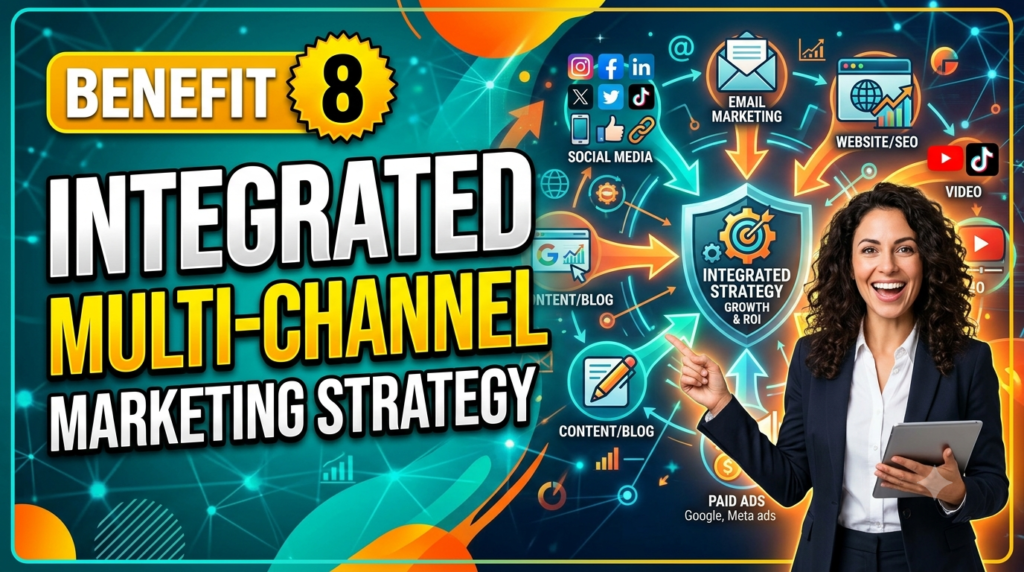
Customers do not live inside one marketing channel, so your strategy should not either. A modern customer journey may involve search engines, websites, social media, email, reviews, advertisements, and direct communication.
An integrated Online NL strategy connects these touchpoints. SEO can bring new visitors. Content can educate them. Remarketing can reconnect with them. Email can nurture the relationship. Analytics can show which interactions lead to outcomes.
Think Online’s description of inbound marketing similarly emphasizes reaching potential customers across multiple touchpoints by combining content, SEO, social media, statistics, and advertising.
Integration also creates consistency. When your campaigns share common goals and messaging, customers receive a clearer brand experience. Internal teams can also make better decisions because campaign performance is evaluated as part of a broader customer journey rather than as isolated numbers.
Read More:-
How Does Strikingly Simplify the Website Building Process?
Building Your Dream Website with Site123
Boost Your E-commerce Strategy with YITH Plugins
Maximize Your Customer Engagement with LiveAgent’s Features
Why STRIPO is Essential for Digital Product Marketersa
Benefit 9: Improving Campaign Cost Efficiency and ROI
Every marketing budget has limits. Whether you spend €500 or €500,000, the objective is to generate as much meaningful business value as possible from that investment.
Digital marketing provides several mechanisms for improving cost efficiency. Audience targeting can reduce wasted impressions. The value of current traffic can be raised through conversion optimization. SEO can build longer-term organic acquisition channels. Analytics can identify underperforming campaigns before they consume excessive budgets.
The most effective strategy is usually not simply choosing the cheapest channel. A channel with a higher cost per click may still deliver better ROI if its visitors convert at a much higher rate. Businesses need to examine the entire journey from acquisition cost to customer value.
Continuous optimization is therefore critical. Digital campaigns should not be treated as “set it and forget it” projects. Performance changes as competition, customer behavior, platforms, and market conditions evolve.
By regularly reviewing results and reallocating resources, businesses can focus more attention on activities that produce measurable value. This makes the marketing budget work smarter rather than simply harder.
How to Get the Most From Online NL for Digital Marketing
The best results begin with clear objectives. Before launching campaigns, decide what success actually means. Do you want more website traffic, qualified leads, online purchases, brand awareness, newsletter subscriptions, or customer retention? Different goals require different strategies and metrics.
Next, understand your audience. Identify who your ideal customers are, what problems they face, what language they use when searching, and which digital channels they frequent. Build your strategy around customer behavior instead of chasing every new marketing trend.
Then create an integrated channel mix. Use SEO for sustainable discovery, paid advertising for targeted acquisition, content for education, social media for engagement, and analytics for measurement. You do not need every channel immediately. Start with the channels most closely connected to your objectives and expand as you gather evidence.
Finally, treat optimization as an ongoing process. Review campaign performance, identify bottlenecks, test improvements, and document what you learn. The strongest digital marketing strategy is rarely the one you launched on day one. It is the one you continually improve.


Conclusion
Using Online NL for your digital marketing campaigns can offer substantial benefits when it represents a coordinated, data-driven approach to reaching audiences in the Dutch online environment. From improving search visibility and attracting targeted traffic to strengthening brand awareness and increasing conversions, digital marketing gives businesses multiple tools for connecting with customers throughout their decision-making journey.
The greatest advantage comes from integration. SEO, paid advertising, social media, content, analytics, and conversion optimization should not exist in separate boxes. When they support a shared strategy, each channel can contribute to a stronger overall customer experience.
Businesses should also remember that successful digital marketing is not built around traffic alone. The real objective is creating meaningful outcomes—whether that means generating qualified leads, increasing sales, building customer relationships, or strengthening long-term brand visibility.
By setting measurable goals, understanding your audience, tracking relevant KPIs, and continuously improving campaigns, you can turn your digital presence into a sustainable growth engine. The online landscape will keep changing, but businesses that remain customer-focused, measurable, and adaptable will be better positioned to respond.
Frequently Asked Questions
Q. What is Online NL in digital marketing?
A. In the context of this article, Online NL refers broadly to an online marketing approach focused on building visibility and running digital campaigns within the Netherlands or Dutch online ecosystem. It can involve strategies such as SEO, paid search, social advertising, content marketing, analytics, and conversion optimization. It should not automatically be confused with Online.nl, which is also the name of a Dutch internet and telecommunications provider.
Q. Can Online NL strategies help improve SEO?
A. Yes. An Online NL-oriented digital strategy can include keyword research, technical optimization, content development, site improvements, and other SEO activities designed to improve organic visibility. Dutch digital marketing providers commonly include SEO among their core services because search visibility can attract potential customers who are already looking for relevant information, products, or services.
Q. Is digital marketing suitable for small businesses?
A. Yes, provided the strategy matches the company’s budget and objectives. Small businesses can focus on a limited number of high-impact channels rather than trying to compete everywhere at once. Local or niche SEO, carefully targeted advertising, useful content, and strong conversion-focused landing pages can provide a practical starting point. The key is measuring business outcomes instead of spending money simply to generate impressions or clicks.
Q. How does analytics improve digital marketing campaigns?
A. Analytics helps businesses understand how visitors discover and interact with their digital properties. Marketers can examine traffic sources, user behavior, campaign performance, and conversions to identify opportunities and problems. This information can guide decisions about budgets, targeting, content, and website improvements. Digital marketing becomes more effective when decisions are based on reliable data rather than assumptions.
Q. How long does it take to see results from an Online NL digital marketing campaign?
A. The timeline depends on the channels involved. Paid advertising can potentially generate traffic shortly after a campaign launches, while SEO usually requires a longer-term commitment because organic visibility develops through ongoing optimization, content quality, competition, and authority. Conversion optimization may produce improvements once sufficient traffic and data are available for meaningful testing. A balanced strategy often combines short-term acquisition channels with longer-term investments such as SEO and content.