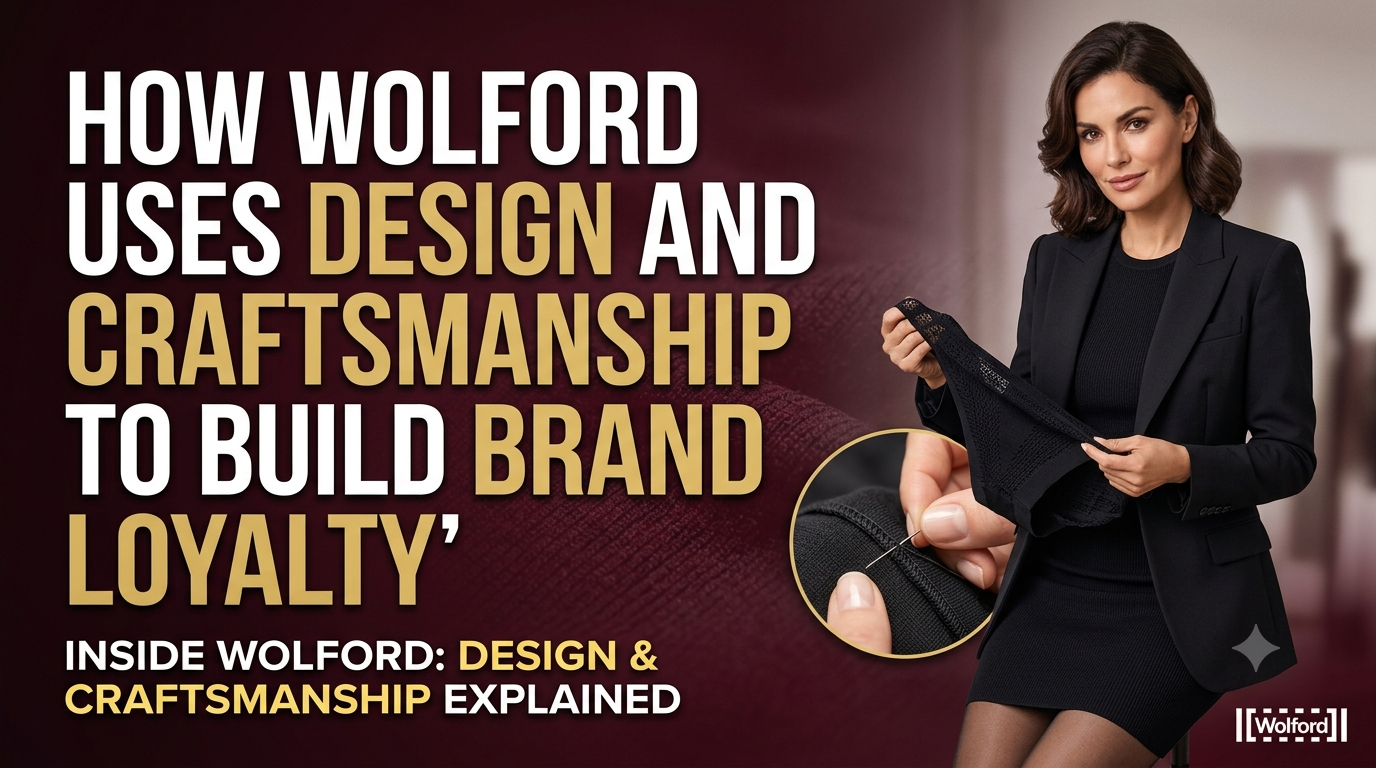
Discover how Wolford uses innovative design, exceptional craftsmanship, premium materials, and seamless technology to create distinctive luxury fashion experiences and build lasting brand loyalty. From its iconic hosiery and bodywear to modern skinwear and fashion collaborations, Wolford combines timeless elegance with technical innovation to deliver comfort, quality, and confidence. Explore how its commitment to precision, product excellence, sustainability, and customer experience has helped Wolford maintain a strong identity and cultivate loyal customers in the competitive luxury fashion industry.
Table of Contents
- The Wolford Story: A Legacy Built Since 1950
- From Austrian Hosiery to Luxury Skinwear
- Why Design Is Central to Wolford’s Identity
- Designing for the Body, Not Just the Trend
- The Craftsmanship Behind the Wolford Experience
- Seamless Technology as a Competitive Advantage
- Innovation That Becomes an Icon
- Quality as a Foundation for Customer Trust
- How Comfort Turns First-Time Buyers Into Loyal Customers
- The Role of Materials in Wolford’s Premium Positioning
- Fashion Collaborations Expand the Brand’s Creative Reach
- Sustainability and Craftsmanship in the Modern Luxury Market
- Circular Design and Material Innovation
- Creating Emotional Connections Through Skinwear
- How Wolford Balances Timelessness With Contemporary Fashion
- The Power of a Consistent Brand Experience
- Why Scarcity and Signature Products Encourage Loyalty
- Wolford’s Evolution From Product Brand to Lifestyle Brand
- What Other Luxury Brands Can Learn From Wolford
- The Future of Design-Led Brand Loyalty
- Conclusion
- FAQs
The Wolford Story: A Legacy Built Since 1950
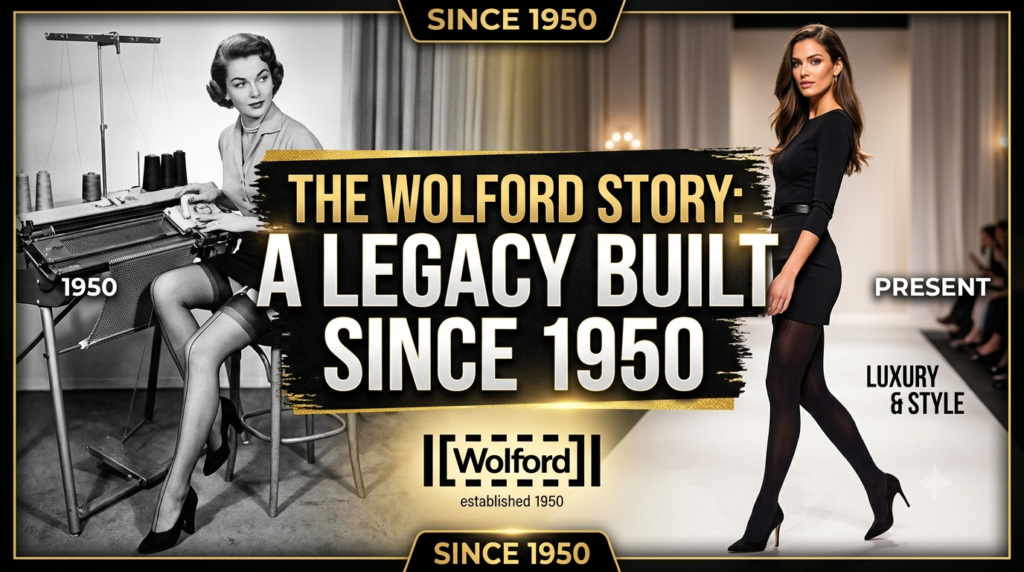
Brand loyalty rarely appears overnight. It is usually built through hundreds of small experiences that tell customers, again and again, that a brand understands what they want and can deliver it consistently. Wolford provides a fascinating example of this approach because its relationship with customers has been shaped by design, textile innovation, craftsmanship, comfort, and a very recognizable aesthetic for decades. Founded in Bregenz, Austria, in 1950, Wolford began with stockings and gradually developed into a global luxury skinwear brand covering legwear, lingerie, bodywear, and apparel. The company describes its identity around innovative fabrics, high-quality construction, and pieces designed to feel almost like a second skin.
That history matters because Wolford has never treated craftsmanship as something hidden behind the finished product. The construction itself is part of the brand story. Its circular-knitting expertise, seamless construction, carefully selected yarns, quality controls, and continuing product innovation have helped distinguish Wolford from ordinary hosiery and apparel brands. The company says its success is based on specially developed round-knitting technology combined with sophisticated workmanship and quality checks. The result is a luxury proposition that customers can physically experience: the fabric feels different, the fit behaves differently, and the finished garment is often designed to disappear into the silhouette rather than compete with it. That creates a powerful foundation for loyalty because the customer is not simply buying a logo; she is buying a repeatable experience. When a product becomes associated with confidence, comfort, fit, and reliability, switching to another brand can suddenly feel less attractive. Wolford has spent decades turning that feeling into a recognizable competitive advantage.
From Austrian Hosiery to Luxury Skinwear
Wolford’s evolution is particularly interesting because the company expanded its category without abandoning the technical knowledge that made its original products successful. Its history records major developments such as circular-knitted stockings in the 1950s, seamless and stretch stockings, support tights, the Satin Touch range, seamless bodysuits, Fatal tights, bodywear, and later apparel and athleisure. Each step extended the same underlying idea: clothing that interacts closely with the body should combine aesthetics with technical precision. Rather than jumping randomly from one fashion category to another, Wolford repeatedly used its knitting and material expertise as the bridge into new products.
This approach gives customers a reason to remain within the brand ecosystem. Someone who first discovers Wolford through tights can encounter bodysuits, lingerie, leggings, dresses, or other skinwear that communicate the same values of fit, tactility, and refined design. The company itself describes its collections as a combination of timeless and trend-led styles, with signature essentials and icons forming a core part of the assortment. That balance is important in luxury fashion. If everything changes every season, customers may admire a brand without developing a lasting relationship with it. If nothing changes, the brand can become irrelevant. Wolford’s strategy sits between those extremes: preserve recognizable technical and aesthetic signatures while allowing designers, collaborations, materials, and silhouettes to evolve. That gives loyal customers something familiar to return to while still providing enough novelty to make each new collection interesting.
Why Design Is Central to Wolford’s Identity
For Wolford, design is not simply about making a garment visually attractive. It is about understanding how fabric, construction, movement, proportion, and the human body work together. The company’s current brand language places strong emphasis on the woman wearing the garment, describing its products as pieces that support confidence, movement, presence, and individuality. That philosophy changes the role of design. Rather than merely inquiring, “What will this garment look like on a rack?” the brand is effectively asking, “What will this garment feel like when someone wears it?”
That distinction can be extremely powerful for customer loyalty. A beautiful garment that feels uncomfortable may generate admiration but not repeat purchases. A garment that makes someone feel comfortable, polished, confident, and physically at ease can become part of her personal routine. This is especially relevant for skinwear because the relationship between garment and body is unusually intimate. Customers notice seams, pressure, elasticity, softness, transparency, stretch, recovery, and fit immediately. Wolford has built its identity around solving these details through design and technology. Its history includes products created specifically to improve fit and comfort, including seamless styles and innovations such as the Pure 50 range with invisible glued seams. Design therefore becomes a form of problem-solving. When customers recognize that a brand repeatedly solves problems they care about, trust grows naturally, and trust is one of the strongest ingredients in long-term brand loyalty.
Designing for the Body, Not Just the Trend
Fashion can be temporary, but the relationship between a person and her body is permanent. Wolford’s emphasis on body-conscious design gives the brand an opportunity to create products that feel relevant beyond a single fashion cycle. Its early innovations in seamless garments demonstrated how technical construction could influence the appearance and comfort of clothing. The company later extended that thinking into bodysuits, shaping products, bras, leggings, and dresses. The famous Fatal line, for example, became associated with seamless construction and sculptural bodywear rather than simply being another seasonal fashion item.
This is where Wolford’s craftsmanship supports its design strategy. A designer can imagine a clean silhouette, but producing that silhouette consistently requires specialized technical knowledge. The difference between an ordinary garment and a premium one can be hidden in the details: how the fabric stretches, how it returns to shape, how edges are finished, how seams behave, and how the garment responds to movement. Wolford’s production infrastructure has included research and development, a doubling mill, steaming facilities, dyeing operations, molding workshops, and a proprietary color laboratory, according to company reporting. Those capabilities help translate creative concepts into physical products. For customers, the technical complexity may not always be visible, but its effects are. A garment that fits beautifully without feeling restrictive can create the kind of positive surprise that makes someone remember the brand and return to it later.
The Craftsmanship Behind the Wolford Experience
Craftsmanship is often discussed in luxury marketing as though it were simply a story told on a website. Wolford’s positioning is more convincing because craftsmanship is connected directly to the manufacturing process and product experience. The company highlights its proprietary knitting technology, sophisticated workmanship, quality checks, fine yarns, and controlled production processes as fundamental to product quality. This gives craftsmanship a practical meaning: it is not only about making something by hand or attaching a heritage label to a product; it is about controlling enough variables to make the final result consistently excellent.
Consistency is crucial for loyalty. Imagine finding a particular pair of tights that fits perfectly, feels comfortable throughout the day, and works seamlessly beneath clothing. The next time you need tights, you are not beginning the search from zero. You already have a trusted answer. That is the hidden economic value of craftsmanship. When quality becomes predictable, customers reduce the perceived risk of purchasing. Luxury brands often benefit from this effect because consumers are willing to pay a premium when they believe the experience will justify the price. Wolford’s reputation has been built around this relationship between quality and comfort, and its sustainability materials emphasize that its reputation depends on product quality, comfort, carefully selected materials, and monitored production processes. Craftsmanship, then, becomes a loyalty mechanism: it gives customers a reason to believe that choosing Wolford again is a safer and more satisfying decision than experimenting elsewhere.
Seamless Technology as a Competitive Advantage
Few elements are more closely connected to Wolford’s identity than seamless technology. The company has repeatedly used circular knitting and seamless construction to create products that reduce visible seams while maintaining shape, support, or visual elegance. Its historical milestones include seamless stretch stockings, seamless bodysuits, completely seamless tights, and later seamless bras and other garments. These innovations matter because they are easy for customers to understand through experience. A technical achievement becomes meaningful when someone can put on the product and immediately notice the difference.
That is an important lesson in luxury branding: innovation becomes more powerful when the customer can feel it. A complicated manufacturing process may sound impressive, but a smoother fit, cleaner silhouette, greater freedom of movement, or more comfortable construction turns technical expertise into personal value. Wolford has consistently linked its technological development to the sensory experience of wearing its products. Its current company description says the brand combines specially developed round-knitting technology, workmanship, quality checks, and fine yarns to create the comfort and product quality behind its reputation. This is how an invisible manufacturing capability becomes visible in the customer’s life. The technology may remain behind the scenes, but the feeling it creates stays with the wearer.
Innovation That Becomes an Icon
The most successful luxury innovations eventually become more than technical achievements; they become recognizable brand symbols. Wolford’s history provides several examples. Satin Touch became a long-standing bestseller, Fatal became associated with seamless bodywear, and Pure 50 and Pure 10 introduced invisible glued seams and ultra-soft construction. These products help solve another challenge in brand loyalty: customers need recognizable anchors. When a product becomes iconic, the customer does not have to learn the brand all over again every season.
Icons also create continuity across generations. A customer may discover a product through a current campaign, while an older customer may remember a similar Wolford style from years earlier. That shared reference point creates a sense of heritage without requiring the brand to freeze itself in the past. Wolford celebrated its 75th anniversary in 2025, presenting its history as a continuing thread connecting innovation, elegance, women, and skinwear. The metaphor of a thread is particularly fitting for a company whose expertise is rooted in textiles. It suggests that individual products are not isolated events; they are connected pieces in a larger story. For loyalty, that continuity matters. Customers can feel that they are participating in something established rather than simply purchasing the latest item in a fast-moving fashion cycle.
Quality as a Foundation for Customer Trust
Luxury customers can be attracted by advertising, celebrity associations, beautiful stores, or striking campaigns, but those factors cannot carry a brand forever if the product disappoints. Wolford’s emphasis on quality gives its marketing a physical foundation. The company states that its reputation depends on quality and wearing comfort and that it carefully controls production processes and selects materials according to ecological and social standards. When a brand makes quality central to its promise, every product becomes an opportunity to either reinforce or weaken customer trust.
This creates a virtuous cycle when the execution is strong. A customer buys because she is attracted to the brand’s image, experiences the product’s quality, becomes confident in the purchase, and then returns because the previous experience reduced uncertainty. Over time, the customer may begin recommending the brand to friends or incorporating its products into her wardrobe. That is stronger than a one-time promotional conversion because the next purchase is driven partly by memory. Wolford’s long history of product development gives that memory depth. Customers are not simply being told that the company has expertise; the brand can point to decades of innovations in tights, bodywear, seamless construction, and fabric technology.
How Comfort Turns First-Time Buyers Into Loyal Customers
Comfort is sometimes treated as the quiet side of luxury, but for Wolford it is one of the most persuasive parts of the value proposition. The company itself describes comfort as a major advantage and highlights products designed to adapt to different figures, reduce visible construction, and move with the wearer. That focus creates a direct emotional connection. When clothing feels good against the skin, the wearer may stop thinking about the garment and start focusing on everything else she wants to do.
This is particularly valuable because the best skinwear can become almost invisible. Instead of demanding attention, it supports the outfit and the person wearing it. A customer may remember the brand not because someone complimented her tights, but because she spent an entire evening feeling comfortable and confident. That kind of memory is difficult for competitors to replicate through advertising alone. It is experiential loyalty. Wolford’s design philosophy is therefore closely connected to a simple psychological principle: products become easier to love when they make daily life feel better. When customers associate a brand with that improvement, repeat purchasing becomes less about comparison and more about trust.
The Role of Materials in Wolford’s Premium Positioning
Materials are another essential part of Wolford’s craftsmanship story. Luxury skinwear places unusual demands on textiles because the fabric needs to satisfy several requirements simultaneously: softness, elasticity, durability, appearance, fit, and compatibility with the intended construction. Wolford’s company materials repeatedly connect its product quality to fine yarns and careful material selection. The material is therefore not simply an ingredient; it is part of the sensory identity of the brand.
This becomes especially important when customers compare premium products with lower-priced alternatives. Two garments can look similar on a screen while feeling completely different in real life. The premium product may have a more refined hand feel, more consistent stretch, better recovery, or construction that behaves differently under clothing. When customers experience these distinctions repeatedly, price becomes only one part of the purchasing decision. The customer is no longer asking, “Can I find something cheaper?” She may instead ask, “Will the cheaper option give me the same experience?” That is a much stronger position for a luxury brand. Wolford’s long-term investment in material development and production control helps reinforce the idea that quality is built into the garment rather than added as a marketing story afterward.
Fashion Collaborations Expand the Brand’s Creative Reach
Wolford has also used collaborations as a way to keep its technical expertise connected to the wider fashion conversation. Its history includes partnerships with names such as Chantal Thomass, Thierry Mugler, Jean Paul Gaultier, Karl Lagerfeld, Vivienne Westwood, Emilio Pucci, Missoni, Valentino, Zac Posen, Armani, adidas, Amina Muaddi, Alberta Ferretti, GCDS, Sergio Rossi, N°21, Jonathan Simkhai, and Etro. These collaborations allow Wolford to bring its manufacturing and material expertise into different creative worlds.
The loyalty benefit is subtle but significant. Collaborations introduce new audiences to the brand while giving existing customers reasons to stay curious. A loyal customer who already trusts Wolford’s craftsmanship may be more willing to try an unusual design when it comes from a respected creative partnership. At the same time, fans of the collaborating designer may discover Wolford’s technical capabilities for the first time. This creates a bridge between heritage and experimentation. The brand remains recognizable because the underlying expertise does not disappear, yet the creative expression changes enough to prevent stagnation. In that sense, collaborations act like windows: they let fresh ideas enter without requiring the house itself to be rebuilt.
Sustainability and Craftsmanship in the Modern Luxury Market
Luxury customers increasingly look beyond appearance and price. They also want to understand how products are made, what materials are used, and whether a brand takes responsibility for its environmental impact. Wolford has made sustainability part of its long-term brand narrative, including work around bluesign®, Cradle to Cradle certification, recyclable or biodegradable products, and material innovation. The company says it became the first hosiery producer allowed to call itself a bluesign® system partner and has developed products around biological and technical circularity.
The important connection here is that sustainability does not have to be separated from craftsmanship. In fact, the two can reinforce one another. A carefully engineered garment that lasts longer, uses thoughtfully selected materials, and is produced under controlled conditions can support a broader definition of luxury: not simply rarity, but responsibility and longevity. Wolford’s sustainability reporting has also connected product durability with both sustainability and reputation. That message can strengthen loyalty among consumers who want their purchases to reflect their values. When craftsmanship, innovation, and environmental responsibility are presented as parts of the same product philosophy, customers have another reason to remain emotionally invested in the brand.
Circular Design and Material Innovation
Wolford’s work with Cradle to Cradle illustrates how technical innovation can become part of the brand’s future-facing identity. The company says it worked with a consortium beginning in 2015 to develop recyclable products and launched its first biologically recyclable products in 2018. It has also described a goal of having 50% of its products recyclable by 2025, either through biological or technical cycles. These initiatives show an attempt to address the tension between luxury fashion and environmental responsibility through product development rather than only communication.
For brand loyalty, that distinction matters. Consumers are more likely to trust sustainability claims when they can connect them to actual product technologies, certifications, materials, or manufacturing practices. Wolford’s sustainability story is therefore most compelling when it remains connected to the same craftsmanship philosophy that defines its products. The broader lesson is that modern loyalty increasingly depends on coherence. A brand should not have one personality in its advertising, another in its manufacturing, and another in its sustainability messaging. When the same values—precision, innovation, quality, responsibility, and design—appear across the entire customer experience, the brand becomes easier to believe in.
Creating Emotional Connections Through Skinwear

Wolford sells garments, but the emotional value attached to those garments can be much larger. The company’s current messaging focuses on confidence, movement, individuality, femininity, and the sensation of wearing something close to the skin. That language turns a functional category into an emotional one. Tights are no longer simply tights; a bodysuit can become part of how someone feels in her body; a carefully designed garment can become part of a personal ritual before an important evening.
This emotional positioning helps explain why design and craftsmanship work so effectively together. Design creates the visual and emotional promise, while craftsmanship delivers the physical proof. If a campaign suggests confidence but the garment pinches, slips, or feels uncomfortable, the promise collapses. If the garment looks beautiful and also delivers the expected sensation, the emotional story becomes credible. Over time, customers can begin to associate Wolford with specific moments in their lives: preparing for a celebration, dressing for an important meeting, building an outfit for an evening out, or simply wanting to feel polished on an ordinary day. Those associations are powerful because loyalty is often built from memories rather than marketing messages.
How Wolford Balances Timelessness With Contemporary Fashion
A major challenge for any luxury fashion brand is maintaining relevance without sacrificing identity. Wolford addresses this tension by combining signature products and technical heritage with new designs and collaborations. Its official history shows a long sequence of innovations and partnerships spanning more than seven decades, while its current collection strategy continues to combine timeless essentials with trend-led styles.
That balance helps customers understand what Wolford stands for. The exact silhouette may change, but the emphasis on body-conscious design, refined materials, technical construction, and skin-level comfort remains recognizable. This is similar to a great piece of architecture: the interior may be updated, but the structural language remains identifiable. Brand loyalty becomes easier when customers can see continuity beneath change. They can experiment with new pieces without feeling that they have abandoned the brand they trusted. Wolford’s 75-year narrative reinforces this continuity by presenting innovation and elegance as an ongoing thread rather than a series of disconnected eras.
The Power of a Consistent Brand Experience
Product quality is only one part of loyalty. The surrounding brand experience also needs to feel consistent. Wolford has historically built a network of monobrand boutiques, selected retail partners, department-store shop-in-shops, and digital channels, allowing customers to encounter the brand in environments designed around its premium positioning. Company information has described a global network of prestigious boutiques and retail partners where Wolford’s products are presented in its own atmosphere.
Consistency matters because luxury customers are buying into a world as much as an individual product. Packaging, store design, visual imagery, product presentation, staff interaction, online experience, and garment quality all contribute to the perception of value. When these elements tell the same story, customers receive repeated confirmation that the brand knows who it is. Wolford’s distinctive visual language has historically been reinforced through collaborations with photographers, designers, and carefully controlled retail environments. The result is a brand identity that can travel from a boutique to a campaign image to a product drawer while remaining recognizable. That recognition reduces cognitive effort for customers and helps turn individual purchases into an ongoing relationship.
Why Scarcity and Signature Products Encourage Loyalty
Luxury loyalty often grows around products that feel distinctive rather than interchangeable. Wolford’s signature pieces and limited collaborations contribute to that sense of distinction. A customer who develops a personal attachment to a particular Wolford product may begin to view it as part of her wardrobe vocabulary. The product becomes familiar, but not ordinary. This is one reason iconic products are so valuable: they can provide stability for the customer while giving the brand a recognizable point of difference.
Limited collaborations add another layer by creating moments of discovery. When a familiar technical platform is reinterpreted by a new designer, customers have a reason to pay attention again. Wolford’s history contains numerous such collaborations, ranging from early partnerships with fashion houses to more recent capsules with contemporary designers and brands. The approach can create a healthy tension between permanence and scarcity. Core products say, “You know what you can trust,” while special editions say, “There is something new worth discovering.” That combination can keep loyal customers engaged without forcing the entire product range to reinvent itself every season.
Wolford’s Evolution From Product Brand to Lifestyle Brand
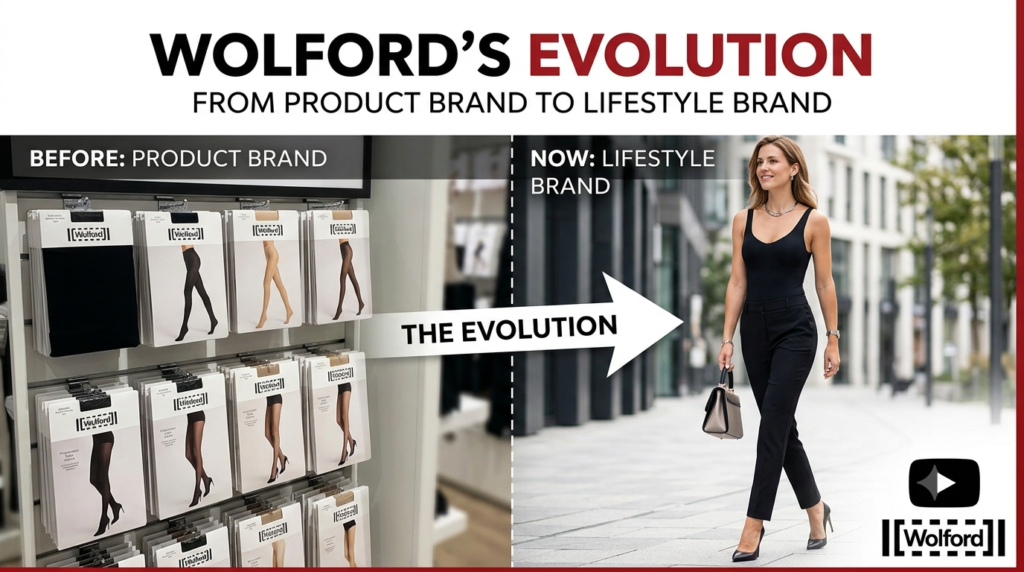
Perhaps the most important change in Wolford’s branding is the shift from emphasizing individual products to emphasizing the person wearing them. Its 75th-anniversary communication explicitly says the focus has moved beyond the product toward the woman herself, connecting Wolford with confidence, movement, presence, and individuality. This is a significant strategic move because product brands compete on specifications, while lifestyle brands compete on meaning.
The difference can be seen in the way customers talk about brands they love. They may not remember the exact technical specifications of a garment, but they remember how the garment made them feel. A luxury brand becomes stronger when customers can use it as part of their own identity. Wolford’s emphasis on skinwear, body-conscious design, and empowerment gives customers a narrative they can personalize. The garment becomes a tool for self-expression rather than merely an object of consumption. That creates deeper loyalty because replacing the product may feel easier than replacing the emotional meaning attached to it.
Read More:-
How Does Strikingly Simplify the Website Building Process?
Building Your Dream Website with Site123
Boost Your E-commerce Strategy with YITH Plugins
Maximize Your Customer Engagement with LiveAgent’s Features
Why STRIPO is Essential for Digital Product Marketersa
What Other Luxury Brands Can Learn From Wolford
Wolford offers several useful lessons for luxury brands trying to build loyalty in an increasingly crowded market. The first is that craftsmanship should be experienced, not merely advertised. If technical expertise produces noticeably better comfort, fit, durability, or aesthetics, customers can become the storytellers. The second lesson is that innovation should strengthen brand identity rather than distract from it. Wolford’s history shows repeated innovation in seamless construction, fabrics, bodywear, and product engineering while maintaining a recognizable connection to skin and silhouette.
The third lesson is the value of consistency. Customers need a reason to believe that the next purchase will deliver an experience compatible with the previous one. The fourth is that heritage becomes useful when it supports current relevance. Wolford can talk about 1950, 1954, 1992, 1994, 2014, or 2025 without presenting history as a museum exhibit; those milestones can instead demonstrate an ongoing commitment to innovation. Finally, luxury brands can learn that sustainability becomes more credible when connected to engineering and product design. Wolford’s work with bluesign® and Cradle to Cradle demonstrates how environmental considerations can be incorporated into a technical product story rather than treated as a completely separate marketing theme.
The Future of Design-Led Brand Loyalty
The future of luxury loyalty is unlikely to be built by logos alone. Consumers have more choices, more access to information, and more opportunities to compare products than ever before. That makes tangible differentiation increasingly important. Wolford’s strongest advantage is the combination of design, craftsmanship, technical innovation, comfort, heritage, and emotional positioning. Each element reinforces the others, creating a brand proposition that is difficult to reduce to a single feature.
Wolford’s 75-year history demonstrates how a company can remain relevant by evolving its creative expression while preserving core expertise. Its story began with hosiery and expanded into a broader world of skinwear, bodywear, lingerie, apparel, and collaborations. The challenge ahead will be maintaining that balance as fashion, sustainability expectations, consumer behavior, and luxury retail continue to change. If Wolford continues to treat craftsmanship as a source of innovation rather than simply heritage, its design philosophy can remain a meaningful reason for customers to return. Ultimately, the most durable form of brand loyalty comes from a simple equation: make something distinctive, make it exceptionally well, make the customer feel something, and then deliver that experience consistently enough that she trusts you the next time she needs it.



Conclusion
Wolford uses design and craftsmanship to build brand loyalty by making quality tangible. Its seamless knitting technology, careful material selection, product engineering, body-conscious design, and long history of innovation give customers more than an attractive garment. They create a recognizable wearing experience that can encourage trust, repeat purchasing, and emotional attachment. Wolford’s evolution from an Austrian hosiery manufacturer into a global luxury skinwear brand shows how technical expertise can become the foundation of a much larger brand identity.
The most compelling part of the strategy is the way design and craftsmanship work together. Design gives Wolford its visual language and emotional promise, while craftsmanship provides the physical evidence that the promise is real. Seamless construction, refined fabrics, comfort, signature products, collaborations, and sustainability initiatives all contribute to a brand that can feel both familiar and innovative. Its 75th-anniversary message captures this evolution by positioning Wolford not simply as something worn on the skin, but as something connected to confidence, movement, presence, and individuality.
That is ultimately why Wolford’s approach to loyalty is worth studying. Customers do not become loyal merely because a company has been around for a long time. They become loyal when history continues to produce value in the present. By combining heritage with innovation, aesthetics with engineering, and luxury with comfort, Wolford has created a product experience capable of turning craftsmanship into trust and trust into long-term brand relationships.
FAQs
Q. Why is craftsmanship important to Wolford’s brand loyalty?
A. Craftsmanship gives Wolford a tangible point of difference. Its circular-knitting technology, material selection, quality controls, and seamless construction contribute directly to the comfort and fit customers experience. When customers repeatedly receive a high-quality experience, they have less incentive to switch to unfamiliar alternatives.
Q. What makes Wolford’s design approach different?
A. Wolford focuses heavily on the relationship between garments and the body. Its design philosophy combines aesthetics with comfort, movement, seamless construction, innovative fabrics, and body-conscious silhouettes. The company describes its products as luxury skinwear designed to fit and feel like a second skin.
Q. How does innovation contribute to Wolford’s customer loyalty?
A. Innovation creates products that customers can experience rather than simply read about. Wolford’s history includes seamless stockings, seamless bodysuits, Fatal tights, Pure tights with invisible glued seams, and other technically advanced products. When an innovation genuinely improves fit or comfort, it can become a reason for repeat purchasing.
Q. Does sustainability contribute to Wolford’s luxury positioning?
A. Yes. Wolford has invested in sustainability initiatives involving bluesign®, Cradle to Cradle certification, recyclable materials, and biodegradable products. These efforts can strengthen the brand’s appeal among customers who increasingly connect luxury with responsible production and material innovation.
Q. How has Wolford maintained relevance for more than 75 years?
A. Wolford combines recognizable technical expertise and signature products with new designs, collaborations, and changing fashion influences. Its history includes collaborations with major designers and brands across multiple decades, while its current positioning continues to emphasize innovation, elegance, individuality, and skinwear. This balance allows the brand to preserve its identity without becoming trapped in its past.