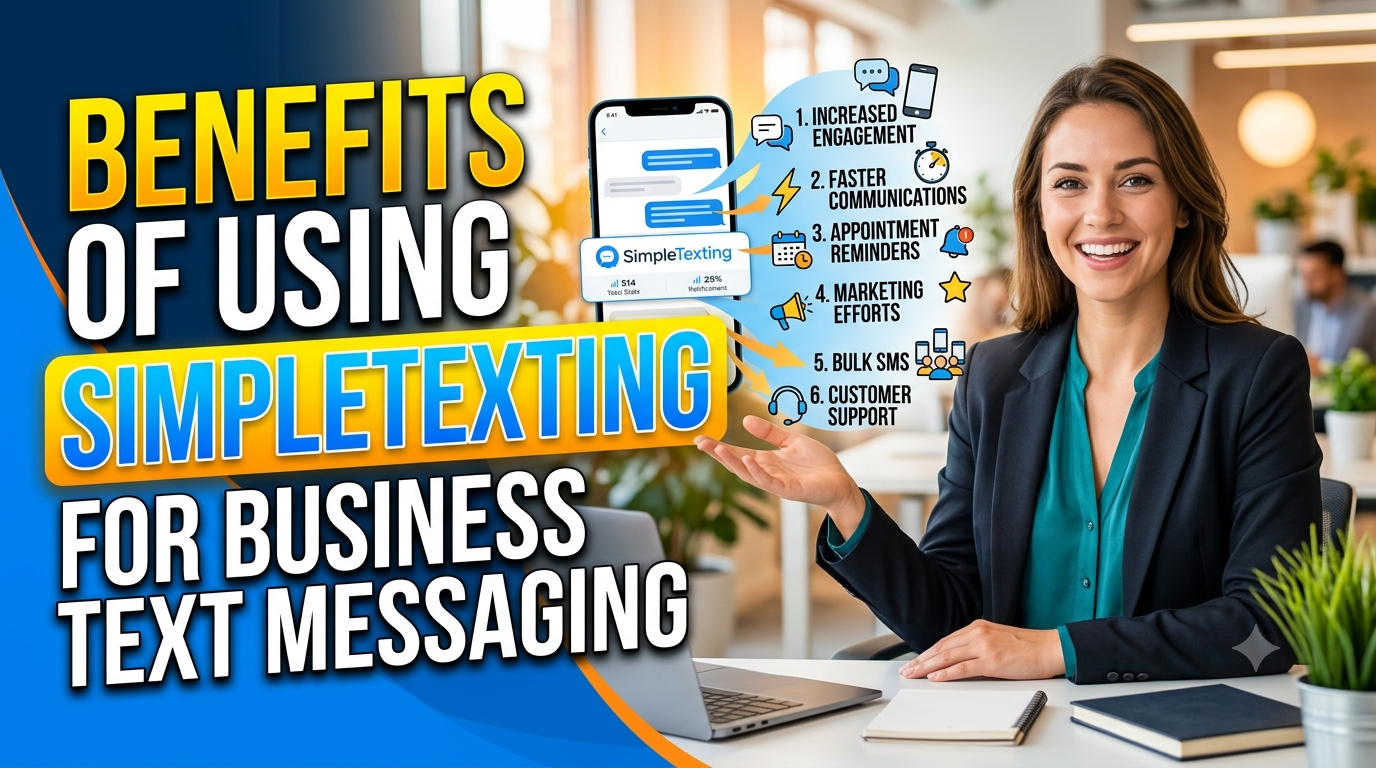
SimpleTexting helps businesses streamline customer communication through fast, convenient, and professional text messaging. From promotional campaigns and appointment reminders to two-way conversations, customer support, and personalized updates, SimpleTexting provides practical tools that make business texting easier to manage and more engaging. With features such as mass texting, SMS and MMS messaging, contact segmentation, automation, scheduling, analytics, and integrations, SimpleTexting can help businesses save time, connect with customers more effectively, and build stronger relationships through direct mobile communication.
Table of Contents
- Why Business Text Messaging Matters Today
- What Is SimpleTexting?
- Key Benefits of SimpleTexting
- Mass Text Messaging Made Easier
- Marketing and Promotional Opportunities
- Customer Support and Engagement
- Analytics and Performance Tracking
- Integrations and Business Workflows
- Compliance and Responsible Business Texting
- SimpleTexting Pricing and Value
- Who Can Benefit From SimpleTexting?
- SimpleTexting vs. Traditional Communication Channels
- Best Practices for Business Text Messaging
- Potential Limitations to Consider
- How to Get Started With SimpleTexting
- Conclusion
- FAQs
Why Business Text Messaging Matters Today
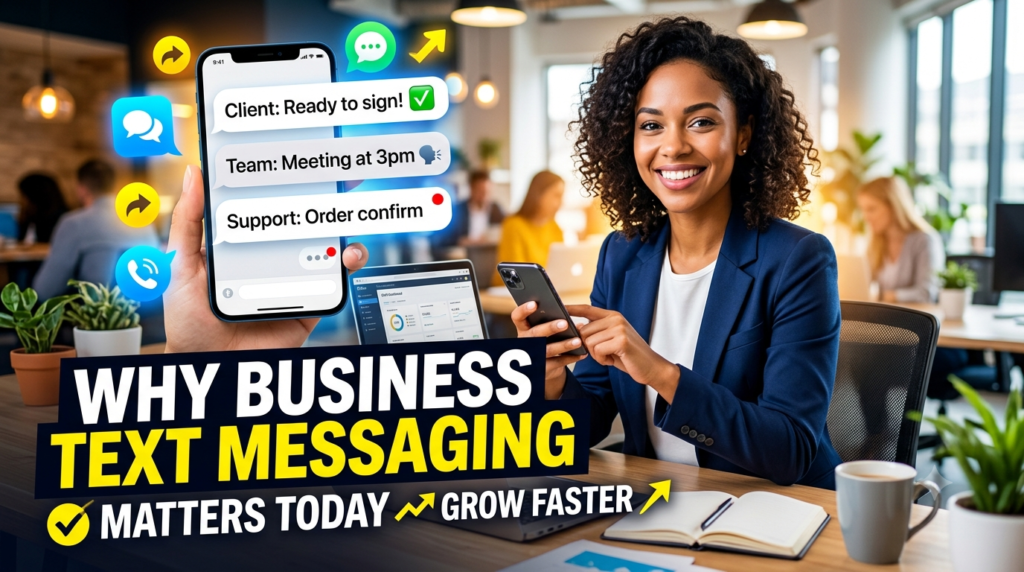
Business communication has changed dramatically, and customers increasingly expect companies to communicate in ways that are quick, convenient, and easy to access. Email still has an important role, phone calls remain useful for complex conversations, and social media can help brands stay visible, but text messaging has a special advantage: it reaches people through a channel they already check throughout the day. Recent SimpleTexting research states that 82% of consumers check a new text within five minutes, illustrating why SMS has become an attractive option for businesses that need timely communication. Think about the difference between sending a customer an email they might read later and sending a concise appointment reminder that appears directly on their phone; the second option can feel much more immediate and personal.
For businesses, this immediacy can support everything from lead generation and promotions to customer service, appointment reminders, order updates, event notifications, and internal communication. Texting also removes some of the friction associated with traditional communication because customers do not have to open a separate application, navigate a complicated portal, or wait on hold simply to respond. The real opportunity is not just sending more messages but creating a communication experience that feels natural to the customer. That is where a dedicated platform such as SimpleTexting can become useful, because it gives businesses tools designed specifically around professional SMS and MMS communication rather than forcing employees to manage business conversations from personal phones. When used thoughtfully, business text messaging can become less like another marketing channel and more like a direct bridge between a company and the people it serves.
Customers Want Faster Communication
Customers are busy, and their expectations have changed accordingly. When someone contacts a company about an appointment, product, service, quote, event, or support question, they generally do not want to wait several days for an answer. A well-designed business texting strategy gives companies an opportunity to meet that expectation without requiring every interaction to happen through a phone call. SimpleTexting supports two-way communication, allowing a company to send an initial message and then continue the conversation when the customer replies. This is particularly valuable because a business text does not have to be a one-way announcement; it can become the beginning of an actual customer conversation.
Texting Fits Modern Customer Habits
The strongest communication channel is often the one customers are already comfortable using. A customer might ignore an overflowing inbox but notice a text notification almost immediately, especially when the message contains useful information rather than generic advertising. SimpleTexting’s current business-texting materials emphasize mass messaging, two-way replies, segmentation, dedicated business numbers, and incoming SMS communication, all of which help turn ordinary texting into a structured business process. Instead of asking customers to adapt to the company’s preferred communication method, businesses can meet customers where they already spend attention. That simple shift can make communication feel less formal, more accessible, and easier to act on.
What Is SimpleTexting?
SimpleTexting is a business messaging platform designed to help organizations send and receive SMS and MMS messages at scale while maintaining a more professional workflow than ordinary phone texting. Rather than having an employee send customer messages from a personal smartphone, a business can use a dedicated business number and manage conversations through a centralized platform. Current SimpleTexting information highlights capabilities including mass texting, two-way conversations, segmentation, analytics, scheduled messages, keywords, MMS, integrations, and business texting tools. This combination is important because effective business messaging is rarely just about pressing “send”; businesses need a way to organize contacts, communicate consistently, measure results, and manage replies.
The platform can support different communication styles at the same time. A company could use one campaign to announce a seasonal promotion, another workflow to remind customers about appointments, and one-to-one texting to answer questions from individual leads. That flexibility means the same underlying messaging system can serve marketing, sales, support, operations, and customer retention. It also reduces the temptation to treat every customer exactly the same because segmentation and personalization allow businesses to tailor messages to different audiences. In practical terms, SimpleTexting acts like a communication hub: instead of scattering customer conversations across personal phones, spreadsheets, email threads, and disconnected applications, the business can bring important text-based interactions into one environment.
A Business-Focused Messaging Platform
One of the biggest advantages of using a dedicated platform is structure. Employees can work from a business communication system rather than mixing customer messages with personal conversations, which makes the process easier to manage as a company grows. SimpleTexting’s current materials also describe access across desktop and mobile environments, contact imports, analytics, keywords, MMS, and customer support resources. For a small company, that can mean starting with a relatively straightforward messaging workflow; for a larger organization, it can provide a foundation for more sophisticated campaigns and automated communication. The value comes from turning texting from an informal activity into a repeatable business process.
Key Benefits of SimpleTexting
The benefits of SimpleTexting become clearer when you look beyond the basic ability to send an SMS. A good business texting platform should help a company communicate faster while also making communication more organized, measurable, and relevant. SimpleTexting combines several of these functions in one platform, including campaigns, two-way messaging, segmentation, personalization, analytics, keywords, scheduling, and multimedia messaging. That matters because businesses rarely have just one communication goal. A retailer may need promotions, a dentist may need appointment reminders, a real-estate company may need lead follow-up, and a nonprofit may need event alerts. A flexible texting system can adapt to each of those scenarios without requiring the business to create a completely separate communication infrastructure.
Another advantage is scalability. Businesses can begin with a relatively small contact database and gradually expand their messaging activity as their customer base grows. SimpleTexting’s current entry-level offering is listed at $29 per month for 500 credits, with unlimited contacts, while additional costs can include a registered local number and carrier-related fees. This structure makes it important for businesses to think about message volume rather than simply counting contacts when estimating costs. The broader benefit is that the platform can support a growing database without requiring the company to abandon its communication system and start again. Like a good storefront, the best messaging infrastructure should be useful when the business is small and still have room when more customers walk through the door.
Two-Way Customer Communication
Two-way texting is one of the most practical advantages because it turns a broadcast into a conversation. Imagine a salon sending an appointment reminder and allowing the customer to reply with a confirmation, or a real-estate agent following up with a prospect who can quickly answer a question by text. Instead of forcing the customer to switch channels, the business can continue the interaction in the same place. SimpleTexting specifically promotes two-way replies and notes that incoming SMS replies are free on its plans, while incoming MMS can consume a credit. That makes the platform useful for businesses that need both outbound communication and responsive customer service.
Mass Text Messaging Made Easier
Sending a message to hundreds or thousands of customers individually would be impractical, but mass messaging software allows businesses to distribute a carefully prepared message to a larger audience without creating a traditional group chat. This distinction is important because recipients do not see one another’s contact information or replies; the communication remains between the business and each individual recipient. SimpleTexting can therefore be used for promotions, announcements, event notifications, reminders, and other campaigns where the same core information needs to reach many people. The business can also combine mass communication with personalization, making the message feel more relevant instead of sounding like a generic broadcast.
Mass texting can save substantial administrative time as well. Consider a business that regularly sends weekly offers, appointment reminders, or updates to customers. Without a centralized texting platform, employees might spend hours copying numbers, writing individual messages, tracking responses, and trying to determine who received what. A campaign-based system turns those repetitive tasks into a defined workflow. The result is not simply faster messaging; it is less operational friction. When employees spend less time performing repetitive communication tasks, they can devote more attention to conversations that genuinely require human judgment.
Personalization and Customer Segmentation
Personalization is where mass texting can become considerably more powerful. Sending the same message to every customer may be easy, but relevance generally improves when businesses divide their audience according to meaningful characteristics or behavior. Current SimpleTexting information says users can segment contacts based on factors such as link clicks, signup method, area code, and custom fields. This gives a business the ability to create different messages for different groups rather than treating an entire database as one audience. A restaurant might communicate differently with loyal customers and new subscribers, while a service provider might separate upcoming appointments from inactive leads.
Personalization also changes the tone of a campaign. A message that acknowledges a customer’s name, location, previous interaction, or relevant offer can feel more like a helpful reminder and less like advertising. That does not mean every text needs to contain dozens of personalized details; sometimes one relevant piece of information is enough. The goal is to make the recipient think, “This message is useful to me,” rather than, “This company is sending the same advertisement to everyone.” When segmentation and personalization are used responsibly, businesses can make their SMS campaigns more focused while reducing unnecessary messages to people who are unlikely to care about a particular offer.
Marketing and Promotional Opportunities
SMS marketing can be particularly useful when a business needs to communicate an offer quickly. A retailer can announce a limited-time promotion, a restaurant can highlight a same-day special, an event organizer can share last-minute availability, or a service business can remind customers about a seasonal package. The strength of SMS is not that every message becomes automatically successful, but that the format supports short, direct communication when timing matters. SimpleTexting provides campaign functionality, segmentation, personalization, keywords, and MMS capabilities that can help businesses build these campaigns systematically. When combined with a clear call to action, a well-timed message can move a customer from awareness to action with very little friction.
There is also room for experimentation. Businesses can test different offers, calls to action, audience segments, and message styles while monitoring engagement metrics. Instead of guessing which communication works, marketers can use campaign data to identify patterns and refine future messages. A business might discover that customers respond better to appointment reminders in the morning, promotional messages on certain days, or concise offers containing a direct link. Over time, those small observations can turn SMS from an occasional promotional tactic into a repeatable customer-engagement channel.
SMS Campaigns and MMS Messaging
Text does not have to mean plain text alone. MMS allows businesses to incorporate visual or multimedia elements into appropriate campaigns, which can be useful for product promotions, event information, visual announcements, and other situations where an image adds context. SimpleTexting’s business materials describe MMS support alongside SMS campaigns, and its platform also provides tools for creating reusable templates and personalized messages. The key is to use multimedia when it improves the message rather than adding an image simply because the technology allows it. A clear product photograph, event graphic, or useful visual can strengthen communication, while unnecessary media can make a message feel cluttered.
Customer Support and Engagement
Business texting can also strengthen customer service because some questions are simply easier to answer through a quick text exchange. A customer might need to confirm an appointment, ask whether a product is available, request a link, clarify a delivery detail, or respond to a sales follow-up. Requiring that person to call a business for every small question creates unnecessary friction. Two-way messaging allows companies to provide a more convenient option while preserving the ability to escalate complicated issues when necessary.
SimpleTexting can also support ongoing engagement rather than isolated conversations. Keywords can help customers initiate interactions by texting a specific word, while autoresponders and scheduled messages can provide immediate or planned communication. The company’s current materials describe keyword campaigns, reminders, automated responses, and integrations as part of its broader business-texting functionality. This can make a customer journey feel more connected. Instead of receiving one promotional message and disappearing into a database, a customer can interact with the company through several useful touchpoints.
Automated Replies and Reminders
Automation is particularly valuable for repetitive communication. Appointment reminders, confirmation messages, welcome texts, event updates, and frequently requested information can often follow predictable patterns. Automating those interactions does not mean removing the human element from customer service; it means reserving human attention for situations where it adds the most value. SimpleTexting’s platform includes scheduling, recurring campaigns, keywords, and autoresponder functionality, giving businesses several ways to automate routine messaging.
The best automation doesn’t feel robotic, but rather helpful. A reminder that arrives at an appropriate time and gives a customer a clear next step can save both sides effort. An automated response that simply pushes a customer through an endless maze of options, on the other hand, can create frustration. Businesses should therefore use automation as a support mechanism rather than treating it as a substitute for thoughtful customer service. The technology works best when it handles predictable tasks and smoothly hands unusual or sensitive situations to a person.
Analytics and Performance Tracking
One of the strongest reasons to use a dedicated business texting platform is measurement. Without analytics, a business may know that it sent 1,000 messages but have little understanding of what happened afterward. SimpleTexting’s materials highlight analytics such as link click-through rates and deliverability, giving businesses data they can use to evaluate campaigns. This makes it possible to ask better questions: Which audience responded? Which link generated engagement? Did a particular offer perform better? Are customers interacting with reminders or ignoring them?
Data also encourages continuous improvement. Suppose a company sends two promotional campaigns and discovers that one produces substantially more link activity. Rather than simply celebrating the stronger campaign, the business can examine what made it different. Was the audience more targeted? Was the offer clearer? Was the timing better? Was the call to action more direct? Over several campaigns, this kind of analysis can transform SMS from an intuitive marketing activity into a measurable channel with increasingly refined practices.
Integrations and Business Workflows
A texting platform becomes more useful when it fits into the tools a business already uses. Modern companies often have customer relationship management systems, calendars, online forms, e-commerce platforms, marketing tools, and other applications operating simultaneously. Manually moving information between those systems and a messaging platform can create unnecessary work and increase the risk of errors. SimpleTexting promotes integrations and API capabilities that can help businesses connect texting with broader workflows.
The practical benefit is consistency. A new lead could enter a system through a web form and then receive an appropriate follow-up message. A customer might receive a reminder based on an appointment workflow rather than relying on an employee to remember it manually. A marketing team could connect campaign activity with other customer data to create more relevant segments. The more naturally texting fits into existing operations, the less likely it is to become an isolated tool that employees forget to use.
Compliance and Responsible Business Texting
Business texting must be handled responsibly. Companies should obtain appropriate consent before sending marketing messages, clearly identify themselves, provide appropriate opt-out mechanisms, and respect customer preferences. SimpleTexting’s current materials discuss carrier registration and automatic opt-out handling, including the use of STOP-style unsubscribe requests. Businesses should still understand that using a messaging platform does not transfer their legal responsibilities to the software provider. Regulations can vary by jurisdiction, industry, message type, and customer relationship, so organizations should establish their own compliance procedures and seek professional legal advice when appropriate.
Responsible messaging is also good business practice. Nobody wants to receive a dozen irrelevant promotional texts every week, and customers quickly lose trust in companies that ignore their communication preferences. A good SMS strategy therefore treats permission as something valuable rather than something to exploit. Send messages that have a clear purpose, respect frequency expectations, make opt-out instructions understandable, and avoid using urgency as an excuse for poor communication. When customers believe a business will text them only when there is something genuinely useful to say, they are more likely to keep the relationship active.
SimpleTexting Pricing and Value
Pricing is an important part of evaluating any business messaging platform, but the headline subscription price should not be the only number considered. As of August 2026, SimpleTexting lists a starting plan of $29 per month for 500 credits, with unlimited contacts; its current comparison material also identifies a $10 monthly registered local-number fee, a $4 one-time carrier registration fee, and additional credits priced at 5.5 cents each. Carrier fees may also apply. That means businesses should estimate their expected message volume and account for number and carrier-related charges before deciding whether a plan fits their budget.
| Consideration | Why It Matters |
| Monthly subscription | Determines the base platform cost |
| Included credits | Helps estimate how much messaging volume is covered |
| Number fees | May add to the recurring cost of a dedicated business number |
| Carrier fees | Can affect the total cost of business texting |
| Extra credits | Important when campaigns exceed the monthly allowance |
| Unlimited contacts | Useful when the customer database grows |
| Incoming SMS | Helps make two-way customer communication more practical |
Value ultimately depends on how the business uses the platform. A company that only sends a handful of texts each month may not need a full business messaging platform, while a business running campaigns, reminders, lead follow-ups, and customer conversations may benefit considerably from centralized tools. SimpleTexting currently offers a free trial, and its published materials say the trial does not require a credit card, giving businesses an opportunity to test the workflow before making a longer-term decision.
Who Can Benefit From SimpleTexting?
SimpleTexting can make sense for many organizations because the underlying communication needs are remarkably similar across industries. Retailers can use SMS for promotions and product announcements, restaurants can send offers and reservation-related reminders, service businesses can communicate about appointments, and real-estate professionals can follow up with leads. Educational organizations, nonprofits, event teams, healthcare-related businesses where appropriate, and professional service providers can also find uses for reminders, alerts, and customer communication. The specific campaign should change according to the industry, but the basic value proposition remains the same: faster, more direct communication.
Small Businesses and Growing Teams
Small businesses may benefit especially because they often have limited staff and need every communication tool to do more than one job. A small team might use the same platform for lead follow-up in the morning, appointment reminders during the afternoon, and promotional campaigns later in the week. Instead of buying separate systems for each activity, a unified messaging workflow can reduce complexity. The ability to use dedicated numbers, mass campaigns, two-way messaging, segmentation, analytics, keywords, and integrations means a growing team can build a communication process without immediately creating a large technology stack.
SimpleTexting vs. Traditional Communication Channels
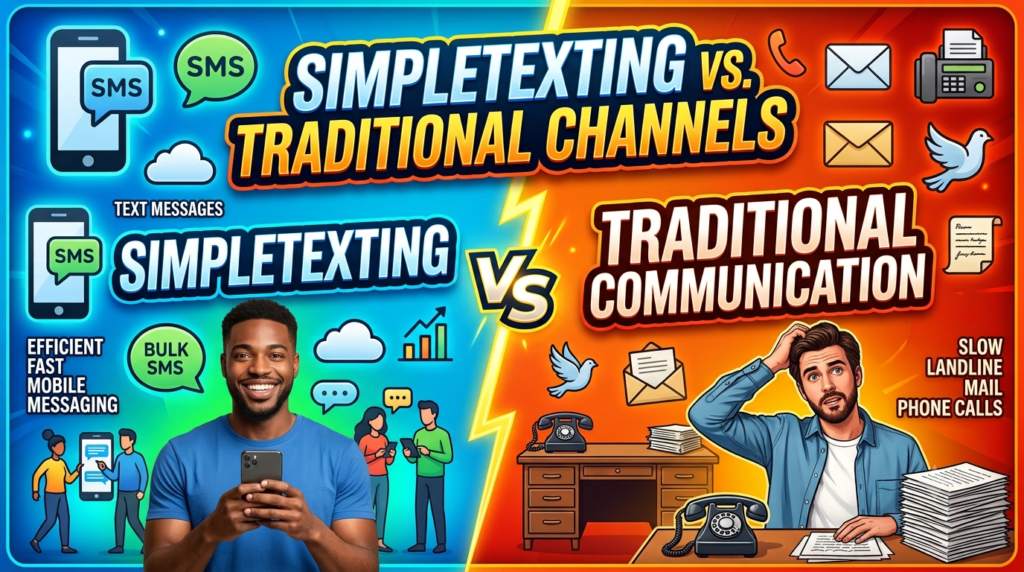
The best question is not whether texting should replace email, phone calls, or social media. It should not. Each channel has a different strength, and businesses generally benefit from using them together. Email is excellent for detailed information, newsletters, long-form content, and records; phone calls are valuable when a conversation requires nuance; social media is powerful for public engagement and discovery; texting excels when communication needs to be direct, timely, and easy to act upon.
| Channel | Best Use | Main Strength |
| SMS | Reminders, alerts, concise promotions | Speed and directness |
| Detailed communication and newsletters | Space and flexibility | |
| Phone | Complex or sensitive conversations | Personal interaction |
| Social media | Public engagement and discovery | Reach and community |
| Business messaging platform | Structured customer texting | Centralized workflow |
SimpleTexting’s value therefore comes from complementing other channels rather than trying to eliminate them. A business might use email to explain a new service, social media to promote it publicly, and SMS to remind interested customers about a deadline. Thinking in terms of an integrated communication strategy produces better results than treating one channel as a universal solution. Texting is the fast-moving lane of the communication highway; it is powerful, but businesses still need the other lanes.
Best Practices for Business Text Messaging
Effective business texting starts with relevance. Before sending anything, ask whether the message provides a clear benefit to the recipient and whether SMS is genuinely the best channel for the information. Keep the language conversational, make the purpose obvious, avoid unnecessary words, and include a straightforward call to action when one is needed. Personalization and segmentation can make campaigns more relevant, while scheduling can help businesses deliver messages at appropriate times. SimpleTexting’s current feature set supports many of these practices through segmentation, personalization, scheduled campaigns, templates, keywords, and analytics.
Businesses should also develop a consistent messaging identity. Customers should recognize who is contacting them, understand why they are receiving the message, and know what action they can take. Avoid sending too frequently simply because the platform makes it easy; convenience for the sender does not automatically mean convenience for the recipient. Track performance and use the data to improve future campaigns instead of repeating the same message indefinitely. Above all, respect consent and opt-out requests. A strong SMS program should feel like a useful customer service channel with marketing capabilities, not like a notification machine that never stops.
Read More:-
How Does Strikingly Simplify the Website Building Process?
Building Your Dream Website with Site123
Boost Your E-commerce Strategy with YITH Plugins
Maximize Your Customer Engagement with LiveAgent’s Features
Why STRIPO is Essential for Digital Product Marketersa
Potential Limitations to Consider
No messaging platform is perfect for every organization, and SimpleTexting is no exception. The current SimpleTexting comparison states that the service is available in the United States and Canada, so businesses operating elsewhere should verify geographic eligibility before choosing it. Businesses should also consider message volume, carrier fees, number fees, registration requirements, integration needs, and the complexity of their communication workflows. High-volume organizations may have different requirements from small businesses, particularly if they need dedicated short codes or very large-scale messaging.
Cost can also become more significant as usage increases. SimpleTexting’s published comparison identifies additional credit charges and number-related costs, while dedicated short-code services can carry substantially higher setup and recurring expenses. That does not make the platform unsuitable; it simply means businesses should calculate total expected costs rather than choosing based on the starting subscription alone. A sensible evaluation should include the number of contacts, monthly messages, multimedia usage, expected growth, required integrations, and compliance needs.
How to Get Started With SimpleTexting
Getting started is easiest when a business begins with a clear communication goal rather than immediately creating dozens of campaigns. Decide whether the first use case will be lead follow-up, appointment reminders, customer support, promotions, event alerts, or another specific purpose. Build a permission-based contact list, select an appropriate business number, create a small set of useful message templates, and test the experience internally before contacting customers. SimpleTexting’s current materials describe a free trial, business numbers, campaigns, keywords, analytics, and other tools that can help businesses test the platform and develop their workflow.
After the initial setup, start small and measure everything you reasonably can. A first campaign does not need to reach thousands of people; the objective should be learning what customers respond to and where the process needs improvement. Monitor delivery, engagement, replies, link activity, opt-outs, and customer feedback. Then refine the message, timing, audience, and frequency. Once the process works reliably, the business can expand into additional use cases such as automated reminders, segmented promotions, customer support, and integrated workflows.



Conclusion
SimpleTexting can give businesses a practical way to make customer communication faster, more organized, and more conversational. Its value comes from combining the immediacy of SMS with business-oriented capabilities such as mass campaigns, two-way texting, personalization, segmentation, MMS, analytics, keywords, scheduling, and integrations. Instead of treating text messaging as something employees casually do from their phones, businesses can build a structured communication channel that supports marketing, sales, customer service, and operations. That can be especially valuable for small and growing companies that want to communicate professionally without creating an unnecessarily complicated technology stack.
The smartest approach is to focus on usefulness rather than volume. Customers do not need more messages; they need better messages. When businesses send relevant information at appropriate times, respect consent, make replies easy, and use campaign data to improve their strategy, texting can become a meaningful part of the customer experience. SimpleTexting is not a magic button that guarantees engagement, but it can provide the infrastructure needed to turn everyday business texting into a more consistent and measurable process.
FAQs
Q. What is SimpleTexting used for?
A. SimpleTexting is used by businesses to send and receive SMS and MMS messages for purposes such as marketing campaigns, customer communication, reminders, lead follow-up, alerts, and engagement. Its platform supports both mass messaging and individual two-way conversations, allowing businesses to manage different communication needs through one system.
Q. How much does SimpleTexting cost?
A. As of August 2026, SimpleTexting’s published starting price is $29 per month for 500 credits. Additional costs can include a registered local number, carrier registration, carrier fees, and extra credits, so businesses should calculate the total expected monthly cost based on their usage rather than relying only on the advertised subscription price.
Q. Can customers reply to SimpleTexting messages?
A. Yes. SimpleTexting supports two-way business texting, allowing customers to reply to messages and businesses to continue conversations. Current SimpleTexting information says incoming SMS replies are free, although incoming MMS can use a credit.
Q. Can SimpleTexting send personalized mass texts?
A. Yes. SimpleTexting supports segmentation and personalization features that allow businesses to target groups and customize messages rather than sending exactly the same communication to everyone. Current platform information describes segmentation based on factors such as link clicks, signup method, area code, and custom fields.
Q. Is SimpleTexting suitable for small businesses?
A. SimpleTexting can be a practical option for small businesses that want a centralized system for customer texting, marketing campaigns, reminders, and two-way communication. Its relatively accessible starting plan, unlimited contacts, free trial, and range of business-oriented features can make it worth testing for teams that expect to use SMS regularly.