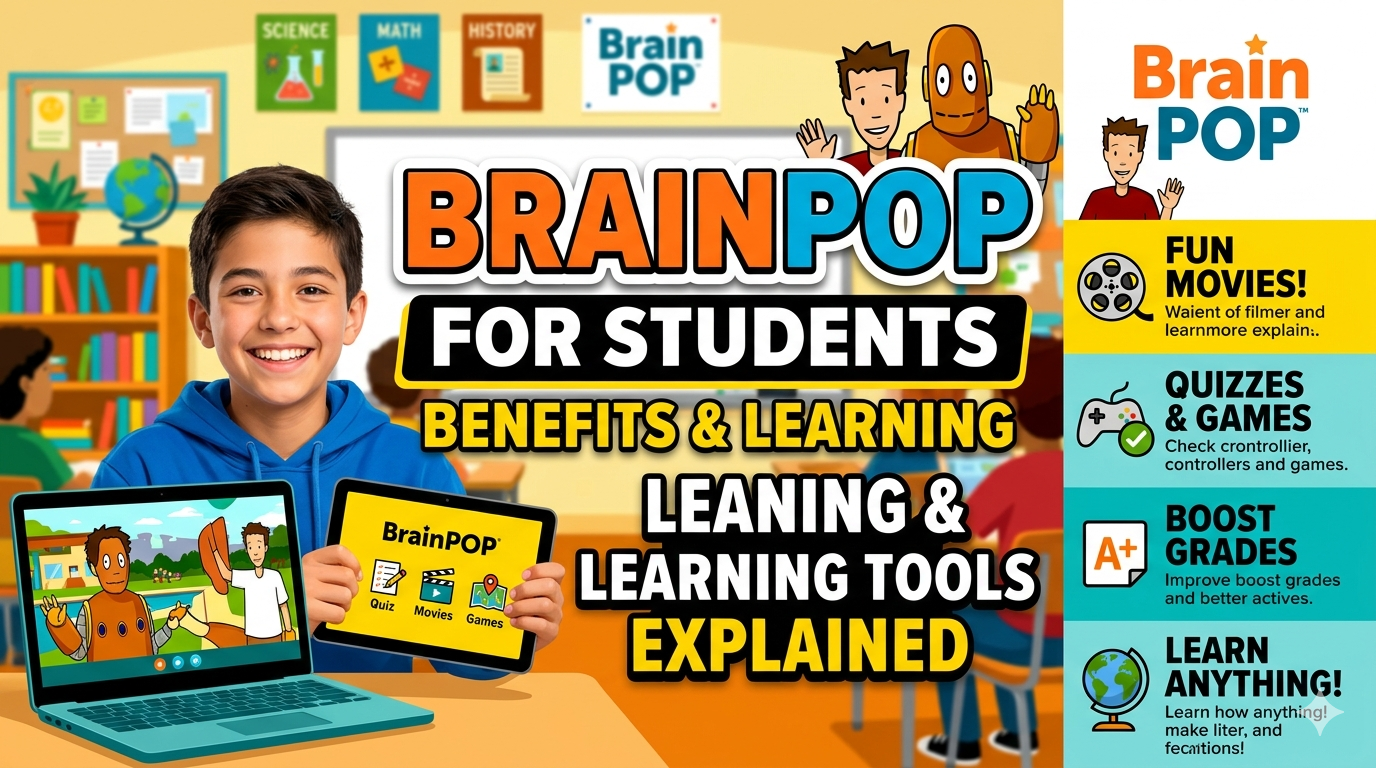
Discover how BrainPOP helps students learn smarter through interactive videos, quizzes, games, and creative activities. This detailed guide explains BrainPOP’s features, benefits, subjects covered, pricing, and why it has become one of the most popular educational platforms for K–8 learners. Whether you are a student, parent, or teacher, explore how BrainPOP makes learning fun, engaging, and effective in today’s digital classroom.
Table of Contents
- What Is BrainPOP?
- Why BrainPOP Is Popular Among Students
- Main Features of BrainPOP
- Subjects Covered on BrainPOP
- BrainPOP Jr. for Younger Learners
- Benefits of BrainPOP for Students
- BrainPOP for Homework and Self-Study
- BrainPOP Pricing and Subscription Options
- BrainPOP Compared to Other Learning Platforms
- Is BrainPOP Worth It for Students?
- Conclusion
- FAQs
What Is BrainPOP?
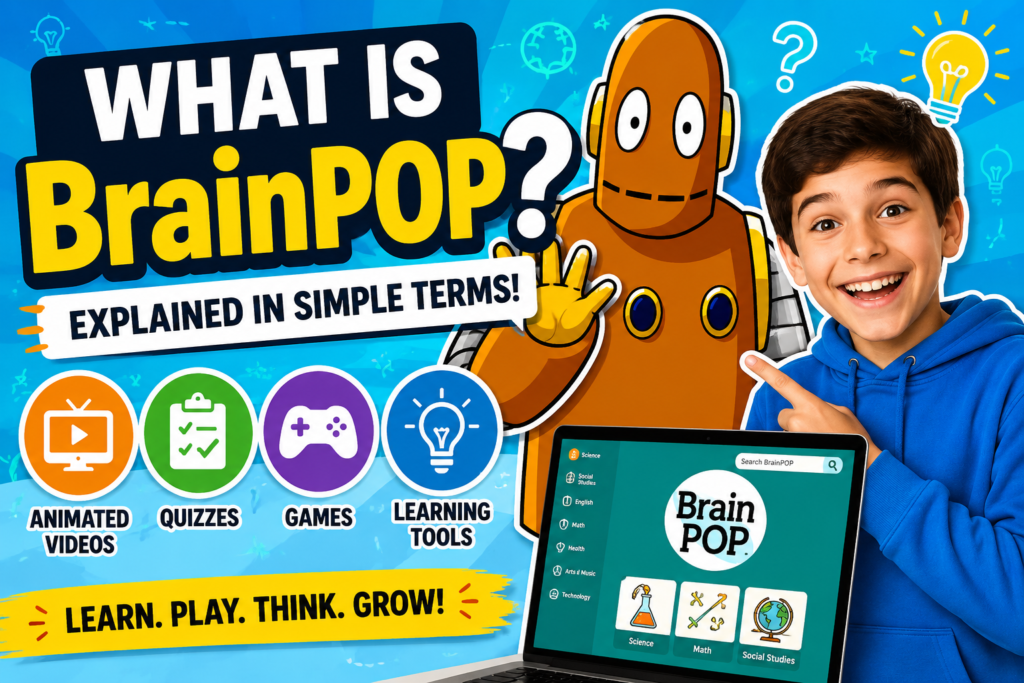
BrainPOP is an online educational platform designed to help students learn through animation, storytelling, quizzes, and interactive activities. Founded in 1999, BrainPOP became famous for its animated videos featuring Tim and Moby, the platform’s iconic characters. These short educational movies explain complex subjects in a simple, entertaining format that students can easily understand and remember.
The platform currently supports subjects including science, social studies, English, math, arts, health, and technology. BrainPOP also offers specialized versions such as BrainPOP Jr. for younger children and BrainPOP ELL for English language learners. According to the company, the platform serves millions of students and educators worldwide.
One reason BrainPOP stands out is its ability to mix education with entertainment. Many students lose focus during traditional lessons because they feel overloaded with information. BrainPOP changes that experience by turning lessons into engaging visual stories. Instead of memorizing boring definitions, learners watch animations, answer questions, and complete activities that make concepts easier to absorb.
The platform is used both inside classrooms and at home. Teachers often use it to introduce new topics, while parents use it to support homework and homeschooling. This flexibility makes BrainPOP useful for different types of learners and educational environments.
Why BrainPOP Is Popular Among Students
Students today are surrounded by digital content every day. Because of this, traditional learning methods sometimes struggle to keep their attention. BrainPOP succeeds because it understands how modern students consume information. Instead of long lectures, it delivers short, animated, and visually engaging lessons that feel more like entertainment than schoolwork.
One major reason students enjoy BrainPOP is its conversational teaching style. The videos use humor, storytelling, and relatable examples to explain difficult ideas. For example, science topics such as electricity, ecosystems, or genetics become easier to understand when presented through animated characters and real-life examples. This approach reduces learning anxiety and builds confidence among students.
BrainPOP also creates an active learning environment. Students are not just passive viewers. After watching videos, they can take quizzes, play games, participate in coding challenges, and create projects. Research consistently shows that active learning improves retention and comprehension because students interact directly with the material instead of simply listening to it.
Another factor behind BrainPOP’s popularity is accessibility. Students can access lessons from school, home, or even while traveling. The platform works on computers, tablets, and smartphones, making learning more flexible and convenient. According to BrainPOP, their platform is designed to support differentiated learning and help students at different skill levels succeed.
Main Features of BrainPOP
BrainPOP is much more than a video website. It includes several educational tools that work together to create a complete learning experience for students. These features are designed to improve understanding, creativity, and critical thinking.
Animated Educational Videos
The animated videos are BrainPOP’s most famous feature. Each video usually lasts a few minutes and explains a specific topic in a fun and easy-to-understand way. The animations break down complicated ideas into smaller parts, helping students learn without feeling overwhelmed.
The use of storytelling and humor keeps students engaged from beginning to end. Instead of dry explanations, BrainPOP videos use conversations, jokes, and relatable situations. This makes lessons memorable and enjoyable.
Quizzes and Assessments
After watching videos, students can test their understanding through quizzes and interactive assessments. These quizzes help reinforce learning and identify areas where students need improvement. Teachers can also track student progress and performance.
Assessments are important because they encourage students to actively recall information. Educational experts often explain that retrieval practice strengthens long-term memory. BrainPOP applies this principle effectively through quick and interactive testing tools.
Learning Games and Activities
BrainPOP also offers educational games that turn studying into a fun challenge. Students can explore simulations, puzzles, and subject-related activities that encourage problem-solving skills.
For example, science games may involve virtual experiments, while math activities can help students practice calculations in an engaging way. According to BrainPOP’s official descriptions, the platform includes creative tools and learning games specifically designed to deepen understanding.
Coding and Creativity Tools
Modern education is no longer only about memorizing facts. Creativity and digital literacy are equally important. BrainPOP includes coding activities and creative projects that allow students to build animations, presentations, and digital stories.
These tools help students develop future-ready skills such as communication, collaboration, and problem-solving. In a world increasingly driven by technology, these abilities are becoming essential for academic and career success.
Subjects Covered on BrainPOP
BrainPOP covers a wide variety of academic subjects, making it useful for students across different grades and interests. This broad coverage is one reason schools and families continue using the platform year after year.
| Subject | Topics Included |
| Science | Biology, Physics, Space, Ecosystems |
| Math | Fractions, Algebra, Geometry |
| English | Grammar, Vocabulary, Reading |
| Social Studies | History, Government, Geography |
| Technology | Internet Safety, Coding, AI |
| Health | Nutrition, Mental Health, Exercise |
Science and Technology
Science is one of BrainPOP’s strongest categories. Students can explore topics ranging from the solar system to genetics through animated lessons and virtual activities. Science often becomes difficult because many concepts are abstract, but BrainPOP simplifies them with visuals and examples.
Technology lessons are also highly relevant in today’s digital age. BrainPOP includes topics related to internet safety, artificial intelligence, digital citizenship, and coding. These lessons help students become smarter and safer digital users.
Math and English
Math can be stressful for many students, especially when concepts feel confusing. BrainPOP uses step-by-step explanations and visual demonstrations to reduce that confusion. Animated examples help students understand fractions, percentages, equations, and geometry more clearly.
English lessons focus on vocabulary, reading comprehension, grammar, and writing skills. These tools are especially useful for younger learners and students learning English as a second language.
Social Studies and Health
Social studies lessons help students understand history, geography, government, and culture. BrainPOP transforms historical events into engaging narratives that students can connect with emotionally.
Health education is another important category. Students can learn about nutrition, exercise, emotional well-being, and healthy habits in an age-appropriate format.
BrainPOP Jr. for Younger Learners
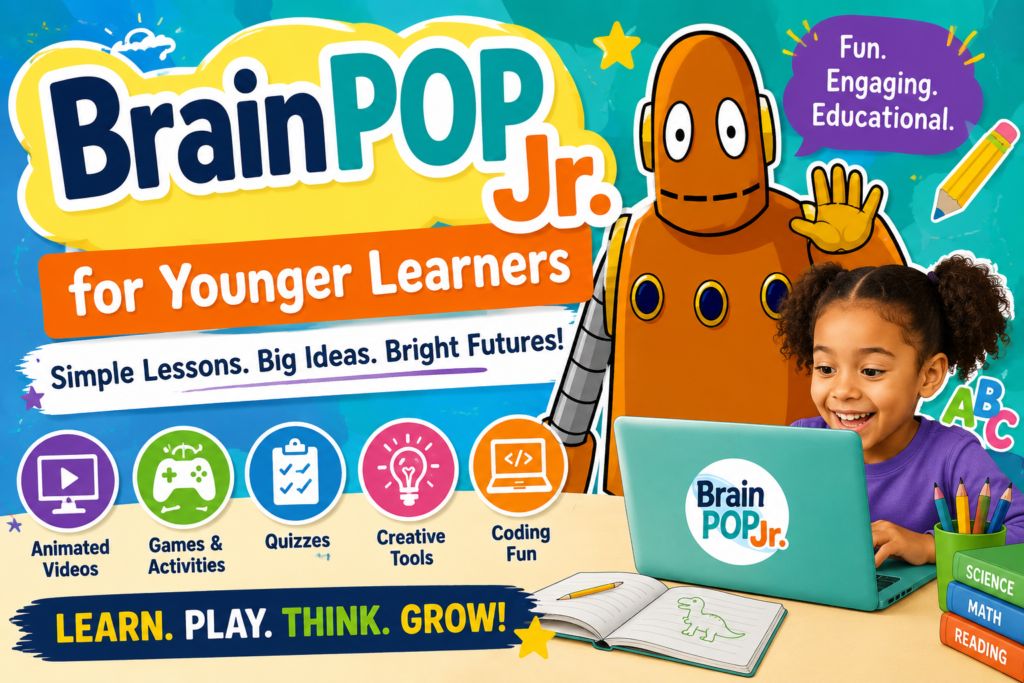
BrainPOP Jr. is specially designed for younger children in grades K–3. While the main BrainPOP platform targets older elementary and middle school students, BrainPOP Jr. uses simpler language, slower pacing, and age-appropriate visuals.
Young learners often have shorter attention spans, so BrainPOP Jr. focuses on playful learning experiences that combine animation, music, and interactive activities. Lessons introduce foundational concepts in reading, math, science, and social skills.
The platform also supports early literacy development. Students practice listening, reading, and vocabulary skills while engaging with stories and educational games. Parents appreciate BrainPOP Jr. because it creates a safe digital learning environment without distracting advertisements or inappropriate content.
BrainPOP Jr. includes features such as quizzes, games, coding activities, and creativity tools tailored for younger minds. According to BrainPOP’s official store information, these tools are specifically built to support active and engaging learning experiences.
Benefits of BrainPOP for Students
The biggest strength of BrainPOP lies in how it improves the overall learning experience for students. Instead of making education feel stressful or repetitive, the platform encourages curiosity and independent exploration.
Better Understanding of Difficult Topics
Many students struggle because classroom explanations move too quickly. BrainPOP allows students to pause, replay, and review lessons at their own pace. This flexibility improves comprehension and reduces frustration.
Visual learning also helps students retain information more effectively. Scientific concepts, historical events, and mathematical formulas become easier to remember when students see animations and practical examples.
Improved Engagement and Motivation
One of the biggest problems in education today is low student engagement. BrainPOP addresses this issue by making lessons interactive and entertaining. Students feel more motivated when learning resembles a game or story instead of a traditional lecture.
Teachers often report higher participation rates when using BrainPOP in classrooms. BrainPOP itself emphasizes that its tools help build deeper engagement and stronger learning connections.
Supports Different Learning Styles
Every student learns differently. Some learners prefer visuals, while others benefit from reading, listening, or hands-on activities. BrainPOP supports multiple learning styles through videos, quizzes, games, and creative projects.
This inclusive approach is especially valuable for students with learning challenges or language barriers. BrainPOP ELL, for example, helps English learners improve vocabulary and grammar through animated storytelling.
BrainPOP for Homework and Self-Study
Homework can often become frustrating for students and parents alike. BrainPOP makes independent study easier by providing clear explanations and interactive support materials.
Students can use BrainPOP to review topics before exams, complete assignments, or learn new concepts outside the classroom. The platform encourages self-directed learning, which is a critical skill for long-term academic success.
One advantage of BrainPOP is that it reduces dependence on constant teacher supervision. Students can independently explore lessons, take quizzes, and practice skills. This builds confidence and responsibility over time.
Parents also benefit because BrainPOP simplifies difficult concepts in a way that makes helping with homework less stressful. Instead of struggling to explain a science chapter manually, parents can guide children toward interactive BrainPOP lessons that explain concepts clearly and visually.
BrainPOP Pricing and Subscription Options
BrainPOP offers different subscription plans for schools, teachers, families, and homeschoolers. Pricing varies depending on the level of access and features included.
| Plan Type | Best For | Features |
| Teacher Subscription | Individual educators | Classroom tools and lessons |
| Family Plan | Parents and students | Home learning access |
| Homeschool Plan | Homeschool families | Full curriculum support |
| School/District Plan | Institutions | Progress tracking and integrations |
According to BrainPOP’s official pricing pages, family and homeschool plans include hundreds of educational topics, quizzes, and learning activities. Some plans also include free trial options.
Although BrainPOP is a paid platform, many users believe the educational value justifies the cost. Schools especially appreciate the ability to track student progress and integrate BrainPOP with tools like Google Classroom and Clever.
BrainPOP Compared to Other Learning Platforms
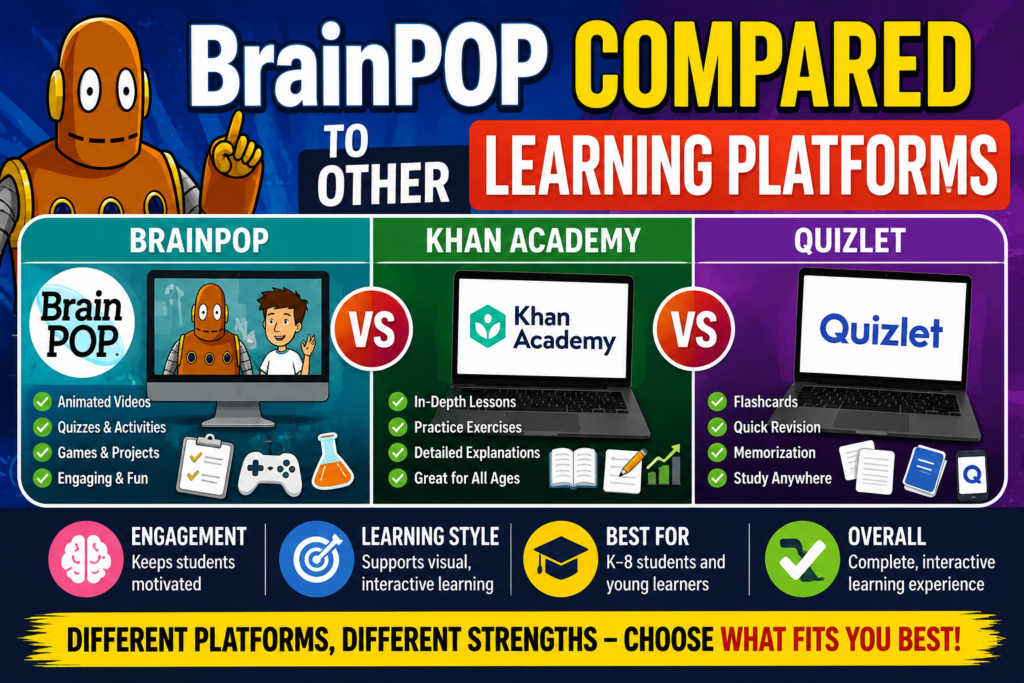
Students and parents often compare BrainPOP with other popular learning tools. While every platform has strengths, BrainPOP offers a unique combination of entertainment and curriculum-focused learning.
BrainPOP vs Khan Academy
Khan Academy focuses heavily on structured academic lessons and practice exercises. It is excellent for detailed academic learning, especially in mathematics.
BrainPOP, however, places more emphasis on engagement and storytelling. Its animated videos are especially effective for younger learners who may lose interest in text-heavy lessons.
Read More:-
Why STRIPO is Essential for Digital Product Marketers
Maximize Your Customer Engagement with LiveAgent’s Features
Boost Your E-commerce Strategy with YITH Plugins
Building Your Dream Website with Site123
How Does Strikingly Simplify the Website Building Process?
BrainPOP vs Quizlet
Quizlet is widely used for flashcards and memorization. It works well for vocabulary and quick revision.
BrainPOP provides a more complete educational ecosystem. Instead of only focusing on memorization, it combines storytelling, visuals, games, quizzes, and creative projects to encourage deeper understanding.
| Platform | Best Feature | Ideal Users |
| BrainPOP | Animated interactive learning | K–8 students |
| Khan Academy | Detailed academic instruction | Older students |
| Quizlet | Flashcards and memorization | Quick revision learners |
Is BrainPOP Worth It for Students?
For many students, BrainPOP is absolutely worth it. The platform successfully combines education and entertainment in a way that keeps learners interested and motivated. Instead of turning study time into a boring task, BrainPOP creates an experience that feels interactive and rewarding.
The platform is especially valuable for visual learners and younger students who benefit from animated explanations. BrainPOP also supports parents and teachers by making complex topics easier to teach and understand.
Its emphasis on creativity, digital literacy, and critical thinking makes it more than just a homework tool. BrainPOP prepares students for modern learning environments where collaboration, communication, and problem-solving are increasingly important.
The educational landscape continues to evolve, and tools like BrainPOP are becoming essential in helping students adapt to new ways of learning. From animated videos to coding activities, BrainPOP creates an environment where curiosity and understanding grow naturally.




Conclusion
BrainPOP has earned its reputation as one of the most engaging educational platforms for students. By combining animation, storytelling, quizzes, games, and creativity tools, it transforms learning into an enjoyable experience rather than a stressful obligation.
Students benefit from clearer explanations, stronger engagement, and flexible self-paced learning. Parents appreciate the safe and educational environment, while teachers value the curriculum-aligned resources and progress tracking tools.
As digital education continues to expand, platforms like BrainPOP are helping students develop not only academic knowledge but also confidence, creativity, and critical thinking skills. Whether used in classrooms, homeschooling, or independent study, BrainPOP remains a powerful tool for modern learners.
FAQs
Q. What age group is BrainPOP designed for?
A. BrainPOP is mainly designed for K–8 students, with BrainPOP Jr. supporting younger children in grades K–3.
Q. Is BrainPOP free for students?
A. BrainPOP offers limited free content, but most features require a paid subscription for full access.
Q. Can BrainPOP help with homework?
A. Yes, BrainPOP is widely used for homework support, revision, and independent learning through videos, quizzes, and activities.
Q. Does BrainPOP include coding lessons?
A. Yes, BrainPOP includes coding and creativity tools that help students build digital literacy and problem-solving skills.
Q. Is BrainPOP good for homeschooling?
A. Absolutely. BrainPOP provides homeschool-friendly plans with interactive lessons and educational resources for multiple subjects.