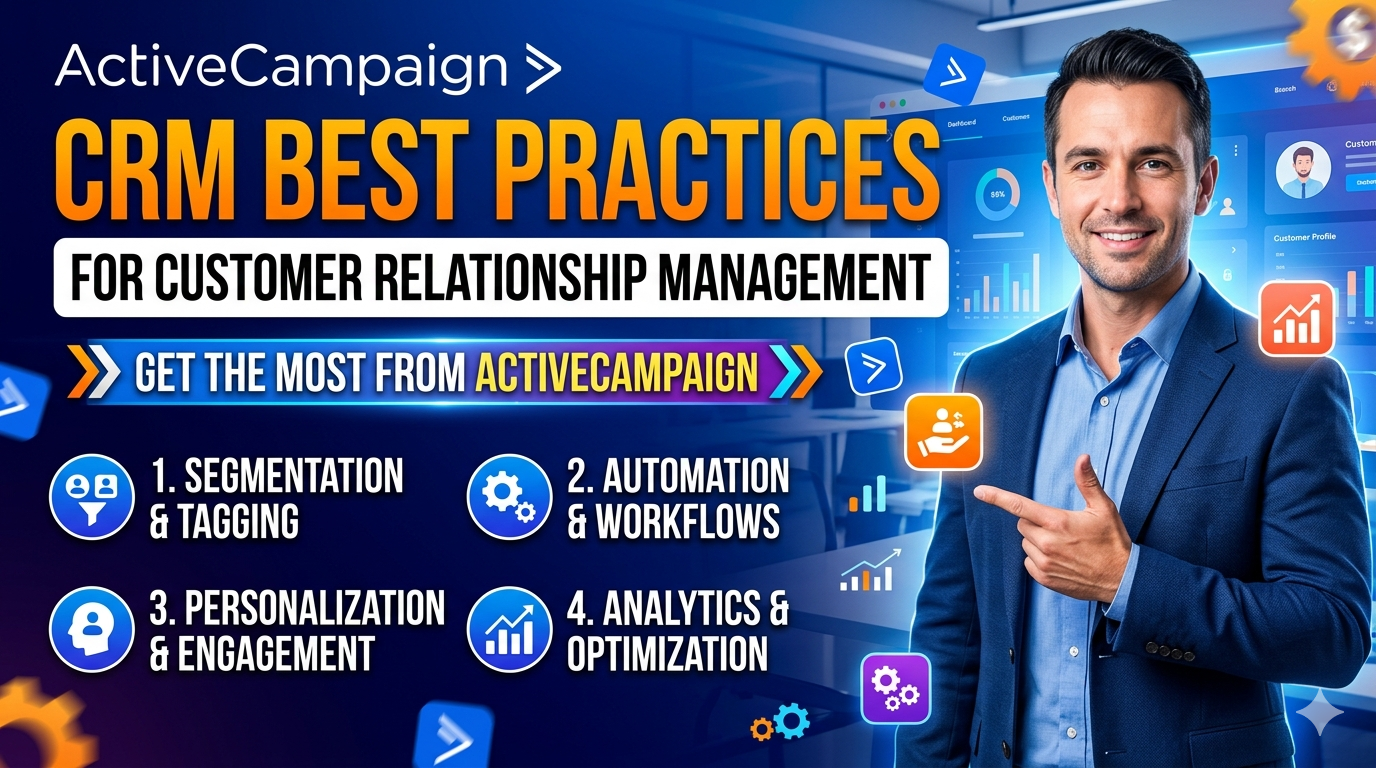
Discover the best ActiveCampaign CRM practices to improve customer relationships, automate workflows, boost lead nurturing, optimize sales pipelines, and increase customer retention. Learn proven strategies for segmentation, automation, lead scoring, and data management to maximize business growth and customer engagement.
Understanding ActiveCampaign CRM
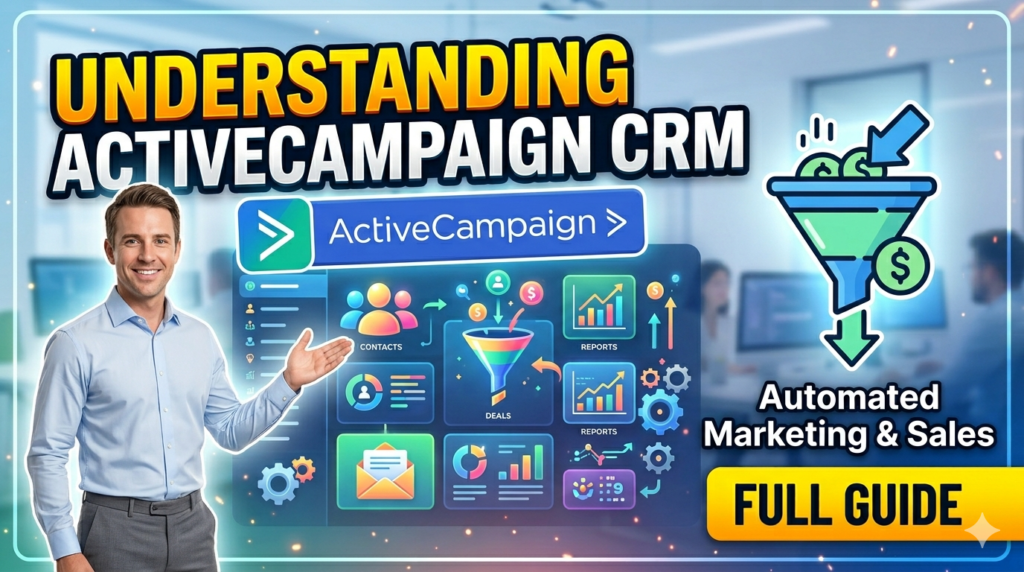
Customer relationship management has evolved significantly over the last decade. Businesses are no longer competing solely on price or product quality. Today, customer experience often determines whether a prospect becomes a loyal customer or chooses a competitor. This shift has increased the importance of CRM platforms that help organizations understand, engage, and retain customers more effectively. ActiveCampaign has emerged as one of the most powerful CRM and marketing automation platforms because it combines contact management, automation, sales tracking, and customer engagement tools within a single ecosystem.
Recent industry reports indicate that the global CRM market is projected to reach approximately $57 billion, highlighting the growing reliance on customer relationship technologies across industries. Businesses are investing heavily in CRM systems because they help centralize customer data, automate repetitive tasks, and create personalized experiences that improve retention and revenue.
Unlike traditional CRM tools that focus only on storing customer information, ActiveCampaign integrates automation directly into relationship management. This approach allows businesses to react instantly to customer behavior, whether someone downloads an ebook, abandons a cart, visits a pricing page, or responds to an email campaign. By connecting marketing and sales activities, organizations gain a complete picture of customer interactions and can deliver highly relevant experiences throughout the customer journey.
What Makes ActiveCampaign Different
ActiveCampaign stands out because it combines CRM functionality with advanced marketing automation. Businesses can manage contacts, create sales pipelines, score leads, automate follow-ups, and analyze customer behavior from one dashboard. Recent platform enhancements include AI-powered automation and intelligent campaign optimization capabilities designed to help organizations work more efficiently. ActiveCampaign currently serves more than 180,000 businesses globally and continues expanding its AI-driven features.
Why CRM Matters in Modern Business
Consider CRM to be your company’s central nervous system. Without it, customer information becomes scattered across spreadsheets, email inboxes, and disconnected software tools. When data exists in silos, teams struggle to provide consistent customer experiences. A well-managed CRM system ensures that every interaction contributes to a stronger relationship, allowing sales, marketing, and customer support teams to work from the same source of truth.
Setting Clear CRM Goals
Before implementing any ActiveCampaign strategy, organizations must establish clear objectives. Many CRM projects fail not because of software limitations but because companies lack a well-defined vision. Without measurable goals, teams often focus on vanity metrics rather than meaningful business outcomes. A CRM should support broader business objectives such as increasing customer retention, improving conversion rates, shortening sales cycles, or enhancing customer satisfaction.
Successful organizations begin by identifying the problems they want their CRM to solve. For example, an ecommerce company may want to reduce cart abandonment rates, while a B2B software provider might focus on improving lead qualification processes. By defining specific targets, businesses can configure ActiveCampaign workflows, automation rules, and reporting dashboards around measurable outcomes.
Defining Business Objectives
Effective CRM objectives should follow the SMART framework: Specific, Measurable, Achievable, Relevant, and Time-bound. Instead of setting a vague goal like “increase customer engagement,” a better objective might be “increase email click-through rates by 20% within six months.” Clear targets make it easier to evaluate success and adjust strategies when necessary. Industry experts consistently emphasize goal-setting as one of the most important CRM implementation practices.
Aligning Sales and Marketing Teams
One of ActiveCampaign’s greatest strengths is its ability to unify sales and marketing operations. Too often, these departments operate independently, leading to inconsistent messaging and missed opportunities. ActiveCampaign enables shared access to customer data, ensuring that both teams understand each prospect’s journey. When sales and marketing collaborate around common goals, lead nurturing becomes more effective, resulting in higher conversion rates and stronger customer relationships.
Building a Strong Customer Database

A CRM system is only as valuable as the quality of its data. Imagine trying to navigate with a GPS that contains outdated maps. Even the most sophisticated technology becomes ineffective when fed inaccurate information. Building a clean, organized customer database should be a top priority for every ActiveCampaign user.
Organizations should establish standardized data collection processes from the beginning. Every contact record should contain relevant information such as name, email address, company details, purchase history, engagement activity, and communication preferences. Consistency is critical because incomplete records limit segmentation, personalization, and reporting capabilities.
Data Collection Best Practices
Businesses should gather information gradually rather than overwhelming customers with lengthy forms. Progressive profiling allows companies to collect additional details over time as trust develops. This approach improves data quality while maintaining a positive user experience. Integrating website forms, ecommerce platforms, customer support tools, and social media channels with ActiveCampaign ensures data flows automatically into the CRM.
Maintaining Data Accuracy
Data quality management should be an ongoing process rather than a one-time task. Duplicate contacts, outdated information, and inconsistent formatting can significantly reduce CRM effectiveness. Regular audits help identify and correct issues before they impact business performance. According to CRM best-practice guidelines, maintaining clean data is essential for accurate reporting, automation, and customer insights.
| Data Quality Practice | Benefit |
| Remove duplicates | Improves reporting accuracy |
| Standardize fields | Ensures consistency |
| Verify contact details | Enhances deliverability |
| Schedule regular audits | Maintains database health |
| Use automation rules | Reduces manual errors |
Mastering Contact Segmentation
Segmentation is where ActiveCampaign truly shines. Instead of treating every customer the same, businesses can group contacts based on shared characteristics and behaviors. Effective segmentation transforms generic communication into highly relevant interactions that resonate with specific audiences.
Imagine walking into a bookstore where every recommendation perfectly matches your interests. That’s the power of segmentation. Customers receive messages tailored to their needs, making them more likely to engage and convert. ActiveCampaign provides advanced segmentation tools that enable businesses to create dynamic audiences based on virtually any combination of attributes.
Behavioral Segmentation
Behavioral segmentation focuses on actions customers take. This includes website visits, email engagement, purchases, downloads, webinar attendance, and other interactions. For example, customers who repeatedly visit pricing pages may be closer to making a purchase than those simply reading blog content. ActiveCampaign can automatically place these individuals into targeted nurturing campaigns designed to address their specific stage in the buying process.
Demographic and Lifecycle Segmentation
Beyond behavior, businesses should segment audiences according to demographics, company size, geographic location, and customer lifecycle stage. New subscribers require different messaging than long-term customers. By understanding where each contact stands in the relationship journey, companies can deliver more meaningful experiences and improve customer satisfaction over time.
Leveraging Automation for Better Relationships
Automation is arguably ActiveCampaign’s most valuable feature. Research consistently shows that automation plays a critical role in modern marketing and sales success. Instead of manually managing every customer interaction, businesses can create intelligent workflows that respond automatically to customer behavior.
Automation should never feel robotic. The goal is to deliver timely, relevant communication that feels personal and helpful. When implemented correctly, automation enhances relationships rather than replacing human interaction.
Automated Lead Nurturing
Most prospects are not ready to buy immediately. Lead nurturing helps maintain engagement until they are prepared to make a decision. ActiveCampaign allows businesses to create automated sequences that educate, inform, and build trust over time. These sequences can include emails, SMS messages, task assignments, and personalized offers.
A well-designed nurturing campaign guides prospects through the buyer’s journey step by step. Instead of pushing for an immediate sale, the focus remains on delivering value. This approach often results in stronger relationships and higher conversion rates because customers feel understood rather than pressured.
Personalized Customer Journeys
Personalization has become a competitive necessity rather than a luxury. Customers expect brands to recognize their preferences, interests, and previous interactions. ActiveCampaign enables businesses to create customized experiences based on real-time behavior and customer attributes.
Trigger-Based Communication
Trigger-based automation ensures messages are delivered at the most relevant moments. For example, a welcome email can be sent immediately after signup, while a follow-up offer might appear after multiple website visits. Timing plays a significant role in customer engagement, making trigger-based workflows highly effective.
Multi-Channel Engagement
Customers interact with brands through multiple channels, including email, SMS, websites, and social media. ActiveCampaign supports coordinated communication across these touchpoints, creating a seamless customer experience. Rather than bombarding customers with repetitive messages, businesses can deliver consistent and complementary interactions that strengthen relationships over time.
Optimizing Sales Pipelines

An effective CRM strategy extends beyond marketing automation. Sales teams also benefit significantly from structured pipeline management. ActiveCampaign’s CRM functionality allows businesses to visualize deals, monitor progress, and identify bottlenecks before they impact revenue.
Sales pipelines provide a clear roadmap from initial contact to closed deal. By defining stages and tracking movement through the pipeline, organizations gain valuable visibility into sales performance. This transparency helps managers forecast revenue, allocate resources, and coach team members more effectively.
Pipeline Management Techniques
Successful pipeline management begins with clearly defined stages. Every stage should represent a meaningful milestone in the sales process. Businesses should avoid creating overly complex pipelines because excessive complexity often leads to confusion and inconsistent usage.
Regular pipeline reviews are equally important. Sales teams should evaluate deal progress, identify stalled opportunities, and determine next actions. ActiveCampaign’s automation capabilities can streamline this process by creating tasks and reminders automatically when deals require attention.
Lead Scoring Strategies
Lead scoring helps sales teams prioritize opportunities based on likelihood to convert. Organizations can allocate points using ActiveCampaign according to consumer behavior, engagement levels, demographics, and purchase signals. Prospects who accumulate higher scores receive greater attention because they demonstrate stronger buying intent.
For example, visiting a pricing page might add ten points, while attending a webinar adds twenty points. When a lead reaches a predetermined threshold, ActiveCampaign can notify the sales team automatically. This approach ensures that sales representatives focus their efforts where they are most likely to generate results.
Read More:-
How Does Strikingly Simplify the Website Building Process?
Building Your Dream Website with Site123
Boost Your E-commerce Strategy with YITH Plugins
Maximize Your Customer Engagement with LiveAgent’s Features
Why STRIPO is Essential for Digital Product Marketersa
Using Analytics and Reporting
Data-driven decision-making separates successful CRM programs from average ones. ActiveCampaign provides comprehensive reporting tools that help businesses understand performance across marketing, sales, and customer engagement activities. Analytics reveal what is working, what is underperforming, and where opportunities for improvement exist.
Organizations should establish a regular reporting schedule to review key metrics. These reviews encourage accountability and support continuous optimization. Rather than relying on assumptions, teams can use actual performance data to guide strategic decisions.
Key CRM Metrics to Monitor
Several metrics deserve ongoing attention:
| Metric | Why It Matters |
| Customer Retention Rate | Measures loyalty and satisfaction |
| Conversion Rate | Indicates campaign effectiveness |
| Lead-to-Customer Ratio | Evaluates sales efficiency |
| Customer Lifetime Value | Assesses long-term profitability |
| Email Engagement Rate | Measures communication relevance |
| Pipeline Velocity | Tracks sales cycle speed |
Monitoring these metrics helps businesses identify trends and make proactive adjustments before problems become significant.
Improving Performance Through Insights
Analytics become valuable only when translated into action. Businesses should regularly test different subject lines, automation workflows, segmentation criteria, and sales processes. Small improvements often compound over time, leading to substantial gains in customer engagement and revenue. CRM optimization is not a one-time project; it is an ongoing commitment to continuous improvement.
Common ActiveCampaign CRM Mistakes to Avoid
Many organizations invest in sophisticated CRM technology but fail to achieve expected results because of avoidable mistakes. One common issue is neglecting user training. Employees who do not fully understand the platform are less likely to use it consistently, reducing overall effectiveness. Proper onboarding and ongoing education significantly improve adoption rates.
Another mistake involves over-automation. While automation is powerful, excessive reliance on automated communication can make interactions feel impersonal. Businesses should strike a balance between efficiency and authentic human engagement. Genuine talks are still valued by customers, particularly at pivotal points in the relationship.
Poor data hygiene represents another major challenge. Outdated, incomplete, or duplicated records undermine reporting accuracy and personalization efforts. Regular database maintenance helps preserve CRM integrity and ensures reliable decision-making. Companies should also avoid creating overly complicated workflows. Simplicity often leads to higher adoption, easier management, and better results.



Conclusion
ActiveCampaign has evolved into one of the most comprehensive platforms for customer relationship management and marketing automation. Its ability to combine CRM functionality, intelligent automation, advanced segmentation, and detailed analytics makes it a powerful solution for businesses seeking stronger customer relationships and sustainable growth. Recent advancements in AI-powered automation further enhance its capabilities, enabling organizations to work smarter while delivering more personalized experiences.
The most successful ActiveCampaign users focus on strategy before technology. They establish clear goals, maintain clean data, segment audiences effectively, automate thoughtfully, optimize sales pipelines, and continuously analyze performance. Customer relationship management is not about collecting data; it is about transforming information into meaningful relationships that drive long-term business success. When these best practices are implemented consistently, ActiveCampaign becomes far more than a software platform—it becomes a growth engine for the entire organization.
FAQs
Q. What is the biggest advantage of using ActiveCampaign for CRM?
A. The biggest advantage is the combination of CRM functionality with advanced marketing automation, allowing businesses to manage customer relationships and automate personalized communication from a single platform.
Q. How often should CRM data be cleaned?
A. Most businesses should perform data audits quarterly, although high-volume organizations may benefit from monthly reviews to maintain accuracy and consistency.
Q. Is lead scoring necessary in ActiveCampaign?
A. Lead scoring is highly recommended because it helps sales teams prioritize prospects who are most likely to convert, improving efficiency and conversion rates.
Q. Can small businesses benefit from ActiveCampaign CRM?
A. Yes. ActiveCampaign offers scalable features that help small businesses automate tasks, improve customer engagement, and build stronger relationships without requiring large teams.
Q. What metrics should businesses track in ActiveCampaign?
A. Important metrics include conversion rates, customer retention rates, customer lifetime value, email engagement rates, lead-to-customer ratios, and pipeline velocity.