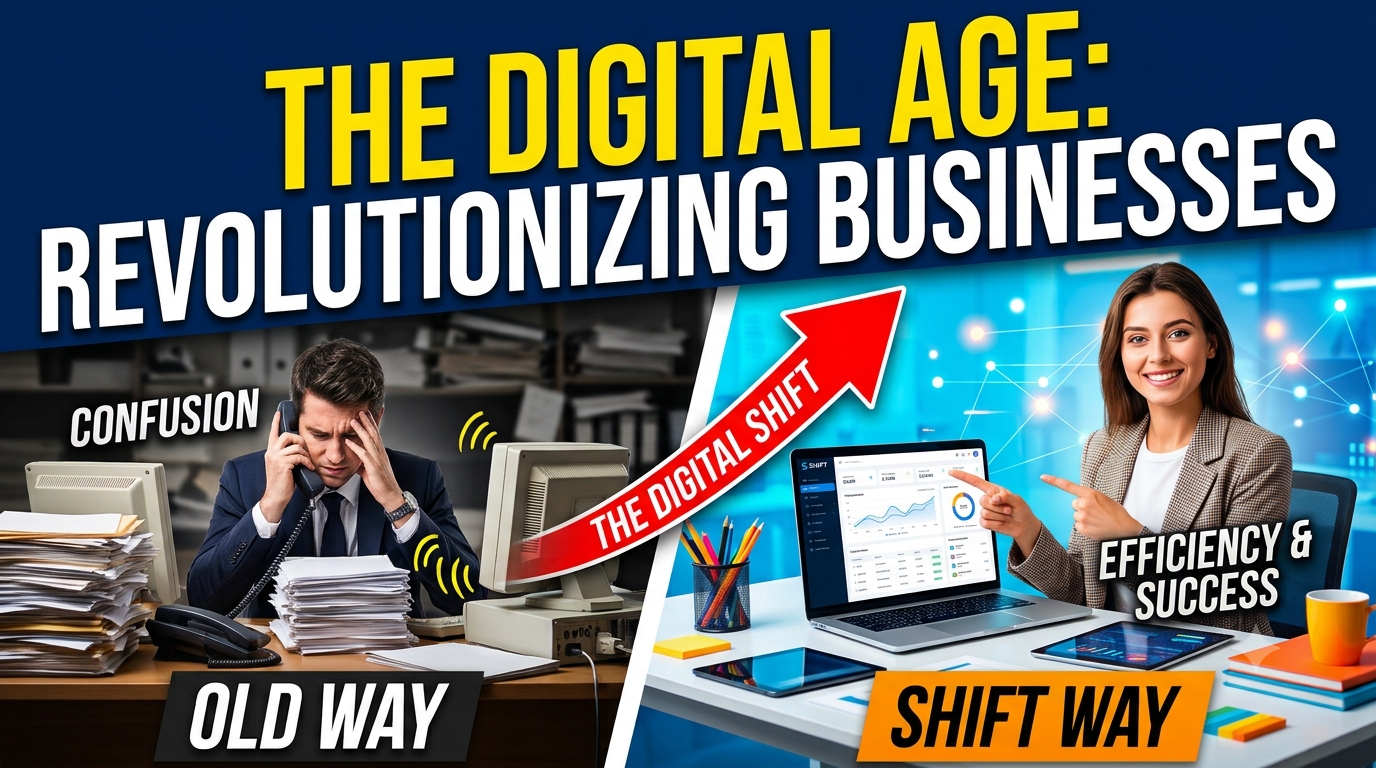
Discover how Shift is transforming the way businesses operate in the digital age through innovative technology, smarter workflows, and efficient logistics solutions. Learn how Shift helps businesses streamline shipping operations, improve team productivity, simplify order management, enhance customer experiences, and support digital transformation. Explore how Shift is helping modern businesses save time, optimize operations, and achieve sustainable growth in an increasingly competitive digital marketplace.
Table of Contents
- Understanding Shift in the Modern Business Environment
- Why Businesses Are Embracing Digital Transformation
- How Shift Supports Business Productivity
- Improving Communication and Team Collaboration
- The Role of Shift in Remote and Hybrid Work
- Making Business Operations More Efficient
- How Shift Helps Businesses Manage Digital Tools
- Supporting Better Business Decisions
- Improving Customer Experience Through Digital Solutions
- The Importance of Security in Digital Workplaces
- Shift and the Future of Business Technology
- Challenges Businesses May Face During Digital Adoption
- Best Practices for Using Shift Effectively
- Conclusion
- Frequently Asked Questions (FAQs)
Understanding Shift in the Modern Business Environment
The way businesses operate has changed dramatically over the last few years. Customers expect faster deliveries, companies want better operational control, and online sellers need technology that helps them manage growing orders without increasing unnecessary expenses. This is where Shift is becoming relevant to the modern business environment. In this article, Shift refers to Shift, the Indian e-commerce logistics and fulfillment platform (Shift.in), which helps online businesses manage shipping, order fulfillment, warehousing, and delivery operations through a connected digital system. Instead of depending on multiple disconnected service providers, businesses can use a centralized platform to manage important parts of their supply chain.
Shift is designed to support e-commerce sellers, direct-to-consumer (D2C) brands, retailers, and manufacturers. Its platform brings shipping technology, courier integrations, fulfillment services, and warehouse solutions together. This makes it easier for businesses to handle orders from different sales channels while maintaining better visibility over their shipments. According to its official website, Shift reports having onboarded more than 5,000 sellers and serving over 21,000 Indian pincodes. These figures highlight the growing importance of technology-driven logistics in India’s online commerce industry.
The biggest advantage of this approach is convenience. Imagine running an online clothing store that receives hundreds of orders every day. Managing courier bookings, printing shipping labels, checking delivery statuses, and handling customer complaints manually can quickly become overwhelming. Shift aims to simplify these activities by bringing essential logistics operations into one digital environment. This allows business owners to spend less time coordinating routine shipping tasks and more time improving their products, marketing strategies, and customer relationships.
In simple terms, Shift represents a more connected approach to business operations. It helps companies move away from fragmented logistics processes and adopt a structured system that can support business growth.
Why Businesses Are Embracing Digital Transformation

Digital transformation is no longer something businesses can comfortably postpone. It has become an important part of staying competitive in an environment where customer expectations and market conditions change quickly. Traditional business methods often depend on spreadsheets, phone calls, manual records, and separate service providers. While these methods may work for smaller operations, they can create delays and confusion when order volumes increase. Digital platforms help businesses bring important information and activities together, making daily operations easier to manage.
For e-commerce companies, digital transformation is especially important because the customer experience does not end when someone clicks the purchase button. The business must also process the order, arrange packaging, select a suitable courier, dispatch the product, and ensure that it reaches the customer successfully. A problem at any stage can affect customer satisfaction and brand reputation. Technology helps businesses monitor these activities and identify problems before they become bigger operational challenges.
Shift supports this transformation by providing digital shipping and fulfillment services. Businesses can connect their online stores with its platform and manage shipments through a centralized dashboard. This approach reduces the need to handle every shipping activity separately. It also gives sellers a more organized way to manage their growing operations.
The Growing Demand for Smarter Workflows
Modern businesses need workflows that are flexible, efficient, and easy to understand. A smarter workflow allows different activities to work together instead of requiring employees to repeat the same information across multiple systems. For example, when an online order is received, the relevant shipping information can be transferred to the logistics platform rather than being entered manually every time.
This type of connected process can reduce administrative work and help teams manage larger order volumes. It also creates more opportunities to monitor business performance because information is available in a more organized format. With solutions such as Shift, businesses can build a more consistent logistics process and respond more effectively to changing customer demand.
How Shift Supports Business Productivity
Productivity is one of the most important factors behind successful business growth. A company may have excellent products and an effective marketing strategy, but if its daily operations are slow or disorganized, growth can become difficult. Employees may spend hours managing shipping records, contacting courier companies, checking tracking information, and resolving delivery-related problems. These responsibilities consume valuable time that could otherwise be used for more important business activities.
Shift helps improve productivity by bringing multiple shipping-related activities into one platform. Rather than managing every courier relationship separately, sellers can access different shipping options through a centralized system. They can create shipments, compare available courier services, generate labels, and monitor delivery progress. This gives business teams a more structured way to manage their logistics responsibilities.
The platform also supports integrations with popular e-commerce platforms such as Shopify, WooCommerce, Magento, and other sales channels. These integrations help businesses connect their online stores with their shipping operations, making order management more convenient.
Simplifying Everyday Business Operations
Think about a business that receives orders through several online marketplaces and its own website. Without an integrated system, employees may need to switch between different dashboards to collect order details and arrange deliveries. This can lead to duplicate work, missed updates, and unnecessary confusion. A centralized logistics platform provides a more convenient way to handle these activities.
Shift helps simplify the shipping process by giving businesses access to important logistics functions in one place. Employees can focus on processing orders and monitoring deliveries rather than spending excessive time coordinating routine tasks. This does not mean that every business responsibility becomes automatic, but it can make everyday workflows more manageable.
Improved productivity also benefits business owners. When less time is spent solving repetitive logistics problems, managers can concentrate on inventory planning, customer service, sales growth, and business development. Over time, these improvements can support a healthier and more scalable business operation.
Improving Communication and Team Collaboration
Effective communication plays an important role in business success. In an e-commerce company, several teams may be involved in completing a single customer order. The sales team receives the order, the warehouse team prepares the product, the logistics team arranges shipment, and customer support handles delivery-related questions. If these departments do not have access to accurate information, mistakes and delays can become common.
Digital logistics platforms help reduce communication gaps by providing a more organized view of shipment information. When employees can access updated order and tracking details, they can coordinate their responsibilities more effectively. For example, customer support representatives can use shipment information to respond to delivery questions without repeatedly contacting the warehouse or courier provider.
Shift supports this process through its centralized shipping dashboard and connected logistics services. Businesses can monitor shipment progress and manage important shipping activities through a common platform. This can improve coordination between teams and reduce the confusion associated with scattered information.
Better collaboration also improves accountability. When information is easier to access, teams can identify where a delay has occurred and decide what action is needed. Managers can use available operational information to understand recurring problems and improve internal processes.
For growing businesses, this kind of communication is particularly valuable. As the number of orders, employees, and delivery locations increases, informal communication methods become harder to manage. A connected digital workflow creates a stronger foundation for consistent business operations.
The Role of Shift in Remote and Hybrid Work
Remote and hybrid working arrangements have changed how modern companies manage their teams. Employees may work from different offices, warehouses, or locations, but they still need access to accurate business information. This is particularly important for online retailers that coordinate sales, inventory, shipping, and customer support across different locations.
Cloud-connected business platforms make it easier for authorized employees to access operational information without depending on physical paperwork or constant face-to-face communication. A manager can monitor shipping activities, review order information, and coordinate logistics responsibilities through a digital dashboard. This creates more flexibility in how business activities are supervised.
Shift contributes to this environment by giving businesses a centralized platform for shipping and fulfillment management. Its integrations and digital workflow can help connect online sales channels with logistics activities, making it easier for distributed teams to coordinate their work.
Consider a D2C brand that operates its main office in one city and stores its products in fulfillment facilities located elsewhere. The marketing team may work remotely, while warehouse employees manage physical inventory and logistics partners handle transportation. Without connected systems, sharing accurate information between these groups can become difficult. A centralized platform helps create a common operational view.
However, technology alone cannot guarantee successful remote collaboration. Businesses still need clear responsibilities, effective communication practices, and appropriate access controls. Shift can support the logistics side of a distributed business, while companies must ensure that their wider management processes work effectively.
Making Business Operations More Efficient
Operational efficiency is about achieving better results while using available resources wisely. For an e-commerce company, this means processing orders accurately, selecting appropriate delivery services, reducing unnecessary expenses, and ensuring that products reach customers on time. Poor logistics management can create additional costs through delayed shipments, failed deliveries, inventory problems, and repeated customer complaints.
Shift helps businesses improve logistics efficiency by combining shipping options and fulfillment services in one platform. Its shipping solution connects sellers with multiple courier partners and helps them choose suitable services based on factors such as delivery speed, price, and serviceability. This gives businesses greater flexibility when arranging deliveries.
Reducing Repetitive Tasks
Repetitive administrative tasks can slow down business operations. Employees may need to create shipment records, enter addresses, compare courier rates, print labels, and update tracking information. When these activities are handled through disconnected systems, the workload can increase as the business grows.
Shift aims to simplify these processes through integrations, shipment creation tools, and centralized logistics management. Businesses can connect their sales channels and synchronize order information with their shipping workflow. They can also create shipments individually or in bulk, depending on their operational requirements.
Reducing repetitive work gives employees more time to focus on tasks that require attention and decision-making. It can also help businesses maintain more consistent processes during busy shopping periods.
Operational efficiency is not only about working faster. It is also about avoiding mistakes, improving resource allocation, and making daily activities easier to monitor. When businesses combine suitable technology with well-designed workflows, they can create a more reliable operating environment.
How Shift Helps Businesses Manage Digital Tools
Modern businesses use several digital tools to manage their daily activities. An online retailer might use Shopify for its website, accounting software for financial records, customer relationship management software for customer information, and separate courier platforms for shipping. Although each tool serves a useful purpose, managing multiple systems can become complicated when they do not communicate effectively.
Shift addresses an important part of this challenge by connecting e-commerce sales channels with logistics operations. Its platform supports integrations with services such as Shopify, WooCommerce, Magento, and Amazon, helping businesses bring order information into their shipping workflow. This allows sellers to manage shipment creation and delivery activities without manually transferring every order detail between separate systems.
Another advantage of using connected digital tools is better visibility. When important shipping information is available through one dashboard, employees can spend less time searching through different platforms. They can check shipment details, review available courier options, and monitor delivery progress more conveniently. This becomes particularly useful for companies that manage multiple products, sales channels, and delivery locations.
However, businesses should select integrations according to their actual requirements. Adding too many tools without a clear purpose can create unnecessary complexity. The goal should always be to build a technology environment that makes everyday operations easier. Shift can serve as an important logistics component within this environment, helping online businesses create a more connected and organized workflow.
Supporting Better Business Decisions
Every successful business depends on good decision-making. Managers regularly need to decide which products to promote, how much inventory to maintain, which delivery services to use, and where operational improvements are required. Making these decisions without reliable information can increase business risks. Digital platforms help managers access relevant information and understand what is happening across important business activities.
Shift supports better logistics-related decisions by providing access to shipment information, courier options, and operational tools. For example, sellers can compare available courier services based on price, delivery speed, and serviceability before selecting an appropriate shipping option. This gives businesses greater flexibility when balancing delivery costs with customer expectations.
Reports and operational information can also help business owners understand their logistics performance. Instead of relying entirely on assumptions, managers can examine available information to identify recurring delivery issues or areas where processes need improvement. Shift’s help center includes reporting tools and a cost estimator as part of its platform resources.
Consider a business that experiences frequent delivery delays in a particular region. By reviewing shipment performance and available service information, the management team can investigate whether a different courier option would be more suitable. Similarly, if shipping expenses increase unexpectedly, the company can review its logistics choices and identify opportunities to improve cost management.
Good decisions require more than data collection. Businesses must understand the information, compare different possibilities, and take appropriate action. Shift provides tools that can support this process, while managers remain responsible for interpreting results and making strategic decisions.
Improving Customer Experience Through Digital Solutions

Customer experience has become one of the biggest competitive advantages in the digital marketplace. People want convenient shopping experiences, transparent delivery information, flexible payment options, and quick solutions when something goes wrong. A customer may love a product, but a delayed delivery or poor communication can negatively affect their opinion of the entire brand.
This is why logistics has become an important part of customer satisfaction. The delivery experience directly influences whether customers trust a business enough to purchase again. Shift helps online sellers manage this important stage through shipping management, shipment tracking, courier integrations, and fulfillment services. Its platform also supports COD and prepaid delivery options, helping businesses manage different customer preferences.
One useful feature of a connected shipping system is improved shipment visibility. Customers appreciate knowing whether their orders have been processed, dispatched, or delivered. When businesses have access to organized tracking information, their customer support teams can provide more accurate updates and respond to delivery questions more efficiently.
Shift also provides tools for managing non-delivery reports, commonly known as NDRs. These reports help businesses identify shipments that could not be delivered and take appropriate follow-up action. Handling such situations properly can reduce unnecessary delivery failures and improve the overall post-purchase experience.
Another important factor is fulfillment speed. Customers increasingly expect quick delivery, particularly when purchasing everyday products. Shift’s fulfillment and hyperlocal delivery solutions are designed to support businesses that need storage, order processing, and faster delivery options.
By improving logistics visibility and delivery coordination, Shift can help businesses create a more dependable customer experience. This matters because customer loyalty is built not only through attractive products but also through reliable service.
The Importance of Security in Digital Workplaces

As businesses move their operations online, protecting digital information becomes increasingly important. E-commerce companies handle sensitive information such as customer names, addresses, contact details, order records, and payment-related information. If this information is not managed properly, businesses may face security risks, financial losses, and damage to customer trust.
Digital transformation should therefore include a strong focus on data protection. Businesses need to understand how their software providers handle information, what security measures are available, and who can access important business records. They should also use strong passwords, enable available account protection features, train employees about cybersecurity, and regularly review access permissions.
For companies using Shift, security should be considered as part of the overall logistics technology setup. Sellers should review the platform’s current security documentation and account settings before connecting their online stores or sharing operational information. They should also make sure that employees receive access only to the information required for their responsibilities.
It is equally important to maintain internal security practices. For example, warehouse employees may need shipment information, while finance teams may require access to billing records. Giving every employee unrestricted access is not a sensible approach. Businesses should establish clear access policies and regularly check whether those permissions remain appropriate.
Digital platforms can make business operations more convenient, but convenience should never come at the expense of security. A reliable digital workplace combines efficient technology, responsible data management, and informed employees. By treating security as an ongoing responsibility, companies can build stronger relationships with customers and business partners.
Shift and the Future of Business Technology
The future of business technology will be shaped by automation, artificial intelligence, connected platforms, and increasingly intelligent supply chains. Businesses will continue looking for ways to reduce operational complexity while delivering better customer experiences. Logistics will remain a major part of this transformation because shipping costs, delivery speed, and inventory management directly influence business performance.
Shift is positioned within this changing environment by bringing shipping software, order fulfillment, and warehouse services together. Its official platform describes solutions for courier selection, inventory storage, order processing, and hyperlocal delivery. It also highlights its development of warehouse management capabilities to provide businesses with better inventory control.
One important development is the growing demand for faster delivery. Customers increasingly compare businesses based on how quickly and reliably they can receive their purchases. Hyperlocal delivery solutions can help eligible businesses respond to this demand by connecting orders with suitable local delivery partners.
Another important development is warehouse technology. Businesses that manage inventory across multiple locations need accurate information about stock availability, storage, picking, and dispatch. Warehouse Management Systems (WMS) help organize these activities and provide better visibility into inventory movement. Shift’s fulfillment offering is designed to support storage and pick-pack-ship operations through its warehouse network.
Artificial intelligence and automation may also influence future logistics operations. Intelligent systems can help businesses analyze delivery patterns, improve operational planning, and identify potential inefficiencies. While these technologies will continue evolving, companies should focus on adopting solutions that address real operational problems rather than following every new technology trend.
The future belongs to businesses that can combine technology with practical decision-making. Shift’s integrated logistics approach reflects this direction by helping online sellers build more organized and scalable operations.
Read More:-
How Does Strikingly Simplify the Website Building Process?
Building Your Dream Website with Site123
Boost Your E-commerce Strategy with YITH Plugins
Maximize Your Customer Engagement with LiveAgent’s Features
Why STRIPO is Essential for Digital Product Marketersa
Challenges Businesses May Face During Digital Adoption
Although digital transformation offers several advantages, adopting new technology is not always simple. Businesses may face financial, operational, and technical challenges when moving away from traditional processes. Understanding these challenges is important because successful digital adoption requires preparation, employee involvement, and continuous improvement.
One common challenge is the initial learning process. Employees who have been using manual systems for years may find it difficult to adjust to a new dashboard or digital workflow. They may need training to understand how orders are synchronized, how shipments are created, and how delivery problems should be handled. Without proper guidance, even a useful platform can become difficult to use.
Another challenge is integration. Businesses often use different applications for sales, accounting, inventory, and customer management. Connecting these systems may require technical support or additional configuration. Companies should check platform compatibility and integration requirements before making a complete transition.
Cost is another important consideration. Although digital tools can improve efficiency, businesses must evaluate subscription charges, shipping expenses, fulfillment fees, and other operational costs. The cheapest solution is not always the best option. Companies should compare the total cost with the actual benefits they receive.
Data accuracy can also become a problem. A digital system is only as useful as the information entered into it. Incorrect addresses, inaccurate inventory records, and incomplete order details can create delivery problems even when the software is functioning correctly.
To overcome these challenges, businesses should introduce technology gradually, train employees, review operational performance, and establish clear procedures. Shift can support logistics modernization, but businesses must ensure that their internal processes are ready to make effective use of its services.
Best Practices for Using Shift Effectively
Getting value from a digital business platform requires more than simply creating an account. Companies should understand their operational requirements and configure their workflows accordingly. A well-planned implementation can help employees use the platform more effectively and make daily logistics activities easier to manage.
The first step is to understand your shipping requirements. Businesses should evaluate their average daily order volume, delivery locations, product categories, packaging needs, and customer preferences. A small online store with a few weekly shipments will have different requirements from a large D2C company processing thousands of orders.
The next step is to connect the appropriate sales channels. Businesses using platforms such as Shopify or WooCommerce can explore the available integration options to simplify order synchronization. They should test the connection with sample orders before depending on it for their entire operation.
Courier selection also deserves attention. Businesses should compare available services based on delivery coverage, shipping charges, delivery speed, and performance. Choosing a courier simply because it offers the lowest price may not always produce the best customer experience.
Companies should also establish a clear process for managing failed deliveries. Regularly monitoring NDRs and following up on unsuccessful delivery attempts can help reduce avoidable losses. Similarly, businesses using fulfillment services should maintain accurate inventory information and coordinate closely with warehouse operations.
Finally, managers should review performance regularly. They can examine delivery trends, shipping costs, operational bottlenecks, and customer feedback to identify areas for improvement. The purpose of using Shift should be to create a more reliable and efficient logistics operation, not simply to introduce another software tool.
With a thoughtful implementation strategy, businesses can make digital logistics a valuable part of their long-term growth plans.



Conclusion
The digital age has completely changed how businesses operate, compete, and serve their customers. Companies can no longer depend entirely on traditional processes if they want to manage increasing customer expectations and growing operational demands. They need connected technology, efficient workflows, reliable delivery services, and better visibility across their business activities. This is where Shift is making a difference in the e-commerce and logistics industry.
By bringing shipping management, courier integrations, order fulfillment, and warehouse solutions together, Shift provides businesses with a more organized way to manage their logistics operations. Its centralized platform helps online sellers simplify shipment management, improve delivery visibility, and build workflows that can support business growth. Features such as sales channel integrations, courier selection, NDR management, and fulfillment services address several common challenges faced by modern e-commerce companies.
However, successful digital transformation is not just about choosing the right software. Businesses must also invest in employee training, data security, process improvement, and customer satisfaction. When technology and effective business strategies work together, companies can become more productive, flexible, and competitive.
As online shopping continues to evolve, platforms like Shift will remain relevant to businesses looking for smarter ways to manage their supply chains. Shift represents an important step toward a more connected, efficient, and technology-driven business environment.
Frequently Asked Questions (FAQs)
Q. What is Shift, and how does it help businesses?
A. Shift is an e-commerce logistics and fulfillment platform that helps businesses manage shipping, courier selection, order fulfillment, and warehouse operations. It provides a centralized system that makes logistics management more organized and convenient for online sellers, D2C brands, retailers, and manufacturers.
Q. How does Shift improve business productivity?
A. Shift improves productivity by simplifying shipping-related activities through a centralized dashboard. Businesses can manage shipments, connect online stores, compare courier options, and monitor delivery progress. This can reduce repetitive administrative work and allow employees to focus on other important business responsibilities.
Q. Can small businesses use Shift?
A. Yes. Shift is designed to support different types of online businesses, including growing e-commerce sellers and established brands. Small businesses can explore its shipping and fulfillment solutions according to their order volumes, operational requirements, and budgets.
Q. Does Shift support e-commerce platform integrations?
A. Yes. Shift supports integrations with popular e-commerce platforms, including Shopify, WooCommerce, Magento, and other sales channels. These integrations help businesses synchronize order information and manage their shipping activities more efficiently.
Q. Why is Shift important for the future of digital business?
A. Shift is relevant because modern e-commerce businesses need efficient shipping, reliable fulfillment, and better supply chain visibility. By combining different logistics services within one platform, Shift helps businesses simplify operations, improve delivery management, and prepare for future growth.