
Discover everything you need to know about DHgate before ordering products online. Learn how DHgate works, how to find reliable sellers, check product quality, compare prices, understand shipping times, and avoid common scams. This guide also covers payment security, buyer protection, customs duties, returns, refunds, and tips for first-time buyers. Whether you’re shopping for personal use or sourcing products for your business, explore the essential things to consider before buying from DHgate and make smarter, safer online shopping decisions.
Table of Contents
- What Is DHgate?
- How Does DHgate Work?
- Is DHgate Legit and Safe to Use?
- How to Find Reliable Sellers on DHgate
- How to Evaluate Product Quality Before Ordering
- DHgate Prices, Discounts, and Hidden Costs
- Shipping Times and Delivery Options
- Customs Duties, Taxes, and Import Rules
- Payment Methods and Buyer Protection
- DHgate Returns, Refunds, and Disputes
- Common DHgate Scams and Warning Signs
- Tips for First-Time DHgate Buyers
- Ordering from DHgate for Business and Resale
- DHgate vs. Other Online Marketplaces
- Pros and Cons of Shopping on DHgate
- Conclusion
- Frequently Asked Questions (FAQs)
What Is DHgate?
DHgate is a China-based online marketplace that connects buyers with independent sellers, manufacturers, and wholesale suppliers. Available through its website and mobile app, the platform allows customers to explore a wide variety of products, including clothing, footwear, electronics accessories, jewelry, home decorations, beauty tools, and other everyday items. Unlike a traditional online store that sells products from its own inventory, DHgate acts as a marketplace where different sellers manage their own listings and fulfill orders. This distinction matters because two sellers offering similar products can provide very different experiences in terms of quality, shipping speed, and customer service. DHgate has historically focused on wholesale transactions, but individual consumers can also find listings that allow smaller purchases.
One reason shoppers discover DHgate is its wide product selection and competitive-looking prices. You may find products offered individually, while other listings require a minimum order quantity or provide lower per-unit prices when you buy multiple items. For small business owners, this can make the platform worth exploring when sourcing unbranded merchandise or testing product ideas. Individual shoppers may also find accessories and household items at prices that look attractive compared with local retail stores. However, low prices should never be the only factor influencing your decision. Before ordering, evaluate the seller’s reputation, product specifications, shipping charges, and refund conditions to determine whether the purchase represents genuine value.
How Does DHgate Work?

The ordering process on DHgate is similar to shopping on other ecommerce platforms. You search for a product, compare available listings, review the seller’s profile, select the required specifications, enter your delivery details, and pay through an available checkout method. Once the order is processed, the seller prepares the item for shipment and provides tracking information when available. Depending on the listing and destination, the package may travel internationally through multiple logistics providers before reaching your address. The estimated delivery date should therefore be treated as a guide rather than an unconditional guarantee, particularly when customs processing or international transit is involved.
The important difference is that you are purchasing from a particular seller rather than from one central retailer responsible for every product. Each listing can have its own product specifications, minimum order requirements, shipping arrangements, and return conditions. A product displayed in several listings might differ in material, dimensions, packaging, or included accessories, even if the photographs appear nearly identical. Before paying, read the complete description and confirm any essential details with the seller through the platform’s messaging system. Keep your order, payment, and important communication within the official platform wherever possible so that you have a clear record if something goes wrong.
Understanding DHgate Sellers and Suppliers
DHgate sellers can include wholesalers, trading companies, manufacturers, and other businesses offering products to international buyers. Their experience, product standards, and customer service can vary significantly. Some sellers may specialize in one product category, while others offer a broad range of merchandise. A long-standing seller with consistent feedback and detailed product listings may be a more sensible choice than an unfamiliar seller offering an unusually low price. Nevertheless, seller history alone does not prove that a particular product is authentic or meets your expectations. Evaluate the individual listing as carefully as the seller’s overall profile.
When comparing suppliers, pay attention to how clearly they answer questions about materials, dimensions, available sizes, packaging, dispatch time, and shipping options. If you are buying in bulk, ask whether the quoted price applies to the exact quantity you need and whether the seller can maintain consistent quality across the entire order. You can also ask for additional photographs or videos where appropriate. Avoid sellers who pressure you to make immediate payments, refuse to clarify basic specifications, or encourage transactions outside the platform. A reliable supplier should be able to explain the product and ordering terms without making unrealistic promises.
Is DHgate Legit and Safe to Use?
DHgate is an established ecommerce marketplace, but that does not mean every seller or listing is trustworthy. The distinction between a legitimate platform and an unreliable individual seller is essential when deciding whether to order. Some customers receive products that match their expectations, while others report delayed deliveries, incorrect items, quality problems, and difficulties resolving disputes. Recent customer feedback on Trustpilot includes complaints about these issues, although review platforms reflect self-selected customer experiences rather than a controlled survey of all purchases.
You can reduce risk by researching the seller, comparing multiple listings, checking recent product reviews, and using the official checkout process. Start with a relatively inexpensive purchase if you have never used a particular seller, rather than committing to a large order immediately. For higher-value purchases, consider whether a marketplace with stronger local returns, easier customer support, or more predictable delivery would be worth the extra cost. Additionally, be wary of branded goods that are advertized at absurdly low rates. The US Trade Representative’s 2025 review of notorious markets identified DHgate in its discussion of online counterfeit concerns, illustrating why buyers should be careful about products that may infringe trademarks or misrepresent their origin.
How to Find Reliable Sellers on DHgate
One of the most crucial aspects in the purchasing process is selecting the appropriate seller. Begin by examining the seller’s rating, transaction history, account age, and recent feedback. Look for detailed reviews from customers who purchased the same item, rather than relying only on the seller’s overall rating. Recent comments can reveal whether a seller consistently ships on time, responds to questions, and delivers products that match the description. A high rating is encouraging, but it should not replace a careful review of the actual product listing.
Compare several sellers offering the same or a similar item before making a decision. Look for clear photographs, complete specifications, realistic pricing, and transparent shipping details. Be cautious when a listing contains generic descriptions, copied-looking photographs, unusually large discounts, or promises that sound too good to be true. If a seller has many reviews but little meaningful information about the product, treat that as a reason to investigate further. For an unfamiliar supplier, ask specific questions before ordering and save the responses. This small amount of preparation can prevent unnecessary disappointment later.
How to Evaluate Product Quality Before Ordering
Product photographs can make almost anything look impressive, which is why images alone are not enough to judge quality. Read the description carefully and check the material, dimensions, weight, model number, compatibility, color options, and included accessories. For clothing, review the size chart and compare measurements with a garment you already own. For electronics accessories, confirm supported devices, connector types, voltage requirements, and relevant safety specifications. A product may look similar to something you have seen in a local store but still differ considerably in performance or construction.
Customer reviews can provide useful clues about the actual item. Look for specific comments about durability, finish, fit, packaging, functionality, and differences between the advertised product and the delivered product. Customer-uploaded photographs can be particularly helpful when available, although no individual review should be treated as conclusive proof. If the listing is unclear, ask the seller for additional details before paying. For expensive or quality-sensitive orders, consider requesting a sample first. It is generally safer to discover a product’s limitations through a small test purchase than after spending a substantial amount on inventory.
DHgate Prices, Discounts, and Hidden Costs
One of DHgate’s main attractions is the possibility of finding products at competitive prices, especially when purchasing several units. However, the displayed product price is only one part of the total cost. Shipping charges, applicable import duties, taxes, currency conversion, and payment-related fees can change the final amount you spend. A product that appears cheaper than an equivalent item elsewhere may become less attractive once all these costs are included. Always review the checkout total before confirming your purchase.
| Cost factor | What to check before paying |
| Product price | Confirm the exact model, size, color, and quantity. |
| Shipping | Check the delivery method, charge, and estimated timeframe. |
| Discounts | Verify coupon conditions and minimum spending requirements. |
| Currency conversion | Check the exchange rate and any payment-provider fees. |
| Customs and taxes | Review the import rules for your destination country. |
| Return expenses | Determine who pays return shipping if a return is approved. |
Discounts can be useful, but they should not distract you from the seller’s reputation or the quality of the product. A large percentage discount is meaningless if the original price is inflated or the item is poorly made. Compare the complete delivered cost against alternatives available locally and on other marketplaces. If you are ordering for a business, calculate the cost per usable unit rather than simply dividing the product price by the number of items purchased. Defective products, delays, and return expenses can quickly eliminate the savings that initially made a bulk order appealing.
Shipping Times and Delivery Options
Because an order may go through multiple logistical steps, international shipment may take longer than domestic delivery. The seller must prepare the item, hand it to a carrier, and arrange transportation to the destination country. The shipment may then undergo customs clearance before a local delivery company takes responsibility for the final leg. Delays can occur because of holidays, weather, incomplete paperwork, carrier congestion, or additional customs checks. Consequently, avoid assuming that every order will arrive by the earliest date displayed on the product page.
Before placing an order, compare the available shipping methods and read the estimated delivery window shown for your destination. Check whether tracking is included and whether the carrier provides updates throughout the journey. If you need an item for a birthday, event, trip, or business deadline, order well in advance and consider a more predictable supplier if timing is critical. After the seller dispatches your package, monitor the tracking information through the official order page and retain screenshots if the status appears inconsistent. Remember that a tracking number alone does not necessarily prove that a parcel has been physically handed over to a carrier.
Customs Duties, Taxes, and Import Rules
When you order from another country, your parcel may be subject to import duties, taxes, documentation requirements, or restrictions. The applicable rules depend on your destination, the product category, the declared value, the country of origin, and the shipping arrangement. Buyers should not assume that an inexpensive product will automatically enter the country without additional charges. In some cases, customs authorities may request invoices or other supporting documents before releasing a shipment.
If you are ordering in India, check the current guidance published by the Central Board of Indirect Taxes and Customs and other relevant official authorities before purchasing products from overseas. Requirements can differ depending on whether an item is intended for personal use or commercial import. Certain goods, including counterfeit branded products and restricted electronics or other regulated items, may face additional scrutiny or import restrictions. DHgate’s help material also warns buyers that import taxes can be their responsibility and that customs may request documentation.
For business purchases, do not rely solely on a seller’s assurance that customs clearance is guaranteed. Confirm the applicable classification, documentation, taxes, and any required authorizations independently. Ask the seller for an accurate invoice and product details where necessary. If the seller proposes undervaluing a shipment or misdescribing its contents to reduce tax, do not agree to that arrangement. Accurate documentation protects you from avoidable delays and compliance problems.
Payment Methods and Buyer Protection
When ordering on DHgate, use the payment options presented through the official checkout and review the applicable payment terms before proceeding. Available methods may vary by country, account, and transaction. Depending on the options offered, you may be able to pay by bank card or another supported payment method. Check the total amount, billing currency, delivery address, and order details before authorizing the transaction. Never share your card PIN, banking password, or one-time password with a seller who claims to need it to process your order.
Buyer protection can help when an order is missing, damaged, or significantly different from its description, but it should not be treated as a guarantee of an effortless refund. The outcome of a claim may depend on the current platform rules, the order status, the evidence supplied, and the reason for the complaint. Keep screenshots of the listing, payment confirmation, seller messages, and tracking information. If a problem arises, follow the official dispute process and meet the deadlines shown in your order. You can also review the terms of your payment provider to understand whether any separate dispute or chargeback rights may apply. Never assume that paying through a particular method automatically guarantees reimbursement.
DHgate Returns, Refunds, and Disputes
Returns and refunds are important considerations because returning an international shipment can be complicated and expensive. Before ordering, review the product’s return conditions and determine whether the seller or buyer is responsible for return shipping. Also, check whether the listing offers any applicable return service and what requirements must be met to qualify. A product that is inexpensive to purchase may not be economical to return if international postage costs more than the item itself.
If your order arrives damaged, is missing, or differs substantially from the listing, document the problem as soon as possible. Take crisp pictures of the product, its packing, the shipping label, and any obvious damage. For electronic products, a short video demonstrating the fault may also be helpful. Contact the seller through DHgate and explain the issue in specific terms, but do not allow informal negotiations to make you miss the platform’s dispute deadline. DHgate’s published help material describes an order-related complaint process for issues such as non-delivery and items that do not match their descriptions.
Keep your explanation factual and attach the strongest available evidence. If the seller proposes a partial refund, replacement, or return, evaluate the offer against the original order terms and your actual loss. Avoid confirming receipt or accepting a resolution before you understand its consequences. Once a dispute is closed, reopening it may be difficult or subject to restrictions. Acting promptly, keeping records, and following the current official process can give you a clearer basis for requesting a fair outcome.
Common DHgate Scams and Warning Signs
Most online shopping risks are easier to manage when you recognize suspicious behavior before paying. On a marketplace with many independent sellers, misleading listings, questionable reviews, counterfeit goods, and unrealistic delivery promises are potential concerns. One common warning sign is a branded product advertised at a tiny fraction of its normal retail price, particularly when the seller makes unsupported claims about authenticity. Another is a listing that uses attractive photographs but provides almost no meaningful information about materials, specifications, or the actual item being sold.
Be particularly cautious if a seller asks you to pay through a separate website, transfer money directly to a personal account, or communicate exclusively through an external messaging service. Moving the transaction away from the platform can make it harder to document what happened and may remove protections associated with the official order process. Other warning signs include pressure to purchase immediately, requests for unnecessary personal information, and promises of guaranteed refunds that are not supported by the platform’s terms. A seller who refuses to answer reasonable questions is not necessarily fraudulent, but there is little reason to take that risk when alternatives are available.
Counterfeit goods deserve special attention. Items that imitate protected trademarks or claim to be genuine branded products without reliable proof can create financial, legal, and safety risks. Customs authorities may detain suspected counterfeit goods, and certain products may fail to meet relevant safety standards. Research published by the US Trade Representative has identified persistent counterfeit-product concerns associated with DHgate.
The safer approach is to choose legitimate unbranded products or authorized sellers and avoid listings that depend on copied logos or misleading authenticity claims.
Tips for First-Time DHgate Buyers
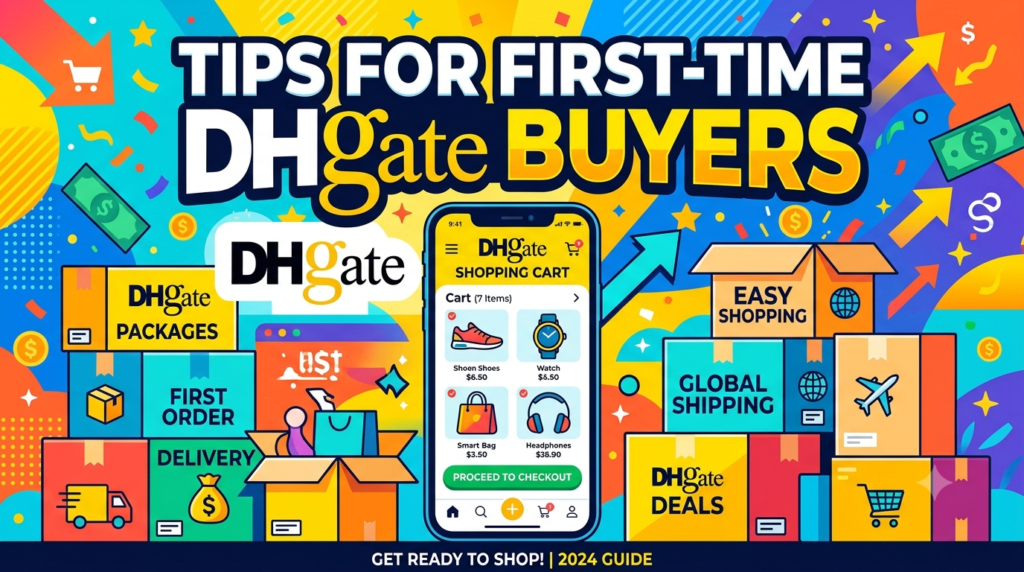
If you are new to DHgate, treat your first purchase as a chance to understand the platform rather than an opportunity to buy as much as possible. Start with a product that is inexpensive, straightforward to evaluate, and not urgently needed. Check several sellers, compare the full delivered cost, and read the latest reviews for the exact item. Before checkout, confirm the size, color, quantity, shipping method, delivery address, and estimated arrival date. These simple checks help you avoid preventable mistakes.
It is also wise to keep a record of your transaction. Save the product page, seller communication, order confirmation, and tracking details. When the parcel arrives, inspect it promptly and report any problems within the relevant timeframe. If you are uncertain about a seller’s reliability, do not place a large order merely because the listing offers a bulk discount. A successful small order provides useful information, although it cannot guarantee that a future large order will have identical quality or fulfillment.
Finally, compare convenience as well as price. A local retailer may charge more but offer faster delivery, easier exchanges, a clearer warranty, and simpler customer support. If those benefits matter to you, the cheapest overseas listing may not be the best purchase. The goal is not simply to spend less; it is to get a product that meets your needs without unnecessary risk.
Ordering from DHgate for Business and Resale
DHgate may interest small businesses, online sellers, and entrepreneurs who want to explore wholesale merchandise or test a product idea. Its broad selection and quantity-based pricing can make supplier research more convenient. However, an attractive listing does not automatically make a supplier suitable for commercial use. Businesses need to consider consistency, packaging, product safety, intellectual property, delivery reliability, and the supplier’s ability to meet repeat orders.
Before committing to bulk inventory, request samples where possible and assess the actual product against your quality requirements. Confirm the exact specifications, minimum order quantity, production or dispatch timeline, and procedure for dealing with defective units. If you intend to sell the products under your own brand, clarify whether you have permission to use the proposed branding and packaging. Do not assume that an item is safe to resell merely because it is available on a major marketplace.
Calculate your expected profit using the complete landed cost, including shipping, import charges, payment fees, packaging, storage, and potential losses from defective inventory. You should also account for marketplace selling fees, returns from your own customers, and any applicable product-compliance obligations. For example, a product purchased for ₹300 may have a much higher effective cost after international freight, duties, packaging, and fulfillment are included. Test the business model with a limited quantity before investing heavily, and keep invoices and import documentation for your records.
Read More:-
How Does Strikingly Simplify the Website Building Process?
Building Your Dream Website with Site123
Boost Your E-commerce Strategy with YITH Plugins
Maximize Your Customer Engagement with LiveAgent’s Features
Why STRIPO is Essential for Digital Product Marketersa
DHgate vs. Other Online Marketplaces
DHgate is not the only place to buy low-cost products or source inventory from overseas. Alternatives such as AliExpress, Alibaba.com, and Amazon serve different shopping needs. Their actual advantages depend on the seller, product category, destination, shipping arrangement, and buyer-protection terms. Instead of assuming one marketplace is always better, compare the options for your specific purchase.
| Feature | DHgate | AliExpress | Alibaba.com | Amazon |
| General focus | Wholesale and consumer marketplace | Primarily retail shopping | Business sourcing and wholesale | Retail shopping |
| Small orders | Available on many listings | Common | Depends on supplier and minimum order | Common |
| Bulk purchasing | Available with some sellers | Depends on listing | Often suitable for bulk sourcing | Depends on seller |
| Seller variation | Can be substantial | Can be substantial | Supplier and factory variation | Third-party seller variation |
| Shipping | Depends on seller and destination | Depends on seller and destination | Depends on negotiated terms | Depends on seller and fulfillment |
| Returns | Check the current listing and platform terms | Check the current listing and platform terms | Confirm terms with the supplier | Depends on seller, item, and policy |
For individual shoppers who value convenient delivery and straightforward returns, a local marketplace may be preferable even if the item costs more. For entrepreneurs investigating bulk products, DHgate and Alibaba.com may be worth comparing, particularly when minimum order quantities and supplier terms differ. AliExpress may be useful when comparing individual retail listings, while Amazon can offer a familiar purchasing experience in markets where its local operations are available. These are general distinctions, not guarantees: always verify the terms that apply to the exact item and destination.
Pros and Cons of Shopping on DHgate
DHgate’s main advantage is the variety of products available from independent suppliers. Shoppers can compare numerous listings, explore bulk prices, and discover products that may be difficult to find locally. For someone researching potential inventory, the marketplace can provide a starting point for identifying suppliers and comparing product specifications. It can also be useful for purchasing non-urgent accessories or unbranded items when the seller has been carefully evaluated.
The disadvantages are equally important. Product quality can vary, international shipping may take longer than expected, and returns can be inconvenient. Some listings may be misleading, and buyers should not assume that every branded item is authentic. Customer reviews also show that some users experience difficulties with delivery and dispute resolution.
These risks do not mean every purchase will go badly, but they make careful research essential.
Ultimately, DHgate is best approached as a marketplace that requires active evaluation rather than as a store where every listing offers the same standards. It may suit buyers who are comfortable comparing suppliers, reading detailed terms, and waiting for international delivery. If you need guaranteed authenticity, immediate delivery, specialist safety certification, or simple local returns, another seller may be the better choice. The right decision depends on how much risk you are willing to accept in exchange for a potentially lower price.



Conclusion
Ordering products on DHgate can be an opportunity to discover affordable merchandise, compare suppliers, and explore wholesale purchasing, but a successful experience depends on making informed decisions. The platform connects buyers with independent sellers, which means product quality, delivery reliability, and customer service can vary considerably. Before placing an order, research the seller, read recent reviews, check product specifications, calculate the total delivered cost, and understand the applicable return and refund terms. If you are buying from India or another country outside the seller’s home market, pay particular attention to customs requirements, import taxes, and delivery estimates.
The smartest approach is to start small, keep records of your transaction, and avoid listings that make unrealistic promises about price or authenticity. For business purchases, test samples and calculate your complete landed cost before investing in bulk inventory. Remember that the lowest advertised price does not always represent the best value. DHgate can be worth considering when you choose products carefully, verify sellers, and understand the risks before paying.
Frequently Asked Questions (FAQs)
Q. Is DHgate a legitimate website?
A. Yes, DHgate is an established online marketplace connecting buyers with independent sellers. However, individual listings and sellers vary in reliability, so you should research the seller, check product reviews, and verify the listing before ordering.
Q. Can I order just one product from DHgate?
A. Yes, many listings allow individual purchases, although some products have minimum order quantities. Check the quantity selector, product options, and shipping charges before placing your order.
Q. How long does DHgate shipping take?
A. Delivery time depends on the seller, shipping method, destination, and customs processing. Check the estimated delivery window displayed at checkout and allow extra time for unexpected delays.
Q. Can I get a refund if my DHgate order never arrives?
A. You may be eligible for a refund under the applicable order-protection and dispute rules. Check your order status, save your tracking information, and submit a claim through the official platform within the stated deadline. Refunds are not guaranteed in every situation.
Q. Is DHgate suitable for buying products for resale?
A. It can be an option for researching suppliers and sourcing certain products for resale. Before buying in bulk, request samples, verify product compliance, calculate shipping and import costs, and make sure the products do not infringe trademarks or other intellectual property rights.