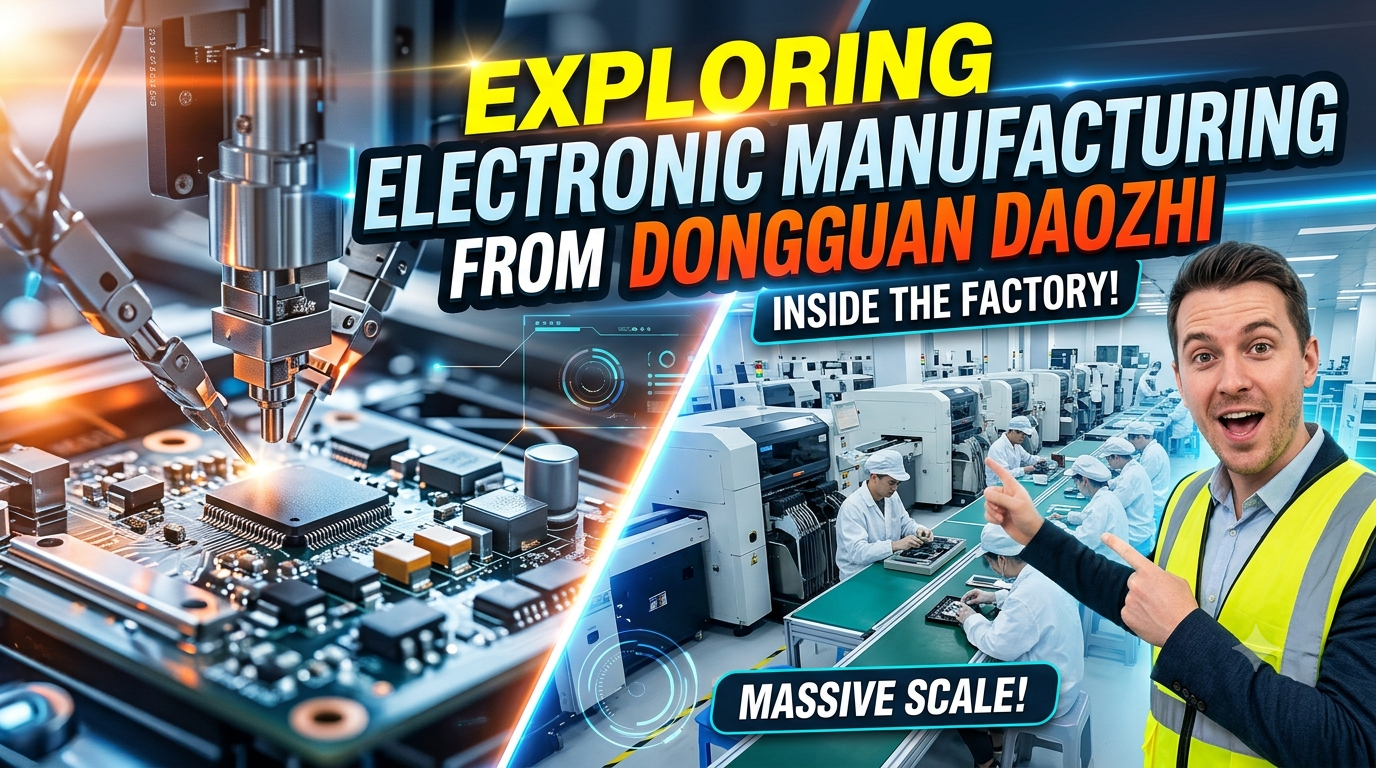
Dongguan Daozhi Electronic Technology is an electronics technology company associated with automotive electronics, dashcams, DVR systems, vehicle cameras, wireless communication, software development, and industrial product design. Its technology portfolio reflects the growing demand for connected automotive solutions that combine reliable hardware with smart software and digital functionality. From innovative camera housings and image-processing technologies to smartphone applications and electronic data-recording solutions, Dongguan Daozhi Electronic Technology represents the integration of engineering, design, and modern electronics manufacturing.
Table of Contents
Understanding Dongguan Daozhi Electronic Technology
Company Background and Public Records
Dongguan Daozhi Electronic Technology Co., Ltd. is associated with Dongguan, Guangdong, China, a region widely recognized for electronics and manufacturing activity. Current public corporate information lists the company as an active entity and gives an address in Qiaotou, Dongguan. A French corporate-information database records its creation in November 2021 and identifies its registered activity there as distance selling through general catalogs, illustrating why corporate-registration classifications should not be treated as a complete description of its engineering or manufacturing capabilities.
Regulatory records provide another useful layer of information. The company has an FCC registration number, 0031988728, and public FCC-related records connect it with wireless electronic products. FCC filing indexes show HD2 filings in August 2026 covering both 2.4 GHz and 5 GHz bands, while an F3 filing from 2024 also appears in the company’s record. The filings identify the purpose as Original Equipment, although the presence of an FCC filing alone does not establish the full extent of a manufacturer’s production infrastructure.
For businesses evaluating an electronics company, this type of public record is valuable because it creates an evidence trail. Instead of relying solely on marketing language, buyers can examine trademarks, patents, regulatory filings, product certifications, and corporate registrations. Taken together, these sources can help identify the areas in which a company has been commercially and technically active. In Dongguan Daozhi’s case, those records repeatedly point toward automotive cameras, DVR equipment, electronic data recording, wireless connectivity, software, and physical product design.
Product and Technology Focus
The company’s public trademark records suggest a technology portfolio that goes beyond a simple camera product. The FITCAMX trademark has been associated with rearview cameras, semiconductor memory units, USB cables, mobile applications, software for electronic data storage, and other electronics-related goods and services. Another Canadian trademark record for FITDVR lists vehicle cameras, rearview cameras, electronic black boxes for recording data, automotive battery products, charging equipment, and related electronic components.
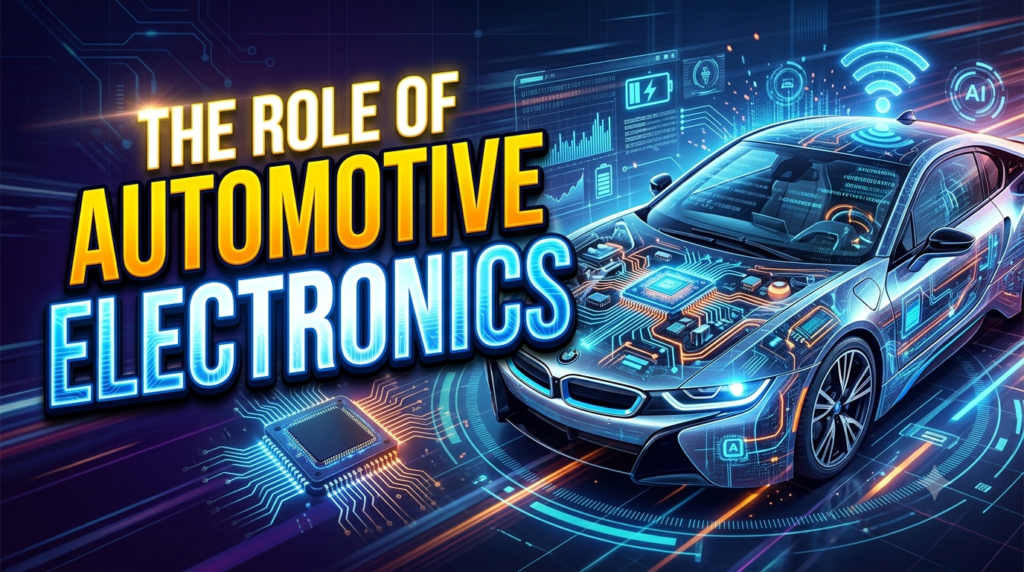
This combination is significant because modern vehicle electronics increasingly operate as connected systems rather than isolated devices. A camera captures information, a processor converts and manages it, storage preserves it, wireless connectivity can transfer it, and software provides a way for users to interact with the recorded information. Manufacturing therefore becomes a multidisciplinary activity in which hardware, software, mechanical components, and user experience have to work together.
That approach can also create advantages for product development. When an organization understands several parts of the technology stack, it can potentially coordinate product architecture more effectively. However, outside observers should avoid assuming that every stage is performed internally. Electronics businesses commonly work with specialized suppliers for sensors, semiconductor components, PCB assembly, plastics, optics, packaging, firmware, and other manufacturing stages. The public evidence supports a broad product-development footprint, but it does not by itself provide a complete factory-by-factory supply-chain map.
The Role of Automotive Electronics
Dashcams and Vehicle Imaging
Automotive cameras appear to be one of the most visible areas connected with Dongguan Daozhi Electronic Technology. Public trademark records identify rearview cameras, video recorders, and electronic data-recording equipment, while FCC-related records identify product models including HD2 and F3. The company has also been assigned recent design patents specifically covering dashcam housings.
A dashcam may look like a relatively straightforward consumer device, but producing one reliably involves several engineering disciplines. The optical system has to capture usable images under changing lighting conditions. The electronic system needs to process and store video efficiently, while power-management circuitry must operate within the constraints of a vehicle environment. Wireless communication, smartphone connectivity, firmware, heat management, mounting, and physical durability add additional layers of engineering complexity.
The manufacturing challenge is therefore not simply about putting components onto a circuit board. A finished automotive camera must function as a complete product. Its electronics need to communicate correctly, the enclosure needs to protect internal components, the mounting system needs to remain stable, and software needs to provide a practical user experience. This is why companies working in automotive electronics increasingly combine electrical engineering, mechanical design, software development, and industrial design within a single product-development process.
Vehicle-Specific Integration
One particularly important characteristic of automotive accessories is their relationship with the vehicle itself. A universal electronic device can often be designed around a standard form factor, but a vehicle-specific camera or integrated accessory has to accommodate differences in windshields, rooflines, trim, mounting positions, cable routes, and interior styling.
This makes industrial design much more than an aesthetic exercise. The enclosure can determine how easily the device is installed, how securely it sits in position, how cables are routed, and how effectively heat is managed. A poorly designed housing can undermine an otherwise capable electronic system, while a carefully engineered enclosure can make a product feel like a natural part of the vehicle.
The FITCAMX brand’s focus on automotive cameras illustrates why physical integration can be an important part of an electronic product strategy. The public record describes FITCAMX-related activity involving automotive electronics, industrial design, image-processing software, and smartphone software.
Electronics Engineering Capabilities
Circuit and Wireless Technologies
Modern automotive electronics depend heavily on carefully engineered circuit systems. A camera product may contain image-processing hardware, memory, power-management circuits, wireless communication components, connectors, sensors, and other electronic elements. Each component has to operate within defined electrical and thermal parameters, and the entire system needs to behave reliably under real-world conditions.
Public FITCAMX trademark information specifically references development of technologies for the fabrication of circuits for wireless communication, electronic data processing, consumer electronics, and automotive electronics. This is useful evidence of the technological categories associated with the company’s intellectual-property portfolio, although it should not be interpreted as proof that every circuit-production process is performed directly at its own facility.
Wireless functionality is especially relevant for modern camera products. Users increasingly expect electronic devices to communicate with smartphones or other systems without complicated physical connections. That means product designers have to consider radio performance, data transfer, application design, security, power consumption, and reliability at the same time. The FCC records for HD2 showing filings involving both 2.4 GHz and 5 GHz frequencies further demonstrate the relevance of wireless functionality in the company’s recent product activity.
Software and Data Management
Hardware alone rarely defines the experience of a modern connected electronic product. Software determines how users configure a device, view recorded information, transfer files, manage settings, and interact with features. For camera products, software can be particularly important because the value of captured video depends heavily on how easily users can access and manage it.
The public FITCAMX trademark record includes cloud storage services for electronic data, computer software design and updating, image-processing software design, smartphone software design, and software development. These classifications indicate an ecosystem that extends beyond physical electronics into digital services and applications.
This illustrates an important trend in electronic manufacturing: the product is increasingly becoming a combination of hardware plus software plus data. A manufacturer that understands this relationship can design hardware around the requirements of the software experience rather than treating the application as an afterthought. For consumers, that can mean easier setup and better interaction. For businesses, it can create additional opportunities for product differentiation.
Product Housing and Industrial Design
Why Enclosures Matter
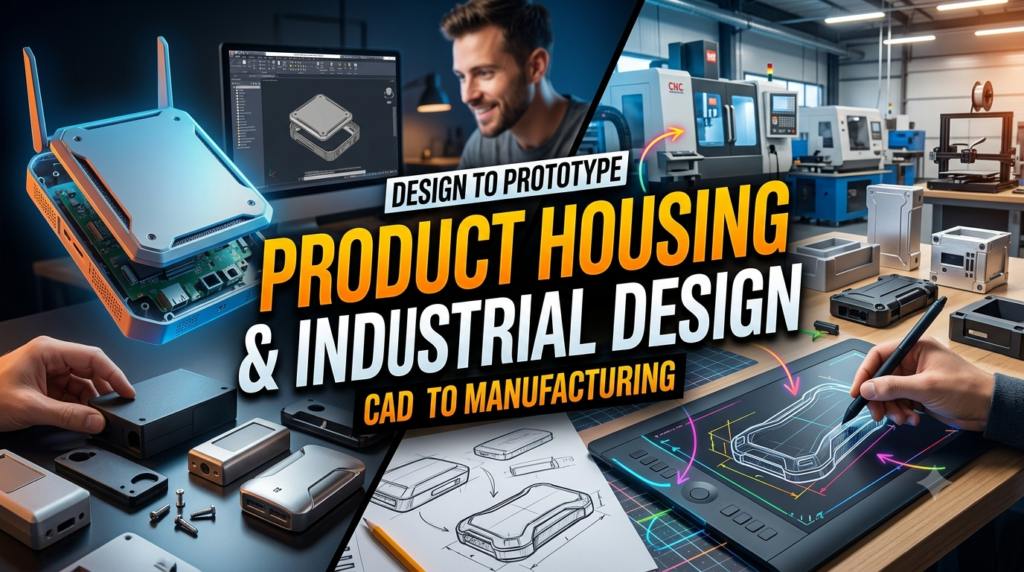
The enclosure of an electronic device is sometimes overlooked because consumers tend to focus on what the product does rather than what protects the components. Yet the housing performs several practical functions simultaneously. It protects the circuit board and internal components, provides mounting points, affects heat dissipation, controls access to connectors and buttons, and determines how the product physically interacts with its environment.
For automotive cameras, these requirements become even more important. The housing needs to fit within a limited space, remain secure while the vehicle is moving, protect sensitive components, and maintain an appearance that works with the vehicle interior. The enclosure can also influence camera positioning, which in turn affects the field of view and usefulness of the captured footage.
Recent patent activity provides concrete evidence of continuing attention to this area. In April 2026, Chinese design patent CN309937452S was published for the HD2-D6900 car dashcam housing. The patent describes the product as a dashcam housing designed to protect internal components, the circuit board, and other internal parts, with the shape identified as the key design feature.
Recent Dashcam Housing Designs
The HD2-D6900 is not the only recent housing design associated with Dongguan Daozhi. Patent CN309937437S, published on April 21, 2026, covers the HD2-D4000 car dashcam housing and similarly identifies the housing’s shape as its key design feature. Another design patent, CN309937451S, covers the HD2-3J00 dashcam housing. These records suggest ongoing attention to physical product architecture within the company’s automotive-camera development.
Why does a collection of housing designs matter? Because product development often happens through iteration. Different vehicle applications, camera configurations, component layouts, or market requirements can require different external architectures. Protecting these designs can help a company establish distinctive product identities while supporting practical engineering requirements.
It also shows why electronic manufacturing should not be reduced to PCB assembly. The final product depends on mechanical design, component placement, materials, manufacturing tolerances, surface finishing, mounting systems, and quality control. The best electronic product is ultimately a system in which the invisible engineering inside the box and the visible design outside it work together.
FITCAMX and FITDVR Product Ecosystems
Connected Camera Technology
The FITCAMX and FITDVR names provide an important window into Dongguan Daozhi’s product ecosystem. FITCAMX records connect the brand with rearview cameras, software, cloud storage, industrial design, and automotive electronics. FITDVR records similarly connect the company with video recorders, vehicle cameras, electronic data-recording equipment, and other electronic products.
A connected camera ecosystem can be viewed as a chain. The camera captures information; the processor handles the information; memory stores it; wireless technology enables communication; and software gives the user a way to control or retrieve it. If any one link performs poorly, the overall user experience can suffer. That makes integration a central manufacturing and product-development challenge.
For manufacturers, this creates a different definition of quality. A device can have a technically capable camera sensor but still disappoint customers if the application is difficult to use. Similarly, strong software cannot compensate for unreliable power management or an unstable physical mounting system. Successful electronic products therefore depend on coordination between many engineering layers.
Read More:-
How Does Strikingly Simplify the Website Building Process?
Building Your Dream Website with Site123
Boost Your E-commerce Strategy with YITH Plugins
Maximize Your Customer Engagement with LiveAgent’s Features
Why STRIPO is Essential for Digital Product Marketersa
Regulatory and Certification Footprint
FCC Filings and Market Access
Regulatory compliance is an important part of electronics manufacturing, particularly when products use wireless communication. Devices sold or operated in different markets may be subject to technical requirements involving radio emissions, electromagnetic compatibility, electrical safety, labeling, documentation, and other criteria.
Dongguan Daozhi has a documented FCC registration, and public filing records associate the company with HD2 and F3 products. The HD2 records include filings from August 2026 for 2.4 GHz and 5 GHz operation. These records are useful when researching the company’s international electronics footprint because they provide independently searchable regulatory information rather than relying exclusively on promotional descriptions.
Certification records should still be interpreted carefully. A certification or regulatory filing generally applies to a particular product, model, configuration, or technical characteristic. It does not automatically certify every product made by the same company, nor does it reveal every quality-control procedure used in production. For procurement decisions, buyers should therefore request model-specific documentation, test reports, certifications, quality standards, and manufacturing information relevant to the exact product under consideration.
Manufacturing Considerations for Buyers
Businesses evaluating an electronics manufacturer need to look beyond a product catalog. “Can this company make electronics?” is frequently not the most crucial question but rather “Can this company consistently produce this specific product at the quality, volume, cost, and compliance level required?”
That distinction matters because electronic manufacturing involves numerous variables. Buyers should examine production capacity, component sourcing, engineering support, prototype development, quality-control procedures, testing capabilities, firmware management, packaging, logistics, after-sales support, and intellectual-property arrangements. A manufacturer may be excellent at one type of product while being less suitable for another.
For a company such as Dongguan Daozhi, public evidence provides useful starting points around automotive cameras, wireless electronics, software, industrial design, and regulatory activity. But a serious procurement process should supplement those public records with direct verification. Potential customers can ask for factory information, production photographs or audits where appropriate, sample units, technical specifications, test documentation, defect-rate information, warranty terms, lead times, minimum order quantities, and engineering change procedures.
The same principle applies to quality assurance. An electronics manufacturer needs repeatable processes rather than simply producing a good prototype. Production testing can involve checking power consumption, wireless connectivity, camera performance, storage behavior, component placement, firmware versions, physical fit, and environmental performance. The exact testing requirements depend on the product, but consistency is what separates a successful production program from a one-off demonstration.
Another consideration is intellectual property. Companies developing a customized electronic product should establish who owns the PCB design, firmware, industrial design, tooling, packaging artwork, software, and other deliverables. Clear contractual terms can reduce misunderstandings later, particularly when products are manufactured across international supply chains.
Cost is important as well, but the lowest quoted unit price does not necessarily represent the lowest total cost. A cheaper component can increase warranty claims, returns, engineering changes, or quality-control expenses. Similarly, a low initial manufacturing price can become less attractive if lead times are unpredictable or if a supplier struggles to maintain consistent component availability. Buyers should therefore consider total cost of ownership, not only the initial quotation.



Conclusion
Exploring Dongguan Daozhi Electronic Technology reveals a modern electronics business whose publicly documented activity extends across automotive cameras, DVR products, wireless electronics, software, industrial design, and product-specific intellectual property. Trademark records connect the company with FITCAMX and FITDVR-related products and services, while FCC records document regulatory activity involving products such as HD2 and F3. Recent 2026 Chinese design patents covering several dashcam housings add another layer of evidence showing continuing work around the physical architecture of automotive camera products.
The broader lesson is that electronic manufacturing solutions are no longer limited to assembly. Today’s products can require circuit engineering, wireless communication, image processing, embedded software, smartphone applications, cloud services, industrial design, mechanical engineering, regulatory compliance, and quality assurance. Automotive cameras are a particularly good example because they have to combine electronics with physical vehicle integration while delivering a reliable digital experience.
For businesses researching Dongguan Daozhi Electronic Technology as a potential supplier, partner, or technology company, public records provide a useful foundation for understanding its areas of activity. At the same time, specific manufacturing capabilities should be verified directly through samples, technical documentation, audits, certifications, production information, and commercial discussions. That balanced approach allows buyers to distinguish what is publicly documented from what still requires direct due diligence.
Ultimately, the most interesting aspect of Dongguan Daozhi’s electronics footprint is the connection between hardware, software, automotive integration, and product design. As connected vehicle accessories continue to evolve, manufacturers operating across these disciplines may increasingly need to think like both engineering organizations and technology-product companies. That combination is helping reshape what electronic manufacturing means in an increasingly connected world.
FAQs
Q. What is Dongguan Daozhi Electronic Technology known for?
A. Public records associate Dongguan Daozhi Electronic Technology Co., Ltd. with automotive electronic products, including vehicle cameras, dashcams, DVR-related equipment, and electronic data-recording products. Its FITCAMX-related records also cover software, cloud storage, image processing, industrial design, and automotive electronics.
Q. What is FITCAMX?
A. FITCAMX is a trademark associated with Dongguan Daozhi Electronic Technology. Public trademark information connects the name with automotive cameras and related software and technology activities, including smartphone software, cloud storage, image processing, and automotive electronics.
Q. Does Dongguan Daozhi manufacture dashcams?
A. Public evidence strongly connects the company with dashcam-related products and designs, including recent Chinese design patents for HD2-series dashcam housings and FCC filings for HD2. However, public records alone do not establish the complete details of every manufacturing stage or whether every component is produced in-house.
Q. What technologies are associated with Dongguan Daozhi Electronic Technology?
A. Public records associate the company with automotive electronics, vehicle cameras, wireless communication, electronic data processing, image-processing software, smartphone software, cloud data storage, industrial design, and electronic recording equipment.
Q. What should businesses verify before working with an electronics manufacturer?
A. Businesses should verify the manufacturer’s exact production capabilities, quality-control systems, certifications, product testing, engineering support, component sourcing, production capacity, lead times, intellectual-property ownership, warranty policies, and ability to maintain consistent quality at the required volume. Public trademarks, patents, and regulatory filings are useful research tools, but they should complement rather than replace direct supplier due diligence.