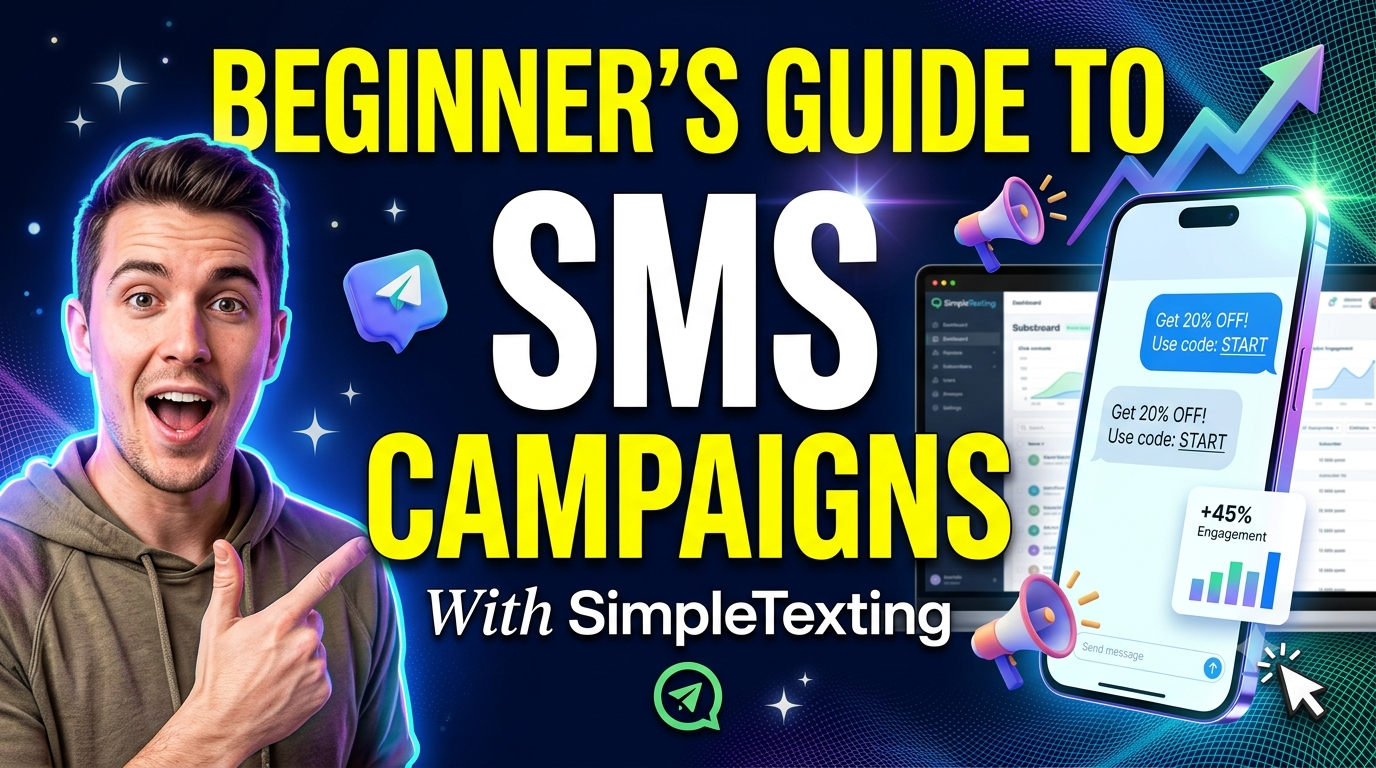
SimpleTexting is a user-friendly SMS marketing platform designed to help businesses connect with customers through text messaging. With features such as mass texting, two-way messaging, automated campaigns, audience segmentation, MMS, analytics, and opt-in tools, SimpleTexting makes it easier to create, manage, and measure effective SMS campaigns. Whether you are a small business or a growing organization, SimpleTexting can help streamline customer communication, promote offers, send reminders, and build stronger engagement through personalized text messages.
Table of Contents
- Why Is SMS Marketing Important and What Is It?
- Getting Started With SimpleTexting
- Build a Permission-Based Contact List
- Define Your SMS Campaign Goal
- Segment Your Audience Before Sending
- Write SMS Messages People Want to Read
- Use Personalization Without Sounding Robotic
- Schedule Campaigns at the Right Time
- Use Automated Drip Campaigns
- Make Two-Way Messaging Part of Your Strategy
- Add MMS and Richer Content When Useful
- Connect SimpleTexting With Other Business Tools
- Measure Campaign Performance
- Common SMS Marketing Mistakes to Avoid
- Understanding SimpleTexting Pricing and Credits
- SMS Compliance and Customer Trust
- A Simple SMS Campaign Workflow for Beginners
- Examples of Effective SMS Campaigns
- Conclusion
- Frequently Asked Questions About SimpleTexting SMS Campaigns
Why Is SMS Marketing Important and What Is It?

SMS marketing is the practice of using text messages to communicate with customers or subscribers for purposes such as promotions, reminders, announcements, event updates, customer engagement, and relationship building. Unlike many digital channels where messages can disappear into crowded feeds or inboxes, SMS is naturally direct and personal because it arrives in the same place people use for everyday conversations. That immediacy can be valuable, but it also creates responsibility. If a business sends irrelevant messages too often, the channel that once felt convenient can quickly become annoying. A strong SMS campaign therefore needs a clear purpose, a permission-based audience, concise copy, useful timing, and an easy way for recipients to manage their subscription. SimpleTexting supports both mass texting and two-way messaging, allowing businesses to send campaigns while also receiving customer replies. Think of SMS as a small doorway into your customer’s attention rather than a billboard. You have only a limited amount of space, so every word needs to earn its place. A successful campaign might promote a limited-time offer, remind someone about an appointment, invite customers to an event, share a new product announcement, or simply ask for feedback. The technology makes sending easier, but the strategy determines whether people actually want to hear from you.
How Text Messages Reach Customers
The strength of SMS comes from its simplicity. Customers do not need to download a special application, create another account, or learn a complicated interface before receiving a normal text message. From a marketing perspective, this makes SMS useful for situations where speed and convenience matter. Imagine a local restaurant announcing that reservations have opened, a retailer informing subscribers about a weekend promotion, or an organization reminding members about an event happening that evening. In each situation, the message works because it is connected to a clear reason for contacting the customer. SimpleTexting supports local, toll-free, and short-code options, depending on the business’s needs and campaign structure. Its platform also allows users to manage messages through a web dashboard and mobile app. Beginners should resist the temptation to treat SMS as a miniature email newsletter. Focused text messages are the most effective. Instead of squeezing five announcements into one message, choose one purpose and guide the recipient toward one logical action. The shorter format can actually improve discipline because it forces marketers to answer an important question: “What do I want this person to understand or do after reading this?” Writing the message becomes much simpler once that question has a definitive answer.
Getting Started With SimpleTexting
Getting started with SimpleTexting begins with understanding your campaign requirements rather than immediately choosing the largest available plan. Think about the approximate number of messages you expect to send, whether you need two-way conversations, whether you will use MMS, how many team members need access, and whether you want integrations with other business software. SimpleTexting currently lists features including mass texting, two-way messaging, auto-replies, drip campaigns, MMS, AI-assisted message generation, API access, reporting and analytics, audience segmentation, text-to-join keywords, opt-in forms, and integrations such as Mailchimp and Zapier. For a beginner, this can seem like a lot, but you do not need to use everything at once. Start with the smallest practical workflow: collect consent, organize contacts, write one useful message, schedule it, send it, and review the results. Once you understand that basic cycle, introduce segmentation, automation, MMS, or integrations one at a time. This approach is much easier than trying to build a sophisticated marketing machine on your first day. A useful rule is to make your campaign simple enough that another person on your team could understand it without needing a lengthy explanation. If the strategy cannot be explained clearly, the technology will not fix it.
Choosing Your SMS Number
Your sending number is an important part of the customer experience because it becomes associated with your brand. SimpleTexting offers options that include 10-digit local numbers, toll-free numbers, and dedicated short codes. The right choice depends on your audience, expected volume, brand identity, and messaging requirements. A local number can make sense for a business serving a particular geographic community, while a toll-free option can be useful for broader business communication. Dedicated short codes are generally designed for larger-scale SMS programs and carry significantly different cost considerations. The important point for beginners is not to select a number simply because it looks convenient. Consider how customers will recognize it and whether your chosen number type fits the compliance and registration requirements applicable to your campaign. A consistent sender identity also helps build familiarity over time. When subscribers repeatedly receive useful messages from the same recognizable business identity, the interaction feels more like an established communication channel and less like an unknown advertisement. Before launching your first major campaign, test the complete experience yourself: subscribe, receive the message, reply to it, check how the sender appears, and confirm that the opt-out process works. Experiencing the campaign as a customer can reveal problems that are easy to miss from the marketer’s dashboard.
Build a Permission-Based Contact List
A strong SMS campaign begins long before the first promotional message. It begins with permission. Your contact list should consist of people who have knowingly agreed to receive messages from your business, following the laws, regulations, carrier requirements, and platform rules that apply to your situation. Buying a random phone-number database may appear like a shortcut, but it can damage trust and create compliance problems. Instead, make subscribing easy and transparent. Explain what people are signing up for, identify the business sending messages, and provide appropriate information about message frequency and opt-out options. SimpleTexting provides tools such as text-to-join keywords, opt-in forms, and pop-ups to help businesses build subscriber lists. This is where good marketing resembles good hospitality: invite people in rather than dragging them through the door. A subscriber who intentionally joins your list is more likely to understand the value of your messages and engage with them. Keep records of how people opted in and make sure your campaign process respects applicable requirements. You should also avoid assuming that permission for one type of communication automatically means permission for every other marketing purpose. A clearly defined subscription experience sets expectations from the beginning and gives customers more control over their relationship with your brand.
Using Text-to-Join and Opt-In Forms
Text-to-join is one of the simplest ways to turn offline attention into an SMS subscriber. A business can promote a keyword through signage, social media, packaging, events, a website, or other marketing channels and invite people to text that keyword to a designated number. SimpleTexting supports unlimited text-to-join keywords according to its current feature information. The advantage is that the subscription action feels natural: the customer sees an offer or invitation, sends a text, and enters the communication flow. Opt-in forms can provide another route for website visitors or customers who prefer signing up digitally. Whichever method you choose, make the value proposition obvious. “Join our list” is less compelling than “Text DEALS to receive weekly member-only offers,” provided that the offer accurately describes what the subscriber will receive. Do not promise something you cannot consistently deliver. If you advertise exclusive discounts but mostly send generic announcements, subscribers may lose interest. Build the first few messages around the promise that convinced people to subscribe. This creates a positive connection between expectation and experience, which is one of the foundations of long-term SMS engagement.
Define Your SMS Campaign Goal
Every campaign should have one primary objective. That objective could be generating sales, increasing event registrations, recovering abandoned purchases, promoting a new product, reminding customers about an appointment, collecting feedback, or driving traffic to a specific page. The goal matters because it influences almost every other decision, including the audience, wording, timing, call to action, and metric you use to judge performance. Suppose your objective is event registration. A message focused on registration should make the event details easy to understand and provide a clear next step. If your objective is customer feedback, the message should make responding simple rather than burying the request beneath promotional information. SimpleTexting’s reporting and analytics features can help marketers evaluate campaign activity, but the numbers become meaningful only when they are connected to an objective. Before creating a campaign, write one sentence beginning with “This campaign is designed to…” and finish it with a measurable outcome. That small exercise can prevent a surprisingly common mistake: trying to make one SMS do everything. A message cannot simultaneously be a sales pitch, newsletter, survey, event invitation, product tutorial, and customer-service announcement without becoming confusing. One campaign, one main purpose, one clear action is a much easier formula for beginners to manage.
Segment Your Audience Before Sending
Sending exactly the same message to every subscriber may be easy, but it is not always effective. Audience segmentation allows you to group contacts according to useful characteristics or behaviors, such as location, customer type, purchase history, interests, signup source, engagement level, or lifecycle stage. SimpleTexting advertises advanced audience segments and contact-management capabilities that can support more targeted messaging. The practical benefit is relevance. A customer who recently purchased a product may need a follow-up message, while someone who has never purchased may need an introductory offer. A local event invitation might make sense for subscribers within a particular area but not for customers who live hundreds of miles away. Segmentation also helps prevent unnecessary messages. If you know a customer has already completed the action your campaign promotes, continuing to send the same invitation is poor communication. Start small by creating two or three meaningful groups rather than building dozens of complicated segments. You could begin with new subscribers, active customers, and inactive subscribers. As your campaign history grows, you can make the groups more sophisticated. The goal is not segmentation for its own sake; it is using information you already have to make each message more useful.
Write SMS Messages People Want to Read
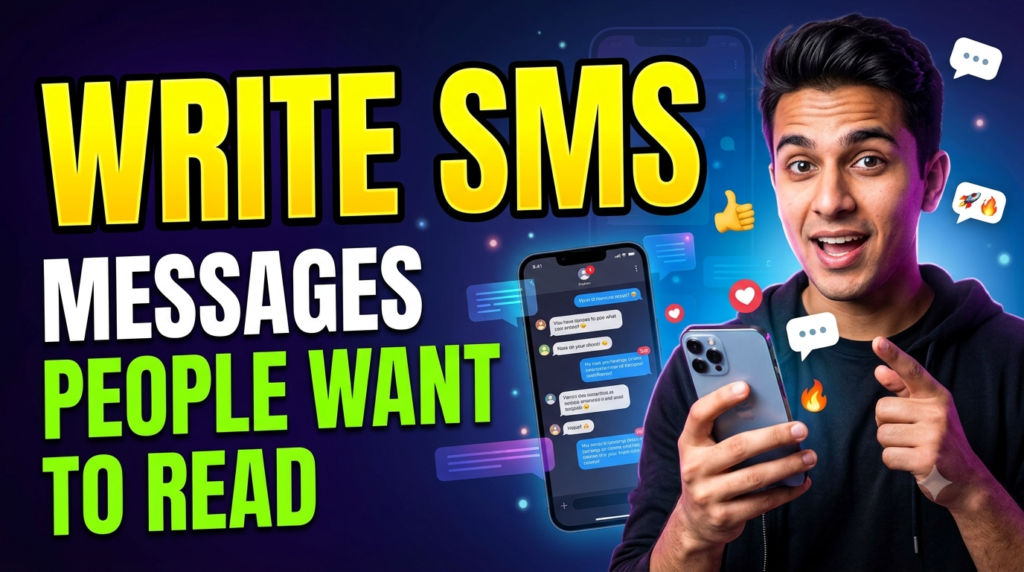
Writing for SMS requires discipline because customers are usually reading on a small screen and may be doing something else at the same time. Start with the most important information instead of building up to it slowly. Tell people why you are contacting them, communicate the key benefit, and give them an obvious next step. A strong promotional text might identify the offer, explain the deadline, and provide a simple action. A reminder might focus on the date, time, and required action. Avoid unnecessary introductions, complicated sentences, vague promises, and excessive punctuation. You should also remember that SMS is a personal channel, so the tone should sound like a helpful business communicating with a customer rather than a corporate announcement written for a boardroom. SimpleTexting includes an AI Assist message generator, which can help with drafting, but generated copy should still be reviewed by a human for accuracy, tone, compliance, and brand fit. The best SMS message is not necessarily the cleverest one. It is the one that the client comprehends right away. Before sending, read your message aloud. If you need to reread it to understand the point, simplify it. If the call to action is buried, move it forward. If the message contains information that does not help the recipient, remove it.
Keep Messages Clear and Action-Oriented
A good SMS campaign usually benefits from one primary call to action. That action might be “Shop now,” “Reply YES,” “Book today,” “Register,” “View details,” or another instruction appropriate to the campaign.It shouldn’t be necessary for the client to speculate on what will happen next. If the campaign sends someone to a webpage, make sure the destination works well on mobile devices because most recipients will open the link from their phone. If the campaign expects a reply, make the requested response obvious. Two-way messaging can turn an SMS campaign from a broadcast into a conversation, but only if the business is prepared to handle replies. SimpleTexting supports two-way messaging and free incoming SMS replies according to its platform information. That creates an opportunity for customer questions, confirmations, feedback, and support. However, do not invite replies if nobody is monitoring the inbox. An unanswered customer message can create more frustration than no campaign at all. A simple internal rule can help: every message should have a clearly defined next step, and every conversational campaign should have an owner responsible for responses. That combination keeps the experience straightforward for customers and manageable for your team.
Use Personalization Without Sounding Robotic
Personalization is more than adding a customer’s first name to a message. Real personalization means making the content relevant to the person’s relationship with your business. A new subscriber may need a welcome offer, while an existing customer may appreciate a loyalty promotion or product recommendation. A customer who attended an event might receive information about the next event rather than an introduction to something they already know. The trick is to use the information you actually have rather than forcing personalization into every sentence. Too much personalization can feel artificial, especially when a message includes awkward wording or unnecessary details. Think of personalization as seasoning: a little can improve the experience, but adding too much can overwhelm the dish. Segmentation, customer attributes, and integrations can help businesses build more relevant campaigns. SimpleTexting lists contact management, audience segments, and integrations with services such as Mailchimp and Zapier among its capabilities. Before using any customer information in an SMS, make sure the information is accurate and that your use of it is appropriate. A personalized message should make the customer think, “That makes sense for me,” rather than, “How does this company know that?”
Schedule Campaigns at the Right Time
A message’s reception can be altered by timing. A useful offer sent when customers are likely to act can feel convenient, while the same message delivered at an inconvenient hour can feel intrusive. There is no universal perfect SMS time because audiences differ by location, lifestyle, industry, and purpose. A restaurant, gym, retail store, healthcare practice, and nonprofit may all have completely different communication patterns. Start by considering the customer’s likely context. Ask yourself whether the person can realistically act on the message when it arrives. A lunch promotion arriving during the relevant part of the day may make sense, while a reminder sent after the appointment clearly does not. Time zones are another important consideration for audiences spread across regions. A campaign that is reasonable for one geographic area could reach another audience at an inconvenient hour if scheduling is not handled carefully. Build a testing process rather than relying entirely on assumptions. Try different reasonable sending windows and compare engagement while keeping the audience and message objective reasonably consistent. Over time, your own campaign history can become more useful than generic advice because it reflects the behavior of your specific subscribers.
Use Automated Drip Campaigns
Automation is particularly useful when a customer journey contains predictable steps. A welcome series, onboarding sequence, appointment reminder flow, educational sequence, or post-purchase follow-up can often be planned in advance. SimpleTexting lists auto-replies and drip campaigns among its SMS marketing capabilities. The value of automation is consistency. Instead of relying on a team member to remember every follow-up, the system can deliver predefined messages according to the campaign structure. However, automation should not mean “set it and forget it.” Review automated campaigns regularly to ensure links work, offers have not expired, wording remains accurate, and customers are not receiving messages after they have completed the intended action. A good automated sequence also needs an exit point. If someone makes a purchase after receiving the first message, they may need to leave the promotional sequence and enter a different customer journey. Beginners can start with a very small sequence: welcome message, value message, and relevant call to action. Once that works reliably, add more sophisticated branching or integrations. Automation should remove repetitive work, not remove human judgment from the customer experience.
Make Two-Way Messaging Part of Your Strategy
SMS becomes particularly interesting when businesses treat it as a conversation instead of a one-way announcement. Two-way messaging can support customer questions, confirmations, feedback, appointment communication, event responses, and other interactive experiences. SimpleTexting includes two-way messaging in its feature set and states that incoming SMS replies are free. For a small business, this can make SMS feel much more approachable because customers can respond using the same familiar channel through which they received the message. But conversational messaging requires operational preparation. Decide who monitors replies, how quickly responses should be handled, what questions can be answered through SMS, and when an issue should move to another channel. You can also create standard responses for common questions while preserving a human escalation route for unusual situations. A campaign asking customers to reply should never become a black hole. If someone responds and receives nothing, the business has effectively promised a conversation without delivering one. When designed properly, two-way SMS can also produce valuable customer insight because responses reveal questions, objections, preferences, and common problems. Those insights can then influence future marketing, product improvements, and customer service.
Add MMS and Richer Content When Useful
SMS does not always have to be plain text. MMS can support visual content such as images, which can be useful for product announcements, event promotions, visual offers, menus, or other campaigns where an image communicates information faster than words. SimpleTexting lists picture messaging among its available features and notes that MMS uses additional credits. The key word is useful. Adding an image simply because you can does not automatically improve a campaign. Ask whether the visual makes the message clearer, more attractive, or easier to act on. A retailer might use an image to showcase a new product, while a service business might use a visual to explain an offer. Make sure the image is appropriate for mobile viewing and does not obscure the primary message. You should also account for the additional credit consumption when planning MMS campaigns. If you are working with a limited monthly allowance, sending an image to every subscriber may consume your budget much faster than a short plain-text campaign. Test the complete experience on a real phone before launching. A message can look perfect inside a marketing dashboard but behave differently depending on the recipient’s device or messaging environment.
Connect SimpleTexting With Other Business Tools
An SMS platform becomes more powerful when it works with the systems your business already uses. Instead of manually copying customer information between platforms, integrations can help connect marketing, customer data, automation, and operational workflows. SimpleTexting currently highlights integrations including Mailchimp and Zapier, as well as API access. For a beginner, the best approach is to automate one repetitive process at a time. For example, a form submission could trigger an SMS welcome message, or a customer action could place someone into a specific communication workflow. The important thing is to understand the data flow before turning on automation. What event triggers the message? Which customer information is transferred? What happens if the information is missing? How does the customer leave the workflow? These questions prevent accidental or confusing messages. If your business eventually needs custom software integration, API access can provide additional flexibility, but technical complexity also increases. Do not build a complicated integration simply because the option exists. The purpose of technology is to make your customer communication smoother, not to create a maze of automation that nobody on the team understands.
Measure Campaign Performance
After the message is sent, a campaign is not complete. It is finished when you understand what happened afterward. Depending on your campaign objective, useful measurements may include delivery, clicks, replies, conversions, registrations, purchases, unsubscribes, and other relevant outcomes. SimpleTexting includes reporting and analytics features designed to help businesses review campaign activity. The most important metric should usually connect directly to your original objective. If the campaign’s goal was registrations, a registration metric matters more than simply celebrating that many messages were delivered. If the goal was customer feedback, the number and quality of responses may matter more than clicks. Avoid treating one metric as a universal definition of success. A campaign can generate many clicks but few purchases, or a small number of replies that provide extremely valuable customer insights. Compare campaigns over time and change one major variable when possible, such as the offer, message structure, audience segment, or sending window.This facilitates comprehension of the factors that affected the result. Your campaign data should become a learning system. Each send gives you information that can improve the next send, creating a cycle of testing, learning, refining, and testing again.
Common SMS Marketing Mistakes to Avoid
Beginners often make the same few mistakes, and most of them have nothing to do with complicated technology. The first is sending messages without clearly established permission. The second is sending too frequently and teaching subscribers to ignore the brand. The third is writing messages that are too vague, forcing customers to figure out why they received them. Another common mistake is using one generic message for every customer regardless of their relationship with the business. Businesses can also make the mistake of focusing entirely on promotional messages while ignoring useful content, reminders, support, or customer feedback. Another problem occurs when companies invite replies but do not monitor them. Finally, marketers sometimes measure vanity metrics rather than business outcomes. SimpleTexting provides tools for segmentation, automation, two-way messaging, and analytics, but those features cannot replace a thoughtful communication strategy. Before every campaign, run through a simple checklist: Did the recipient give appropriate permission? Is the message relevant? Is the purpose clear? Is the timing reasonable? Is the call to action obvious? Can customers opt out appropriately? Is someone available to respond if replies are invited? If the answer to these questions is yes, you have already avoided many of the most damaging beginner errors.
Understanding SimpleTexting Pricing and Credits

Understanding the pricing model is important before you design a campaign calendar. SimpleTexting’s official pricing page describes plans based on monthly text volume and lists features such as mass texting, two-way messaging, MMS, drip campaigns, analytics, segmentation, integrations, and opt-in tools. Current third-party pricing references report entry-level pricing around $39 per month for 500 credits, with higher-volume plans available as usage increases, although the exact total can vary depending on number type, billing choice, and other charges. Because pricing can change, businesses should verify the current amount directly on SimpleTexting’s official pricing page before purchasing. SimpleTexting pricing Credits also require some planning because message length and media can affect consumption. A beginner should estimate the number of subscribers, average campaign frequency, expected message length, and whether MMS will be used before selecting a plan. Do not choose a plan solely by looking at the contact-list size. A business may have thousands of contacts but send messages to only a fraction of them, while another company may have a smaller list and send several campaigns each month. Your expected sending behavior is what matters most.
| Campaign factor | Why it matters |
| Subscriber count | Determines the potential audience size |
| Messages per month | Helps estimate monthly credit requirements |
| Message length | Longer SMS can consume more credits |
| MMS usage | Multimedia messages can consume additional credits |
| Number type | Local, toll-free, and short-code options have different considerations |
| Team size | Multiple users may affect account requirements |
| Automation | Drip campaigns can increase message volume over time |
SMS Compliance and Customer Trust
SMS marketing should always be approached with compliance and customer trust in mind. The exact requirements depend on the country, audience, message type, number type, industry, and other factors, so businesses should obtain appropriate legal or compliance advice for their circumstances rather than relying on a generic checklist. SimpleTexting’s pricing information references 10DLC registration guidance, while its platform supports opt-in forms and text-to-join functionality. From a practical perspective, permission should be clear, records should be maintained, and subscribers should have an understandable way to stop receiving marketing messages. Do not hide important subscription information or make opting out unnecessarily difficult. Customer trust is not merely a legal issue; it is a marketing asset. People who understand why they are receiving your messages are more likely to engage positively. People who feel tricked into joining a list are more likely to unsubscribe or report messages. Also pay attention to the promises you make when collecting consent. If your signup process says subscribers will receive occasional promotions, repeatedly sending several messages per day may violate the expectation you created even if the content itself seems harmless. Treat every subscriber as someone who gave you access to a personal communication channel. The goal is to use that access responsibly.
Read More:-
How Does Strikingly Simplify the Website Building Process?
Building Your Dream Website with Site123
Boost Your E-commerce Strategy with YITH Plugins
Maximize Your Customer Engagement with LiveAgent’s Features
Why STRIPO is Essential for Digital Product Marketersa
A Simple SMS Campaign Workflow for Beginners
A beginner-friendly SMS workflow can be surprisingly straightforward. Start by identifying one campaign goal, such as promoting an offer or increasing registrations. Next, choose the specific audience that is most relevant to that goal and confirm that the contacts have appropriate permission to receive the communication. Write a short message that explains the benefit and gives the customer one obvious action. Then review the wording, link, timing, sender identity, and opt-out experience before scheduling the campaign. After sending, monitor responses and campaign data, and record what you learned. SimpleTexting’s combination of mass texting, segmentation, automation, two-way messaging, and analytics can support each part of this workflow. A useful beginner process looks like this:
- Set one measurable goal.
- Choose a relevant, permission-based audience.
- Write one focused message.
- Add one clear call to action.
- Check links, timing, and compliance requirements.
- Test the customer experience.
- Send or schedule the campaign.
- Monitor replies and results.
- Document what worked and what did not.
- Improve the next campaign using what you learned.
The beauty of this process is that it can grow with you. You do not need a huge marketing department to begin learning what works.
Examples of Effective SMS Campaigns
Different businesses can use SMS in very different ways, and the strongest campaigns usually match the message to the customer’s current situation. A clothing retailer might send subscribers a limited-time promotion with a direct link to a mobile shopping page. A restaurant might notify customers about a special menu or reservation opportunity. A fitness studio could remind members about upcoming sessions or share a time-sensitive class update. A nonprofit could use SMS to communicate event information or supporter updates. A service business might send appointment reminders or follow-up requests. In each case, the underlying formula remains similar: the recipient has a reason to receive the message, the content is relevant, and the action is clear. Consider a hypothetical campaign for a small coffee shop: instead of sending a generic “Visit us today!” message, the business could send subscribers a specific, time-limited offer that clearly explains what they receive and when it expires. The second message gives the customer a reason to act. Another example is a welcome campaign where a new subscriber receives an immediate confirmation, followed later by a useful introduction to the business and then a relevant offer. Automation can make this sequence easier to manage. SimpleTexting’s current platform supports both drip campaigns and auto-replies, making these types of structured workflows possible.


Conclusion
Building effective SMS campaigns with SimpleTexting does not require you to become a marketing expert overnight. The strongest foundation is surprisingly simple: get permission, understand your audience, define a clear goal, write useful messages, choose sensible timing, make conversations manageable, and measure the results. SimpleTexting provides a range of tools that can support that process, including mass texting, two-way messaging, audience segmentation, drip campaigns, MMS, opt-in tools, integrations, and analytics. The important thing is to introduce these capabilities gradually rather than trying to use everything at once. Start with one audience, one campaign goal, and one clear message. Once you understand how customers respond, use those lessons to improve your next campaign. Over time, SMS can become more than a promotional channel; it can become a practical communication bridge between your business and the people who have chosen to hear from you. Treat that access carefully, focus on relevance rather than volume, and use your campaign data as a guide. That is the foundation of an SMS strategy that can grow without becoming complicated.
Frequently Asked Questions About SimpleTexting SMS Campaigns
Q. What is SimpleTexting used for?
A. SimpleTexting is an SMS marketing and business messaging platform that supports functions such as mass texting, two-way messaging, automated campaigns, MMS, contact management, audience segmentation, opt-in tools, integrations, and analytics. Businesses can use these capabilities for promotions, reminders, announcements, customer conversations, and other messaging workflows.
Q. How do I start an SMS campaign with SimpleTexting?
A. Begin by defining your campaign objective and identifying the permission-based audience you want to contact. Then create a concise message with one clear call to action, check the timing and customer experience, schedule or send the campaign, and review the results afterward. Starting with one simple campaign makes it easier to learn the platform before introducing advanced automation or integrations.
Q. Does SimpleTexting support two-way messaging?
A. Yes. Two-way messaging is included among SimpleTexting’s listed platform capabilities, allowing businesses to send messages and receive customer replies. If you use two-way messaging, make sure your team has a process for monitoring and responding to incoming messages.
Q. How much does SimpleTexting cost?
A. SimpleTexting uses usage-based plans, and its official pricing page currently presents different options according to messaging volume and number type. Third-party pricing sources currently report entry-level pricing around $39 per month, but businesses should check the official pricing page for the latest figures and applicable charges before subscribing.
Q. How can I improve the performance of my SMS campaigns?
A. Focus on relevance before volume. Build a permission-based audience, segment subscribers when useful, write concise messages, use a clear call to action, test appropriate sending times, monitor replies, and evaluate campaign results against your original objective. Over time, use your own performance data to refine your audience, offers, timing, and messaging strategy.