
Discover the global hospitality experience at Radisson Hotels, where comfort, modern design, exceptional service, and local character come together to create memorable stays. From luxury and lifestyle properties to business-friendly city hotels and relaxing resorts, Radisson Hotels offer diverse experiences for travelers around the world. Explore what makes Radisson Hotels a trusted name in international hospitality, including their unique hotel brands, guest-focused service, dining, technology, sustainability initiatives, and growing presence across destinations such as Europe, Asia, and India.
Table of Contents
- The Global Reach of Radisson Hotels
- Understanding the Radisson Brand Family
- What Makes the Radisson Guest Experience Different?
- Hospitality Designed Around Modern Travelers
- Food, Wellness, and Social Spaces
- Technology and Convenience in the Guest Journey
- Sustainability and Responsible Hospitality
- The Growing Importance of Local Experiences
- Radisson Hotels in Asia and India
- Why Consistency Matters in Global Hospitality
- The Future of the Radisson Hospitality Experience
- Conclusion
- FAQs About Radisson Hotels
The Global Reach of Radisson Hotels
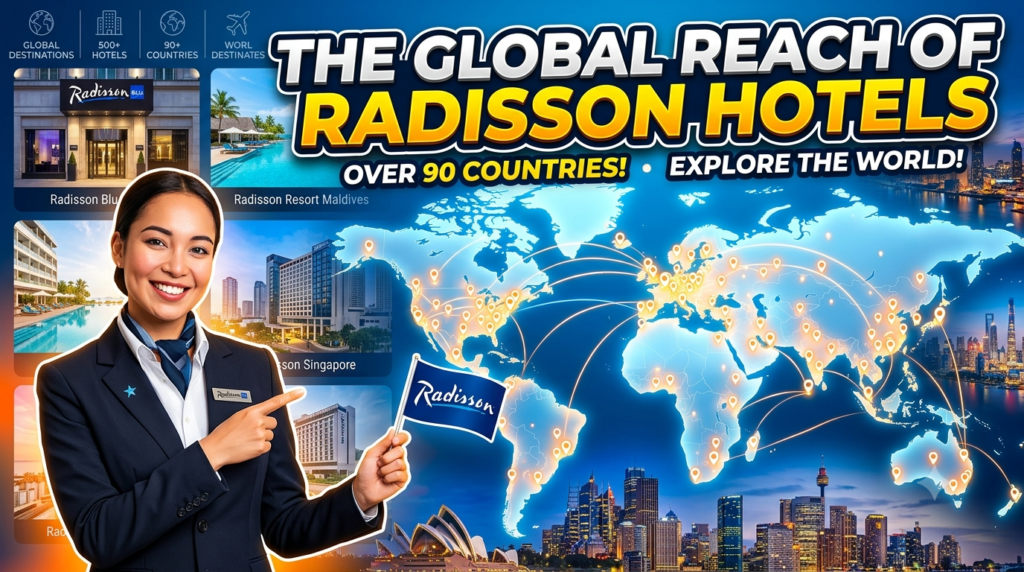
When travelers hear the name Radisson Hotels, they may picture a stylish city property, a comfortable business hotel, or perhaps a resort overlooking a beautiful destination. That variety is actually one of the most interesting parts of the Radisson hospitality experience. Radisson Hotel Group has built a broad international portfolio designed to serve travelers with very different expectations, budgets, trip purposes, and ideas of what a memorable hotel stay should feel like. The group currently describes itself as having more than 1,640 hotels in operation and under development across EMEA and APAC, while its wider presence extends across more than 100 countries and territories. That scale gives the brand something few independent hotels can easily reproduce: the ability to combine international hospitality standards with experiences shaped by individual destinations. A traveler can move from a major European capital to an Asian business hub or a resort destination and still encounter familiar elements of the Radisson service philosophy. Yet the best global hospitality is not simply about making every hotel identical. It is about creating confidence while leaving enough room for personality. That balance is central to understanding why Radisson continues to expand its presence around the world.
A Portfolio Built for Different Travelers
One reason the Radisson experience feels different from a single-brand hotel company is the breadth of its portfolio. Rather than trying to make every traveler fit one definition of hospitality, the group operates a collection of brands positioned for different audiences. Radisson Collection focuses on distinctive luxury lifestyle properties, while Radisson Blu occupies the upper-upscale space with a strong emphasis on stylish environments and thoughtful service. The core Radisson brand is positioned around balance, contemporary design, and approachable upscale hospitality. Radisson RED takes a more playful and informal approach, particularly appealing to travelers who want social spaces and a less traditional hotel atmosphere. Other brands, including Park Inn by Radisson and Country Inn & Suites by Radisson, address different needs within the upscale and midscale segments. This architecture matters because modern travelers are no longer choosing hotels simply according to star ratings. They are choosing according to personality, purpose, location, design, flexibility, and value. A business traveler attending a conference may want efficiency and workspace, while a couple on a city break may prioritize restaurants, atmosphere, and location. By maintaining different identities under one broader hospitality organization, Radisson can respond to both without forcing the same experience onto everyone.
Understanding the Radisson Brand Family
The easiest way to understand Radisson’s global hospitality strategy is to think of its brands as different personalities within one large family. They share organizational knowledge and hospitality principles, but they are not intended to feel exactly the same. Radisson Collection, for example, emphasizes iconic properties, local influence, contemporary living, dining, wellness, and distinctive design. Radisson Blu has a more established upper-upscale identity, combining modern interiors with service that pays attention to details. The standard Radisson experience is designed to create a sense of balance and comfort, while Radisson RED introduces more energetic and informal environments. This segmentation allows travelers to make choices based not only on price but also on the kind of experience they want to have. Imagine selecting a hotel the way you might select a restaurant: sometimes you want elegant fine dining, sometimes you want a relaxed neighborhood café, and sometimes you want somewhere lively where the atmosphere is almost as important as the meal. Radisson’s brand family applies a similar logic to accommodation. The result is a hospitality ecosystem in which different properties can appeal to different moods while remaining connected to a recognizable international organization.
Radisson Collection and Radisson Blu
Among the best examples of this approach are Radisson Collection and Radisson Blu. Radisson Collection is built around the idea that a luxury hotel should feel connected to its surroundings rather than simply importing a generic international design. Its properties are intended to reflect local character while delivering contemporary accommodation and experiences across areas such as dining, fitness, wellness, and sustainability. Radisson Blu, meanwhile, offers a broader upper-upscale proposition and has developed a particularly strong presence across Europe. For guests, this distinction can make the decision-making process easier. Someone looking for an exceptional property with a strong sense of place may naturally gravitate toward Radisson Collection, while someone who wants a polished international hotel with familiar standards may choose Radisson Blu. The interesting point is that both approaches recognize the same truth about modern hospitality: guests want reliability, but they also want something worth remembering. A room can be clean, comfortable, and beautifully designed, but the memories created by the location, staff, food, atmosphere, and small personalized touches often determine whether a guest thinks, “That was a good hotel,” or, “I want to stay there again.”
Luxury, Lifestyle, and Local Character
The modern luxury traveler is increasingly interested in authenticity. A beautiful room is no longer enough if the entire property feels disconnected from its destination. Radisson’s luxury and lifestyle concepts respond to this shift by giving greater attention to local influences and distinctive environments. In practical terms, this can mean architecture that reflects the city, food that incorporates regional influences, artwork connected to local culture, or social spaces designed around how people actually spend time in that destination. The result is a hotel experience that becomes part accommodation and part introduction to the place itself. This is especially important in cities where travelers may have hundreds of properties to choose from. Why stay somewhere that could exist anywhere when you can stay somewhere that helps you understand where you are? That question increasingly shapes premium hospitality. Radisson Collection’s emphasis on authentic local influence and Radisson RED’s more expressive lifestyle positioning demonstrate two different responses to the same consumer desire: travelers want hotels to have a personality. The strongest properties therefore function almost like a bridge between the traveler and the destination, giving guests comfort without creating a bubble that completely separates them from the world outside.
Radisson, Radisson RED, and Park Inn by Radisson
The broader Radisson portfolio becomes even more interesting when looking at brands aimed at everyday business and leisure travelers. The core Radisson brand is designed around a contemporary upscale experience, with properties appearing in city, suburban, airport, resort, and serviced-apartment settings. That flexibility makes it relevant to travelers whose journeys can look very different from one another. Radisson RED, on the other hand, deliberately challenges traditional hotel conventions through informal service, bold design, and social environments. It speaks to guests who may see the hotel as more than a place to sleep. Park Inn by Radisson provides another proposition, focusing on approachable hospitality and practical comfort. Together, these brands show how the group attempts to cover a wide portion of the travel spectrum. Instead of asking, “What does every Radisson hotel look like?” it is more useful to ask, “What should a particular Radisson brand make a particular traveler feel?” That shift from physical uniformity to emotional consistency is an important part of modern hotel branding.
What Makes the Radisson Guest Experience Different?

A hotel stay is made up of dozens of small moments. A guest remembers how quickly check-in happened, whether the staff seemed genuinely interested in helping, whether the room felt comfortable after a long flight, whether breakfast was convenient, and whether a problem was solved without creating another problem. Radisson’s stated hospitality philosophy is built around its “Yes I Can!” service approach, which reflects a willingness to help and go beyond basic expectations. The phrase itself is simple, but the concept behind it is more important than the slogan. Hospitality works best when employees have the confidence and authority to focus on solutions rather than simply reciting procedures. That can turn an ordinary interaction into a memorable one. Imagine arriving late at night after a delayed flight and finding that the front-desk team handles the situation calmly rather than treating your arrival as an inconvenience. That tiny interaction can change your perception of the entire property. Global hotel groups need systems and standards, but guests experience those systems through people. The human element remains the bridge between a brand promise and the reality of a hotel stay.
The “Yes I Can!” Service Philosophy
The strongest hospitality philosophy is one that employees can actually use in real situations. A guest rarely cares about the internal structure of a hotel company; they care about whether someone listens and helps. Radisson’s “Yes I Can!” approach is designed around that mindset, encouraging employees to deliver thoughtful service and create memorable moments. It also supports the idea that every team member is effectively a brand ambassador. From reception and housekeeping to food and beverage and management, every interaction contributes to the guest’s impression. This becomes especially important in international hospitality because expectations vary across cultures. A guest from one country may interpret friendliness differently from a guest from another, but everyone appreciates genuine attentiveness. The challenge is to maintain a recognizable service standard without making interactions feel robotic. When that balance works, the guest receives something powerful: the reassurance of a global brand combined with the warmth of personal service. That combination is difficult to manufacture through technology alone, which is why people remain at the heart of the hospitality experience.
Hospitality Designed Around Modern Travelers
Travel has changed dramatically, and hotels have had to change with it. The traditional model of a guest checking into a room, eating breakfast, and leaving the next morning no longer describes every journey. People work while traveling, extend business trips for leisure, bring families, stay longer, use hotel restaurants without sleeping at the property, and expect digital convenience throughout the booking process. Radisson’s diverse portfolio reflects this changing landscape by including conventional hotels, resorts, serviced apartments, lifestyle properties, and long-stay solutions. The growth of extended-stay travel is particularly important because it changes what guests expect from a room. A traveler staying for several nights or weeks may want additional living space, flexible dining options, laundry facilities, kitchen facilities, reliable Wi-Fi, and a stronger feeling of home. Hospitality therefore becomes less about providing a temporary bed and more about creating a temporary lifestyle. Radisson’s recent expansion into long-stay hospitality shows how hotel groups are adapting to this shift. The modern guest journey can stretch across business, leisure, work, relaxation, and exploration, sometimes all during the same trip.
Business Travel and Bleisure
Business travel is one of the areas where consistency and convenience become especially valuable. Corporate travelers often have limited time, which means friction can quickly become frustration. A smooth check-in, reliable internet, comfortable workspace, convenient breakfast, accessible location, and efficient transportation options can make an enormous difference. At the same time, the rise of bleisure travel has blurred the boundary between business and leisure. A person might attend meetings for two days and stay an additional weekend to explore the destination. Hotels therefore need to satisfy two versions of the same guest: the professional who needs efficiency and the traveler who wants discovery. Radisson’s city hotels and varied brand portfolio are well suited to this blended pattern because they can provide practical business facilities while also offering restaurants, wellness areas, social spaces, and destination access. The most successful business hotel today does not feel like an office with bedrooms attached. It feels like a place where work and personal life can coexist comfortably.
Family, Leisure, and Resort Experiences
Leisure travelers approach hotels differently. Families may prioritize room configurations, breakfast, swimming pools, convenience, and proximity to attractions, while couples may care more about privacy, dining, wellness, and atmosphere. Resorts add another dimension because guests often spend much more of their trip inside the property. That means the hotel becomes part of the destination itself. Radisson’s growing resort portfolio demonstrates the importance of this segment, particularly across Europe and Asia. A successful resort has to provide variety without overwhelming guests: somewhere to eat, somewhere to relax, somewhere to exercise, somewhere to socialize, and somewhere to escape. The best resort experiences feel effortless because the guest does not have to constantly solve logistical problems. Everything seems to flow naturally from one moment to the next. That is where hospitality becomes almost invisible. You stop thinking about the service because the service is doing its job. Instead, you remember the sunset, the meal, the conversation, or the feeling of having finally switched off.
Food, Wellness, and Social Spaces
Hotels are no longer judged solely by their bedrooms. Food, wellness, fitness, and social spaces have become major components of the overall guest experience. A hotel restaurant can become a destination for local residents rather than simply a place where hotel guests eat breakfast. A rooftop bar can shape the identity of a property. A well-designed fitness center can make business travelers feel that they can maintain their routines while away from home. Wellness spaces can turn a short stay into something restorative rather than merely functional. Radisson’s various brands approach these features differently, which helps create distinct experiences across its portfolio. Luxury properties may emphasize sophisticated dining and wellness, while lifestyle properties may focus on social interaction and informal environments. This is an important shift because travelers increasingly choose hotels according to the experience they can have inside the property. The room remains important, of course, but it is only one chapter in the story.
Dining as Part of the Hotel Experience
Food has a unique ability to connect travelers with places. A hotel breakfast can introduce a guest to regional ingredients, while a restaurant can provide an easy introduction to local flavors without requiring a separate excursion. For international hotel groups, dining also creates a difficult balancing act. Guests expect familiar quality and food-safety standards, but they increasingly want authenticity. The most interesting hotel restaurants therefore combine international professionalism with local inspiration. A guest should be able to enjoy a recognizable breakfast format while still discovering something specific to the destination. This approach can also make hotels more relevant to local communities. When residents choose a hotel’s restaurant, bar, or café for their own occasions, the property becomes part of the neighborhood rather than an isolated building for visitors. That connection strengthens the hospitality experience because guests get a sense that the hotel belongs somewhere. Food, in this sense, is not just a service. It becomes part of the hotel’s identity.
Technology and Convenience in the Guest Journey
Technology has transformed what guests expect from hotels. Travelers increasingly want to search, compare, book, modify, communicate, and manage their stays with minimal friction. But technology works best when it simplifies the journey rather than making hospitality feel impersonal. Digital tools can help guests find information quickly, manage reservations, access hotel services, and communicate requests. At the same time, there are moments when people still want to speak with another person. A traveler dealing with a complicated booking or unexpected problem may value a human conversation more than another automated menu. Radisson’s challenge, like that of every major hotel group, is to combine digital convenience with human hospitality. The ideal experience is not “technology instead of people.” It is “technology where technology is useful, and people where people are better.” When that distinction is respected, digital innovation becomes almost invisible. Guests simply feel that everything is easier.
Sustainability and Responsible Hospitality

Sustainability has moved from being a niche travel concern to a major part of hospitality strategy. Hotels consume substantial amounts of energy and water, generate food and other waste, purchase large quantities of products, and influence the behavior of thousands of guests. Radisson has developed a responsible-business approach that includes resource reduction, community engagement, inclusion, and environmental initiatives. Its Hotel Sustainability Basics framework addresses areas such as energy, water, waste, carbon emissions, linen reuse, green cleaning, vegetarian food options, and reducing single-use plastics. These measures may sound ordinary individually, but their cumulative impact can be significant when applied across a large international portfolio. The bigger challenge is making sustainability meaningful to guests without turning every stay into an environmental lecture. Guests generally want responsible options that fit naturally into the experience. A linen-reuse program should be simple, recycling should be convenient, and sustainable food should be enjoyable rather than presented as a compromise. The future of green hospitality is likely to depend on exactly that kind of integration.
Moving Toward Net-Zero Hospitality
Radisson’s sustainability journey has also moved toward measurable net-zero goals. The group introduced its Verified Net Zero Hotels program in 2025 and announced a roadmap in 2026 aimed at reaching 100 Verified Net Zero hotels by 2030. This direction is significant because it moves sustainability beyond broad statements and toward measurable operational performance. Achieving genuine reductions in hotel emissions is challenging, particularly for older buildings that were not originally designed around modern energy standards. It requires changes in energy sourcing, building efficiency, food operations, waste management, and guest practices. The important question is not whether a hotel can become sustainable overnight—it cannot—but whether the organization has credible systems for measuring progress and continuously improving. For travelers, that can eventually make sustainability easier to evaluate. Instead of simply seeing a green label on a website, guests may increasingly be able to understand what that label actually represents. That transparency could become one of the strongest differentiators in future hospitality.
The Growing Importance of Local Experiences
Global hospitality can sometimes face a paradox: the larger a hotel company becomes, the more important local identity becomes. Travelers can book international brands almost anywhere, so the property needs a reason to feel special once they arrive. Radisson’s portfolio addresses this through different brand concepts, destination-focused properties, and local design influences. The idea is straightforward: global standards should provide confidence, while local character provides memory. A traveler may choose a recognizable hotel because they know what level of service to expect, but they remember the city because of the experiences that surround that stay. Hotels can contribute to that discovery by recommending restaurants, cultural attractions, neighborhoods, markets, events, and experiences that residents actually value. This is where hotel employees can become informal ambassadors for their destinations. A great recommendation from someone who knows the city can be more valuable than a generic tourist guide. In a world where travelers can research almost anything online, personal knowledge becomes surprisingly powerful.
Radisson Hotels in Asia and India
Asia has become an increasingly important part of Radisson Hotel Group’s growth story, and India stands out as a particularly significant market. The group has continued expanding its presence across Indian cities and destinations, including major urban centers as well as emerging markets. That strategy reflects a broader transformation in Indian travel, where domestic tourism, business travel, weddings, leisure, and weekend trips are creating demand beyond traditional metropolitan hubs. India’s diversity also presents an interesting hospitality opportunity because a hotel in a major technology or financial center may need to serve a very different audience from a resort or property in a smaller destination. Radisson’s multi-brand approach allows it to participate across several segments. For Indian travelers, the familiarity of an international brand can provide confidence, while individual properties can adapt to local expectations around food, celebrations, family travel, and service. The country’s hospitality market is increasingly competitive, which means simply having an international name is not enough. Hotels have to deliver value and experience consistently.
Read More:-
How Does Strikingly Simplify the Website Building Process?
Building Your Dream Website with Site123
Boost Your E-commerce Strategy with YITH Plugins
Maximize Your Customer Engagement with LiveAgent’s Features
Why STRIPO is Essential for Digital Product Marketersa
Why Consistency Matters in Global Hospitality
Imagine booking a hotel in a city you have never visited. You may not know the neighborhood, the transport system, or even what to expect culturally. A recognizable hotel brand can reduce some of that uncertainty. This is one of the hidden strengths of global hospitality companies. Consistency creates confidence. It does not mean that every property should be identical; instead, guests should know that certain fundamental expectations—cleanliness, service, safety, professionalism, and quality—will be taken seriously. Radisson’s large portfolio gives it the ability to create this sense of familiarity across different destinations. At the same time, its collection of distinct brands allows individual properties to retain personality. That combination is similar to a familiar language spoken with different accents. The meaning remains recognizable, but the local character changes. For frequent travelers, that can be incredibly valuable. They can explore new destinations without feeling as though they are starting from zero every time.
The Future of the Radisson Hospitality Experience
The next stage of hospitality will likely be shaped by several competing demands: personalization, sustainability, technology, affordability, local authenticity, and flexibility. Travelers want more choice, but they also want less friction. They want sustainable hotels, but they do not want sustainability to make their experience inconvenient. They want technology, but they also want genuine human interaction. They want global standards, but they want local character. Radisson’s continued investment across multiple brands suggests that the company is positioning itself for exactly this fragmented travel environment. Its expansion into long-stay accommodation, continued resort development, growth in markets such as India and Asia, and sustainability initiatives all point toward a hospitality model that is broader than traditional overnight accommodation. The hotel of the future may function simultaneously as a workplace, restaurant, social club, wellness center, residence, and gateway to the local community. The brands that succeed will be those capable of combining these roles without making the guest experience feel complicated.




Conclusion
The global hospitality experience at Radisson Hotels is ultimately about balancing two ideas that can appear contradictory: familiarity and individuality. Travelers want the reassurance that comes from an established international hotel group, but they also want each journey to feel connected to the destination they have chosen. Radisson’s broad brand portfolio gives it a way to address that tension, from luxury lifestyle experiences through Radisson Collection to the more energetic personality of Radisson RED and the approachable comfort of brands such as Park Inn by Radisson and Country Inn & Suites by Radisson. Its service philosophy places people at the center, while its investment in technology, sustainability, resorts, long stays, and emerging markets reflects the changing expectations of modern travelers. The real measure of success, however, remains simple: how does the guest feel when they leave? If the answer is comfortable, cared for, inspired, and eager to return, the hotel has done more than provide a room. It has created an experience. That is the real opportunity for Radisson as it continues expanding its global hospitality presence.
FAQs About Radisson Hotels
Q. What is Radisson Hotel Group known for?
A. Radisson Hotel Group is known for its international portfolio of hotel brands, broad geographic presence, and focus on guest-centered hospitality. Its portfolio spans luxury, lifestyle, upscale, midscale, resort, and extended-stay experiences.
Q. What makes Radisson hotels different from one another?
A. Radisson operates multiple brands with distinct identities. Radisson Collection focuses on luxury lifestyle properties, Radisson Blu emphasizes upper-upscale hospitality, Radisson RED offers a more informal and social experience, while brands such as Park Inn by Radisson and Country Inn & Suites by Radisson target different comfort and value needs.
Q. Is Radisson focused on sustainable hospitality?
A. Yes. Radisson has developed sustainability initiatives covering energy, water, waste, carbon emissions, food, plastics, community impact, and inclusion. Its newer Verified Net Zero program is intended to expand measurable net-zero hotel operations.
Q. Are Radisson hotels suitable for business travelers?
A. Yes. Many Radisson properties cater to business travelers through convenient locations, meeting facilities, work-friendly spaces, dining options, connectivity, and services designed around efficient stays. Some properties also work well for bleisure travel, where business trips are combined with leisure time.
Q. Why is Radisson expanding in India and Asia?
A. India and the wider Asia-Pacific region offer strong opportunities because of expanding domestic travel, business activity, leisure tourism, and demand for branded accommodation. Radisson’s multi-brand portfolio allows it to serve different markets and traveler segments as these regions continue developing.