
Discover how RebateKey can help you save more on online purchases through rebates, discounts, and exclusive deals. Learn how RebateKey works, how to find eligible products, claim rebates correctly, compare effective prices, and make smarter shopping decisions. This guide also covers important RebateKey tips, payout times, eligibility rules, benefits, and potential drawbacks so you can shop confidently and maximize your savings.
Table of Contents
- What Is RebateKey?
- How to Use RebateKey for Online Shopping
- Ways RebateKey Can Help You Save More
- RebateKey Rebates vs. Traditional Coupons
- RebateKey Payouts and Waiting Period
- Important Rules to Follow
- Is RebateKey Safe and Legit?
- Potential Advantages and Drawbacks
- Tips for Getting the Most From RebateKey
- Final Verdict
- Conclusion
- Frequently Asked Questions
What Is RebateKey?
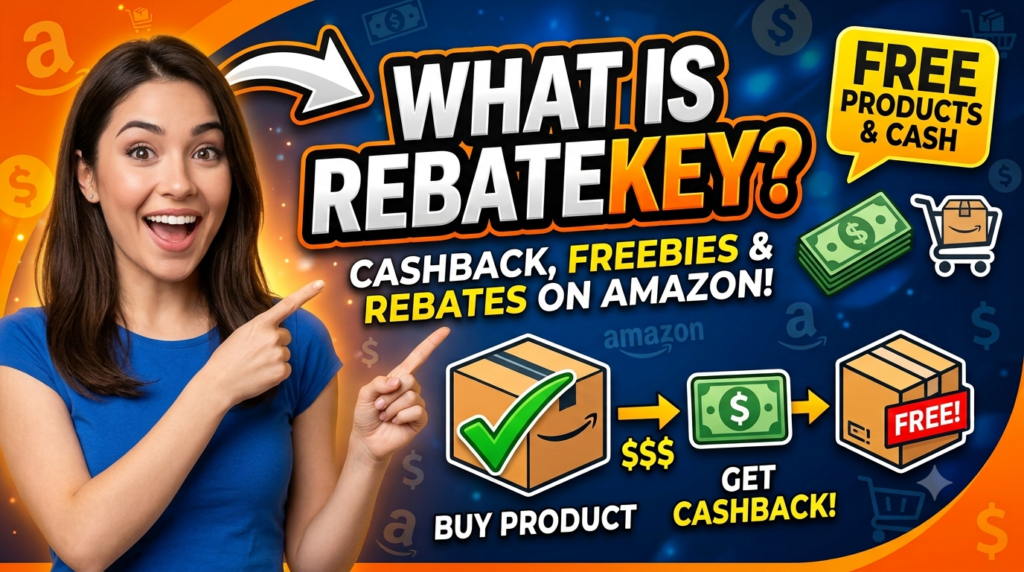
RebateKey is an online rebate and deal platform designed to connect shoppers with discounted products and manufacturer-funded rebate offers. According to RebateKey’s own explanation, the company was created by ecommerce sellers who wanted a way to promote products and encourage customers to try newer or high-selling items. Rather than selling the products directly, RebateKey lists offers supplied by sellers and directs shoppers to the marketplace where the product is actually purchased. This distinction matters because a shopper should think of RebateKey as a deal and rebate intermediary, not necessarily as the retailer itself. The product page, seller, price, marketplace, and rebate conditions therefore deserve careful attention before you click the purchase button.
For a bargain hunter, the attraction is obvious. Imagine that an eligible product costs $40 on a marketplace and RebateKey advertises a $20 rebate. You still make the purchase according to the offer’s instructions, but if the rebate is successfully approved and paid, your effective cost can become $20 before taxes or other applicable charges. That is very different from simply finding a 10% coupon. RebateKey’s current site says its marketplace contains categories ranging from electronics and home products to clothing, grocery, beauty, pet supplies, tools, toys, and more. The selection can therefore be useful for people who already intend to shop in these categories. The key is to treat a rebate as a potential reduction in your final cost, rather than assuming every advertised percentage represents instant money back at checkout.
How the RebateKey Model Works
The RebateKey process generally follows a few straightforward stages. First, you browse available rebate offers and select a product that genuinely interests you. Then you follow the specified purchase link to the relevant marketplace and make sure the product, seller, and price match the offer you selected. After completing the purchase, you return to RebateKey and submit the required order information, typically the order ID, so the seller can verify the transaction. RebateKey’s current buyer instructions state that the rebate is then added to the user’s Wallet once the purchase is verified, with the funds held for the applicable waiting period before payout.
That last step is where many inexperienced shoppers can make mistakes. A rebate offer is not necessarily a “buy anything and get money back” arrangement. The offer may specify a particular product, seller, price, marketplace, or purchase procedure. RebateKey’s instructions specifically warn buyers to make sure the product and pricing correspond between RebateKey and the marketplace and to avoid using additional discount codes when the offer says they are prohibited. Think of the rebate conditions as a recipe: skipping one ingredient can change the result. If the offer says to purchase through a specific link and submit the order ID, following those instructions is part of qualifying for the rebate.
Why Sellers Offer Large Rebates
You might naturally wonder why a seller would give away such a large portion of a product’s purchase price. RebateKey explains that participating sellers use rebates as a way to encourage customers to try products and accelerate sales. The company describes its model as a marketing mechanism in which sellers fund rebates and RebateKey manages the process. From the seller’s perspective, a rebate can function like a promotional campaign: instead of spending all of a marketing budget on traditional advertising, the seller uses an attractive offer to encourage actual purchases.
For shoppers, this creates an interesting situation. You may be able to access a product at an unusually low effective cost, but that does not automatically mean the product is the best possible purchase. A 70% rebate on a product you do not need is still money spent unnecessarily. The smartest approach is to start with the question, “Would I buy this product if there were no rebate?” If the answer is no, the percentage should not tempt you into purchasing it. Once you have established that the product is useful, you can use the rebate to improve the economics of the purchase.
How to Use RebateKey for Online Shopping
Using RebateKey effectively is less about complicated technology and more about developing a careful shopping routine. Start by visiting the platform and browsing the available rebate categories or searching for a product that you already planned to buy. RebateKey currently promotes offers across a broad range of product categories and marketplaces, so using its filters and search functionality can help narrow the options. Once you find an appealing offer, read the conditions before making any purchase. Do not rush simply because a large percentage or limited-looking deal catches your eye.
The next step is to compare the RebateKey listing with the marketplace listing. Check the exact product, brand, seller, and listed price. RebateKey’s buyer guide specifically advises shoppers to make sure these details match. This simple habit can prevent one of the most frustrating shopping experiences: buying what appears to be the right item only to discover later that it was not the qualifying version. You should also pay attention to whether the deal prohibits coupons or additional discounts. RebateKey’s FAQ says that using additional discounts can invalidate certain rebates, so “stacking” every promotion you find is not always a winning strategy. The goal is not to collect as many discount codes as possible; the goal is to achieve the lowest valid effective price.
Finding Products and Deals
Searching strategically can make a major difference. Instead of opening random offers simply because they advertise an impressive rebate percentage, start with your shopping list. If you need kitchen accessories, search that category. If you are planning to replace a phone accessory, look for relevant electronics. If you regularly purchase pet products, check those offers when you actually need supplies. RebateKey’s current rebate directory includes categories such as beauty, books, electronics, grocery, home and kitchen, health and personal care, office products, pet supplies, sporting goods, tools, toys, and more. This variety means you can potentially turn rebate hunting into part of your normal shopping process instead of treating it as a reason to buy things you never planned to purchase.
Another useful strategy is to compare the effective price, not merely the rebate percentage. Suppose Product A costs $30 and offers a $10 rebate, while Product B costs $25 and offers a $5 rebate. Product A has the larger dollar rebate, but its effective pre-tax cost after the rebate is $20 compared with $20 for Product B. Now imagine Product B has better reviews or a longer warranty. Suddenly, the “smaller” rebate may actually be the better deal. This is why experienced bargain hunters look beyond flashy percentages. A rebate is one part of the equation, not the entire equation.
Completing Your Purchase Correctly
Once you decide that an offer is worthwhile, follow the purchase instructions exactly. RebateKey’s support documentation instructs buyers to click through the appropriate marketplace link, purchase the eligible product, and then return to the RebateKey platform to provide the order ID. Save your order confirmation and other relevant purchase information until the rebate has been successfully paid. A screenshot or confirmation email can also be useful for your own records if you later need to verify what you purchased.
The most important habit here is do not improvise. If the offer tells you to use a particular link, use that link. If it says not to use another coupon, do not add one simply because your browser suggests it. If it requires a particular seller, do not switch sellers because another listing looks slightly cheaper. Rebate programs depend on transaction verification, so small differences can matter. Taking an extra minute before checkout can be much more valuable than discovering after the purchase that you accidentally made yourself ineligible.
Submitting Your Order ID
After purchasing, the order ID becomes an important part of the rebate process. RebateKey explains that buyers need to report their purchase by entering the order number or “Rebate Key” associated with the transaction. Once the seller verifies the order, the rebate can be approved and reflected in the buyer’s Wallet. RebateKey’s purchase guide also directs buyers to the purchases area and the unclaimed section to confirm the transaction.
Do not treat this step as something you can casually complete days later without checking the terms. The platform’s FAQ says the purchase should be reported within one hour, making prompt submission an important part of the process. A good routine is simple: buy the item, immediately copy the order ID, open RebateKey, submit the purchase, and confirm that it appears correctly in your account. It is a little like putting a receipt into a folder immediately after shopping rather than throwing it into a drawer and hoping you can find it later.
Ways RebateKey Can Help You Save More
The biggest advantage of RebateKey is the potential size of some rebates. The platform currently advertises offers reaching as high as 100% on selected products, although such offers should be viewed as individual promotions rather than a guarantee that every product will be free. When used intelligently, even smaller rebates can add up. If you regularly purchase products that qualify for rebates, the cumulative savings can become meaningful over time, particularly when you are already planning those purchases.
The trick is to build a rebate-first shopping mindset without becoming rebate-driven. Before purchasing an item online, consider checking whether an eligible rebate exists. Then compare that offer against the ordinary marketplace price and competing products. Keep a simple record of pending rebates if you shop frequently, because delayed payouts can otherwise become easy to forget. The platform itself provides a Wallet for tracking rebate amounts and payout status, which can make this process easier. Used this way, RebateKey becomes another layer in your shopping workflow rather than an impulse-buying machine.
Look for High-Value Rebates
A high-value rebate can be particularly useful when it applies to a product you genuinely need. For example, if you were already planning to spend $50 on a household item and discover a legitimate $20 rebate, the offer can materially reduce your effective cost. But percentage-based marketing can sometimes make an offer appear more dramatic than it really is. A 50% rebate on an overpriced product may still be worse than a 20% rebate on a fairly priced alternative.
This is why you should compare the product’s ordinary market price before deciding. Search for the same item or comparable alternatives, consider quality and reviews, and then calculate the final effective price after the rebate. The rebate should improve a good purchase, not rescue a bad one. In practical terms, your shopping formula can be as simple as: purchase price minus expected rebate equals effective pre-tax cost. Once you begin thinking in that format, flashy rebate percentages become much less distracting.
Compare the Final Effective Price
Price comparison is arguably the most important skill when using any rebate platform. Imagine three websites selling similar products at $45, $40, and $38. The $45 product comes with a $15 RebateKey rebate, the $40 product has a $5 coupon, and the $38 product has no promotion. The effective prices would be approximately $30, $35, and $38 before considering taxes and other costs. Suddenly, the rebate offer is clearly interesting.
But there is another layer: product quality. If the $30 item is poorly reviewed while the $35 item has significantly stronger customer feedback, the $5 difference may be worth paying. Good shopping is rarely about finding the biggest discount in isolation. It is about finding the strongest value-for-money combination. RebateKey can help with the price component, but you still need to do the consumer research.
Combine RebateKey With Smart Shopping Habits
Although some RebateKey offers may prohibit additional discounts, you can still combine rebate shopping with general money-saving habits that do not interfere with eligibility. Build a shopping list before browsing, compare prices, avoid unnecessary purchases, and set a spending limit. Track your rebate claims so you know how much money is pending rather than mentally counting it as cash you already have.
It is also useful to think about timing. If an item is not urgent, you can wait for a more attractive offer rather than purchasing immediately. Check different categories periodically and look for products you were already planning to purchase. The platform’s current site features rebates, coupons, deals, and store-related offers, giving shoppers multiple ways to explore potential savings. The best savings strategy is therefore a combination of patience, comparison, and disciplined purchasing.
RebateKey Rebates vs. Traditional Coupons
Traditional coupons usually reduce the amount you pay during checkout. A rebate, by contrast, may require you to pay the purchase price first and receive money later. That difference is important for budgeting. If a product costs $60 and has a $20 rebate, you generally should think of the transaction as a $60 purchase followed by a potential $20 payout, rather than assuming that only $40 will leave your account immediately.
| Feature | Traditional Coupon | RebateKey Rebate |
| When savings are received | Usually at checkout | After purchase and verification |
| Upfront purchase price | Usually reduced | May remain at listed price |
| Claim process | Enter/apply coupon | Submit purchase/order information |
| Waiting period | Usually none | RebateKey says a waiting period applies |
| Savings potential | Varies | Selected offers can be substantial |
| Important consideration | Coupon eligibility | Rebate terms and purchase verification |
The two approaches therefore serve different purposes. A coupon is generally immediate and straightforward, while a rebate can potentially offer a larger saving but requires patience and correct claim submission. RebateKey itself explains that its offers are different from ordinary coupons because the shopper purchases the product first and subsequently receives the rebate. Understanding this distinction prevents unrealistic expectations and helps you manage your cash flow.
RebateKey Payouts and Waiting Period
One of the most important things to understand before using RebateKey is that rebate money is not necessarily immediate. RebateKey’s current FAQ states that the platform holds rebate funds for 35 days to allow transaction verification and resolve potential issues before sending the payout. Its support materials similarly explain that buyers should expect to wait before receiving the money and can track the rebate through the Wallet section. This means you should not use a rebate offer for a purchase that you can only afford if the cashback arrives immediately.
RebateKey says buyers may select a payout method such as a check, PayPal, or an e-gift card. The exact process and timing can depend on the offer and account circumstances, so always read the current terms associated with a particular deal. It is sensible to keep your own record of the purchase date, rebate amount, order ID, and expected payout date. That small amount of organization can make it much easier to identify a delayed or missing payment.
Important Rules to Follow
Rebate programs are attractive precisely because they can offer significant savings, but they generally require shoppers to follow their conditions carefully. RebateKey’s buyer instructions specifically emphasize matching the product, price, and seller between the rebate listing and the marketplace. They also warn that additional discounts can invalidate a rebate in applicable offers. This means you should read the offer details before checkout rather than assuming all coupons and promotions can be stacked together.
The safest routine is to verify five things before purchasing: the exact product, the marketplace, the seller, the price, and the rebate conditions. After purchasing, submit the order ID promptly and retain the confirmation. If the product is returned or the order is canceled, do not assume the rebate will remain valid. Rules can vary by promotion, so the individual offer’s terms should always take priority over assumptions based on another deal you previously used.
Is RebateKey Safe and Legit?
The answer requires some nuance. RebateKey is an established online platform with its own website, buyer documentation, seller documentation, and published explanation of its rebate model. ScamAdviser currently describes rebatekey.com as “very likely safe” while also flagging the presence of mainly negative reviews as a negative signal. That does not prove that every transaction will be problem-free, and it is important to distinguish website legitimacy from the reliability of an individual rebate experience.
Current third-party feedback is mixed and deserves attention. At the time of the search, Trustpilot displayed a 1.9 out of 5 rating from 94 reviews, with 34% of listed reviews being one-star reviews and 52% being five-star reviews. Some recent reviewers report problems involving delayed or missing payouts and customer-service responsiveness, while other reviewers describe receiving substantial rebates and having positive experiences. This mixed picture means shoppers should avoid treating promotional claims or isolated testimonials as guarantees. If you decide to use RebateKey, start with purchases you can comfortably afford, follow the terms exactly, retain documentation, and evaluate your own experience over time.
Potential Advantages and Drawbacks
The strongest argument for RebateKey is straightforward: it can potentially reduce the effective cost of online purchases without requiring shoppers to search through endless coupon codes. Its current platform offers rebates across numerous categories and marketplaces, and the company says selected rebates can reach very high percentages. For a disciplined shopper, this can create genuine opportunities to save money on products they already intended to purchase. The platform’s Wallet and claim-tracking process can also make pending rebates easier to monitor.
The drawbacks deserve equal attention. You may have to pay the full purchase price upfront, wait for the rebate, and carefully follow eligibility requirements. A missed condition can potentially invalidate an offer. More importantly, current third-party reviews include complaints about payout delays and customer service, so shoppers should not treat every promised rebate as instant or risk-free money. The sensible conclusion is neither “RebateKey always works perfectly” nor “RebateKey is automatically a scam.” Instead, approach it like any financial-saving tool: understand the rules, manage your expectations, document transactions, and only purchase products that make sense for your budget.
Read More:-
How Does Strikingly Simplify the Website Building Process?
Building Your Dream Website with Site123
Boost Your E-commerce Strategy with YITH Plugins
Maximize Your Customer Engagement with LiveAgent’s Features
Why STRIPO is Essential for Digital Product Marketersa
Tips for Getting the Most From RebateKey
The best way to maximize savings is to make RebateKey part of a broader shopping strategy. Start with products you genuinely need, then search for matching rebates. Compare the effective post-rebate price with other sellers and similar products. Before checkout, verify every eligibility requirement, especially seller, marketplace, price, product version, and coupon restrictions. After purchase, submit the order ID promptly and keep your records until the rebate is successfully paid.
Another smart habit is to maintain a small rebate tracker. You do not need complicated software; a spreadsheet or notes app can record the product, purchase date, original price, expected rebate, order ID, and payout status. This is especially helpful if you use rebate platforms frequently because pending payments can accumulate quickly. RebateKey’s own materials say users can monitor their rebates in the Wallet section, so your personal record provides an additional layer of organization.
Finally, resist the psychological trap of “free money.” A 90% rebate sounds extraordinary, but spending $10 on something unnecessary is still spending $10. The best rebate is the one attached to a product that solves a real need at a competitive effective price. Treat the rebate as the finishing touch on a smart purchase rather than the reason to make the purchase in the first place.
Final Verdict
RebateKey can be useful for shoppers who are comfortable paying upfront, following detailed rebate instructions, and waiting for their money to be paid later. Its current platform provides access to rebates, coupons, and deals across a wide range of product categories, while its buyer documentation clearly explains the basic claim process. The potential savings can be significant on selected products, particularly when the rebate applies to something you already intended to buy.
At the same time, current customer feedback means it is sensible to approach the service with realistic expectations. Third-party reviews show both positive experiences and serious complaints about payment delays and support, so shoppers should not assume that every transaction will be effortless. If you use RebateKey, the smartest approach is to verify the deal, follow the instructions exactly, retain purchase records, and avoid spending money you cannot comfortably have tied up during the rebate waiting period. Used with that mindset, RebateKey can be another tool in your online-shopping savings toolkit rather than a substitute for careful price comparison.




Conclusion
Saving money online is rarely about finding one magical coupon or discovering one perfect cashback website. Real savings usually come from combining several good habits: comparing prices, avoiding unnecessary purchases, checking promotions, understanding return policies, and paying attention to the final effective cost. RebateKey adds another potential layer of savings by connecting shoppers with manufacturer-funded rebate offers and directing them to participating marketplaces. Its current documentation says buyers generally purchase through the provided marketplace link, submit their order ID, and wait for the applicable processing period before receiving their payout.
The biggest lesson is simple: do not chase the percentage; chase the value. A large rebate attached to a product you need and a competitive price can be genuinely attractive. A large rebate attached to an unnecessary or overpriced product is simply clever marketing. And because current third-party reviews raise concerns about payout and customer-service experiences, it is wise to start cautiously and keep good records. When you combine careful research with disciplined spending, rebate shopping can become a practical way to stretch your online-shopping budget further.
Frequently Asked Questions
Q. What is RebateKey used for?
A. RebateKey is an online platform that lists rebates, coupons, and deals from participating sellers and manufacturers. Shoppers can browse qualifying products, purchase them through the specified marketplace, and submit their order information to claim an eligible rebate.
Q. How long does a RebateKey rebate take?
A. RebateKey’s current buyer FAQ says funds are held for 35 days after the purchase is verified before payout. Its support documentation also describes a waiting period and says buyers can monitor rebates through their Wallet.
Q. Can I use another coupon with a RebateKey offer?
A. Not necessarily. RebateKey specifically warns that using additional discounts can invalidate an applicable rebate. Always read the individual offer’s terms before applying another coupon or promotional code.
Q. Does RebateKey sell the products directly?
A. No. RebateKey explains that it does not directly sell the products listed on its platform. Instead, it displays deals supplied by participating sellers and directs buyers to marketplaces where the actual purchase takes place.
Q. Is RebateKey worth trying?
A. It can be worth trying for shoppers who understand the rebate process and are comfortable waiting for their payout. However, current third-party reviews are mixed, including complaints about delayed payments and customer support, so it is sensible to begin cautiously, follow every offer requirement, and keep documentation for your purchases.