
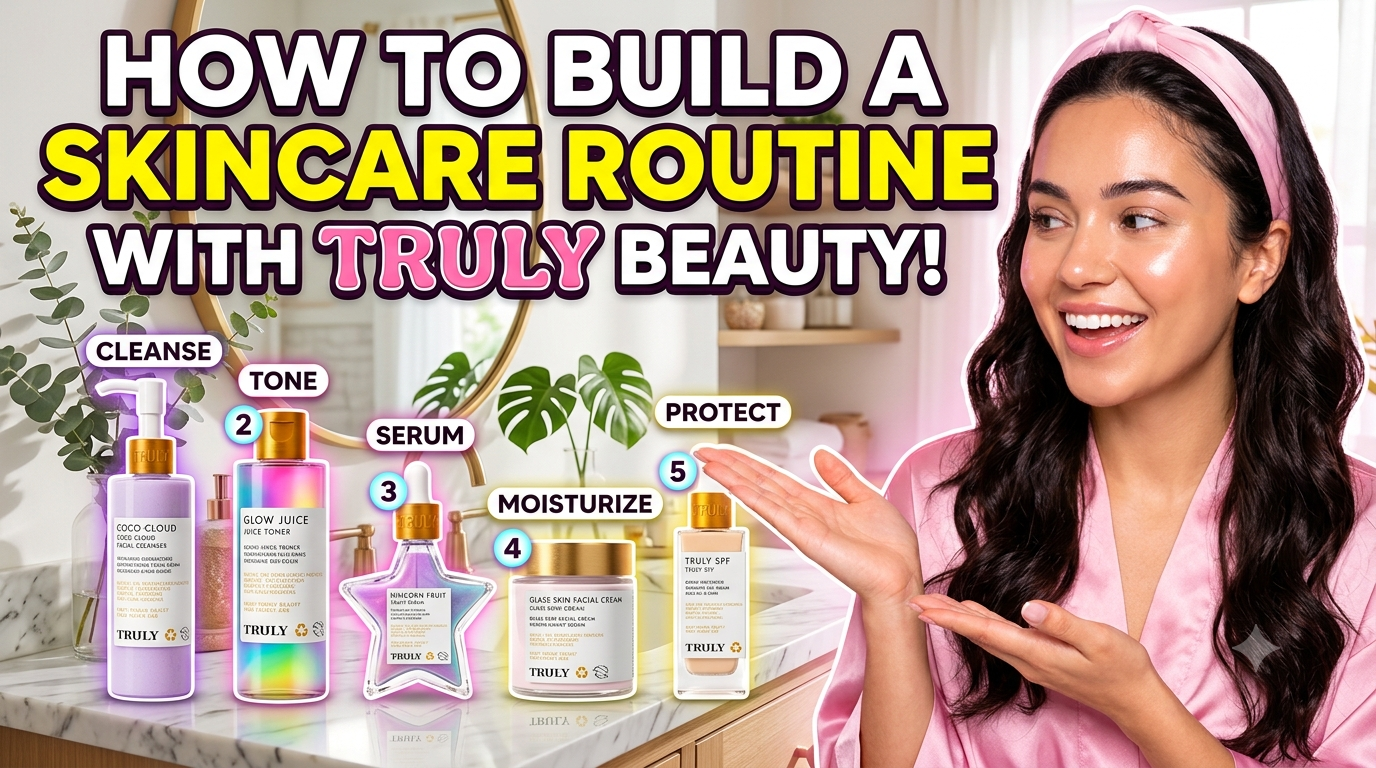
Discover how to build an effective skincare routine with Truly Beauty products and give your skin the care it deserves. From cleansing and hydration to targeted serums, moisturizers, exfoliation, and body care, Truly Beauty offers a variety of beauty products designed to complement different skincare goals. This guide explores how to choose and layer Truly Beauty products correctly, create simple morning and nighttime routines, avoid common skincare mistakes, and maintain a consistent regimen for healthier-looking, hydrated, and radiant skin.
Table of Contents
- Understanding Truly Beauty and Its Approach to Skincare
- Step 1: Identify Your Skin Type and Main Concerns
- Step 2: Start Your Morning Routine with Gentle Cleansing
- Step 3: Add a Targeted Face Serum
- Step 4: Lock In Hydration with Moisturizer
- Step 5: Finish Your Morning Routine with Sunscreen
- Building a Truly Beauty Nighttime Skincare Routine
- Creating a Body Skincare Routine with Truly Beauty
- How to Layer Truly Beauty Products Correctly
- Common Skincare Routine Mistakes to Avoid
- How Long Should You Follow a Routine Before Evaluating Results?
- Conclusion
- FAQs
Understanding Truly Beauty and Its Approach to Skincare

A good skincare routine starts long before you apply the first drop of serum. It begins with understanding what you are putting on your skin and, just as importantly, why you are using it. Truly Beauty positions itself within the beauty market as a brand offering skincare, body care, and related beauty products with an emphasis on visually distinctive formulas and ingredient-driven solutions. According to the company’s product disclaimer, its definition of “clean” centers on being as natural as possible without sacrificing performance, while acknowledging that some formulations may include synthetic ingredients.
This distinction is important since skincare products can occasionally sound almost magical due to marketing.A colorful jar or beautifully whipped texture may make skincare more enjoyable, but your routine should ultimately be based on your skin’s needs. Think of your skincare products as members of a team. Your cleanser has one job, your serum may have another, your moisturizer supports hydration, and sunscreen handles daytime UV protection. When every product has a purpose, your routine becomes much easier to understand.
The same philosophy applies when incorporating Truly Beauty products into your regimen. Rather than buying several products simultaneously because they look appealing, begin by identifying the gaps in your existing routine. Do you struggle with dryness? Are you trying to improve the appearance of rough body texture? Does your skin feel uncomfortable after cleansing? Are you simply looking for a reliable everyday routine? Your answers should determine what enters your shopping cart.
The American Academy of Dermatology notes that a simple approach built around cleansing, moisturizing, and protecting the skin can be both practical and effective. Using too many products may also increase the chance of irritation. That makes simplicity an excellent starting point, even if you eventually want to build a more elaborate Truly Beauty skincare routine.
Why Ingredient-Focused Skincare Matters
Ingredients are the engine under the hood of any skincare product. Packaging might get your attention, but the formulation determines how the product interacts with your skin. This is especially important when you start experimenting with targeted products such as exfoliating acids, hydrating serums, or formulas designed for uneven texture.
For example, Truly Beauty’s recent skincare content discusses the use of alpha hydroxy acids such as lactic acid and glycolic acid in products targeting concerns like rough patches and the appearance associated with keratosis pilaris. Its 2026 spring skincare guidance recommends considering chemical exfoliating ingredients rather than relying exclusively on harsh physical scrubs for certain texture concerns. This does not mean everyone needs an acid-based product every day. It means ingredient selection should follow the problem you are trying to address.
Hydrating ingredients serve a different purpose. Truly Beauty’s current editorial recommendations include a hydrating face serum featuring hyaluronic acid and niacinamide, positioned as an option for supporting softer and more hydrated-looking skin. The same article recommends a peptide-focused facial moisturizer as part of a hydration-centered routine. If hydration is your main goal, these categories may make more sense than immediately reaching for strong exfoliating treatments.
The easiest rule to remember is this: choose products according to function, not hype. If you cannot explain why a product belongs in your routine, you probably do not need to introduce it yet. Skincare works best when each step earns its place.
Step 1: Identify Your Skin Type and Main Concerns
Before building your routine, spend a little time observing your skin. This sounds straightforward, but it is one of the most usually omitted stages. People often build routines around products they want rather than problems they actually have. Someone with easily irritated skin might purchase multiple exfoliating treatments because they promise smoother texture, while someone experiencing dehydration might keep using aggressive cleansers because they associate a tight feeling with cleanliness.
Start by considering how your skin typically behaves throughout the day. If your face frequently feels tight or flaky, dryness may be a major concern. If you notice significant shine and excess oil, particularly across much of your face, you may lean toward an oily skin type. Combination skin often involves oilier areas around the forehead, nose, and chin alongside normal or drier areas elsewhere. Sensitive or reactive skin may become uncomfortable, red, itchy, or irritated in response to particular ingredients or environmental factors.
Then separate your skin type from your skin concerns. They are not usually interchangeable. You might have oily skin while also experiencing dehydration. You could have dry skin and be concerned about uneven texture. You may have combination skin while wanting to address dullness. This distinction helps you choose products more intelligently because one product rarely solves every concern simultaneously.
If you have persistent acne, eczema, rosacea, unexplained irritation, or another skin condition, consider consulting a board-certified dermatologist rather than relying exclusively on cosmetic skincare products. A routine can support healthy-looking skin, but it should not be treated as a substitute for medical diagnosis or treatment.
Dry, Oily, Combination, and Sensitive Skin
Once you understand your general skin type, you can begin customizing your Truly Beauty skincare routine. For dry-feeling skin, your priorities will typically revolve around gentle cleansing and hydration. Look for products that help maintain moisture rather than leaving your face feeling stripped. Hydrating serums and moisturizers can then become the backbone of the routine.
Oily skin does not automatically mean you should eliminate moisturizer. That is a surprisingly persistent skincare myth. Moisturizers help support hydration, and lightweight formulas may feel more comfortable for people who dislike heavy textures. The American Academy of Dermatology explains that moisturizer works by trapping water in the skin, helping the skin appear brighter while reducing the visible appearance of fine lines.
Combination skin usually benefits from balance rather than extremes. You may prefer lightweight hydration across your entire face while using targeted products only where necessary. Sensitive skin requires even more restraint. Introducing several new products at once can make it nearly impossible to determine which formula caused a reaction.
Whatever your skin type, introduce new products gradually and consider patch testing when appropriate. Skincare should feel like a controlled experiment, not a roulette wheel. The fewer variables you change at once, the easier it becomes to understand what your skin actually likes.
Step 2: Start Your Morning Routine with Gentle Cleansing
Your morning routine does not need to resemble a twelve-course meal. For most people, the objective is simple: prepare the skin for the day while maintaining hydration and ensuring adequate sun protection. Cleansing is often the first step, particularly if you wake up feeling oily or have used heavier products overnight.
The American Academy of Dermatology recommends using a gentle, non-abrasive cleanser, washing with lukewarm rather than hot water, and patting the skin dry with a soft towel. These small details matter. Aggressive scrubbing and excessively hot water can leave skin feeling uncomfortable, especially if your skin is already dry or sensitive.
When selecting a cleanser to pair with other Truly Beauty products, focus on compatibility. Your cleanser should remove unwanted buildup without creating the feeling that your face has been polished with sandpaper. If cleansing leaves your skin extremely tight, uncomfortable, or visibly irritated, the formula or cleansing technique may not be right for you.
After cleansing, resist the temptation to throw every active ingredient in your collection onto your face. Your next step should depend on what your skin needs. If hydration is the priority, a hydrating serum may follow. If you are using another targeted treatment, check its directions and ingredient profile carefully before combining it with additional active formulas.
Consistency beats complexity. A simple routine performed regularly is often more practical than an elaborate ritual you abandon after five days.
Step 3: Add a Targeted Face Serum
Serums are where a skincare routine can become highly personalized. They are generally used to deliver specific ingredients based on concerns such as dehydration, dull-looking skin, or uneven texture. However, adding a serum simply because everyone on social media seems to have one is not a strategy. You need to know what you want the product to accomplish.
Within a Truly Beauty skincare routine, you might consider a hydrating serum if your skin frequently feels dry or dehydrated. Truly Beauty currently highlights its Hydrating Face Serum in editorial content, describing a formula containing hyaluronic acid and niacinamide. According to the brand, the product is designed around hydration and softer-looking skin. Brand claims should always be interpreted as product positioning rather than guaranteed individual results, since everyone’s skin can respond differently.
When applying serum, follow the individual product directions rather than assuming that more is better. Skincare is not like adding extra cheese to pizza. Doubling the amount of an active product does not necessarily double the benefit and may increase the possibility of irritation.
Give each new serum enough time to fit into your routine before adding another. If your skin suddenly becomes irritated after you introduce four products simultaneously, identifying the culprit becomes difficult. One thoughtful addition at a time gives you much more useful information.
Choosing Hydrating and Brightening Ingredients
Hydration and brightening are two popular skincare goals, but they should not be confused. Hydrating ingredients generally focus on supporting moisture levels and helping skin feel comfortable and supple. Brightening products typically aim to improve the appearance of dullness or uneven-looking tone.
Ingredients such as hyaluronic acid are commonly found in hydration-focused products, while niacinamide appears in a wide range of formulas targeting multiple cosmetic concerns. Truly Beauty currently promotes both ingredients within its Hydrating Face Serum. Depending on your routine, this type of multipurpose formulation may help you avoid layering several separate serums.
Exfoliating acids require a little more caution. Glycolic and lactic acids can be useful ingredients in products designed to improve the appearance of texture, but piling multiple exfoliating formulas into one routine can overwhelm some people’s skin. Truly Beauty’s own 2026 guidance for a compromised skin barrier suggests temporarily pausing retinol, AHAs, scrubs, and acid-containing toners when the skin barrier appears damaged, focusing instead on a simplified routine.
Your skin is constantly giving you feedback. Burning, persistent stinging, worsening redness, or significant irritation should not be interpreted as proof that a product is “working.” If a product consistently causes discomfort, stop using it and seek professional advice when needed.
Step 4: Lock In Hydration with Moisturizer
Moisturizer is the comforting blanket of your skincare routine. After cleansing and applying any appropriate serum, a moisturizer helps support hydration and can make the skin feel smoother and more comfortable. This step is particularly important if your routine includes ingredients that can contribute to dryness.
Truly Beauty’s recent skincare content recommends its Cloud Cream Pro-Peptide Facial Moisturizer as a hydration-focused option and describes it as a gel cream featuring ingredients including peptides and soybean extract. Whether you choose that product or another moisturizer from the brand, pay attention to how the texture works with your skin and climate.
Someone with dry skin may prefer a richer texture, particularly at night, while a person with oily or combination skin may gravitate toward lightweight gel-like moisturizers. There is no universal texture that everyone needs. The best moisturizer is one that provides enough comfort and hydration without creating problems for your individual skin.
Application timing can also help. Dermatologists often recommend moisturizing when the skin is still slightly damp because moisturizer can help trap water in the skin. Think of it as closing a door before the moisture escapes.
If you are building your routine from scratch, cleanser plus moisturizer is already meaningful progress. You can introduce specialized items later rather than pressuring your skin to adjust to a complete collection overnight.
Step 5: Finish Your Morning Routine with Sunscreen
If there is one daytime step that should never become an afterthought, it is sun protection. A beautifully organized skincare shelf cannot compensate for consistently ignoring UV exposure.
The American Academy of Dermatology recommends sunscreen that provides broad-spectrum protection, SPF 30 or higher, and water resistance, alongside other protective measures such as seeking shade and wearing protective clothing. Daily sun protection can help reduce UV-related skin damage and premature signs of aging.
Sunscreen generally belongs at the end of your morning skincare routine before makeup. If your chosen Truly Beauty routine does not include a sunscreen suitable for your needs, use a separate broad-spectrum sunscreen from another trusted brand. There is no rule saying every product in your routine must carry the same logo.
This is an important point when discussing how to build a skincare routine with Truly Beauty products. Brand loyalty should never be more important than routine completeness. You can enjoy Truly Beauty cleansers, serums, moisturizers, or body products while choosing sunscreen from elsewhere if necessary.
A practical morning sequence might look like this:
| Step | Product Category | Main Purpose |
| 1 | Gentle cleanser | Remove oil and buildup |
| 2 | Targeted serum | Address hydration or another specific concern |
| 3 | Moisturizer | Support and maintain hydration |
| 4 | Broad-spectrum SPF 30+ sunscreen | Protect against UV exposure |
Simple? Absolutely. But simple is often exactly what makes a routine sustainable.
Building a Truly Beauty Nighttime Skincare Routine
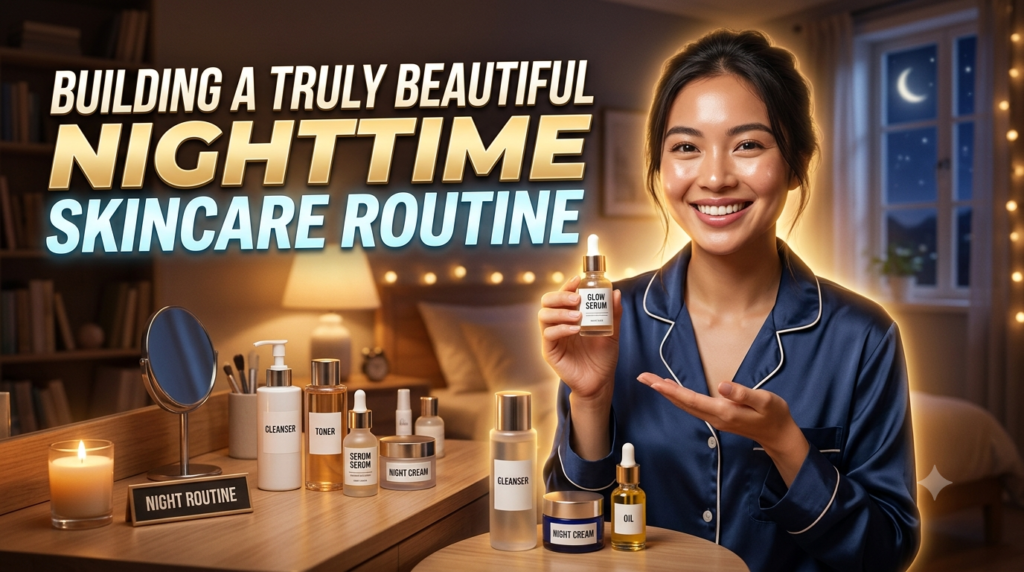
Your nighttime skincare routine has a slightly different job from your morning routine. During the day, protection—particularly sun protection—is a major priority. At night, you can focus on removing makeup, sunscreen, excess oil, and environmental buildup before applying hydration or carefully selected treatments.
Begin with cleansing. If you wear heavy makeup or water-resistant sunscreen, you may find that an initial makeup-removing step followed by gentle cleansing works better for you. The objective is to clean your skin thoroughly without aggressively rubbing it.
Once your skin is clean, decide whether it is a regular hydration night or a treatment night. This distinction can be useful if you use exfoliating ingredients. Instead of combining every active product each evening, you can create a schedule that gives your skin periods of simpler, hydration-focused care.
After your chosen serum or treatment, apply moisturizer. You may prefer a slightly richer layer at night if your skin tends to become dry, although individual preferences vary. Your routine should leave your skin comfortable rather than greasy, tight, or irritated.
The most effective nighttime routine is not necessarily the longest. If you are exhausted and staring at nine bottles lined up beside the sink, you are far more likely to skip everything. Create a schedule that works for your real life.
Cleansing Away Makeup, Sunscreen, and Daily Buildup
Evening cleansing deserves special attention because your face has spent hours exposed to sunscreen, makeup, sweat, oil, and the general messiness of everyday life. Going to sleep without properly cleansing can leave all of that sitting on the skin overnight.
If you wear makeup, start with a product designed to remove it effectively. Follow the directions and avoid unnecessary tugging around delicate areas. After makeup removal, use your regular gentle cleanser if needed to clean the skin.
The AAD’s general face-washing advice remains useful here: choose a gentle cleanser, use lukewarm water, and avoid abrasive scrubbing. Your face does not need to squeak like a freshly cleaned kitchen counter to be considered clean.
Once you have finished cleansing, gently pat your face dry and continue with the rest of your nighttime routine. Consider forgoing unnecessary active treatments and concentrating on moisturizer if your skin seems exceptionally sensitive that evening. Flexibility is part of good skincare.
Introducing Exfoliating Treatments Carefully
Exfoliation can help improve the appearance and feel of rough or uneven skin, but it is also one of the easiest areas to overdo. When people see the word “exfoliate,” they sometimes imagine that more frequent exfoliation will produce smoother skin faster. In practice, aggressive routines can leave the skin irritated and uncomfortable.
Truly Beauty’s 2026 skincare guidance discusses chemical exfoliating ingredients such as glycolic and lactic acids for certain body texture concerns. At the same time, another recent article from the brand recommends temporarily stopping acids and scrubs when dealing with signs of a compromised skin barrier. Together, those recommendations highlight an important principle: exfoliating ingredients can have a place in skincare, but context and frequency matter.
When introducing an exfoliating product, follow its specific instructions and avoid immediately combining it with several other strong actives. If you already use prescription skincare, retinoids, or treatments recommended by a dermatologist, ask your healthcare professional before making major changes.
Watch your skin closely. Increasing dryness, persistent irritation, or uncomfortable sensitivity may be signs that your routine needs simplifying.
Creating a Body Skincare Routine with Truly Beauty
Skincare does not stop at your jawline. One of the areas where Truly Beauty has developed a recognizable identity is body care, including products positioned for concerns such as rough texture and post-shaving care.
A basic body routine follows principles similar to facial skincare: cleanse without unnecessary harshness, address specific concerns selectively, moisturize, and protect exposed skin from the sun. The products themselves may differ because body skin and facial skin do not always respond identically to the same formulations.
Your shower is the natural starting point. Use a cleanser appropriate for your skin and avoid water that is excessively hot if dryness is an issue. After showering, apply moisturizer while your skin retains some moisture. This can help maintain a softer, more comfortable feel.
If you want to incorporate targeted Truly Beauty body care products, choose them according to a specific need. Someone dealing with rough-looking texture may consider an exfoliating body treatment, while someone focused primarily on dryness may prioritize hydration. Again, you do not need five products doing essentially the same job.
Cleansing and Exfoliating the Body
Body exfoliation is popular because areas such as the arms and legs can develop noticeable roughness or uneven texture. However, aggressive physical scrubbing is not always the answer.
Truly Beauty’s 2026 spring skincare guide specifically discusses switching from harsh physical scrubs toward products containing chemical exfoliants such as AHAs, including lactic and glycolic acid, for concerns such as rough patches and the appearance of strawberry legs or keratosis pilaris. That does not mean you should apply acids from head to toe every day. Start conservatively and follow the directions provided with the individual product.
Be especially mindful after shaving. Freshly shaved skin can sometimes be more sensitive, and applying a strong exfoliating formula immediately afterward may cause discomfort for some people. Check the directions for your specific Truly Beauty product and avoid combining treatments simply because they are marketed toward similar concerns.
Exfoliation should complement your routine, not dominate it. If your body skin becomes persistently dry or irritated, reduce the frequency and prioritize gentle cleansing and moisturizing.
Using Body Serums and Moisturizers
Body serums have become increasingly popular as consumers bring facial skincare concepts below the neck. Depending on the formula, these products may target hydration, texture, or cosmetic radiance. Truly Beauty’s recent spring skincare content, for example, discusses lightweight and shimmering body serums as alternatives within seasonal body-care routines.
If you use both a serum and moisturizer, apply them according to the manufacturer’s instructions. A common approach is to apply lighter treatments before heavier moisturizing products, but individual formulations may differ.
The AAD recommends daily moisturizing and notes that applying moisturizer after bathing can help trap water in the skin. This is one of the easiest habits to incorporate into a body skincare routine because it connects the new behavior to something you already do—showering.
Do not forget sun protection on exposed body areas. Your neck, chest, arms, hands, and legs can all receive UV exposure depending on what you are wearing. Facial sunscreen is important, but UV rays do not politely stop at your chin.
How to Layer Truly Beauty Products Correctly
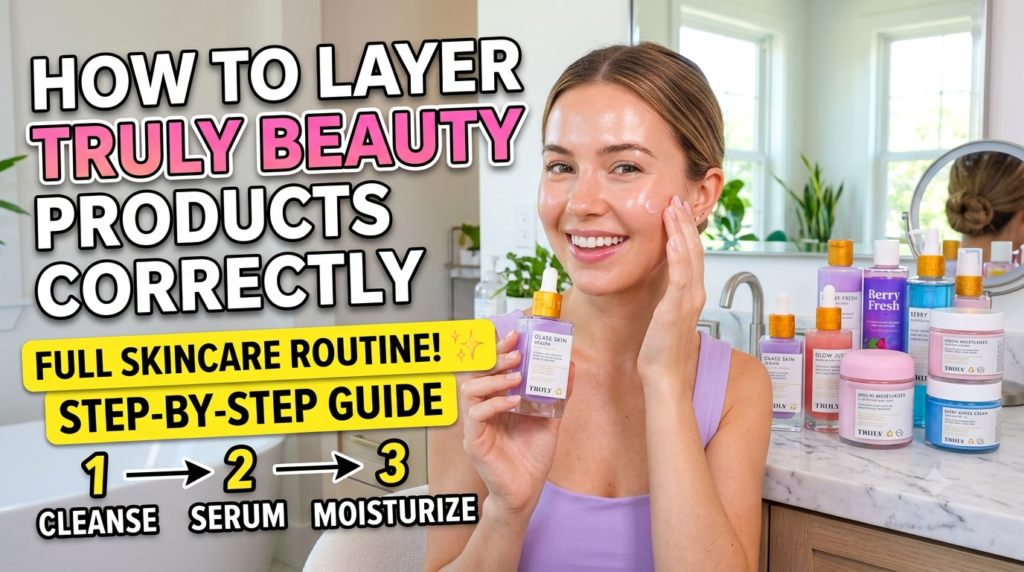
Product layering sounds complicated until you strip it down to its basic logic. You want each product to be used in a way that allows it to perform its intended role without unnecessarily interfering with other steps.
A straightforward routine generally begins with cleansing, followed by targeted treatments, moisturizer, and—during daytime—sunscreen. The AAD also emphasizes that product order matters and recommends applying treatment products after cleansing, followed by moisturizer and/or sunscreen.
When building a routine around Truly Beauty products, always prioritize the instructions on each product’s label. Formulations vary, and generic “thin-to-thick” advice should not override specific usage directions.
You should also think about ingredient compatibility. Using several products containing exfoliating acids at the same time may increase irritation. Likewise, introducing numerous active ingredients simultaneously makes it difficult to identify what is helping and what is causing problems.
Here is a practical framework:
Morning: Cleanser → appropriate serum → moisturizer → broad-spectrum SPF 30+ sunscreen.
Night: Makeup removal if needed → cleanser → targeted treatment or hydrating serum → moisturizer.
Occasional treatment: Exfoliating products or masks according to individual product directions and your skin’s tolerance.
The routine should evolve based on your skin’s response rather than your desire to use every product you own.
Read More:-
How Does Strikingly Simplify the Website Building Process?
Building Your Dream Website with Site123
Boost Your E-commerce Strategy with YITH Plugins
Maximize Your Customer Engagement with LiveAgent’s Features
Why STRIPO is Essential for Digital Product Marketersa
Common Skincare Routine Mistakes to Avoid
The biggest skincare mistakes are often surprisingly simple. The first is using too many products too quickly. A new routine can be exciting, especially when you have several beautifully packaged products waiting on the shelf. But introducing everything simultaneously can overwhelm your skin and make troubleshooting nearly impossible.
Another mistake is assuming that stronger sensations equal stronger results. Tingling may occur with certain products, but persistent burning or significant irritation should never become a badge of honor. Your skincare routine is supposed to support your skin, not challenge it to a duel.
Skipping sunscreen is another major problem. If you spend money and time on products intended to improve the appearance of your skin but consistently neglect UV protection, you are overlooking one of the most important components of daytime skincare. The AAD describes daily sunscreen as an important measure for reducing premature skin aging and helping prevent skin cancer.
Finally, avoid copying someone else’s routine exactly. Your favorite influencer’s skin type, environment, medical history, and tolerance may be completely different from yours. Use recommendations as inspiration, but build your routine around your own skin.
How Long Should You Follow a Routine Before Evaluating Results?
Skincare requires patience, which is difficult in a culture that promises transformations overnight. While certain moisturizing products may make skin feel softer relatively quickly, changes involving texture, tone, or recurring blemishes can take longer and vary significantly between individuals.
Rather than constantly changing products, give your basic routine time to become consistent. Pay attention to how your skin feels from week to week. Is it comfortable after cleansing? Does your moisturizer provide enough hydration? Are you experiencing new irritation? These observations are often more useful than inspecting your face under bright bathroom lighting every twelve hours.
Consider keeping your core routine stable while introducing only one major new treatment at a time. This creates a clearer cause-and-effect relationship. If your skin improves, you have a better idea of what may be helping. If irritation appears, you can more easily identify the potential trigger.
Remember that skincare is not a race toward perfection. Skin naturally has pores, texture, lines, and occasional imperfections. The goal of a good Truly Beauty skincare routine should be to care for your skin consistently and address realistic concerns—not chase an airbrushed version of human skin that does not exist outside filters.




Conclusion
Learning how to build a skincare routine with Truly Beauty products becomes much easier when you stop thinking about how many products you can use and start thinking about what your skin actually needs.
Begin with the fundamentals: gentle cleansing, appropriate hydration, moisturizing, and reliable daytime sun protection. Once those habits are established, you can selectively incorporate Truly Beauty serums, moisturizers, body treatments, and exfoliating products based on your individual concerns. The brand’s current content highlights ingredients ranging from hyaluronic acid and niacinamide for hydration-focused routines to AHAs for certain texture concerns, giving shoppers several directions in which they can personalize their regimen.
The secret is balance. Introduce products gradually, avoid overloading your routine with strong active ingredients, follow product directions, and pay attention to your skin’s response. If you experience persistent or severe skin concerns, a dermatologist should be your next stop rather than another experimental product.
Ultimately, the best skincare routine is the one you understand, enjoy, and can follow consistently. Your shelf does not need to look like a beauty store. It simply needs the right products, in the right order, for the right reasons.
FAQs
Q. Can I build my entire skincare routine using Truly Beauty products?
A. You can use multiple Truly Beauty products in the same routine if they suit your skin and are compatible, but there is no requirement to use one brand exclusively. Your routine should include the essential categories your skin needs, including suitable daytime sun protection. Choose products based on formulation and function rather than brand loyalty.
Q. What should a beginner Truly Beauty skincare routine include?
A. A beginner should generally keep things simple. Start with a gentle cleanser, moisturizer, and broad-spectrum SPF 30 or higher sunscreen for daytime. Once your skin is comfortable with the basics, consider adding a targeted Truly Beauty serum or treatment according to your specific concerns. The AAD similarly recommends a simple foundation of cleansing, moisturizing, and protection.
Q. Can I use Truly Beauty exfoliating products every day?
A. That depends on the specific product, its ingredients, concentration, usage directions, and your skin’s tolerance. Products containing exfoliating acids should be introduced carefully, particularly if you already use other active ingredients. Follow the label instructions and reduce or discontinue use if you experience persistent irritation.
Q. In what order should I apply Truly Beauty products?
A. A straightforward morning order is cleanser, targeted serum, moisturizer, and sunscreen. At night, you can use makeup remover if needed, followed by cleanser, an appropriate serum or treatment, and moisturizer. Always check individual product directions because certain specialized formulations may have different instructions.
Q. Are Truly Beauty products suitable for sensitive skin?
A. Suitability depends on the individual product and your specific sensitivities. Even ingredients that work well for many people can cause reactions in others. If your skin is sensitive, introduce products one at a time, consider patch testing, and be particularly cautious with exfoliating acids and other active ingredients. Persistent irritation or an existing skin condition should be discussed with a dermatologist.