

YITH is a powerful WooCommerce solution designed to help online businesses improve store functionality, customer experience, and ecommerce performance. With YITH plugins, merchants can add features such as product customization, bundles, wishlists, bookings, and other tools that make WooCommerce stores more flexible and conversion-focused. By choosing the right YITH extensions and combining them with proper hosting, caching, and website optimization, businesses can create a smoother shopping experience while supporting long-term online growth.
Table of Contents
- Understanding the Role of YITH in WooCommerce
- How YITH Helps Improve the Online Shopping Experience
- YITH Plugins and Store Functionality
- Why Performance Matters for Ecommerce Growth
- YITH for Conversion-Focused Store Design
- Supporting Larger Product Catalogs
- YITH Product Bundles and Average Order Value
- YITH for Personalized Shopping Experiences
- Compatibility and WooCommerce Updates
- YITH and Plugin Maintenance
- Performance Should Not Mean Adding Plugins Carelessly
- YITH and the Importance of a Strong Technical Foundation
- Comparing YITH With a DIY WooCommerce Approach
- When YITH Makes Sense for Growing Businesses
- Practical Ways to Get Better Performance From YITH
- Common Mistakes to Avoid
- The Business Value of Investing in the Right WooCommerce Tools
- Conclusion
- Frequently Asked Questions
Understanding the Role of YITH in WooCommerce
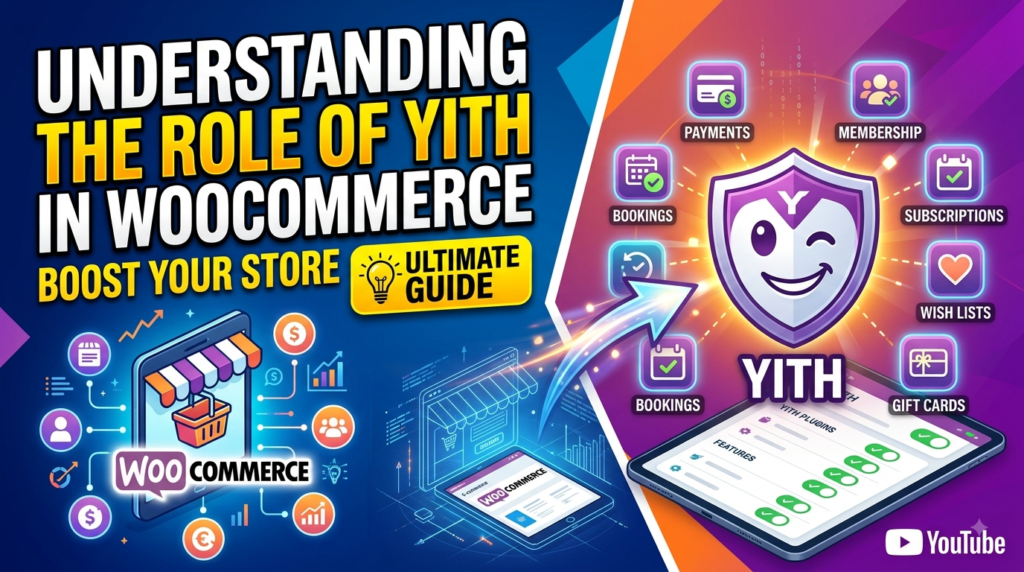
WooCommerce provides an impressive foundation for ecommerce, but every business eventually encounters requirements that go beyond the basic shopping-cart experience. A clothing store may want customers to personalize products, a furniture company may need appointment bookings, a subscription business may need recurring payments, and a gift store may want product bundles. Building each of these features independently can become complicated, particularly when the store owner is not a developer. This is where YITH becomes attractive because its ecosystem is focused heavily on WooCommerce-specific use cases rather than treating ecommerce as an afterthought. Instead of commissioning a custom solution for every individual requirement, a merchant can evaluate an existing YITH extension and determine whether it fits the store’s workflow.
That specialization matters because ecommerce features often interact with one another. Product information affects cart behavior, cart behavior affects checkout, checkout affects order management, and all of those elements influence the customer’s perception of the store. A well-designed extension should fit naturally into that journey rather than forcing the merchant to create disconnected systems. YITH’s broad WooCommerce portfolio gives businesses the option to build functionality progressively as their needs change. The goal is not simply to have more features; the goal is to have the right features working together in a predictable customer journey.
Why WooCommerce Stores Need More Than Core Features
The basic WooCommerce setup can be enough for a very small catalog, but growing businesses usually need additional capabilities to compete effectively. Customers now expect product pages to answer questions quickly, provide useful choices, remember preferences, and make purchasing convenient. A store selling customizable products, for example, might lose potential buyers if customers cannot easily specify size, color, engraving, packaging, or other options. Similarly, a business with complementary products may miss revenue opportunities if shoppers are never shown logical bundles or related purchasing options.
YITH approaches these challenges through specialized plugins. Product Add-Ons, for instance, lets merchants create additional options for products, including different types of selectable or customizable fields. Its current WordPress.org listing shows ongoing WooCommerce compatibility updates and framework improvements, illustrating the importance of maintaining an extension as the underlying ecommerce platform evolves. For a business owner, that maintenance can reduce some of the development burden associated with keeping custom functionality compatible with newer WooCommerce versions.
How YITH Helps Improve the Online Shopping Experience
Performance should be considered from the customer’s perspective rather than simply as a number displayed by a speed-testing tool. A technically fast website can still feel frustrating if visitors cannot find products, understand variations, customize items, or move smoothly through the purchasing process. Conversely, a store with sophisticated functionality can become difficult to use if those features are poorly organized. The real objective is to create an experience where the technology feels almost invisible. Customers should be able to browse, compare, personalize, add products to their carts, and complete purchases without having to think about the software behind the process.
This is one of the strongest reasons specialized WooCommerce extensions can be useful. Rather than making a business reinvent common ecommerce interactions, a purpose-built plugin can provide an established interface and administrative workflow. YITH’s ecosystem is particularly relevant here because its products are designed around common online-store scenarios. That means a merchant can focus on the commercial question—what experience should the customer have?—instead of spending all of their time asking how to program the underlying functionality.
Creating Better Product Discovery
Product discovery is one of the easiest areas for an online store to underestimate. A customer who cannot quickly find the right product may simply leave, even if the store actually sells exactly what they need. Search, filtering, product comparison, wishlists, quick-view experiences, and intelligently organized categories can reduce that friction. These tools do not necessarily make a server faster, but they can make the entire shopping process feel faster because customers reach useful information with fewer steps.
This distinction is important when discussing WooCommerce performance. Performance is not only about milliseconds; it is also about efficiency in the user’s journey. If a customer needs eight clicks to reach a product that could have been discovered in three, the store is operationally inefficient even if its page-load score looks excellent. Businesses therefore choose specialized ecommerce tools because better functionality can improve the perceived efficiency of the storefront. YITH’s range allows merchants to select tools based on the specific friction points they want to remove rather than adding unrelated features simply because they are available.
YITH Plugins and Store Functionality
A major advantage of an established WooCommerce plugin ecosystem is modularity. Store owners do not have to redesign the entire website every time they introduce a new commercial idea. Instead, they can identify a specific requirement and add functionality around it. This modular approach can be particularly valuable for small and medium-sized businesses because their ecommerce strategy often changes rapidly. One month they may focus on personalization, another month on bundles, and later they may introduce subscriptions or bookings.
The modular model also encourages businesses to think in terms of measurable objectives. Rather of posing the question, “Which plugins should my store have?” a better question is, “Which customer or business problem am I trying to solve?” That shift helps prevent unnecessary plugin accumulation. A store does not automatically become better because it has twenty extensions installed. In fact, community discussions around WooCommerce frequently emphasize that cumulative plugin overhead, heavy page builders, unnecessary scripts, and overlapping functionality can create performance problems. YITH is therefore most useful when its tools are selected deliberately and integrated into a broader performance strategy.
Product Add-Ons and Customization
Customization is increasingly important because shoppers often want products that match their individual requirements. Consider a customer ordering a gift, printed item, personalized accessory, or made-to-order product. A simple product page may not provide enough information or interaction to capture the order correctly. YITH Product Add-Ons allows merchants to create additional options for products, helping them present customization choices directly within the shopping experience. The plugin supports multiple option types and can be configured for product-level and global options, according to its current WordPress.org documentation.
From a business perspective, this functionality can reduce unnecessary communication between customers and staff. Instead of sending an email asking for engraving text or special packaging instructions, the shopper can provide those details during the purchase process. That can improve order accuracy while making the customer feel that the website understands what they want. The performance benefit is indirect but meaningful: a clearer buying process reduces friction, prevents avoidable support interactions, and helps the store operate more efficiently. The key is to configure only the options customers actually need and avoid overwhelming product pages with dozens of unnecessary choices.
Why Performance Matters for Ecommerce Growth
Website performance has a direct relationship with how comfortably customers interact with an online store. Visitors do not arrive with unlimited patience; they compare experiences across websites and expect pages, images, navigation elements, and checkout components to behave smoothly. When a store becomes slow or unstable, the problem can extend beyond a poor technical score. Customers may abandon product pages, hesitate to add items to their carts, or lose confidence during checkout. For an ecommerce business, every unnecessary obstacle can become a commercial problem.
That is why performance optimization should be treated as a system rather than a single plugin decision. YITH itself recommends looking at hosting, caching, CDN configuration, image sizes, and poorly coded plugins when addressing slow websites. This is an important point for merchants considering any WooCommerce extension. A good plugin cannot compensate for severely underpowered hosting or unoptimized images. Businesses that get the best results from YITH typically combine carefully selected functionality with strong technical foundations, regular maintenance, and ongoing performance testing.
Speed, Usability, and Customer Expectations
Speed and usability are closely connected, but they are not identical. A page can load quickly while still making customers work too hard, just as a beautifully organized store can frustrate users if every interaction takes several seconds. The best ecommerce experience combines both. Customers should be able to understand the product, choose options, review pricing, and proceed to checkout without confusion.
This is where YITH can contribute to a broader performance strategy. Its tools can streamline specific ecommerce tasks, while the merchant controls the technical environment in which those tools operate. Businesses should monitor real-world performance after installing any significant extension, especially on product, cart, checkout, and account pages. Testing before and after implementation provides much more useful information than assuming a plugin will automatically improve or harm speed. The goal is simple: keep useful functionality while eliminating unnecessary technical friction.
YITH for Conversion-Focused Store Design
A successful internet business should help customers make confident purchases rather than just draw them in. Conversion-focused design means presenting useful information at the right moment, reducing uncertainty, and making the next action obvious. YITH tools can support this strategy by adding functionality that helps customers compare products, save items, customize purchases, or discover combinations that make sense. The important factor is not the presence of a feature but whether the feature solves a genuine customer problem.
For example, a wishlist can give customers a reason to return instead of forcing them to remember product names. A product bundle can make a group of complementary items easier to purchase. A product customization tool can remove the need for back-and-forth communication. Each improvement may look small individually, but together they can create a storefront that feels much more responsive to customer needs. This is why many businesses view ecommerce plugins as part of their conversion strategy rather than merely technical accessories.
Turning Browsers Into Buyers
Conversion rarely depends on one dramatic feature. More often, it comes from removing several small obstacles that make buying harder than it should be. Imagine a customer who likes a product but is unsure whether the size is right, wants to compare it with another item, and needs a customization option. If the store cannot support those decisions conveniently, the customer may postpone the purchase or leave. A well-structured WooCommerce experience gives the shopper tools to resolve those questions while remaining on the site.
Merchants can handle these situations in a variety of ways thanks to YITH’s extensive plugin ecosystem.The business can decide which customer actions deserve additional support and introduce the appropriate functionality. This makes the platform useful for stores that want to grow beyond a basic catalog without immediately commissioning custom software. The best results come when each extension has a clear role, a measurable objective, and a place within the overall customer journey.
Supporting Larger Product Catalogs
As a WooCommerce store grows, managing products becomes more complex. A small shop might have twenty products, while an established business could manage hundreds or thousands of items with variations, categories, bundles, personalization options, and different purchasing rules. Complexity increases the need for structured tools because manually managing every customer interaction becomes inefficient. YITH can help businesses address individual areas of this complexity through specialized extensions.
However, larger catalogs also make performance discipline more important. More products can mean more database activity, more images, more variations, and more opportunities for inefficient queries or unnecessary frontend assets. Plugin selection must therefore become more deliberate as a store grows. Merchants should regularly review active plugins, remove unused extensions, optimize media, maintain caching, and test critical workflows. YITH’s own performance guidance emphasizes that hosting, caching, images, and poorly coded plugins all contribute to website speed.
Managing Complex Ecommerce Requirements
Complexity is not necessarily a problem; unmanaged complexity is. A growing store needs functionality, but every new feature introduces another layer that must be maintained. The advantage of a specialized ecosystem is that merchants can choose mature solutions for recurring ecommerce requirements rather than creating an entirely separate system for every business process.
For example, YITH Product Bundles provides a way to group products into purchasable combinations. Its current WordPress.org changelog shows continuing compatibility work, including support for recent WooCommerce versions in 2026. This kind of ongoing compatibility matters because WooCommerce itself evolves. A store that relies on outdated extensions can face compatibility issues, broken workflows, or security problems. Regularly maintained plugins therefore become part of a store’s operational infrastructure rather than being disposable add-ons.
YITH Product Bundles and Average Order Value
Product bundles can be particularly useful for businesses that sell complementary products. Instead of asking customers to discover several related items individually, a store can present them as a logical combination. Think about a skincare company offering a cleanser, moisturizer, and serum together, or an electronics business combining a camera with a memory card and protective case. The customer gets a more convenient purchasing experience, while the merchant gets an opportunity to increase the value of each transaction.
YITH Product Bundles is designed around this type of functionality. The plugin listing now displays WooCommerce compatibility upgrades and ongoing releases, such as version 2.26.0 in June 2026 with support for WooCommerce 10.9. The commercial advantage is not simply the bundle itself. A thoughtfully designed bundle can reduce decision fatigue, expose complementary products, and make customers feel that they are receiving a more complete solution rather than being pushed toward unrelated upsells.
Encouraging Customers to Buy More
There is an important difference between helpful cross-selling and aggressive selling. Customers respond better when recommendations make sense in context. A bundle should answer a genuine question: What else would help this customer get better value from the product they are already considering? When the answer is obvious, the additional purchase can feel useful rather than intrusive.
This approach can also improve the operational side of ecommerce. Instead of creating complicated manual instructions for staff, the store can structure complementary products within the purchasing experience. Customers can see what is included, understand the combined offer, and complete the transaction in fewer steps. Like every other plugin-based strategy, the merchant should monitor performance and customer behavior rather than assuming that every bundle will increase sales. The strongest bundles are based on actual purchasing patterns and clear customer needs.
YITH for Personalized Shopping Experiences
Personalization has become a major part of modern ecommerce because shoppers increasingly expect websites to adapt to their preferences. A store selling standard products may need only simple variations, while a business selling customized goods may need a much richer interaction. Product Add-Ons can be particularly useful in this situation because it allows customers to provide additional information or choose extra options as part of the product purchase.
Personalization can also strengthen the relationship between a customer and a brand. When a shopper can add a name, select a configuration, choose a service option, or specify a preference directly on the product page, the experience feels more personal. It also gives the business structured information about what the customer wants. That can reduce mistakes compared with collecting customization requirements through scattered emails or messages.
Giving Customers More Control
Good ecommerce design gives customers enough control without making the purchase process complicated. This balance is especially important for customizable products. Too few choices can make the product feel restrictive, while too many choices can overwhelm shoppers. YITH’s Product Add-Ons functionality can help merchants structure additional product options within the existing WooCommerce shopping journey.
The merchant still needs to make thoughtful decisions about how those options appear. Required fields should be genuinely necessary, optional upgrades should be clearly priced, and the page should remain easy to understand on mobile devices. Performance testing is equally important because interactive customization can involve additional scripts or calculations. The smartest approach is to use customization where it creates real commercial value and keep the implementation as streamlined as possible.
Compatibility and WooCommerce Updates
Compatibility is one of the least exciting parts of ecommerce management, but it can become one of the most important. WooCommerce and WordPress are actively developed platforms, meaning extensions must evolve alongside them. A plugin that worked perfectly several years ago may not necessarily behave the same way after multiple platform updates. This is why current compatibility information and regular releases matter when businesses select their ecommerce tools.
Recent YITH plugin changelogs demonstrate this ongoing maintenance. YITH Product Add-Ons has received releases supporting successive WooCommerce versions, while Product Bundles has also received regular compatibility updates during 2026. This does not mean every YITH installation will automatically be problem-free. Businesses should still test updates in a staging environment when possible, maintain backups, and check their most important customer workflows after major changes. Good maintenance turns compatibility from a risk into a manageable process.
YITH and Plugin Maintenance
Because an online store is never fully finished, plugin maintenance plays a significant role in WooCommerce performance. New WordPress versions, WooCommerce releases, PHP changes, security fixes, hosting configurations, and third-party integrations can all affect how a website behaves. Businesses that install plugins and never review them may eventually accumulate outdated or redundant functionality. That can increase technical debt and make troubleshooting more difficult.
YITH’s continued plugin development is therefore useful, but merchants must participate in the maintenance process too. A store owner should know which plugins are active, why each one exists, and whether each feature is still contributing to the business. Security updates should be taken seriously, and changes should ideally be tested before being pushed directly to a revenue-generating production site. The goal is not to avoid plugins; it is to maintain a lean, purposeful plugin stack.
Performance Should Not Mean Adding Plugins Carelessly
One of the biggest misconceptions about WooCommerce performance is that installing more optimization-related tools automatically makes a website faster. In reality, every plugin adds code, dependencies, settings, and potential interactions. Community discussions among WooCommerce users repeatedly highlight cumulative plugin overhead and unnecessary scripts as potential sources of performance problems. That lesson applies to YITH just as it applies to every other WordPress extension provider.
A better strategy is to begin with the business requirement and then select the smallest practical toolset. If a store does not need product customization, it does not need a product add-on plugin. If customers rarely buy complementary products, complicated bundle functionality may not be necessary. Once a plugin is installed, test the storefront, monitor resource usage, and verify that it does not interfere with checkout or other critical functions. Performance comes from good architecture and disciplined configuration, not from collecting optimization products.
YITH and the Importance of a Strong Technical Foundation
Even the best WooCommerce plugin operates within a larger technical environment. Hosting determines the resources available to the website, caching affects repeated requests, a CDN can help deliver static assets, image optimization reduces unnecessary transfer size, and the database must remain healthy. YITH’s own documentation recommends examining these areas when dealing with slow websites. This is useful guidance because it prevents merchants from blaming a single plugin for a problem that may actually originate elsewhere.
Businesses should therefore treat YITH as one layer in the ecommerce technology stack. A sensible foundation might include reliable managed hosting, a lightweight theme, optimized images, suitable caching, a CDN where appropriate, regular backups, and a carefully reviewed plugin portfolio.The most important pages—home pages, category pages, product pages, cart, checkout, and customer-account sections—should then be used to measure performance.When these components work together, specialized YITH functionality can support the business without becoming the dominant source of technical complexity.
Comparing YITH With a DIY WooCommerce Approach
A business can always choose to build custom WooCommerce functionality instead of using established plugins. Custom development offers maximum flexibility and can be appropriate for organizations with unusual requirements, large technical teams, or strong engineering resources. However, it also brings development costs, testing responsibilities, documentation requirements, maintenance work, and compatibility challenges. For many small and medium-sized businesses, the question is not whether custom development is technically possible but whether it is the best use of limited time and money.
YITH can provide a middle ground. Merchants can access specialized functionality without having to build every feature themselves, while still benefiting from the flexibility of the WordPress and WooCommerce ecosystem. This does not mean plugins are always better than custom development. Highly specialized businesses may eventually need custom solutions. But for common ecommerce requirements, a maintained plugin can be a practical starting point and can allow a company to invest its development resources in areas that truly differentiate the brand.
When YITH Makes Sense for Growing Businesses
YITH is particularly relevant when a WooCommerce business has moved beyond basic ecommerce requirements and needs more sophisticated customer interactions. A growing store might want product customization, bundles, wishlists, bookings, subscriptions, or other specialized functions. Instead of treating each new requirement as a completely separate software project, the business can evaluate whether a YITH extension provides an appropriate solution.
The strongest use case is a merchant who understands that functionality and performance must develop together. Such a business does not install every available plugin. It identifies customer problems, selects targeted tools, tests them, and reviews the results. This approach can make YITH part of a broader growth strategy rather than simply another plugin vendor. For businesses that want to expand their WooCommerce capabilities without immediately building everything internally, that balance can be valuable.
Practical Ways to Get Better Performance From YITH
The first step is to establish a performance baseline before installing or changing significant functionality. Measure important pages, record loading behavior, and note any existing checkout or JavaScript issues. After introducing a YITH plugin, test the same pages again and compare the results. This approach turns performance optimization into a measurable process instead of relying on assumptions.
Merchants should also optimize images, use appropriate caching, select capable hosting, maintain their WordPress and WooCommerce installations, and remove plugins that are no longer necessary. YITH itself recommends cache plugins, stronger hosting resources, CDN services, and optimized image sizes as part of broader speed optimization. Finally, keep the plugin configuration focused. If a feature does not contribute to customer experience, operational efficiency, revenue, or another measurable business objective, question whether it needs to remain active.
Read More:-
How Does Strikingly Simplify the Website Building Process?
Building Your Dream Website with Site123
Boost Your E-commerce Strategy with YITH Plugins
Maximize Your Customer Engagement with LiveAgent’s Features
Why STRIPO is Essential for Digital Product Marketersa
Common Mistakes to Avoid
The first common mistake is assuming that a plugin’s reputation guarantees perfect performance on every website. WooCommerce stores vary dramatically in hosting, themes, databases, product counts, third-party integrations, and traffic patterns. A configuration that works beautifully on one store may behave differently on another. Testing therefore remains essential, regardless of the plugin provider.
Another mistake is treating plugin quantity as a measure of store quality. More features do not necessarily mean a better customer experience. A crowded product page, excessive pop-ups, unnecessary scripts, and complicated navigation can make a store feel slower even when the underlying server is performing well. Businesses should also avoid skipping updates indefinitely because they fear compatibility issues; instead, they should use backups and staging environments where possible to make updates safer. The best WooCommerce store is not the one with the most plugins—it is the one where every active component has a clear purpose.
The Business Value of Investing in the Right WooCommerce Tools
Technology decisions in ecommerce ultimately need to connect to business outcomes. A product customization tool can reduce manual order clarification. A bundle system can simplify complementary purchases. A wishlist can encourage customers to return. A better product experience can help shoppers make decisions with greater confidence. These benefits may not appear as a single “performance” number, but they can influence how efficiently a store operates and how easily customers move through the buying journey.
That is the broader reason online businesses choose ecosystems such as YITH. They are not simply buying plugins; they are buying ways to solve recurring ecommerce problems without building every feature from scratch. YITH’s continuing compatibility work across its WooCommerce plugins shows why maintenance is an important part of that value proposition. When combined with good hosting, caching, image optimization, careful plugin selection, and regular testing, YITH can become a practical component of a scalable WooCommerce strategy.



Conclusion
Online businesses choose YITH because growing WooCommerce stores often need more flexibility than the platform’s core functionality can provide. YITH offers specialized tools that can support customization, product bundles, customer engagement, and other ecommerce requirements while allowing merchants to build on the familiar WordPress and WooCommerce environment. Its active compatibility updates are particularly relevant for businesses that want their stores to keep pace with newer WooCommerce releases.
Still, the smartest way to think about YITH and WooCommerce performance is not that installing YITH automatically makes a website faster. Performance is a combination of hosting, caching, media optimization, database health, theme quality, plugin selection, and configuration. YITH itself recommends addressing these broader factors when improving website speed. When businesses select only the functionality they genuinely need and combine it with a strong technical foundation, YITH can help create a WooCommerce store that is more flexible, easier to manage, and better aligned with modern customer expectations. In the end, the goal is simple: give shoppers a smooth experience while giving the business practical tools to grow.
Frequently Asked Questions
Q. Is YITH good for WooCommerce performance?
A. YITH can be useful for WooCommerce performance when its plugins are selected carefully and configured appropriately. It should not be considered a standalone speed-optimization solution because hosting, caching, images, themes, databases, and other plugins also affect performance. YITH’s own documentation recommends looking at these broader technical factors when addressing slow websites. The best approach is to install only the extensions that solve genuine business requirements and test their impact on important pages.
Q. Can YITH plugins slow down a WooCommerce website?
A. Any WordPress plugin can potentially contribute to website overhead, depending on what it does and how the website is configured. The impact varies according to the plugin, hosting environment, theme, number of products, other active extensions, and traffic. Community discussions also point out that cumulative plugin overhead and unnecessary scripts can become performance concerns. Businesses should therefore test their website before and after installing major extensions and remove functionality that is no longer needed.
Q. Why do businesses use YITH Product Add-Ons?
A. Businesses use YITH Product Add-Ons when they want customers to personalize or configure products during the purchasing process. The plugin supports different types of additional options and can be used to collect information that is relevant to customized products. This can be especially useful for businesses selling personalized gifts, custom products, configurable items, or services that require additional customer selections.
Q. Does YITH support newer WooCommerce versions?
A. YITH plugins receive ongoing compatibility updates, although support varies by individual plugin and version. For example, the YITH Product Add-Ons changelog shows support for WooCommerce 11.0 in its July 2026 release, while YITH Product Bundles has also received multiple WooCommerce compatibility updates during 2026. Store owners should always check the current plugin documentation and changelog before performing major updates.
Q. Is YITH better than custom WooCommerce development?
A. There is no universal answer because the right choice depends on the store’s requirements and resources. YITH can be a practical option when a business needs common ecommerce functionality without paying to develop and maintain every feature from scratch. Custom development can be preferable when a company has highly specialized requirements that existing plugins cannot satisfy. For many growing stores, using a proven plugin for standard functionality while reserving custom development for genuinely unique requirements can provide a sensible balance.