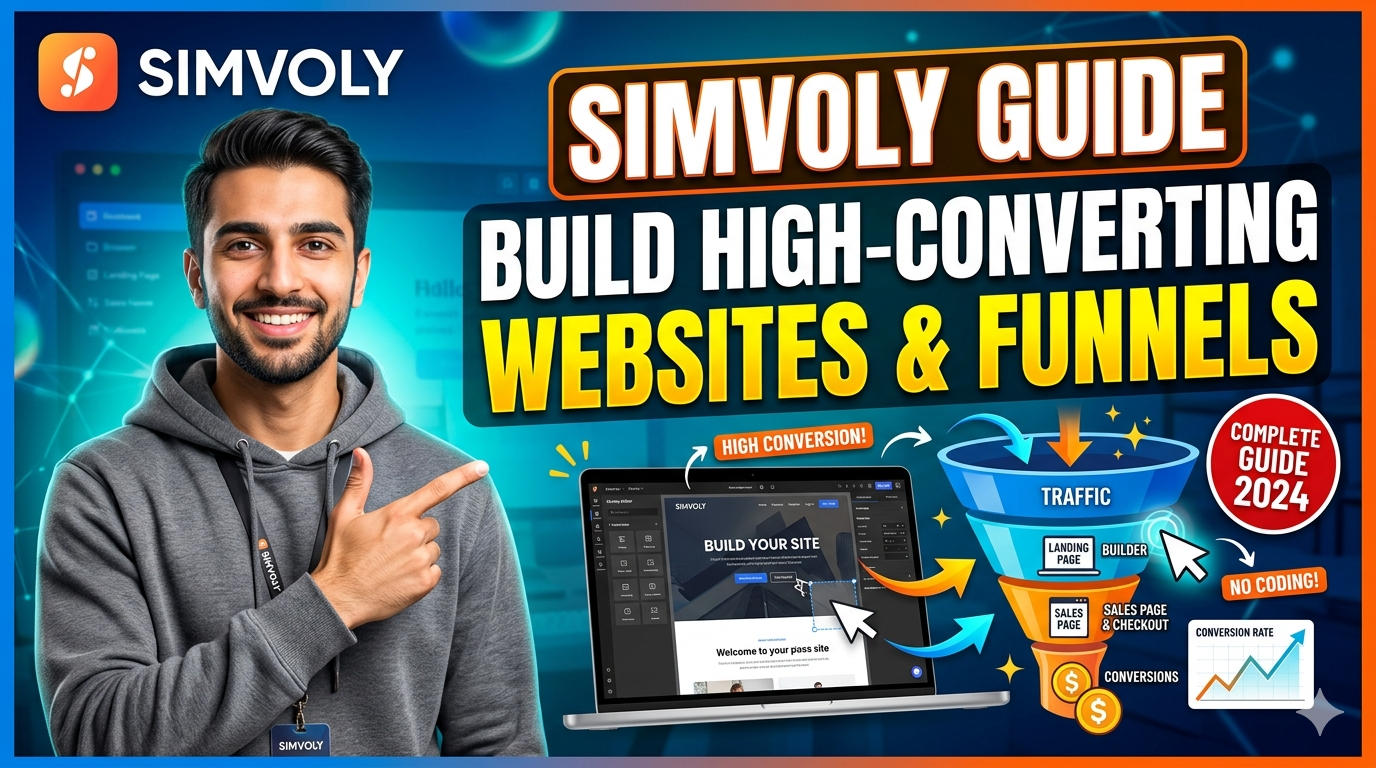
Discover how Simvoly helps businesses build high-converting websites and sales funnels from one powerful platform. This complete guide covers Simvoly features, pricing, SEO tools, funnel-building strategies, automation, e-commerce capabilities, and comparisons with competitors like ClickFunnels and GoHighLevel. Learn how to create professional websites, optimize conversions, and grow your online business with Simvoly’s all-in-one marketing ecosystem.
Table of Contents
- What Is Simvoly and Why Is It Gaining Attention?
- Core Features of Simvoly
- Simvoly Pricing Plans Explained
- How to Build a Website With Simvoly
- Creating High-Converting Funnels in Simvoly
- Simvoly SEO Features and Marketing Tools
- Simvoly vs Competitors
- Who Should Use Simvoly?
- Conclusion
- Frequently Asked Questions
What Is Simvoly and Why Is It Gaining Attention?
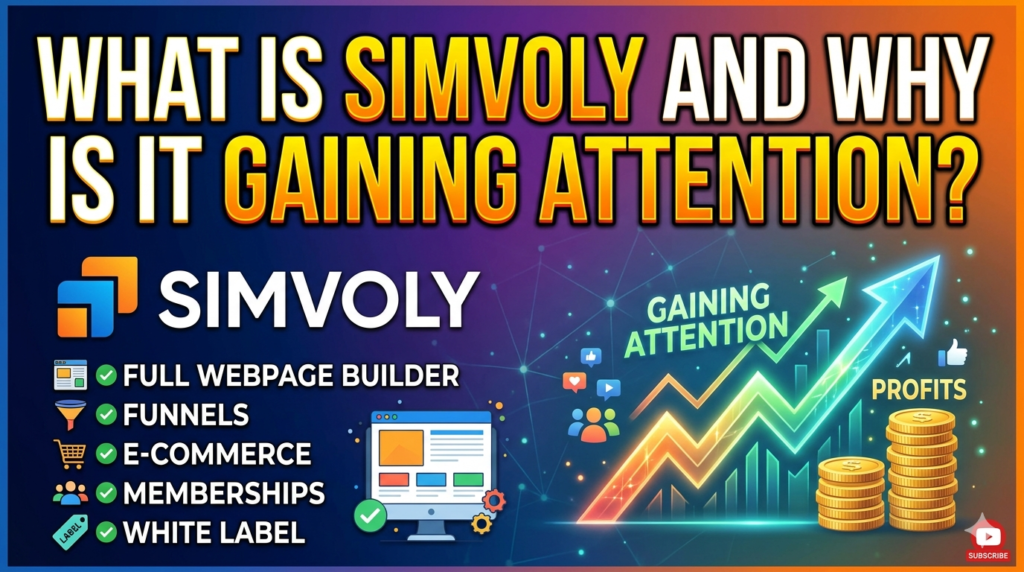
The digital marketing landscape has changed dramatically in the past few years. Businesses are no longer satisfied with basic websites that simply “look good.” They need platforms capable of converting traffic into customers. Simvoly positions itself as an all-in-one ecosystem specifically designed for that purpose. At its core, Simvoly is a website builder, sales funnel creator, CRM platform, and marketing automation tool wrapped into a single interface.
One major reason Simvoly is attracting attention is its focus on conversion-driven design. Many website builders prioritize aesthetics while overlooking marketing performance. Simvoly approaches things differently. It combines clean design tools with practical conversion features like A/B testing, upsells, downsells, funnel analytics, popups, and optimized checkout systems. This means users can not only build beautiful pages but also track and improve the effectiveness of every step in their customer journey.
The rise of online entrepreneurship has also contributed to Simvoly’s growth. Coaches, consultants, agencies, freelancers, course creators, and e-commerce sellers all need digital platforms that work quickly without requiring coding knowledge. Simvoly’s drag-and-drop builder allows users to create pages visually, making web development accessible even for beginners. At the same time, advanced users appreciate the platform’s flexibility, automation capabilities, and white-label opportunities.
Another interesting factor is Simvoly’s strong focus on agencies. The platform offers full white-label functionality, allowing agencies to rebrand the software under their own name, domain, and pricing structure. According to Simvoly case studies, some agencies have built million-euro recurring revenue businesses using the platform’s white-label system. That makes Simvoly more than just a website builder—it becomes a business model for digital entrepreneurs.
Core Features of Simvoly
One of Simvoly’s biggest strengths is its extensive feature set. The platform offers an integrated environment where everything functions flawlessly rather than extensively depending on third-party programs and plugins. Both website owners and users have a more seamless experience as a result.
Drag-and-Drop Website Builder
The drag-and-drop website builder is one of the most beginner-friendly aspects of Simvoly. Users can visually create pages by moving blocks, sections, images, forms, and text elements without touching code. The builder includes professionally designed templates suitable for businesses, agencies, portfolios, online stores, and landing pages.
What makes this especially powerful is the balance between simplicity and customization. Because they compel users to adhere to specific design, some website builders feel constrictive. Simvoly offers much greater flexibility. Users can customize spacing, typography, colors, animations, responsive settings, and layouts while maintaining fast loading speeds and mobile responsiveness.
The platform also includes AI-powered website assistance and pre-built templates that accelerate the creation process. For beginners, this reduces the intimidation factor of starting from scratch. Imagine walking into a fully furnished apartment instead of an empty room—you can personalize it quickly rather than spending weeks designing every detail yourself.
Funnel Builder and Conversion Tools
Funnels are where Simvoly truly separates itself from many traditional website builders. Funnels are structured paths designed to guide visitors toward a specific goal. Instead of allowing endless distractions like standard websites often do, funnels keep users focused on actions such as purchasing a product or submitting contact information.
Simvoly’s funnel builder includes tools for:
- A/B split testing
- Custom checkouts
- Upsells and downsells
- Funnel analytics
- Lead capture forms
- Conversion tracking
- Popups and countdown timers
These tools are critical because even tiny conversion improvements can dramatically increase revenue. For example, if a funnel converts at 2% instead of 1%, a business essentially doubles its sales without increasing traffic. Simvoly’s analytics help users understand where visitors drop off, which pages perform best, and how different designs impact conversions.
The one-click upsell functionality deserves special attention. After customers make a purchase, businesses can instantly offer related products without requiring customers to re-enter payment information. This simple feature can significantly boost average order value and overall profitability.
Built-In CRM and Marketing Automation
Many businesses spend hundreds of dollars monthly on separate CRM software, email marketing tools, and automation systems. Simvoly integrates these directly into its platform.
The built-in CRM helps businesses organize leads, customers, appointments, and communication. Every funnel submission or purchase automatically feeds into the CRM system, reducing manual data management. Users can segment contacts, monitor customer behavior, and automate follow-up campaigns.
Automation workflows are another huge advantage. Businesses can create automated sequences triggered by actions such as:
- Form submissions
- Purchases
- Abandoned carts
- Appointment bookings
- Email opens
- Link clicks
This means a small business can operate with the efficiency of a much larger company. Imagine having a virtual assistant who automatically sends welcome emails, follow-up reminders, abandoned cart messages, and promotional offers twenty-four hours a day. In essence, marketing automation accomplishes that.
E-Commerce and Online Selling
Simvoly also functions as a full e-commerce platform. Users can sell physical products, digital downloads, memberships, subscriptions, and courses. The platform supports custom checkout experiences, recurring billing, inventory management, and order tracking.
One standout feature is how naturally e-commerce integrates with funnels. Traditional online stores sometimes struggle with conversions because customers face too many distractions. Simvoly allows sellers to build streamlined sales funnels specifically optimized for products and offers.
Here is a quick comparison of Simvoly’s key business capabilities:
| Feature | Included in Simvoly |
| Website Builder | Yes |
| Funnel Builder | Yes |
| CRM | Yes |
| Email Marketing | Yes |
| E-Commerce | Yes |
| A/B Testing | Yes |
| White Labeling | Yes |
| Automation Workflows | Yes |
| Online Courses | Yes |
| Appointment Booking | Yes |
Businesses may manage operations more effectively because to this all-in-one structure, which eliminates the need for complex integrations.
Simvoly Pricing Plans Explained
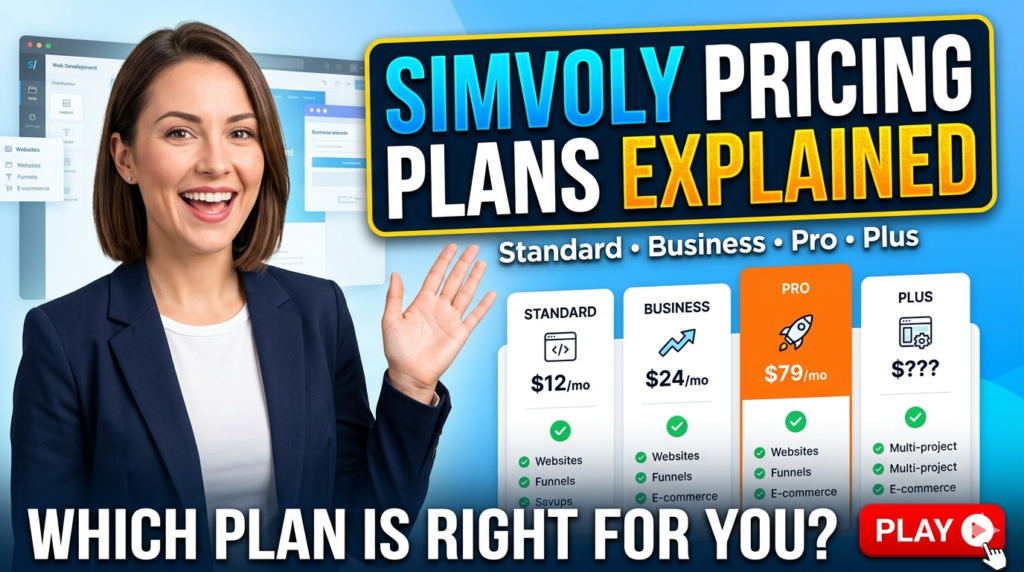
Pricing is often a deciding factor when choosing a website or funnel platform. Simvoly offers multiple plans designed for individuals, businesses, and agencies. According to current pricing information, plans start around $12 per month for basic website functionality and increase depending on advanced features and white-label capabilities.
Personal and Business Plans
The Personal plan is ideal for beginners or small projects. It includes one website, limited funnels, A/B testing, and basic CRM functionality. This is usually enough for freelancers, bloggers, or startups wanting to establish an online presence without major expenses.
The Business plan introduces more advanced features like unlimited pages, additional funnels, more products, and stronger e-commerce capabilities. This tier is often suitable for growing businesses that need lead generation and sales optimization.
Growth and White Label Plans
The Growth plan is where Simvoly becomes especially attractive for marketers and agencies. It unlocks advanced funnel capabilities, white-label tools, and expanded automation features. Businesses can manage multiple projects and build branded solutions for clients.
White-label plans are particularly powerful because they allow agencies to:
- Use their own branding
- Set custom pricing plans
- Offer SaaS services
- Build recurring revenue models
- Manage client websites and funnels centrally
This transforms Simvoly from a simple website tool into a scalable business infrastructure.
How to Build a Website With Simvoly
Even for novices, using Simvoly to create a website is surprisingly simple. The process begins with choosing a template or using the AI-assisted setup system. Templates are categorized by industry and business type, which helps users start with layouts tailored to their needs.
Once a template is selected, users can customize every section visually. Text blocks, images, videos, testimonials, forms, and buttons can all be edited using the drag-and-drop interface. Unlike coding-heavy platforms, Simvoly removes technical barriers, allowing users to focus on branding and messaging rather than programming.
Mobile optimization is another major strength. Since mobile traffic dominates modern internet usage, websites must look great on smaller screens. Simvoly automatically generates responsive designs while still allowing users to tweak mobile layouts manually. This ensures visitors receive a consistent experience regardless of device.
SEO optimization tools are also built directly into the platform. Users can customize meta titles, descriptions, URLs, alt text, and page settings without installing plugins. Fast hosting infrastructure powered by Amazon Web Services helps improve loading speeds, which benefits both user experience and search rankings.
Creating High-Converting Funnels in Simvoly
Funnels are arguably Simvoly’s strongest selling point. While many platforms offer websites, fewer specialize in conversion-focused funnel systems integrated directly with websites and CRM tools.
A typical funnel might include:
- Landing page
- Lead capture form
- Sales page
- Checkout page
- Upsell offer
- Thank-you page
Each step is carefully optimized to guide visitors toward a desired action. Simvoly allows users to track visitor movement through these stages with detailed analytics and conversion tracking.
A/B testing is particularly valuable here. Users can test different headlines, button colors, layouts, offers, or images to determine what converts best. Instead of guessing what works, businesses can make data-driven decisions.
Checkout optimization tools also help increase revenue. Features like order bumps and one-click upsells encourage customers to purchase additional products during checkout. This strategy is used by some of the world’s most successful online businesses because it increases customer value without requiring additional advertising costs.
Funnels work because they remove friction. Imagine walking into a supermarket with hundreds of aisles when you only need one item. It feels overwhelming. Funnels simplify decision-making by presenting visitors with one clear path forward.
Simvoly SEO Features and Marketing Tools
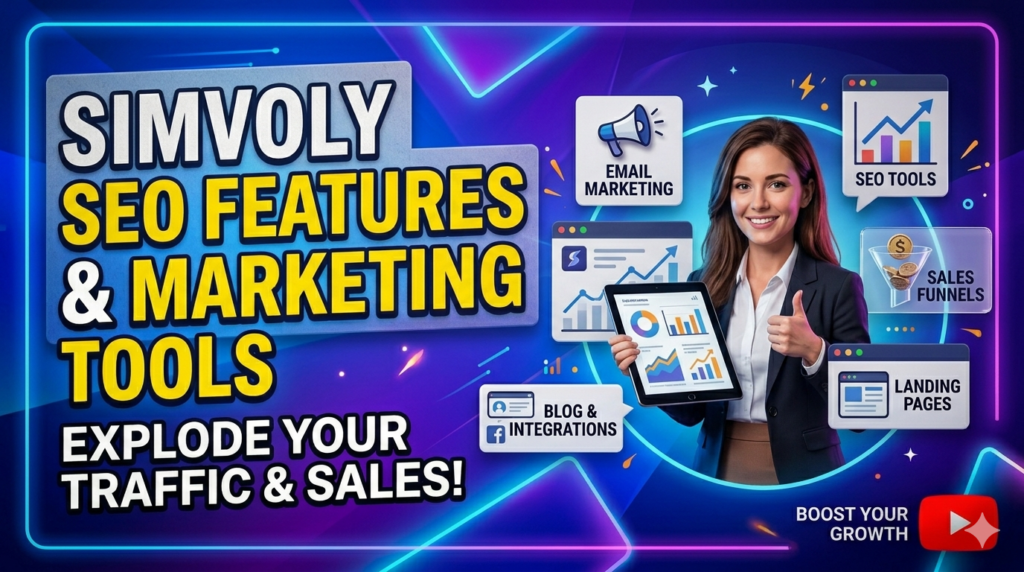
SEO remains essential for long-term traffic growth, and Simvoly includes several features designed to support search visibility. Users can optimize:
- Page titles
- Meta descriptions
- URLs
- Header structures
- Image alt tags
- Mobile responsiveness
- Page loading speed
The platform also supports blogging functionality, which is important for content marketing and organic traffic growth. Businesses can publish articles targeting specific keywords and use funnels to convert readers into leads or customers.
Email marketing and automation are integrated directly into the platform as well. Users can build campaigns, segment audiences, create automated workflows, and manage subscriber lists without needing external email providers.
This integration creates a smoother marketing ecosystem. For example, when someone submits a form on a funnel page, they can instantly enter an automation sequence that sends educational emails, promotional offers, or appointment reminders.
Read More:-
STRIPO: The Complete Guide to Creating Professional Email Templatesa
Outgrow for Marketers: A Complete Guide to Quizzes, Calculators, and Surveys
Keap: The Complete Guide to CRM and Marketing Automation for Small Businesses
How Dobell Helps Men Elevate Their Style Without Breaking the Bank
Ferrari World Abu Dhabi (US): Complete Travel Guide for American Visitors
Simvoly vs Competitors
Choosing the right platform often comes down to comparing alternatives. Tools like ClickFunnels, GoHighLevel, Wix, Shopify, and Webflow are competitors of Simvoly.
Simvoly vs ClickFunnels
ClickFunnels focuses heavily on funnel creation, but Simvoly combines funnels with full website functionality and integrated e-commerce. Simvoly is also generally more affordable for businesses wanting both websites and funnels in one place.
Simvoly vs GoHighLevel
GoHighLevel is known for CRM and automation capabilities aimed at agencies. Simvoly offers similar agency-focused white-label options while providing a smoother visual website-building experience. Many users find Simvoly easier for design-focused projects, while GoHighLevel appeals more to advanced automation users.
Here is a simplified comparison:
| Platform | Best For | Strength |
| Simvoly | Websites + Funnels | All-in-one simplicity |
| ClickFunnels | Funnel specialists | Funnel optimization |
| GoHighLevel | Agencies | CRM and automation |
| Shopify | E-commerce stores | Product management |
| Wix | Beginners | Easy website creation |
Who Should Use Simvoly?
Simvoly works best for users who want a unified platform instead of piecing together multiple tools. It is especially valuable for:
- Small businesses
- Coaches and consultants
- Agencies
- Course creators
- Freelancers
- E-commerce brands
- Affiliate marketers
- SaaS entrepreneurs
The platform is particularly attractive for users focused on conversions and automation rather than simple brochure-style websites. Businesses that rely on lead generation, online sales, or recurring customer relationships can benefit greatly from its integrated ecosystem.
Agencies also gain unique advantages through white-label functionality. Instead of sending clients to third-party platforms, agencies can offer branded website and funnel services under their own identity.




Conclusion
Simvoly has positioned itself as far more than just another website builder. It combines websites, funnels, CRM tools, automation, e-commerce, and marketing features into one streamlined ecosystem designed to increase conversions and simplify business operations. Its drag-and-drop builder makes website creation accessible for beginners, while advanced features like A/B testing, white-label branding, upsells, and automation workflows provide serious value for experienced marketers and agencies.
The platform’s strongest advantage lies in how seamlessly everything works together. Instead of managing disconnected tools and integrations, businesses can handle websites, funnels, email marketing, sales, and customer management from one dashboard. That convenience saves time, reduces complexity, and improves efficiency.
For entrepreneurs looking to build high-converting online experiences without technical headaches, Simvoly offers a compelling solution. Whether you are launching a personal brand, scaling an agency, running an online store, or building recurring SaaS revenue through white-label services, Simvoly provides the infrastructure needed to compete in today’s digital marketplace.
Frequently Asked Questions
Q. Is Simvoly good for beginners?
A. Yes, Simvoly is beginner-friendly thanks to its drag-and-drop builder, pre-designed templates, and visual editing system. Users do not need coding skills to create websites or funnels.
Q. Can Simvoly replace ClickFunnels?
A. For many businesses, yes. Simvoly offers funnel-building capabilities similar to ClickFunnels while also including website building, CRM tools, and e-commerce features in one platform.
Q. Does Simvoly support e-commerce?
A. Absolutely. Simvoly supports online stores, subscriptions, digital products, memberships, custom checkouts, and recurring payments.
Q. What makes Simvoly different from other website builders?
A. The biggest difference is its integration of websites and funnels inside a single platform. Most website builders focus only on page design, while Simvoly prioritizes conversions and marketing performance.
Q. Is Simvoly good for agencies?
A. Yes, especially because of its white-label capabilities. Agencies can rebrand the platform, create SaaS-style recurring revenue businesses, and manage multiple client projects efficiently.