

LambdaTest (US) is a powerful cloud-based cross-browser testing platform that helps developers and QA teams ensure their websites and web applications work seamlessly across different browsers, devices, and operating systems. This comprehensive guide explores LambdaTest’s key features, including live interactive testing, automated testing, real device cloud access, and responsive design testing. Learn how LambdaTest simplifies the testing process, improves software quality, accelerates release cycles, and enhances user experience. Whether you’re a startup, freelancer, or enterprise organization, this guide provides everything you need to understand how LambdaTest can streamline cross-browser testing and support modern web development workflows.
Understanding Cross-Browser Testing
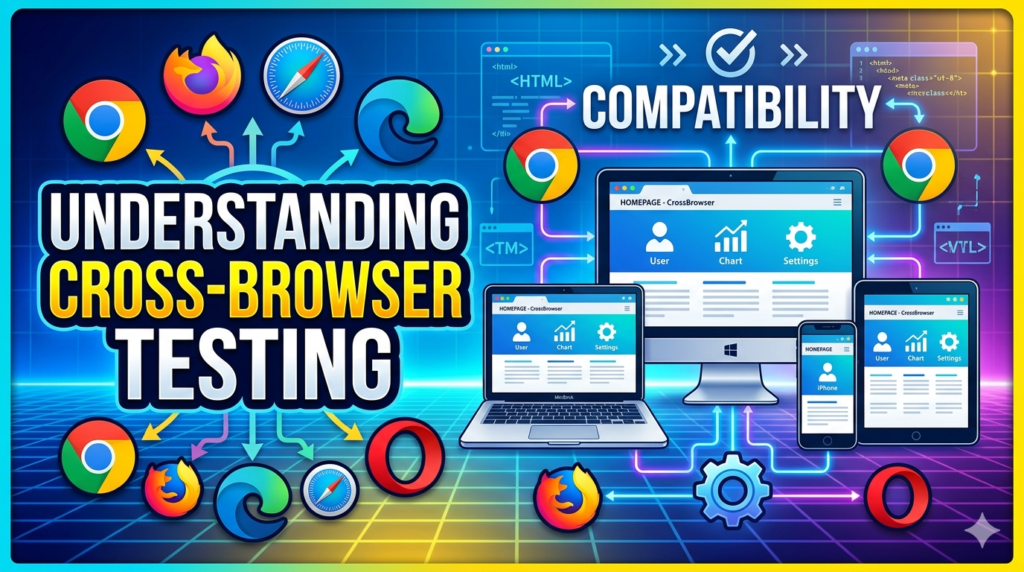
In today’s digital world, users access websites and applications through countless combinations of browsers, operating systems, and devices. A website that looks perfect on Chrome may display broken layouts on Safari, while a feature that works flawlessly on Firefox might fail on Edge. This inconsistency creates significant challenges for businesses aiming to deliver a seamless user experience. That is where cross-browser testing becomes essential.
Cross-browser testing is the process of verifying that a website or web application functions correctly across different browsers, operating systems, screen sizes, and device configurations. Without this testing process, companies risk losing visitors due to poor usability, broken functionality, or inconsistent design. Imagine opening an online store and discovering that the checkout button disappears on your preferred browser. Most users would leave immediately rather than troubleshoot the issue.
Modern web technologies continue to evolve rapidly, making compatibility testing more important than ever. New browser updates, changing standards, and device fragmentation create a moving target for development teams. Businesses that ignore compatibility testing often face increased support costs, lower customer satisfaction, and reduced conversion rates.
Cross-browser testing acts like quality control for the digital experience. It ensures that every visitor receives a consistent experience regardless of how they access a website. For organizations serving customers across the United States and globally, maintaining browser compatibility is no longer optional—it is a competitive necessity.
Why Browser Compatibility Matters
Browser compatibility directly impacts customer trust and business performance. Studies consistently show that users form opinions about websites within seconds of landing on a page. If layouts break, buttons fail, or content becomes unreadable, visitors often leave before engaging with the brand.
Different browsers use unique rendering engines and support web technologies differently. The same code may be interpreted slightly differently by Chrome, Safari, Firefox, and Edge. These differences can create unexpected issues that developers never encounter during local testing. Compatibility testing helps identify these problems before customers experience them.
Common Browser Testing Challenges
Testing manually across dozens of browsers and operating systems can quickly become overwhelming. Development teams often struggle with maintaining physical devices, installing multiple browser versions, and reproducing bugs consistently. Legacy browser support adds another layer of complexity.
Cloud-based testing platforms have emerged to solve these challenges by providing instant access to thousands of browser and device combinations. This approach significantly reduces testing time while improving coverage and reliability.
What Is LambdaTest?
LambdaTest, which officially rebranded as TestMu AI in January 2026, is a cloud-based testing platform designed to help developers and quality assurance teams perform cross-browser and cross-device testing efficiently. The platform began as a browser testing solution but has evolved into a broader AI-powered quality engineering ecosystem.
Today, the platform enables teams to test websites, web applications, mobile applications, and automated workflows across thousands of browser and operating system combinations. Instead of maintaining expensive testing infrastructure, organizations can leverage cloud resources to execute tests from anywhere in the world.
One of the primary reasons for LambdaTest’s popularity is its accessibility. Teams can launch tests instantly without configuring complex environments or purchasing physical hardware. This flexibility makes it attractive for startups, mid-sized businesses, and enterprise organizations alike.
The platform also integrates with modern development workflows, allowing testing activities to become part of continuous integration and continuous deployment pipelines. This capability supports faster software releases while maintaining quality standards. As software development accelerates, tools that streamline testing processes become increasingly valuable.
Evolution of LambdaTest into TestMu AI
In January 2026, LambdaTest officially rebranded as TestMu AI, reflecting its transformation from a cross-browser testing platform into an AI-native quality engineering solution. The company retained its core testing capabilities while introducing AI-powered features, autonomous testing agents, and intelligent quality analytics.
Key Statistics and Market Presence
The platform reports serving more than 3 million users, supporting over 1.5 billion tests, and serving approximately 18,000 enterprises across 132 countries. These numbers highlight its significant presence in the software testing industry.
Core Features of LambdaTest

LambdaTest offers a comprehensive set of tools designed to simplify browser compatibility testing and quality assurance processes. These features address the needs of developers, QA engineers, project managers, and DevOps teams alike.
Live Interactive Testing
Live interactive testing allows users to manually test websites across various browser and operating system combinations in real time. Instead of relying solely on automated scripts, testers can interact directly with applications, reproduce issues, and evaluate user experiences.
This capability is particularly valuable for exploratory testing, visual inspections, and troubleshooting complex bugs. Testers can verify functionality, examine layouts, and identify inconsistencies that automated tools may overlook.
Automated Testing at Scale
In today’s software development, automation is essential. LambdaTest supports automated testing frameworks such as Selenium, Cypress, Playwright, and Appium. Teams can execute tests simultaneously across multiple environments, reducing execution time dramatically.
Parallel execution is especially beneficial for large projects where hundreds or thousands of test cases must run regularly. Rather than waiting hours for results, teams can receive feedback within minutes.
Real Device Cloud
Testing on emulators alone is often insufficient because real-world user experiences can vary significantly. LambdaTest provides access to a cloud of real devices, allowing teams to validate application behavior under authentic conditions. The platform offers access to more than 10,000 devices and over 3,000 browser combinations.
Visual and Responsive Testing
Visual testing helps identify design inconsistencies across browsers and devices. Responsive testing ensures websites adapt correctly to different screen sizes and resolutions. These features are particularly important as mobile traffic continues to dominate internet usage.
How LambdaTest Works
Getting started with LambdaTest is surprisingly straightforward. The platform is designed to minimize setup complexity while maximizing testing efficiency.
Setting Up an Account
Users begin by creating an account and selecting a testing plan.Individuals and small teams can easily explore platform capabilities thanks to a free tier for experimentation and learning.
Once registered, users gain access to the dashboard, where they can configure testing environments, manage projects, and review test results. The intuitive interface reduces the learning curve often associated with enterprise testing tools.
Running Your First Cross-Browser Test
The testing workflow typically follows these steps:
- Enter the website URL.
- Select browser and operating system combinations.
- Launch the testing session.
- Interact with the application.
- Capture screenshots and logs.
- Document issues and share findings.
This process allows teams to evaluate compatibility quickly without requiring extensive infrastructure management.
Analyzing Test Results
After execution, LambdaTest provides detailed reports, screenshots, logs, and debugging information. These insights help developers identify root causes and implement fixes efficiently.
The ability to share reports directly with team members improves collaboration and accelerates issue resolution. Faster feedback loops translate into shorter development cycles and higher software quality.
LambdaTest Pricing and Plans
Pricing remains an important consideration when selecting a testing platform. LambdaTest offers multiple plans designed to accommodate different organizational needs and budgets.
Free Plan
The free plan includes limited testing minutes, screenshot testing, responsive testing, and basic browser testing capabilities. It serves as an excellent starting point for students, freelancers, and small teams.
Paid Plans
Recent industry sources indicate that paid plans generally begin around $15 per month for live testing, with enhanced device access and advanced testing capabilities available through higher-tier subscriptions. Real device plans commonly start around $39 per month, while enterprise plans provide custom pricing based on organizational requirements.
| Plan Type | Typical Starting Price | Key Features |
| Free | $0 | Limited browser testing, screenshots, responsive tests |
| Live Testing | $15/month | Unlimited manual testing, browser coverage |
| Real Device Plus | $39/month | Real devices, advanced mobile testing |
| Enterprise | Custom | Advanced security, scalability, dedicated support |
LambdaTest vs Competitors

Choosing a testing platform often involves comparing available alternatives. Two major competitors frequently considered alongside LambdaTest are BrowserStack and Sauce Labs.
LambdaTest vs BrowserStack
| Feature | LambdaTest | BrowserStack |
| Free Plan | Yes | Limited Trial |
| Starting Price | Around $15/month | Around $29/month |
| Real Device Testing | Yes | Yes |
| AI Features | Extensive | Growing |
| Automation Support | Yes | Yes |
Industry comparisons frequently position LambdaTest as a cost-effective solution, especially for teams requiring substantial testing concurrency.
LambdaTest vs Sauce Labs
Sauce Labs remains a strong enterprise-focused competitor. While both platforms provide cloud testing infrastructure, LambdaTest often attracts organizations seeking a balance between affordability, usability, and broad browser coverage.
Teams evaluating solutions should consider factors such as pricing, device availability, integration requirements, reporting capabilities, and support quality.
Read More:-
How Does Strikingly Simplify the Website Building Process?
Building Your Dream Website with Site123
Boost Your E-commerce Strategy with YITH Plugins
Maximize Your Customer Engagement with LiveAgent’s Features
Why STRIPO is Essential for Digital Product Marketersa
Benefits for Developers and QA Teams
Testing platforms succeed when they solve real business problems. LambdaTest delivers several advantages that directly impact development efficiency and software quality.
Faster Release Cycles
Modern software teams operate under intense pressure to release updates rapidly. Traditional testing methods often become bottlenecks, delaying deployments and increasing costs.
LambdaTest accelerates testing through cloud infrastructure and parallel execution. By reducing test execution time, teams receive faster feedback and can move confidently toward production releases. This speed advantage becomes increasingly valuable as applications grow more complex.
Automated workflows further streamline testing activities, enabling continuous quality validation throughout development cycles. Rather than treating testing as a final checkpoint, organizations can integrate it seamlessly into daily operations.
Improved User Experience
User experience ultimately determines the success of digital products. Cross-browser testing helps ensure that every visitor encounters a consistent, reliable experience regardless of their device or browser preferences.
A smooth experience improves engagement, increases conversions, and strengthens brand reputation. It also reduces support requests because customers encounter fewer technical issues. In many ways, cross-browser testing acts as insurance against costly user-facing defects.
Best Practices for Cross-Browser Testing
Even with powerful tools, effective testing requires thoughtful planning and execution.
Prioritize Browsers by Audience
Not every browser deserves equal attention. Organizations should analyze traffic data to identify the browsers and devices most commonly used by their audiences.
For example, a U.S.-based e-commerce business may prioritize Chrome, Safari, Edge, and mobile browsers because they represent the majority of visitor traffic. Focusing resources strategically maximizes testing efficiency.
Automate Repetitive Tests
Manual testing remains valuable, but repetitive tasks should be automated whenever possible. Automated regression testing ensures critical functionality continues working after code changes.
To obtain thorough coverage, teams can combine exploratory manual testing with automation. This balanced approach delivers efficiency without sacrificing quality.
Additional best practices include:
- Test early and frequently.
- Integrate testing into CI/CD pipelines.
- Use real devices whenever practical.
- Monitor browser market trends.
- Maintain updated test cases.
- Review analytics regularly.




Conclusion
LambdaTest, now operating as TestMu AI, has established itself as one of the leading platforms for cross-browser testing and quality engineering. Its combination of live testing, automation capabilities, real device access, and AI-powered innovation provides a compelling solution for modern software teams. The platform’s extensive browser coverage, cloud-based infrastructure, and scalable pricing make it accessible to organizations of all sizes.
Cross-browser testing is no longer a luxury reserved for large enterprises. It has become a fundamental requirement for delivering exceptional digital experiences. Whether you are a solo developer launching your first application or an enterprise managing complex software ecosystems, investing in reliable browser testing can prevent costly issues and improve customer satisfaction.
As web technologies continue evolving, platforms like LambdaTest help organizations maintain confidence in their releases. By simplifying compatibility testing and integrating seamlessly into modern workflows, they enable teams to focus on innovation rather than infrastructure management.
FAQs
Q. Is LambdaTest still available in 2026?
A. Yes. LambdaTest officially rebranded to TestMu AI in January 2026, but existing services, accounts, and features remain available under the new brand.
Q. How many browser combinations does LambdaTest support?
A. The platform supports over 3,000 browser combinations and access to more than 10,000 devices through its testing cloud.
Q. Does LambdaTest offer a free plan?
A. Yes. A free plan is available that includes limited browser testing minutes, screenshot testing, and responsive testing features.
Q. Can LambdaTest be used for automated testing?
A. Absolutely. The platform supports Selenium, Cypress, Playwright, Appium, and other popular automation frameworks.
Q. What industries benefit most from LambdaTest?
A. Any organization developing web or mobile applications can benefit. Common users include software companies, e-commerce businesses, SaaS providers, digital agencies, financial institutions, and enterprise development teams.