
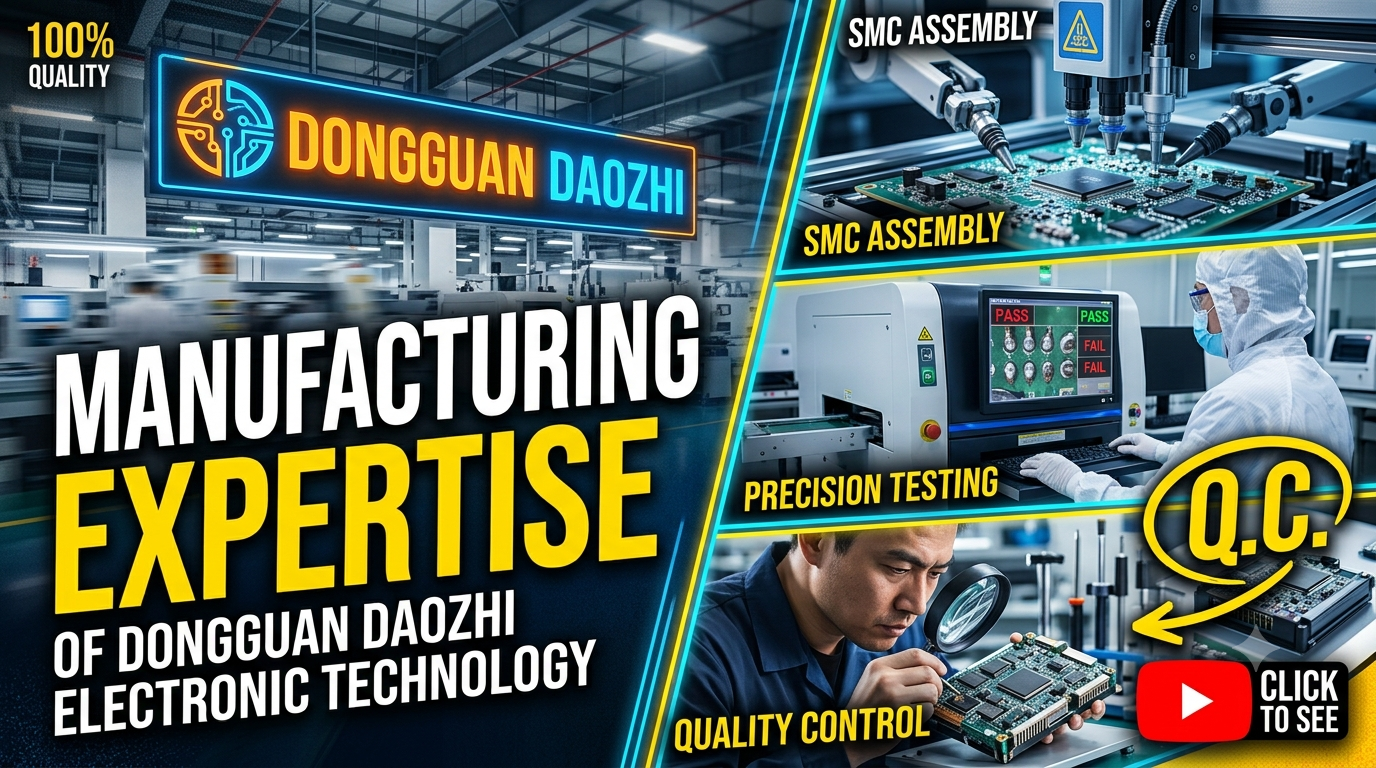
Discover the manufacturing expertise of Dongguan Daozhi Electronic Technology, a China-based electronics company known for its focus on automotive electronics, dashcams, vehicle cameras, and related digital technologies. Explore how Dongguan Daozhi Electronic Technology combines product design, electronic engineering, automotive integration, software development, and innovative housing solutions to create modern vehicle technology products. This article examines its FITCAMX and FITDVR brands, engineering capabilities, intellectual property, recent product development, and potential role in the evolving smart automotive electronics industry.
Table of Contents
- Who Is Dongguan Daozhi Electronic Technology?
- Core Manufacturing Expertise
- FITCAMX and the Company’s Product Ecosystem
- Engineering and Product Development Capabilities
- Quality, Certification, and Intellectual Property
- Why Manufacturing Expertise Matters to Automotive Electronics Buyers
- The Future of Dongguan Daozhi Electronic Technology
- Conclusion
- FAQs
Who Is Dongguan Daozhi Electronic Technology?
Company Identity and Product Focus
Dongguan Daozhi Electronic Technology Co., Ltd. is identified in public trademark documentation as a China-based company located in Dongguan, Guangdong. Canadian intellectual-property records list its address in Qiaotou Town, Dongguan City, while multiple trademark records associate the company with FITCAMX and FITDVR products. This is significant because trademarks can provide a more concrete view of a company’s commercial product direction than generic descriptions found on business directories. The available records show an emphasis on automotive cameras and electronic products rather than a narrow focus on a single type of component.
The company’s product footprint is especially interesting because it sits at the intersection of automotive electronics and consumer technology. FITCAMX-related trademark records include car video recorders, rearview cameras, rechargeable batteries, chargers, GPS-related products, video monitors, and other electronic equipment. More recent filings also reference products and services connected with downloadable DVR software, mobile applications, image processing, cloud storage, and software design. That mix suggests an ecosystem rather than an isolated hardware product. A camera captures information, storage preserves it, software makes it accessible, and vehicle-specific physical design determines how naturally the product integrates into the car.
The Importance of Its Dongguan Manufacturing Base
The location of a manufacturer can tell us something important about its potential capabilities, although location alone should never be treated as proof of factory scale or quality. Dongguan is one of China’s major manufacturing centers, with deep supplier networks for electronics, plastics, metal components, tooling, PCB-related production, assembly, packaging, and other industrial processes. For a company developing compact automotive electronics, that ecosystem can make product iteration considerably more practical because many components and manufacturing services can be sourced within the surrounding industrial region.
Think about the development of a dashcam as building a small machine rather than simply assembling a camera. The product may require a circuit board, image sensor, processor, memory, lens system, housing, connectors, buttons, cable assemblies, mounting structures, and software. Each piece has its own engineering requirements, and the final product only works properly when all of those pieces cooperate. A manufacturing ecosystem such as Dongguan’s can therefore support the kind of cross-disciplinary development that modern electronics increasingly demands. The public record does not establish every internal production process used by Daozhi, but its product registrations, technical filings, and design activity provide evidence of a company working across several layers of electronic-product development.
Core Manufacturing Expertise
Automotive Electronics and Dashcam Development
One of the clearest areas associated with Dongguan Daozhi Electronic Technology is automotive video technology. Its FITCAMX trademark history includes car video recorders and vehicle rearview cameras, while FITDVR documentation likewise identifies car videorecorders and related software products. This specialization is important because automotive electronics create different engineering challenges from ordinary consumer gadgets. A dashcam has to operate in a moving vehicle, often for extended periods, while dealing with heat, vibration, electrical fluctuations, limited physical space, and continuous data processing.
A good automotive camera is therefore a balancing act. The manufacturer must achieve sufficient image quality without making the system unnecessarily large, provide dependable recording without overwhelming storage, and create an installation method that does not interfere with the driver’s field of view. Vehicle compatibility creates another layer of complexity because different car models have different rooflines, windshield shapes, trim pieces, wiring arrangements, and available mounting positions. The FITCAMX product strategy appears particularly relevant here because the brand is associated with vehicle-specific camera products rather than generic cameras alone. That kind of specialization can make physical integration one of the company’s most important areas of manufacturing expertise.
Product Housing and Mechanical Design
Electronics manufacturing is sometimes described as though the circuit board is the entire product. In reality, the physical enclosure can be just as important. It protects the internal electronics, controls the positioning of components, influences thermal behavior, determines how the product connects to the vehicle, and contributes heavily to the finished appearance. Recent design patents assigned to Dongguan Daozhi Electronic Technology offer unusually direct evidence of attention to this area.
A patent published in April 2026 identifies the HD2-3J00 Car DVR Housing, describing it as a housing designed to protect the internal components, circuit board, and other internal parts of a dashcam, with its shape identified as the key design feature. Another published design concerns the HD2-D6900 car dashcam housing, again describing the housing as a protective structure for the internal electronics and emphasizing its shape. A third filing covers the HD2-D4000 housing. These records are valuable because they demonstrate continuing attention to the physical architecture of automotive camera products.
Recent Dashcam Housing Designs
The recent housing patents are more than paperwork. They demonstrate how the company’s product development appears to consider the mechanical side of electronic engineering as a distinct design problem. A housing has to protect sensitive components while maintaining the compact dimensions expected from an automotive camera. It also needs to accommodate the camera lens, circuit board, power connections, heat-producing electronics, and mounting requirements without creating unnecessary bulk.
That becomes especially important when a camera is intended to integrate with a vehicle’s existing interior. A poorly designed enclosure can look like an aftermarket accessory, while a carefully engineered one can appear to belong to the vehicle. This distinction affects installation, aesthetics, customer satisfaction, and ultimately the perceived quality of the finished product. The existence of multiple recent housing designs suggests that Dongguan Daozhi is continuing to refine this physical layer rather than treating the enclosure as an afterthought.
FITCAMX and the Company’s Product Ecosystem
From Dashcams to Connected Automotive Electronics
The FITCAMX name is central to understanding Dongguan Daozhi Electronic Technology’s commercial identity. The trademark has a history going back several years, and public records show registrations covering automotive and electronic products. One FITCAMX registration includes car video recorders, GPS-related products, rechargeable batteries, chargers, and video monitors. Later FITCAMX filings expand into rearview cameras, chipsets, USB cables, downloadable DVR software, mobile applications, and other technology-related products.
This broad product definition points toward a more integrated vision of automotive electronics. Today’s vehicle camera market is increasingly connected to smartphones, storage systems, applications, driver-assistance concepts, and digital workflows. The hardware is only one piece of the user experience. Once video is recorded, users need ways to view, transfer, manage, store, and sometimes edit that information. The company’s trademark filings referencing mobile applications and DVR-related software therefore make sense within the broader evolution of automotive camera products.
Software and Hardware Integration
The line separating hardware manufacturing from software development has become increasingly blurred. A modern dashcam can contain imaging hardware, memory, processing electronics, wireless connectivity, firmware, mobile software, and cloud-related functions. If those components are developed without coordination, the final product can feel fragmented. If they are designed as a system, the user can experience the camera as one coherent product.
Public trademark records associated with Dongguan Daozhi Electronic Technology specifically reference software design and development, image processing software design, smartphone software design, cloud storage services, and technologies related to wireless communication and automotive electronics. These filings do not by themselves prove the exact internal engineering workflow or staffing structure of the company, but they demonstrate that its intellectual-property portfolio extends beyond physical camera hardware. That is an important clue when assessing its manufacturing expertise because modern electronics manufacturing increasingly includes firmware, application compatibility, data management, and digital user experience.
Engineering and Product Development Capabilities
Electronics, Imaging, and Data Recording
At the heart of a dashcam is an imaging pipeline. Light enters the lens, reaches the image sensor, is processed electronically, and eventually becomes a digital video stream that must be encoded and stored. Each stage creates engineering constraints. The manufacturer has to coordinate optical components, electronic processing, storage, power management, thermal behavior, and software.
Dongguan Daozhi’s public product records consistently point toward this technology stack. The company’s trademark portfolio includes car video recorders, rearview cameras, electronic black boxes for recording data, semiconductor-related products, video monitors, and other electronic devices. A third-party device database currently indexes more than 100 records associated with the company, including dashcam models and certification records, although such third-party databases should be treated as supplementary rather than definitive corporate sources.
The significance lies in the range of technical elements involved. Video recording requires consistent data handling, while automotive deployment requires attention to power and physical reliability. If the camera records continuously, storage management becomes important. If the device communicates with a smartphone, wireless and application compatibility become relevant. If it is designed for a particular vehicle, physical integration becomes another engineering challenge. In other words, the product category itself forces a manufacturer to combine multiple technical disciplines.
Industrial and Design Engineering
The physical design of an automotive electronic product can influence everything from installation to heat dissipation. That’s why industrial design and manufacturing engineering cannot operate independently. A housing needs to be visually acceptable, mechanically robust, manufacturable at scale, and compatible with the electronics inside it. The recent HD2-series design patents provide evidence that this mechanical-design layer remains an active part of the company’s product-development work.
There is also an important distinction between creating a prototype and creating a product that can be manufactured repeatedly. A prototype can tolerate manual adjustments and small inconsistencies. A commercial product cannot. Manufacturing expertise involves converting an engineering concept into a repeatable production process, where components fit consistently and finished products behave predictably. While publicly available sources do not provide detailed factory-level information such as production capacity, yield rates, or specific assembly-line equipment, the company’s ongoing product and design filings indicate continued activity in product engineering.
Quality, Certification, and Intellectual Property

Evidence From Product Certifications and Trademarks
For an electronics manufacturer, intellectual property and certification records can provide useful external evidence of commercial activity. Dongguan Daozhi Electronic Technology has multiple trademark records associated with FITCAMX and FITDVR, including registrations in the United States and filings in Canada. A U.S. trademark record shows FITCAMX registered in 2019, while another FITCAMX registration was recorded in 2024. FITDVR was also registered in 2024.
These records matter because they show that the company’s product identity has been developed across international markets. The Canadian records also provide a concrete list of goods associated with the company’s trademarks, including automotive batteries, chargers, rearview cameras, electronic data-recording devices, and other electronic products. This doesn’t automatically mean every listed product is manufactured in-house, and that distinction is important. Trademark classifications describe commercial rights and product categories; they should not be confused with a complete factory capability statement.
Design Patents and Continuous Product Development
The company’s recent design-patent activity is arguably one of the most interesting indicators of its manufacturing direction. In April 2026, multiple Chinese design patents assigned to Dongguan Daozhi Electronic Technology were published for dashcam housings. The patents cover different housing designs and identify the shape of each product as a central design characteristic.
Why does that matter? Because product design patents often emerge from the need to protect distinctive physical designs in competitive hardware markets. Automotive accessories can be especially design-sensitive because customers care about how a device fits into an existing vehicle interior. Protecting the external architecture of a camera can therefore complement protection of the brand and underlying technology. Taken together with the company’s trademark portfolio, these filings suggest a business that is investing in both brand development and physical product differentiation.
Why Manufacturing Expertise Matters to Automotive Electronics Buyers
Custom Fit and Vehicle Integration
For buyers evaluating an automotive electronics manufacturer, manufacturing expertise is not simply about asking whether the company can produce a camera. The more important question is whether it can create a product that behaves like a natural part of the vehicle. Vehicle-specific integration requires careful attention to dimensions, mounting positions, cable routing, interior appearance, and compatibility.
This is where a company specializing in automotive camera products can have an advantage over a generic electronics supplier. A generic camera can record video, but an automotive-focused product must solve the installation problem as well. The housing patents associated with Dongguan Daozhi demonstrate the importance of this physical dimension. When multiple housings are designed for dashcam applications, mechanical architecture becomes part of the product strategy rather than merely packaging.
Read More:-
How Does Strikingly Simplify the Website Building Process?
Building Your Dream Website with Site123
Boost Your E-commerce Strategy with YITH Plugins
Maximize Your Customer Engagement with LiveAgent’s Features
Why STRIPO is Essential for Digital Product Marketersa
Reliability, Scalability, and Supply-Chain Considerations
Reliability is another major consideration. A vehicle electronics product may face conditions that ordinary indoor consumer electronics never encounter. High temperatures behind a windshield, repeated vibration, electrical fluctuations, dust, and long operating periods can all put pressure on components and assemblies. Manufacturing expertise therefore needs to include not only design but also process consistency, component selection, testing, and quality control.
For businesses considering a manufacturer or technology partner, it is useful to separate verified capabilities from assumptions. Public sources establish that Dongguan Daozhi Electronic Technology is associated with automotive video products, FITCAMX and FITDVR trademarks, multiple electronic product categories, and recent dashcam housing designs. They do not, however, publicly establish every detail about factory size, annual output, defect rates, internal production equipment, or supplier relationships. A responsible assessment should therefore combine public intellectual-property evidence with direct supplier audits, sample testing, certification review, manufacturing documentation, and quality-system verification.
The Future of Dongguan Daozhi Electronic Technology
Opportunities in Smart Vehicle Electronics
The automotive electronics market is moving toward increasingly connected products. Cameras are becoming part of a wider digital environment involving smartphones, cloud services, driver information, vehicle monitoring, and data management. Dongguan Daozhi’s existing intellectual-property footprint already touches several of these areas, including DVR software, mobile applications, cloud storage, image processing, wireless communication, and automotive electronics.
That creates a potentially interesting path for future product development. The next generation of automotive cameras is unlikely to be judged only by resolution. Buyers may increasingly care about intelligent video processing, faster wireless transfer, easier installation, better storage management, improved vehicle integration, and software experiences that reduce friction. Manufacturers capable of combining these elements can move from being simple hardware suppliers toward becoming broader automotive-technology developers.
Dongguan Daozhi’s recent housing patents also suggest that physical product development remains active alongside this digital direction. If the company continues combining mechanical design, automotive imaging, software, and connected functionality, its manufacturing expertise could become increasingly relevant to the smart-vehicle accessory market.




Conclusion
Dongguan Daozhi Electronic Technology offers an interesting example of how modern electronics manufacturing extends far beyond circuit-board assembly. Its publicly documented activities connect the company with automotive cameras, dashcams, rearview cameras, electronic recording equipment, FITCAMX and FITDVR brands, software-related technologies, and recent dashcam housing designs. The strongest evidence of its manufacturing expertise comes from the combination of these product categories with continuing physical-design activity, particularly the recent HD2-series housing patents published in 2026.
The bigger lesson is that automotive electronics manufacturing is becoming increasingly multidisciplinary. A successful product needs electronics, optics, mechanical engineering, software, industrial design, manufacturing processes, and supply-chain coordination to work together. Dongguan Daozhi’s public intellectual-property and product footprint shows meaningful activity across many of these areas, although detailed factory capabilities should still be verified directly when evaluating the company as a manufacturing partner. For anyone researching Dongguan Daozhi Electronic Technology, its evolution around automotive imaging and integrated vehicle electronics provides a useful case study of how specialized electronics manufacturers can build expertise by combining hardware engineering with product-specific design and digital technology.
FAQs
Q. What is Dongguan Daozhi Electronic Technology known for?
A. Dongguan Daozhi Electronic Technology is publicly associated with automotive electronics, particularly dashcams and vehicle camera products. Its trademark records connect the company with the FITCAMX and FITDVR brands and identify products such as car video recorders and rearview cameras.
Q. What is FITCAMX?
A. FITCAMX is a trademark associated with Dongguan Daozhi Electronic Technology. Public trademark records associate the brand with automotive video recorders, rearview cameras, electronic products, DVR-related software, mobile applications, and other technology categories.
Q. Does Dongguan Daozhi manufacture dashcam housings?
A. Public Chinese design-patent records show Dongguan Daozhi Electronic Technology as the assignee of several recent dashcam housing designs, including the HD2-3J00, HD2-D6900, and HD2-D4000. The records describe these housings as protective structures for dashcam internal components.
Q. What makes automotive electronics manufacturing different?
A. Automotive electronics must account for factors such as vibration, temperature, power conditions, limited installation space, long operating periods, and vehicle-specific compatibility. A dashcam therefore requires coordinated electronic, mechanical, optical, software, and manufacturing engineering rather than simply assembling a camera.
Q. Is Dongguan Daozhi Electronic Technology suitable for manufacturing partnerships?
A. The company has a documented footprint in automotive electronics, trademarks, product development, and design patents, but a potential manufacturing partnership should be evaluated through direct due diligence. Buyers should verify current production capacity, certifications, quality-control procedures, sample performance, factory processes, lead times, and commercial terms before making a sourcing decision.