Discover the top things to consider before using CJdropshipping (US) for your e-commerce store. Learn about product sourcing, US warehouse availability, shipping costs, delivery times, product quality, pricing, profit margins, and order fulfillment. Explore the advantages and potential challenges of CJdropshipping (US) to make informed decisions, improve your dropshipping strategy, and build a profitable online business.
Table of Contents
- Understanding CJdropshipping and Its Business Model
- Product Sourcing and Product Quality
- US Warehouse Availability and Inventory
- Shipping Costs and Delivery Times
- Pricing, Service Fees, and Profit Margins
- E-Commerce Platform Integration
- Branding and Custom Packaging
- Returns, Refunds, and Customer Support
- Inventory Management and Order Fulfillment
- Product Compliance and Business Risks
- Pros and Cons of Using CJdropshipping
- How to Get Started With CJdropshipping
- Conclusion
- Frequently Asked Questions (FAQs)
Understanding CJdropshipping and Its Business Model
Before connecting a supplier to your online store, take time to understand how its business model works. CJdropshipping operates as a sourcing and fulfillment service, allowing sellers to find products, request sourcing for items that are not readily available, and arrange delivery to customers. Rather than purchasing large quantities of every product in advance, you can generally sell eligible products through your store and arrange fulfillment when orders arrive. This approach can reduce the need for upfront inventory investment, although it does not eliminate business expenses or the risk of unsold inventory if you decide to stock products yourself. Your actual costs and responsibilities depend on the product, sourcing arrangement, warehouse, and shipping method you select.
For a US-focused e-commerce business, the platform can be useful when you want to test product ideas without renting storage space or handling individual packages. Imagine selling pet accessories, home organizers, or travel products through a Shopify store. Instead of keeping boxes in your room or office, you can explore sourcing and fulfillment options through CJdropshipping. However, you remain responsible for the storefront, advertising, customer communication, pricing, and overall shopping experience. The supplier supports your operations, but it does not automatically create a profitable business. Understanding this distinction helps you evaluate whether the platform fits your budget, product category, and long-term goals.
How CJdropshipping Works for US Sellers
The typical process begins with selecting a product or submitting a sourcing request, reviewing the available product and shipping information, and connecting the supplier to your store. Depending on your setup, orders may be imported manually or automatically, after which fulfillment and tracking can be managed through the available tools. CJdropshipping’s fulfillment information describes store integrations, automated product listing, order importing, inventory support, and customized packaging options.
These capabilities can reduce repetitive administrative work, but you should test the complete order journey before relying on automation.
For example, place a sample order and follow it from checkout through dispatch and delivery. Check whether the correct product variant is selected, the shipping address transfers correctly, tracking details become available, and the customer receives the promised item. A product listing that looks excellent on your dashboard is only one part of the process. The real test is whether the customer receives the correct product within a reasonable period and whether your store can communicate any delays clearly. A successful dropshipping operation depends on this entire chain working consistently, not simply on finding a low-cost supplier.
Product Sourcing and Product Quality
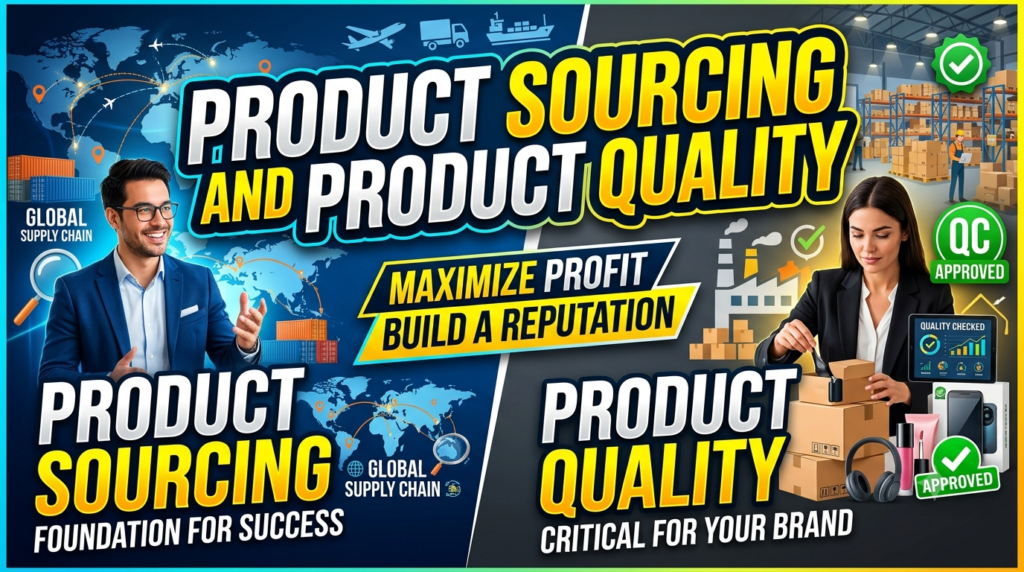
Product selection can determine whether your store attracts repeat customers or struggles with complaints. CJdropshipping provides access to product listings and sourcing services, but availability does not guarantee that every item will meet your customers’ expectations. Product images may look polished while the actual item has different dimensions, materials, colors, or packaging. Before adding an item to your store, investigate its specifications, customer-use requirements, manufacturing quality, and suitability for your intended audience. Pay particular attention to products where safety, durability, or accurate sizing affects customer satisfaction.
A practical approach is to shortlist a few products instead of uploading hundreds immediately. Compare the listed specifications, available variants, supplier information, shipping options, and total landed cost. If the platform does not provide enough information, contact support or submit a sourcing request to clarify the missing details. You should also investigate whether the product is consistently available and whether the supplier can handle a reasonable increase in orders. A product that sells well during a small test may become difficult to fulfill if stock disappears or sourcing takes longer than expected.
Evaluating Suppliers and Product Samples
Ordering a sample is one of the most useful ways to evaluate a product before promoting it widely. A sample allows you to inspect its materials, packaging, size, functionality, and overall appearance instead of relying entirely on photographs. If you plan to sell clothing, for instance, check fabric quality and sizing. For home accessories, assess durability and whether the product performs the task described in your listing. Photograph the sample yourself when appropriate, and use the experience to improve your product descriptions so customers receive realistic expectations.
Do not overlook consistency. One acceptable sample does not prove that every future unit will be identical, so you should also understand what quality checks are available and how defects are handled. CJdropshipping describes inspection procedures within its fulfillment services, including checks associated with products stored in its warehouses and orders before dispatch.
Ask which checks apply to your specific product and service arrangement. Keep written records of product specifications, supplier responses, sample observations, and agreed requirements. These records can help you investigate discrepancies if customer complaints begin appearing after launch.
US Warehouse Availability and Inventory
Warehouse location can significantly affect delivery expectations and the way you manage your business. CJdropshipping lists warehouse services in the United States and other countries, but you should not assume that every product is stocked domestically. Some products may be available in a US warehouse, while others may need to be sourced or shipped internationally. Always verify the location of the exact product variant you intend to sell. A listing that appears suitable for US customers is not enough to establish that the item will be dispatched from within the country.
US warehouse stock can be attractive when your target audience values shorter delivery times. However, inventory availability changes, and popular products can run out during promotions or seasonal demand. Before investing in advertising, check stock levels, replenishment expectations, and alternative fulfillment options. If your store depends on one product, consider what you will do if its US inventory becomes unavailable. You might pause advertising, offer an alternative, or temporarily adjust your delivery promise. Planning for stock shortages protects both your revenue and your reputation.
Another factor is the cost of holding inventory. CJdropshipping’s published service-fee information outlines different storage conditions depending on warehouse and storage duration, including time-based charges for some US warehouse inventory arrangements.
If you purchase stock in advance, calculate how long it could remain in storage and what happens if demand is lower than expected. A domestic warehouse can improve fulfillment speed, but it should be evaluated as part of a complete inventory strategy rather than treated as an automatic advantage.
Shipping Costs and Delivery Times
Shipping is one of the most important considerations when using CJdropshipping for a US e-commerce store. Customers often expect clear delivery estimates, dependable tracking, and reasonable shipping charges. At the same time, the shipping method you select directly affects your costs and profit margins. CJdropshipping explains that shipping prices and delivery estimates depend on factors such as destination, product weight, shipping method, and product characteristics. Its shipping calculator can help sellers compare available options for specific orders.
Do not rely on a general delivery estimate displayed on a product page without checking the relevant shipping route. Processing time, dispatch time, transit time, and final-mile delivery are different stages. A parcel might leave the warehouse quickly but experience delays during transportation or local delivery. When writing your store’s shipping policy, account for the complete order journey and avoid promising a delivery date you cannot reasonably support. If your customers are buying gifts or seasonal products, even a short delay can have a larger impact on satisfaction than it would for an ordinary purchase.
Comparing US Warehouse and International Shipping
The following table summarizes the main differences to investigate before selecting a fulfillment route.
| Factor | US warehouse fulfillment | International fulfillment |
| Delivery expectations | May offer faster domestic delivery | May require a longer transit period |
| Product availability | Limited to available US inventory | May provide access to a broader sourcing pool |
| Shipping charges | Depends on package size, weight, and service | Depends on route, method, weight, and product type |
| Inventory planning | May involve pre-positioning stock | May allow fulfillment without stocking domestically |
| Main risk | Domestic stock shortages | Longer transit and international shipping delays |
These are general comparisons, not guarantees for every CJdropshipping product. Actual delivery speed and cost should be confirmed using the current shipping information for the exact item and destination.
Before launching a product, compare at least two suitable shipping options when available. Look at price, estimated delivery time, tracking coverage, restrictions, and how remote addresses are handled. Some shipping methods may have tracking limitations or additional charges for certain destinations, as reflected in CJdropshipping’s dispute policy.
Choosing the cheapest route without checking these conditions can create more expensive problems later. A slightly higher shipping cost may be worthwhile if it offers more dependable tracking and a better customer experience.
Pricing, Service Fees, and Profit Margins
A low product price does not necessarily mean a profitable product. Your real cost includes the item itself, shipping, applicable fulfillment charges, payment processing, advertising, platform subscriptions, taxes where applicable, refunds, and other operating expenses. CJdropshipping publishes a service-fee schedule covering warehouse and fulfillment-related charges, and its documentation explains that logistics costs can include shipping and service components associated with work such as inspection, packing, and dispatch.
Since charges vary by service and order characteristics, review the current quote rather than assuming every product follows the same pricing structure.
Consider a simplified example. Let’s say you charge $30 for a product. The product costs $9, shipping is $5, payment processing is $1, advertising costs $7 per sale, and other allocated expenses equal $2. Your estimated contribution before taxes and other unlisted costs is $6. If shipping increases by $2 or advertising becomes less efficient, that margin falls quickly. This is why pricing decisions should be based on realistic operating costs rather than the difference between the retail price and the supplier’s listed product price.
A simple way to assess a product is to calculate its contribution margin before scaling advertising. Include realistic estimates for returns, damaged items, discounts, and customer-service expenses. You should also test whether your selling price remains competitive with comparable stores. If you need to charge substantially more to make a profit, improve the product’s perceived value through useful content, better service, bundles, or branding rather than relying entirely on discounts.
Review your costs periodically because shipping prices, supplier availability, and advertising performance can change. A product that generates a healthy margin today might become less attractive after a shipping adjustment or an increase in customer acquisition costs. Keep a spreadsheet of product cost, fulfillment cost, selling price, advertising cost, refund rate, and net contribution. This makes it easier to identify which products deserve more investment and which should be removed from your catalog.
E-Commerce Platform Integration
A dropshipping platform should work smoothly with your e-commerce store, especially when you start receiving multiple orders every day. CJdropshipping lists integrations for platforms including Shopify, WooCommerce, eBay, Etsy, TikTok Shop, and other supported marketplaces and store systems.
However, the availability of an integration does not mean every feature works identically across all platforms. You should confirm the current compatibility, account requirements, order-processing workflow, and any limitations that could affect your particular store.
For example, if you use Shopify, investigate how products are imported, how variants and prices are updated, and whether orders can be synchronized automatically. If you operate a WooCommerce store, check how the integration handles product descriptions, stock changes, shipping information, and tracking updates. A small configuration mistake can cause problems such as incorrect product variants, duplicate listings, or outdated prices. Testing the integration with a low-risk product before adding your entire catalog is a sensible way to identify these issues.
Automation can save considerable time, but it should not replace regular monitoring. Check whether orders are imported correctly, whether fulfillment status changes are reflected in your store, and whether customers receive the expected notifications. Establish a routine for reviewing failed imports, pending orders, and stock discrepancies. A reliable integration makes operations easier, while a poorly tested one can multiply errors as sales increase.
Branding and Custom Packaging
In a crowded market, branding may make an online retailer stand out. If customers receive an unremarkable product in generic packaging, they may remember the item but have little reason to return to your store. Custom packaging, branded inserts, labels, and a consistent visual identity can create a more professional experience. CJdropshipping describes customization options that include packaging, labeling, and other branding services, subject to the applicable service arrangements.
Before investing in custom packaging, confirm the minimum order requirements, customization costs, production time, and whether the service is available for your chosen product and warehouse. Ask for examples or samples if possible. You should also consider whether the additional expense is justified by your selling price and target audience. A simple branded insert might be sufficient for a new store, whereas a premium product line may benefit from more distinctive packaging. The objective is to improve the customer experience without allowing branding expenses to consume your margin.
Your brand identity should extend beyond the package. Product photography, accurate descriptions, helpful customer support, and a clear returns policy all contribute to how customers perceive your business. If you plan to build a long-term brand rather than test products temporarily, consider how consistently your supplier can support the experience you want to deliver. Branding is most effective when the product, packaging, communication, and delivery process all meet the same standard.
Returns, Refunds, and Customer Support
Returns are an essential part of e-commerce, and they deserve attention before you accept your first order. Customers may request refunds because an item is damaged, incorrect, defective, delayed, or simply unsuitable for their needs. Your supplier’s policies will affect how quickly you can resolve these situations and how much money you may lose. CJdropshipping’s published dispute policy outlines conditions relating to returns, shipping methods, destinations, and eligible claims. It also states that returns are generally directed to its China warehouses rather than its US warehouses, with international shipping costs and transit times creating practical challenges.
This matters because your customer will normally contact your store, not your supplier, when something goes wrong. If a customer expects to return a product to a local US address but your return arrangement requires international shipping, the experience may become frustrating and expensive. Before listing a product, understand where returns can be sent, who pays return shipping, what evidence is required for a dispute, and what deadlines apply. Do not promise free or local returns unless you have a workable arrangement that supports that promise.
Your store’s refund policy should explain the process in clear language. Distinguish between damaged or incorrect items, change-of-mind returns, lost parcels, and delivery delays. Keep records of order details, photographs, tracking information, and supplier communications so you can investigate claims efficiently. Also, make sure your own policies comply with applicable US consumer-protection requirements; a supplier’s policy does not automatically replace your legal obligations as a retailer.
Customer support is equally important. Before committing to a supplier, test its available support channels and ask practical questions about fulfillment delays, inventory changes, and dispute handling. CJdropshipping’s help center describes options such as live chat and support tickets.
Evaluate how easily you can obtain useful answers and what information you need to provide. Good support cannot prevent every problem, but it can help you resolve issues before they damage customer trust.
Inventory Management and Order Fulfillment
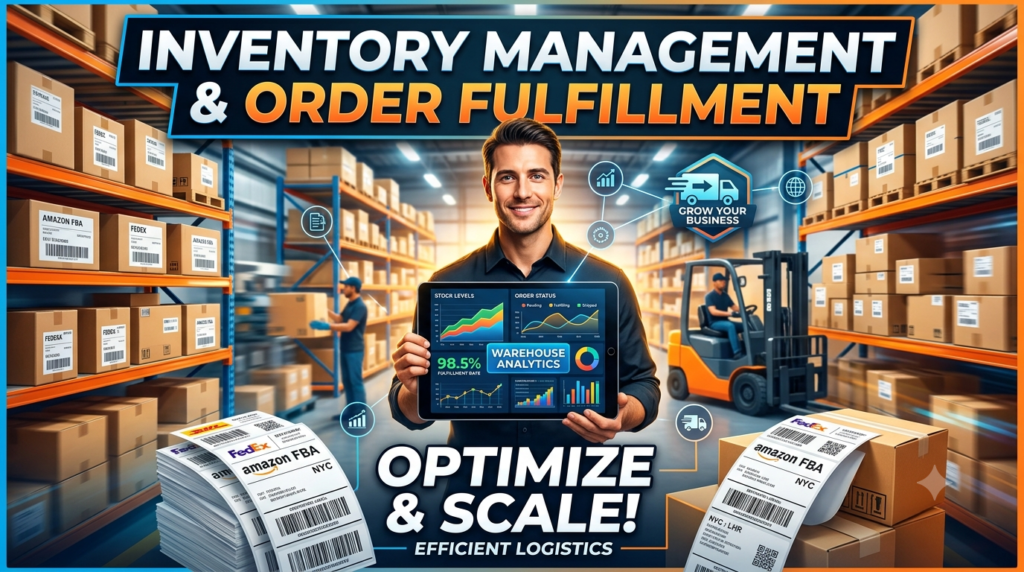
Inventory management becomes more complicated as your store grows. A product may be available when you publish its listing and unavailable by the time a customer places an order. If your store continues accepting orders without reflecting stock changes, you may need to issue refunds or explain delays. These problems can be especially costly during promotional campaigns, when a sudden increase in demand puts pressure on your supplier’s inventory and shipping operations.
Start by identifying the products that require the closest monitoring. Bestsellers, seasonal products, and items with limited stock deserve frequent checks. Where supported, configure inventory synchronization and order notifications so you can identify potential problems early. However, never assume that a synchronization feature eliminates every discrepancy. Periodically compare your storefront with the supplier’s current availability, especially before running a large advertising campaign or offering a major discount.
You should also establish an order-management routine. Review newly imported orders, confirm payment status, investigate orders awaiting fulfillment, and monitor tracking updates. If an order remains unfulfilled longer than expected, contact the supplier rather than waiting for the customer to complain. Create a simple escalation process for missing packages, incorrect products, and stock shortages. A few minutes of preventive monitoring can save considerable time spent handling complaints later.
For stores experiencing consistent demand, consider whether holding inventory in a suitable warehouse could improve reliability. CJdropshipping offers fulfillment services involving stocked inventory, with costs depending on factors such as inbound handling, outbound processing, shipping, and storage.
Compare the cost of pre-positioning inventory with the potential benefits of faster fulfillment. This decision should be based on actual sales patterns rather than the assumption that stocking products is always better.
Product Compliance and Business Risks
Not every product is suitable for every market or sales channel. Before selling an item in the United States, check whether it is subject to product-safety rules, labeling requirements, import restrictions, intellectual-property protections, or category-specific regulations. Requirements may be particularly important for electronics, children’s products, cosmetics, food-contact products, and items making health-related claims. A supplier listing alone does not prove that a product meets all applicable requirements.
Ask for relevant product documentation when necessary, and independently verify claims that affect safety or legal compliance. Do not use copyrighted photographs, trademarked designs, or branded product descriptions without the appropriate rights. If you sell through a marketplace, review its prohibited-product rules and documentation requirements as well. A listing that violates a marketplace policy can result in removal, withheld funds, or account restrictions, even if the supplier continues offering the item.
You should also account for broader business risks. Advertising performance can decline, customer preferences can change, shipping routes can experience disruptions, and supplier stock can disappear. Avoid building your entire business around one untested product or relying on a single traffic source. Keep financial reserves for refunds and unexpected costs, and establish alternative plans for important products whenever practical.
Finally, understand your responsibilities as the store owner. Your supplier may manage sourcing and delivery, but you still need to communicate honestly with customers, maintain accurate product listings, follow relevant tax and business requirements, and resolve complaints. Taking these responsibilities seriously helps create a more resilient business and reduces the likelihood that a short-term sourcing problem will become a larger operational issue.
Read More:-
How Does Strikingly Simplify the Website Building Process?
Building Your Dream Website with Site123
Boost Your E-commerce Strategy with YITH Plugins
Maximize Your Customer Engagement with LiveAgent’s Features
Why STRIPO is Essential for Digital Product Marketersa
Pros and Cons of Using CJdropshipping
CJdropshipping can be a useful fulfillment partner, but its suitability depends on your business model, product category, budget, and customer expectations. Comparing the main advantages with the practical limitations will help you decide whether to test the service or investigate other suppliers first.
| Advantages | Potential drawbacks |
| Product sourcing and fulfillment services in one platform | Product availability and sourcing times can vary |
| Access to US and international warehouse options | Not every product is stocked in the United States |
| Integration with supported e-commerce platforms | Integration features and workflows may differ |
| Product inspection and customization options | Inspection does not eliminate every quality issue |
| Ability to test products without stocking every item yourself | Advertising and fulfillment expenses can reduce margins |
| Options for branded packaging and labeling | Customization may involve additional costs or requirements |
| Shipping calculator and order-management tools | Delivery estimates are not guaranteed arrival dates |
| Support channels for resolving questions | Returns and disputes can involve complicated logistics |
The biggest advantage is flexibility. You can explore products, evaluate shipping methods, and build a store without managing every package yourself. This can be especially useful for entrepreneurs who are starting with limited storage space or want to test different product ideas before committing to bulk purchases.
The main challenge is that outsourcing fulfillment also means relying on another business for important parts of the customer experience. You have less direct control over inventory, packaging, inspection, and dispatch than you would with products stored and packed in-house. The best decision is not necessarily to choose the supplier with the lowest listed prices. Instead, look for the arrangement that provides an acceptable balance of cost, quality, reliability, and customer satisfaction.
How to Get Started With CJdropshipping
If CJdropshipping appears suitable for your business, start with a controlled test instead of immediately building a large catalog. A small launch lets you evaluate the service, understand its costs, and identify problems before they affect dozens or hundreds of customers. Follow these steps to establish a practical starting point.
Step 1: Define your target audience. Decide who you want to sell to, what problems your products will solve, and why customers should purchase from your store instead of a competitor. A focused niche makes it easier to develop relevant product descriptions, advertising campaigns, and branding.
Step 2: Research potential products. Compare several products based on demand, competition, product quality, shipping costs, and likely selling price. Avoid selecting an item solely because it is inexpensive or visually appealing. You need a product that customers want and that can be fulfilled reliably at a reasonable cost.
Step 3: Verify sourcing and warehouse availability. Review the current listing, confirm the exact variant, and check whether stock is available in a US warehouse or needs to be shipped internationally. If important information is missing, contact support or submit a sourcing request.
Step 4: Calculate your complete costs. Include product cost, shipping, fulfillment fees, store expenses, payment processing, advertising, and a reasonable allowance for refunds or other unexpected costs. Estimate your contribution margin before committing to paid marketing.
Step 5: Order a sample. Inspect the product yourself and evaluate its packaging, functionality, quality, and suitability for your target audience. Use your findings to prepare accurate product descriptions and realistic expectations for buyers.
Step 6: Connect your store and test the workflow. Set up the relevant integration, import the product, and check the product details, variants, inventory, and order settings. Place a test order to confirm that the process works as expected.
Step 7: Publish transparent store policies. Explain delivery estimates, tracking, cancellations, returns, and refunds. Make sure your promises match the fulfillment options you have verified.
Step 8: Launch and monitor performance. Start with a manageable advertising budget and monitor sales, delivery times, customer feedback, refund rates, and actual profit. Increase spending only when your results show that the product and fulfillment process can support growth.
This gradual approach allows you to learn from real orders without taking unnecessary financial risks. Once you have evidence that the product sells consistently and customers receive it satisfactorily, you can consider expanding your catalog, improving packaging, or exploring additional warehouse options.



Conclusion
Choosing a dropshipping supplier is about more than finding products at attractive prices. Before using CJdropshipping (US) for your e-commerce store, evaluate product quality, warehouse availability, shipping estimates, total fulfillment costs, platform integrations, branding options, return conditions, and compliance requirements. Each factor can influence your profitability and the experience customers have with your business.
CJdropshipping offers a combination of product sourcing, fulfillment, warehouse services, and integrations that may suit entrepreneurs who want to simplify their operations. However, the right choice depends on your specific products and target market. US warehouse availability should be verified for each item, delivery estimates should be checked against the actual shipping route, and supplier policies should be reviewed before you make promises to customers.
The smartest strategy is to start small, test products, calculate realistic margins, and monitor every stage of the fulfillment process. Build your store around reliable service and transparent communication rather than depending entirely on low prices or aggressive marketing. With careful research and consistent evaluation, you can determine whether CJdropshipping is the right partner for your e-commerce goals and create a stronger foundation for sustainable growth.
Frequently Asked Questions (FAQs)
Q. Is CJdropshipping a good choice for a US e-commerce store?
A. CJdropshipping may be suitable for US-focused stores that need product sourcing, order fulfillment, and access to domestic or international warehouse options. Its suitability depends on product quality, shipping costs, inventory availability, and customer expectations. Testing a sample and reviewing the complete fulfillment cost can help you make an informed decision.
Q. Does CJdropshipping have warehouses in the United States?
A. Yes. CJdropshipping lists US warehouse services alongside facilities in other countries. However, not every product is necessarily stocked in a US warehouse. Confirm the inventory location and availability of your exact product before advertising a particular delivery timeframe.
Q. How much does it cost to use CJdropshipping?
A. Costs depend on the product, shipping method, warehouse, order characteristics, and additional services you select. Your total expenses may include the product price, shipping, fulfillment-related charges, storage, and customization. Check the current service-fee information and shipping calculator for a product-specific estimate before deciding your selling price.
Q. Can I use CJdropshipping with Shopify?
A. CJdropshipping lists Shopify among its supported store integrations. Integration capabilities can vary, so confirm the current setup requirements and test product importing, inventory synchronization, order fulfillment, and tracking before launching your store.
Q. What should I check before selling a product through CJdropshipping?
A. Check product quality, specifications, sourcing reliability, warehouse location, shipping costs, delivery estimates, profit margins, and return conditions. For regulated products, verify the relevant safety and compliance requirements as well. Ordering a sample and testing the fulfillment process are practical ways to identify potential issues before accepting customer orders.