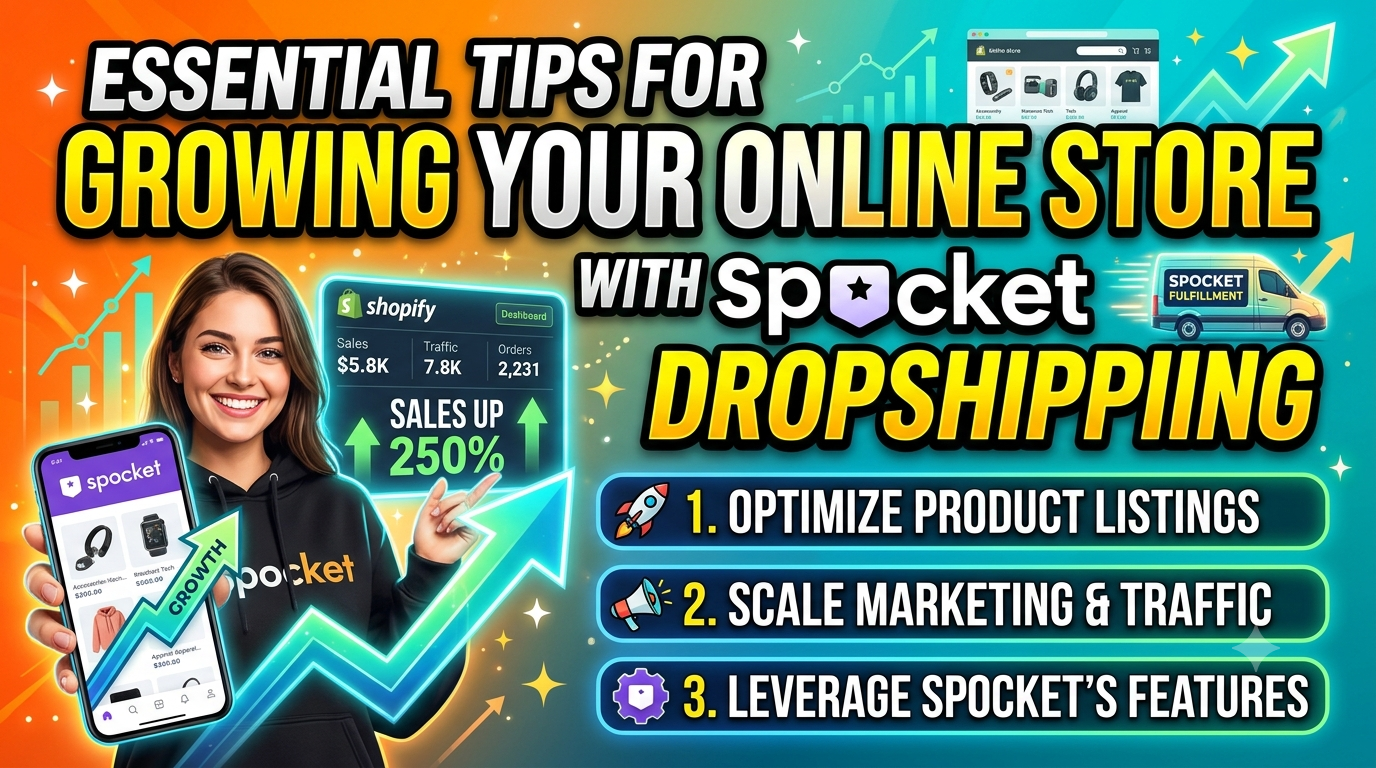
Discover how Spocket Dropshipping can help you grow your online store with reliable suppliers, quality products, and simplified order fulfillment. Learn essential strategies for choosing profitable products, finding trusted suppliers, optimizing product listings, improving customer experience, and increasing eCommerce sales. Whether you’re a beginner or an experienced online entrepreneur, explore practical tips to build a successful dropshipping business, strengthen your brand, and achieve long-term growth with Spocket.
Table of Contents
- Understanding Spocket Dropshipping and How It Works
- Choose a Profitable Niche for Your Online Store
- Find Reliable Suppliers Through Spocket
- Select High-Quality Products That Customers Want
- Build a Professional and User-Friendly Online Store
- Optimize Your Product Listings for SEO
- Use Competitive Pricing to Increase Sales
- Create a Strong Brand Identity
- Invest in Social Media Marketing
- Use Content Marketing to Attract Organic Traffic
- Improve Customer Experience and Support
- Focus on Shipping Speed and Order Fulfillment
- Use Email Marketing to Build Customer Relationships
- Analyze Store Performance and Customer Behavior
- Test Products Before Scaling Your Business
- Avoid Common Dropshipping Mistakes
- Explore Automation to Save Time
- Develop a Long-Term Growth Strategy
- Conclusion
- Frequently Asked Questions (FAQs)
Understanding Spocket Dropshipping and How It Works
Before growing your online business, you need to understand how the dropshipping model works and how Spocket fits into the process. Dropshipping is an eCommerce business model in which you sell products without purchasing or storing inventory yourself. Instead, you partner with suppliers who manage product storage, packaging, and shipping. When a customer places an order through your online store, the order is forwarded to the supplier, who ships the product directly to the customer. You earn money from the difference between your selling price and the supplier’s product cost, after accounting for expenses such as marketing, platform subscriptions, payment processing, and refunds. This business model makes it easier for beginners to experiment with different product categories without investing large amounts of money in stock.
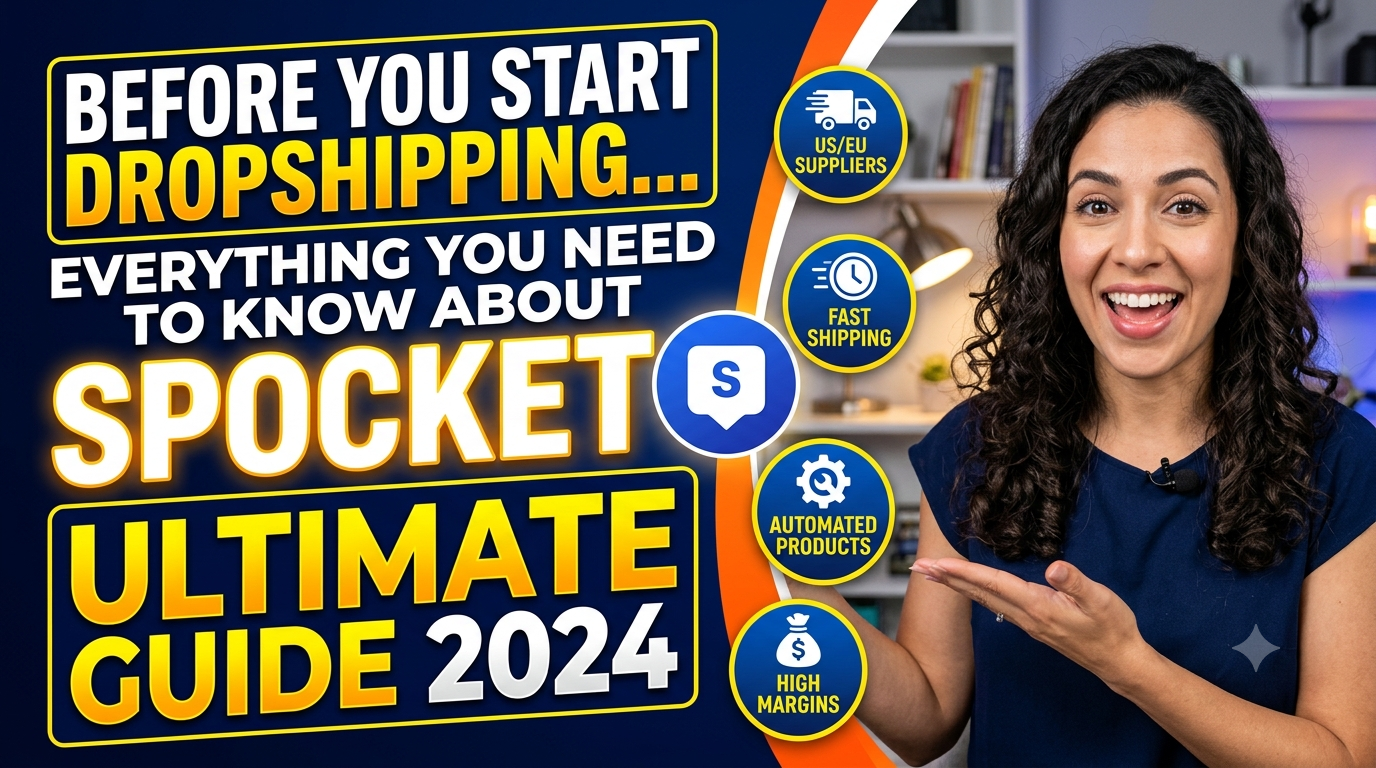
Spocket dropshipping simplifies several parts of this process by connecting online sellers with suppliers across different regions. According to Spocket’s official help center, users can browse products, order samples, import products into their stores, and manage fulfillment through supported integrations. Its platform supports popular eCommerce solutions, including Shopify, WooCommerce, Wix, BigCommerce, and Squarespace.
This means you can focus more on building your brand, understanding your customers, and promoting your products instead of managing every logistical detail manually. However, remember that dropshipping is not a completely hands-free business. You remain responsible for pricing, customer communication, marketing, refunds, and the overall shopping experience. Think of Spocket as a business-support tool rather than a guarantee of success.
Choose a Profitable Niche for Your Online Store

Choosing the right niche is one of the most important decisions you will make when launching an online store. A niche helps you focus on a particular audience instead of trying to sell everything to everyone. Imagine opening a physical shop that sells kitchen accessories, pet products, clothing, electronics, and fitness equipment all at once. Customers might struggle to understand what your brand actually represents. The same problem can affect an online store with too many unrelated products. Instead, choose a category that has a clear target audience and enough product variety to support future growth. Popular possibilities include beauty accessories, home improvement products, fashion, pet supplies, fitness equipment, travel accessories, and sustainable lifestyle products. The best niche is not necessarily the one receiving the most attention on social media; it is the one where customer demand, product quality, competition, and potential profit work together.
When exploring products through Spocket dropshipping, consider whether the products solve everyday problems or satisfy a specific customer interest. For example, if you select the home organization niche, you could offer storage containers, kitchen organizers, decorative accessories, and space-saving products. These items appeal to customers with related needs, making it easier to create bundles and targeted marketing campaigns. Research your competitors to understand their pricing, product descriptions, customer reviews, and promotional strategies. You should also consider whether the niche offers repeat-purchase opportunities. A business selling products that customers regularly need may have more opportunities to develop long-term relationships than one depending entirely on occasional purchases. Start with a manageable category, understand your audience, and expand only when you have enough information to make confident decisions.
Research Customer Demand and Market Trends
Market research helps you avoid investing your time in products that people are unlikely to purchase. Before adding an item to your store, investigate whether customers are actively searching for it, discussing it, or buying similar products. Google Trends can help you understand changes in search interest, while social media platforms such as Instagram, Pinterest, TikTok, and YouTube can reveal emerging consumer preferences. You can also explore competitor stores and customer reviews to discover common complaints. For example, if customers frequently mention that existing travel organizers are too small or poorly designed, that feedback may reveal an opportunity to offer a better alternative. Look for consistent demand instead of choosing a product simply because one influencer made it popular. Seasonal trends can also create opportunities, but your store should ideally have products that remain relevant throughout the year. Combining research from multiple sources gives you a clearer picture of customer expectations and helps you select products with stronger commercial potential.
Find Reliable Suppliers Through Spocket
A successful dropshipping business depends heavily on supplier reliability. You may have an attractive website, excellent advertisements, and competitive prices, but customers will not return if their orders arrive late or products do not match their descriptions. This is why supplier research should be one of your priorities when using Spocket. The platform provides access to suppliers from different regions, including the United States and Europe, along with other global suppliers. Spocket states that suppliers undergo a review and onboarding process that considers product quality, inventory arrangements, pricing, and fulfillment expectations.
These measures can help sellers discover potential partners, but you should still evaluate each supplier individually before committing to a product.
Start by examining supplier ratings, customer feedback, shipping estimates, and available product information. Pay attention to how clearly suppliers communicate their fulfillment policies and whether they provide tracking information. You should also investigate how they handle damaged items, missing deliveries, and stock shortages. Ordering product samples is particularly valuable because it allows you to inspect the actual item rather than relying entirely on photographs. Check its packaging, materials, functionality, and overall quality. If possible, compare samples from multiple suppliers offering similar products. A slightly higher supplier price may be worthwhile if it comes with better quality and more dependable delivery. Remember that your supplier is an important part of your customer experience. Choosing carefully at the beginning can prevent unnecessary complaints, refund requests, and negative reviews later.
Select High-Quality Products That Customers Want
Finding a product that looks attractive is easy; finding one that customers genuinely want to purchase requires more research. Your product selection should balance demand, quality, affordability, and profit potential. Avoid filling your store with hundreds of items simply because they are available in the Spocket catalog. A large product catalog does not automatically create a successful business. Instead, begin with a smaller collection of products that fit your chosen niche and serve a clear customer need. Consider factors such as usefulness, durability, design, product dimensions, available variations, and shipping costs. Products that solve everyday problems can be particularly useful because their benefits are easier to explain through product descriptions, videos, and advertisements. You should also evaluate whether an item is suitable for your target audience and whether its selling price makes sense compared with similar products available elsewhere.
Another effective approach is to identify products that can be purchased together. For instance, a store specializing in fitness accessories could sell resistance bands, workout gloves, gym bags, and water bottles. This creates opportunities for cross-selling and product bundles, potentially increasing the average order value. However, always verify the product details before publishing listings. Do not make unsupported claims about product materials, health benefits, safety certifications, or performance. If a product has specific limitations, communicate them honestly. Your goal should be to build a product collection that customers trust, not simply to chase temporary trends. When customers receive products that meet their expectations, they are more likely to leave positive reviews, recommend your store, and consider buying from you again.
Build a Professional and User-Friendly Online Store
Your website is the digital storefront of your business, and its appearance can influence whether visitors decide to shop with you. A professional online store does not need complicated animations or expensive visual effects. It needs a clean layout, consistent branding, easy navigation, and clear product information. Platforms such as Shopify, WooCommerce, Wix, and BigCommerce can help entrepreneurs build an eCommerce website and connect it with compatible dropshipping tools. Spocket provides integrations with several popular store-building platforms, allowing sellers to import products and manage parts of their fulfillment workflow.
When designing your website, organize products into relevant categories and make important pages easy to find. Your homepage should immediately communicate what your business sells and why visitors should explore your products.
Mobile optimization deserves special attention because many customers browse and shop through smartphones. Make sure your website loads quickly, product images display correctly, and buttons are easy to tap. The checkout process should be straightforward, with transparent shipping costs and clearly displayed payment options. Include essential pages such as About Us, Contact Us, Shipping Policy, Return Policy, Privacy Policy, and Terms and Conditions. Use high-quality product photographs and maintain consistent fonts, colors, and visual elements across the website. Before launching, test the complete shopping experience yourself. Visit your store as if you were a first-time customer, browse products, add something to your cart, and check the checkout process. A smooth experience helps build confidence and reduces unnecessary friction between discovering a product and completing a purchase.
Optimize Your Product Listings for SEO
Search engine optimization is an important strategy for attracting potential customers without depending entirely on paid advertisements. You want your store to have a chance to show up in relevant results when consumers search for products on Google. Start by researching keywords related to your products and customer needs. For example, if you sell reusable kitchen storage bags, your keyword research might include phrases such as reusable food storage bags, eco-friendly kitchen accessories, and alternatives to plastic food bags. Use relevant keywords naturally in your product titles, descriptions, image alt text, category pages, and meta descriptions. Avoid repeating the same keyword unnecessarily because keyword stuffing can make your content difficult to read and may harm its search performance.
Your product descriptions should provide more value than a basic supplier description. Explain what the product does, who might benefit from it, what makes it useful, and which specifications customers should understand before purchasing. Include details such as dimensions, materials, colors, and care instructions whenever accurate information is available. Write unique descriptions instead of copying identical text from multiple supplier listings. You can also create informative blog posts targeting questions your customers commonly ask. For example, a home organization store could publish articles about small kitchen storage ideas or practical ways to organize a bedroom. These articles can attract visitors who are researching solutions before making a purchase. SEO generally takes time, so focus on producing useful content consistently rather than expecting immediate rankings. A well-optimized store can become a valuable long-term source of organic traffic.
Use Competitive Pricing to Increase Sales
Pricing is more than choosing a number that looks attractive on a product page. It determines your potential profit, influences customer expectations, and affects how your brand is positioned in the market. When setting prices for products sourced through Spocket, begin by calculating the complete cost of selling each item. This should include the supplier price, shipping charges, payment processing fees, platform subscriptions, advertising expenses, discounts, and an allowance for refunds or unexpected costs. For example, suppose your supplier charges $15 for a product and shipping costs $5. If you sell it for $35, your initial difference is $15, but this is not necessarily your final profit because other business expenses still need to be deducted. Understanding this difference prevents you from confusing revenue with actual earnings.
Research competitors to understand the prices customers are already seeing for similar products. You do not always need to offer the lowest price. Instead, focus on providing a convincing combination of quality, convenience, service, and value. You can experiment with introductory discounts, bundle offers, free-shipping thresholds, and seasonal promotions. However, make sure every offer remains financially sustainable. For example, offering free shipping on orders above a certain amount may encourage customers to purchase additional items, but you should calculate whether the extra order value covers the shipping expense. To learn how clients react to various pricing points, keep an eye on your conversion rate and average order value. A smart pricing strategy should support both customer satisfaction and business profitability.
Create a Strong Brand Identity
A strong brand gives customers a reason to remember your store instead of treating it like another random shopping website. There is much more to branding than just a memorable company name or logo. It involves your visual identity, communication style, product selection, customer service, and the overall feeling people associate with your business. Start by choosing a name that is easy to remember, relevant to your niche, and suitable for future expansion. Develop a simple logo, select a consistent color palette, and decide how you want your brand to communicate with customers. For example, a sustainable lifestyle store might use natural colors and friendly messaging, while a premium fashion store could choose a more elegant visual style. Your brand identity should remain consistent across your website, social media accounts, packaging information, and customer emails.
You should also establish a clear reason why customers should purchase from your store. Perhaps you specialize in carefully selected home accessories, offer useful product recommendations, or make shopping easier for a particular audience. Use your marketing materials and About Us page to convey that value. Avoid making claims that you cannot support, such as describing every product as handmade or environmentally friendly without evidence. Authenticity is more valuable than exaggerated marketing language. Over time, consistent branding can help customers recognize your business and develop trust. When shoppers feel connected to a brand, they may become repeat customers rather than purchasing from you only when a discount is available. Treat your brand as a long-term business asset that grows alongside your product range and customer base.
Invest in Social Media Marketing
Social media can help your online store reach potential customers, demonstrate product benefits, and build relationships with people interested in your niche. Platforms such as Instagram, TikTok, Facebook, Pinterest, and YouTube offer different ways to promote products through photographs, short videos, tutorials, demonstrations, and customer stories. However, you should not create an account on every platform without a clear strategy. Determine the areas where your target audience is most active and focus your efforts there. For example, Pinterest may be useful for visual products related to home decor, fashion, and DIY projects, while TikTok and Instagram Reels can help demonstrate how a product works. Create content that educates or entertains rather than publishing advertisements repeatedly. A simple video showing how a kitchen organizer saves space may be more convincing than a post that only says the product is available for purchase.
Consistency is another important factor in social media marketing. Develop a realistic posting schedule and experiment with different content formats. You could share product demonstrations, buying guides, behind-the-scenes videos, frequently asked questions, and customer feedback. Encourage customers to share photographs or videos of their purchases when appropriate and with their permission. You can also collaborate with relevant micro-influencers whose audiences match your target market. Before paying for a collaboration, examine audience engagement, content quality, and the relevance of their followers. Track measurable outcomes such as website clicks, add-to-cart activity, sales, and customer acquisition costs. Social media followers alone do not guarantee business growth. The real objective is to turn relevant attention into meaningful customer relationships and profitable sales.
Use Content Marketing to Attract Organic Traffic
Content marketing is a long-term approach that helps your business attract potential customers by providing useful information. Instead of constantly asking people to buy something, you give them answers to questions they are already searching for. This approach can improve brand awareness, establish credibility, and create additional opportunities for customers to discover your products. Start a blog on your online store and publish articles related to your chosen niche. If your business sells pet accessories, you could write about choosing comfortable pet beds, organizing pet supplies, or selecting suitable travel accessories for pets. If you sell fashion products, create content about seasonal styling, wardrobe organization, and accessory combinations. These topics can attract visitors who may eventually become customers.
Make your content practical, easy to understand, and relevant to your products. Use descriptive headings, short explanations where appropriate, original photographs, and internal links to related product pages. You can also repurpose blog articles into social media posts, short videos, email newsletters, and downloadable guides. For example, one detailed article about organizing a small apartment could become several short videos demonstrating individual storage ideas. This allows you to get more value from the content you create. Avoid publishing low-quality articles just to increase your website’s page count. Search engines and readers both benefit from helpful, original information. Over time, a well-maintained content library can support your SEO strategy and make your online store a useful resource rather than simply another place selling products.
Improve Customer Experience and Support

Customer experience can make or break your online business. When someone purchases from your store, they expect accurate product information, a smooth checkout, timely communication, and support if something goes wrong. Since you do not physically handle the inventory in a dropshipping model, communication becomes especially important. Make sure customers understand what they are buying, how long delivery may take, and what they should do if they experience a problem. Display your contact information clearly and provide multiple ways for customers to reach your business when possible. Respond to questions politely and avoid making promises about delivery dates or product features that you cannot guarantee.
Create a clear process for handling refunds, exchanges, damaged products, and missing shipments. Keep customers updated when an order is delayed instead of waiting for them to contact you first. If someone receives a defective item, acknowledge the issue and explain the available solution. A helpful response can sometimes turn a negative experience into an opportunity to demonstrate that your business takes customer satisfaction seriously. You should also collect feedback after purchases to understand what is working and what needs improvement. Pay attention to repeated complaints because they may indicate a supplier or product issue that needs immediate attention. Excellent customer service is not just about solving problems; it is about creating a shopping experience that makes customers comfortable purchasing from your store again.
Focus on Shipping Speed and Order Fulfillment
Shipping is one of the most important parts of dropshipping because customers care about when their purchases will arrive. Even an excellent product can create disappointment if delivery takes longer than expected or tracking information is unavailable. Spocket provides access to suppliers in different locations, including the United States and Europe, which may offer suitable shipping options for customers in those markets. However, shipping speed depends on the supplier, destination, product availability, processing time, and selected delivery method. Never assume that every product on the platform has the same delivery timeline. Check the shipping information for each item and compare suppliers before importing products into your store.
Make shipping information visible on your product pages and during checkout. If an item requires additional processing time, explain this clearly so customers can make informed decisions. Monitor order statuses regularly and contact suppliers when shipments appear delayed. Ensure that tracking information reaches customers as soon as it becomes available. You should also review your supplier’s performance over time, especially regarding order accuracy and delivery reliability. Spocket’s supplier guidelines describe expectations around processing orders, providing tracking information, and meeting specified delivery timeframes.
Use these expectations as a reminder to evaluate fulfillment quality instead of assuming that supplier selection alone guarantees a positive experience. Reliable shipping helps protect your store’s reputation and encourages customers to shop with confidence.
Use Email Marketing to Build Customer Relationships
Email marketing remains a useful way to communicate directly with people who have shown interest in your store. Unlike social media, where your reach can depend on changing platform algorithms, an email list gives you a direct communication channel with subscribers who have agreed to receive your messages. Begin by adding a simple newsletter subscription option to your website. You can encourage sign-ups by offering useful information, exclusive promotions, or early access to selected product launches. Once someone subscribes, avoid overwhelming their inbox with constant sales messages. Instead, create a balanced email strategy that combines product recommendations, helpful content, special offers, and relevant updates.
Set up automated emails for important customer interactions. A welcome email can introduce your brand and explain what customers can expect from your store. An abandoned-cart email can remind visitors about products they added but did not purchase, while an order confirmation email can provide reassurance after checkout. You can also send follow-up messages requesting feedback after delivery or recommending related products based on previous purchases. Segment your subscribers according to their interests and shopping behavior so that your emails remain relevant. For example, customers interested in home decor should not receive every promotional email about fitness accessories. Always follow applicable email marketing and privacy requirements, including providing an unsubscribe option. A thoughtful email strategy can encourage repeat purchases and help your business build relationships that last longer than a single transaction.
Analyze Store Performance and Customer Behavior
Growing an online store without analyzing its performance is like driving a car without looking at the road. You might be moving forward, but you will have little idea whether you are heading in the right direction. Use analytics tools to understand how visitors discover your website, which products attract attention, and where customers leave the shopping process. Google Analytics 4, platform dashboards, and advertising reports can provide useful information about traffic sources, purchases, engagement, and customer behavior. Pay attention to important metrics such as conversion rate, average order value, customer acquisition cost, revenue, refund rate, and repeat purchase rate. These numbers help you understand whether your marketing activities are generating meaningful business results.
For example, imagine that your online store receives 1,000 visitors in a month but only 10 people complete a purchase. Rather than immediately increasing your advertising budget, investigate why the other visitors are not converting. Perhaps the product prices are too high, the shipping information is unclear, the checkout process is complicated, or the product pages lack useful details. You can test different headlines, images, product descriptions, and promotional offers to identify improvements. Similarly, if one product consistently generates sales while another receives very little attention, examine the differences in demand, pricing, presentation, and customer feedback. Make decisions based on measurable evidence instead of personal assumptions. Regular performance reviews help you identify opportunities, reduce unnecessary spending, and develop a more predictable growth strategy.
Test Products Before Scaling Your Business
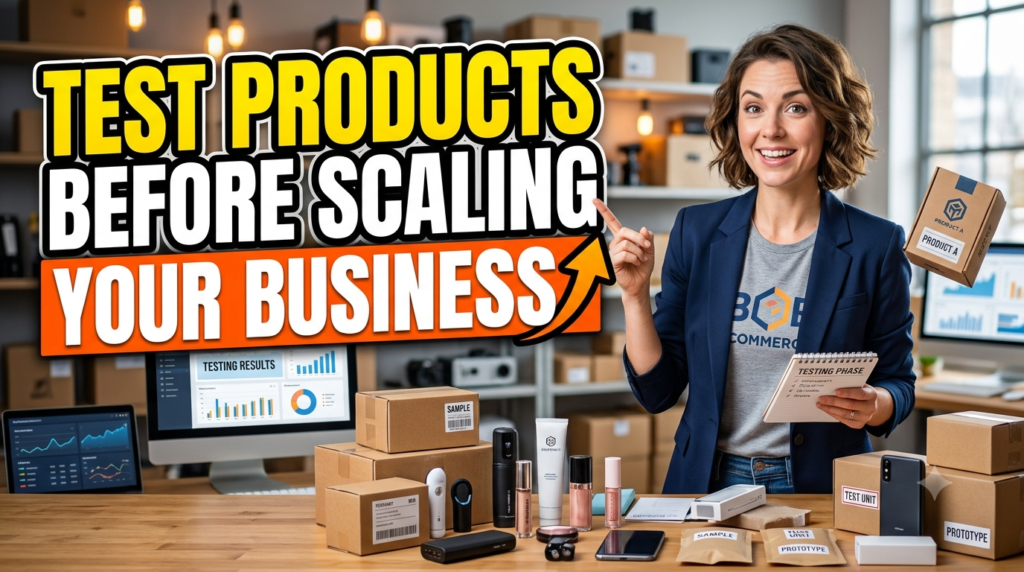
One of the biggest mistakes new dropshippers make is investing heavily in advertisements before understanding whether their products can satisfy customers. Product testing helps you reduce this risk. Instead of importing a large collection and spending money promoting every item, select a small group of products that match your niche. Review their supplier information, order samples when possible, and evaluate the quality yourself. Check whether the product matches its photographs, whether the materials feel appropriate, and whether it performs as described. You can then create different marketing materials to test how customers respond. For example, one advertisement might highlight convenience, while another focuses on design or affordability. Compare their performance to understand which benefits attract your audience.
Testing should continue after your first sales. Monitor customer reviews, refund requests, delivery performance, and repeat purchases to determine whether a product deserves more investment. A product that generates many clicks but very few purchases may have a pricing or presentation problem. Another product may receive fewer clicks but produce a stronger conversion rate and better profit per order. These differences matter when deciding where to allocate your marketing budget. Once a product demonstrates consistent demand and reliable fulfillment, gradually increase its promotional investment. Avoid scaling too quickly based on one successful advertisement or a temporary sales spike. Sustainable growth comes from identifying products that perform well over time, not simply chasing short-lived popularity.
Avoid Common Dropshipping Mistakes
Dropshipping offers flexibility, but that does not mean every business decision will produce positive results. Many beginners make avoidable mistakes because they focus too much on launching quickly and too little on building a reliable operation. One common problem is choosing products without researching customer demand. Another is copying supplier descriptions and images without checking whether the information is accurate or appropriate for the target market. Some store owners also underestimate advertising costs, ignore shipping times, or set prices without calculating their actual expenses. These decisions can create financial pressure even when the store appears to be generating sales. To avoid these problems, treat your online store as a real business that requires planning, testing, and ongoing management.
You should also avoid depending entirely on one supplier when your business begins to grow. If that supplier runs out of stock or changes its fulfillment arrangements, your store could face unexpected disruptions. Where practical, identify alternative suppliers for important products and monitor inventory availability. Another mistake is neglecting customer service after an order has been placed. Customers should not have to chase your business for updates about their purchases. Keep your policies transparent and respond to problems promptly. Finally, avoid believing unrealistic promises about guaranteed profits or overnight success. Dropshipping requires time, research, marketing knowledge, and financial discipline. Learning from small mistakes is normal, but repeatedly ignoring customer feedback and business data can prevent your store from reaching its potential.
Read More:-
How Does Strikingly Simplify the Website Building Process?
Building Your Dream Website with Site123
Boost Your E-commerce Strategy with YITH Plugins
Maximize Your Customer Engagement with LiveAgent’s Features
Why STRIPO is Essential for Digital Product Marketersa
Explore Automation to Save Time
Managing an online store involves many repetitive activities, including importing products, updating listings, monitoring orders, checking inventory, and sending customer notifications. Handling every task manually can become difficult as your business expands. This is where automation tools can make your daily operations more manageable. Spocket offers integrations and order-management features designed to simplify parts of the dropshipping process. Depending on your connected store and subscription, these tools can help with product imports, order synchronization, and fulfillment workflows.
Automation can reduce repetitive work, allowing you to spend more time on product research, marketing, customer relationships, and business planning.
However, automation should not mean completely ignoring your operations. Review imported product details, check stock availability, and monitor order statuses regularly. Automated systems can save time, but incorrect product information or supplier inventory changes can still create problems. Set up notifications where available so you can respond quickly when an order requires attention. You can also automate selected marketing activities, such as welcome emails and abandoned-cart reminders, using suitable tools. Start with the tasks that consume the most time and automate them gradually. Keep a human review process for important decisions involving refunds, customer complaints, product quality, and supplier performance. The best approach combines technology with active business management. When used thoughtfully, automation can help you handle a growing number of orders without allowing operational complexity to take over your day.
Develop a Long-Term Growth Strategy
Building an online store is not just about making your first few sales. Your long-term objective should be to develop a business that can attract customers consistently, manage orders efficiently, and generate sustainable profits. Start by setting realistic business goals for the next three, six, and twelve months. Your early priorities might include selecting a niche, launching your website, testing products, and generating your first customers. Once your store becomes operational, focus on improving conversion rates, strengthening supplier relationships, and increasing repeat purchases. As you collect more information about your audience, use those insights to improve your product range and marketing strategy. Having clear milestones makes it easier to measure progress and identify areas that need attention.
You should also think carefully about how your business can become more distinctive over time. This might involve developing a recognizable brand, creating original product content, offering better customer support, introducing exclusive product bundles, or exploring print-on-demand opportunities. Spocket’s current platform information also highlights product sourcing, integrations, and print-on-demand options as parts of its wider dropshipping ecosystem.
As your sales grow, review your profit margins and operational costs rather than focusing only on revenue. Consider expanding into related products only when your existing business processes are stable. A long-term strategy should remain flexible because customer preferences, competition, supplier availability, and marketing channels can change. Keep learning, testing, and improving. Consistent progress is often more valuable than rapid expansion without a strong foundation.

Conclusion
Growing an online store with Spocket dropshipping requires more than finding products and adding them to a website. It involves choosing the right niche, understanding customer expectations, working with reliable suppliers, developing a recognizable brand, and creating marketing strategies that generate consistent sales. Spocket can simplify product sourcing and order fulfillment by connecting retailers with suppliers and supporting popular eCommerce platforms. However, your business success ultimately depends on how effectively you use these resources. Focus on product quality, transparent pricing, customer satisfaction, and reliable shipping rather than trying to compete only through discounts. Invest time in SEO, social media marketing, email campaigns, and performance analysis to build a stronger foundation for future growth. Start small, test your products, learn from customer feedback, and expand when your business is ready. With consistent effort, careful planning, and the right tools, you can turn your dropshipping store into a sustainable eCommerce brand.
Frequently Asked Questions (FAQs)
Q. What is Spocket dropshipping?
A. Spocket dropshipping is an eCommerce business model that allows online retailers to source products from suppliers through the Spocket platform without maintaining their own inventory. When customers purchase products from your store, suppliers handle the packaging and shipping. You earn the difference between your selling price and the supplier’s cost, after deducting other business expenses.
Q. Is Spocket suitable for beginners?
A. Yes, Spocket can be suitable for beginners who want to explore dropshipping without purchasing inventory in advance. Its product sourcing tools and integrations can simplify store management. However, beginners should understand product research, marketing, pricing, supplier selection, and customer service before investing heavily in their businesses.
Q. How can I find winning products on Spocket?
A. You can discover potential winning products by researching customer demand, analyzing market trends, reviewing supplier information, and comparing product prices. Look for products that solve customer problems, offer reasonable profit potential, and have suitable shipping options. Ordering samples before promoting products can also help you evaluate quality.
Q. Can I integrate Spocket with Shopify and WooCommerce?
A. Yes. Spocket supports integrations with popular eCommerce platforms, including Shopify and WooCommerce. It also supports platforms such as Wix, BigCommerce, Squarespace, and others. These integrations help retailers import products and manage different parts of their dropshipping operations.
Q. How can I increase sales in my Spocket dropshipping store?
A. You can increase sales by selecting products that match customer demand, optimizing product listings for SEO, using social media marketing, offering competitive prices, and improving website navigation. Providing accurate shipping information and responsive customer support can also encourage repeat purchases and positive customer reviews.