
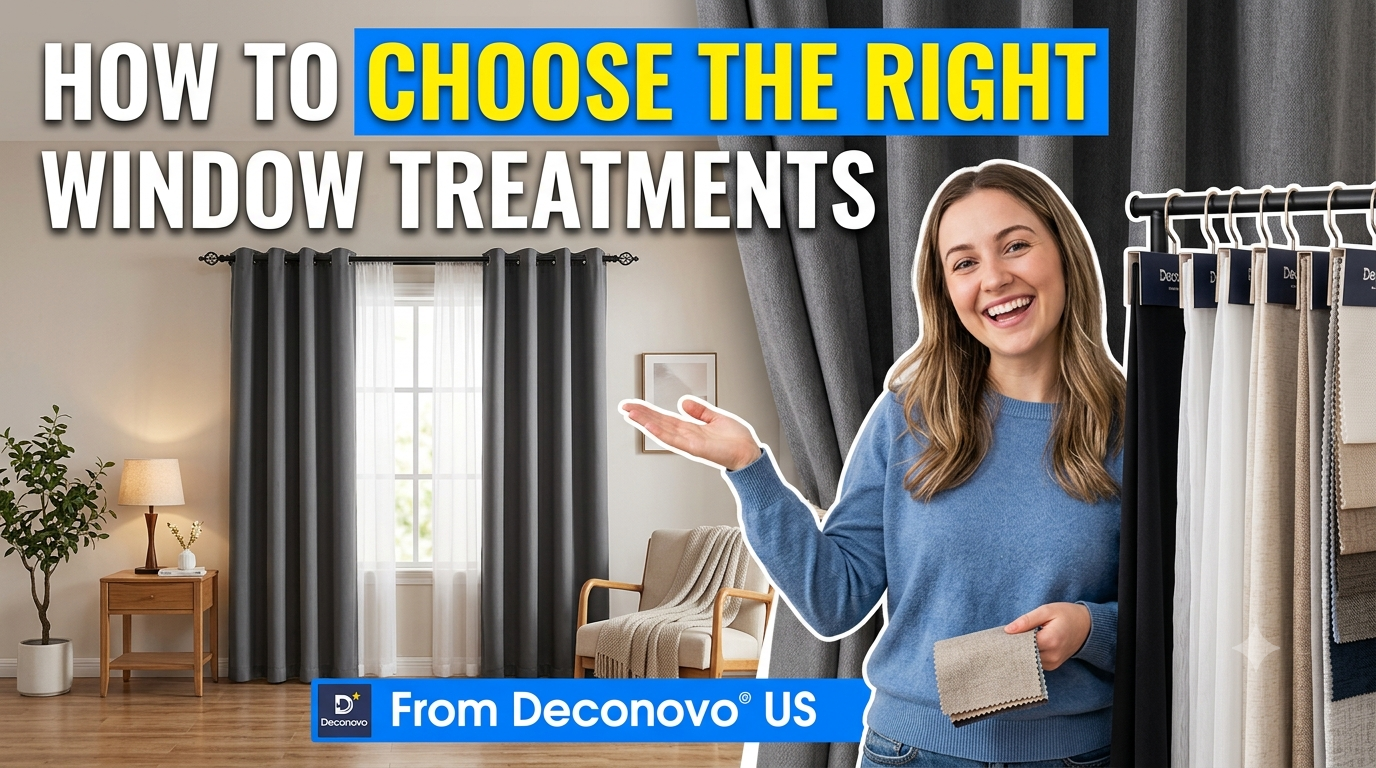
Deconovo US offers a wide selection of stylish and functional window treatments designed to enhance comfort, privacy, light control, and home décor. From blackout and thermal curtains to linen, velvet, sheer curtains, Roman shades, roller shades, and woven bamboo options, Deconovo US provides solutions for bedrooms, living rooms, offices, and other spaces. With customizable sizes, a variety of colors and fabrics, and options for different interior styles, Deconovo US makes it easier to find window treatments that combine practicality with modern design.
Table of Contents
- Understanding Your Window Treatment Needs
- Explore Deconovo US Curtain and Shade Options
- Choose the Right Window Treatment Material
- Measure Your Windows Before Ordering
- Choose Between Ready-Made and Custom Treatments
- Match Colors With Your Interior Design
- Consider Privacy and Light Control
- Think About Energy Efficiency
- Compare Curtains, Shades, and Blinds
- Consider Maintenance and Everyday Use
- Set a Practical Budget
- Check Reviews, Swatches, and Product Details
- Conclusion
- FAQs
Understanding Your Window Treatment Needs
Before browsing products, take a moment to ask what you actually expect your window treatment to do. Is the main goal to block sunlight during the afternoon, create privacy at night, soften the appearance of a large window, reduce drafts, protect furniture from strong sunlight, or simply make the room look finished? You may need several of these benefits at once, but identifying the most important one makes the shopping process much easier. For example, a bedroom usually benefits from strong light control and privacy, while a living room may need a combination of natural light and decorative softness. An office could benefit from glare reduction without turning the room completely dark, while a nursery may prioritize darkness and a practical, family-friendly operating system. Deconovo US organizes its products into useful categories, including blackout curtains, climate curtains, bedroom curtains, office curtains, shades, and customized treatments, so thinking about the room first gives you a better starting point than simply choosing the cheapest or most attractive option. A useful rule is to imagine the window without any decoration and then decide what you want to change about it. If the room feels too bright, prioritize light control. If it feels cold or exposed, think about insulation and privacy. If it feels plain, focus on texture and color. Once you know the problem you are trying to solve, the right window treatment becomes much easier to identify.
Identify Your Room’s Main Purpose
Every room tells you something about the type of window treatment it needs. A bedroom, for instance, is usually a place where comfort and darkness matter, making blackout curtains or total-blackout options particularly attractive. Deconovo US currently offers multiple bedroom curtain styles, including custom linen blackout curtains, linen-and-cotton blend blackout curtains, velvet blackout curtains, and other options in different colors and finishes. A living room is different because completely blocking the outside world may not be desirable; you may prefer a treatment that lets daylight enter while still creating privacy and visual warmth. For a home office, glare management can be more important than complete darkness, particularly if you work near a monitor or spend several hours reading. Kitchens and bathrooms require another level of thought because moisture, stains, cleaning, and ventilation can influence which materials make sense. If the room has children or pets, operation and accessibility should also enter the decision. Deconovo’s FAQ, for example, distinguishes between cordless and corded Roman shades, explaining that cordless versions have no visible cords and are positioned as a child-safe option, while corded styles provide precise adjustment and can suit larger or harder-to-reach windows. The lesson is simple: choose the treatment based on how the room is actually used rather than choosing purely according to how it looks online.
Decide How Much Light You Want
Light is one of the biggest factors separating one window treatment from another. Some people want a bright room with filtered daylight, while others want an almost completely dark environment for sleeping, watching television, working, or protecting a room from intense sunlight. Deconovo US offers both regular blackout and 100% total blackout categories, allowing shoppers to distinguish between different levels of light control. Its black blackout collection explains that the company offers darker treatments designed for strong light blocking as well as lighter colors when a softer room-darkening effect is preferred. This distinction matters because “blackout” should not automatically be interpreted as meaning that every window will feel exactly the same. The color, fabric construction, installation method, window gaps, and surrounding light can all influence the final effect. If darkness is your top priority, look specifically at total-blackout products and pay attention to the dimensions and installation details rather than assuming any thick-looking curtain will deliver identical performance. If your priority is creating a comfortable, naturally lit room, a lighter fabric or sheer layer may be more appropriate. You can also combine treatments, such as pairing a heavier curtain with a sheer panel, to create a flexible day-and-night setup. Think of your window as a volume control for daylight: the right treatment gives you the ability to turn the brightness up, soften it, or reduce it dramatically when the situation calls for it.
Explore Deconovo US Curtain and Shade Options
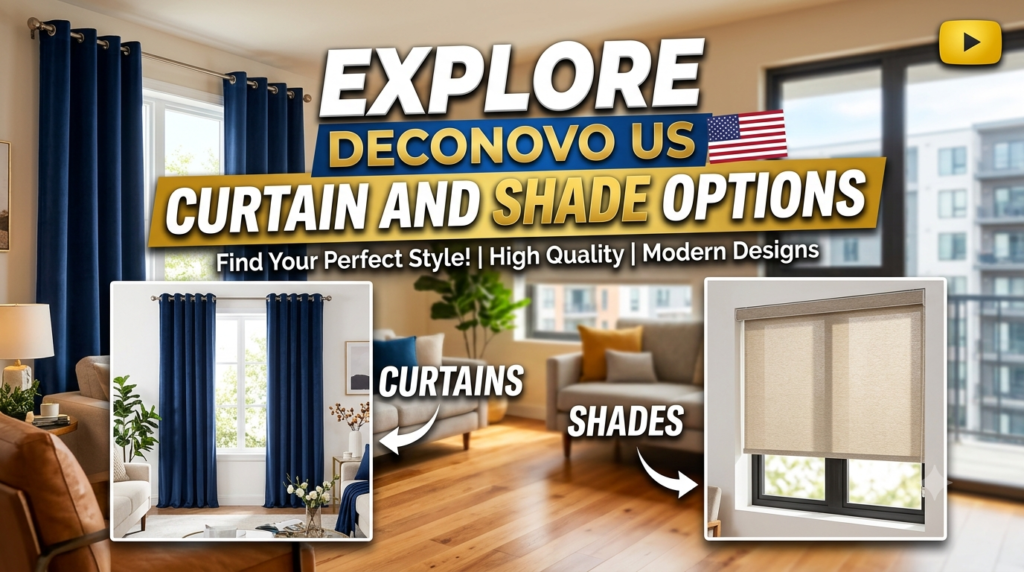
Once you understand the purpose of the room, it is time to explore the actual range of treatments available. Deconovo US currently presents a wide assortment rather than a single signature curtain style. The main collection includes linen curtains, custom blackout curtains, sheer curtains, shades and blinds, and other decorative options, while its customization section includes products such as bamboo woven shades alongside custom curtains. This variety is useful because different windows can require completely different solutions even within the same home. A wide patio door might look best with full-length curtains, whereas a smaller bathroom window may be better suited to a shade. A bedroom with strong morning sun may benefit from a blackout treatment, while a dining room may look more inviting with a softer fabric that filters daylight. The important thing is not to assume that every room should use the same treatment. Consistency can be created through color, texture, or hardware while still allowing each room to have a treatment appropriate to its function. Before making a purchase, explore several categories and compare their materials, dimensions, operation, light-control descriptions, and customization choices. Deconovo’s current collection also includes products with substantial color ranges; for example, some custom curtain styles are available in numerous shades, making it easier to coordinate treatments with furniture, flooring, walls, and decorative accessories.
Blackout Curtains for Light Control
Blackout curtains are an obvious choice when controlling sunlight is a priority, but they can also influence the atmosphere and comfort of a room. Deconovo US describes its blackout collection as including different fabrics and styles, with options ranging from linen and cotton-related materials to heavier velvet and other substantial fabrics. If you are shopping for a bedroom, consider how early sunlight enters the room, whether street lighting reaches the window at night, and whether you need darkness during daytime naps. For a media room, stronger light control can improve the viewing environment, while in an office it may help create a more controlled workspace when glare becomes distracting. Deconovo’s current 100% total-blackout collection includes custom velvet options such as Heloise and Nicolette, demonstrating how strong light-blocking performance does not necessarily mean choosing a plain or purely functional appearance. You should still read the specific product description carefully because performance can vary between products and installations. Consider the curtain width, height, overlap, and the amount of light that can enter around the edges. A beautiful blackout curtain installed too narrowly may leave bright gaps that undermine the result. In other words, the curtain itself is only one part of the light-control equation; the way you measure, order, and install it matters just as much.
Thermal Curtains for Insulation
If your windows contribute to temperature changes in a room, thermal curtains deserve attention. Deconovo US describes its climate curtain collection as designed to provide insulation from cold air entering a room and to reduce heat transfer through windows, connecting the treatment with potential energy-saving benefits. This can be particularly appealing for bedrooms, living rooms, offices, and other spaces where you notice temperature differences near windows. Thermal curtains are not simply about staying warm, however; the broader idea is to create a more comfortable indoor environment by reducing some of the exchange between the interior and exterior. When choosing one, consider the window’s location, the amount of direct sunlight it receives, seasonal temperature changes, and how heavily you want the fabric to sit around the window. Deconovo’s climate collection currently includes several styles and colors, including velvet and other curtain constructions, so shoppers do not necessarily have to sacrifice aesthetics to pursue a more insulating treatment. It is also helpful to keep expectations realistic: curtains are only one component of a home’s energy performance, and their effect depends on the window, room, installation, fabric, and surrounding conditions. Still, if your room feels noticeably cooler near a window in winter or receives strong solar exposure during warmer months, considering thermal properties alongside appearance can make your choice more thoughtful and functional.
Choose the Right Window Treatment Material
Material affects almost everything about a window treatment: its texture, weight, appearance, drape, maintenance, light control, and overall impression. Linen can create an airy, relaxed appearance, while velvet tends to feel richer and more dramatic. A linen-look fabric can provide a casual visual character without necessarily having the same texture as natural linen, while heavier materials can give windows a more substantial architectural presence. Deconovo’s current US curtain range includes natural-looking linen styles, linen-look products, cotton blends, velvet, Dutch velvet, and other fabric choices. When comparing materials, do not judge only from a photograph because the physical texture can look different under your home’s lighting. This is one reason ordering or reviewing available fabric swatches can be useful before committing to a large set of custom curtains. Deconovo specifically promotes free swatches on its US site, giving shoppers a way to assess color and material more closely before making a decision. Think about the personality of your room as well. If your furniture is already visually heavy, a lighter curtain may prevent the space from feeling crowded. If the room has minimalist furniture and large empty walls, a textured or substantial curtain can introduce depth. The best material is therefore not necessarily the most expensive or luxurious option; it is the one whose physical character supports both the practical requirements and the design language of your space.
Linen and Linen-Look Fabrics
Linen has become a popular choice for interiors because it can make a room feel relaxed, natural, and sophisticated without looking overly formal. Deconovo US currently features multiple custom linen and linen-related blackout styles, including products such as Zuri, Olivia, Sophia, and Solene, with different colors and construction options. These styles can work particularly well when you want the room to feel warm and refined rather than heavily decorated. Natural-looking textures also pair easily with wood, neutral upholstery, woven accessories, plants, and understated wall colors. However, shoppers should avoid assuming that every linen-style curtain will behave identically. Some are designed primarily around appearance, while others include blackout construction or additional performance characteristics. Look at the product description for the specific item and decide whether you are buying primarily for texture or for light-blocking performance. Color selection also matters with linen-style curtains because neutral shades can create a calm backdrop, whereas deeper tones can become a stronger visual feature. If you are unsure about a color, a swatch can be far more reliable than judging from your screen. Natural daylight, artificial lighting, wall color, and flooring can all change how fabric appears. A linen curtain that looks warm beige online might appear noticeably different next to your actual furniture. Sampling first can prevent an expensive design mistake and help you choose with confidence.
Velvet and Heavier Fabrics
Velvet and other heavy fabrics create a very different visual effect from linen. They tend to feel richer, more substantial, and more dramatic, making them attractive for bedrooms, formal living rooms, entertainment spaces, and interiors where the window treatment is meant to make a statement. Deconovo’s current US catalog includes Dutch velvet blackout curtains and 100% total-blackout velvet styles, with some models offered in a wide selection of colors. Heavy fabric can also influence how the room feels visually because it frames the window with more presence. This can be useful when you have large windows and want the treatment to become part of the room’s focal composition. On the other hand, heavy curtains may not be the right choice for a very small room where you want to preserve an airy feeling. They can also require more consideration regarding the curtain rod, mounting hardware, and ease of opening and closing because the overall weight can be greater. Before selecting velvet, consider whether the rest of the room can support its richer appearance. If your sofa, bed, rug, and accessories already have strong textures, a simpler fabric may create better balance. If the space feels flat or unfinished, a substantial velvet curtain can add depth almost like adding another layer of furniture. The key is to use material intentionally rather than selecting it simply because it looks luxurious.
Measure Your Windows Before Ordering
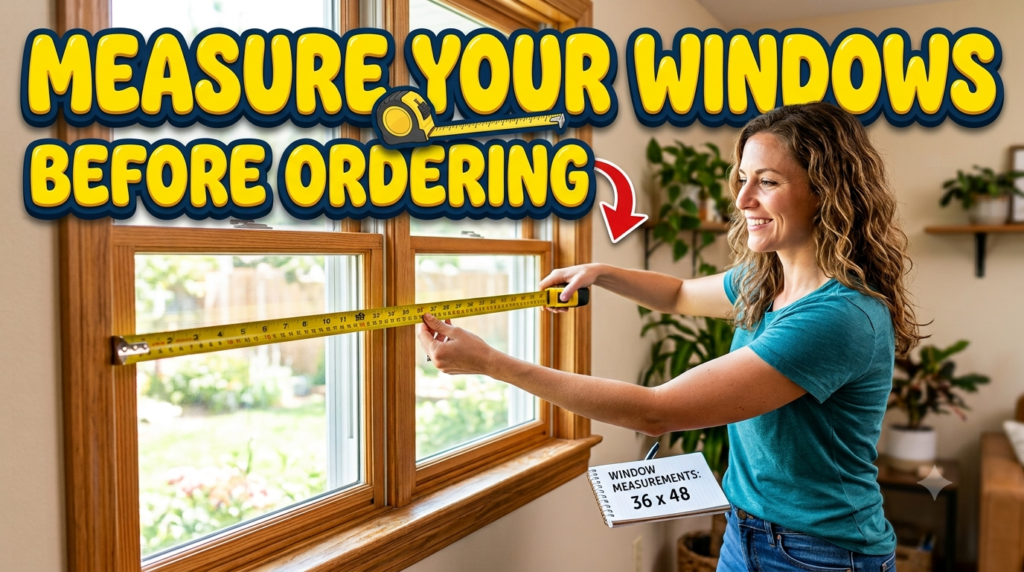
One of the most important steps in choosing window treatments is also one of the easiest to rush: measuring the window correctly. A beautiful curtain cannot compensate for incorrect dimensions, and custom products make accurate measurement even more important. Start by determining whether you are measuring the window itself, the inside of the frame, the outside area, or the space you want the curtain to cover. Then consider how high and wide you want the treatment to extend. Many designers prefer mounting curtains higher and wider than the actual window because this can make the window feel larger and create a more generous frame around it, but the best approach depends on your room and hardware. When ordering custom treatments from Deconovo US, pay close attention to the product’s measurement instructions and customization fields rather than relying on assumptions from another curtain brand. The company’s custom blackout collection specifically positions customization as a way to select the desired size for a window or French door. Measure more than once and write down the measurements clearly before entering them online. Also consider the finished length you want: floor-length curtains create a different look from sill-length treatments, and pooling fabric creates a different effect again. For shades, measurement can involve different considerations depending on whether the shade is mounted inside or outside the window frame. Taking your time here is like laying the foundation for a house: if the measurements are wrong at the beginning, every attractive choice afterward becomes harder to use successfully.
Choose Between Ready-Made and Custom Treatments
The choice between ready-made and custom window treatments depends largely on how unusual your windows are and how precise you want the final result to be. Ready-made products can be convenient when you have standard-sized windows and want a straightforward solution without spending time entering custom dimensions. Custom treatments, on the other hand, can be valuable for oversized windows, French doors, unusually shaped openings, or situations where you want a particularly precise fit. Deconovo US currently offers a dedicated collection of custom blackout curtains, with shoppers able to select products and desired sizes, while its broader customization range also includes custom curtains and woven shades. Customization can also make design consistency easier because you can select a specific fabric and coordinate it across multiple windows. If one room has three windows of slightly different dimensions, for example, custom sizing may provide a more cohesive finished appearance. The trade-off is that custom shopping requires greater attention to measurements and product specifications. Before ordering, check the return and customization policies applicable to the specific product, because customized items may be handled differently from standard products. If your windows are ordinary and you need a simple upgrade, ready-made may be perfectly sensible. If your windows are difficult to fit or the finished appearance matters greatly, customization can be worth considering. The best choice is the one that saves you frustration while giving the room the proportion and function you want.
Match Colors With Your Interior Design
Color is where window treatments can either quietly complete a room or dramatically change its personality. You do not always need to match the curtains exactly to your walls, sofa, or bedding; in many cases, choosing a complementary tone creates a more sophisticated result. Deconovo’s current collection offers a broad range of shades across different styles, including neutrals, blues, greens, pinks, browns, grays, and darker tones. Neutral curtains are often the safest choice when you expect your furniture or accessories to change over time because they can work with many different palettes. On the other hand, a bold color can turn an otherwise simple window into a visual focal point. Think about the role you want the curtain to play. Should it blend into the background like a quiet supporting actor, or should it step forward and become part of the room’s personality? Also examine the amount of natural light in the room because colors can appear dramatically different in bright sunlight compared with evening artificial lighting. Dark curtains can create a cozy atmosphere and may support stronger light control, while lighter shades can help maintain a brighter visual feeling. If you are choosing between several similar colors, use a swatch against your actual wall and furniture rather than relying solely on your monitor. Color coordination is less about finding an identical shade and more about creating a relationship between the different surfaces in the room.
Consider Privacy and Light Control
Privacy and light control often overlap, but they are not exactly the same requirement. A room can have excellent privacy during the day while still allowing significant sunlight to enter, or it can be almost completely dark while also providing strong privacy. Think about when you need privacy most. A living room facing a busy street may require coverage during the evening, while a bedroom might need privacy around the clock. If you want flexibility, layering can be particularly useful. A sheer curtain can soften daylight and provide a degree of visual screening, while a heavier curtain can be closed when you need greater privacy or darkness. Deconovo’s product range includes both sheer curtains and stronger blackout treatments, allowing different layers to be considered within the same overall design approach. Shades can provide another route when you want a cleaner, more compact appearance around the window. The best solution depends on your home’s position, neighboring buildings, window orientation, and personal comfort level. Remember that privacy is not only about whether someone can see inside; it is also about how exposed the room feels. A well-chosen treatment can make a large window feel more comfortable and intentional without forcing you to keep it completely covered all day. Consider morning, afternoon, evening, and nighttime separately, because the privacy and light requirements of the same window can change significantly throughout the day.
Think About Energy Efficiency

Windows can be one of the areas where indoor and outdoor temperatures interact, which is why window treatments sometimes play a role in improving comfort. Deconovo US specifically describes its thermal or climate curtain collection as helping insulate against cold air and reduce heat transfer through windows, while connecting reduced heat transfer with potential energy savings and a lower carbon footprint. If you live somewhere with strong seasonal temperature changes, this feature may be worth considering alongside color and appearance. Start by identifying which windows cause the most discomfort. A large south-facing window with strong sunlight can have different needs from a shaded bedroom window that feels cold in winter. Heavier curtains may also change the perceived comfort of a room because they create a physical layer between the interior and the window. However, do not treat curtains as a replacement for good windows, insulation, sealing, or appropriate heating and cooling. Their performance depends on the entire setup, including fabric, coverage, installation, and the window itself. Deconovo’s current climate collection includes different styles and colors, which means shoppers can consider insulation without automatically choosing something that clashes with their interior. A practical approach is to prioritize thermal properties in rooms where temperature control is genuinely an issue and focus more heavily on appearance and light filtering in rooms where temperature is already comfortable. That way, you are paying for a feature where it can provide meaningful value rather than adding performance features simply because they sound impressive.
Compare Curtains, Shades, and Blinds
Curtains are only one category of window treatment, and sometimes a shade or blind is the better solution. Curtains can add softness, texture, color, and height to a room, especially when hung from near the ceiling to the floor. Shades and blinds generally create a more compact visual profile and can be useful where space around the window is limited or where you prefer a streamlined appearance. Deconovo US’s current customization collection includes natural jute and bamboo woven shades, while its FAQ describes Roman shades and roller shades as additional treatment types with different operating and performance characteristics. The right choice depends on the room’s architecture and your daily habits. A large living room window may benefit from flowing curtains that soften the space, while a small kitchen window may look cleaner with a shade. If you have a desk close to the window, a roller shade may offer a practical way to adjust light without fabric taking up much surrounding space. Deconovo also notes that its 100% blackout and motorized roller shades provide UV protection and can help reduce heat, while its Roman shades can be customized with additional lining for certain performance needs. Compare the options based on operation, fabric, maintenance, privacy, light control, available space, and design. There is no universal winner. The best treatment is the one that fits both the physical window and the way you interact with the room every day.
Consider Maintenance and Everyday Use
A window treatment can look fantastic on installation day and become frustrating later if it is difficult to clean, operate, or maintain. Before buying, think honestly about your household routine. Do you open the curtains every morning and close them every night? Are the windows near a kitchen where dust and cooking residue may accumulate? Do you have children or pets that can reach the treatment? Does the room collect a lot of sunlight? These questions can influence which material and operating style make the most sense. Deconovo US offers different fabric types and operating systems, so maintenance and everyday usability should be evaluated at the individual product level rather than assumed across the entire brand. Its FAQ, for example, distinguishes between cordless and corded Roman shades, while the product catalog includes materials ranging from linen to velvet and bamboo. Also check the care instructions before purchasing, especially if you prefer machine-washable or particularly low-maintenance products. Heavy decorative curtains may require more care than lightweight panels, while woven shades may have their own cleaning considerations. Think of your window treatment as a piece of furniture that moves: you will interact with it repeatedly, so its operation should feel natural rather than annoying. A treatment that looks perfect but is awkward to open can quickly become something you avoid using. Practicality is not the enemy of style; when the two work together, the room feels better every day.
Read More:-
How Does Strikingly Simplify the Website Building Process?
Building Your Dream Website with Site123
Boost Your E-commerce Strategy with YITH Plugins
Maximize Your Customer Engagement with LiveAgent’s Features
Why STRIPO is Essential for Digital Product Marketersa
Set a Practical Budget
Budgeting for window treatments becomes easier when you separate the cost of the product from the value of the solution. A low-priced curtain is not necessarily the best deal if it does not fit correctly, fails to provide the required privacy, or needs to be replaced quickly. At the same time, the most expensive treatment is not automatically the right choice for every window. Deconovo US currently lists products across a range of prices, with examples in its curtain collection including custom styles in the roughly 30–50 range and some premium or specialized options priced higher; current listings also show products such as bamboo woven shades above $100. Prices can change, promotions can affect displayed amounts, and customization can influence the final cost, so check the current product page before making a purchase. Build your budget around the number of windows, whether you need one or multiple panels, whether you need custom sizing, and whether accessories or hardware are required. It is also useful to prioritize the rooms where window treatments will have the greatest effect. You might invest more in a bedroom where blackout performance is important and choose a simpler treatment for a low-priority window. Consider long-term value as well. If a better fabric, better fit, or better light-control performance means you will enjoy the treatment for years, the initial difference in price may be easier to justify. The goal is not to spend as little as possible; it is to spend intelligently.
Check Reviews, Swatches, and Product Details
Online shopping gives you access to an enormous range of choices, but it also means you should become a careful reader before clicking the purchase button. Look beyond the main product photograph and examine the available dimensions, fabric description, color options, blackout or thermal claims, operating mechanism, care information, customization choices, and customer reviews. Deconovo US currently displays customer ratings on many individual products, and its homepage also features customer feedback; the company’s Trustpilot profile provides another source of customer sentiment, although third-party reviews should naturally be considered alongside—not instead of—the manufacturer’s product information. Reviews can be particularly helpful for understanding how a product looks in real rooms, how heavy the fabric feels, whether the color matches expectations, and how customers experienced ordering or installation. Swatches can help with color and texture before committing to multiple panels, and Deconovo promotes free swatches on its US site. It is also smart to check the current return policy and any conditions related to custom-made products before ordering. If you are comparing two curtains that appear similar, read the details carefully because one may be designed for total blackout while another provides softer room darkening. The same principle applies to shades: operating style, lining, UV protection, water resistance, and thermal features can differ. Treat the product description like a specification sheet, not just marketing copy. When you combine specifications, swatches, measurements, and customer feedback, you can make a much more informed choice.




Conclusion
Choosing the right window treatment from Deconovo US becomes much easier when you stop looking for a single “best curtain” and instead look for the best solution for your particular window and room. Start with the purpose: decide whether you need darkness, privacy, insulation, filtered daylight, decoration, or a combination of several benefits. Then consider the material, color, dimensions, operating system, maintenance requirements, and budget. Deconovo’s current US selection provides a broad range of possibilities, from linen and velvet blackout curtains to thermal treatments, sheer curtains, Roman and roller shades, and natural woven shades, with customization available for many products. Accurate measurements should come before ordering, especially when choosing custom products, because a perfect fabric in the wrong size will never deliver the finished appearance you imagined. Swatches can help you judge color and texture, while reviews and product specifications can help you understand how the treatment may perform in everyday use. Most importantly, think about the window as part of the room rather than an isolated feature. The right treatment can soften a space, frame a view, control sunlight, improve privacy, and reinforce your interior style all at once. Whether you choose a relaxed linen look, dramatic velvet, a practical blackout curtain, a thermal panel, or a streamlined shade, the smartest decision is the one that combines function, fit, style, and long-term usability rather than focusing on appearance alone.
FAQs
Q. What should I consider first when choosing window treatments from Deconovo US?
A. Start with the room’s purpose and the main problem you want the treatment to solve. Decide whether you prioritize blackout performance, privacy, insulation, filtered daylight, decoration, or a combination of these factors. Then narrow your options by material, style, color, size, and budget. Deconovo US has separate collections for different needs, including blackout, climate, bedroom, office, and customized window treatments, which can make the initial search more manageable.
Q. Are Deconovo blackout curtains suitable for bedrooms?
A. Yes, blackout curtains can be particularly useful in bedrooms when reducing incoming daylight is a priority. Deconovo US offers both blackout and 100% total-blackout collections, including custom styles in materials such as linen and velvet. However, always review the specifications of the individual product and measure your window carefully because installation and coverage can affect the final level of darkness.
Q. Does Deconovo US offer custom window treatments?
A. Yes. Deconovo US currently offers custom blackout curtains and other customized products, allowing shoppers to select desired sizes for suitable products. Its customization range also includes woven bamboo shades and other custom curtain styles. Customization can be especially useful for unusually sized windows, French doors, or rooms where you want a more precise finished appearance.
Q. Should I choose curtains or shades?
A. The answer depends on the window and the style of the room. Curtains are excellent when you want softness, texture, color, and a more traditional or decorative appearance, while shades can provide a cleaner and more compact solution. Deconovo US offers both curtain and shade categories, including Roman, roller, and woven shade options. Consider available space, light control, privacy, operation, maintenance, and overall interior style before deciding.
Q. How can I choose the right color for my Deconovo window treatments?
A. Look at the colors already present in your room, including walls, flooring, furniture, rugs, and accessories. Neutral colors can create a flexible backdrop, while stronger colors can make the window a focal point. Because online screens can display colors differently, using a fabric swatch can help you compare the material with your actual interior. Deconovo US currently promotes free swatches and offers many colors across its curtain collections.