
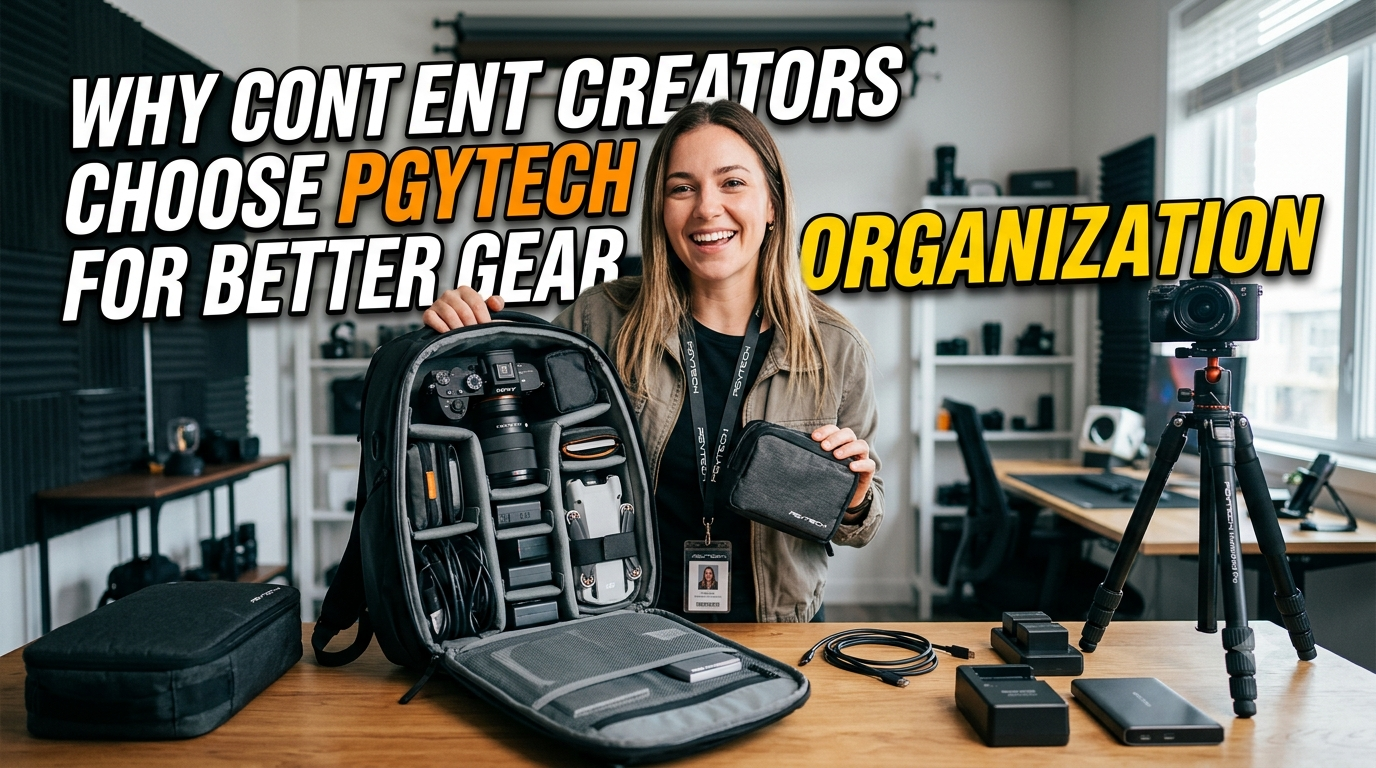
Discover why PGYTECH is becoming a preferred choice for content creators seeking smarter gear organization, flexible storage, and reliable protection. From camera bags and modular inserts to tech organizers, lens cases, and accessories, PGYTECH offers practical solutions designed to keep cameras, lenses, drones, cables, batteries, and other creative essentials organized and easy to access. Explore how PGYTECH can simplify packing, improve workflow efficiency, protect valuable equipment, and help photographers, videographers, vloggers, and travel creators focus more on creating and less on searching through their gear.
Table of Contents
- The Growing Need for Better Creator Gear Organization
- Why Modern Creator Kits Are Getting More Complicated
- What Makes PGYTECH Different From Ordinary Camera Bags
- Modular Organization for Different Shooting Styles
- Adjustable Compartments and Dividers
- OneMo Bags for Photographers and Videographers
- OneMo Sling for Fast Access
- Camera Inserts for Custom Organization
- Protection Without Sacrificing Accessibility
- Tech Organizers for Cables and Small Accessories
- Keeping the Small Things Under Control
- Organizing Drones, Lenses, Cameras, and Batteries
- Why Accessibility Matters During a Shoot
- PGYTECH and the Rise of Modular Creator Workflows
- Travel-Friendly Organization for Content Creators
- Durability and Protection on the Move
- Creating a More Efficient Packing System
- How PGYTECH Supports Different Creator Niches
- The Value of Dedicated Gear Organization
- What Creators Should Consider Before Choosing PGYTECH
- PGYTECH vs. Traditional Gear Storage Approaches
- How to Build a PGYTECH-Based Gear Setup
- Why Better Organization Can Improve the Creative Process
- Conclusion
- FAQs
The Growing Need for Better Creator Gear Organization
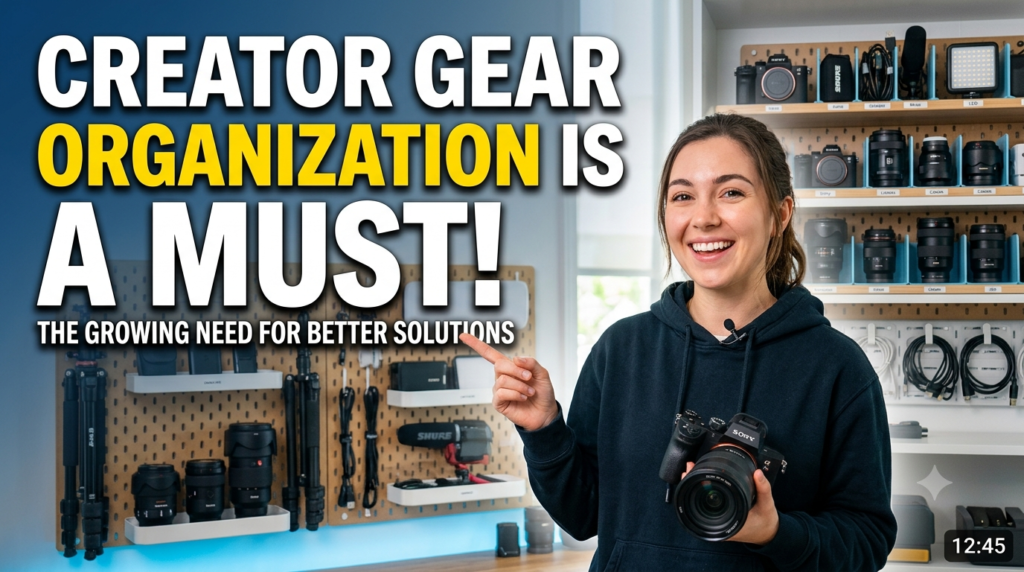
Content creation has changed dramatically, and the typical creator’s equipment bag is no longer limited to a camera and one spare battery. A modern photographer, YouTuber, filmmaker, travel creator, or social media professional may carry camera bodies, multiple lenses, microphones, memory cards, batteries, chargers, power banks, cables, filters, tripods, drones, action cameras, smartphones, lights, and laptops. The result is a simple problem that anyone who has searched through a crowded backpack understands: having the right equipment means very little if you cannot find it quickly when you need it. This is one reason gear organization has become part of the creative workflow, rather than an afterthought. PGYTECH has built much of its current product range around this reality, offering camera bags, inserts, organizers, partitions, pouches, and accessories designed to help creators separate and access their equipment. Its current bag and organizer collections include products such as the OneMo series, OneGo products, Camera Insert, Mini Tech Organizer, Tech Organizer, Lens Case, Filter Organizer, and Memory Card Wallet. The appeal is easy to understand: when your equipment is organized logically, you spend less time digging through your bag and more time watching the light, composing a frame, recording a take, or capturing an unexpected moment.
Why Modern Creator Kits Are Getting More Complicated
The modern creator kit behaves less like a traditional camera bag and more like a portable production studio. A travel photographer might need a mirrorless body, several lenses, filters, spare batteries, a drone, a compact tripod, and storage media. A YouTuber may add microphones, lighting accessories, cables, SSDs, chargers, a laptop, and smartphone equipment. Meanwhile, a short-form video creator might carry an action camera, phone grip, mini tripod, wireless microphone, power bank, and several small mounting accessories. PGYTECH’s current product categories reflect this expansion beyond conventional photography: its camera gear range includes camera straps, card-reader cases, quick-release tools, mounts, wearable accessories, tripods, and other creator-oriented equipment. The challenge is that small accessories create disproportionate organizational problems. A camera body is easy to recognize, but a particular cable, adapter, memory card, filter, or quick-release plate can disappear into a large compartment within seconds. Good organization therefore needs to account for size, frequency of use, protection, access, and workflow, not simply available storage volume. PGYTECH’s emphasis on dedicated compartments and modular accessories addresses that problem by allowing creators to build a carrying system around the equipment they actually use rather than forcing every creator into one fixed internal layout.
What Makes PGYTECH Different From Ordinary Camera Bags
A conventional backpack often treats equipment organization as a secondary feature: put some padding inside, add a few pockets, and call the job finished. PGYTECH takes a more system-oriented approach, with its product ecosystem spanning backpacks, slings, camera inserts, partitions, tech organizers, protective wraps, lens cases, filter organizers, memory-card storage, and other accessories. That matters because creators rarely have identical equipment lists. One person may need space for two cameras and several lenses, while another may primarily carry a drone, compact camera, laptop, and accessories. A flexible system makes it easier to adjust the internal environment instead of replacing the entire bag whenever the kit changes. The company’s Camera Insert, for example, uses an embedded frame, high-density foam, adjustable dividers, splash-resistant treatment, and a side opening intended to align with a backpack’s quick-access pocket. PGYTECH says the insert can accommodate configurations such as two cameras and four lenses or one camera and five lenses, depending on size and setup. That kind of modular thinking is particularly attractive to experienced creators because equipment evolves constantly. Instead of treating organization as a fixed arrangement, the creator can think of the bag as a configurable workspace that changes according to the assignment.
Modular Organization for Different Shooting Styles
One of the strongest reasons creators gravitate toward modular gear organization is simple: every shoot is different. A street photographer may need one camera, two lenses, batteries, and memory cards, while a commercial shoot could demand multiple bodies, larger lenses, lighting equipment, monitors, and accessories. A travel filmmaker may prioritize a drone, camera, compact tripod, and laptop, whereas a wedding photographer might need immediate access to several lenses and batteries. PGYTECH’s approach allows users to rearrange storage rather than accepting a single permanent configuration. Its earlier OneMo guidance, for instance, describes using movable dividers to create different upper, lower, left, and right storage configurations, with the ability to dedicate different sections to camera equipment and travel items. This flexibility is valuable because organization is not simply about fitting the maximum amount of gear inside a bag. It is about placing frequently used items where they can be reached quickly and protecting less frequently used equipment in deeper sections. The creator can effectively design an internal map: camera here, primary lens there, batteries in a dedicated pocket, cards in another location, and personal items separated from delicate equipment. That mental map can save time repeatedly throughout a shooting day.
Adjustable Compartments and Dividers
Adjustable dividers may appear like a small feature, but they are one of the most important tools for maintaining organized camera equipment. Fixed compartments can work when your gear never changes, but cameras and lenses vary substantially in shape and size, and creators frequently add new equipment over time. PGYTECH’s Camera Insert uses adjustable dividers with high-density foam, allowing users to create spaces around individual pieces of equipment rather than leaving everything to move around inside a large cavity. The company also sells separate partitions for products in its OneMo, OnePro, and OneGo families, making the broader system more adaptable. This is especially useful when a creator changes from a lightweight everyday kit to a larger production kit. Instead of buying an entirely different storage solution, the internal layout can be modified. There is also a psychological benefit: when every piece of equipment has a designated location, packing becomes a repeatable process rather than a guessing game. A creator can quickly recognize whether a battery, lens, card, or accessory is missing before leaving home. That makes adjustable organization more than a convenience; it becomes a practical way to reduce forgotten equipment and unnecessary searching during fast-paced shoots.
OneMo Bags for Photographers and Videographers
The OneMo family has become an important part of PGYTECH’s approach to camera organization because it combines carrying capacity with flexible internal storage. The current PGYTECH range includes several OneMo products, including the OneMo 2 Backpack, OneMo Lite Backpack, OneMo Sling, and OneMo Tactical Backpack. The appeal of this family is that creators can select a form factor according to how much equipment they carry and how they move through their environment. A photographer walking through a city may want a compact sling, while a filmmaker traveling with multiple pieces of equipment may prefer a larger backpack. The OneMo concept is particularly useful for creators who do not want their camera bag to behave like a black box. The internal configuration can be adapted, and the broader accessory ecosystem provides additional ways to customize storage. PGYTECH’s current OneMo Sling, for example, uses what the company calls a “Sandwich” structure, with separate areas for cameras, drones, tablets, stabilizers, small essentials, and other items. This kind of layout recognizes that creators need different levels of access during a shoot. The equipment used every few minutes should not be buried beneath items needed only once.
OneMo Sling for Fast Access
For creators who prioritize mobility, a sling can be more practical than a large backpack because it keeps essential equipment closer to the body and can provide faster access. PGYTECH’s OneMo Sling is available in 7L and 11L configurations, with a design intended to organize cameras, drones, tablets, stabilizers, and smaller essentials in separate areas. The current product information also highlights a large top opening, a battery-storage area with a power indicator pocket, tripod attachment straps, and a hidden AirTag pocket. Those features demonstrate an important shift in creator gear design: the bag is not merely transporting equipment; it is helping the user manage the entire shooting process. Imagine walking through a busy location and suddenly seeing the perfect shot. You do not want to remove a backpack, unzip several layers, move a cable, and finally reach your camera. A well-designed sling can reduce those steps. For street photographers, travel creators, vloggers, and anyone working in environments where opportunities appear unexpectedly, access speed can be as valuable as storage capacity. The goal is not to carry everything you own. It is to carry the equipment you need in a layout that supports the way you actually shoot.
Camera Inserts for Custom Organization
A camera insert is one of the most interesting options for creators who already own a backpack but want professional-level protection and organization inside it. Instead of forcing users to purchase a dedicated camera backpack, an insert effectively creates a protective equipment compartment that can be placed within another carrying system. PGYTECH’s Camera Insert is designed with a solid frame, high-density foam, adjustable dividers, YKK zippers, splash-resistant treatment, and side attachment points. PGYTECH lists multiple sizes and says the XS, S, and M versions can also be used as shoulder bags and converted into a workstation-style setup. This is useful for creators who want flexibility between professional shoots and everyday travel. The same person might carry camera equipment inside a backpack on one trip, move the insert into another bag for a different assignment, or use it independently when working on location. It also creates a separation between fragile equipment and ordinary belongings. Clothes, notebooks, food, chargers, and personal items do not need to occupy the same unstructured space as lenses and camera bodies. For creators who value modularity, an insert can therefore serve as the organizational core of a larger travel system.
Protection Without Sacrificing Accessibility
Protection and accessibility can sometimes feel like opposing goals. The more padding and separation you add, the safer equipment may become, but excessive protection can also make gear frustrating to reach. PGYTECH’s approach attempts to balance these priorities through foam padding, structured compartments, openings positioned for access, and customizable dividers. The Camera Insert’s high-density foam is intended to provide protection while keeping the design relatively lightweight, while its side opening is designed to work with a backpack’s quick-access pocket. That balance matters because professional creators often operate under time pressure. A photographer may need to change lenses quickly; a videographer may need to retrieve a battery between takes; a travel creator may need to switch from a camera to a drone before the scene changes. A bag that protects everything but makes every item difficult to reach is not necessarily a good workflow tool. The ideal organization creates controlled accessibility: fragile items remain separated and protected, while frequently used equipment stays within easy reach. This is where thoughtful internal design can make a noticeable difference in the daily experience of carrying expensive creative equipment.
Tech Organizers for Cables and Small Accessories
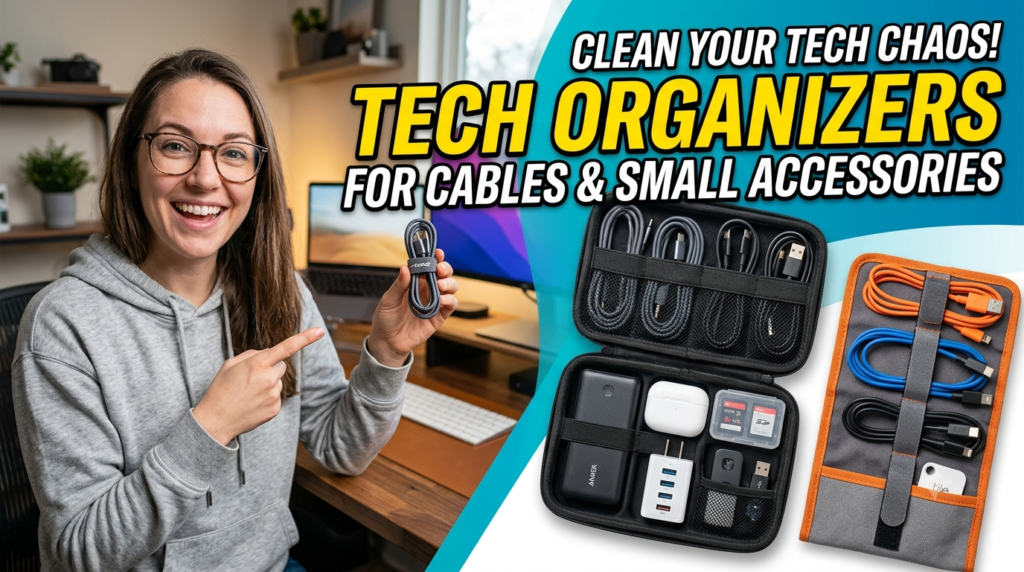
Cameras and lenses usually receive the most attention, but small electronic accessories can create some of the biggest organizational headaches. Cables, adapters, memory cards, card readers, batteries, power banks, charging accessories, and small connectors can quickly turn a backpack into a tangled collection of unrelated objects. PGYTECH currently offers both a Mini Tech Organizer and Tech Organizer, along with dedicated memory-card storage and CreateMate card-reader cases. The company also lists USB cables and other small creator accessories in its camera tools and accessories category. This ecosystem makes sense for today’s hybrid creator, whose workflow may involve cameras, smartphones, laptops, drones, and multiple storage systems at the same time. A dedicated organizer gives small items their own territory. That means a creator does not have to empty an entire backpack just to locate one cable. It also makes packing more predictable: cables go in the organizer, memory cards go in the card wallet, lenses go in protective cases or camera compartments, and larger equipment occupies the main storage areas. The result is a simple principle that experienced creators quickly appreciate: small things need small homes.
Keeping the Small Things Under Control
The difference between a tidy gear bag and a chaotic one often comes down to the smallest objects. A memory card can slip beneath a battery; a charging cable can wrap around a lens cap; a filter can become buried underneath a notebook. None of these problems seems serious individually, but together they create friction every time equipment is needed. PGYTECH’s dedicated organizers and accessories provide separate storage options for these smaller components, including a Memory Card Wallet, Filter Organizer, Lens Case, Protective Wrap, and Tech Organizer. The broader lesson is that organization works best when storage corresponds to the role of an object. A filter should not share an unstructured pocket with cables, and a memory card should not be treated like a generic loose accessory. When categories are separated, the creator can build habits around them. After a shoot, cards return to one place, batteries to another, cables to the organizer, and lenses to their protective compartments. Over time, this turns packing and unpacking into a routine. That routine can be surprisingly valuable because it reduces the mental load associated with managing a large collection of equipment.
Organizing Drones, Lenses, Cameras, and Batteries
Creators increasingly operate across multiple formats, which means their bags need to support more than conventional camera equipment. A single travel creator may carry a mirrorless camera, drone, action camera, smartphone, microphone, power bank, filters, and compact tripod. PGYTECH’s current product range explicitly spans camera bags and inserts as well as drone-related accessories, action-camera cases, mounting products, battery-related storage, and mobile photography tools. The OneMo Sling, for example, is described as supporting mainstream DSLR and mirrorless cameras as well as DJI Mavic-series drones. This broad compatibility is important because creators increasingly move between different capture devices depending on the shot. The best organizational system does not assume that every creator owns one camera and three lenses forever. Instead, it should allow the kit to expand, contract, and change. A creator might carry a drone on a travel assignment but leave it behind for a studio shoot. The ability to reorganize the same carrying system around those changing requirements can reduce unnecessary bulk while keeping the right equipment protected.
Why Accessibility Matters During a Shoot
A well-organized bag can influence more than convenience; it can influence whether a creator captures a moment at all. Photography and video often involve rapidly changing conditions. Light disappears, subjects move, weather changes, people walk through a frame, and spontaneous opportunities can last only a few seconds. If a creator knows exactly where each item is stored, the response becomes faster and more automatic. PGYTECH’s designs frequently emphasize access points, structured compartments, and layouts intended to keep commonly used equipment within reach. The OneMo Sling, for example, has a large top opening and separate storage areas, while the Camera Insert includes a side opening designed to align with a backpack’s quick-access pocket. These design decisions reflect an important principle: organization should follow action. The items used most frequently should generally occupy the easiest-to-reach locations, while backup equipment can stay deeper inside. Once a creator adopts that approach, the bag becomes an extension of the workflow. Instead of interrupting the creative process to search for equipment, the creator can focus on the subject, story, composition, and timing.
PGYTECH and the Rise of Modular Creator Workflows
The growth of modular creator gear reflects a broader change in how people produce content. Creators no longer work in one fixed environment with one fixed kit. A photographer might create content in a studio on Monday, travel on Tuesday, shoot outdoors on Wednesday, and produce smartphone content on Thursday. Each situation demands a different combination of equipment. PGYTECH’s product architecture, spanning OnePro, OneMo, OneGo, organizers, inserts, partitions, straps, cases, and creator accessories, reflects this idea of adaptable workflows. Modular equipment is attractive because it allows creators to build a system gradually. Someone might start with a small organizer, add a camera insert later, and eventually move into a larger backpack as their equipment collection grows. This is different from buying one huge bag and attempting to make it work for every situation. A modular approach can be more intentional: determine what you need for each type of shoot, then configure your equipment accordingly. In that sense, PGYTECH is not simply selling bags. It is participating in a larger shift toward workflow-based gear organization, where the goal is to make equipment support the creative process rather than dictate it.
Travel-Friendly Organization for Content Creators
Travel exposes weaknesses in gear organization very quickly. At home, it is easy to spread equipment across a desk and locate everything. At an airport, train station, hotel room, or outdoor location, the same equipment suddenly needs to fit into a limited physical space while remaining protected and accessible. PGYTECH’s current product range includes backpacks, slings, inserts, organizers, protective wraps, luggage-style camera solutions, and travel-oriented accessories. This variety allows creators to think about organization at multiple levels. The backpack can handle larger equipment, an insert can protect camera gear, and a tech organizer can isolate cables and electronic accessories. That layered approach is useful because travel organization is essentially a game of controlled compression: everything needs to occupy as little unnecessary space as possible without becoming difficult to access. The creator also needs to separate fragile gear from personal belongings. A structured system makes that possible. Instead of treating the entire bag as one storage container, each component has a defined purpose. For people who regularly move between locations, that structure can make packing faster and reduce the frustration of rebuilding the same equipment arrangement every morning.
Durability and Protection on the Move
Expensive camera equipment deserves more than a convenient place to sit. A bag needs to help protect equipment against everyday movement, accidental bumps, weather exposure, and the general roughness of travel. PGYTECH incorporates several protective features into its organizational products. The Camera Insert, for example, uses a steel frame around the opening, high-density foam, splash-resistant treatment, durable Velcro lining, and YKK zippers. The company’s product range also includes protective wraps, rain covers, lens cases, and other protective accessories, suggesting that protection is considered across multiple layers of the carrying system. This matters because protection is not only about catastrophic accidents. Daily friction can also damage equipment over time. Lenses can knock against one another, cables can scratch surfaces, and loose accessories can create pressure against delicate components. Structured compartments reduce those interactions. For creators who travel frequently, that peace of mind has practical value. A creator can concentrate on the assignment instead of constantly worrying about whether equipment is moving around inside the bag.
Creating a More Efficient Packing System
One of the biggest advantages of organized gear is that it turns packing into a repeatable system. Without a system, creators often pack according to memory: camera, lenses, batteries, chargers, cables, tripod, laptop, and whatever else they remember at the last minute. That approach works until something important is forgotten. A modular PGYTECH setup can instead be organized into categories. Cameras and lenses occupy protected camera compartments, memory cards have a dedicated location, filters can be grouped together, cables can remain in a tech organizer, and larger accessories can be assigned specific sections. PGYTECH’s current accessory collection provides separate products for these purposes, including Camera Insert, Lens Case, Filter Organizer, Memory Card Wallet, Tech Organizer, Protective Wrap, and various partitions. Once the system is established, packing becomes almost like following a checklist without needing to write one down. The creator can visually inspect each section before leaving. After the shoot, returning everything to the same place creates a second checkpoint. This reduces the risk of losing small equipment and makes the next shoot easier to prepare for. Organization becomes a habit rather than a chore.
How PGYTECH Supports Different Creator Niches
PGYTECH’s appeal extends beyond traditional photographers because its products accommodate a wide range of creator activities. A travel vlogger may appreciate a compact sling and tech organizer, while a landscape photographer may prioritize camera inserts, lens cases, filters, and larger backpacks. A drone creator may need dedicated drone-compatible storage and accessories, while a mobile creator can benefit from phone grips, stands, action-camera accessories, and compact carry solutions. PGYTECH’s current catalog includes OneGo products positioned for everyday use, OneMo products for different carrying needs, OnePro products aimed at professional outdoor photography, and a broad selection of camera and mobile accessories. This variety matters because content creation is not a single profession anymore. The same person might be a photographer, videographer, editor, traveler, and social media creator depending on the project. Gear organization therefore needs to be versatile. A system that works only for one kind of camera setup quickly becomes restrictive. PGYTECH’s broader ecosystem gives creators the option to assemble combinations around their specific workflows. That does not mean every creator needs every product. The smarter approach is to identify the tools used most often and select storage around those tools.
The Value of Dedicated Gear Organization
It is tempting to think of gear organizers as optional accessories, especially when a standard backpack already has several pockets. But dedicated organization solves problems that generic pockets usually cannot. A dedicated camera insert provides structure and padding around equipment. A lens case separates a lens from other objects. A filter organizer gives filters their own protected location. A memory card wallet prevents tiny storage media from disappearing into a large compartment. A tech organizer keeps cables and small electronics grouped together. PGYTECH’s current catalog offers each of these categories, indicating how the company has approached organization as a collection of specific problems rather than one generic storage challenge. The benefit is cumulative. One organizer may save a few minutes; several coordinated organizers can change how the entire bag works. There is also a financial argument. Camera equipment can be expensive, and losing or damaging a small accessory can create unnecessary replacement costs. Better organization does not eliminate every risk, but it can reduce avoidable contact, clutter, and misplacement. For serious creators, that makes organization part of equipment management rather than simply a matter of aesthetics.
What Creators Should Consider Before Choosing PGYTECH
PGYTECH offers a broad product ecosystem, but that does not mean every product is right for every creator. The best choice depends on the size of the equipment kit, shooting style, travel habits, preferred carrying method, and how often gear needs to be accessed. A creator who usually carries one camera and one lens may find a compact sling more practical than a large professional backpack. Someone carrying multiple bodies, lenses, a drone, and production accessories may need a larger modular system. Current PGYTECH listings range from compact organizers and small bags to larger OneMo, OnePro, and roller solutions, with pricing varying substantially by product and configuration. It is also important to distinguish between storage capacity and usable capacity. A bag may technically fit a large number of items, but if those items are difficult to access, the practical benefit can be limited. Creators should therefore ask several questions before buying: What equipment do I carry every week? Which items need immediate access? What changes from shoot to shoot? Do I need modular dividers? Do I travel often? Would an insert work with my existing backpack? Answering these questions first makes the buying decision much more logical.
PGYTECH vs. Traditional Gear Storage Approaches
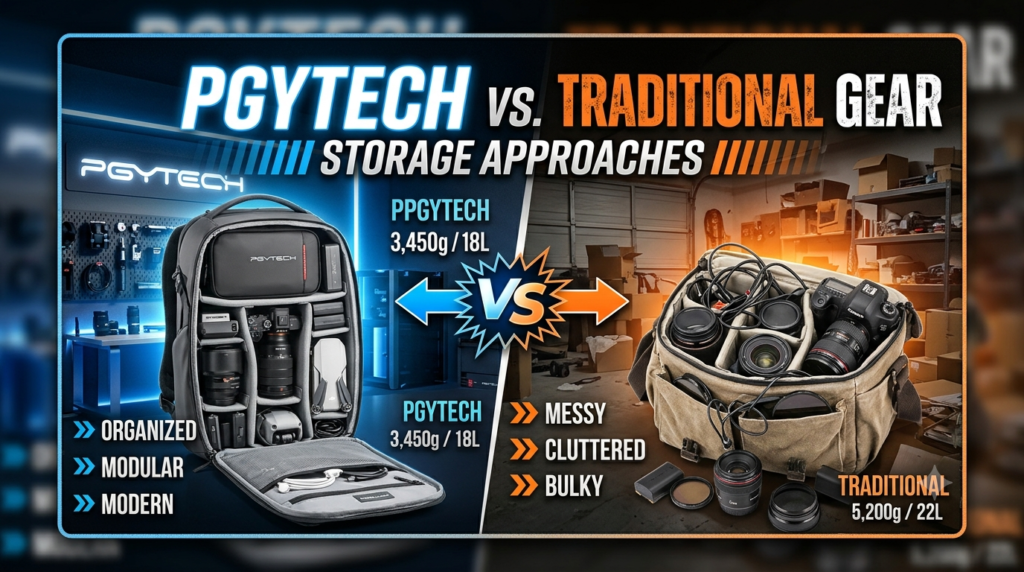
Traditional gear storage generally falls into two categories: a basic backpack with loose equipment or a conventional camera bag with a relatively fixed internal layout. Both can work, particularly for creators with simple kits. The problem appears when equipment expands or workflows become more complex. A generic backpack may provide plenty of space but little protection, while a fixed camera bag may protect equipment but become inefficient when the creator’s setup changes. PGYTECH’s approach sits closer to a modular ecosystem. Its current range includes backpacks, slings, inserts, organizers, partitions, protective accessories, card storage, lens cases, and creator-specific tools. The difference is not necessarily that one approach is universally better; it is that PGYTECH provides more opportunities to customize the way equipment is carried. For a beginner with one camera, a traditional solution may be perfectly adequate. For a creator whose kit changes frequently, modular organization can provide more long-term flexibility. The real advantage emerges when the creator stops thinking of the bag as one container and starts treating it as a system of connected storage zones. That shift can make equipment easier to find, easier to protect, and easier to adapt.
Read More:-
How Does Strikingly Simplify the Website Building Process?
Building Your Dream Website with Site123
Boost Your E-commerce Strategy with YITH Plugins
Maximize Your Customer Engagement with LiveAgent’s Features
Why STRIPO is Essential for Digital Product Marketersa
How to Build a PGYTECH-Based Gear Setup
Building a practical setup does not require purchasing an entire product ecosystem at once. The better strategy is to start with the biggest organizational problem. If camera equipment is moving around too much, begin with a Camera Insert or suitable modular bag. If cables and small electronics are creating the biggest mess, start with a Tech Organizer. If lenses or filters are difficult to protect, consider dedicated cases or organizers. PGYTECH’s current catalog offers these components separately, which makes it possible to build a setup progressively. After identifying the core storage solution, divide equipment into three practical groups: frequently accessed items, occasionally accessed items, and backup items. Frequently accessed equipment should remain closest to the easiest opening. Occasionally used accessories can occupy secondary compartments. Backup equipment can sit deeper inside. This approach prevents a common mistake: giving every item equal priority. Not every piece of equipment needs immediate access. The goal is to design the bag around the sequence of actions that happens during a real shoot. When the storage layout mirrors the workflow, the creator spends less time reorganizing equipment and more time creating.
Why Better Organization Can Improve the Creative Process
The biggest argument for organized creator gear has nothing to do with pockets, zippers, foam, or backpack aesthetics. It is about reducing friction between an idea and the final shot. Every time a creator cannot find a battery, untangles a cable, searches for a memory card, or moves several pieces of equipment to reach a lens, the creative process is interrupted. Those interruptions may seem tiny, but they accumulate across a long shooting day. PGYTECH’s emphasis on modular compartments, dedicated organizers, accessible openings, and specialized storage is designed around reducing those moments of friction. A well-organized kit also creates confidence. Before leaving for a shoot, the creator knows where everything belongs and can quickly identify what is missing. During the shoot, equipment can be retrieved without unnecessary searching. After the shoot, everything can be returned to its assigned location. That creates a loop: pack efficiently, shoot confidently, unpack systematically, and prepare faster next time. For content creators, that kind of workflow improvement can be more valuable than simply adding another piece of equipment to the collection.




Conclusion
Content creators are choosing PGYTECH for better gear organization because modern creative workflows demand more than a large bag with a few padded compartments. Cameras, lenses, drones, microphones, batteries, memory cards, filters, cables, smartphones, laptops, and mounting accessories all need different forms of storage, protection, and accessibility. PGYTECH’s current ecosystem responds to that complexity with modular bags, camera inserts, partitions, tech organizers, lens cases, filter organizers, memory-card storage, protective accessories, and specialized creator tools. The OneMo Sling demonstrates how fast-access organization can work for mobile creators, while the Camera Insert shows how structured protection can be integrated into a flexible carrying system. The strongest reason to consider PGYTECH, however, is not simply the number of compartments available. It is the philosophy behind them: your gear should be organized around your workflow. When every important item has a predictable location, packing becomes easier, access becomes faster, equipment stays better separated, and the creator can devote more attention to the actual work. For photographers, filmmakers, vloggers, travelers, and hybrid creators whose equipment continues to grow, that kind of organization can turn a crowded gear bag into a practical creative workstation.
FAQs
Q. Why is PGYTECH popular among content creators?
A. PGYTECH has developed a broad ecosystem of camera bags, inserts, organizers, partitions, cases, straps, and creator accessories that can be combined according to different workflows. Its current catalog includes products for photography, video, travel, mobile content, drones, and everyday creator use. The modular nature of many of these products is particularly useful for creators whose equipment changes from one assignment to another. Instead of relying on one fixed storage configuration, users can select compartments and accessories according to their actual kit. That makes the brand relevant to both dedicated photographers and creators who work across several formats.
Q. Is PGYTECH suitable for travel photographers?
A. Yes. PGYTECH offers several backpack, sling, insert, and organizer options designed around camera and travel equipment. The OneMo family, for example, includes larger backpacks as well as the OneMo Sling, while the Camera Insert can provide a structured protective compartment inside a compatible backpack. Travel photographers can benefit from separating camera equipment from clothing, personal belongings, cables, and other travel items. The best option depends on the size of the equipment kit and whether fast access or maximum carrying capacity is the higher priority.
Q. Can PGYTECH organizers be used for non-camera electronics?
A. Yes. PGYTECH currently sells dedicated Tech Organizer and Mini Tech Organizer products alongside card-reader cases, memory-card storage, cables, and other small electronic accessories. These products can be useful for creators carrying laptops, chargers, cables, storage devices, batteries, adapters, and other technology. Separating those accessories from camera equipment can make the entire bag easier to navigate. It also helps prevent small objects from becoming mixed together in larger compartments.
Q. What should a beginner buy first from PGYTECH?
A. A beginner should start with the organizational problem that causes the most frustration rather than purchasing the largest possible bag. If the main issue is protecting a camera and lenses, a suitable camera insert or organized camera bag may be the best starting point. If cables, memory cards, and chargers are creating the mess, a tech organizer may deliver more immediate value. PGYTECH’s current catalog includes compact organizers, camera inserts, slings, backpacks, and individual accessories, so creators can build a system gradually.
Q. Does better gear organization really make a difference for content creators?
A. It can, particularly for creators carrying multiple pieces of equipment. Organization reduces the amount of time spent searching for accessories and makes it easier to identify missing equipment before a shoot. It can also reduce unnecessary movement between delicate items by keeping cameras, lenses, batteries, cards, and accessories in designated locations. PGYTECH’s modular approach is designed around precisely this type of workflow, with products that emphasize configurable storage and accessibility. For a creator working under time pressure, even small improvements in access and packing can make the shooting process smoother.