
Maxpeedingrods offers a wide range of performance upgrades for car enthusiasts looking to improve power, handling, and overall driving performance. From coilovers and control arms to turbochargers, intercoolers, and forged connecting rods, Maxpeedingrods provides performance-focused components for a variety of vehicles and applications. This guide explores how to choose the right Maxpeedingrods upgrades, verify fitment, plan your budget, and build a balanced setup that matches your driving goals.
Table of Contents
- Why Maxpeedingrods Is Worth Exploring for Performance Upgrades
- Start With Your Car’s Performance Weak Point
- Exploring Maxpeedingrods Coilovers
- Turbochargers and Supporting Components
- Connecting Rods and Internal Engine Upgrades
- Control Arms, Air Suspension, and Chassis Upgrades
- How to Verify Fitment Before Ordering
- Building a Performance Upgrade Plan
- Common Mistakes to Avoid
- Conclusion
- FAQs
Why Maxpeedingrods Is Worth Exploring for Performance Upgrades
When you start searching for performance upgrades, the biggest challenge usually isn’t finding parts; it’s figuring out which parts actually make sense for your car. That is where Maxpeedingrods becomes an interesting brand to investigate because its current catalog covers several major areas of automotive modification rather than focusing on only one type of component. The official site currently lists products including coilovers, air suspension, control arms, connecting rods, turbochargers, turbo cartridges, carburetors, and other engine and suspension components. This variety can be useful when you’re planning a complete build because performance rarely comes from one magical component. Think of your car like a team: the turbo, suspension, engine internals, wheels, tires, brakes, and chassis all have different jobs, and making one dramatically stronger can expose weaknesses somewhere else. A good upgrade strategy therefore starts with understanding what you want from the vehicle, whether that’s sharper cornering, more power, improved stance, better acceleration, or a combination of those goals. Maxpeedingrods also organizes products around different vehicle applications and performance categories, which makes the search process more manageable than simply buying the cheapest-looking component you can find. The smart approach is to treat its catalog as a starting point for research, compare specifications carefully, and build a package where each modification supports the next one.
A Broad Range of Performance Parts
One of the most useful things about exploring Maxpeedingrods is the sheer breadth of its current performance catalog. Its website presents coilovers in multiple series, turbochargers in street, sport, and standard categories, as well as connecting rods, control arms, air suspension, and various turbo-related components. That range matters because different drivers have completely different definitions of “performance.” Someone who drives a modified BMW on weekends may want adjustable coilovers and more aggressive suspension geometry, while another enthusiast building a turbocharged Honda may be much more interested in a turbocharger, intercooler piping, and stronger connecting rods. There is also a major difference between replacing a worn component with an upgraded version and building a high-output engine from scratch. The first goal may prioritize reliability and compatibility, while the second demands much more attention to horsepower targets, boost pressure, fueling, cooling, engine management, and internal strength. Maxpeedingrods’ catalog includes components that can participate in both kinds of projects, but that doesn’t mean every component belongs on every car. The most valuable habit you can develop is to read the specifications before looking at the price. A low-cost part that fits poorly or doesn’t support your intended setup can become much more expensive once installation, replacement, and troubleshooting are added to the equation.
Matching Parts to Your Actual Driving Goals
Before clicking the buy button, define what you actually want your vehicle to feel like. Do you want the car to corner flatter on a winding road, accelerate harder on a straight, sit lower for appearance, survive higher boost, or simply feel tighter and more responsive? Those questions sound basic, but they determine which category of Maxpeedingrods parts deserves your attention. If handling is the priority, suspension components such as coilovers and control arms should probably receive more attention than engine modifications. If power is the target, the research path changes toward turbochargers, intercooling, intake and exhaust flow, fueling, engine management, and potentially stronger internal engine components. Maxpeedingrods itself separates several of these categories, including street and sport turbo options and different coilover series, which reinforces the importance of choosing based on intended use rather than appearance alone. A daily driver also has different requirements from a dedicated track car. A very aggressive setup might look impressive and deliver excellent track behavior while becoming tiring or impractical in traffic. Your best upgrade is therefore not necessarily the most extreme component available; it is the component that moves the car toward the driving experience you actually want.
Start With Your Car’s Performance Weak Point
The easiest way to waste money on modifications is to upgrade what looks exciting instead of what is holding the car back. Performance tuning works best when you identify the bottleneck first. Imagine your car as a chain: adding strength to one link doesn’t automatically make the entire chain stronger if another link remains weak. For example, adding a large turbocharger to an otherwise poorly prepared engine can create a need for better fueling, cooling, exhaust flow, engine management, and potentially stronger internals. Likewise, installing aggressive coilovers without considering tires, alignment, bushings, and control arms may produce a lower car without delivering the balanced handling you expected. Maxpeedingrods offers products across many of these categories, including turbo systems, intercooler components, control arms, coilovers, and connecting rods. That makes it possible to research upgrades as a system instead of treating each purchase as an isolated modification. Start by asking what your car does poorly right now. Does it understeer? Roll too much? Struggle for power at higher speeds? Heat-soak after repeated pulls? Feel unstable under braking? Or simply lack the response you want? Once you identify the weakness, the appropriate upgrade category becomes much clearer.
Engine Power and Forced Induction
If your main objective is more engine power, forced induction is one of the most significant areas to investigate. Maxpeedingrods currently offers standard, street, and sport turbo categories, giving enthusiasts different directions depending on their intended application. A turbocharger is essentially an air-management device: it uses exhaust energy to compress intake air, allowing an engine to potentially burn more fuel and produce more power. But selecting a turbo isn’t simply a matter of choosing the largest compressor wheel you can afford. Turbo sizing affects response, spool characteristics, airflow capability, and the power range where the engine feels strongest. A turbo that is oversized for a small street engine can make the car feel lazy before boost arrives, while an undersized turbo may reach its airflow limits as power demands increase. Supporting hardware matters just as much. Intercooler capacity, charge piping, exhaust flow, oil supply, fueling, engine calibration, and cooling all influence the finished result. Maxpeedingrods’ catalog includes turbo intercooler pipes, intercoolers, oil lines, exhaust manifolds, turbo intake hoses, downpipe-related products, and other supporting components, illustrating how a turbo build can extend well beyond the turbocharger itself.
Handling, Suspension, and Ride Height
For many enthusiasts, the most noticeable performance upgrade isn’t more horsepower at all; it’s better control. Suspension determines how effectively your tires stay connected to the road, how the chassis responds to steering inputs, and how the car behaves during braking, acceleration, and cornering. Maxpeedingrods currently highlights several coilover families, including T6 and T7 Series products, while its catalog also includes control arms and air suspension components. This gives you several directions depending on the build. Coilovers can provide adjustable ride height and, depending on the specific application, adjustable damping or other setup features. Control arms can be particularly useful when changing suspension geometry or correcting alignment requirements created by lowering or lifting a vehicle. But suspension modification is a balancing act. Lowering a car dramatically doesn’t automatically make it handle better, and very stiff springs can make a road car less predictable on rough surfaces. Tires, alignment, spring rates, damping, chassis condition, and suspension geometry all work together. The best setup is the one that maintains usable tire contact and predictable behavior rather than simply producing the lowest possible ride height.
Exploring Maxpeedingrods Coilovers
Coilovers are among the most popular upgrades for enthusiasts who want a more controlled and customizable chassis. Maxpeedingrods currently offers several coilover families, including T6 and T7 Series options, with the company describing the T7 Series as intended for street and junior-track use. Its own published material describes T6 Series coilovers as using a twin-tube design and offering 24 damping settings, while T7 products are positioned toward daily street and junior track applications. Those details are useful starting points, but the correct choice still depends heavily on the exact vehicle and how you intend to drive it. A coilover isn’t just a decorative suspension part; it changes the relationship between the chassis, springs, dampers, tires, and road surface. Before ordering, check the exact vehicle application, adjustment range, spring specifications, damping features, and included hardware. Also consider whether your existing control arms, bushings, top mounts, and tires are healthy enough to take advantage of the new suspension. A performance suspension upgrade can reveal worn components that were previously hidden by soft factory settings. For that reason, a thorough inspection before installation can be just as important as the coilover selection itself.
T6 and T7 Series Options
The T6 and T7 Series are worth comparing rather than automatically assuming one is better. Maxpeedingrods positions the T6 line as a performance-oriented coilover solution and describes the T7 line specifically for street and junior-track use. The distinction matters because your intended environment should influence your suspension choice. A commuter car that spends most of its life crossing potholes and traffic-filled streets needs a very different compromise from a weekend track car that spends its time on smooth asphalt. Adjustable damping can give you more freedom to tune the vehicle, but adjustment itself isn’t a substitute for understanding suspension behavior. If you change damping without considering tire pressure, alignment, spring characteristics, or road conditions, you can easily make the car feel worse rather than better. Ride height is another consideration. Lowering the center of gravity can reduce body movement, but excessive lowering can reduce suspension travel, alter geometry, and create clearance problems. Before choosing a series, look beyond the headline feature and examine the exact kit for your vehicle. “Which series is the best?” isn’t the crucial question but “Which series provides the adjustment range and characteristics that fit my car and my driving?”
Choosing Street Versus Track-Oriented Setup
Street and track setups should never be treated as interchangeable. On public roads, the suspension has to cope with broken pavement, speed bumps, uneven surfaces, rain, traffic, and unpredictable road conditions. A track setup can be optimized around smoother surfaces, consistent tire temperatures, repeated high-load cornering, and much more aggressive driving. That is why a component marketed for street and junior-track use can be appealing to enthusiasts who want a compromise rather than a specialized race setup. Maxpeedingrods explicitly describes its T7 Series in that street/junior-track category. When selecting your setup, think about the percentage of time the vehicle spends in each environment. If ninety percent of your driving is commuting, optimizing the car for the remaining ten percent of track use may create unnecessary compromises. On the other hand, if you regularly attend track days, a more adjustable setup may provide useful room for experimentation. Always remember that suspension changes should be followed by an appropriate alignment, and after significant changes you should verify tire clearance, brake-line routing, fastener torque, and suspension travel.
Turbochargers and Supporting Components
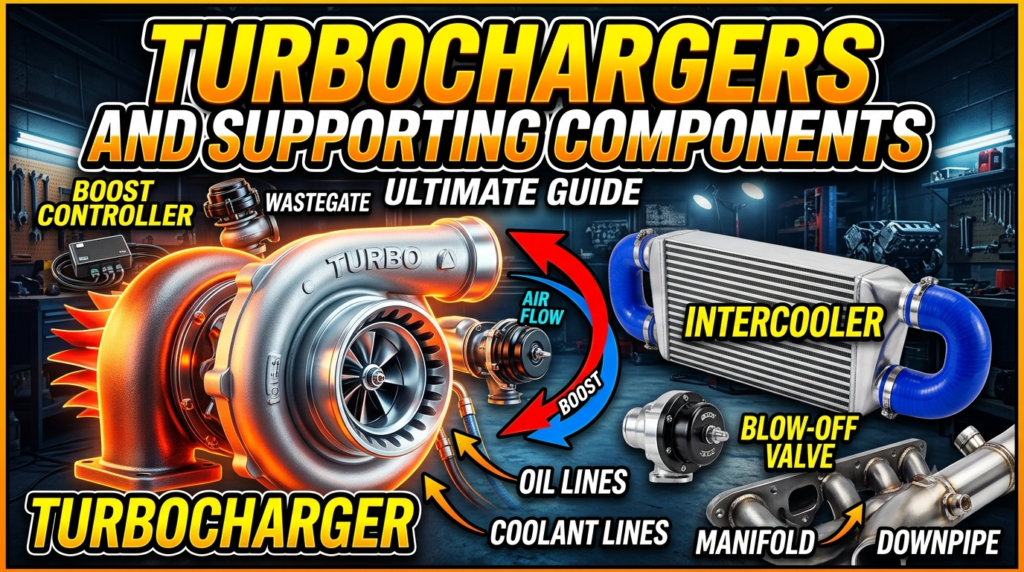
Turbo upgrades can transform a vehicle, but they are also one of the easiest areas to approach incorrectly. The current Maxpeedingrods catalog separates turbo products into street, sport, and standard categories and also lists a substantial range of turbo-related supporting components. The right turbo must work with the engine’s displacement, RPM range, intended boost level, exhaust characteristics, fueling system, and desired powerband. If you select a turbo based only on a maximum horsepower number, you may end up with a vehicle that technically has more potential but feels disappointing during normal driving. The supporting system is equally important because compressed air creates heat, and increased power increases demands on fuel delivery and engine cooling. An intercooler helps manage intake temperatures, while appropriately designed charge piping helps move compressed air between the turbocharger and engine. Exhaust components also affect how efficiently gases leave the engine and drive the turbo. Maxpeedingrods lists intercoolers, turbo charge pipes, oil lines, exhaust manifolds, downpipe-related combinations, turbo intake hoses, and other components that can form part of a broader forced-induction project. Treat the turbo as the center of a system, not an isolated horsepower button.
Choosing the Right Turbocharger
When comparing turbochargers, start with your realistic power target and desired driving characteristics. If you’re building a responsive street car, you may value quick spool and midrange torque more than maximum top-end airflow. If you’re building a track-focused car, you may accept slower response in exchange for greater high-RPM airflow. The engine’s displacement and operating range also matter because a turbo designed for one application may behave very differently on another. Maxpeedingrods has previously described its turbo range as being based around OEM-related applications and has discussed testing areas such as balance, housing durability, wheel load limits, and sealing in its company materials. That information can be useful when evaluating the brand’s approach, but buyers should still verify the specifications of the individual product they are considering. Look for compressor and turbine specifications, flange compatibility, oil and coolant requirements where applicable, wastegate configuration, actuator details, and the manufacturer’s stated application range. Most importantly, determine whether the rest of your engine can support the intended boost and airflow. A turbo upgrade should be matched with a realistic calibration and appropriate fueling rather than simply installed and driven at maximum capability.
Intercoolers, Piping, and Exhaust Components
Supporting components often determine whether a turbo build feels polished or frustrating. A turbocharger can compress a large amount of air, but that compression generates heat, and high intake temperatures can reduce performance and increase stress. An appropriately sized intercooler can help manage charge temperatures, while well-routed piping reduces unnecessary restrictions and installation problems. Maxpeedingrods currently lists intercoolers, turbo intercooler pipes, charge-pipe kits, turbo oil lines, exhaust manifolds, turbo intake hoses, and several combined turbo packages. This broad selection can be useful when building a system because you can think about airflow from the air inlet all the way through the exhaust rather than focusing only on the turbo itself. Exhaust manifold design and downpipe configuration can influence flow and packaging, while oil lines must be installed correctly because turbocharger lubrication is critical. Heat management also deserves attention, particularly in compact engine bays. When choosing components, prioritize correct fitment and appropriate specifications over visual appeal. A beautifully polished engine bay doesn’t compensate for a poorly routed oil line or an intercooler that can’t handle your intended power level. Performance tuning is ultimately about creating a reliable chain of compatible components.
Connecting Rods and Internal Engine Upgrades
When power levels rise, the conversation eventually moves inside the engine. Connecting rods play a fundamental mechanical role because they transfer the piston’s movement to the crankshaft while experiencing substantial forces during engine operation. Maxpeedingrods has a long-standing focus on connecting rods and currently lists them among its featured performance components. Its published materials describe forged 4340/EN24-type steel connecting rods and mention ARP fasteners on its rod products, although exact specifications should always be confirmed for the individual application. For enthusiasts planning increased boost or higher cylinder pressures, stronger internal components can become an important part of the build strategy. However, replacing connecting rods is not a casual bolt-on modification. It normally involves substantial engine disassembly, precise measurements, correct bearing clearances, appropriate fastener procedures, and careful assembly. A stronger rod alone also doesn’t make an engine invincible because pistons, crankshaft, bearings, head gasket, fuel system, cooling system, and engine calibration all contribute to the engine’s overall limits. If you’re considering an internal-engine upgrade, establish the intended horsepower and RPM range first, then determine which components need reinforcement to support that target.
Understanding Forged Connecting Rods
Forged connecting rods are commonly considered for high-performance engine builds because the manufacturing process can produce strong, durable components suitable for demanding applications. Maxpeedingrods’ own materials emphasize forged 4340/EN24 steel connecting rods and identify different rod designs, including H-beam options, alongside ARP fasteners. But choosing a rod should involve much more than seeing the word “forged” in a product description. You need the correct center-to-center length, big-end and small-end dimensions, bearing compatibility, bolt specification, piston compatibility, and engine-specific fitment. Weight can also matter, particularly in high-RPM applications, where reciprocating and rotating mass become increasingly important. The rod design should match the intended engine use rather than simply being the strongest-looking component in the catalog. If the engine is being rebuilt for increased boost, the entire rotating assembly should be considered together. That means checking piston compression ratio, crankshaft condition, bearing clearances, rod ratio where relevant, and the expected RPM and cylinder pressure. A professional engine builder can be invaluable here because a high-performance rotating assembly is only as reliable as the measurements and assembly practices behind it.
When Stronger Engine Internals Make Sense
Not every modified car needs aftermarket connecting rods. If you’re driving a mostly stock engine with a modest upgrade, spending heavily on internal components may not be the most logical first step. The decision becomes more relevant when the build’s expected cylinder pressures, RPM, or power output approach the limits of the factory components. Turbo upgrades can increase those loads substantially, which is why internal strength should be considered before chasing an aggressive power target. Maxpeedingrods offers connecting rods alongside turbochargers, crankshafts, and other engine components, allowing enthusiasts to research several parts of the rotating assembly from the same performance-oriented catalog. Still, the correct threshold depends on the engine platform, its factory design, condition, tune, fuel, boost level, and intended usage. A sensible build leaves some safety margin rather than targeting the absolute limit of every component. If your engine is being opened anyway, that can also be the right time to inspect bearings, rings, pistons, cylinder walls, and crankshaft surfaces. Performance upgrades should reduce weak points, not simply move them somewhere else.
Control Arms, Air Suspension, and Chassis Upgrades
Suspension performance isn’t limited to coilovers. Control arms and related chassis components influence suspension geometry, wheel positioning, and the way the vehicle responds as the suspension moves. Maxpeedingrods currently lists multiple control-arm categories, including street-basis and street-performance options, as well as combined products involving control arms, camber plates, and bushings. These components can become particularly important after lowering or changing the suspension because ride-height changes can alter alignment angles. If the suspension geometry is no longer working within a useful range, simply adding stiffer dampers may not solve the underlying problem. Air suspension provides another direction, especially for drivers who want adjustable ride height or a different combination of appearance and practicality. Maxpeedingrods currently features air suspension and air-bag-related products among its categories. The key is understanding that each system involves trade-offs. A lowered car may look sharper but require careful attention to clearance and alignment. An air-suspension system may offer ride-height flexibility but introduces additional components that must be installed and maintained correctly. The best chassis upgrade is one that improves the vehicle’s actual behavior while preserving enough practicality for your normal driving environment.
Improving Suspension Geometry
Suspension geometry becomes increasingly important when you move beyond basic shock-and-spring replacement. Changing ride height can alter camber, toe, roll-center relationships, and other alignment characteristics depending on the vehicle. Control arms and adjustable suspension components can sometimes help restore or optimize those relationships. Maxpeedingrods’ current catalog includes control arms, camber-related combined products, bushings, and other suspension components designed around different applications. That doesn’t mean every lowered vehicle automatically needs every available adjustable component. Instead, you should inspect the alignment results and determine what the car actually requires. Excessive negative camber, incorrect toe, or poor suspension travel can cause uneven tire wear and unpredictable handling. This is why a professional alignment is one of the smartest investments after a major suspension modification. Alignment isn’t merely about making the steering wheel look straight; it determines how the tires meet the road. If you are building a performance car, keep records of your alignment settings and make changes gradually. A methodical approach makes it much easier to identify what actually improved the vehicle.
Balancing Comfort, Clearance, and Performance
A good performance build should still be enjoyable to drive. It is easy to become obsessed with lowering the car, increasing spring stiffness, adding power, or installing increasingly aggressive components until the vehicle becomes uncomfortable and difficult to use. The best modifications balance performance with the roads you actually drive on. Maxpeedingrods offers products aimed at different applications, including coilovers intended for street and junior-track use, which reflects the reality that enthusiasts need different compromises. Before selecting a suspension component, think about tire width, wheel offset, fender clearance, exhaust clearance, speed bumps, driveway angles, and available suspension travel. A vehicle that scrapes everywhere isn’t necessarily faster. Similarly, a suspension setup that feels extremely stiff at low speeds may not provide better grip on rough public roads because the tires can struggle to follow surface changes. Performance is about control, not punishment. Aim for a setup that keeps the vehicle predictable, allows the tires to work effectively, and gives you enough adjustability to fine-tune the car without turning every journey into a compromise.
How to Verify Fitment Before Ordering
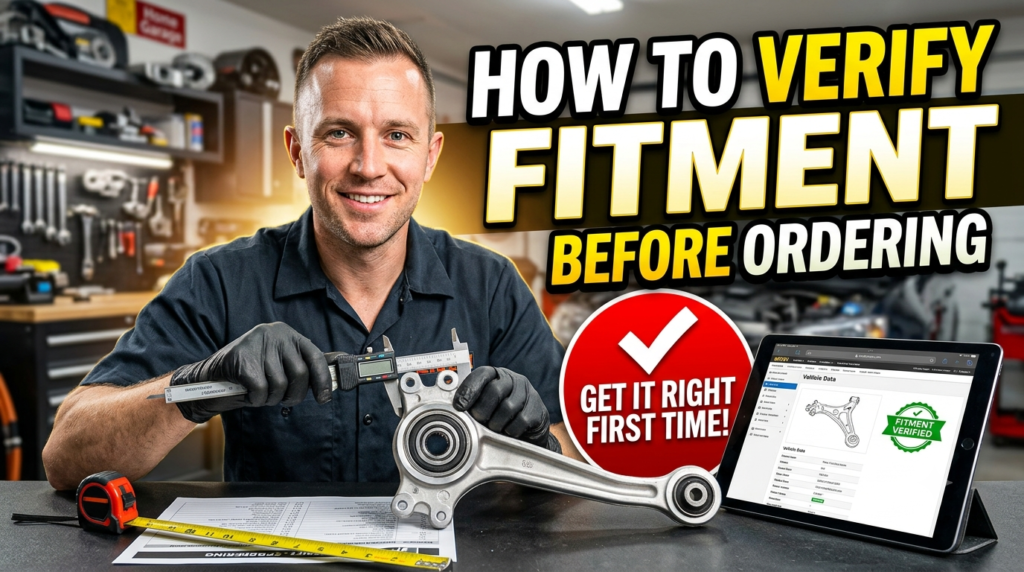
Fitment should be treated as a technical requirement, not a final checkbox. Maxpeedingrods emphasizes broad vehicle coverage and lists both universal and model-specific components across its catalog. Even so, two vehicles that share a model name can have different engines, transmissions, suspension configurations, production years, markets, or factory options. Before ordering, compare the exact product application against your vehicle’s year, model, engine code, drivetrain, body configuration, and relevant factory specifications. For suspension components, check mounting points, ride-height range, wheel clearance, brake-line routing, and any included hardware. For turbo components, confirm flange patterns, compressor and turbine specifications, oil connections, coolant connections where applicable, actuator arrangements, and intake/exhaust dimensions. For connecting rods, dimensional accuracy becomes even more critical because incorrect parts can create serious mechanical problems. Never assume that a component fits because the product title contains your vehicle’s model name. Read the application list and technical specifications carefully. If the listing leaves an important dimension unclear, contact the seller or a qualified specialist before purchasing rather than gambling on compatibility.
Vehicle Compatibility and Specifications
The most reliable fitment process begins with your vehicle’s exact identity. Write down the model year, engine code, transmission type, drivetrain, and any modifications already installed. Then compare those details with the product listing. Maxpeedingrods states that its products cover a wide range of modern and classic vehicles and provides application-oriented categories across suspension and engine components. That makes browsing easier, but enthusiast vehicles often have years of modifications behind them, and those modifications can change what fits. A previous owner may have installed different brakes, wheels, engine mounts, suspension arms, or exhaust components. When in doubt, measure the component and compare the measurements with the vehicle before ordering. Photographs are helpful, but dimensions are better. For complex upgrades, create a simple compatibility checklist and confirm every interface between the new component and the existing system. This is especially important when mixing parts from different manufacturers. The goal isn’t merely to find a component that can be installed; it is to find one that works correctly with the entire configuration.
Checking Supporting Modifications
Every major performance upgrade should trigger a second question: “What else needs to change?” A larger turbo may require improved fueling, intercooling, engine management, exhaust flow, and potentially stronger internals. Lowering a vehicle may require alignment correction, different control arms, or changes to tire and wheel fitment. Increasing engine power may also increase demands on brakes, clutch, transmission, differential, cooling, and tires. Maxpeedingrods’ catalog itself reflects this interconnected approach by offering combined products and supporting components such as turbo-plus-intercooler combinations, turbo-plus-downpipe packages, control-arm branches, and other related systems. You don’t necessarily need to purchase every supporting component at once, but you should understand the dependencies before beginning the project. A modification plan should identify what can remain stock, what must be upgraded immediately, and what should be monitored as power or load increases. This prevents the classic tuning mistake of discovering halfway through a project that the next upgrade is mandatory rather than optional.
Read More:-
How Does Strikingly Simplify the Website Building Process?
Building Your Dream Website with Site123
Boost Your E-commerce Strategy with YITH Plugins
Maximize Your Customer Engagement with LiveAgent’s Features
Why STRIPO is Essential for Digital Product Marketersa
Building a Performance Upgrade Plan
A performance build becomes much easier when you treat it as a project instead of a shopping spree. Begin with a baseline: document the car’s current power, handling behavior, maintenance condition, tire condition, and existing modifications. Then define one or two measurable objectives. “I want the car to be faster” is vague, while “I want sharper cornering and a more controlled ride for weekend driving” provides a clear direction. Once the goal is established, select modifications that directly support it. Maxpeedingrods’ broad catalog makes it possible to investigate suspension, turbocharging, engine internals, control arms, and other components as part of a larger plan. The most effective approach is usually staged. Start with maintenance and foundational components, then address the largest performance bottleneck, then evaluate the results before moving to the next stage. This method protects your budget and teaches you how each modification changes the vehicle. It also reduces the risk of creating several simultaneous problems that are difficult to diagnose. Performance tuning should feel like building a staircase: each step should support the next.
Budgeting and Prioritizing Upgrades
Your budget should include more than the purchase price of the parts. Installation, alignment, tuning, fluids, gaskets, hardware, replacement components, and unexpected repairs can significantly increase the final cost of a performance project. This is especially true when you move into turbocharging or internal engine work. A turbocharger may be relatively straightforward to purchase, but the complete system can involve intercooling, piping, fueling, exhaust changes, calibration, heat management, and engine monitoring. Likewise, coilovers may be purchased as a kit, but installation should generally be followed by alignment and careful inspection. The smartest way to budget is to divide your project into stages and establish a maximum amount for each stage. Research the complete system before buying the first component. Maxpeedingrods’ broad product selection can make it tempting to add several upgrades to the cart at once, but a slower approach usually produces a better result. Spend first on the parts that address the biggest limitation, then use real-world driving feedback to determine what deserves attention next. That strategy is much less likely to leave you with an expensive collection of disconnected modifications.
Installation, Alignment, and Tuning
Installation quality can make or break an upgrade. Even a well-designed performance component can behave poorly if it is installed incorrectly, adjusted improperly, or paired with incompatible hardware. Suspension work should include checks for torque, clearance, suspension travel, brake-line routing, and alignment. Turbo installations require particular attention to oiling, sealing, intake and exhaust connections, cooling, and heat management. Internal engine work requires precision measurements and correct assembly procedures. Once the parts are installed, don’t immediately assume the project is finished. Give the car a careful inspection, verify fluid levels, check for leaks or unusual noises, and test it gradually. For engine modifications that materially change airflow or boost, professional calibration may be essential to keep the engine operating within safe parameters. Suspension modifications should receive an appropriate alignment, and tire condition should be checked afterward. The goal is to turn a collection of aftermarket components into a coherent vehicle. Installation is the bridge between a part’s advertised capability and what you actually experience behind the wheel.
Common Mistakes to Avoid
One of the biggest mistakes is choosing a component based purely on price, appearance, or an impressive headline specification. Another is buying the most aggressive component available without considering the rest of the vehicle. A giant turbo isn’t automatically better, extremely low suspension isn’t automatically faster, and the strongest connecting rod isn’t automatically the right connecting rod. Another common error is ignoring maintenance before adding performance parts. Worn bushings, tired wheel bearings, weak cooling systems, old fluids, and damaged tires can undermine an otherwise excellent upgrade plan. Fitment mistakes are another major risk, especially when enthusiasts assume that a product listed for a vehicle family automatically fits every variant. Maxpeedingrods provides application-oriented categories and emphasizes broad vehicle coverage, but the individual product specifications remain the final point of reference. Additionally, you should refrain from altering too many factors at once. If you install five major modifications simultaneously and the car develops a problem, determining which change caused it becomes much harder. Build methodically, document what you change, and test after each significant stage. Most importantly, remember that performance modifications can affect safety and road legality, so check the rules applicable to your location before installing parts intended for competition or off-road use.




Conclusion
Finding the right performance upgrades from Maxpeedingrods is less about discovering a single “best” product and more about creating a sensible combination of parts for your specific car. The brand’s current catalog spans coilovers, air suspension, control arms, turbochargers, turbo accessories, connecting rods, and other engine and chassis components, giving enthusiasts plenty of areas to explore. The smartest path is to begin with your goal, identify the vehicle’s weakest performance area, confirm exact fitment, and then build outward from that foundation. If handling is the priority, investigate coilovers, alignment, control arms, tires, and suspension geometry. If power is the goal, research turbo sizing and the supporting intercooling, fueling, exhaust, cooling, and engine-management requirements before increasing boost. If the engine is being pushed toward substantially higher cylinder pressures, investigate internal components such as connecting rods as part of a complete rotating-assembly strategy. The best performance build isn’t necessarily the most expensive or extreme one; it is the one where every modification has a purpose. Treat Maxpeedingrods as a catalog to research carefully, verify the specifications of each individual part, and make your modifications in logical stages. Do that, and your upgrade journey becomes far less about collecting parts and far more about creating a car that genuinely feels better to drive.
FAQs
Q. What types of performance upgrades can I find from Maxpeedingrods?
A. Maxpeedingrods currently offers a broad range of performance-oriented automotive products, including coilovers, air suspension, control arms, turbochargers, turbo cartridges, connecting rods, carburetors, and various intake, exhaust, and turbo-support components. The exact options depend on your vehicle and application, so checking the individual product listing is essential before purchasing.
Q. Are Maxpeedingrods coilovers suitable for daily driving?
A. Some Maxpeedingrods coilover products are specifically positioned for street-oriented use. The company describes its T7 Series as being designed for street and junior-track applications, while its T6 Series is presented as another adjustable performance suspension option. The best choice depends on your vehicle, road conditions, desired ride height, and preferred suspension characteristics.
Q. How do I choose the right Maxpeedingrods turbo?
A. Start with your realistic horsepower target, engine displacement, RPM range, desired response, and intended driving environment. Then verify compressor and turbine specifications, mounting configuration, oil and coolant requirements, and compatibility with your existing engine hardware. Don’t choose a turbo based solely on its maximum advertised power potential because an oversized turbo can sacrifice response and drivability.
Q. Do I need stronger connecting rods after installing a turbo?
A. Not necessarily. The need for stronger connecting rods depends on the engine platform, power target, boost level, RPM, tune, fuel, and expected cylinder pressure. Maxpeedingrods offers forged connecting rods for various applications, but an internal-engine upgrade should be considered as part of a complete engine-building strategy rather than as an automatic requirement for every turbo installation.
Q. What should I check before ordering a Maxpeedingrods performance part?
A. Always verify the exact vehicle year, model, engine, drivetrain, product application, dimensions, mounting points, and supporting hardware. For suspension components, also consider wheel clearance, brake-line routing, alignment, and suspension travel. For engine components, verify dimensions and compatibility with the existing assembly. Careful fitment research before ordering can save considerably more money than trying to correct a compatibility problem after installation.