
Donorbox is a powerful online fundraising platform designed to help nonprofits, charities, churches, schools, and community organizations collect donations and grow supporter relationships. With features such as customizable donation forms, recurring donations, crowdfunding, peer-to-peer fundraising, donor management, event fundraising, and multiple payment options, Donorbox makes online fundraising simple and accessible. Whether you are launching a new campaign or building a long-term donor strategy, Donorbox provides practical tools to create engaging campaigns, increase donations, and encourage recurring support.
Table of Contents
- What Is Donorbox and Why Does It Matter?
- Understanding Donorbox’s Core Fundraising Features
- How to Get Started With Donorbox
- Creating a High-Converting Donation Form
- Building a Strong Fundraising Campaign
- Promoting Your Donorbox Campaign
- Growing Monthly and Recurring Giving
- Managing Donors and Building Relationships
- Tracking Fundraising Performance and Analytics
- Understanding Donorbox Pricing and Fees
- Best Practices for Successful Donorbox Fundraising
- Common Donorbox Mistakes to Avoid
- Conclusion
- FAQs
What Is Donorbox and Why Does It Matter?

Over the past few years, fundraising has undergone significant shift. People no longer want to navigate complicated donation pages, fill out endless forms, or search through multiple payment options before supporting a cause. They expect giving to be as simple as buying something online, and that is exactly where Donorbox can become useful for nonprofits, charities, churches, schools, community organizations, and other mission-driven groups. Donorbox is an online fundraising platform that provides tools for donation forms, fundraising pages, recurring donations, crowdfunding, peer-to-peer fundraising, memberships, events, text-to-give, donor management, and other fundraising activities. According to Donorbox’s current platform information, more than 100,000 organizations use the service, with campaigns operating across 96 countries. Instead of treating online fundraising as simply placing a payment button on a website, the platform gives organizations a broader system for collecting donations and managing relationships with supporters. Think of it as turning your website into a digital fundraising counter that stays open around the clock. The real value, however, does not come from creating an account and waiting for donations; it comes from using the available tools strategically, reducing friction for donors, communicating a compelling story, and continuously improving your campaign based on actual supporter behavior.
How Donorbox Fits Into Modern Fundraising
Modern donors are surrounded by distractions, so convenience matters enormously. A potential supporter might discover your organization through Instagram, read your campaign story on a phone, receive an email reminder later, and finally decide to donate while commuting or relaxing at home. If your donation process is slow or confusing at any point, that person may simply leave. Donorbox is designed around this modern donor journey, offering customizable forms, donation pages, digital payment methods, recurring giving options, donor portals, and integrations with other software. Its current platform information says donation forms support 52+ currencies and 15 languages, while payment options include methods such as Apple Pay, Google Pay, PayPal, Venmo, and other digital payment solutions depending on configuration and location. This flexibility matters because fundraising is no longer limited to one audience using one payment method. A successful campaign should meet supporters where they already are. Donorbox can therefore serve as the transaction engine behind a broader fundraising strategy rather than being the entire strategy itself. Your story, audience, outreach, trust-building, and follow-up still determine whether people decide to give.
Understanding Donorbox’s Core Fundraising Features
One reason organizations consider Donorbox is the range of fundraising tools available within one ecosystem. Instead of combining separate systems for donation forms, recurring donations, crowdfunding, event registration, and donor management, organizations can use different Donorbox features according to their needs. The platform currently highlights donation forms, donation buttons, donation pages, text-to-give, peer-to-peer fundraising, crowdfunding, memberships, events, donor portals, and its Live Kiosk among its fundraising capabilities. This makes it possible to build different campaigns without completely changing the underlying donation infrastructure each time. For example, a nonprofit might use a standard donation form for everyday giving, a dedicated fundraising page for an annual appeal, peer-to-peer pages for a charity challenge, and recurring donations for long-term sustainability. The important lesson is not to use every feature simply because it exists. Start with the fundraising problem you are trying to solve, then choose the Donorbox feature that makes that specific donor action easier.
Donation Forms and Donation Pages
Your donation form is one of the most important pieces of your entire fundraising system because it is where interest becomes action. Donorbox allows organizations to customize donation forms with branding, calls to action, suggested amounts, payment methods, campaign details, and other elements designed to make the giving experience more straightforward. The platform also provides hosted donation pages for organizations that do not want to build a separate fundraising page from scratch. A strong donation form should answer the donor’s most important questions quickly: Who am I helping? Why does this matter? What difference will my donation make? How can I pay? What happens next? If your form makes supporters think too much, you are adding unnecessary friction at exactly the moment when motivation is highest. Treat the form like a well-designed checkout counter: clear signage, obvious choices, minimal obstacles, and reassurance that the transaction is secure.
Recurring Donations and Donor Retention
One-time donations can help a campaign reach its immediate target, but recurring donations can create a more predictable foundation for an organization. Donorbox currently supports multiple recurring intervals, including daily, weekly, bi-weekly, monthly, quarterly, and annual options, allowing organizations to match different supporter preferences. Donorbox also reports that nearly 30% of online donations now come from regular automated giving and that recurring donors give an average of 42% more per year than one-time donors. These figures should be viewed as platform-reported statistics rather than universal results for every nonprofit, but they highlight why recurring giving deserves serious attention. Instead of asking, “How can we get this person to donate today?” a stronger fundraising question is, “How can we make it easy for this person to support our mission throughout the year?” That shift changes the relationship from transaction to partnership.
How to Get Started With Donorbox
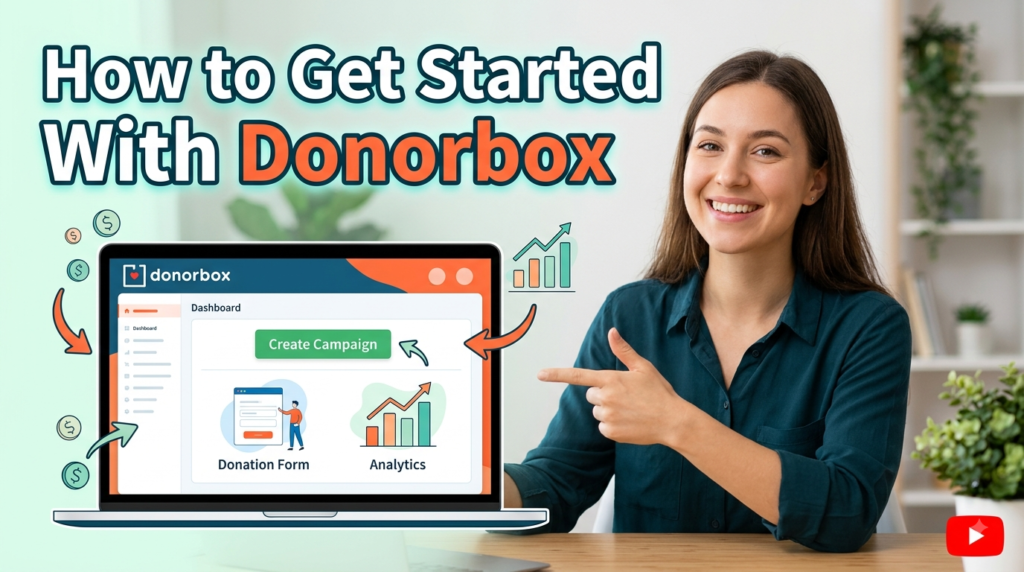
Getting started with Donorbox is relatively straightforward, but the preparation you do before creating your first form can make a significant difference. First, clarify the purpose of your fundraising campaign, the audience you want to reach, the amount you hope to raise, and the specific action you want supporters to take. Then prepare your organization name, logo, colors, campaign story, suggested donation amounts, impact statements, thank-you messaging, and payment-processing information. Donorbox says organizations can create an account and start fundraising without setup or cancellation fees on its Standard plan. That low barrier can be helpful for smaller organizations that want to test online fundraising before committing to a larger technology investment. However, “easy to start” should not be confused with “automatic success.” A beautifully configured fundraising platform cannot compensate for a weak campaign message or an audience that never hears about the campaign. Think of Donorbox as the road and your campaign strategy as the vehicle; you still need both to reach your destination.
Setting Up Your Organization
Your organization profile is more than an administrative detail because it contributes to donor trust. Make sure the name, branding, logo, website, campaign information, and contact details look consistent across your digital presence. If a supporter clicks from your Instagram profile to a donation page and suddenly sees a completely different organization name or visual identity, hesitation can creep in. Consistency creates familiarity, and familiarity can reduce the psychological distance between a donor and your organization. You should also prepare clear information about how donations are used, especially when you are running a specific campaign with a measurable target. Instead of saying, “Help us make a difference,” explain what the money will accomplish in concrete terms. A donor is much more likely to understand the value of a $50 contribution when you explain what that amount can help provide rather than leaving the impact completely abstract.
Connecting Payment Processing
Payment processing is the bridge between a donor’s intention and money reaching your organization, so it deserves careful attention during setup. Donorbox works with payment processors such as Stripe and PayPal, with processing fees varying according to payment method, country, currency, and processor configuration. Donorbox’s current pricing page states that its Standard plan charges a 2.95% platform fee for many core features, in addition to applicable payment-processing fees. Because payment fees can change and may differ outside the United States, organizations should verify the current rates that apply to their specific setup rather than relying on a generic estimate. It is also useful to test the complete donation journey before launching publicly. Make a test donation, check the receipt, confirm that the payment appears correctly in the dashboard, review the donor-facing experience, and make sure your thank-you message works. A five-minute test can reveal problems that might otherwise cost you donations during a real campaign.
Creating a High-Converting Donation Form
A high-converting donation form is not necessarily the form with the most features. In many cases, it is the form that makes the desired action feel obvious and easy. Your headline should immediately communicate the campaign’s purpose, while your supporting copy should explain why the campaign matters now. Use your organization’s branding so supporters feel that they have not been redirected to an unfamiliar third-party environment. Donorbox allows organizations to customize donation forms and donation pages with elements such as colors, calls to action, suggested amounts, payment methods, and campaign information. You should also test your form on mobile devices because many supporters will encounter your campaign through social media, messaging apps, or mobile email. If the form looks crowded, requires unnecessary scrolling, or makes the donation amount difficult to change, simplify it. Every extra decision is another opportunity for a donor to postpone giving.
Choosing Suggested Donation Amounts
Suggested donation amounts can influence how donors think about their contribution. Instead of presenting a completely blank field and asking someone to decide everything independently, you can provide sensible options that reflect your audience and campaign. For example, a community campaign might present $25, $50, $100, and $250, while another organization might use $10, $25, $50, and $100. The right numbers depend on your existing donor data and the financial context of your audience, so there is no universal magic combination. More importantly, connect those amounts to meaningful outcomes whenever possible. Saying “$50 helps provide educational materials for students” gives the donor a mental picture of impact that “$50 donation” does not. Donorbox has also highlighted the use of impact-focused giving levels as a way to help donors understand the difference their contributions can make. Your suggested amounts should therefore act like signposts, helping donors make a confident decision rather than forcing them to calculate what would be appropriate.
Using Impact-Focused Messaging
People rarely donate because an organization has a nice payment form; they donate because they believe their money can help create a meaningful outcome. That means your donation form needs a story, even if the story is short. Explain the problem, show the human impact, describe what your organization is doing, and make the donor’s role visible. Instead of saying, “Donate now to support our program,” try something more specific such as, “Your $25 gift can help us provide essential supplies to one family this month.” The exact impact claim must be accurate and supported by your organization’s finances, but the principle is simple: translate money into meaning. Donorbox’s current guidance also emphasizes “areas of impact” and reports that donors can be more likely to increase giving when they understand a compelling reason for additional support. Your campaign should make donors feel that their contribution is not disappearing into a large organizational machine; it is becoming part of a visible solution.
Building a Strong Fundraising Campaign
A Donorbox campaign should have a beginning, middle, and end rather than simply existing as a permanent donation link. Start by identifying a specific goal and deadline. Then build anticipation before launch, communicate the campaign during its active period, and create urgency as you approach the deadline. A campaign goal gives supporters something tangible to follow, while updates help people understand that their donations are producing momentum. Donorbox’s crowdfunding tools support campaign storytelling, progress updates, goal meters, donor walls, and other engagement elements designed to make fundraising more interactive. This matters because fundraising is partly social psychology: people want to see that other people care, that progress is happening, and that their contribution can move the campaign forward. Instead of asking the same question repeatedly—“Please donate”—change the conversation throughout the campaign. Share progress, introduce beneficiaries, celebrate milestones, answer questions, and explain what remains to be achieved.
Using Crowdfunding and Peer-to-Peer Fundraising
Crowdfunding and peer-to-peer fundraising can extend your reach beyond the people who already know your organization. With peer-to-peer fundraising, supporters can create personalized fundraising pages and ask their friends, family members, colleagues, or social networks to contribute. Donorbox currently describes its peer-to-peer feature as allowing supporters to create personalized campaign pages featuring stories and images, while donations raised through supporter campaigns go directly to the organization. This approach works because people often respond differently when a fundraising request comes from someone they personally trust. Imagine your organization has 100 loyal supporters; instead of asking only those 100 people to donate, you can equip them to introduce your mission to their own networks. The key is to make participation easy. Give fundraisers sample messages, social media graphics, campaign talking points, progress goals, and encouragement so they feel like ambassadors rather than unpaid marketers trying to figure everything out themselves.
Promoting Your Donorbox Campaign
Creating a great campaign page is only half the job. The other half is bringing the right people to it. Use a combination of email, social media, your website, messaging channels, events, newsletters, and personal outreach rather than depending on a single promotional channel. Every promotional message should answer three questions quickly: what is happening, why should someone care, and what should they do next? Your call to action can lead directly to your Donorbox donation form or fundraising page. Donorbox also supports donation buttons that organizations can place on websites, emails, and other outreach materials, giving supporters a direct path to the donation experience. Avoid posting the same generic donation request every day because repetition without new information can cause people to tune out. Instead, vary your content: introduce the problem, share a beneficiary story, announce progress, explain a donation’s impact, highlight a fundraiser, celebrate a milestone, and then make a clear ask.
Social Media and Email Promotion
Social media is excellent for attention, while email can be powerful for direct relationship-building. Use social platforms to create curiosity and emotional connection, then make the donation action easy to find. A short video explaining why the campaign matters can be more memorable than a paragraph of fundraising copy, while a donor story can provide social proof that makes the campaign feel real. Email should be more personalized when possible, especially for existing supporters who already have a relationship with your organization. Segmenting donors based on past behavior can help you avoid sending the same message to everyone. A first-time donor may need a welcome and thank-you message, while a long-term supporter may respond better to a campaign update showing how previous contributions created results. The goal is not to shout louder; it is to communicate more intelligently. Your Donorbox campaign becomes far more effective when every channel points toward the same clear story and action.
Growing Monthly and Recurring Giving
Recurring giving deserves its own strategy because it changes the economics and predictability of fundraising. Instead of asking a supporter for $120 once, you might invite that person to consider $10 per month, assuming the amount and framing are appropriate for your organization and audience. Donorbox allows organizations to offer multiple recurring intervals and gives donors tools to manage their recurring plans. Donorbox also reports that donation forms recommending monthly giving have produced substantially higher average donation values than forms recommending one-time giving, although organizations should treat that as platform-specific evidence rather than a guarantee of the same result. The best recurring-giving campaigns explain why ongoing support matters. For example, a food bank may need dependable funding every month, while an animal rescue organization may have ongoing food, veterinary, and shelter expenses. When donors understand that the mission continues every day, monthly giving becomes a natural extension of their desire to help.
Managing Donors and Building Relationships
A donor should never feel like a transaction number in a spreadsheet. The moment someone gives, the relationship should move into a new stage. Thank them quickly, show appreciation, communicate what their support helped accomplish, and eventually invite them to stay connected with the organization. Donorbox provides donor-management capabilities that can help organizations filter donors, review donor profiles, record communication information, export donor data, and identify important supporter moments. These tools can become much more valuable when paired with a deliberate stewardship strategy. For instance, you might recognize recurring donors differently from first-time donors, send campaign updates to people who contributed to a specific project, or reach out personally when a supporter reaches an anniversary milestone. The objective is simple: transform the donation experience from “payment completed” into “relationship started.” When supporters feel informed and appreciated, they have more reasons to remain connected to your mission.
Tracking Fundraising Performance and Analytics
Successful fundraising should be measured rather than guessed. At minimum, monitor the number of donations, total amount raised, average donation value, recurring donor count, campaign conversion rate, donor retention, and performance by promotional channel. Donorbox provides analytics and integrations that can help organizations understand fundraising activity, including integrations and tracking options involving tools such as Google Analytics and Facebook Pixel. These measurements can reveal surprising patterns. Perhaps Instagram produces many visitors but few donations, while email generates fewer visitors but a much higher conversion rate. Maybe your monthly donation option attracts fewer donors but generates greater long-term value. Once you understand these patterns, you can allocate your time and marketing budget more intelligently. Analytics should not become a collection of impressive-looking numbers; each metric should answer a practical question such as “Where are our donors coming from?” or “Which message motivates people to give?”
Understanding Donorbox Pricing and Fees
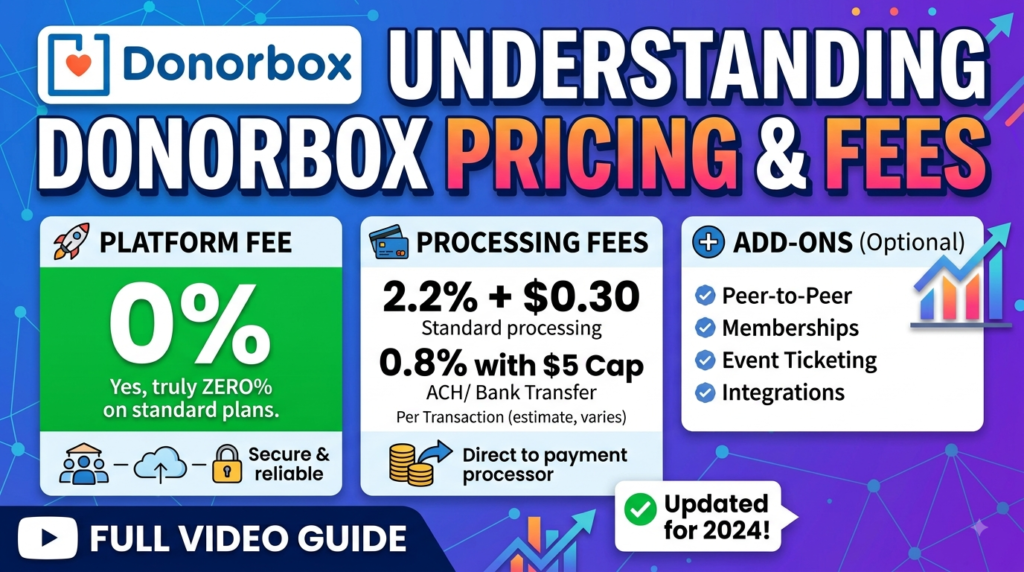
Pricing is an important consideration before launching a fundraising program because platform fees and payment-processing fees affect the amount that ultimately supports your mission. Donorbox’s current Standard plan has no monthly subscription fee and applies a 2.95% platform fee to many core fundraising features, while some features such as events, memberships, and supporter peer-to-peer pages have a 3.95% platform fee. The platform also lists Pro and Premium options with lower platform fees and additional capabilities. Payment processing fees are separate and depend on the payment processor and payment method. Donorbox also allows organizations to ask donors to cover applicable fees, which can help nonprofits retain more of each contribution. Because plans and payment rates can change, organizations should always review the current pricing page before making a purchasing decision. The right plan is not necessarily the cheapest one; it is the one where the additional functionality and lower fees make financial and operational sense for your fundraising volume.
| Donorbox plan | Current platform-fee positioning | Best suited for |
| Standard | 2.95% for many core features; some features are 3.95% | Organizations starting or running straightforward campaigns |
| Pro | 1.75% for many core features; some features are 2% | Growing organizations needing more customization and analytics |
| Premium | 1.6% for many core features; additional support | Organizations seeking advanced tools and dedicated assistance |
Fees shown are based on Donorbox’s current published pricing information and can vary by feature, processor, country, and payment method.
Read More:-
How Does Strikingly Simplify the Website Building Process?
Building Your Dream Website with Site123
Boost Your E-commerce Strategy with YITH Plugins
Maximize Your Customer Engagement with LiveAgent’s Features
Why STRIPO is Essential for Digital Product Marketersa
Best Practices for Successful Donorbox Fundraising
The best Donorbox strategy combines technology with disciplined communication. Start with one clearly defined campaign rather than overwhelming supporters with too many competing requests. Make the donation form visually consistent with your website, explain impact in concrete language, provide sensible suggested donation amounts, and make recurring giving easy to understand. Promote the campaign across several channels while adapting the message to each audience. Most importantly, continue communicating after someone donates. Thank-you messages, progress reports, beneficiary stories, campaign milestones, and transparent reporting can turn short-term attention into long-term trust. Donorbox itself emphasizes donor-friendly checkout, recurring giving, payment flexibility, campaign storytelling, donor management, and integrations as important parts of its fundraising ecosystem. The platform can provide the machinery, but your organization’s authenticity is what gives that machinery purpose. If the technology is the engine, your mission is the fuel.
Common Donorbox Mistakes to Avoid
One of the biggest mistakes is assuming that a donation platform automatically creates donors. It does not. Another common problem is sending supporters to a donation page with little explanation of the campaign’s purpose or impact. Organizations can also make the mistake of asking for donations constantly without showing results, which can weaken trust over time. Other issues include ignoring mobile users, failing to test the payment process, using confusing suggested donation amounts, neglecting recurring giving, and never following up with existing donors. A technically perfect campaign can still fail if nobody knows it exists or if supporters do not understand why they should care. Avoid trying to solve every fundraising challenge with another feature. Instead, regularly ask whether your campaign makes the donor journey simpler, your message clearer, and your organization’s impact more visible. You are headed in the correct direction if the response is “yes.”



Conclusion
Donorbox can be a powerful fundraising platform when it is used as part of a complete donor strategy rather than as a standalone donation button. Its current toolkit includes donation forms, fundraising pages, recurring donations, crowdfunding, peer-to-peer campaigns, memberships, events, text-to-give, donor management, donor portals, integrations, and other tools designed to make giving easier and fundraising more manageable. The strongest campaigns begin with a compelling mission, make the donation process simple, communicate specific impact, promote the campaign consistently, and use data to improve future efforts. Recurring giving deserves particular attention because predictable support can provide organizations with greater financial stability over time. Pricing should also be reviewed carefully because platform and payment-processing fees vary according to plans, features, processors, and locations. Ultimately, successful Donorbox fundraising is less about pressing a “publish” button and more about building a bridge between a donor’s desire to help and a clearly demonstrated opportunity to make a difference. Build that bridge well, keep supporters informed, and give people a reason to return, and your fundraising campaign has a much stronger foundation for sustainable growth.
FAQs
Q. Is Donorbox free to use?
A. Donorbox offers a Standard plan with no monthly platform subscription fee, but donations are subject to applicable platform and payment-processing fees. Its current published pricing lists a 2.95% platform fee for many Standard-plan core features, with certain features carrying a 3.95% fee. Organizations can also ask donors to cover applicable fees.
Q. Can Donorbox handle recurring donations?
A. Yes. Donorbox supports recurring giving and currently provides several recurring intervals, including monthly, quarterly, annual, weekly, and other options. Donors can also manage recurring plans through the Donor Portal.
Q. Can I use Donorbox for crowdfunding?
A. Yes. Donorbox provides crowdfunding functionality that allows organizations to create campaign pages, share stories, communicate progress, and use fundraising goals and other engagement features.
Q. Can donors cover Donorbox fees?
A. Yes. Donorbox allows organizations to give donors the option of covering applicable platform and payment-processing fees. This can help an organization retain more of the original donation for its mission.
Q. Is Donorbox suitable for small nonprofits?
A. Donorbox can be useful for smaller nonprofits because the Standard plan does not require a monthly platform subscription, allowing organizations to begin fundraising without committing to a larger recurring software expense. As fundraising volume and operational needs grow, organizations can evaluate whether a higher-tier plan provides enough additional value to justify its cost.