
Discover how Klook US Affiliates can build a profitable travel affiliate marketing strategy by promoting popular tours, attractions, activities, and travel experiences. Learn practical SEO techniques, content strategies, keyword targeting methods, and conversion optimization tips to attract high-intent travelers and increase affiliate earning potential. Whether you are a travel blogger, content creator, or digital marketer, this guide provides actionable insights to help Klook US Affiliates grow traffic, improve conversions, and create a sustainable affiliate marketing business.
Table of Contents
- Understanding the Klook US Affiliate Opportunity
- How the Klook Affiliate Model Works
- Choose a Profitable Travel Niche Before Creating Content
- Build an SEO Strategy Around Traveler Search Intent
- Create Travel Content That Naturally Generates Affiliate Clicks
- Optimize Klook Affiliate Links for Better Conversions
- Use Social Media and Video to Expand Your Reach
- Build Trust Before Asking Readers to Book
- Track Affiliate Performance and Improve Your Strategy
- Scale Your Klook US Affiliate Business
- Common Klook Affiliate Marketing Mistakes to Avoid
- Conclusion
- Frequently Asked Questions
Understanding the Klook US Affiliate Opportunity

The opportunity for Klook US affiliates begins with understanding what modern travelers actually buy online. Travel affiliate marketing is no longer limited to recommending flights and hotels. Travelers increasingly research complete trips online, including attractions, tours, airport transportation, rail journeys, car rentals, day trips, and activities. Klook’s US-facing marketplace features travel experiences and things to do across destinations such as Los Angeles, New York, Orlando, Tokyo, Paris, Seoul, Bangkok, and many others, giving publishers room to create content around both domestic and international travel interests.
This variety can make an experience-focused affiliate strategy particularly interesting. Imagine someone planning a five-day trip to Tokyo. Their journey may begin with a broad search such as “things to do in Tokyo,” but eventually they might search for attraction tickets, train options, day tours, or specific experiences. Every one of those searches represents a different opportunity for a travel publisher to provide useful information. Instead of viewing your website as a collection of affiliate links, think of it as a knowledgeable digital travel companion. Your job is to appear when travelers have questions and help them confidently decide what to do next.
The scale of the wider business also provides useful context. In its November 2025 U.S. IPO filing, Klook reported 2024 revenue of approximately $417.1 million, representing growth of more than 24% from the previous year, according to Reuters and its SEC filing. The filing also stated that the average rating across user reviews on the platform was 4.7 out of 5 as of September 30, 2025. These figures do not guarantee affiliate earnings, but they indicate that Klook operates at meaningful scale in the global travel-booking market.
Why Travel Experiences Can Be Valuable for Affiliate Marketers
Travel experiences have an important characteristic: they naturally fit into informational content. A traveler reading a guide about “best things to do in Seoul” may already be considering which attractions to visit. Someone searching “best Tokyo day trips” is even further along the decision-making journey. This makes travel content particularly suitable for contextual affiliate marketing, where the recommended product or experience appears as a logical solution rather than an unrelated advertisement.
Another advantage is the sheer variety of potential content angles. Klook’s current marketplace includes categories spanning tours and experiences, day trips, attraction tickets, transportation-related services, accommodation, car rentals, and other travel products depending on destination and availability. One affiliate could build a website entirely around Japan travel, while another might focus on family attractions, theme parks, Asian destinations, European rail travel, or budget itineraries.
The lesson is simple: relevance beats volume. You do not need to cover every destination in the world. A focused website with 50 genuinely useful articles about a specific travel niche may generate more qualified affiliate traffic than hundreds of generic, shallow destination pages.
How the Klook Affiliate Model Works
At its core, affiliate marketing is a performance-based relationship. A publisher creates useful content and sends interested visitors to a merchant through tracked affiliate links. When eligible transactions occur under the applicable program rules, the affiliate may receive a commission. Klook’s official affiliate site describes its program as a way for publishers to earn revenue from website traffic while offering travel deals to their audiences. It also highlights solutions including data feeds, APIs, and white-label integrations for partners requiring more advanced implementations.
For beginners, the process generally starts with applying to the relevant affiliate program or approved network, receiving access to tracking tools, and adding suitable links to content. However, affiliates should verify current commission rates, attribution windows, eligible products, payment requirements, and regional conditions directly inside their affiliate account or official program documentation. These details can vary by market, campaign, product category, and partner arrangement, so relying on an old blog post that promises a specific commission percentage can lead to inaccurate expectations.
Think of the affiliate model as a bridge. On one side stands a traveler with a question. On the other side is a booking option that might solve that traveler’s problem. Your content is the bridge connecting those two points. The stronger and more trustworthy that bridge is, the more likely visitors are to cross it.
Affiliate Links, Tracking, and Conversion Fundamentals
Affiliate success depends heavily on understanding the journey between a search query and a completed booking. A visitor may discover your article through Google, read several sections, click a tracked link, compare available options, and then decide whether to purchase. Your role is not to force that decision. It is your responsibility to explicitly disclose your affiliate relationship while directing relevant, high-intent visitors to the best destination or product page.
This is why deep linking can be more effective than repeatedly sending everyone to a generic homepage. If your article discusses a particular attraction or destination, a relevant destination or experience page usually creates a smoother user journey than forcing visitors to search again. Every unnecessary step adds friction, and friction can reduce conversion.
Affiliate marketers should also remember that tracking and attribution rules matter. Cookies, attribution periods, commission structures, cancellations, refunds, and excluded products can affect actual earnings. Because these policies may change, Klook US affiliates should consult their current affiliate dashboard and official terms before publishing specific claims about commissions or tracking periods. This keeps content accurate and prevents readers or aspiring affiliates from relying on outdated information.
Choose a Profitable Travel Niche Before Creating Content
One of the biggest mistakes new affiliates make is trying to become the internet’s travel encyclopedia overnight. They publish one article about New York, another about Bali, another about Paris, and suddenly their website looks like a suitcase packed by someone five minutes before leaving for the airport. There is no clear direction. Search engines struggle to understand the site’s expertise, while visitors have little reason to return.
A better strategy is to choose a focused niche where you can develop topical authority. For example, you could specialize in Japan travel experiences, family attractions in the United States, Southeast Asia itineraries, theme park travel, or budget-friendly city activities. Your niche should ideally combine sufficient search demand, commercial potential, personal expertise or research capability, and enough bookable experiences to support monetization.
Once you have established authority in one area, expansion becomes easier. A site that starts with detailed Tokyo content could gradually expand into Osaka, Kyoto, and eventually broader Japan travel. This creates a connected network of articles rather than isolated pages competing for attention.
Destination-Based vs. Traveler-Based Niches
A destination-based niche organizes content around geography. Examples include Japan, South Korea, Thailand, California, or New York City. This model works well because travelers often conduct multiple searches about the same destination before booking. A single reader planning Japan might visit your guides about Tokyo attractions, airport transfers, day trips, theme parks, rail transportation, and itinerary planning.
A traveler-based niche focuses instead on a specific audience or travel style. You might create content for families traveling with children, solo travelers, couples, luxury travelers, digital nomads, or budget backpackers. The destination changes, but the audience remains consistent.
Neither approach is automatically superior. The best choice depends on your expertise and content resources. However, consistency matters. When visitors immediately understand who your content serves, your brand becomes easier to remember and trust.
Build an SEO Strategy Around Traveler Search Intent
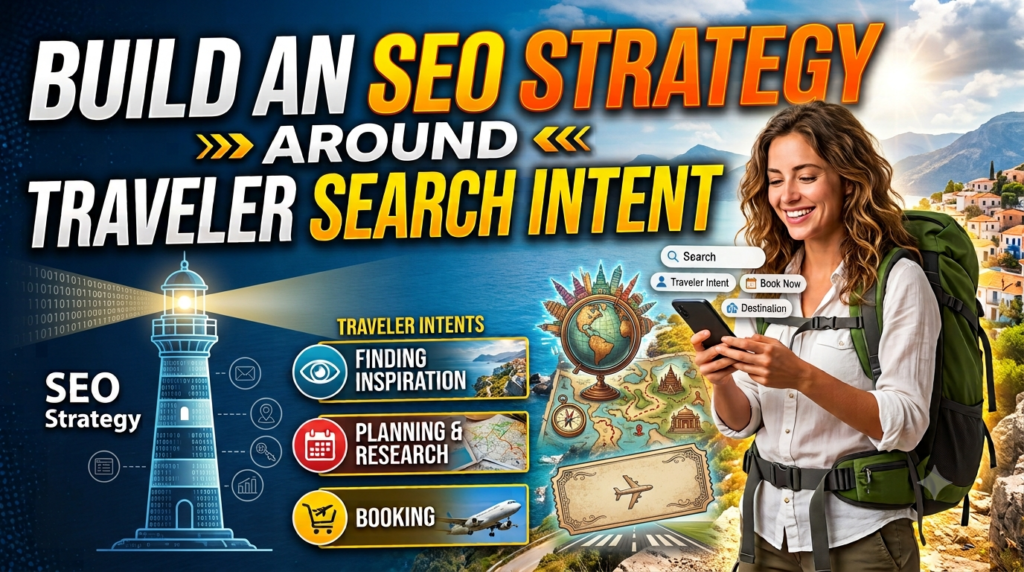
SEO is one of the strongest long-term traffic channels for travel affiliate marketers because travel planning naturally begins with questions. People search for destinations, compare attractions, investigate prices, build itineraries, and research transportation before making decisions. Each query reveals something about the traveler’s intent.
Consider the difference between “Tokyo” and “best Tokyo attraction passes for tourists.” The first keyword is extremely broad. The searcher might want weather information, history, photographs, or news. The second query indicates a much clearer commercial research intent. An affiliate publisher generally benefits from identifying keywords where useful information and potential bookings naturally overlap.
Build your SEO strategy around the complete traveler journey. Publish inspirational content for discovery, detailed guides for planning, comparison content for evaluation, and specific booking-oriented pages for visitors approaching a decision. Internal links can then move readers naturally between these stages.
Target Commercial and Transactional Travel Keywords
Commercial keywords are particularly valuable because users searching them are often comparing options. Queries containing phrases such as best, top, review, worth it, tickets, passes, and things to do may indicate that the traveler is actively evaluating choices.
Transactional intent is even stronger when users search for specific tickets, tours, transfers, or activities. However, your content still needs to add value. Simply creating a thin page around “buy tickets” is unlikely to build lasting search visibility or reader trust.
Answer practical questions. Explain who an experience suits, how long visitors should allow, what travelers should consider before booking, and what alternatives exist. Helpful details create confidence, and confidence can lead to clicks.
Use Long-Tail Keywords to Reach Ready-to-Book Travelers
Long-tail keywords may have lower individual search volume, but they often reveal more specific needs. A broad keyword such as “Orlando attractions” may be highly competitive. A more specific query about activities for families, rainy-day attractions, or a three-day itinerary can attract users with clearer expectations.
The strategy resembles fishing in a crowded ocean versus choosing a smaller lake where you understand exactly what fish are present. Large keywords look attractive because of their search volume, but competition can be intense. Hundreds of specific long-tail pages can collectively generate meaningful traffic while serving visitors more precisely.
Use keyword research tools alongside Google autocomplete, related searches, forums, travel communities, and your own analytics. Look for recurring questions travelers ask before purchasing. Those questions can become your editorial roadmap.
Create Travel Content That Naturally Generates Affiliate Clicks
The best affiliate content does not feel like a sales page wearing a travel-blog costume. It solves a genuine problem first. If readers feel that every paragraph exists solely to push them toward a booking button, trust disappears quickly.
Create content around real planning situations. Detailed itineraries, attraction comparisons, transportation guides, neighborhood guides, seasonal activity lists, and first-time visitor resources can all support affiliate recommendations naturally. For example, a three-day Seoul itinerary might explain the logic behind each day’s schedule before suggesting relevant attractions or experiences where appropriate.
Your call-to-action should match the reader’s intent. Someone reading an informational destination overview may respond better to “Check current availability” than an aggressive “BOOK NOW!” message. Context matters. The goal is to make the affiliate link feel like the next useful step in the reader’s journey.
Build Destination Content Clusters
Content clusters can strengthen both SEO and user experience. Instead of publishing isolated articles, create a comprehensive destination hub supported by narrower guides.
Imagine building a Tokyo cluster. Separate articles about attractions, day trips, transportation, family activities, rainy-day ideas, seasonal experiences, and recommended itineraries might be linked from your central Tokyo travel guide. Those supporting pages can link back to the hub and to each other where relevant.
This creates a digital spiderweb where every useful piece of content strengthens the overall structure. Search engines can better understand topical relationships, while readers can continue exploring without returning to search results after every question.
Optimize Klook Affiliate Links for Better Conversions
Getting traffic is only half the challenge. If 50,000 people visit your website but almost nobody clicks your affiliate links, your monetization strategy needs attention. Link placement, relevance, context, page speed, mobile usability, and calls-to-action can all influence performance.
Place affiliate links where readers naturally need them. A link appearing immediately after you explain the benefits and limitations of an experience has context. A random banner disconnected from the article does not. You can also test text links, comparison tables, buttons, and contextual calls-to-action, provided your implementation complies with program policies and applicable advertising disclosure requirements.
Avoid overcrowding the page. Ten links pointing to the same place do not automatically produce ten times more conversions. Too many promotional elements can make a page feel untrustworthy. Focus on clarity and relevance instead.
Use Social Media and Video to Expand Your Reach
SEO can create durable traffic, but travel is inherently visual, making social media and video powerful complementary channels. Short-form videos can demonstrate experiences in seconds, while longer videos can explain complete itineraries and destination planning. A traveler who sees an exciting activity in a video may immediately want more details.
The key is connecting social discovery with useful conversion-focused resources. Instead of posting beautiful travel footage with no next step, direct interested viewers toward a detailed guide or relevant booking resource. Your website can then provide the depth that a short social post cannot.
Different platforms serve different stages of discovery. Search-focused video can capture planning intent, while short-form social platforms may generate inspiration. Email newsletters can bring previous readers back when you publish new guides or seasonal travel deals. A diversified strategy reduces dependence on any single traffic source.
Build Trust Before Asking Readers to Book
Trust is the invisible currency of affiliate marketing. Without it, even excellent SEO rankings may fail to generate meaningful revenue. Readers need to believe that your recommendations are based on usefulness rather than whichever link earns money.
Transparency is essential. Clearly disclose affiliate relationships according to applicable rules and regulations. Explain that you may earn a commission when someone books through qualifying links without unnecessarily changing the price they pay, if that is accurate under your arrangement.
Also acknowledge limitations. If an experience is not suitable for certain travelers, say so. If travelers should verify accessibility, cancellation rules, meeting locations, age restrictions, or availability before booking, encourage them to check current details. Balanced recommendations often convert better in the long run because readers learn that your content helps them make decisions rather than merely pushing products.
Track Affiliate Performance and Improve Your Strategy

A profitable affiliate strategy requires measurement. Publishing content without tracking performance is like driving across the country without looking at the dashboard. You may still move forward, but you have little idea whether you are heading in the right direction.
Track which pages generate organic traffic, which links receive clicks, and which topics contribute to affiliate conversions where reporting tools make that data available. Look for patterns. Perhaps itinerary pages generate significant traffic but low clicks, while attraction comparison pages receive fewer visits yet produce stronger commercial performance.
These insights should shape your editorial calendar. If certain destinations consistently attract qualified visitors, create deeper supporting content around them. If an article ranks well but generates few clicks, review its calls-to-action and search intent alignment.
Focus on Revenue-Producing Metrics
Page views are useful, but they are not the final measure of affiliate success. A website can generate impressive traffic while earning very little if visitors have weak commercial intent.
Important metrics may include organic sessions, affiliate link click-through rate, conversion rate where available, earnings per click, revenue per visitor, average booking value, and performance by destination or content category. Not every affiliate dashboard provides every metric, so combine available program reporting with privacy-conscious website analytics.
Evaluate trends over meaningful periods rather than reacting to daily fluctuations. Travel demand is seasonal, and destination popularity can change throughout the year. Data becomes valuable when it helps you make better decisions.
Read More:-
Parcel ABC UK Shipping Guide: Features, Pricing, and Benefits Explained
Why Fun-sport-vision.com DE Is Gaining Popularity in Germany
Mashvisor (US): Complete Review for Real Estate Investors in 2026
What Is Scandic SE? A Complete Beginner’s Guide
Simpel NL Explained: Everything You Need to Know
Scale Your Klook US Affiliate Business
Scaling does not simply mean publishing more articles. It means creating repeatable systems that produce useful content and measurable results. Once you discover a content format that performs well, replicate the underlying strategy across relevant destinations without duplicating the content itself.
Suppose your detailed “three-day itinerary” format performs strongly for one destination. You might adapt that framework for other destinations while conducting original research for each location. The structure becomes repeatable, but every article remains genuinely useful and specific.
You can also expand through email marketing, video, social content, and programmatic integrations where appropriate. Klook’s affiliate platform advertises advanced solutions such as data feeds, APIs, and white-label options, which may be relevant to qualifying publishers building more sophisticated travel products. The right scaling method depends on your technical resources, audience size, and business model.
Common Klook Affiliate Marketing Mistakes to Avoid
The first common mistake is chasing traffic without considering intent. Viral travel content may attract thousands of visitors, but if those readers are not planning a trip, affiliate conversion potential can remain low. Balance inspirational content with practical planning and commercial-intent content.
Another mistake is publishing outdated travel information. Attraction schedules, prices, availability, transportation options, and booking policies can change. Review your highest-performing commercial pages regularly and direct readers to official booking pages for current details.
Affiliates should also avoid making unsupported claims about commissions or guaranteed earnings. Program terms can change, and individual results vary significantly. Treat affiliate marketing as a business that requires testing, optimization, and patience rather than a shortcut to instant passive income.




Conclusion
Building a profitable Klook US affiliate strategy requires much more than adding tracking links to travel articles. Sustainable growth comes from understanding travelers, selecting a focused niche, targeting meaningful search intent, creating genuinely helpful content, and continuously improving performance using real data.
The strongest Klook US affiliates position themselves as trusted travel resources. They answer questions before travelers ask them, build connected destination content clusters, use relevant calls-to-action, and maintain transparency about affiliate relationships. They also verify current program terms rather than relying on outdated commission or tracking information.
Klook’s official affiliate platform provides opportunities for publishers to monetize travel-focused audiences and offers tools ranging from standard affiliate participation to more advanced integrations. Your competitive advantage, however, comes from how effectively you connect those opportunities with the right audience. Build trust first, optimize second, and scale what the data proves works.
Frequently Asked Questions
Q. What is the Klook affiliate program?
A. The Klook affiliate program is designed to allow publishers and eligible partners to monetize traffic by referring audiences to travel deals and booking opportunities. The official affiliate platform also advertises integration options including data feeds, APIs, and white-label solutions for different publisher needs. Applicants should review the current official requirements and terms before joining.
Q. How can Klook US affiliates increase their earnings?
A. Affiliates can focus on high-intent travel keywords, detailed destination guides, attraction comparisons, itineraries, relevant deep links, and conversion optimization. Tracking which content generates clicks and bookings can help publishers identify profitable topics and expand strategically.
Q. What content works best for travel affiliate marketing?
A. Destination guides, attraction comparisons, “things to do” articles, itineraries, transportation guides, family travel resources, and specific experience reviews can work well when they match genuine traveler intent. The best format depends on the audience and destination.
Q. Should I use SEO or social media for Klook affiliate marketing?
A. Using both can create a stronger strategy. SEO can capture travelers actively researching destinations, while social media and video can generate discovery and inspiration. Email can then help build a recurring audience instead of relying entirely on search algorithms.
Q. Is Klook affiliate marketing profitable?
A. It can potentially become profitable, but profitability is not guaranteed. Results depend on traffic quality, niche selection, search rankings, audience trust, conversion performance, current program terms, seasonality, and the affiliate’s ability to optimize content. Publishers should treat it as a long-term digital business rather than expecting guaranteed passive income.