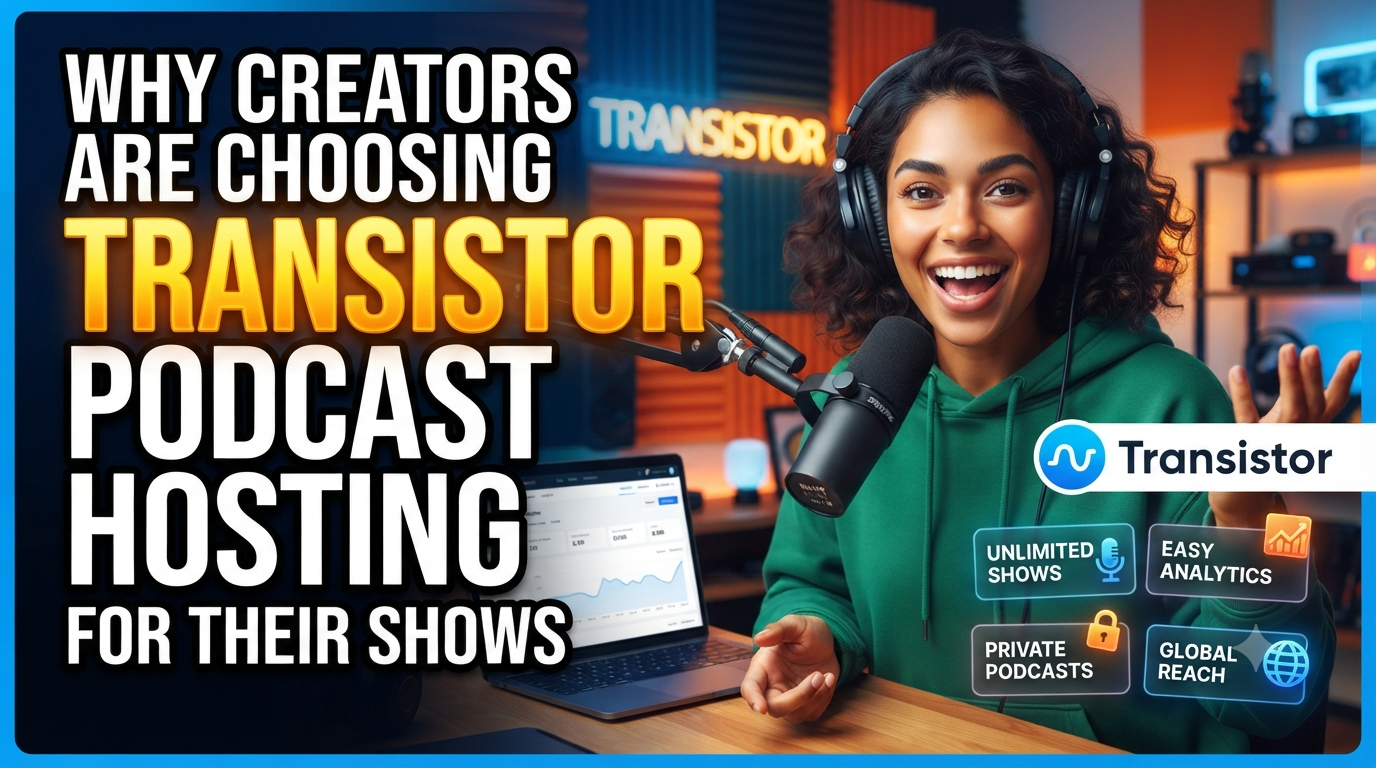
Discover why Transistor Podcast Hosting is becoming a popular choice among content creators, podcasters, and businesses. Explore its features, pricing, podcast distribution, advanced analytics, private podcasting, video hosting, and monetization options. Learn how Transistor helps creators manage multiple podcasts, simplify publishing, grow their audiences, and build a professional podcasting brand. Find out whether Transistor Podcast Hosting is the right platform for your podcasting journey.
Table of Contents
- Understanding Transistor Podcast Hosting
- Why Podcast Hosting Matters for Content Creators
- Unlimited Podcasts Under One Account
- Simple Podcast Publishing and Distribution
- Advanced Podcast Analytics
- Professional Podcast Websites
- Private Podcasting for Exclusive Content
- Dynamic Advertising and Monetization
- Video Podcast Hosting and Distribution
- Team Collaboration and Workflow Management
- Integrations and Automation
- Transistor Podcast Hosting Pricing
- Benefits for Different Types of Creators
- Transistor vs. Traditional Podcast Hosting
- Potential Limitations to Consider
- How to Get Started with Transistor
- Is Transistor Worth It for Growing Podcasts?
- Conclusion
- Frequently Asked Questions (FAQs)
Understanding Transistor Podcast Hosting
Before exploring why creators are choosing Transistor, it helps to understand what the platform actually does. Transistor is a podcast hosting and distribution service that allows users to upload episodes, generate RSS feeds, distribute shows to popular listening platforms, and monitor podcast performance from a centralized dashboard. Think of it as the home base for your podcast. Instead of managing audio files, publishing information, and distribution separately, you can bring several important parts of your podcasting workflow together. The platform was founded in 2018 by Jon Buda and Justin Jackson, and it has developed into a hosting solution for independent creators, companies, and established podcast networks. According to its official website, Transistor now hosts more than 40,000 podcasts.
One reason the platform attracts attention is its focus on simplicity without removing useful professional features. Beginners can use it to launch their first podcast, while experienced creators can manage multiple shows, invite collaborators, explore monetization opportunities, and review audience analytics. It also provides built-in podcast websites and embeddable players, making it easier to establish an online presence. Rather than functioning like a basic file-storage service, Transistor aims to support the complete publishing process. This makes it relevant for people who want to build a serious podcasting presence instead of simply uploading occasional recordings. For creators who value organization and flexibility, having these tools in one place can make podcast management considerably more convenient.
Why Podcast Hosting Matters for Content Creators

Many new podcasters assume that recording an episode and uploading it to Spotify or Apple Podcasts is enough to run a successful show. In reality, podcast hosting plays a much bigger role. A hosting provider stores audio files, creates an RSS feed, delivers episodes to listening applications, and provides information about how audiences interact with published content. Without a reliable hosting solution, creators may struggle with distribution, performance tracking, and managing their growing episode libraries. Imagine preparing an excellent interview, spending hours editing the audio, and then discovering that your publishing process is unnecessarily complicated. A good hosting platform helps prevent these operational problems and gives creators more time to focus on producing valuable content.
Choosing the right podcast host becomes even more important when a show starts attracting regular listeners. As downloads increase, creators need dependable audio delivery, organized episode management, and meaningful performance reports. They may also want to introduce sponsors, publish exclusive episodes, or launch another show for a different audience. A suitable platform should support these changes rather than force creators to rebuild their entire workflow. Transistor Podcast Hosting addresses these needs by combining hosting, distribution, analytics, websites, and additional publishing features. It allows creators to develop their podcasts gradually while maintaining a centralized system. This is especially helpful for people who want podcasting to become part of their professional brand, marketing strategy, or long-term content business.
Unlimited Podcasts Under One Account
One of the biggest reasons creators consider Transistor is its multiple-podcast hosting capability. Many hosting platforms organize their subscriptions around individual shows, which can make managing several podcasts expensive. Transistor takes a different approach by allowing users to create unlimited podcasts under one account. Each show receives its own RSS feed, website, and analytics, helping creators maintain separate identities and audiences without opening multiple hosting accounts.
This feature can be particularly valuable for podcast networks, marketing agencies, entrepreneurs, and creators who enjoy experimenting with different subjects.
For example, imagine a content creator who runs a technology podcast but also wants to launch another show focused on entrepreneurship. Both podcasts may have different audiences, publishing schedules, guests, and branding requirements. With Transistor, the creator can manage both from the same account rather than maintaining separate subscriptions for each project. The same setup can work for businesses operating multiple branded shows or agencies managing podcasts for different clients. It also makes experimenting with new formats less complicated because creators can test ideas without immediately committing to another hosting subscription. As their projects expand, they can organize their shows in one place and keep their publishing activities easier to manage. This flexibility is a major attraction for anyone planning to build more than one podcast over time.
Simple Podcast Publishing and Distribution
Publishing episodes across different listening platforms can become a repetitive task when creators manage everything manually. They need to prepare episode details, upload audio files, organize descriptions, and ensure that listeners can discover new content through their preferred applications. Transistor simplifies this process by generating an RSS feed for each podcast and supporting distribution to major podcast platforms. Creators can use their feed to connect their shows with services such as Spotify, Apple Podcasts, and other podcast directories. Once a podcast is properly submitted and approved by a directory, new episodes can appear automatically through the RSS distribution system.
The biggest advantage is that creators do not need to upload the same audio file separately to every podcast application. They can publish through their hosting dashboard and let the connected distribution system handle the delivery process. This saves time, reduces repetitive work, and helps maintain a consistent publishing routine. Transistor also supports video podcast distribution, allowing eligible creators to publish video episodes to supported platforms.
For someone publishing weekly interviews or educational episodes, these features can make a noticeable difference. Instead of spending valuable time handling technical publishing tasks, creators can focus on preparing guests, researching topics, editing conversations, and planning upcoming episodes. A smoother publishing workflow also makes it easier to maintain consistency, which is important when building audience trust.
Advanced Podcast Analytics
Creating content without understanding audience behavior is like running a business without checking its performance. Creators need more than a simple download counter to understand whether their podcasts are attracting listeners and developing over time. Transistor provides advanced podcast analytics that help users examine performance and understand how their shows are being consumed. Depending on the available reporting, creators can explore download activity, listening applications, devices, and geographical information. These insights can help them recognize audience patterns and make better decisions about their future episodes.
For example, suppose a creator notices that interview episodes consistently receive more downloads than solo discussions. That information may encourage them to schedule more guest conversations. Similarly, geographical insights can help identify locations where a show is attracting interest, while device and application information can provide a better understanding of how listeners access episodes. Analytics can also be useful when approaching potential sponsors because creators need reliable information to explain their show’s reach. However, it is important to understand that podcast download numbers are not automatically the same as unique listeners or completed listens. Different listening applications may also report statistics differently. The real value of Transistor’s analytics is that they provide creators with useful performance information in one place, helping them move beyond assumptions and make more informed content decisions.
Professional Podcast Websites
Having a dedicated website can make a podcast look more professional and give listeners another way to discover its content. Although podcast directories help people find shows, they do not always provide creators with complete control over branding and presentation. Transistor solves this problem by offering a built-in podcast website with its hosting plans. Creators can use this website to showcase their podcast name, cover artwork, episode descriptions, and other important information. They can also customize the appearance and add links that connect visitors with their other online platforms. This is particularly useful for independent podcasters who do not want to spend additional money or time building a separate website just to establish an online presence.
A dedicated podcast website can also become an important part of a creator’s marketing strategy. Imagine someone discovering your show through a social media post. Instead of sending them directly to a third-party listening application, you can direct them to your website, where they can explore previous episodes, learn about the host, and find relevant links. Creators can also embed Transistor’s podcast player into existing websites, making episodes accessible without forcing visitors to leave the page. For businesses, this creates an additional opportunity to connect podcast content with products, services, newsletters, and brand messaging. A professional website does not automatically guarantee more listeners, but it gives creators greater control over how their shows are presented.
Private Podcasting for Exclusive Content
Not every podcast needs to be available to the entire internet. Sometimes creators want to share exclusive episodes with paying members, employees, students, or a selected community. This is where private podcasting becomes valuable. Transistor supports private podcasts, allowing creators to distribute exclusive audio content to approved subscribers. Each private subscriber receives an individual RSS feed, which they can add to a compatible podcast application. This approach makes private content easier to access because subscribers can listen through familiar podcast apps instead of visiting an entirely different platform every time a new episode becomes available.
This feature opens several opportunities for creators who want to develop membership-based content. For example, a business coach could publish regular public episodes and offer exclusive training sessions to premium subscribers. An online educator could share additional lessons, while a company could use private podcasts to distribute internal announcements and employee training materials. Transistor also allows creators to manage subscriber access, which is useful when people join or leave a membership program. Its private podcast functionality is especially interesting because it supports different content strategies without requiring a separate public podcast for every audience. However, private feeds should not be treated as a perfect security solution for highly confidential information, since subscribers may share access or record content. For exclusive membership material and controlled distribution, though, private podcasting can be a practical addition to a creator’s publishing strategy.
Dynamic Advertising and Monetization
Turning a podcast into a source of income is a goal for many content creators. However, monetization becomes more complicated when creators need to update advertisements across dozens or hundreds of previously published episodes. Traditional advertising methods often require manually editing audio files whenever a campaign changes. Transistor offers dynamic advertising features that help simplify this process. Its dynamic ad insertion system allows eligible users to place audio advertisements or other clips at specific points in their episodes, including the beginning, middle, and end. Creators can also manage campaigns that apply advertisements to multiple episodes without having to edit every recording individually.
Consider a creator who works with a company sponsoring a monthly podcast series. Instead of permanently recording the advertisement into every episode, the creator can use dynamic insertion to manage the campaign and update advertising placements when needed. This provides more flexibility when sponsorship agreements change or promotional periods end. It can also help creators make better use of their existing episode libraries because older episodes may continue generating downloads long after publication. Dynamic advertising is not a guaranteed income source, however. Creators still need an audience, suitable advertisers, and effective sponsorship agreements to generate revenue. Transistor provides the technical tools to manage advertising, but building a profitable podcast requires a separate monetization strategy. Its Campaigns functionality is available on Professional plans and above, making plan selection important for creators who want to use these features.
Video Podcast Hosting and Distribution
Podcasting is no longer limited to audio recordings. Many creators now record video versions of their conversations because visual content can help them connect with audiences on platforms such as YouTube. Video podcasting also creates opportunities to turn one recording into multiple content formats, including full-length episodes, short clips, promotional videos, and social media highlights. Transistor has expanded beyond traditional audio hosting by supporting video podcast hosting and distribution. According to its current website, creators can upload video episodes and distribute them to supported platforms, including YouTube, Apple Podcasts, Spotify, and RSS.
This can be particularly useful for interview-based shows, educational podcasts, and businesses that regularly create video content. Rather than treating audio and video as completely separate publishing projects, creators can manage more of their distribution workflow through one hosting platform. For instance, an entrepreneur recording a weekly business discussion can publish the video version while maintaining access to audio distribution for listeners who prefer consuming podcasts while driving, exercising, or working. Transistor’s video capabilities also make the platform more relevant to creators who want to experiment with different content formats as audience preferences evolve. However, video storage limits and monthly download allowances should be considered when selecting a subscription. Creators who publish large video files frequently should evaluate their expected storage requirements before choosing a plan.
Team Collaboration and Workflow Management

Running a podcast becomes more demanding when several people participate in the production process. A show might involve a host, editor, researcher, producer, social media manager, and marketing assistant. If everyone uses separate accounts and communication channels without a clear system, even simple publishing tasks can become confusing. Transistor helps address this challenge by supporting unlimited team members and collaborators across its plans. Creators can invite people to their podcast accounts and organize responsibilities without purchasing an additional hosting subscription for every team member.
This feature is particularly helpful for growing podcast businesses and agencies that manage multiple shows. For example, a production agency may have different editors working on different podcasts while its marketing team prepares descriptions and promotional campaigns. Having collaborators access the relevant platform can reduce unnecessary communication and make publishing more organized. It also allows creators to expand their production operations without immediately changing their hosting setup. A solo podcaster may not need this functionality at the beginning, but it can become increasingly valuable as the show grows. Team collaboration is not simply about inviting more people; it is about creating a workflow where everyone understands their responsibilities. By bringing contributors into a centralized podcasting environment, Transistor helps make that process easier to coordinate.
Integrations and Automation
Modern content creators rarely depend on a single software tool. They may use separate applications for recording interviews, editing audio, managing newsletters, tracking subscribers, and promoting new episodes. Switching between these tools repeatedly can consume time and create unnecessary manual work. Transistor supports integrations that help connect podcast publishing with other services. Its official documentation highlights integrations and automation options involving tools such as Zapier and Make, which allow creators to build workflows without needing advanced programming knowledge.
For example, a creator could configure an automation that sends a notification to a team communication channel whenever a new episode is published. Another workflow could add subscriber information to a spreadsheet or trigger an action in a connected marketing application. Transistor also offers API access, giving developers additional opportunities to connect podcast operations with custom systems. These capabilities become especially valuable when managing several shows or running a professional content business. Instead of repeating the same administrative actions after every publication, creators can automate suitable tasks and spend more time developing their content. Of course, integrations require proper configuration, and not every workflow needs automation. The most useful approach is to identify repetitive tasks that consume time and connect only the tools that genuinely improve productivity. This flexibility makes Transistor appealing to creators who want a more organized and scalable production process.
Transistor Podcast Hosting Pricing
Pricing is an important consideration when choosing a podcast hosting service, particularly for beginners and independent creators who need to manage their budgets carefully. Transistor offers several subscription plans designed for different podcasting requirements. Its current official website lists Starter, Professional, and Business plans, with a 14-day free trial available to people who want to explore the platform before purchasing. The plans include unlimited podcasts, while monthly download allowances, private subscriber limits, and additional features vary depending on the subscription.
Here is a comparison of the main plans based on the current official website:
| Feature | Starter | Professional | Business |
| Monthly price | $19 | $49 | $99 |
| Monthly audio downloads | 40,000 | 200,000 | 400,000 |
| Unlimited podcasts | Yes | Yes | Yes |
| Unlimited audio storage | Yes | Yes | Yes |
| Video storage | 200 GB | 500 GB | 1 TB |
| Private subscribers | 200 | 1,500 | 5,000 |
| Unlimited team members | Yes | Yes | Yes |
| Advanced analytics | Yes | Yes | Yes |
| Dynamic advertising | No | Yes | Yes |
| Dynamic show notes | No | Yes | Yes |
| Remove Transistor branding | No | No | Yes |
Prices are in USD and reflect the official website’s displayed monthly rates. Features and limits may change. Check the pricing page before subscribing.
The Starter plan is a reasonable starting point for independent creators who want professional hosting without paying for advanced advertising features they may not need. Professional is more suitable for growing shows that require higher download allowances, more private subscribers, and dynamic advertising. Business is designed for larger operations that need additional capacity and the option to remove Transistor branding. Annual billing offers savings equivalent to two months free according to the official website.
One important point is that the cheapest plan is not necessarily the best option for everyone. A creator should consider their expected downloads, video storage requirements, private audience size, and monetization plans before selecting a subscription. Since all three plans support unlimited podcasts, users managing multiple shows may find the pricing structure particularly attractive. However, creators should calculate the total cost in their own currency and account for applicable taxes or international payment charges. Reviewing the current plan details before purchasing helps avoid unexpected limitations later.
Benefits for Different Types of Creators
One reason Transistor appeals to different users is that its features are not restricted to a single podcasting style. Independent creators can use it to publish personal shows, interview programs, educational content, and industry discussions. Entrepreneurs can build branded podcasts that introduce their products, share business knowledge, and develop stronger relationships with potential customers. Since the platform supports multiple shows, creators can experiment with different topics without maintaining separate hosting subscriptions for every project. This flexibility is useful for people who enjoy exploring new ideas and want room to expand their content strategy over time.
Businesses can also use Transistor to support communication and marketing activities. A company might create a public podcast to discuss industry developments while maintaining a private podcast for internal employee updates. Educational organizations can distribute lessons and additional learning materials through private feeds, while membership-based communities can provide exclusive audio content to subscribers. Agencies may find the platform useful when managing several client podcasts because multiple shows can be organized within one account. The built-in website, analytics, and collaboration tools add further value to these workflows. Of course, different users will benefit from different features. A beginner publishing one short episode every month may not need the same subscription as an agency operating a large podcast network. The platform’s flexibility makes it worth considering, but choosing features based on actual requirements is always a smarter decision than paying for capabilities that will remain unused.
Transistor vs. Traditional Podcast Hosting
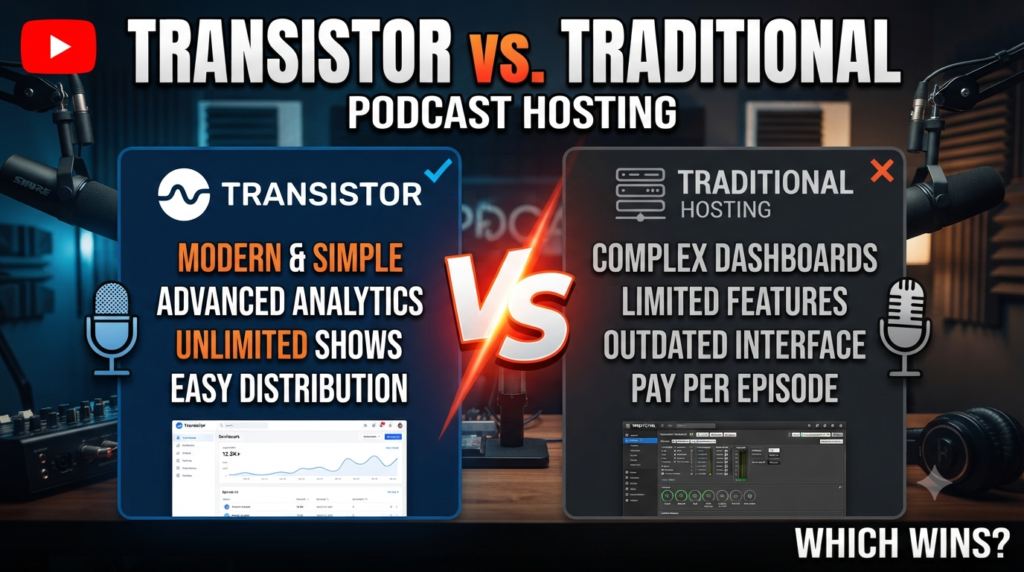
Podcast hosting platforms can look similar at first because most of them provide audio storage, RSS feeds, and episode distribution. However, the experience can differ significantly when creators begin managing multiple shows, working with teams, or exploring monetization. Traditional hosting solutions may organize subscriptions around individual podcasts or place certain professional features behind higher pricing tiers. Transistor differentiates itself through unlimited podcast hosting under one account, built-in websites, private podcasting, advanced analytics, and video distribution capabilities. This combination can be particularly useful for creators who expect their publishing activities to expand.
| Comparison area | Basic hosting approach | Transistor approach |
| Multiple shows | May require separate subscriptions | Unlimited shows under one account |
| Podcast websites | May require external services | Built-in website builder |
| Private podcasts | Depends on provider | Supported |
| Analytics | Varies by platform | Advanced analytics |
| Team collaboration | Depends on plan | Unlimited collaborators |
| Dynamic advertising | May require additional tools | Available on eligible plans |
| Video podcasting | Provider-dependent | Supported |
| Automation | Varies by integrations | API, Zapier, and Make support |
The right choice ultimately depends on the creator’s publishing requirements and budget. A beginner who only needs basic audio hosting may prefer a simpler or less expensive alternative. Someone operating several shows, building a podcast network, or offering private membership content may find Transistor’s bundled features more valuable. It is also worth comparing customer support, migration options, storage allowances, and download limits before switching providers. Rather than choosing a platform based entirely on popularity, creators should evaluate how well it supports their current workflow and future plans.
Potential Limitations to Consider
Although Transistor offers several useful features, it is important to understand its limitations before deciding whether it is the right hosting provider. The first consideration is pricing. Transistor does not advertise a permanent free hosting plan; instead, it offers a 14-day free trial. This means creators who want to host a podcast without any recurring subscription cost may need to explore other options. The Starter plan begins at $19 per month, which may be reasonable for professional creators but could feel expensive for someone experimenting with podcasting for the first time. Beginners should consider whether they will publish regularly and whether they need the platform’s additional features before committing to a paid subscription.
Another consideration is that advanced features are not available on every plan. Dynamic advertising and dynamic show notes require a Professional subscription or higher, while removing Transistor branding requires the Business plan. Video creators should also pay attention to storage limits and monthly download allowances because larger files can increase their usage quickly. Additionally, although Transistor makes podcast distribution easier, creators still need to submit their shows to relevant directories and complete any required platform approvals. Hosting a podcast does not automatically guarantee visibility, subscribers, or advertising revenue. The platform provides infrastructure, but creators remain responsible for producing valuable content, promoting episodes, and building relationships with listeners. Understanding these differences helps users make realistic decisions and avoid expecting a hosting service to solve every podcast growth challenge.
Read More:-
How Does Strikingly Simplify the Website Building Process?
Building Your Dream Website with Site123
Boost Your E-commerce Strategy with YITH Plugins
Maximize Your Customer Engagement with LiveAgent’s Features
Why STRIPO is Essential for Digital Product Marketersa
How to Get Started with Transistor
Starting a podcast on Transistor is relatively straightforward, even for creators who have never used a dedicated hosting platform. The first step is to visit the official website and explore the available subscription options. New users can take advantage of the 14-day trial to understand the dashboard and test the platform’s features. After creating an account, they can set up their podcast by adding essential information such as the show title, description, cover artwork, and other branding details. These elements help establish the podcast’s identity and make it easier for potential listeners to understand what the show is about.
Once the initial setup is complete, creators can upload their first episode. They should prepare a suitable audio file, write an informative episode title, add a detailed description, and include relevant links where necessary. Transistor generates an RSS feed that can be submitted to podcast directories such as Spotify and Apple Podcasts. After completing the necessary submission and approval steps, creators can publish future episodes through their Transistor dashboard. The general workflow looks like this:
- Visit the official Transistor website.
- Create an account and explore the free trial.
- Set up your podcast profile and upload its artwork.
- Upload your first audio or video episode.
- Add the episode title, description, and publishing information.
- Connect your podcast to supported listening platforms.
- Review analytics and monitor your audience’s response.
Creators should also establish a realistic publishing schedule before launching. Publishing consistently helps audiences understand when to expect new episodes. It is equally important to promote the podcast through newsletters, social media, websites, and relevant online communities. Transistor makes hosting and distribution easier, but successful podcasting still requires planning, creativity, and regular communication with listeners.
Is Transistor Worth It for Growing Podcasts?
Whether Transistor is worth the investment depends on what a creator wants to achieve. For someone planning to publish one occasional episode without advanced requirements, a lower-cost hosting service may be sufficient. However, creators who want to develop multiple shows, establish a professional online presence, understand their audience, and explore different monetization strategies may find Transistor’s feature combination appealing. Its unlimited podcast hosting is especially valuable for people who manage several content projects. Instead of paying separately for every show, they can organize multiple podcasts under one subscription and maintain their individual branding and analytics.
The platform also offers room for creators to expand their operations. A podcast might begin as a small personal project and eventually become a branded content channel with guests, sponsors, premium subscribers, and video episodes. Transistor supports many of these activities through its hosting, collaboration, private podcasting, advertising, and distribution tools. Its pricing structure allows users to select a plan according to their expected usage and upgrade as their requirements change. Still, creators should remember that investing in hosting is only one part of building a successful show. Content quality, audience engagement, consistent publishing, and effective promotion remain essential. If your goal is to build a podcast that can grow into a professional content brand, Transistor Podcast Hosting is a platform worth exploring, particularly if you value flexibility and the ability to manage multiple shows from one account.

Conclusion
Choosing the right podcast hosting platform can make a significant difference in how easily creators manage, distribute, and grow their shows. As podcasting becomes an increasingly competitive content format, creators need tools that support more than basic audio uploads. They need reliable hosting, convenient publishing, useful analytics, professional presentation, and opportunities to develop their audience and business.
Transistor Podcast Hosting brings these capabilities together through unlimited podcast hosting, RSS distribution, advanced analytics, built-in websites, private podcasting, team collaboration, and dynamic advertising. Its video podcast capabilities also make it relevant to creators who want to reach audiences through both audio and visual content. The ability to manage multiple shows under one subscription is another major advantage, particularly for podcast networks, agencies, entrepreneurs, and independent publishers.
Of course, the platform may not be the most affordable option for everyone, and creators should carefully compare its pricing and features before subscribing. However, for people looking to build a professional podcasting workflow and expand their content operations, Transistor provides a compelling combination of flexibility and functionality.
Ultimately, successful podcasting is about creating content that people genuinely want to hear. The right hosting platform simply makes the journey easier. If you are planning to launch a new show or improve your existing podcasting setup, exploring Transistor’s 14-day free trial could be a practical first step.
Frequently Asked Questions (FAQs)
Q. What is Transistor Podcast Hosting?
A. Transistor is a podcast hosting and distribution platform that helps creators upload episodes, generate RSS feeds, distribute content to podcast directories, and monitor show performance. It also offers features such as private podcasting, analytics, built-in websites, team collaboration, and video podcast hosting. It is designed for independent creators, businesses, agencies, and podcast networks that want to manage their publishing activities from one account.
Q. Can I host multiple podcasts on Transistor?
A. Yes. Transistor allows users to host unlimited podcasts under one account without paying an additional hosting fee for each show. Every podcast receives its own RSS feed, website, and analytics. This makes it particularly useful for creators, businesses, and agencies that manage multiple podcast projects simultaneously.
Q. Does Transistor offer a free plan?
A. Transistor currently offers a 14-day free trial rather than a permanent free hosting plan. During the trial, new users can explore the platform before deciding whether to purchase a subscription. Its paid plans include Starter, Professional, and Business options with different usage limits and features.
Q. Is Transistor suitable for beginners?
A. Yes. Beginners can use Transistor to upload their first episodes, create an RSS feed, distribute their shows, and build a podcast website. Its centralized dashboard helps simplify the publishing process. However, beginners should evaluate the subscription cost and compare it with their expected podcasting requirements before choosing a plan.
Q. Does Transistor support private podcasts and monetization?
A. Yes. Transistor supports private podcasts that allow creators to distribute exclusive episodes to approved subscribers. It also offers dynamic advertising features on eligible plans, allowing users to insert advertisements and audio clips into episodes. These capabilities can help creators develop membership-based content and manage sponsorship campaigns more efficiently.