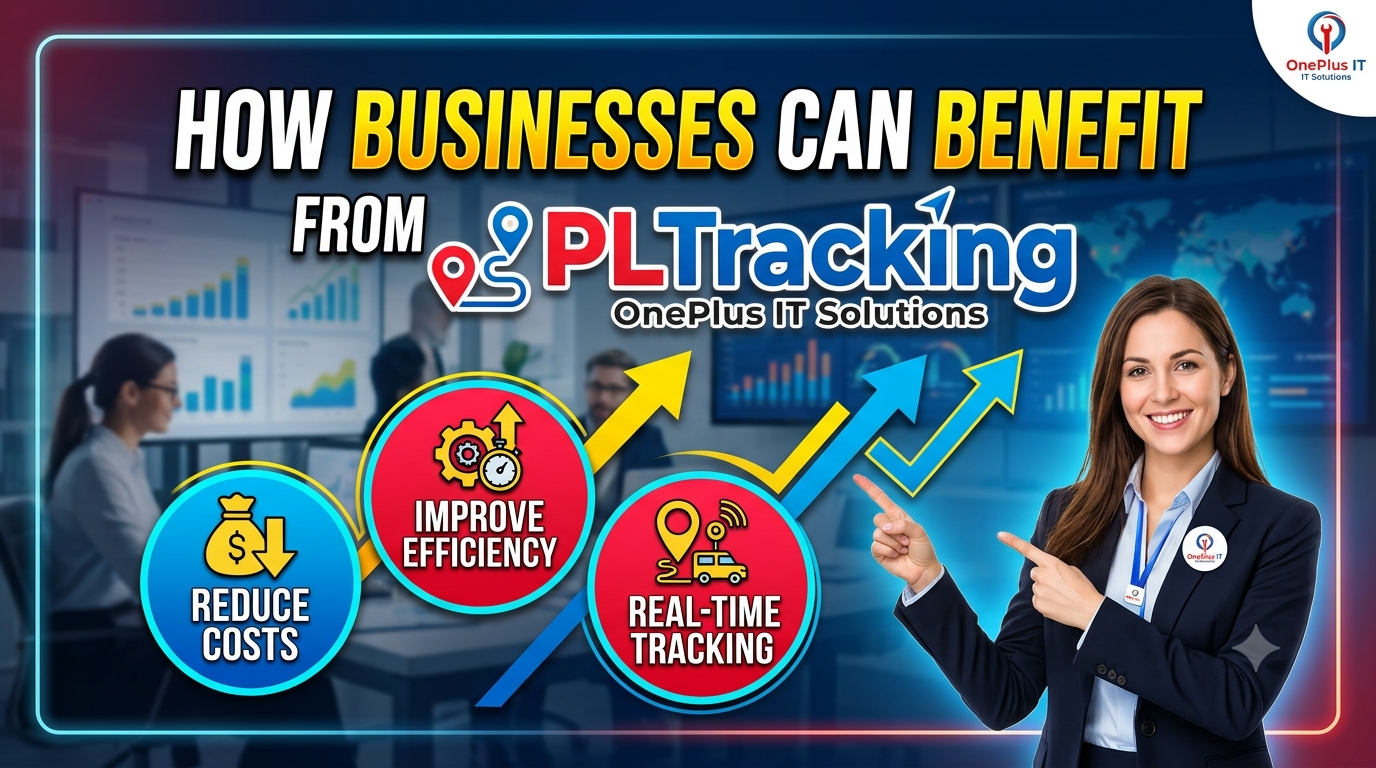
PLTracking_OnePlus IT offers businesses a smarter way to improve operational visibility, streamline daily workflows, manage resources, and make informed decisions. By using effective tracking and IT solutions, businesses can monitor important activities, reduce operational inefficiencies, improve accountability, enhance customer service, and support long-term growth. Whether you are managing projects, assets, teams, or business operations, PLTracking_OnePlus IT can help create a more organized, transparent, and efficient working environment.
Table of Contents
- Understanding PLTracking_OnePlus IT Solutions
- Key Business Benefits of PLTracking_OnePlus
- Better Resource and Asset Management
- Enhancing Customer Service and Accountability
- Using Tracking Data for Business Intelligence
- PLTracking_OnePlus for Growing Businesses
- Security, Control, and Responsible Tracking
- How to Evaluate a Tracking Solution
- Conclusion
- FAQs
Understanding PLTracking_OnePlus IT Solutions
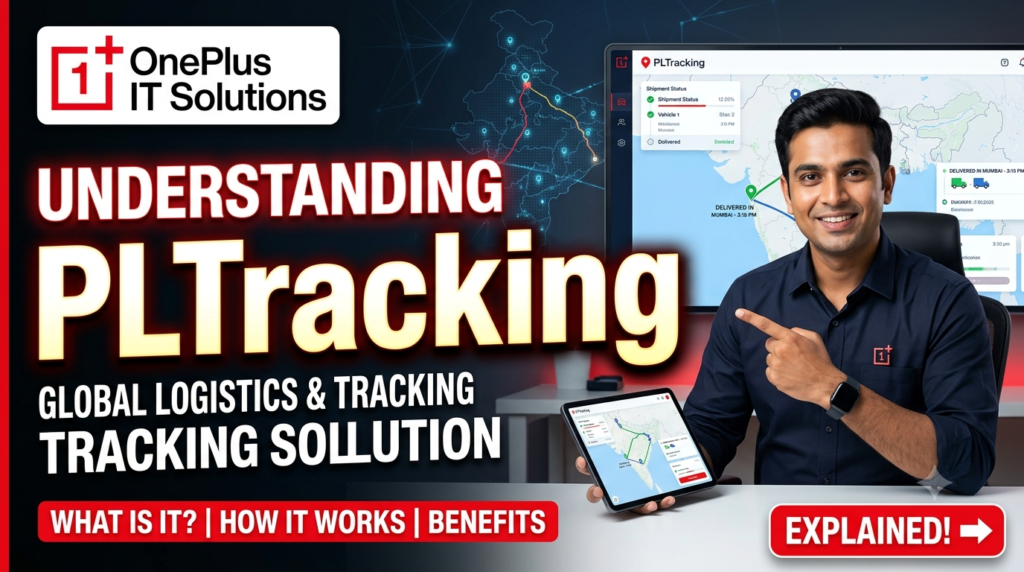
Businesses today operate across people, processes, devices, vehicles, projects, customers, and digital systems, so knowing what is happening at any given moment can make a major difference. PLTracking_OnePlus IT Solutions can be approached as a business tracking and visibility solution designed around the idea that organizations should have clearer information about operational activity rather than relying entirely on spreadsheets, phone calls, messages, or delayed reports. Public search results do not currently provide enough authoritative information to verify a specific vendor product under the exact name “PLTracking_OnePlus IT Solutions,” so the discussion here focuses on the business value of a tracking-oriented IT solution rather than making unsupported claims about proprietary features. That distinction matters because good technology content should explain practical benefits without inventing specifications, pricing, integrations, certifications, or performance figures that cannot be verified. Modern tracking platforms commonly aim to bring operational information into a more centralized view, helping teams identify activity, exceptions, delays, and trends with less manual effort.
The broader technology landscape shows why this approach has become increasingly useful. IT solution providers already use tracking tools for areas such as project management, issue management, asset monitoring, logistics, and operational reporting. For example, Puratech Solutions describes tracking technologies alongside enterprise development, databases, security, and AI/ML capabilities, while its enterprise applications include centralized monitoring and dashboards. In another example, logistics technology providers emphasize multi-carrier tracking, analytics, and performance monitoring because businesses need more than a simple status indicator; they need information that can support operational decisions. This is the basic opportunity for PLTracking_OnePlus: create a clearer connection between what is happening operationally and what managers need to know to act.
Why Business Tracking Matters Today
Imagine running a company where every important update arrives late. A delivery problem becomes visible only after a customer complains. A field employee misses a scheduled activity, but the manager discovers it hours later. An asset is unavailable, yet nobody knows why. A project begins slipping, but the warning signs remain buried inside messages and spreadsheets. These situations are not necessarily caused by employees working badly; they often happen because information is fragmented. A tracking solution can help bring that information into a more structured environment, giving decision-makers a better chance to identify problems before they become expensive.
Tracking should not be confused with simply watching people. In a well-designed business environment, tracking is about visibility, accountability, efficiency, and informed decision-making. Depending on the organization and implementation, it can cover assets, tasks, orders, vehicles, projects, service requests, equipment, or other operational events. The goal is to answer simple but important questions: What happened? Where is it? What is delayed? Who needs to act? What changed? What should happen next? When those answers are easier to obtain, managers can spend less time collecting information and more time solving problems.
From Manual Monitoring to Digital Visibility
Manual monitoring can work when a company has only a handful of operations, but complexity grows quickly. A spreadsheet may be perfectly adequate for a small team, yet the same spreadsheet can become difficult to maintain when hundreds of records, multiple employees, different locations, and frequent updates enter the picture. Every manual entry creates another opportunity for delay or inconsistency. Digital tracking attempts to replace that fragmented process with a more organized flow of information.
This is where a solution such as PLTracking_OnePlus IT Solutions can potentially create value. Instead of asking several employees for updates, a manager could use a centralized system to understand operational status. Instead of searching through multiple communication channels, teams could work from a common source of information. Instead of waiting for a weekly report to discover a recurring problem, decision-makers could analyze patterns more frequently. The benefit is not simply having more data; it is having usable visibility at the right time.
Key Business Benefits of PLTracking_OnePlus
The most important benefit of a tracking-oriented IT solution is the ability to transform scattered operational information into something a business can actually use. When information is organized consistently, managers can see activity, compare performance, investigate exceptions, and identify areas that need attention. That can make everyday operations more predictable because employees are no longer depending entirely on memory or informal updates. A centralized tracking approach can also make responsibilities clearer, especially when multiple teams contribute to the same process.
For a growing organization, this visibility can become even more valuable. More customers usually mean more orders, more service requests, more employees, more assets, or more projects. Complexity does not increase in a perfectly linear way; communication gaps can multiply as teams become larger. A structured tracking environment gives businesses a framework for managing that complexity. Rather than treating every new problem as a separate incident, leaders can use historical information to recognize patterns and improve the underlying process.
Improving Operational Visibility
Operational visibility is one of the clearest advantages of tracking technology. A business cannot improve what it cannot see, and it is difficult to manage an operation when important information exists in disconnected places. A tracking solution can help establish a central view of activities and their current status, allowing teams to identify what is progressing normally and what requires attention. This is especially useful for organizations managing distributed operations, field activities, inventory, logistics, projects, or customer service workflows.
Consider a service company managing dozens of customer requests. Without centralized tracking, employees may use email, calls, messaging applications, and individual spreadsheets to record progress. A manager then has to piece together the current situation manually. With a properly configured tracking system, each request can follow a defined workflow, and relevant information can be associated with that request. The manager gains a clearer picture without repeatedly interrupting employees for updates. That small improvement, repeated across hundreds of activities, can translate into significant operational efficiency.
Supporting Faster Decision-Making
Speed matters when business conditions change quickly. A delayed decision can result in missed opportunities, dissatisfied customers, unnecessary costs, or inefficient use of resources. Tracking systems can support faster decisions by reducing the time required to locate relevant information. Instead of starting with “What happened?”, managers can potentially begin with “What should we do next?”
This does not mean software automatically makes every business decision. Technology is most useful when it gives people reliable information and appropriate context. A manager still needs experience, judgment, and business knowledge. However, if the system highlights delayed tasks, unusual activity, resource shortages, or recurring bottlenecks, the manager has a stronger foundation for making that judgment. In this way, PLTracking_OnePlus can be viewed as an information layer that helps connect operational events with management action.
Better Resource and Asset Management
Every business has resources that need to be managed carefully. These might include vehicles, equipment, computers, inventory, tools, documents, staff capacity, or project budgets. When organizations lack accurate visibility into these resources, they can spend money unnecessarily or allow valuable assets to remain underused. A tracking solution can help businesses establish clearer records of resource activity and availability.
For example, an organization may own equipment that is used by multiple teams. Without proper tracking, one team may assume an item is available while another team is already using it. A centralized system can provide a clearer record of allocation and status. Similarly, when equipment requires maintenance, tracking historical activity can help teams understand when action is due. The objective is not simply to collect asset information but to make that information useful for planning.
Reducing Operational Waste
Waste does not always look dramatic. Sometimes it is ten minutes spent searching for an update, an hour spent preparing a report manually, a duplicated purchase, an unnecessary trip, or repeated customer follow-up. Small inefficiencies can become expensive when they happen every day. Tracking technology can help reveal where those inefficiencies occur.
Once activity is recorded consistently, businesses can examine patterns instead of relying solely on assumptions. If certain tasks repeatedly take longer than expected, managers can investigate the cause. If a resource is consistently underutilized, allocation can be reconsidered. If particular stages of a workflow create delays, the process can be redesigned. This is where tracking becomes more than a monitoring tool; it becomes a mechanism for continuous operational improvement.
Enhancing Customer Service and Accountability
Customers rarely care about a company’s internal complexity. They care whether the service they were promised actually happens. When businesses cannot provide accurate updates, customers may become frustrated even when the underlying problem is relatively small. Tracking can improve the organization’s ability to communicate because customer-facing teams have access to more structured information.
Suppose a customer asks about an order, service request, installation, or scheduled activity. Instead of asking several internal teams to locate the answer, a representative can use the available tracking information to understand the current status. This can reduce response time and create a more professional customer experience. The same principle applies to internal accountability: when tasks and milestones are recorded clearly, it becomes easier to identify where a process is succeeding or where intervention is required.
Building Customer Trust Through Transparency
Transparency can be a powerful competitive advantage. Customers are more comfortable when they understand what is happening rather than receiving vague promises. Tracking technology can support transparency by giving businesses a stronger information base for updates. Depending on the system’s design, appropriate status information can be shared with customers without exposing sensitive internal data.
The important point is balance. More transparency does not mean exposing every piece of operational information. Businesses should determine what customers actually need to know and what should remain internal. A thoughtful PLTracking_OnePlus IT Solutions implementation can therefore support customer communication while maintaining appropriate access controls and privacy practices. The strongest systems are not simply transparent; they are selectively transparent.
Using Tracking Data for Business Intelligence
Tracking generates historical information, and historical information can become valuable when analyzed properly. A business may begin using a system simply to know where an activity stands, but over time the collected records can help reveal patterns. Managers can ask which processes take the longest, which activities create the most delays, where resources are frequently unavailable, and when demand tends to increase. These questions move tracking from operational monitoring toward business intelligence.
This is an important shift because individual events tell only part of the story. One delayed task may be an exception, but repeated delays in the same stage indicate a process problem. One unusual customer complaint may be random, while a growing pattern of similar complaints could indicate a service issue. Data makes it possible to distinguish isolated incidents from recurring problems, provided the information is accurate and consistently recorded.
Turning Data Into Actionable Insights
A dashboard can look impressive without helping anyone make a decision. The real value of tracking data comes from connecting information to action. If a dashboard shows that a process is delayed, the business should be able to determine why, identify who needs to respond, and measure whether the corrective action worked.
For this reason, businesses considering PLTracking_OnePlus should think beyond the question, “What data can we collect?” A better question is, “Which decisions should this data help us make?” That approach keeps technology aligned with business goals. It also prevents organizations from creating complicated systems filled with information that nobody actually uses.
PLTracking_OnePlus for Growing Businesses

Small businesses often operate through personal communication and simple tools because those methods are fast and inexpensive at the beginning. As the organization expands, however, informal systems can become difficult to control. New employees do not automatically know where information is stored, managers cannot remember every operational detail, and customers expect increasingly professional service. A structured tracking platform can provide the foundation needed to move from informal coordination toward scalable operations.
Scalability is not only about handling more records. It is about maintaining consistent processes while the company grows. If every new employee requires a manager to explain a different manual tracking method, growth becomes expensive. A centralized system can create standardized workflows and make operational information easier to access. This can help companies expand without allowing administrative complexity to grow at the same rate.
Supporting Scalability and Expansion
Imagine a company operating from one location with ten employees. Communication may happen naturally because everyone knows everyone else. Now imagine that same company with five locations and several hundred employees. The old communication model suddenly becomes fragile. Information needs to travel between teams, managers need consolidated reporting, and processes need consistent standards.
A solution such as PLTracking_OnePlus IT Solutions can potentially support this transition by giving the organization a more structured operational framework. The exact capabilities will depend on the actual implementation, but the strategic principle is straightforward: businesses need systems that can evolve with them. Technology should reduce complexity, not create another layer of complexity that employees have to fight every day.
Read More:-
Parcel ABC UK Shipping Guide: Features, Pricing, and Benefits Explained
Why Fun-sport-vision.com DE Is Gaining Popularity in Germany
Mashvisor (US): Complete Review for Real Estate Investors in 2026
What Is Scandic SE? A Complete Beginner’s Guide
Simpel NL Explained: Everything You Need to Know
Security, Control, and Responsible Tracking
Business tracking also introduces an important responsibility: information must be protected. Tracking systems may contain operational records, customer information, employee-related data, location information, asset details, or other sensitive business information depending on how the platform is configured. A company should therefore evaluate authentication, authorization, data protection, backups, auditability, retention policies, and access controls before deploying any tracking solution.
Responsible tracking also requires a clear purpose. Employees and customers should understand what information is collected, why it is collected, and who can access it when appropriate. Businesses should avoid collecting unnecessary information simply because technology makes it possible. A well-designed tracking strategy should follow the principle of collecting useful data while respecting privacy and organizational policies.
This consideration becomes particularly important when tracking involves people or location-sensitive information. Technology should support legitimate operational objectives rather than become an excuse for excessive surveillance. Businesses can build greater trust by documenting policies, limiting access, protecting stored information, and reviewing whether collected data is genuinely necessary.
How to Evaluate a Tracking Solution
Before selecting or implementing PLTracking_OnePlus, businesses should first define the problem they want to solve. Are they trying to improve logistics visibility, manage field operations, track projects, monitor assets, improve customer communication, or consolidate operational data? Without a clear objective, even an excellent software platform can become underused. Workflow should be supported by technology, not the other way around.
Organizations should also evaluate usability, scalability, integration, reporting, security, support, customization, and total cost. A solution that offers dozens of features may not be the right solution if employees find it difficult to use. Conversely, a simple system can create significant value when it solves a clearly defined problem and fits naturally into existing processes.
| Evaluation Area | Questions Businesses Should Ask |
| Usability | Can employees learn and use the system without excessive training? |
| Visibility | Does it provide the operational information managers actually need? |
| Scalability | Can the solution support more users, records, locations, and workflows? |
| Integration | Can it work with existing business systems and data sources? |
| Reporting | Can managers convert tracking information into useful reports and insights? |
| Security | Are access controls, authentication, backups, and data protection appropriate? |
| Support | Is reliable technical assistance available when problems occur? |
| Cost | Does the expected business value justify implementation and ongoing expenses? |
The final test should be practical: does the solution make the business easier to manage? If employees spend more time updating a system than benefiting from it, the implementation needs improvement. If managers receive useful information faster and customers receive better service, the investment is moving in the right direction. Tracking technology succeeds when it becomes part of the normal workflow rather than an additional administrative burden.



Conclusion
Businesses increasingly need visibility across their operations, and tracking technology can provide an important foundation for achieving it. PLTracking_OnePlus IT Solutions can be considered from this broader perspective: a tracking-oriented approach can help organizations organize operational information, improve accountability, support faster decisions, manage resources more effectively, and use historical data to identify opportunities for improvement. Publicly available sources do not currently establish a sufficiently detailed official feature set for a product specifically named “PLTracking_OnePlus IT Solutions,” so businesses should verify the provider’s actual capabilities, integrations, security practices, pricing, and support arrangements before making purchasing decisions.
The strongest reason to adopt tracking technology is not simply to watch activity. It is to create a clearer picture of how the business works. When managers can see what is happening, employees understand what needs attention, customers receive more reliable information, and leaders can use real operational data to improve processes. In a competitive environment where time, resources, and customer trust matter, that visibility can become a meaningful business advantage.
FAQs
Q. What is PLTracking_OnePlus IT Solutions?
A. PLTracking_OnePlus IT Solutions refers to a tracking-focused IT solution concept intended to help businesses improve operational visibility and manage activities or resources more effectively. Because authoritative public information about a specific product under this exact name is limited, businesses should confirm the provider’s official product documentation before relying on specific feature or performance claims.
Q. How can tracking technology help small businesses?
A. Tracking technology can help small businesses organize information, reduce manual follow-ups, improve accountability, and identify operational bottlenecks. As a company grows, centralized tracking can also make it easier to maintain consistent processes across employees and locations.
Q. Can a tracking solution improve customer service?
A. Yes. When businesses have better visibility into orders, tasks, service requests, or operational activities, customer-facing teams can often provide faster and more accurate updates. Better information can reduce unnecessary internal communication and help create a more reliable customer experience.
Q. Is business tracking only useful for large companies?
A. No. Large companies may have more complex tracking requirements, but small and medium-sized businesses can benefit as well. The key is selecting a solution that matches the organization’s current needs and can grow as those needs become more sophisticated.
Q. What should businesses check before adopting PLTracking_OnePlus?
A. Businesses should evaluate the solution’s actual features, ease of use, scalability, integrations, reporting capabilities, security controls, support, implementation requirements, and total cost. Most importantly, they should define the business problem first and then determine whether the solution genuinely solves it.