Discover the most powerful Designmodo Startup Framework features every web designer should know in 2026. From drag-and-drop website building and responsive Bootstrap layouts to clean exportable code, SEO-friendly structure, and customizable UI components, this guide explores how Startup Framework helps designers create modern, high-performing websites faster. Whether you’re a freelancer, agency owner, or startup founder, learn how this flexible framework can streamline workflows, improve collaboration, and boost web design productivity.
Table of Contents
- What Is Designmodo Startup Framework?
- Why the Framework Became Popular
- Drag-and-Drop Website Building
- Bootstrap-Powered Responsive Design
- Pre-Built Website Blocks and Components
- Clean Exportable Code
- Built-In SEO and Performance Advantages
- Global Styling and Customization Features
- Animation and Interactive Effects
- Collaboration and Productivity Benefits
- Conclusion
- FAQs
What Is Designmodo Startup Framework?
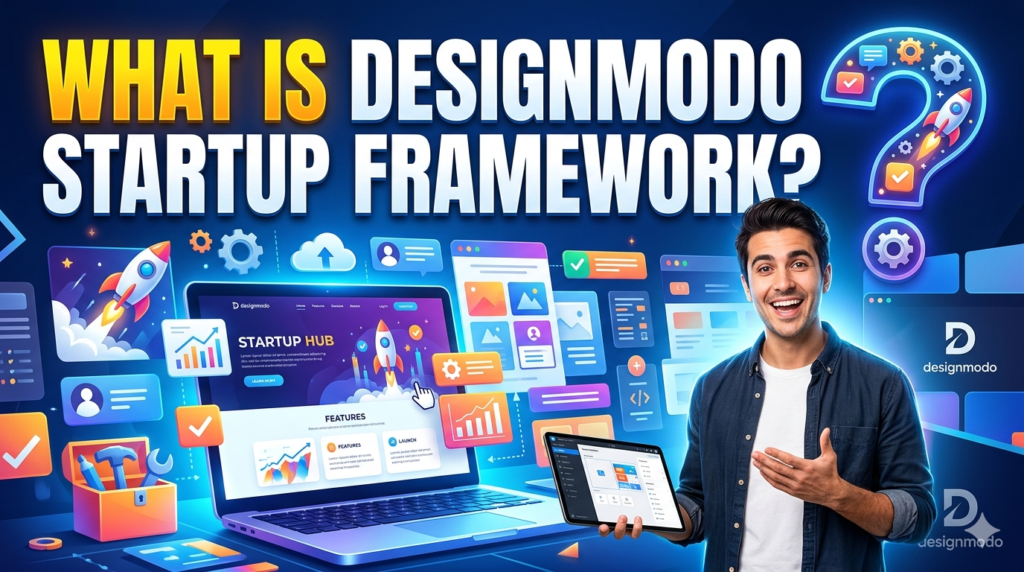
The Startup Framework by Designmodo is a Bootstrap-based drag-and-drop website builder designed for professionals who want to create modern websites quickly without sacrificing flexibility. Instead of forcing users into rigid templates, the framework provides customizable blocks and reusable components that simplify the development process while still allowing creative freedom.
At its core, Startup Framework bridges the gap between no-code tools and traditional front-end development. Many web designers struggle with a frustrating trade-off: speed versus control. Fully coded websites offer unlimited customization but require significant development time. Traditional website builders are fast but often restrictive. Startup attempts to combine the best of both worlds.
The framework uses Bootstrap, one of the world’s most trusted responsive front-end frameworks. That means layouts automatically adapt across desktops, tablets, and smartphones without additional effort. In an era where over 60% of web traffic comes from mobile devices, responsive design is no longer optional—it’s survival.
Another reason Startup Framework gained popularity is its practicality for startups and agencies. Designers can build landing pages, SaaS sites, portfolios, eCommerce pages, and promotional websites in hours instead of weeks. Imagine replacing the exhausting process of manually arranging every HTML container with a streamlined visual system that still outputs clean code. That productivity boost matters enormously when handling multiple client projects simultaneously.
Unlike some page builders that generate messy or locked code, Startup allows users to export project files. Designers retain ownership and can continue development independently. That’s a major advantage for agencies that need scalable workflows and maintainable websites.
Why the Framework Became Popular
One major reason Startup Framework exploded in popularity is its balance between simplicity and professionalism. Many website builders target beginners but frustrate experienced designers. Startup Framework takes a different approach. It respects professional workflows while still being beginner-friendly.
Designmodo highlights that Startup includes extensive pre-designed blocks for headers, pricing sections, blogs, eCommerce layouts, and content areas. These blocks significantly reduce production time while maintaining a polished, modern appearance. Instead of designing every section from scratch, designers can focus on branding, messaging, and user experience.
The rise of startups and SaaS businesses also fueled its growth. Young companies need fast deployment, especially when validating products or launching marketing campaigns. Waiting months for a custom-coded website simply isn’t realistic anymore. Startup Framework provides a practical shortcut without making websites look generic.
Designers also appreciate its visual consistency. Many websites fail because they feel disconnected—different typography styles, inconsistent spacing, and clashing colors create a chaotic experience. Startup Framework solves much of that problem through structured design systems and reusable components.
Another factor is affordability. Building custom front-end systems from scratch requires large budgets and experienced developers. Startup gives freelancers and smaller agencies access to enterprise-quality website structures at a fraction of the cost. That democratization of professional web design tools has made it particularly attractive in competitive digital markets.
Drag-and-Drop Website Building
One of the strongest features of Startup Framework is its drag-and-drop interface. Web designers can visually assemble pages by selecting pre-built blocks and rearranging them without manually coding every section.
This dramatically accelerates production speed. Think about traditional web development for a moment. Even a simple landing page often involves creating responsive containers, typography systems, spacing rules, navigation bars, buttons, forms, and mobile adjustments. That process consumes countless hours. Startup removes much of the repetitive work while keeping customization available.
The visual editor is especially useful during brainstorming and prototyping stages. Designers can quickly test layout concepts without writing code from scratch. That flexibility allows faster experimentation and better collaboration with clients. Instead of showing static mockups, designers can present functioning prototypes almost immediately.
Another hidden advantage is reduced cognitive fatigue. Repetitive front-end coding can become mentally exhausting, especially during deadline-heavy projects. Drag-and-drop systems streamline routine tasks so designers can spend more energy on creativity and strategy.
Startup’s interface also lowers the barrier for non-technical professionals. Marketing teams, founders, and content creators can contribute to website creation without requiring advanced coding knowledge. This collaborative environment speeds up workflows and minimizes communication bottlenecks between departments.
Still, Startup doesn’t feel like a toy. Many beginner-focused builders simplify things so aggressively that customization becomes painful. Startup Framework preserves enough flexibility to satisfy professional designers while remaining accessible.
Visual Editing Without Coding
Visual editing is more than convenience—it fundamentally changes how websites are designed. Instead of imagining layout structures mentally while writing HTML, designers can see updates instantly.
That real-time feedback improves decision-making. Designers can test spacing, typography, hierarchy, and section placement visually rather than through trial and error coding. The process feels more natural, almost like sculpting rather than engineering.
Startup’s visual editing tools are particularly effective for landing pages and conversion-focused websites. Marketers often need rapid adjustments to headlines, CTA buttons, pricing layouts, and forms. Visual editing enables quick iteration cycles without developer delays.
For freelancers, this means faster revisions and happier clients. For agencies, it means more projects completed in less time. Speed has become one of the biggest competitive advantages in modern web design, and Startup directly supports that need.
Bootstrap-Powered Responsive Design
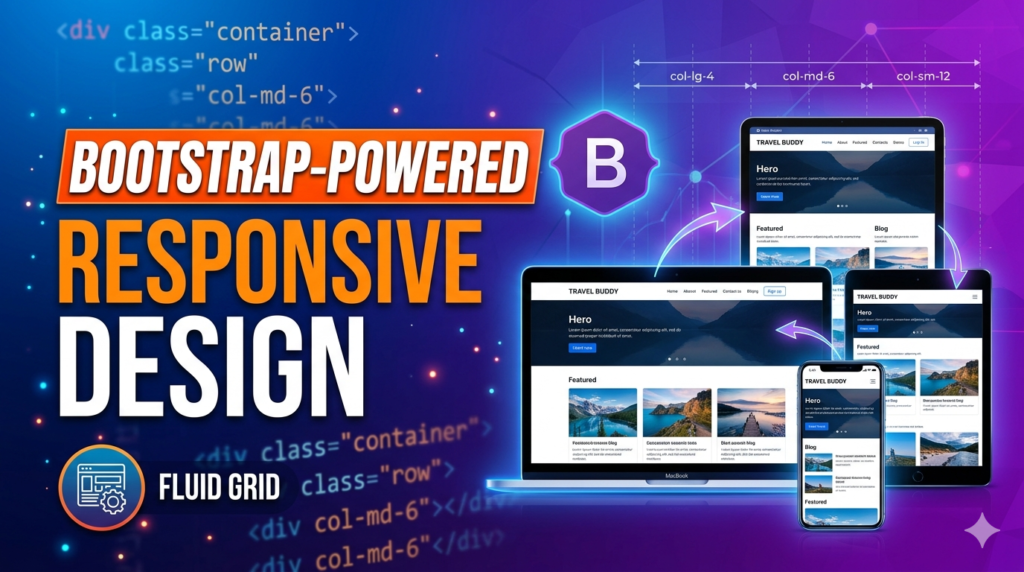
Responsive design is no longer a luxury feature. It’s the foundation of modern web development. Bootstrap, the foundation of Startup Framework, provides designers with a dependable responsive grid structure and cross-device consistency.
Bootstrap’s popularity stems from its proven stability. Millions of websites rely on it because it simplifies responsive development while maintaining flexibility. Startup Framework inherits those advantages while wrapping them in a more user-friendly environment.
The framework automatically adjusts layouts for different screen sizes. Headers resize intelligently, navigation menus adapt, and content reorganizes itself fluidly across devices. This matters enormously because mobile traffic dominates the modern web landscape. Studies cited by Designmodo show that over 50% of page views now come from mobile devices.
Responsive behavior also impacts SEO rankings. Google prioritizes mobile-friendly websites in search indexing, making responsive performance essential for visibility. A beautiful desktop-only website today is like building a luxury store in the middle of the desert—impressive but ineffective.
Startup Framework helps designers avoid common mobile usability problems such as oversized images, tiny buttons, broken grids, and unreadable text. That reliability reduces testing headaches and improves user satisfaction.
Mobile-First Development
Mobile-first development means designing for smaller screens before expanding to desktops. Startup Framework naturally supports this philosophy through Bootstrap’s responsive system.
This approach forces designers to prioritize clarity and usability. On mobile devices, there’s no room for clutter. Every element must serve a purpose. That discipline often leads to cleaner, more focused websites overall.
Designmodo’s own trend research emphasizes that mobile-first design remains one of the most important web design priorities entering 2026. Websites that ignore mobile optimization risk higher bounce rates, weaker conversions, and reduced search visibility.
Startup simplifies mobile-first design by handling much of the technical groundwork automatically. Designers can focus on user experience rather than constantly troubleshooting responsive breakpoints.
Pre-Built Website Blocks and Components
Another standout feature is Startup’s enormous library of pre-built website blocks. These reusable sections allow designers to assemble professional pages rapidly while maintaining visual consistency.
The framework includes blocks for:
| Component Type | Purpose |
| Hero Sections | Capture attention immediately |
| Pricing Tables | Display subscription plans clearly |
| Headers & Navigation | Improve usability |
| Footers | Reinforce branding and navigation |
| Testimonials | Build social proof |
| Contact Forms | Increase lead generation |
| Blog Layouts | Organize content effectively |
| eCommerce Sections | Showcase products professionally |
According to Designmodo, Startup includes over 40 eCommerce-focused blocks alone. That extensive variety makes the framework suitable for many industries and business models.
For web design, these blocks function similarly to premium LEGO parts. Designers can mix, rearrange, and customize them without starting from zero. The result is faster production without sacrificing uniqueness.
Consistency is another major advantage. When building websites manually, maintaining alignment, spacing, typography, and UI harmony across pages can become tedious. Reusable blocks create a more cohesive design language automatically.
Customizing Pre-Made Blocks
Pre-built doesn’t mean generic. Startup allows designers to customize colors, typography, spacing, animations, and layouts extensively.
This flexibility matters because branding is everything. Businesses want websites that reflect their identity rather than looking identical to competitors. Startup’s customization tools allow designers to create distinctive experiences while still leveraging pre-built structures.
Customization also speeds up iteration. Instead of redesigning sections entirely, designers can refine existing blocks strategically. That approach saves time while maintaining polished results.
For agencies handling multiple clients, reusable customizable blocks become productivity superpowers. Teams can standardize workflows while still delivering personalized designs.
Clean Exportable Code
Many no-code builders generate bloated, messy code that becomes a nightmare for developers later. By exporting comparatively clean HTML, CSS, and JavaScript files, Startup Framework adopts an alternative strategy.
This is incredibly important for scalability. Websites often evolve over time. Businesses may later add APIs, custom features, integrations, or advanced functionality. Clean exportable code makes those transitions far smoother.
Think of messy code like tangled headphones stuffed into your pocket. Technically usable, but frustrating and inefficient. Clean code, on the other hand, creates maintainable systems developers can build upon confidently.
Startup’s HTML5 and CSS3 structure also aligns with modern web standards. Developers can integrate exported projects into larger ecosystems without excessive cleanup work.
Agencies especially benefit from this flexibility. They can prototype quickly using Startup while still handing polished code to development teams for advanced customization.
Developer-Friendly Architecture
Professional developers often avoid visual builders because of poor architecture. Startup reduces that concern significantly.
The framework respects front-end development principles while still prioritizing usability. Designers can work visually without trapping developers in rigid ecosystems later.
Startup appeals to both professional teams and independent contractors because of this hybrid approach. It functions equally well as a rapid prototyping tool and a production-ready foundation.
Built-In SEO and Performance Advantages
Website aesthetics alone don’t guarantee success. Performance and SEO matter just as much. Startup Framework supports both through responsive architecture, optimized structures, and clean coding practices.
Fast loading speeds directly affect user behavior. Research consistently shows that slow websites increase bounce rates and reduce conversions. Startup’s streamlined Bootstrap foundation helps minimize unnecessary overhead compared to heavier page builders.
SEO benefits also emerge from semantic structure and mobile responsiveness. Google rewards websites that provide strong user experiences, especially on mobile devices.
Startup helps designers build technically solid foundations that support long-term organic visibility. While SEO still requires content strategy and optimization work, the framework eliminates many technical obstacles.
Faster Loading Speeds
Page speed is one of the internet’s invisible battlegrounds. Visitors rarely compliment fast websites, but they absolutely notice slow ones.
Startup’s lightweight structure improves load performance compared to many bloated visual builders. Faster sites improve user engagement, lower bounce rates, and support better search rankings.
For businesses relying on paid advertising, speed becomes even more important. Every slow-loading second wastes advertising dollars by losing impatient visitors.
Global Styling and Customization Features
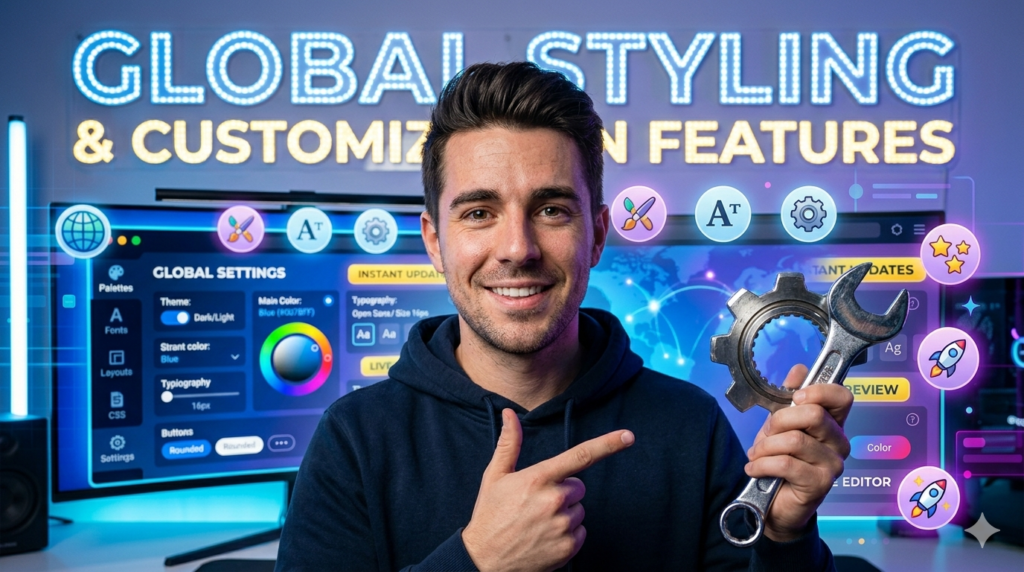
Design consistency separates amateur websites from professional experiences. Startup Framework includes global styling tools that allow designers to control typography, colors, and visual identity across entire projects.
Instead of editing each section individually, designers can establish centralized style systems. This creates cohesive branding while dramatically speeding up revisions.
Typography controls are especially valuable. Fonts influence readability, emotion, and brand perception more than many people realize. Startup allows designers to create visually balanced hierarchies without manually adjusting every text element.
Color customization tools also support stronger branding. Designers can quickly apply consistent palettes throughout websites while maintaining accessibility and visual harmony.
Typography Controls
Typography is the voice of a website. A luxury brand should not sound like a gaming forum, and a startup shouldn’t feel like a law office unless intentional.
Startup Framework provides enough flexibility for designers to craft distinct personalities through typography systems. Clean heading hierarchies, scalable font sizing, and responsive text behavior all contribute to stronger user experiences.
Color Systems and Branding
Colors influence emotion, trust, and attention. Startup’s global color management tools make branding easier and more consistent.
Rather than endlessly editing individual buttons and sections, designers can apply systematic color changes efficiently. This becomes especially useful when managing multiple client brands simultaneously.
Read More:-
How Does Strikingly Simplify the Website Building Process?
Building Your Dream Website with Site123
Boost Your E-commerce Strategy with YITH Plugins
Maximize Your Customer Engagement with LiveAgent’s Features
Why STRIPO is Essential for Digital Product Marketers
Animation and Interactive Effects
Modern websites are expected to feel alive. Static pages increasingly feel outdated, especially in competitive industries.
Startup Framework includes animation and interaction capabilities that help designers create more engaging experiences. These effects can guide attention, reinforce branding, and improve storytelling when used strategically.
Animations are like seasoning in cooking. Too little feels bland, but too much becomes overwhelming. Startup allows designers to enhance experiences without turning websites into chaotic visual circuses.
Interactive effects also improve usability. Hover states, transitions, scrolling animations, and visual feedback help users navigate intuitively.
Modern UI Enhancements
Modern UI design relies heavily on subtle movement and interaction. Micro-animations make interfaces feel polished and responsive.
Startup simplifies the implementation of these enhancements, helping designers create premium-feeling websites without extensive JavaScript expertise.
Improving User Engagement
Engaging websites keep users exploring longer. Interactive elements encourage curiosity and make browsing more enjoyable.
For landing pages, engagement often translates directly into conversions. Thoughtful animations can draw attention to call-to-action buttons, pricing sections, or signup forms more effectively than static layouts alone.
Collaboration and Productivity Benefits
One of Startup Framework’s most underrated strengths is how much it improves collaboration and productivity.
Agencies frequently juggle designers, developers, marketers, copywriters, and clients simultaneously. Miscommunication and delays can derail projects quickly. Startup’s visual environment reduces friction by making website structures easier for everyone to understand.
Clients can review designs earlier. Marketers can adjust messaging faster. Developers receive cleaner foundations. Everyone works more efficiently.
The framework also shortens turnaround times dramatically. Faster production means agencies can handle more projects, improve profitability, and respond to market demands more quickly.
Agency Workflow Improvements
For agencies, time is money. Repetitive tasks eat profitability alive.
Startup Framework reduces repetitive front-end work while maintaining professional quality. Teams can focus more energy on strategy, branding, and user experience rather than rebuilding basic structures repeatedly.
Faster Client Delivery
Clients care deeply about timelines. Businesses launching products or campaigns often need websites urgently.
Startup enables designers to deliver polished responsive websites quickly without sacrificing professionalism. That speed creates competitive advantages for both agencies and freelancers.


Conclusion
The Designmodo Startup Framework has earned its reputation because it solves a real problem in modern web design: balancing speed, flexibility, responsiveness, and professional quality.
Its drag-and-drop interface accelerates production. Bootstrap integration ensures responsive performance. Pre-built blocks simplify workflows. Exportable clean code supports scalability. Global customization tools maintain branding consistency. Animation features enhance engagement. Together, these features create a toolkit that empowers designers rather than limiting them.
In today’s digital landscape, web designers need more than creativity—they need efficiency, adaptability, and tools that support rapid execution without compromising quality. Startup Framework delivers exactly that balance.
Whether you’re a freelancer building landing pages, an agency managing multiple client projects, or a startup founder launching a new SaaS platform, Startup Framework offers a practical and powerful solution for creating modern websites that perform well across devices and search engines alike.
FAQs
Q. What is Designmodo Startup Framework used for?
A. Designmodo Startup Framework is primarily used for building responsive websites, landing pages, startup websites, SaaS platforms, and marketing pages quickly using drag-and-drop Bootstrap-based tools.
Q. Is Startup Framework beginner-friendly?
A. Yes. The framework is designed for both beginners and professionals. Non-coders can use visual editing tools, while developers can customize exported code extensively.
Q. Does Startup Framework support responsive design?
A. Absolutely. Startup Framework is built on Bootstrap, which ensures layouts adapt properly across desktops, tablets, and smartphones.
Q. Can developers export the code from Startup Framework?
A. Yes. One of Startup’s biggest strengths is that users can export HTML, CSS, and JavaScript files for further development and customization.
Q. Is Startup Framework good for SEO?
A. Yes. Its responsive structure, clean code output, and fast-loading architecture support better SEO performance and user experience.