
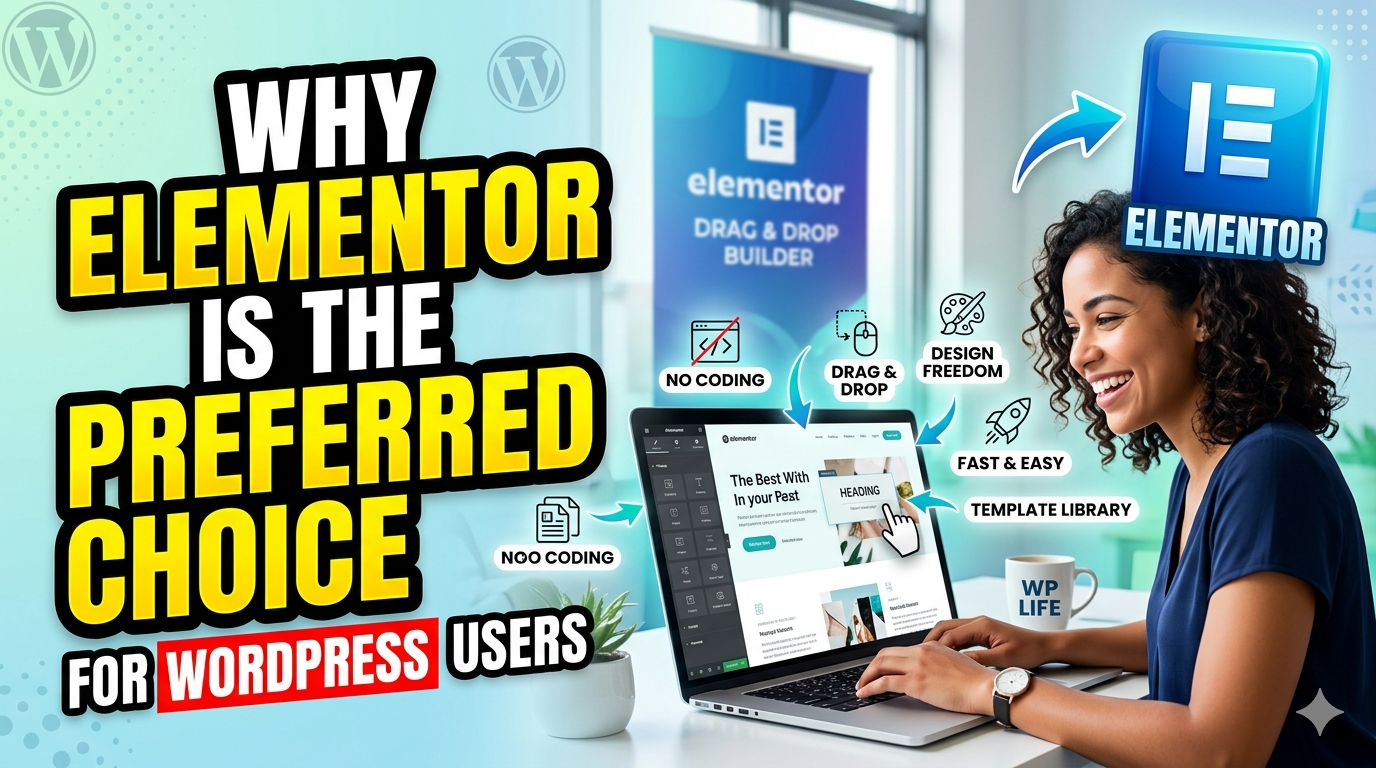
Discover why Elementor has become the top choice for WordPress users worldwide. Learn how its drag-and-drop builder, AI-powered features, responsive design tools, WooCommerce integration, and SEO-friendly performance help beginners and professionals create stunning websites with ease. Explore the key benefits, comparisons, and future trends that make Elementor the leading website builder for WordPress in 2026.
Table of Contents
- Understanding the Rise of Elementor
- What Makes Elementor Different
- Elementor’s User-Friendly Interface
- Powerful Design Flexibility
- Elementor AI Features Transforming Website Creation
- Performance and Speed Improvements
- WooCommerce Integration for Online Stores
- SEO Benefits of Using Elementor
- Elementor vs Other Website Builders
- The Future of Elementor and WordPress
- Conclusion
- FAQs
Understanding the Rise of Elementor

The Growth of WordPress in 2026
WordPress remains the king of content management systems, and its dominance continues to grow because of its flexibility and open-source nature. According to recent statistics, WordPress powers more than 43% of all websites and controls over 60% of the CMS market globally. This means millions of businesses, creators, and entrepreneurs rely on WordPress as the foundation for their digital presence.
One major reason for WordPress’s success is its adaptability. Unlike closed platforms that lock users into specific ecosystems, WordPress allows people to customize every aspect of their website. Elementor fits perfectly into this environment because it extends WordPress’s capabilities without removing the freedom users value. It acts like a bridge between simplicity and advanced customization.
In earlier years, many WordPress users struggled with outdated editors and complicated theme customization systems. Making even a small design change often required CSS knowledge or hiring a developer. Elementor changed this completely by introducing a live visual editor where users could drag, drop, and instantly preview every design adjustment. Suddenly, creating websites became accessible to almost anyone.
Businesses also appreciate WordPress and Elementor because they offer ownership and scalability. Unlike website builders that operate like rented apartments, WordPress websites feel more like owning property. Users control their hosting, plugins, content, and customization options. Elementor enhances this freedom by providing enterprise-level design tools without taking away control from the website owner.
Elementor’s Expanding Global Popularity
Elementor’s growth has been nothing short of remarkable. Industry reports indicate that Elementor now powers millions of active websites and controls approximately 40–50% of the WordPress page builder market. Those statistics highlight how deeply Elementor has penetrated the modern web design industry.
Part of Elementor’s success comes from its universal appeal. Beginners love it because it eliminates technical barriers. Agencies love it because it speeds up workflow and improves productivity. Developers appreciate its extensibility and compatibility with custom coding. It serves multiple audiences without sacrificing usability.
Another key factor is Elementor’s continuous innovation. Instead of remaining static, the platform constantly evolves. Recent updates introduced AI-powered tools, advanced responsive design controls, improved performance optimization, and integrated hosting solutions. This ability to adapt to industry trends keeps Elementor ahead of competitors.
Community support also plays a huge role. Elementor has built a massive ecosystem of tutorials, third-party plugins, Facebook groups, YouTube educators, and developer resources. When users encounter challenges, they rarely feel alone. That kind of community-driven support system creates confidence and encourages long-term loyalty.
What Makes Elementor Different
True Drag-and-Drop Editing
The heart of Elementor’s popularity lies in its drag-and-drop editor. Unlike traditional website builders that separate backend editing from frontend design, Elementor allows users to edit websites visually in real time. It feels less like coding and more like arranging pieces on a digital canvas.
This approach changes the entire web creation experience. Users can drag widgets such as images, headings, buttons, forms, and videos directly onto the page. Every change becomes visible immediately. There is no need to constantly save, preview, and refresh pages just to see how a layout looks.
That instant visual feedback dramatically reduces frustration. Imagine trying to paint while blindfolded and only seeing the result after every brush stroke. Traditional editors often felt like that. Elementor removes the blindfold and turns website creation into an intuitive process.
The platform also includes advanced layout controls, animation settings, spacing customization, and typography tools. Users can fine-tune every section without writing a single line of CSS. This level of accessibility empowers entrepreneurs and creators who want professional results without technical complexity.
Real-Time Visual Customization
Modern web design revolves around user experience and branding consistency. Elementor excels here by offering precise visual customization options that help websites stand out from generic competitors.
Users can control fonts, colors, backgrounds, gradients, borders, shadows, spacing, animations, and interactive effects with incredible detail. Instead of being limited to preset themes, Elementor encourages creativity. It is like moving from a basic sketchbook to a professional design studio packed with endless possibilities.
The Theme Builder feature takes customization even further. Website owners can design headers, footers, archive pages, blog templates, and WooCommerce layouts visually. This eliminates the dependency on restrictive themes and gives complete control over branding.
Another important strength is responsive editing. With mobile traffic accounting for a huge portion of global internet usage, responsive design is no longer optional. Elementor allows users to customize layouts independently for desktop, tablet, and mobile devices. This ensures websites look polished and functional across every screen size.
Elementor’s User-Friendly Interface
Ideal for Beginners
One of Elementor’s greatest achievements is making web design approachable for beginners. Many people launching websites have no technical background at all. They might be photographers, local business owners, fitness coaches, or freelancers simply trying to establish an online presence.
Elementor lowers the learning curve dramatically. The interface is clean, visual, and intuitive. Users can experiment freely without fearing they will break the website. That sense of safety encourages creativity and exploration.
Templates also play a major role in beginner success. Elementor offers professionally designed templates and blocks that users can import instantly. Instead of starting from scratch, beginners can customize existing designs and launch attractive websites quickly.
The educational ecosystem surrounding Elementor adds another layer of accessibility. Thousands of tutorials, courses, blogs, and YouTube videos teach users how to master the platform step by step. Beginners rarely feel overwhelmed because help is always available.
Efficient for Professional Developers
Interestingly, Elementor is not just for beginners. Many professional developers and agencies use it daily because it speeds up production while maintaining flexibility.
Agencies managing multiple client projects appreciate Elementor’s workflow efficiency. Instead of coding every layout manually, teams can create reusable templates, global widgets, and design systems. This dramatically reduces development time and increases profitability.
Developers can also integrate custom code when needed. Elementor supports custom CSS, dynamic content, APIs, and third-party integrations. This hybrid approach offers the best of both worlds: visual simplicity and technical power.
For freelancers, Elementor can feel like having an entire design team working alongside them. Tasks that once required days of coding can now be completed within hours. Faster delivery means happier clients and increased earning potential.
Powerful Design Flexibility
Custom Templates and Blocks
Design flexibility is where Elementor truly shines. Many website builders limit users to rigid layouts, but Elementor encourages experimentation and personalization.
Users can create reusable templates for landing pages, blog sections, hero banners, testimonials, and call-to-action areas. These reusable components save time and maintain visual consistency across the site.
Global widgets add another layer of convenience. If a business updates a contact form or promotional banner, changes can automatically apply across the entire website. This centralized control simplifies site management significantly.
Elementor’s library of pre-designed blocks also accelerates the design process. Instead of building every section manually, users can import professionally crafted designs and customize them instantly. It feels similar to building with high-quality LEGO pieces instead of carving bricks from scratch.
Responsive Mobile Design Controls
Mobile optimization has become critical for SEO, user experience, and conversions. Research shows that mobile traffic now dominates internet browsing behavior worldwide. Elementor responds to this shift with advanced responsive design tools.
Users can independently adjust typography, margins, padding, column stacking, and visibility settings for different devices. This level of control ensures websites remain visually appealing and functional on smartphones, tablets, and desktops alike.
Responsive editing also improves performance. Instead of forcing heavy desktop designs onto smaller devices, Elementor allows creators to optimize layouts specifically for mobile users. This leads to better engagement and lower bounce rates.
Businesses benefit enormously from these capabilities because mobile-friendly websites often rank better on search engines and convert visitors more effectively. A responsive website is no longer a luxury—it is a necessity.
Elementor AI Features Transforming Website Creation
AI-Powered Content Generation
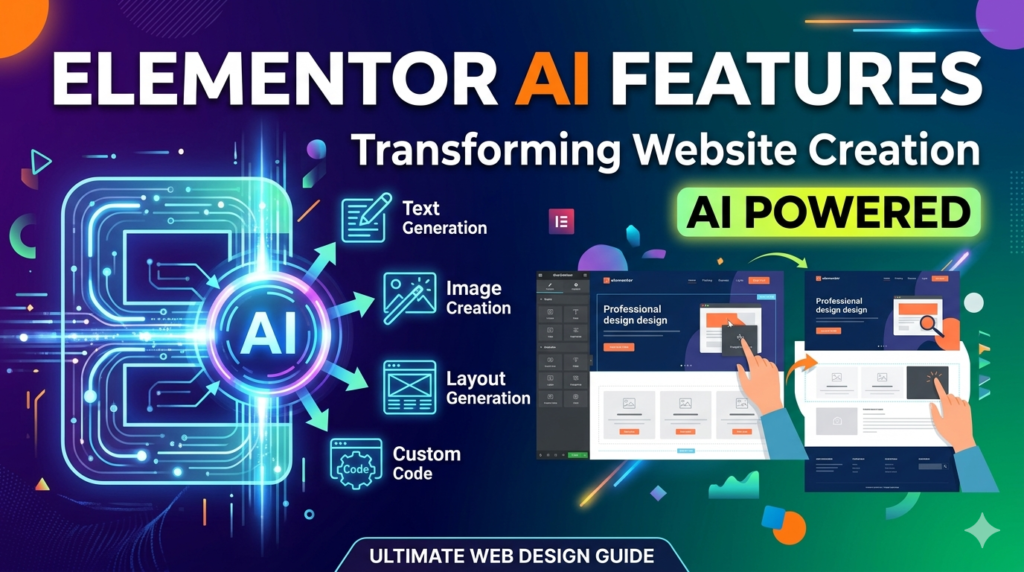
Artificial intelligence is reshaping digital creation, and Elementor has embraced this transformation aggressively. Recent updates introduced AI-powered tools that help users generate content, layouts, code snippets, and design ideas directly inside the editor.
This integration changes the speed of website production dramatically. Instead of staring at a blank page wondering what headline to write, users can generate ideas instantly. AI starts to function as a creative assistant in the background.
Small businesses benefit especially from these features because they often lack dedicated copywriters or designers. Elementor AI helps bridge those gaps affordably. It empowers smaller brands to compete with larger companies that traditionally had bigger creative budgets.
The AI tools also assist with coding tasks, making advanced customization easier for non-technical users. Generating custom CSS or HTML snippets becomes much more approachable when AI guidance is integrated directly into the workflow.
AI Design Assistance and Automation
Beyond text generation, Elementor’s AI features help streamline design decisions. Users can generate layouts, improve design consistency, and automate repetitive tasks faster than ever before.
This matters because web design can sometimes feel overwhelming. Beginners often struggle with spacing, typography, or layout balance. AI-powered suggestions help reduce design mistakes while improving visual quality.
Automation also enhances productivity for agencies and freelancers. These days, repetitive tasks that used to take hours can be finished in minutes. Faster workflows translate directly into increased revenue and reduced project stress.
The future of web design clearly points toward AI-assisted creation, and Elementor’s early investment in this space positions it strongly for continued dominance.
Performance and Speed Improvements
Optimized Hosting and Core Web Vitals
Everything is impacted by website speed, including customer satisfaction and SEO rankings. Studies consistently show that slow-loading websites lose visitors rapidly. Elementor has made major improvements in performance optimization to address these concerns.
Recent reports highlight Elementor’s investment in optimized hosting environments and Core Web Vitals improvements. Faster Time to First Byte performance and integrated optimization tools help websites achieve better loading speeds.
Performance optimization includes lazy loading, reduced DOM output, optimized asset loading, and lightweight design structures. These enhancements help Elementor websites compete effectively in Google’s speed-focused ranking systems.
Businesses benefit financially from faster websites because users are more likely to stay, browse, and convert. In ecommerce, even small speed improvements can increase revenue significantly.
Lightweight Design Strategies
Elementor has also focused on reducing unnecessary code and improving frontend efficiency. Critics previously argued that page builders created bloated websites, but Elementor has responded with smarter optimization practices.
Users can selectively load features, minimize scripts, and optimize image delivery. Combined with quality hosting and caching strategies, Elementor websites can achieve impressive performance scores.
Professional developers often combine Elementor with performance-focused themes and CDN services to create highly optimized experiences. This flexibility allows websites to balance visual creativity with technical efficiency.
Performance optimization is no longer just a technical discussion—it directly influences user trust. Visitors subconsciously judge businesses based on how quickly their websites load.
WooCommerce Integration for Online Stores
Custom Product Pages
Ecommerce businesses increasingly choose Elementor because of its deep WooCommerce integration. Instead of relying on generic product layouts, store owners can fully customize product pages visually.
This flexibility helps brands create unique shopping experiences that align with their identity. Product galleries, upsells, trust badges, reviews, and pricing sections can all be arranged strategically to improve conversions.
Online shopping has become intensely competitive. Customers expect professional, visually engaging stores. Elementor helps businesses deliver those experiences without requiring custom coding expertise.
Conversion-Focused Features
Elementor also includes marketing-focused tools designed to improve conversions. Popup builders, countdown timers, sticky headers, and lead generation forms help businesses capture attention effectively.
These tools matter because attracting visitors is only half the battle. Websites must also convert traffic into subscribers, leads, or customers. Elementor combines design flexibility with practical marketing functionality.
For entrepreneurs running online businesses, this integration eliminates the need for multiple disconnected tools. Everything works together within one ecosystem.
SEO Benefits of Using Elementor

Clean Code and Faster Pages
SEO remains a major priority for website owners, and Elementor supports optimization efforts in several ways. Faster pages, mobile responsiveness, structured layouts, and compatibility with SEO plugins all contribute positively to search visibility.
Google increasingly prioritizes user experience metrics such as loading speed, mobile usability, and page stability. Elementor’s optimization improvements help websites align with these ranking factors.
The builder also encourages clean content organization using proper headings, sections, and structured layouts. This makes content easier for both users and search engines to understand.
Compatibility with SEO Plugins
Elementor integrates seamlessly with leading SEO plugins like Yoast SEO and Rank Math. This compatibility allows users to optimize metadata, schema markup, sitemaps, and readability directly within WordPress.
Content marketers especially appreciate this synergy because it streamlines publishing workflows. Instead of juggling multiple disconnected systems, everything operates cohesively.
Good SEO is not just about keywords anymore. It is about delivering high-quality user experiences, and Elementor supports that objective effectively.
Read More:-
Leadpages (US) vs Other Landing Page Builders: Which One Is Best?
Top Strategies to Maximize Earnings with the CapCut Affiliate Program
Explore the Ultimate Luxury Experience at Okada Manila(GLOBAL)
Top Attractions to Explore at Yas Island Abu Dhabi (US) in 2026
How Revopoint 3D Technologies Inc. Makes 3D Scanning Easy and Affordable
Elementor vs Other Website Builders
Elementor vs Gutenberg
Gutenberg, WordPress’s native block editor, has improved significantly over time. It offers lightweight performance and tighter WordPress integration. However, Elementor still maintains advantages in flexibility, design depth, and user experience.
Elementor provides more advanced widgets, animations, responsive controls, and visual customization capabilities. For users seeking pixel-perfect design freedom, Elementor often feels more powerful and intuitive.
That said, some minimalist users prefer Gutenberg for simpler websites. The choice often depends on project requirements and design ambitions.
Elementor vs Wix and Squarespace
Compared to closed platforms like Wix and Squarespace, Elementor offers greater ownership and flexibility. Users control hosting, plugins, themes, and integrations entirely.
Closed platforms may feel simpler initially, but they often restrict scalability and advanced customization. Elementor combined with WordPress offers long-term growth potential without platform lock-in.
Businesses that prioritize branding, SEO flexibility, and advanced functionality often prefer Elementor because it adapts to evolving needs more effectively.
The Future of Elementor and WordPress
Emerging Trends in Web Design
The web design industry continues evolving rapidly. AI integration, performance optimization, accessibility improvements, and responsive experiences dominate current trends.
Elementor remains positioned at the forefront of these developments because of its aggressive innovation strategy. The company continues investing heavily in AI-powered workflows, hosting optimization, collaboration tools, and accessibility enhancements.
Future websites will likely become even more personalized, interactive, and intelligent. Elementor’s ecosystem appears prepared for that future.
Why Elementor Continues to Dominate
Elementor’s success comes down to one simple truth: it empowers people. It removes technical barriers while still offering professional-grade control. That balance is incredibly difficult to achieve, yet Elementor has managed to do it consistently.
The platform combines creativity, efficiency, scalability, SEO friendliness, ecommerce functionality, AI innovation, and community support into one cohesive experience. Few competitors offer such a complete package.
As WordPress continues dominating the CMS market, Elementor will likely remain one of the most influential tools shaping how websites are built globally.




Conclusion
Elementor has transformed the WordPress ecosystem by making professional web design accessible to everyone. Whether someone is launching a personal blog, scaling an ecommerce business, or managing dozens of client websites, Elementor provides the flexibility and tools needed to succeed online.
Its drag-and-drop editing, AI-powered features, responsive controls, WooCommerce integration, and SEO compatibility create a powerful all-in-one environment for website creation. Combined with WordPress’s unmatched scalability and ownership advantages, Elementor delivers a compelling solution for modern digital needs.
The internet keeps evolving, and user expectations continue rising. Websites must be fast, beautiful, mobile-friendly, and conversion-focused. Elementor helps users meet those expectations without requiring years of technical training.
That is exactly why Elementor remains the preferred choice for WordPress users around the world.
FAQs
Q. Is Elementor suitable for beginners?
A. Yes, Elementor is highly beginner-friendly because it uses a visual drag-and-drop interface that eliminates the need for coding knowledge.
Q. Does Elementor slow down websites?
A. Modern versions of Elementor include significant performance optimizations. With proper hosting, caching, and optimization practices, Elementor websites can load very quickly.
Q. Can Elementor be used for ecommerce websites?
A. Absolutely. Elementor integrates deeply with WooCommerce, allowing users to create custom product pages, shopping experiences, and conversion-focused online stores.
Q. Is Elementor better than Gutenberg?
A. Elementor generally offers more advanced design flexibility and visual customization, while Gutenberg focuses on lightweight native WordPress editing.
Q. Why do agencies prefer Elementor?
A. Agencies value Elementor because it speeds up workflows, allows reusable templates, simplifies client management, and reduces development time significantly.