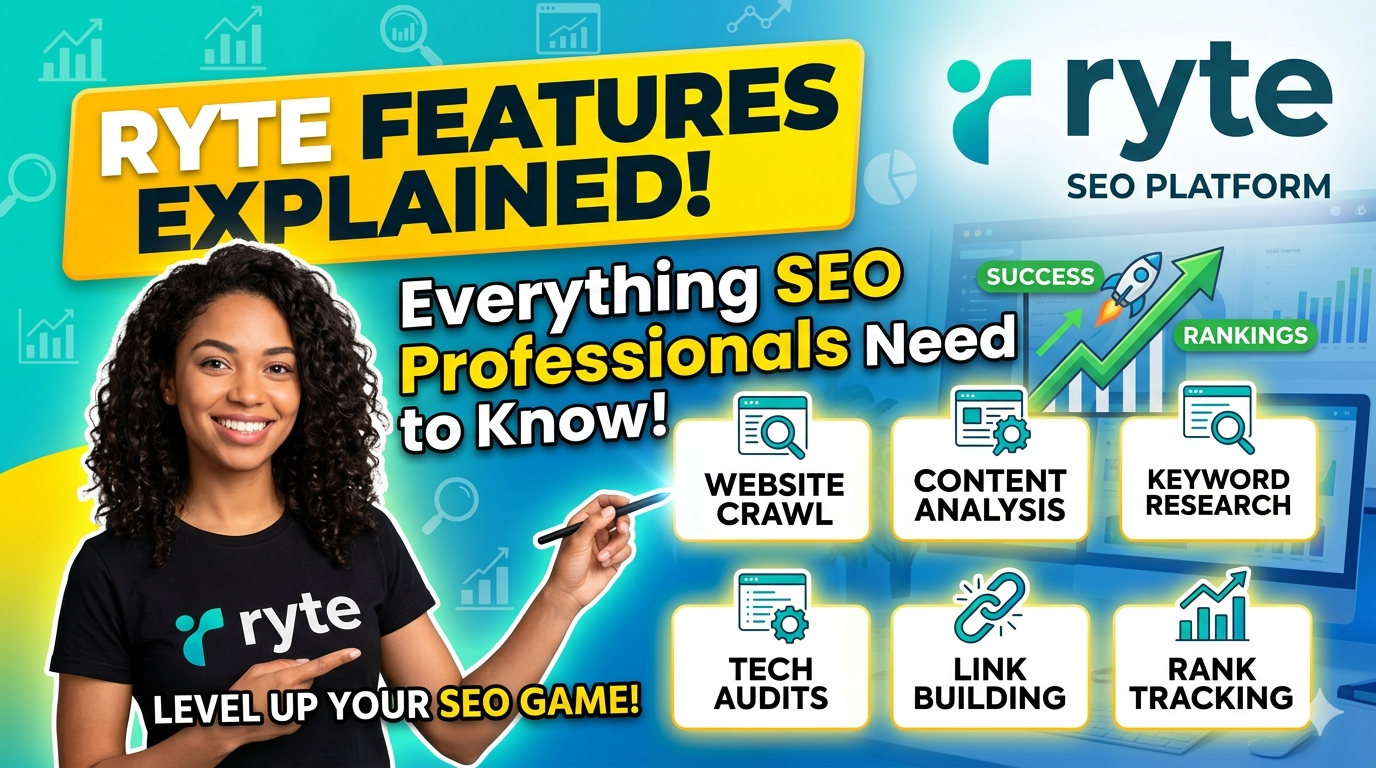
Discover everything SEO professionals need to know about Ryte features in this complete guide. Learn how Ryte helps improve technical SEO, website performance, Core Web Vitals, content optimization, accessibility, and search visibility. Explore Ryte’s auditing tools, Google Search Console integration, automation features, pricing, pros and cons, and why it has become a trusted platform for enterprise SEO teams and digital marketers.
Table of Contents
- What Is Ryte and Why SEO Professionals Use It
- The Core Philosophy Behind Ryte
- Ryte Website Success Module
- Ryte Search Success Features
- Ryte Content Success Tools
- Ryte Performance Monitoring Features
- Ryte Automation and Alerts
- Ryte Accessibility and Compliance Features
- Ryte Integrations and APIs
- Ryte Pricing and Plans
- Pros and Cons of Using Ryte
- Best Alternatives to Ryte
- Final Verdict on Ryte for SEO Professionals
- FAQs
What Is Ryte and Why SEO Professionals Use It
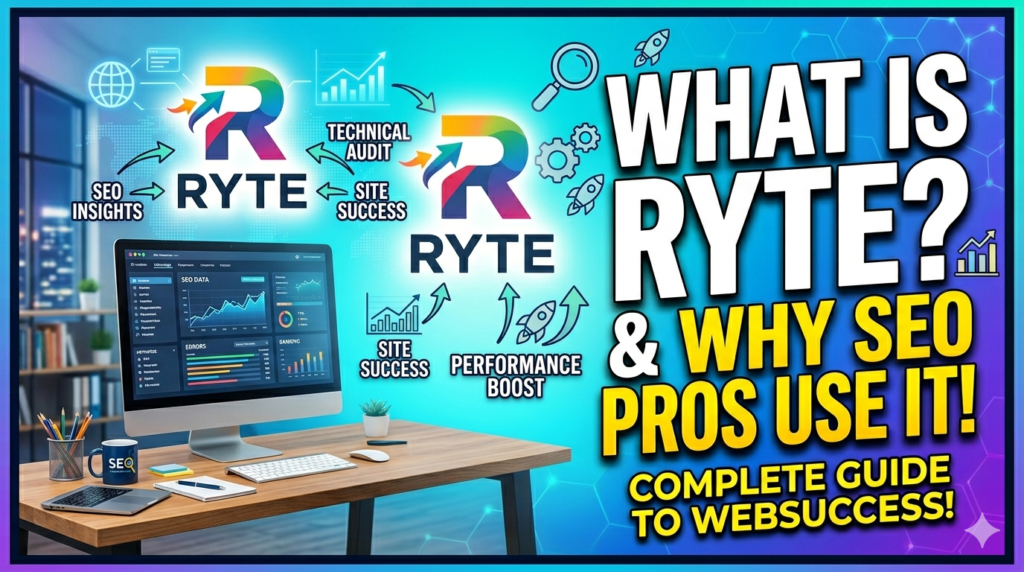
At its core, Ryte is a website optimization platform built to improve technical SEO, content quality, user experience, accessibility, and website performance. Unlike lightweight SEO plugins that only focus on keywords or rankings, Ryte dives into the deeper layers of website health. It helps businesses understand whether their site is technically optimized for both users and search engines.
Ryte has become especially popular among enterprise SEO teams, ecommerce businesses, agencies, and technical SEO consultants because of its detailed crawling capabilities and actionable reporting. According to Ryte’s official platform information, thousands of brands use the platform to improve organic traffic, usability, and conversion rates.
Ryte’s Position in the SEO Industry
The SEO industry has evolved dramatically. Ten years ago, ranking high often meant stuffing keywords into pages and buying backlinks. Today, Google evaluates websites based on page experience, performance, crawlability, accessibility, structured data, and content relevance. Ryte aligns itself with this modern SEO philosophy.
Rather than acting purely as a keyword research tool, Ryte positions itself as a Website User Experience platform. That distinction matters. It means the tool prioritizes site quality and usability alongside SEO signals. This broader focus gives SEO professionals more insight into how technical problems impact rankings, conversions, and user satisfaction simultaneously.
Who Benefits Most From Ryte
Ryte is not necessarily built for casual bloggers looking for a quick SEO score. Its biggest strength appears when managing medium-to-large websites with thousands of URLs. Ecommerce stores, SaaS companies, publishers, and enterprise websites gain the most value because technical issues scale rapidly with larger websites.
Agencies also appreciate Ryte because it centralizes technical audits, performance monitoring, and reporting into one environment. Instead of juggling multiple disconnected tools, teams can monitor crawl issues, Core Web Vitals, structured data, indexing problems, and content quality from a unified dashboard.
The Core Philosophy Behind Ryte
One reason Ryte stands out is its philosophy around website quality. Most SEO platforms focus only on rankings. Ryte treats SEO as part of a broader digital experience. That approach mirrors how Google itself evaluates websites today.
Website User Experience as an SEO Strategy
Imagine your website as a physical retail store. Even if the sign outside is attractive, customers will leave quickly if the shelves are disorganized, the lighting is poor, and the checkout line takes forever. Websites work the same way. Traffic alone means nothing if the experience is frustrating.
Ryte helps businesses improve that experience through technical audits, speed optimization, accessibility checks, and content quality analysis. The platform emphasizes that search visibility and user satisfaction are deeply connected.
Why Technical SEO Matters More Than Ever
Google’s algorithms increasingly reward websites that are technically healthy. Broken links, slow load speeds, duplicate content, JavaScript rendering problems, and crawl inefficiencies can quietly damage rankings even when content quality is high.
Ryte’s crawling engine is one of its strongest features because it continuously scans websites for hidden technical issues. SEO professionals can identify indexing errors, redirect chains, missing metadata, orphan pages, and crawl budget waste before those problems grow into major ranking losses.
Ryte Website Success Module
The Website Success module is essentially Ryte’s technical SEO command center. This is where users perform detailed website crawls and analyze site architecture.
Technical SEO Audits
Ryte’s technical audit functionality is built for depth. Users can crawl websites regularly or schedule automated analyses to monitor ongoing changes. The platform reportedly supports advanced crawl configurations, JavaScript rendering, and mobile viewport testing.
The audits identify issues such as:
| Technical Issue | Why It Matters |
| Broken links | Hurts UX and crawl efficiency |
| Duplicate content | Confuses search engines |
| Redirect chains | Slows crawling |
| Missing metadata | Weakens SERP optimization |
| Canonical issues | Causes indexing confusion |
| Slow pages | Damages rankings and conversions |
For enterprise sites with thousands of pages, these insights become incredibly valuable because even tiny technical errors can multiply across large websites.
Crawl Analysis and Error Detection
Ryte’s crawler acts almost like a digital detective. It explores website structures the same way search engines do, uncovering problems hidden beneath the surface. Users receive prioritized issue reports that highlight the most urgent technical concerns first.
This prioritization matters because not every issue deserves immediate panic. A missing image alt tag is very different from accidentally blocking critical pages in robots.txt. Ryte helps teams focus on high-impact fixes instead of drowning in minor warnings.
Internal Linking Insights
One of the most underappreciated SEO tactics is internal linking. Ryte provides detailed visibility into website architecture and crawl paths, helping users optimize how authority flows through the site.
Inadequate internal linking results in orphan pages that are difficult for search engines to find. Ryte helps SEO teams improve crawl accessibility by identifying these vulnerabilities. Think of it like improving the road system inside a city so traffic flows efficiently instead of getting stuck in dead ends.
Ryte Search Success Features

Ryte’s Search Success module focuses heavily on search performance analysis and Google Search Console data interpretation.
Google Search Console Integration
One of Ryte’s strongest capabilities is its integration with Google Search Console. Instead of forcing users to manually sort through overwhelming GSC data, Ryte organizes and visualizes search insights in a more actionable way.
SEO professionals can monitor:
- Keyword performance
- Click-through rates
- Impression growth
- Ranking fluctuations
- Underperforming pages
- Top-performing URLs
This integration becomes especially useful for large websites with massive keyword datasets.
SEO Opportunity Detection
Ryte includes several smart opportunity detection features. According to Ryte’s official SEO platform information, the tool identifies “Organic Underperformers” and “Google Top 10 Tests,” helping users discover pages that could generate quick ranking improvements.
Imagine ranking in position eight for a keyword with huge traffic potential. Ryte highlights these opportunities so teams can optimize strategically rather than guessing blindly.
This feature can save SEO professionals enormous amounts of time because it surfaces low-hanging fruit automatically.
Ryte Content Success Tools
Content optimization is another major component of Ryte’s ecosystem. Unlike AI-heavy writing assistants that focus on pumping out articles rapidly, Ryte emphasizes structured optimization.
TF-IDF Content Optimization
Ryte’s TF-IDF content analysis helps writers identify important terms and topical relationships related to their target keywords. The idea is not keyword stuffing. Instead, it helps ensure content comprehensively covers a topic in a way search engines expect.
Many SEO teams still rely on TF-IDF models because they reveal semantic gaps in content. Ryte uses this approach to guide content creators toward stronger topical relevance.
The system compares your content against high-performing search results and identifies missing contextual phrases that may strengthen topical depth.
Search Intent Optimization
Modern SEO revolves around understanding intent. If someone searches “best running shoes,” they probably want comparisons and reviews, not a technical essay on rubber manufacturing.
Ryte helps align content structure with search intent. Writers can better understand what type of information users expect, making content more useful and competitive.
This is where Ryte becomes more than a technical crawler. It starts connecting technical SEO with user psychology and content strategy.
Ryte Performance Monitoring Features
Performance optimization is no longer optional. Google’s Core Web Vitals updates pushed website speed and usability into the center of SEO conversations.
Core Web Vitals Tracking
Ryte integrates Core Web Vitals monitoring directly into its platform, allowing users to identify slow-loading pages and user experience bottlenecks.
The platform tracks metrics related to:
| Core Web Vital | Purpose |
| Largest Contentful Paint (LCP) | Measures loading speed |
| Interaction to Next Paint (INP) | Measures responsiveness |
| Cumulative Layout Shift (CLS) | Measures visual stability |
Poor performance in these areas can reduce rankings and frustrate users simultaneously.
Website Speed Optimization
Ryte’s performance reports help teams identify heavy resources, inefficient scripts, rendering delays, and crawl inefficiencies affecting speed.
A slow website is like a restaurant where customers wait twenty minutes before receiving menus. Most people simply leave. Ryte helps prevent that scenario online.
Ryte Automation and Alerts
SEO problems often happen suddenly. A developer accidentally blocks an entire directory. A migration breaks internal links. An update destroys page performance.
Slack Notifications and Custom Alerts
Ryte includes Slack notifications and custom alert systems that notify teams about major website changes.
This feature is especially valuable for agencies and enterprise organizations where websites change constantly. Instead of manually checking dashboards every day, teams receive automated warnings when unusual events occur.
Scheduled Crawls
Scheduled crawling allows businesses to monitor website health continuously rather than relying on occasional manual audits.
This ongoing monitoring approach transforms SEO from reactive maintenance into proactive protection.
Ryte Accessibility and Compliance Features
Accessibility is becoming increasingly important for both SEO and legal compliance. Ryte includes accessibility-focused analysis tools designed to improve inclusiveness and website quality.
Accessibility Audits
Accessibility audits help identify usability problems for people with disabilities. Missing alt attributes, poor contrast ratios, broken navigation patterns, and structural inconsistencies can all impact accessibility scores.
Improving accessibility often improves SEO indirectly because search engines reward cleaner structures and better usability.
Website Quality Assurance
Ryte’s quality assurance features extend beyond traditional SEO. The platform checks for broader website quality issues that affect trust, usability, and conversions.
This broader approach makes Ryte appealing for organizations that want to align SEO with UX and development workflows.
Ryte Integrations and APIs

Large SEO operations rarely use a single tool. Ryte supports integrations and APIs that allow teams to incorporate data into existing workflows.
The Google Search Console integration remains the most important, but API functionality allows developers and enterprise teams to automate reporting and monitoring.
For technical SEO specialists, APIs are like power tools. They remove repetitive manual work and allow deeper customization.
Ryte Pricing and Plans
Ryte offers multiple pricing tiers depending on crawl limits, projects, and features. According to publicly available pricing information, plans range from free versions to enterprise-level solutions.
| Plan | Approximate Pricing | Best For |
| Free | $0 | Beginners and testing |
| Pro | Around $120/month | Small businesses |
| Business | Around $500/month | Agencies and larger websites |
| Enterprise | Custom pricing | Enterprise SEO teams |
Enterprise plans include advanced crawling, onboarding support, API access, and larger crawl budgets.
One criticism from users is that Ryte can become expensive for smaller businesses. Still, for enterprise organizations where technical SEO errors can cost millions in lost traffic, the investment often makes sense.
Read More:-
Top Features That Make Xara a Preferred Design Solution
Spocket Review: The Ultimate Dropshipping Solution for Online Stores
Why Jackery US Is Trusted for Reliable Backup Power Solutions
Why BLUETTI US Is a Leading Brand in Portable Energy Storage
SharkNinja UK Review: Innovative Home Appliances Worth Buying
Pros and Cons of Using Ryte
Every SEO platform has strengths and weaknesses. Ryte is no exception.
| Pros | Cons |
| Excellent technical SEO audits | Learning curve for beginners |
| Strong Google Search Console integration | Expensive for small sites |
| Core Web Vitals monitoring | Limited backlink tools |
| Detailed crawl reports | Less focused on off-page SEO |
| Accessibility and compliance checks | Complex enterprise interface |
| Smart alert systems | Not primarily a keyword research tool |
Ryte shines brightest in technical SEO environments. Businesses seeking heavy backlink analysis or social media tools may need supplementary platforms.
Best Alternatives to Ryte
Ryte competes with several major SEO platforms.
| Tool | Best Known For |
| Semrush | All-in-one SEO marketing |
| Ahrefs | Backlink analysis |
| Screaming Frog | Deep crawling |
| Lumar | Enterprise crawling |
| Moz | Beginner-friendly SEO |
| Sitebulb | Visual SEO audits |
Ryte differentiates itself by combining technical SEO, website quality assurance, accessibility, and user experience monitoring in one ecosystem.




Final Verdict on Ryte for SEO Professionals
Ryte is one of the most sophisticated technical SEO platforms available today. It excels in areas many businesses underestimate: crawl efficiency, website structure, accessibility, Core Web Vitals, and technical health monitoring.
For enterprise SEO teams, large ecommerce stores, publishers, and agencies, Ryte can function like a central nervous system for website optimization. It continuously monitors technical conditions, identifies opportunities, and warns teams before problems spiral out of control.
The platform may feel overwhelming for complete beginners, and it is not the cheapest SEO solution on the market. But for organizations serious about long-term organic growth, Ryte delivers the type of deep technical insight that simpler SEO tools cannot match.
In a search landscape increasingly shaped by user experience, website quality, and technical excellence, Ryte positions itself as far more than an SEO tool. It becomes a full-scale website optimization platform designed for the future of search.
FAQs
Q. Is Ryte mainly a technical SEO tool?
A. Yes, Ryte focuses heavily on technical SEO, website quality, performance monitoring, and accessibility optimization. It is especially useful for enterprise-level SEO management.
Q. Does Ryte include keyword research features?
A. Ryte offers keyword monitoring and content optimization tools, but it is not primarily designed as a keyword research platform like Ahrefs or Semrush.
Q. Can Ryte monitor Core Web Vitals?
A. Yes. Ryte includes Core Web Vitals tracking and performance analysis to help websites improve loading speed and user experience.
Q. Is Ryte suitable for agencies?
A. Absolutely. Agencies benefit from Ryte’s scheduled crawls, reporting tools, alerts, and technical monitoring capabilities across multiple websites.
Q. What makes Ryte different from other SEO tools?
A. Ryte combines technical SEO, accessibility audits, performance monitoring, compliance checks, and content optimization into one platform focused heavily on website quality and user experience.